
In this guide
A generator that runs alongside the grid is not a private matter between a household and its installer. Under the UK's connection rules, any generating equipment wired to a distribution network must meet the protection settings set out in Engineering Recommendation G98 or G99, and the network operator must be told about it. G98 covers installations rated below 3.68kW per phase; G99 applies above that threshold1. All generating equipment connected to any electricity distribution network has had to comply with one or the other3.
The distinction matters because it decides whether a household can simply fit and inform, or must apply and wait for approval. A small inverter or battery system below the G98 limit is notified after commissioning, usually within 28 days4. A standby generator or larger inverter above the limit goes through the G99 process, where the operator checks whether the local network can take the extra load before the system is energised6.
Northern Ireland runs its own variants, G98/NI and G99/NI, administered by NIE Networks, with the same underlying logic and the same fit and inform route for small installations7. What follows sets out which standard applies, what the operator checks, how the application runs, who pays for reinforcement, and what the rules mean for a household's energy independence.
G98 and G99: the ENA standards behind generator notification
G98 is a UK engineering standard written by the Energy Networks Association, the body that represents the country's electricity network operators. It was previously known as G83, and the current version, Engineering Recommendation G98, was introduced in May 20181. Its purpose is to ensure that small-scale generation connects to the grid safely and does not compromise network stability, safety or power quality1. The obligation to comply is not voluntary: it sits under the Electricity, Safety, Quality and Continuity Regulations 20021.
G99 does the same job at a larger scale. Both standards are described by network operators as technical standards for the protection settings required for generators or storage assets to connect to electricity networks, acting as a safety mechanism that protects both the network and the equipment from faults5. The protection settings are what stop a generator from continuing to energise a section of network that has been isolated for repair, and what disconnect it when the network's voltage or frequency moves outside permitted limits.
Manufacturers carry part of the burden. Under EREC G98, manufacturers must always lodge their declarations of full compliance in the ENA Type Test Register, so that an installer can confirm a particular inverter or generating unit is approved for connection2. The same requirement appears in the ENA's own guidance as a duty to lodge declarations in the ENA LCT Register11. Equipment must be type tested under the requirements of EREC G986.
"G98 is a UK engineering standard written by ENA."
The standards also place ongoing duties on the owner. Maintenance of the equipment is listed among the continuing responsibilities that come with a G98 connection6. Compliance is therefore not a one-off paperwork exercise at commissioning; it assumes the protection settings remain functional for the life of the installation.
G98 or G99: which applies to your system
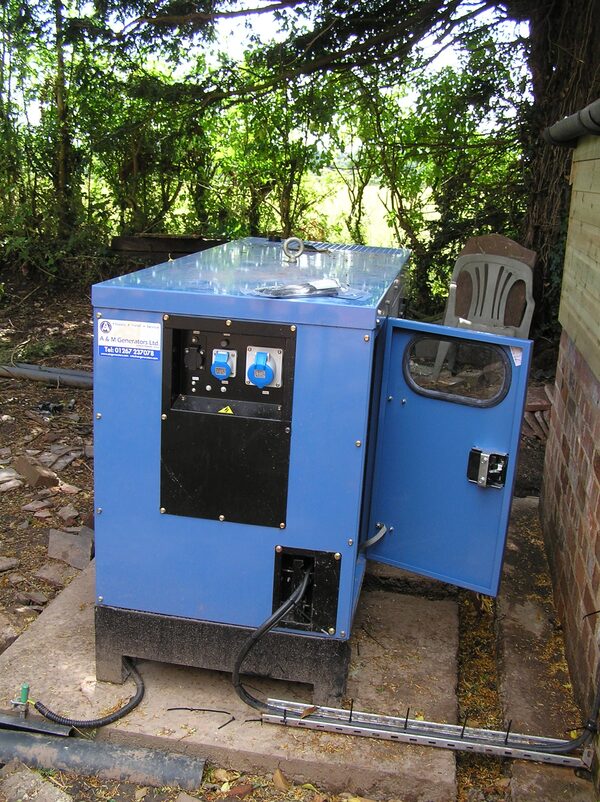
The dividing line is capacity per phase. A generator with a capacity greater than 3.68kW per phase falls under EREC G992. Below that figure, G98 applies and the connection process is relatively simple, summarised by the ENA as fit and inform3. The same threshold appears in the Northern Ireland guidance, where generation greater than the microgeneration limits must use the G99/NI application process8.
Vehicle to grid connections sit on the G99 side of the line. The ENA's guidance states that it is likely that V2G will be greater than 16 A per phase and therefore G98 is not applicable and G99 should be used3. A household considering a bidirectional charger for an electric vehicle should expect the larger application route.
There is a second trigger that catches some small installations. An application under G98 is required where another property within the same postcode, ignoring the last two digits, has had generation installed within the last 28 days by the same installer4. This is designed to catch clusters of installations on the same part of the low voltage network, where several small systems together can have the effect of one larger one.
| System | Standard | Route |
|---|---|---|
| Generation below 3.68kW per phase | G98 | Fit and inform, notify within 28 days1 |
| Generation above 3.68kW per phase | G99 | Application and approval before energising2 |
| Vehicle to grid, likely above 16 A per phase | G99 | Application and approval3 |
| Multiple installations in one postcode within 28 days | G98 application | Prior approval trigger4 |
| Northern Ireland, within microgeneration limits | G98/NI | Fit and inform with approved equipment7 |
| Northern Ireland, above the limits | G99/NI | Application process8 |
For a household, the practical consequence is that a small standby generator wired through a transfer switch to run a few circuits, and never operated in parallel with the grid, is a different case from an inverter or battery system that exports. The standards govern equipment connected to the network; an island-only set that is physically incapable of running in parallel sits outside them, which is why the transfer switch arrangements covered in connecting a generator to a house matter as much as the generator itself.
What the network operator checks before approving a connection
For a G99 application, the operator's first question is whether the grid can take the extra electricity load before the system is up and running10. That check is the reason approval comes before installation rather than after. The operator reviews the capacity available at the premises and determines whether the existing electricity supply can safely accommodate the increased loading12. It also uses the information in the application to assess and monitor the local network12.
Where several properties on the same circuit are adding equipment, the operator may need to upgrade cables or equipment to keep everything working12. The stated purpose of these checks is to establish how much electricity the area uses and whether it can handle the new equipment, to avoid power cuts and keep the supply safe and steady12. In other words, the assessment protects the applicant's neighbours as much as the applicant.
The application itself is reviewed for completeness. NIE Networks will check the application details and the information submitted, and may request more information or clarification9. An application is considered valid once all of the correct information is received and the fee is paid9. Only then is it placed in the generation queue, where each application is assessed in turn to determine the extent of work that may be needed for the connection9.
Electricity North West operates a fast track route for applications that meet its SGI 1, 2 or 3 criteria. For those, it undertakes a review of the network and, if certain conditions are met, issues a Fast Track notification13. This is a lighter-touch path for straightforward cases, and it exists alongside the standard queue rather than replacing it.
How the application process works, step by step
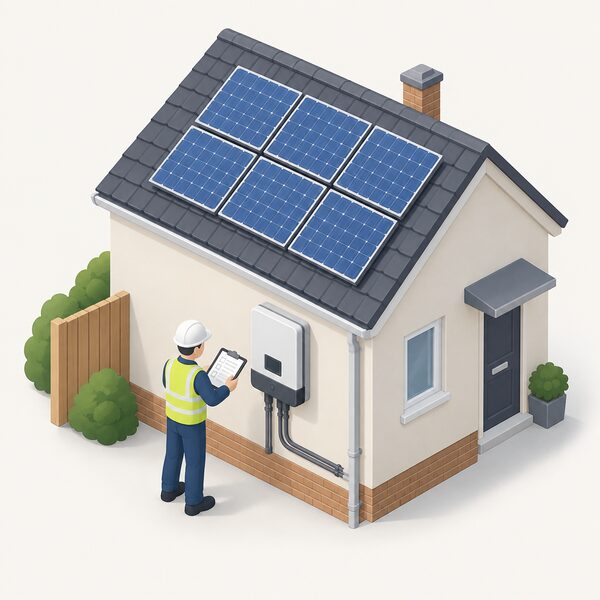
The process differs by size, and the smaller route is deliberately minimal. For installations within the G98 limit using approved equipment, the installer can usually connect it under the fit and inform process: they install and commission the system, then notify NIE Networks afterwards7. The same shape applies across Great Britain, where the connection process is relatively simple and can be summarised as fit and inform3.
The notification deadline is consistent across sources. The installer must notify the DNO within 28 days of commissioning the generating unit6. SSEN requires an Installation Commissioning Confirmation within 28 days of each generating unit being commissioned4. Bedford Borough Council's building regulations guidance describes completing a G98 application form within 28 days of the solar panels being in place10. A Welsh government scheme specification goes further and requires G98 applications to the DNO to be completed within 48 hours of system commissioning11.
The forms differ by site. G98 Form A covers installations of generation or storage at multiple premises, and G98 Form B covers a single premise11. For G99 compliant schemes, the commissioning documents go back to the named Designer on the offer or notification correspondence13, and confirmation of commissioning of each power generating module is provided in the format shown in G99 Form A3-211.
- Choose the equipment to be installed14.
- Nominate an installer, who carries out checks at the property and submits the application, managing the whole process on the customer's behalf14.
- The operator assesses the new equipment and the existing electricity supply once the application arrives14.
- If the supply can cope, the customer and installer are notified and the equipment can be installed safely14.
- If the supply cannot cope, the customer is told the equipment cannot be installed and the operator advises how to proceed14.
- After commissioning, the installer submits the commissioning confirmation within 28 days4.
Installers submit applications through the ENA's Connect Direct website14. For commercial installs, or where help with the application process is needed, NIE Networks provides an email contact14.
Who your local network operator is and what they do
The distribution network operator is the body responsible for maintaining the physical electricity supply to a home or business15. A network operator is responsible for the pipes and wires that move energy, and should be contacted about power cuts or connection issues in the area16. That is a different organisation from the energy supplier that bills the household, and the distinction matters when something goes wrong.
If the identity of the local operator is unclear, the Energy Ombudsman directs consumers to the Energy Networks Association website to find out who their network provider is17. Ofgem gives the same instruction: contact your network operator if you have a power cut or connection issues in your area18. The operator's role in generation connections is the same body's role in supply: it owns and maintains the assets the generator will connect to.
In Northern Ireland, NIE Networks handles both new supplies and upgrades to existing supplies, and its connections scope covers businesses and farms as well as solar, wind and other generation connections19. Its customer service line is 03457 643 643, and its WhatsApp support runs from 7.30am to 11.30pm, seven days a week, including public and bank holidays19. For a household in Great Britain, the equivalent contact for a power cut is the free 105 number, which puts the caller through to the electricity network operator21.
The operator also runs the support arrangements that matter during an outage. NIE Networks maintains a medical care register for householders who rely on electricity for medical equipment, and a Critical Care information service for vulnerable customers22. These sit alongside the connection function, and a household that depends on a generator because of medical need should be on the relevant register as well as having the generation notified.
What happens after you are approved: installation and assessment outcomes
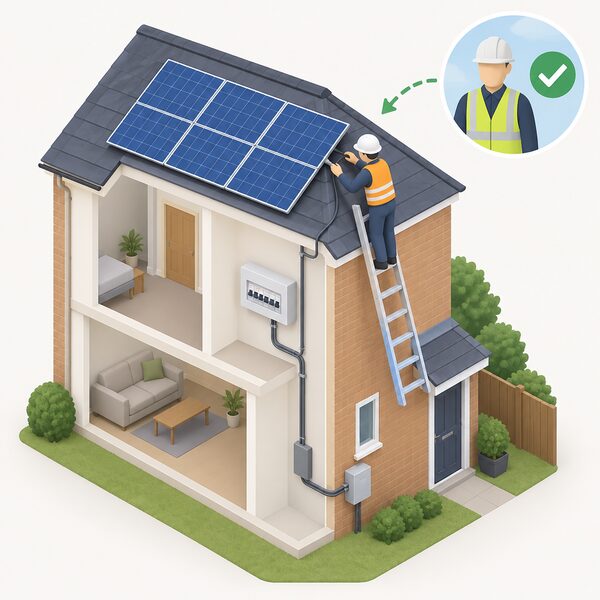
Approval is not the end of the process. Once the operator has assessed the application and confirmed the existing supply can cope, the customer and installer are notified and the new equipment can be installed safely14. If the assessment shows the existing supply cannot cope, the customer is told the equipment cannot be installed and the operator advises how to proceed14. That advice may point towards an upgrade of the supply, which is a separate piece of work with its own cost.
After commissioning, the paperwork continues. The installer must provide an Installation Commissioning Confirmation within 28 days of each generating unit being commissioned4. Electricity North West describes the outcome as an email confirmation indicating that the commissioning documents have been logged and the system verified as complying with G98 or G99 standards13. For G99 schemes, the documents go to the named Designer on the offer or notification correspondence13.
Whether a household is connecting a G98 or G99 compliant scheme, the operator needs to be notified so that its records can be updated13. That record keeping is what allows the operator to know what is connected where, which is the basis for the network assessment described above. A system that is installed but never notified leaves the operator's records wrong and the household outside the process.
Costs, quotes and who pays for network reinforcement
The cost of a generation connection reflects the work required, based on the export capacity requested, the generator's position on the network and whether reinforcement is needed, with all works and costs specific to site requirements8. There is no single national figure, and prices are quoted per project rather than published as a tariff.
In Northern Ireland the charging basis has changed. Under the Fairer Connection Costs for Connections Charging proposals, reinforcement assets provide system-wide benefits, so their costs are to be shared across all users through regulated network charges9. NIE Networks states that these costs will now be shared across all electricity consumers9. The customer still pays for the cost of the service cable, the meter and any work needed to connect directly to the network; the change only removes the cost of wider reinforcement9.
For budgeting, NIE Networks offers a budget quote tool that provides a provisional cost for a new connection but cannot provide a cost for complex work such as housing developments23. Its Statement of Charges provides typical costs for the main items of expenditure, excluding VAT, for a new or modified connection to the network23. For a detailed cost proposal of a connection or alteration that will definitely be proceeding, an application form must be submitted through a Connections account23. Where an address is not yet available in the quote tool, the data is updated regularly and the advice is to check back23.
The wider picture on network charges is that they are not static. Ofgem's summary of changes to the energy price cap for 1 April to 30 June 2025 records a Network Charge Compensation scheme allowance of £3, driven by the introduction of that scheme24. The scheme grants compensation on electricity network charges to energy intensive industries using Great Britain's electricity grid, and is included in the energy price cap25. It is a reminder that network costs are ultimately spread across consumers, which is the same principle now applied to reinforcement in Northern Ireland.
Safety when running a generator alongside the network
The safety case for notification rests on what the protection settings do. G98 and G99 are technical standards for the protection settings required for generators or storage assets to connect to electricity networks, acting as a safety mechanism to protect both the network and the equipment from faults5. They specifically refer to different kinds of protection settings regulations that generator or storage assets must comply with to connect to the network, protecting both the network and the asset from potential faults10.
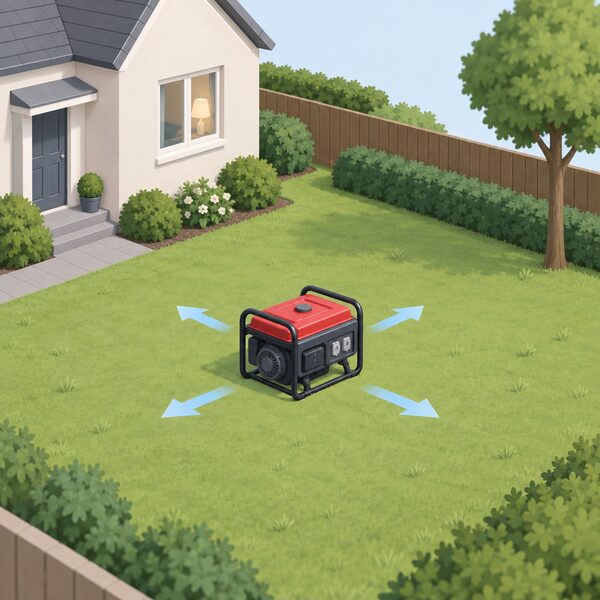
For a household running a generator during an outage, the practical rules are separate from the connection standards but just as important. NIE Networks advises that if a generator is being used, care must be taken over where it is sited in case of carbon monoxide poisoning, with plenty of air flow22. Standard power cut advice includes never touching damaged electricity equipment, checking on vulnerable family and friends, keeping the freezer door closed, reporting the power cut, turning off cookers, heaters and sensitive equipment, and leaving a light on22.
"If you are using a generator be careful where you site it in case of carbon monoxide poisoning. Make sure there is plenty of air flow."
Preparation matters as much as response. NIE Networks advises keeping a torch and batteries in the house, knowing the location of the fuse box, being able to open electric gates, keeping an electric vehicle battery charged, and joining the medical care register if dependent on electricity for medical equipment22. If electricity lines are down or causing significant risk to the public, the number to call is 999; for other supply issues the customer helpline is 03457 643 64320.
Reporting a power cut and what compensation follows
A generator does not remove the need to report an outage. The Met Office advises that if a neighbour's power is also off, it should not be assumed that the DNO has already been notified, and that the operator should always be called26. The free number is 105, which puts the caller through to the electricity network operator21. Ofgem's guidance is the same: contact your network operator if you have a power cut or connection issues in your area18.
Compensation follows the Guaranteed Standards of Performance. Network operators must restore supply within 12 hours for interruptions outside severe weather hours, 24 hours in severe storm category 1 weather and 48 hours in severe storm category 2 weather27. Payment is automatic within 10 working days if the operator holds the customer's bank details, and an extra £40 may be owed if a claim is needed28. Payment can be made by cheque, cash or bank transfer28.
| Situation | Restoration standard | Compensation position |
|---|---|---|
| Normal weather | 12 hours27 | Automatic within 10 working days if bank details held28 |
| Severe storm category 1 | 24 hours27 | Automatic within 10 working days if bank details held28 |
| Severe storm category 2 | 48 hours27 | Automatic within 10 working days if bank details held28 |
| Planned cut, notice or timing rules broken | Not applicable | £4029 |
| Payment missed after a few months | Not applicable | Extra £40 may be owed28 |
Food safety during an outage has its own guidance. According to Food Standards Agency guidance cited by National Grid, a fridge will keep food safe for up to four hours during a power outage provided the door is kept closed as much as possible27. Beyond that, the guidance does not guarantee safety, which is one reason a generator sized for essential loads is often aimed at refrigeration first.
What the rules mean for a household's energy independence
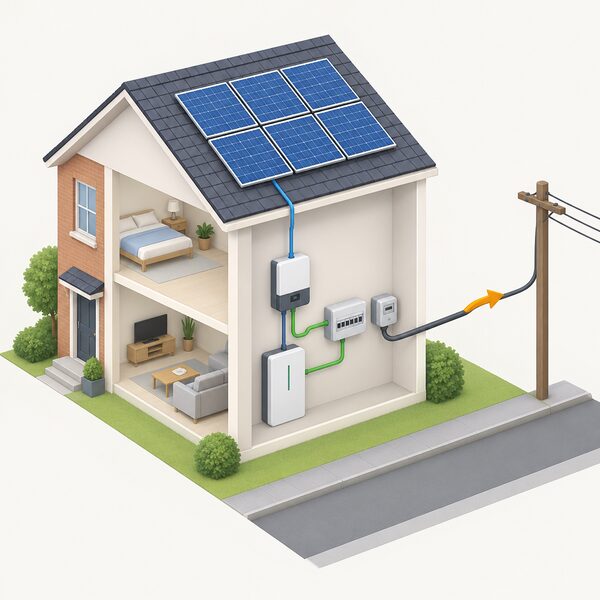
Notification under G98 or G99 is the price of connecting generation to the network, and it buys a specific kind of independence. A notified system can run alongside the grid, export when it has surplus, and rely on the network's protection arrangements to disconnect it safely when the network is in trouble. The standards exist because a generator that keeps energising a dead network is a danger to the people repairing it5.
The dependence that remains is real. A grid-connected generator still depends on the network for the reference voltage and frequency it synchronises to, on the operator for approval and records, and on the installer for the commissioning confirmation that must arrive within 28 days4. A household that wants to run entirely independently of the network is describing an island system, which is a different design question from the one the connection standards answer.
For most households, the practical position is that a small standby generator wired through a transfer switch to run selected circuits, and never operated in parallel with the grid, sits outside the G98 and G99 notification regime. Anything that exports, or that can run in parallel, does not. The dividing line is capacity per phase and the ability to operate in parallel, and the consequences of getting it wrong run from an unrecorded installation to a genuine safety risk. The pages on standby generators for homes and island mode and black start set out the equipment side of that decision.
Sources29 cited
- Micro generation and storage connections, Electricity North West, 2026
- Connecting generation to the electricity networks, Energy Networks Association, 2026
- G98 Single Premises, Energy Networks Association, 2026
- Installations up to 3.68kW per phase at a single premises, SSEN Distribution, 2026
- Installations above 3.68kW per phase but 50kW or less, SSEN Distribution, 2026
- G98 Single Premises Summary Guide, Energy Networks Association, 2026
- What is G98/NI, NIE Networks, 2026
- Generation FAQs, NIE Networks, 2026
- Once I send all the information, what happens next, NIE Networks, 2026
- Building regulations renewables guidance, Bedford Borough Council, 2026
- Barcud Solar Panel Installation Scheme Specification, Sell2Wales, 2026
- What we do with your application, NIE Networks, 2026
- G99 Fast Track process, Electricity North West, 2026
- Your connections process, NIE Networks, 2026
- Connections, NIE Networks, 2026
- Connection charging announcement FAQs, NIE Networks, 2026
- What is the cost of a new electricity connection), NIE Networks, 2026
- How we can help: network operators, Energy Ombudsman, 2026
- Complain about your energy supplier or network operator, Ofgem, 2026
- Additional works, NIE Networks, 2026
- Check if you can get payment for a power cut, Ofgem, 2026
- Power cuts advice, NIE Networks, 2026
- Plan for a power cut, Ofgem, 2026
- Get compensation if you have a power cut, Citizens Advice, 2026
- What to do in a power cut, Met Office, 2026
- Standards of performance, National Grid, 2026
- Response to storms, NIE Networks, 2026
- How do you prepare for a storm, NIE Networks, 2026
- Summary of changes to energy price cap 1 April to 30 June 2025, Ofgem, 2025
 G98 and G99 NotificationAdding a home battery usually means telling your network operator first, but sometimes you can just let them know afterwards.
 Telling the Network OperatorWho tells the network operator you are having a home EV charger fitted, and when?
 G98 and G99 Grid ConnectionDoes your solar system need telling the network or asking it first?
 Maintaining Backup PowerWill your generator actually start when the power goes off?
 Standby Generators for HomesA standby generator starts itself when the power cuts out, so your home keeps running even when you are out.
 Electrical Safety for GenerationWho signs off the wiring when you fit solar panels or a small wind turbine, and how do you know it is safe?