In this guide
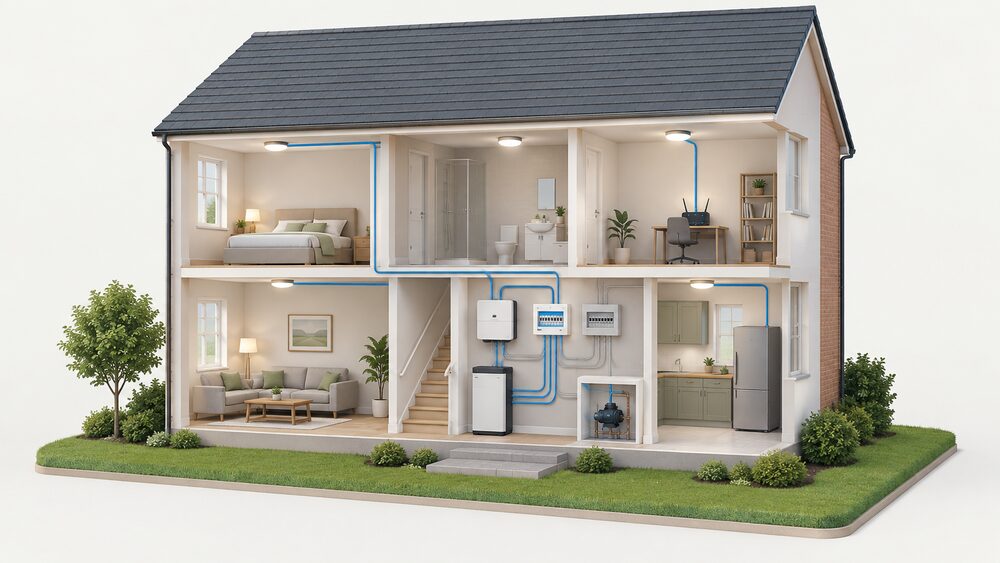
A backup supply is almost never wired to a whole house. It is wired to a chosen set of circuits, carried on their own board or their own section of a board, so that when the grid fails the fridge, the lights, the router and the heating pump keep running while everything else goes dark. That arrangement is the essential loads board, and the circuits on it are the essential loads.
The scale is deliberately small. In many projects, backup power is designed for critical loads only1. One maker's essential home backup set is the fridge, LED lighting, router and boiler pumps2. Another lists refrigerators, routers, lamps, computers and other critical appliances3. A third provides backup for up to 4x 240V or 8x 120V circuits, and only 2x 240V or 4x 120V where a single load controller is installed4.
What the board carries decides what a household notices during an outage. A backed-up lighting circuit and a socket for the router mean the evening continues; an unbacked-up cooker circuit means dinner changes. The wiring itself is not optional or improvised: an automatic isolation and changeover mechanism is mandatory under BS 7671 standards to isolate the home from the grid during a blackout2.
What an essential loads board actually is
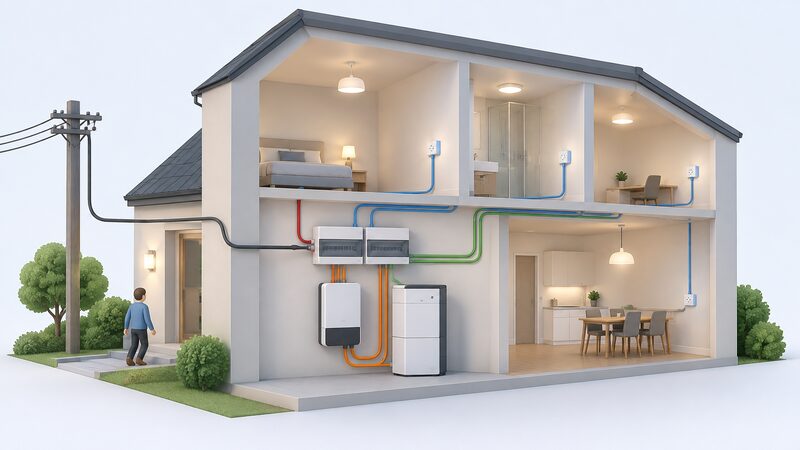
An essential loads board is a distribution board that has been separated from the main installation so that a backup source can energise it without energising the rest of the house. The requirement is stated directly: backup circuits must be isolated on a separate consumer unit or a dedicated section of your smart panel2. Either arrangement achieves the same thing, a defined set of final circuits that can be switched from grid supply to backup supply and back.
The board is not a device in itself. It is the point at which three things meet: the incoming supply, the backup source, and the circuits chosen to survive an outage. A backup-capable setup typically includes battery storage, a compatible hybrid inverter, control functions for safe off-grid switching, and a design that prioritises critical loads1. The board is where that prioritisation becomes physical.
Manufacturers describe the same idea in different language. One offers a UPS port built in for supplying critical circuits, with whole-site backup possible using an additional cabinet7. Another provides an independent critical load output port alongside the grid port3. A third supplies instant energy availability to a dedicated socket or lighting circuit in the event of a power cut8. The vocabulary varies; the principle does not.
The practical consequence is that the household has two classes of circuit. The first class runs whenever the backup source has charge. The second class runs only when the grid is up. Nothing about the second class is broken or inferior; it is simply outside the protected set, and its loads are the ones that would drain a battery fastest.
What drives the size of the backed-up set
Three things decide how much can sit on the board: the output of the backup source, the surge behaviour of the loads, and the priority rules the system applies.
Output is the first limit. One maker's larger battery provides UPS 6 kW continuous for critical loads, and its smaller unit UPS 4 kW continuous5. An inverter range in the same market offers 5,000VA nominal backup power, with 18,000 VA peak backup capacity across the series6. Those figures describe what the equipment can deliver, not what a household should connect; the connected load has to sit inside them.
Surge behaviour is the second. Motors and compressors draw far more at start than they do running, which is why a fridge or a boiler pump is a different proposition from a lamp. Systems handle this by sequencing. One maker's restart timeline, assuming all loads power on first try, shows highest priority loads powered on at 00:00:52 to 00:01:57 after shutdown, the refrigerator at 00:01:14 to 00:02:19, kitchen lights at 00:01:36 to 00:02:41, and the microwave at 00:01:58 to 00:03:034. Staggering the restarts keeps the initial demand inside the inverter's capability.
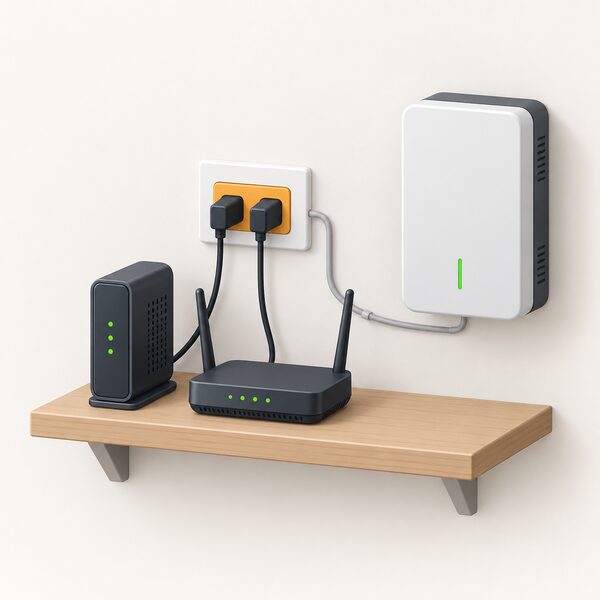
Priority is the third. The same maker requires that the Wi-Fi router and modem have the highest priority amongst the essential load circuits4. That is a design decision with a clear logic: without the router, remote monitoring and control of the system itself is harder, and the household loses the connection it relies on for information.
Load shedding then manages what remains. During an outage, one system keeps on essential loads and turns off non-essential loads to extend backup time9. Another describes the system's control logic as instantly providing backup power and smartly prioritising critical loads rather than draining the battery on everything connected10.
Which circuits to back up, and in what order
The order matters more than the list, because a backup source has finite energy and the board has finite ways. The essential set that appears repeatedly across maker guidance is small: refrigeration, lighting, communications and heating circulation.
- Communications first. The router and modem hold the highest priority among essential load circuits4. Ofcom guidance for providers is a minimum of 1 hour of continuous call time in the event of a power outage for digital landlines11.
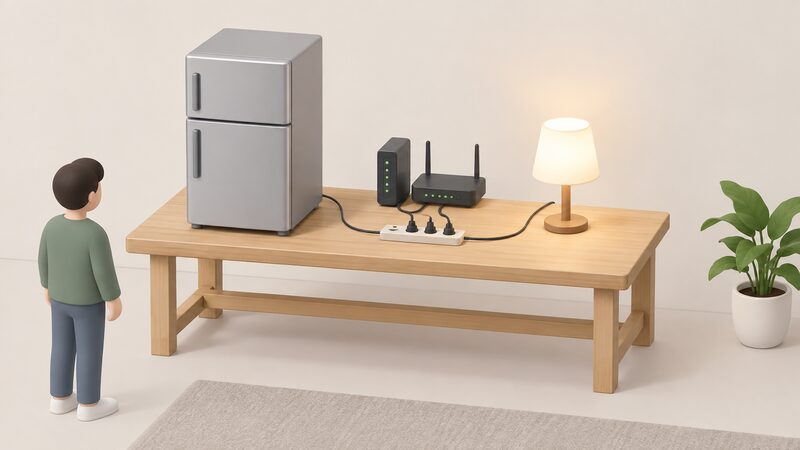
- Refrigeration next. Fridges and freezers are named in the essential home backup set2 and among critical appliances3. They cycle rather than run continuously, which suits a battery.
- Lighting. LED lighting is named in the essential set2, and a dedicated lighting circuit is one of the options a battery can supply directly8.
- Heating circulation. Boiler pumps are named in the essential set2. A pump is a small load with a starting surge, and it is the difference between a cold house and a warm one.
- Medical and mobility equipment. Stairlifts often have backup batteries, and the advice is to check how long the backup battery is expected to last, with access to a ground floor exit, telephone and heating for around three hours12.
Where a backup circuit falls short
The limits are structural, not a matter of buying a larger unit.
- It covers a chosen set of circuits, not the house. In many projects, backup power is designed for critical loads only1.
- Whole-site backup needs more equipment. One maker states that whole-site backup is possible with a PCAB or NEXUS cabinet7, and another that its full backup option requires a battery storage system14.
- A load that keeps tripping can be cut off. If a load causes five system shutdowns, the system fully disables that load, and it will not be automatically powered on when off-grid shutdowns occur4.
- The board does not create energy. It distributes whatever the battery, generator or inverter can supply, and the runtime follows the load.
- Restoration is automatic but not instant. All essential loads are powered on automatically when the system connects back to the grid or to a generator4, but the sequence takes time.
The rules that govern a backed-up board
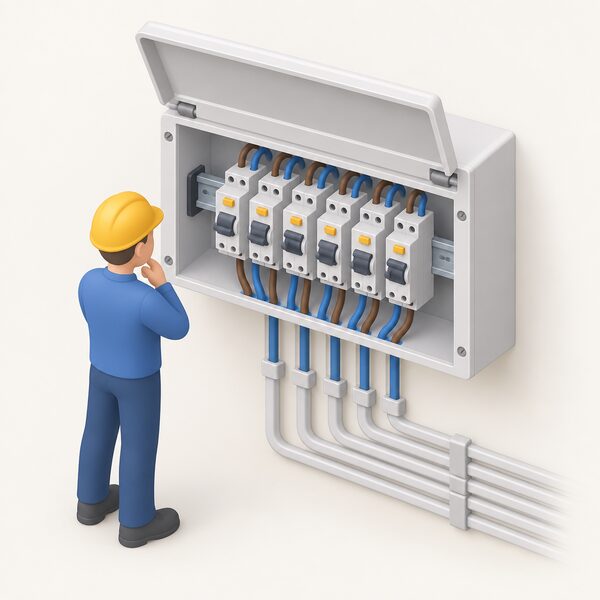
The wiring regulations set the frame. BS 7671:2018+A4:2026 is current and supersedes BS 7671:2018+A2:2022+A3:2024, published on 15 April 202615. Its predecessor amendment, BS 7671:2018+A1:2020, was published on 1 February 2020 and was intended to be implemented immediately, with installations falling within the scope of Section 722, the erection of which is commenced after 31 July 2020, required to comply16. BS 7671:2018+A1:2020 is listed as current and under review, with committee JPEL/6417.
Protective devices on the board follow the same regulations as the rest of the installation. A residual current circuit-breaker with protection against overload is made to BS EN 6100918. Where a specific load is added, the circuit is designed for it: each charging point shall be supplied individually by a final circuit protected by an overcurrent protective device19, and the circuit must be designed as a continuously-rated load20.
Grid protection rules apply to the equipment as well as the wiring. The ENA G98/G99 rules and the BS EN 61851 EV charging standards state that chargers must continuously monitor the incoming voltage and shut down automatically if it goes outside the legal range21. The same principle of automatic disconnection runs through backup design.
"An automatic isolation and changeover mechanism is mandatory under BS 7671 standards to isolate your home from the grid during a blackout"
How the arrangement differs across the UK nations
The wiring rules are the same across the four nations, because BS 7671 applies throughout the UK. What differs is the network context around the property, and that can change what a household is able to add.
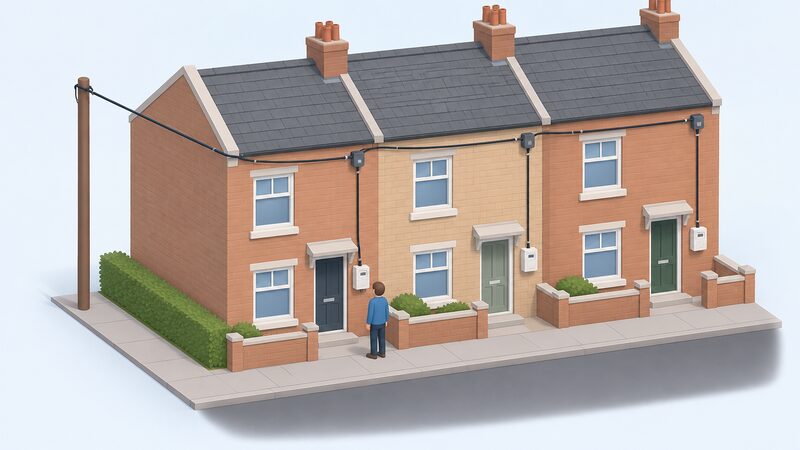
In Northern Ireland, a looped service is a common constraint. Installing a home EV charger typically requires a fuse upgrade to 80 to 100 amps, which often cannot be done on a looped supply without overloading the shared cable22. A household planning a large new load on a backed-up board may find the supply itself is the first limit, before any question of circuit selection arises.
Emergency planned power cuts are handled by the network operators, and the position on exemption is uniform: households and businesses cannot opt out or be specially treated for emergency planned power cuts23. Residential customers, including those on the Priority Services Register, and businesses without backup generation are not exempt13. The practical difference between nations lies in who the operator is and how support is delivered, not in whether a backup circuit is permitted.
For households in Scotland, Wales and Northern Ireland, the network operator and its support arrangements differ, and the pages on power cuts in Scotland, power cuts in Wales and power cuts in Northern Ireland set out the local position. The Priority Services Register and, in Northern Ireland, the Customer Care Register are separate from the wiring question but bear on the same outage.
What a backed-up board means for energy independence
A backup circuit changes the consequences of an outage for a chosen set of loads. It does not change where the energy comes from. Electrical energy storage is a way of increasing self-consumption and reducing reliance on the grid24, and a home energy management system keeps essential household appliances running continuously during unexpected grid outages10. Both statements describe a reduction in dependence, not its removal.
The dependence that remains is specific and worth naming. The household still relies on a network operator for the supply that charges the battery and for restoration after an outage. It still relies on a supplier for billing and, in most cases, for the meter. It relies on the manufacturer of the inverter or battery for firmware, monitoring and warranty support. Where the backup source is a generator, it relies on fuel. Where it is a battery, it relies on the grid or on solar to refill it.
The mechanism itself is quick. An emergency power supply is a reactive system, physically isolating the home and switching to battery backup within milliseconds when a grid failure occurs2. That speed is what makes a backed-up circuit different from a manual changeover: the fridge, the router and the lights do not notice the transition.
The wider grid context is worth holding alongside the household one. Building a larger grid requires the UK to secure additional supply chain capacity to deliver all of the necessary equipment including cabling and transformers25. A household that has moved its essential loads onto a backed-up board has, in a small way, reduced what it needs from that build-out during an outage.
For the wider picture, the backup power pillar covers the full range of options, and island mode and black start explains how a backup supply takes over from the grid. Households weighing a battery against a generator can compare them in standby generator vs home battery, and those planning the wiring itself will find the regulatory detail in backup power safety and standards.
Sources25 cited
- Care and assisted living providers, Energy Networks Association, 2026-09-17
- Emergency backup power guide: solar PV and batteries, Jackery UK, 2026-06-24
- Deye solar energy storage solutions, Deye, 2026-09-17
- Enphase Sunlight Backup user guide, Enphase, 2026
- AlphaESS brochure, AlphaESS, 2026-09-17
- APstorage, APsystems, 2026-07-21
- ESS AELIO, Solarwatt, 2026-04
- libbi datasheet, myenergi, 2026-09-17
- Smart energy, SolarEdge, 2026-09-17
- Smart energy management systems, Solax, 2026-04-08
- Response to Ofgem on supplier 24/7 metering support, Consumer Scotland, 2024-12-16
- Emergency power cuts, NIE Networks, 2026-09-19
- How planned emergency power cuts would work, Energy Networks Association, 2022-10-07
- Backup power function, Fronius, 2026-09-17
- Requirements for electrical installations, IET Wiring Regulations, BSI, 2026-04-15
- Electric vehicle charging installations FAQs, IET, 2026-09-17
- Requirements for electrical installations, IET Wiring Regulations, BSI, 2020-02-29
- Which RCD type?, IET, 2019-09
- Section 722 EV charging complete guide, NICEIC, 2018-07-01
- Section 722 EV charging complete guide, Elec-Mate, 2026-07-02
- When your EV charger stops charging: understanding overvoltage, Indra, 2025-12-09
- Looped services, NIE Networks, 2026-09-19
- Emergency power cuts, Electricity North West, 2026-09-19
- Electrical energy storage systems, Flexi-Orb, 2025-04-22
- BEAMA policy recommendations for the next UK Government, BEAMA, 2024
 Backup Power and EPSWill your lights stay on when the power goes out?
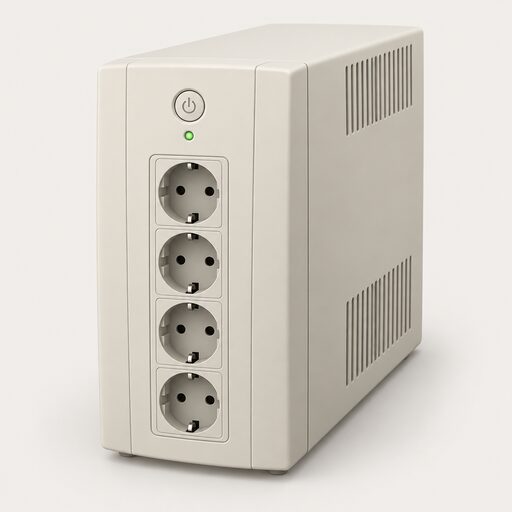 Maintaining Backup PowerWill your generator actually start when the power goes off?
 Backup Power and IndependenceA power cut leaves most homes completely dark, so how much backup do you actually need to keep the lights on?
 Prepare a Home for a Power CutA household checklist for before, during and after an outage: what to keep charged and to hand, which appliances to switch off, how long food stays safe and what to do about medical equipment.
 UPS Sizing ExplainedWhat size uninterruptible power supply do you need, and how long will it keep your devices running in a power cut?
 Leaving the Electricity GridCan you really cut your home off the grid completely, and what does it cost to have your electricity supply removed for good?