
In this guide
- What Rota Disconnection Is
- Block Letters and Three Hours
- Finding Your Block Letter
- How Much Notice You Get
- Timetable Across Great Britain
- Protected Customers and Register
- Solar Batteries and Generators
- Northern Ireland and the 5% Rule
- Preparing Your Household
- Living Through Three Hours
- Charging and Compensation
- What a Rota Reveals
A rota power cut, formally a rota load disconnection, is a way of managing and balancing electricity demand by temporarily disconnecting specific groups of customers from the grid in a scheduled manner1. In regulation it is defined as "the deliberate disconnection of customers' electricity supplies by the relevant electricity distributor for a set duration on a rota basis so as to reduce the demand for electricity to the level of capacity that is available". Each electricity meter in Great Britain and in Northern Ireland is assigned a block letter, and in an emergency different block letters are timetabled to be without power for a three-hour period so that supply is shared and everyone has power for most of the day1.
Rotas would only be used after all other options, such as turning down industrial demand and voltage reduction, have failed to restore stability to the power system1. Network operators describe emergency power cuts as unlikely this winter, and state that none are currently planned3. SSEN describes the scenario as a worst case with robust industry plans in place and disconnections as a last resort4. ScottishPower states that emergency power cuts are unlikely, "However, as they are not impossible" it publishes guidance for them5.
The practical shape of the arrangement is narrow and specific: around three hours of lost power per day per customer, on an area-by-area basis, spread by national timetable across England, Scotland and Wales so that the whole country is not without power at once2. A parallel but separately run scheme exists in Northern Ireland, where at least 5% of households would be switched off at once7. For a household, the significance is that no personal warning is guaranteed, no opt-out exists, and standard grid-tied solar will not keep the lights on.
What a rota load disconnection is, and the point at which it would be used
The purpose is stated plainly by the industry body: rotational disconnection helps to prevent overloading or blackouts during periods of high demand, ensuring a stable and reliable electricity supply for everyone1. It is a controlled reduction in demand, imposed because the alternative, an uncontrolled collapse, is worse and far harder to recover from.
The sequencing matters. Rota disconnections would only be used after all other options, such as turning down industrial demand and voltage reduction, have failed to restore stability to the power system2. UK Power Networks describes power sharing rotas with three-hour cuts as measures that could be used as a last resort once the system operator has exhausted all other measures8. ScottishPower makes the same point, that planned emergency power cuts only occur as a last resort, or in response to a major energy supply shortage, and are used to safely manage the electricity supply in an energy emergency5.
Households cannot remove themselves from the arrangement. Electricity North West states that households and businesses cannot opt out or be specially treated for emergency planned power cuts, and that an emergency power cut means switching power off to at least 5% of UK households at once3. That 5% floor explains why a rota is needed at all: the volume of demand that must be shed is far greater than any one area could absorb without repeated, prolonged outages.
The rota itself is not a standing public document. It would only be published once emergency power cuts have been approved to take place1. A block letter can be checked at any time, but the timetable attached to it exists only when the emergency does.
The mechanics: block letters A to U and three hours at a time
Each electricity meter is assigned an alphabetical block letter, between A and U4. In an emergency, different block letters are timetabled to be without power for typically around three hours once or twice a day, depending on the severity of the shortage3. NIE Networks sets the same structure out for Northern Ireland, with each block disconnected for a maximum of three hours at a time7.
Sources differ slightly on frequency, and the difference is one of severity rather than contradiction. Some describe around three hours once a day10; others describe once or twice a day where there is time to implement an emergency rota11. The regulator's consultation text on the standards of performance refers to a prescribed period of three hours on a working day.
| Element | What applies |
|---|---|
| Block letter range | A to U6 |
| Assigned to | Each electricity meter4 |
| Duration of one disconnection | Around three hours, maximum three hours at a time4 |
| Frequency | Once a day, or once or twice a day depending on severity10 |
| Timing tolerance | Around 30 minutes before or after the published time4 |
| Repeat exposure | Not normally a second cut for several days3 |
Timing is approximate by design. Power might be switched off or reconnected around 30 minutes before or after the published time, depending on national electricity use at that moment4. Those who have already had their power disconnected go to the bottom of the timetable and would only be disconnected again once all blocks have had their turn12. Electricity North West states that customers subject to a rota cut will not normally suffer a second one for several days3. Even a household whose block is not scheduled may notice short duration effects lasting under three minutes, such as dimming lights or low power, as the system is managed3.

Finding your block letter, and where it sits on the bill

There are two routes: the national lookup and the bill. Entering a postcode at powercut105.com returns the block letter and, when a rota is live, when the supply will be off13. ScottishPower states that a block letter can also be found at powercut105.com or by calling 1055. The rota itself will only be published once emergency power cuts have been approved13.
On the bill, suppliers print it in different places, which is the single most common source of confusion:
| Where it is printed | Source of the description |
|---|---|
| Small square box, top third of the front page | SSEN6 |
| Top half of the electricity bill | Electricity North West3 |
| Top of the energy bill or statement | ScottishPower5 |
| Page 2 or 3 of the latest bill or invoice, underneath the supply address | E.ON Next and Sainsbury's Energy14 |
| A box underneath the supply address on the front page | 100Green16 |
In Northern Ireland the equivalent is found by entering a postcode on the NIE Networks Block Map, or through the postcode box on the planned emergency power cuts page, where blocks can be toggled on a map12. Each electricity meter there is assigned a block letter in the same way19.
For households with more than one meter, or a meter that has been exchanged, the block letter is a property of the meter rather than the person, so it is worth confirming through the postcode lookup as well as the bill. A block letter is of no use on its own: it becomes actionable only when a rota is published alongside it.
Notice: from a few days to as little as 30 minutes
The honest answer is that notice is not guaranteed and cannot be personal. Electricity North West states that the system operator plans to hold a press conference and use social media to let people know a few days before cuts are needed, and that it is not possible to call, text or email every customer in advance3. ScottishPower puts it the same way: ideally a few days before a power cut is needed, "However, it could be as short as 30 minutes' notice" depending on the situation5.
The reason sits in the operational chain. Network operators themselves may receive as little as 30 minutes' notice of an instruction to implement a power cut3. A warning to households cannot be earlier than the instruction that triggers it.
Some supplier guidance describes government giving up to 48 hours' notice so households have time to get ready14. That is a maker's description of intent rather than an entitlement, and it sits alongside the 30-minute floor from the network operators. Where a rota is running, SSEN describes issuing the next day's rota in the early evening before, every day the issue continues6.
In Northern Ireland the position is more explicit still: planned emergency power cuts can take place without warning, if SONI instructs NIE Networks to reduce demand immediately to protect the electricity system and avert longer term issues22. Otherwise advance notice is given through media and social media channels23. When a cut starts, the rota is published on the NIE Networks website12.
How the timetable is spread across England, Scotland and Wales

The planned temporary power cuts would be shared across customers throughout England, Scotland and Wales6. ScottishPower describes this as a national timetable spread across the UK, with the whole country not without power at once5. That sharing is the mechanism by which the rota does its job: it converts a shortfall that would otherwise fall on one region into short, repeated, distributed interruptions.
Delivery is regional. Distribution network operators run the physical switching in their own licence areas: National Grid Electricity Distribution, for instance, covers four licence areas, the East and West Midlands, South Wales and the South West, across a 55,300 square kilometre service area24. The free 105 number connects a caller to their local electricity network operator in England, Scotland and Wales25; Northern Ireland uses a separate number. More on who does what is set out on who fixes a power cut, with nation-specific detail on power cuts in Scotland and power cuts in Wales.
Whether the published time is met exactly depends on national electricity use at that moment, which is why the 30-minute tolerance either side applies everywhere4. A household in one block letter may find its neighbours in a different block, because block letters follow meters and network topology rather than street boundaries.
Protected customers and the Priority Services Register
This is the part of the subject most often misunderstood. Certain customers who meet strict criteria, such as hospitals and emergency services, qualify to have their supplies protected and will not experience disruption, although they have been instructed to reduce the amount of electricity they use6. Residential customers, including those on the Priority Services Register, and businesses without backup generation that are not listed as protected, would be part of a planned power cut rota1.
"Residential customers, including those on the Priority Services Register and businesses without backup generation that a..."
The Priority Services Register is a free service26 and it delivers real support: priority support with heating and cooking facilities if supply is cut off, advance notice of power cuts, and an identification and password scheme for home visits27. SSEN offers registered customers a free personalised Power Cut Plan tailored to their needs, routines and communication preferences, with guidance on what to do before, during and after a cut28, and communication support including British Sign Language Video Relay and textphone28. Customers who depend on electricity for home medical care or who have special communication needs can find power cuts particularly difficult29, and depending on circumstances some may be given priority if there is a power cut1.
What the register does not do is exempt a household from a rota. It changes the quality of contact and support, not the switching. Households relying on powered medical equipment should read help during a power cut if you rely on medical equipment and, for the register itself, the Priority Services Register or, in Northern Ireland, the Customer Care Register.
Solar, batteries and generators: what own generation can and cannot do
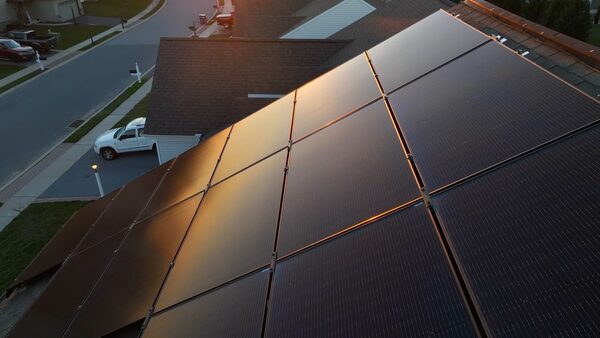
Grid-tied solar does not keep a house running in a power cut. Solar panels switch off automatically during a power cut as a safety feature that prevents electricity being exported to the network, and usually restart on their own once power returns23. Electricity North West states plainly that solar panels will stop working during a power cut for safety reasons30. The Energy Saving Trust states that solar typically cannot power a home during a cut unless the home is off grid or has additional equipment22. Equipment itself should not be damaged: solar panels, heat pumps, EV chargers and batteries should be ready to use again once power is restored23.
During a rota cut specifically, SSEN states that own generation will not be able to export electricity to the wider network at the times when the household is part of the rota6. Where a planned outage letter says a temporary generator will be used, the guidance is to turn solar panels off before the outage and back on once mains power has been restored23.
Other limits worth stating flatly:
- Solar photovoltaic electricity can only be generated during daylight31, so a winter evening rota slot is the worst possible match for unsupported panels.
- Plug-in solar microgenerators cannot at present be legally sold, supplied, or used in the UK due to constraints arising from existing product safety legislation32; current standards only permit solar generation that is permanently connected and wired into the mains rather than plugged into a socket33. Under the current rules, electricity from such kit cannot be stored in a battery and unused power cannot be paid for34.
- UK Power Networks states that it cannot provide individual generators in the event of a national power emergency8.
What does work is equipment designed to run independently of the grid: a battery system configured for backup, a portable power station, or a generator connected through appropriate switching. Those routes are covered in island mode, black start and how backup supplies take over, essential loads and backup circuits, portable power stations and connecting a generator to a house. The independence a rota exposes is not about generating electricity, it is about whether a home can use what it generates when the network is not there.
Northern Ireland: SONI, NIE Networks and the 5% minimum
Northern Ireland runs its own arrangement, with its own trigger, operator and rota. In the event of a shortfall in electricity generation in Northern Ireland, SONI, which is responsible for balancing generation with demand, may instruct NIE Networks to reduce demand through planned emergency power cuts to protect grid integrity18. The plans are drawn up by specialist engineers within NIE Networks and implemented immediately when instructed35.
| Feature | Northern Ireland arrangement |
|---|---|
| Trigger | Shortfall in generation; SONI instructs NIE Networks18 |
| Minimum scale | At least 5% of NI households at once7 |
| Duration | Typically three-hour periods35 |
| Frequency | Around three hours once or twice a day where there is time to implement a rota35 |
| Notice | May take place without warning if immediate demand reduction is instructed22 |
| Rota publication | On the NIE Networks website when a cut starts12 |
| Helpline | 03457 643 64337 |
NIE Networks describes planned emergency power cuts as a form of emergency power cut used in response to a severe shortage of electricity generation in Northern Ireland, switching off supply to groups of customers7. It stresses that they are a last resort and would not affect everyone at the same time19. Charging follows the same principle as in Great Britain: customers are only charged for the amount of electricity they use7.
If power is not restored within an hour of the scheduled time, NIE Networks asks customers to check Power Check for information and report the cut12. Reports can be made through the NIE Networks website, WhatsApp, Facebook, or the helpline on 03457 643 64337. Further detail sits on power cuts in Northern Ireland.
Preparing a household, and the advice not to stockpile electricity

Preparation for a rota cut is mundane and mostly involves things that do not need power. Energy Networks Association advises keeping a mobile phone fully charged so it can be used for updates, keeping a torch handy, keeping warm clothes, blankets and food that does not need heating accessible, and following the network operator on social media for local updates1. SSEN adds keeping a battery-powered radio tuned to a local station, keeping a note of key contacts, checking with neighbours, keeping warm with a thermos flask, and saving work regularly38. NIE Networks adds knowing where the fuse box is, being able to open electric gates, keeping an EV battery charged, and joining the medical care register for those dependent on electricity for medical equipment39.
NIE Networks' preparation advice for planned emergency cuts specifically includes:
- Keep a torch handy in case you are without power during the night40.
- Have warm clothes and blankets accessible in case of a prolonged cut40.
- Open or shut electric gates and access points as appropriate before the cut40.
- Check on elderly or vulnerable neighbours, family and friends and make them aware of the planned cuts40.
During a cut, NIE Networks advises never touching damaged electricity equipment, keeping the freezer door closed, turning off cookers, heaters and sensitive equipment, and leaving one light on so it is obvious when supply returns39. Where a risk to the public exists, such as large downed trees or dangling electrical wires, the number to call is 99941. Broader seasonal preparation is covered in how to prepare your home for a winter power cut.
Living through three hours: food, mobility and the things that stop
Three hours is short enough that most household food is unaffected. Network operator guidance says food should keep for between four and six hours in the fridge and 15 to 24 hours in the freezer if the doors stay closed3. Which? gives the same four to six hours for a fridge as long as doors are kept closed. Smart Energy GB states up to four hours25, and National Grid, citing the Food Standards Agency, also gives up to four hours with the door kept closed as much as possible. The documents differ on the fridge figure between four and six hours; all of them exceed a three-hour cut. In warm weather, Electricity North West puts fridge food at around four hours. More detail sits on power cut food safety.
What stops abruptly is anything mains-powered and mobility-critical: stairlifts, through-floor lifts, electric gates, powered beds, and door entry systems. The advice to open or shut electric gates before a cut exists precisely because they become immovable40. See will my stairlift work in a power cut and will my Wi-Fi work during a power cut.
Where a cut runs long, network operators have welfare arrangements. Electricity North West states that for customers with poor mobility it can provide hot food and drinks, or where appropriate overnight accommodation, if the power cut continues over a long period of time. Those arrangements are described on network operator support schemes.
A rota event is not necessarily a single episode. SSEN notes that, depending on the severity of the situation, power may be interrupted multiple times over the period of the event, which may last several days4. Planning around one three-hour window understates the case if a shortage persists.
Charging, compensation and what is not payable
Two rules govern the money. First, billing: customers will only be charged for the amount of electricity they use3. Nothing is billed for energy not delivered.
Second, compensation. Electricity North West states directly that under Ofgem rules, compensation is not available for an emergency power cut of this nature3. This is the sharpest practical distinction between a rota cut and an ordinary power cut, and it is worth setting the two side by side.
| Situation | Payment |
|---|---|
| Emergency rota disconnection | Not available under Ofgem rules3 |
| Planned cut with no two days' notice, or on a different day from the notice | £4020 |
| Planned and unplanned cuts, businesses | £120 |
| Unplanned cut, more than 5,000 homes affected, off longer than 24 hours | £100, then £45 for every 12 hours after that, to a maximum of £40020 |
| Four or more cuts of three hours or more between 1 April and 31 March | An extra £10020 |
| NIE Networks, supply not restored to standard | £50 for a home, £125 for business premises, then £25 for every 12-hour period after that |
Ofgem's worked examples show how the escalating payments accumulate: a cut of more than 12 hours that is interrupted for 36 hours could attract 2 additional £45 payments, adding up to £90, and a cut of more than 24 hours interrupted for 72 hours could attract 4 additional £45 payments, adding up to £180. Some payments require a claim rather than arriving automatically. Amounts are as stated by the regulator for 2026. Full detail sits on power cut compensation and the Guaranteed Standards of Performance and, for Northern Ireland, power cut compensation in Northern Ireland.
The logic behind the exclusion is that the Guaranteed Standards address failures by a network company. A rota disconnection is not a fault: it is an instructed, correctly executed action. One supplier's guidance makes the same distinction for storms, stating that compensation is not applicable if the outage results from a disturbance in the national energy supply rather than a fault in the network.
What a rota tells a household about its own dependence
A rota disconnection is the clearest available test of how much of a home depends on the network rather than on equipment inside it. Nothing in the arrangement can be negotiated: there is no opt-out, no special treatment, and registration on the Priority Services Register changes support and communication but not whether the supply is switched3. Compensation does not apply3. Solar panels, however large the array, disconnect themselves23.
What remains within a household's control is narrow but real: stored energy that can run without the grid, a defined set of essential loads, and heating that does not fail the moment the meter goes dead, covered in keeping heating running in a power cut and across the wider backup power guidance. Everything else, the timing, the duration, the notice and the order of blocks, is decided elsewhere, and a household's only lever is what it has already installed.
Sources41 cited
- What happens in an energy shortage, Energy Networks Association, 2026-09-17
- Rota load disconnections, National Grid, 2026-09-17
- Emergency power cuts, Electricity North West, 2026-09-19
- Electricity Supply Emergency Code, SSEN, 2026-09-19
- Planned emergency power cuts and blackouts, ScottishPower, 2025-09-26
- Emergency planning portal for residential customers, SSEN, 2026-09-19
- Emergency power cuts, NIE Networks, 2026-09-19
- Make a plan to be winter ready, UK Power Networks, 2026-09-17
- Emergency power cuts, UK Power Networks, 2026-09-17
- What is a block letter and why is it important, NIE Networks, 2026-09-19
- Care and assisted living providers, Energy Networks Association, 2026-09-17
- How do I know if or when my power will be switched off, NIE Networks, 2026-09-19
- Planned emergency power cuts, E.ON Next, 2026-09-17
- Emergency power cuts, Sainsbury's Energy, 2026-09-20
- Emergencies, 100Green, 2026-03-11
- Where can I find my block letter, NIE Networks, 2026-09-19
- Planned work, NIE Networks, 2026-09-19
- Planned emergency power cuts, NIE Networks, 2026-09-19
- How do planned emergency power cuts work, NIE Networks, 2026-09-19
- Get compensation if you have a power cut, Citizens Advice, 2026-09-17
- How we will let you know about planned power cuts, Electricity North West, 2026-09-19
- How much notice will be given, NIE Networks, 2026-09-19
- Solar power facts, Energy Saving Trust, 2026-08-13
- Distribution area search, National Grid, 2026-09-17
- What to do in a power cut, Met Office, 2026-09-20
- Priority Services for customers with hearing loss, SSEN, 2026-09-19
- Home energy support schemes, Cheshire West and Chester Council, 2026-09-17
- General advice for customers, National Grid, 2026-09-17
- Why would emergency power cuts happen, NIE Networks, 2026-09-19
- Planned power cuts, SSEN, 2026-09-19
- Tips to help you during a power cut, Electricity North West, 2026-09-19
- Plug-in solar consultation document, GOV.UK, 2026-06-16
- Six things to know before plug-in solar panels hit the shelves, Citizens Advice, 2026-08-21
- Is there any action I should take in preparation, NIE Networks, 2026-09-20
- Preparing for a power cut, SSEN, 2026-09-19
- Power cut advice, NIE Networks, 2026-09-19
- NIE Networks customer standards, NIE Networks, 2026-09-20
- Standards of performance, National Grid, 2026-09-17
- Extra support for customers with poor mobility, Electricity North West, 2026-09-20
- Plan for a power cut, Ofgem, 2026
- Power cut help and reporting, NIE Networks, 2026-09-20
 Power Cuts in Northern IrelandNorthern Ireland has a single electricity distribution network, run by NIE Networks, and its own reporting number, registers and compensation arrangements.
 Power Cuts in ScotlandWho do you call when the power goes out in Scotland, and how long should it take to come back on?
 Prepare a Home for a Power CutA household checklist for before, during and after an outage: what to keep charged and to hand, which appliances to switch off, how long food stays safe and what to do about medical equipment.
 The Full Backup Power GuideHow long do UK power cuts usually last, and what can keep your fridge, heating or phone going until the power comes back?
 Power Cuts in WalesWho do you call when the power goes out in Wales, and how long should it take to come back on?
 Switch Energy SupplierThe practical sequence of a domestic energy switch: the details and readings needed, the five working day transfer, cooling-off periods, exit fees and the final bill.