
In this answer
Short answer
For a planned power cut, your electricity network operator must give you two days' notice if it intends to cut your supply to do work1. That is the floor set out in consumer guidance, and it applies across Great Britain. SSEN, which runs networks in central southern England and the north of Scotland, states it will aim to provide written notice at least two days before it plans to switch off the power2.
The two-day rule covers planned engineering work. It does not cover an emergency. Where the system operator instructs a network to reduce demand through rota load disconnection, the network itself may receive as little as 30 minutes' notice of the instruction to implement a power cut3. In that situation, customers are told through media and social media channels rather than by post.
So the honest answer is: a few days in normal circumstances, and as little as half an hour when the grid is short. What follows is who plans these cuts, how you are told, and what a household can do before the lights go off.
Who plans and announces a power cut
The company that plans a power cut is your distribution network operator, or DNO. It is the company in charge of the supply to your area, and it is responsible for maintaining the physical electricity supply to your home6. Ofgem's guidance is blunt about the split: a network operator is responsible for the pipes and wires that move energy, and should be contacted about power cuts or connection issues in your area7. Your energy supplier, the company that sends the bill, is a different business entirely.
That distinction matters when something goes wrong. Your network operator is responsible for fixing power cuts and paying you compensation, not the energy supplier1. Complaints about power cuts or connection problems go to the DNO, not to the billing company7.
In Northern Ireland the structure is slightly different. SONI, which balances generation with demand, instructs NIE Networks to reduce electricity demand through planned emergency power cuts when generation is insufficient8. NIE Networks then carries out the disconnection. The same two-day expectation applies to planned work there, and NIE Networks states that customers should receive a postcard giving the times and dates of the planned work9.
If you do not know which company owns the wires to your home, enter your postcode on the Energy Networks Association's find-my-network-operator page, which lists every electricity distribution network operator10. The Energy Ombudsman points people to the same route to identify their network provider11.

How you are told, and how far ahead
Notification is not one method but several, and the lead time varies with the type of work.
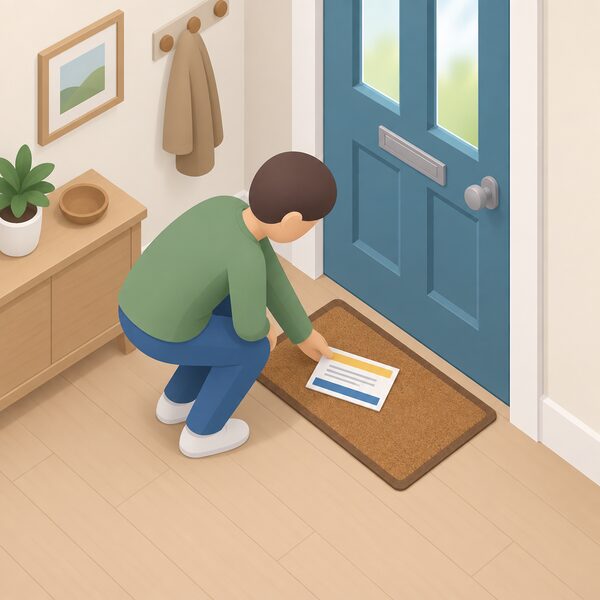
For routine planned interruptions, the standard route is a letter or postcard. NIE Networks states that planned interruptions will be communicated ahead of time via the typical notification letters, with community information events in areas affected9. Electricity North West sends a postcard with details about the planned power cut ten days before, and customers still receive it12. The same operator runs an e-card service that goes out six days before and again one day before the planned cut12.
For its Rising and Lateral Mains programme, Electricity North West notifies customers at least seven days in advance via a letter when a temporary power supply is to be turned off during works13. That is longer than the two-day minimum, and it reflects the scale of the work rather than a different legal duty.
Suppliers and networks use a wider set of channels too: notices, emails, calls, and home visits14.
UK Power Networks: London, the South East and East of England
If you live in London, the South East or the East of England, your distribution network operator is UK Power Networks15. The company covers London, south-east and eastern England, and is listed as the electricity distribution operator for London, South-East England and East Anglia16.
For a power cut, customers in those areas can call 0800 31 63 1054. The free national alternative is 105, which puts you through to your electricity network operator4. UK Power Networks also offers a service telling householders in its area who the current electricity supplier is for their address, which is useful after a move5.
Contact details for non-emergency matters differ by purpose. For its domestic supply move service, UK Power Networks states its team will get back to you within 48 hours17. Other documents give a response time of within five working days, so the two figures disagree and neither has been reconciled.
The Priority Services Register: extra support
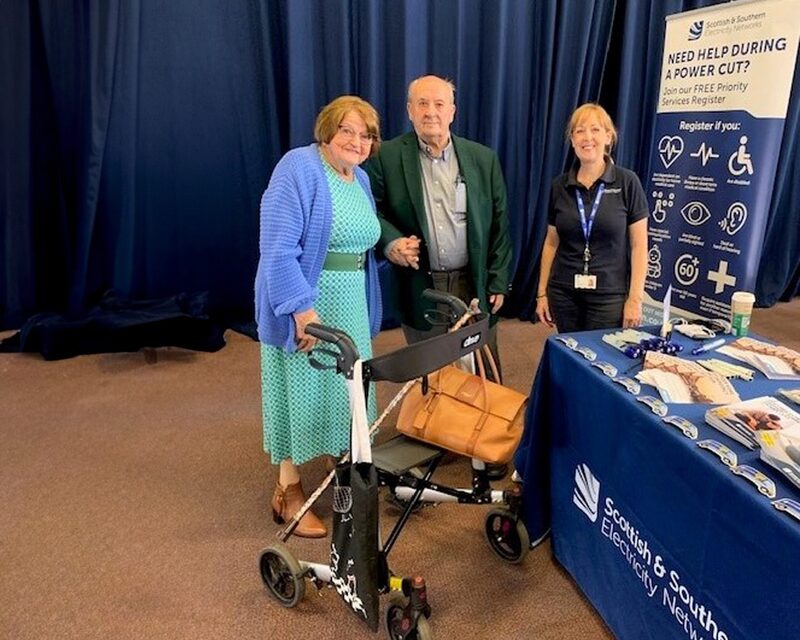
The Priority Services Register is a free service for households that need extra help during an interruption5. It is the main tool a household has for getting earlier warning and practical support.
What it provides, according to the organisations that run and promote it, includes advance notice of planned power cuts, alternative communication formats such as large print or braille, extra support during emergencies, and priority assistance if your energy supply is interrupted18. Cadent's gas version adds a nominated contact who can deal with bills or help in a power cut on your behalf19. SSEN offers advance notice of planned power cuts where possible20, and Smart Energy GB describes the same benefit in terms of advance notice of planned service interruptions and priority in a power cut21.
Local authority guidance adds priority support with heating and cooking facilities if your supply is cut off, advance notice of power cuts, and an identification and password scheme for home visits22. That last point matters: a password scheme lets a householder verify that someone at the door is genuine.
Signing up is done through your energy supplier or your network operator. The register is free, and it is the single step that changes how much notice a vulnerable household actually receives.
Preparing your home for a planned cut
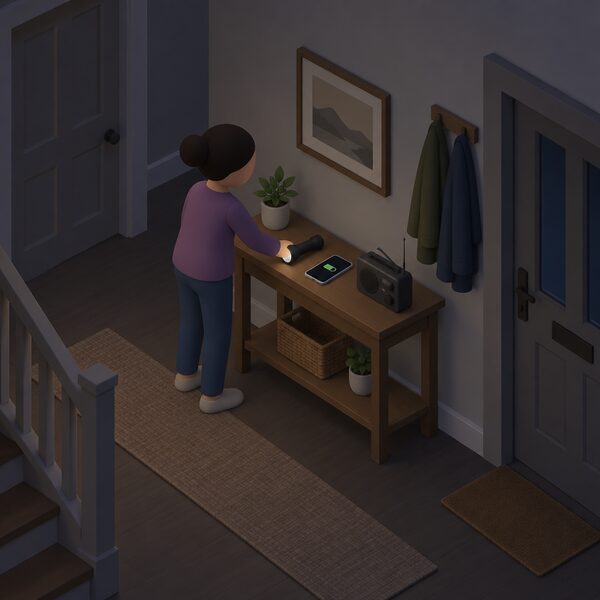
Preparation for a planned cut is mostly about light, warmth, communication and food, and the advice from network operators is consistent.
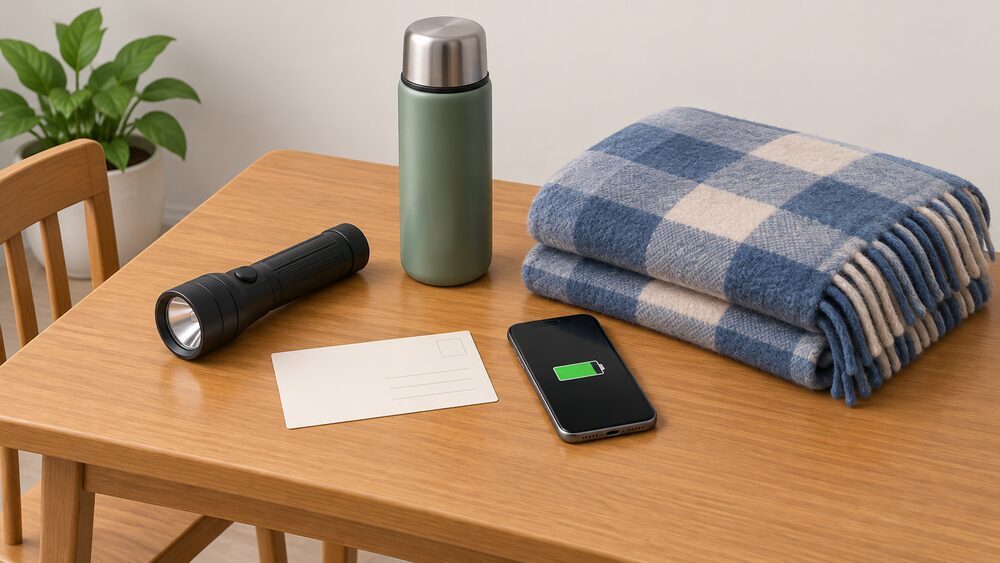
Energy Networks Association guidance is to keep a mobile phone fully charged so it can be used to go online for updates or to call if there is a power cut, keep a torch handy, have warm clothes, blankets and food that does not need heating accessible, and follow your network operator on social media for local updates23. SSEN's list adds a battery-powered radio tuned to a local station, a note of key contacts, checking with neighbours, a thermos flask for warmth, and saving your work regularly24. NIE Networks advises having warm clothes and blankets accessible in case of a prolonged power cut25. Northern Gas Networks keeps the advice short: keep a torch handy in case of power cuts26.
Two further points are worth holding on to. First, check on elderly or vulnerable neighbours, family and friends and make them aware of the planned emergency power cuts25. Second, a smart meter cannot cut off your power; it measures and communicates, and the supply is switched at the network, not by the meter27.
"Keep a mobile phone fully charged so you can use it to go online for updates or call if you have a power cut"
What a planned cut means for household independence
A planned power cut is the clearest demonstration of where a home's electricity actually comes from. The supply is delivered by a distribution network operator, a regional monopoly, and there is no competing wire to switch to. Notice periods, compensation and priority support are all set by that arrangement, not by the household's choice of supplier.
The dependence is real but bounded. A planned cut for engineering work comes with two days' notice and a letter1. An emergency rota cut can arrive with as little as 30 minutes' notice to the operator, and customers learn about it through broadcast and social channels3. The Priority Services Register is the one lever a household can pull in advance, and it is free5. Beyond that, the practical independence available to a home is a charged phone, a torch, a battery radio and a plan for warmth and food23.
For the wider picture of how the grid is balanced and what happens when generation falls short, see electricity margins and supply shortfalls and NESO winter outlook. The companies that own the wires are covered in electricity distribution networks and who is my distribution network operator.
Sources27 cited
- Get compensation if you have a power cut, Citizens Advice, 2026-09-17
- Planned power cuts, SSEN, 2026-09-19
- Emergency power cuts, Electricity North West, 2026-09-19
- What is 105, UK Power Networks, 2026-09-17
- What's the difference between you and my electricity supplier, UK Power Networks, 2026-09-17
- Complain about your energy supplier or network operator, Ofgem, 2026-08-26
- Complain about your energy supplier or network operator, Ofgem, 2026
- Why would emergency power cuts happen, NIE Networks, 2026-09-19
- How will it impact me, NIE Networks, 2026-09-19
- Find my network operator, Energy Networks Association, 2026-09-17
- Network operators, Energy Ombudsman, 2026-09-20
- E-card for planned power cuts, Electricity North West, 2026-09-20
- Rising and lateral mains, Electricity North West, 2026-09-19
- Response to DCC out-of-region communications hub installations, Citizens Advice, 2026-05-12
- Who supplies my electricity and gas, Uswitch, 2026-06-29
- How to move your gas or electricity meter, Uswitch, 2026-09-04
- Move, UK Power Networks, 2026-09-17
- Support for those on prepayment meters, British Gas Energy Trust, 2026-07-07
- Priority Services Register, Cadent Gas, 2026-09-20
- Priority Services: dementia, SSEN, 2026-09-19
- Smart meters and carers, Smart Energy GB, 2026-08-19
- Support schemes, Cheshire West and Chester Council, 2026-09-17
- What happens in an energy shortage, Energy Networks Association, 2026-09-17
- Preparing for a power cut, SSEN, 2026-09-19
- Is there any action I should take in preparation, NIE Networks, 2026-09-20
- Staying safe and warm this winter, Northern Gas Networks, 2025-11-03
- Can a smart meter cut off power, Smart Energy GB, 2026-04-24
 Rota Power Cuts ExplainedIf electricity runs short, could your home be switched off for three hours at a time?
 Prepare a Home for a Power CutA household checklist for before, during and after an outage: what to keep charged and to hand, which appliances to switch off, how long food stays safe and what to do about medical equipment.
 Power Cuts in WalesWho do you call when the power goes out in Wales, and how long should it take to come back on?
 Power Cuts in ScotlandWho do you call when the power goes out in Scotland, and how long should it take to come back on?
 The Full Backup Power GuideHow long do UK power cuts usually last, and what can keep your fridge, heating or phone going until the power comes back?
 New Electricity ConnectionWho do you contact for a new or upgraded electricity connection, and what will it cost?