
In this answer
Short answer
Your gas and electricity network operator is the company that owns and maintains the wires and pipes delivering energy to your home. It is not the company you pay. Energy network operators manage and maintain the wires, pipes and other infrastructure which delivers electricity and gas to your home, business and community, and they are different to your energy supplier: you do not pay your bill to them1.
To find yours, enter your postcode into the Energy Networks Association's find my network operator tool, which identifies your electricity distribution network operator2. For gas, the Find My Supplier service reveals who supplies your gas along with your MPRN number and your gas transporter3. Both lookups take a postcode and nothing else.
The distinction matters because the two companies do different jobs. A network operator is responsible for the pipes and wires that move energy, and should be contacted about power cuts or connection issues in your area4. Your supplier is responsible for your meter and any faults with it5. In a power cut, call 105 free of charge and you will be put through to your electricity network operator6. If you smell gas, call 0800 111 999 immediately7.
Who your network operator is, and why it is not your supplier
The network operator and the supplier are separate businesses with separate duties, and the split runs through every household's energy arrangements. Energy network operators own and run the pipes and wires that carry gas and electricity to your home, and they are different to your energy supplier: you do not pay your bill to them1. A gas distribution network operator is likewise different and separate to your energy supplier9.
The practical test is who you pay and who you call. Your gas supplier, the company you pay your gas bill to, is responsible for your meter and any faults with it5. The network side is responsible for the pipes and wires that move energy, and should be contacted about power cuts or connection issues in your area4. Northern Gas Networks states plainly that it is not a gas supplier10.
Ownership of the networks is concentrated. Cadent Gas Ltd, Northern Gas Networks Limited, SGN and Wales & West Utilities Limited are the gas distribution network operators8. The exception on the gas side is gas transmission, which is owned and operated by National Grid Gas8. On electricity, there are 14 operators, and the actual operator is determined by where you live3.
That structure has a consequence for households. Switching supplier changes who bills you, not who owns the cable or pipe outside. Ofgem's guidance on switching lists the information a household needs to change supplier: your postcode, the name of your current supplier, the name of your current tariff, the amount you pay per unit in kilowatt hours, and the amount of energy you use each year11. None of that alters the network.
Finding your electricity network operator by postcode
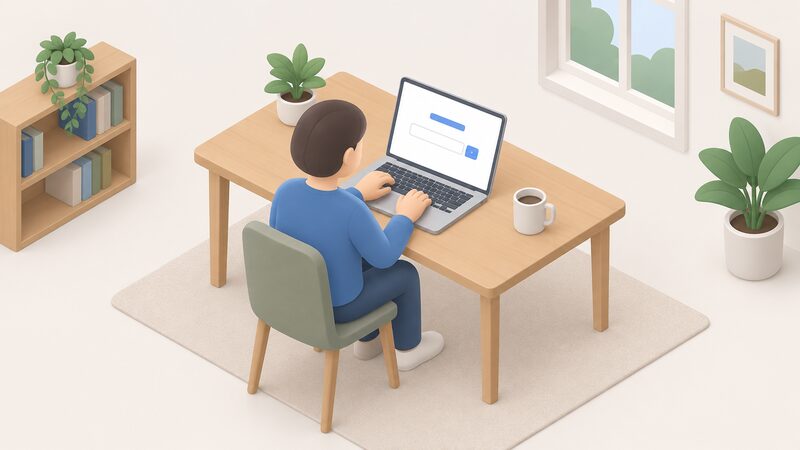
The electricity lookup is the simpler of the two. Enter your postcode on the Energy Networks Association page to find out who your electricity distribution network operator is2. The same tool is the route the Energy Ombudsman points to: you can find out who your network provider is via the Energy Networks Association website13. The Met Office directs households to the same place, noting that details for all the electricity Distribution Network Operator companies are available through the Energy Networks Association14.
There is a second route that does not need a lookup at all. The code on your electricity bill contains a Distributor ID number, which can help you find which network operator looks after your connection1. That is useful when a postcode sits near a boundary between two operators, or when a new build has not yet settled into the usual records.
Your Meter Point Administration Number is the other identifier worth knowing. It is the unique identifier for your electricity supply point15. Suppliers use it to identify the property, and it sits alongside the Distributor ID on the bill.
Finding your gas network by postcode
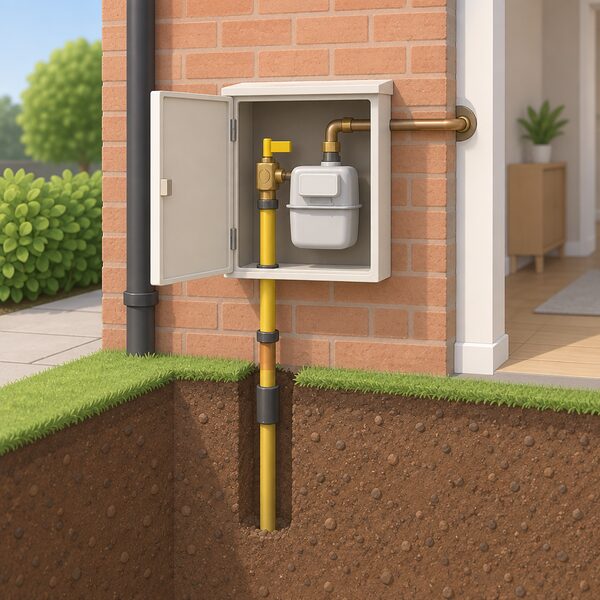
Gas works differently, because the question "who supplies my gas" and "who transports my gas" have different answers. The Find My Supplier service can be used to discover who supplies your gas, as well as your MPRN number and gas transporter3. The MPRN can be found on your gas bill or by using the Find My Supplier search tool16.
A gas transporter is the company that physically distributes the gas to your home, and it is also responsible for maintaining the pipes to your property16. That is the gas equivalent of the electricity distribution network operator, and it is the body to contact about the pipework rather than the meter.
For new connections, the gas distribution networks run their own application routes. Northern Gas Networks accepts applications through an online postcode lookup, by telephone, or by downloadable PDF forms17. That is a connection process rather than an identity check, but it uses the same postcode logic: the network that serves an address is fixed by geography.
In Northern Ireland the electricity picture differs again. NIE Networks allocates a block letter, which can be found by entering your postcode on its Block Map18. The block letter is based on where you live and how your electricity is supplied18. It matters because it determines the rota a household falls into if power sharing is needed.
What your network operator is responsible for, and what it is not
The responsibilities divide cleanly once the two roles are separated. A network operator is responsible for the pipes and wires that move energy4. It is your electricity Distribution Network Operator that is responsible for maintaining physical electricity supplies to your home or business14. On the gas side, the transporter maintains the pipes to the property16, while your gas supplier is responsible for your meter and any faults with it5.
Compensation sits with the network, not the supplier. Your gas or electricity network operator is responsible for fixing power cuts and paying you compensation19. That is a meaningful distinction for a household: a long outage is a network failure, and the payment route runs through the operator.
Complaints follow the same split. Contact your network operator if you have a power cut or connection issues in your area20. Where a household needs to escalate, the Energy Ombudsman handles network operators as well as suppliers13.
| Question | Who deals with it |
|---|---|
| Power cut or outage | Electricity network operator4 |
| Damaged cable or connection issue | Network operator4 |
| Meter fault | Gas or electricity supplier5 |
| Gas pipe to the property | Gas transporter16 |
| Compensation after a long outage | Network operator19 |
Power cut or gas emergency: who to contact and when
The power cut number is the same across Great Britain. Calling 105 is free and puts a household through to its electricity network operator6. National Grid lists 0800 6783 105 or 105 for power cuts and emergencies22, and states that in an emergency the number is 10523. Electricity North West asks households affected by flooding to make contact on 105 or report a power cut so it can carry out a safety check24.
The gas emergency number is equally uniform. If you smell gas, call 0800 111 999 immediately7. The National Gas Emergency Service operates day or night25. The number is the same whichever gas transporter serves the property, which is why identifying the transporter can wait until after the call.
There is a separate service for planned disruption in Northern Ireland. If power sharing is needed, the rota and what it means can be found at www.powercut105.com by entering your postcode, which shows your block letter and when you will lose electricity26. Power Cut 105 exists to find out which local electricity network you are connected to by entering your postcode27.
Why knowing your network matters for household energy independence

Knowing which network serves an address is the first step in understanding what a household controls and what it does not. The network is the part of the energy system a home cannot choose, cannot switch and does not pay directly. Energy network operators manage and maintain the wires, pipes and other infrastructure which delivers electricity and gas to your home, business and community1, and they are different to your energy supplier: you do not pay your bill to them1.
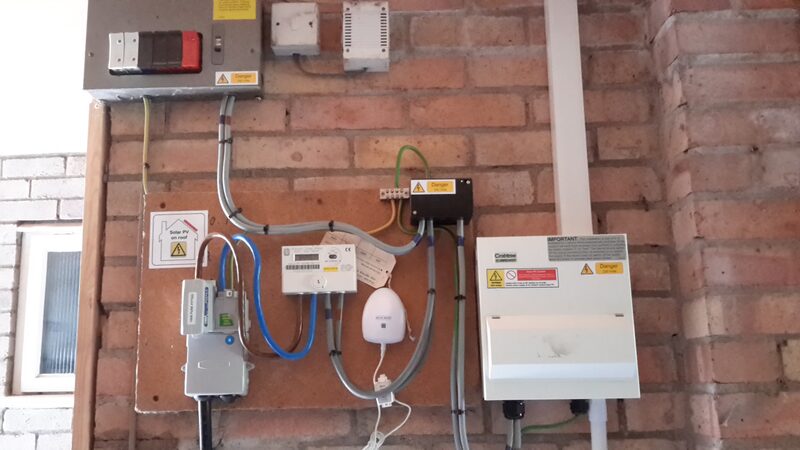
That has a direct bearing on self-generation and electrification. NIE Networks asks households to inform it before installing electric vehicles or heat pumps, because these appliances use a lot more electricity than most, and several unreported installations in the same area can put pressure on the local network28. A household adding a heat pump or an EV charger is therefore interacting with the network, not just the supplier, and the notification requirement exists because local capacity is shared.
The same logic applies to resilience. Utility networks are responsible for ensuring that communities have access to safe and efficient utility supplies, and a cross-utility study covers gas, electricity, water and communications29. Households in vulnerable circumstances can be recorded on the Priority Services Register, which spans suppliers, the network companies who transport energy to your home, and meter operators12. In Northern Ireland, where a consumer needs alternative forms of communication, the electricity or gas supplier or NIE Networks will provide this free of charge30.
The dependence that remains is structural. A grid-connected home relies on the network for import and export, on a supplier for billing and metering, and on the gas transporter for the pipe to the property. What a household can do is know which body to call, register for priority support where eligible, and notify the network before adding large electrical loads. For the wider picture of where supply comes from and how the network is governed, see UK energy supply and electricity distribution networks.
Sources30 cited
- Find my network operator, Energy Networks Association, 2023-09-29
- Customers, Energy Networks Association, 2026-09-17
- Who supplies my electricity and gas?, Uswitch, 2026-06-29
- Complain about your energy supplier or network operator, Ofgem, 2026
- Emergency engineer visit, Cadent Gas, 2026-09-20
- Check if you can get payment for a power cut, Ofgem, 2026
- FAQs and guidance, Northern Gas Networks, 2025-10-30
- Energy terms explained, Ofgem, 2026
- Disconnecting from the gas network, IGEM, 2026-09-20
- Will my gas supply be cut off?, Northern Gas Networks, 2024-10-02
- Switch your home energy supplier, Ofgem, 2026
- PSR promise and keeping your data safe, UK Power Networks, 2026-09-17
- Network operators, Energy Ombudsman, 2026-09-20
- What to do in a power cut, Met Office, 2026-09-20
- Domestic and homeowners, NESO, 2026-09-17
- Who is my gas and electricity supplier?, Confused.com, 2026-07-03
- Apply now, Northern Gas Networks, 2026-09-17
- Where can I find my block letter?, NIE Networks, 2026-09-19
- Get compensation if you have a power cut, Citizens Advice, 2026-09-17
- Complain about your energy supplier, Ofgem, 2026
- What can I do to keep my bills down?, Northern Gas Networks, 2024-10-02
- Entering premises guide for customers, National Grid, 2026-09-17
- GSOP 2, National Grid, 2026-09-17
- Flooding advice, Electricity North West, 2026-09-19
- Staying safe this winter, IGEM, 2025-11
- Emergency power cuts, UK Power Networks, 2026-09-17
- Power Cut 105, Power Cut 105, 2026-09-17
- Why you need to inform NIE Networks, NIE Networks, 2026-09-19
- Customers in vulnerable situations and community resilience, National Energy Action, 2024-01-31
- Code of Practice for Consumers in Vulnerable Circumstances, Utility Regulator, 2025
 Who Supplies Your Energy?Not sure who bills you for gas or electricity?
 The Full Energy Suppliers GuideWho the UK's domestic gas and electricity suppliers are, how the market is structured across Great Britain and Northern Ireland, what a supplier is licensed and obliged to do, how the price cap limits bills, what happens when a supplier fails, and who regulates it all.
 Who to Call for Energy HelpA single reference to the right contact for each situation: gas escapes, power cuts, water leaks, meter faults, billing disputes, scams and free advice.
 The Full Where Our Energy Comes From GuideWhere does the gas in your boiler and the electricity in your sockets actually come from?
 Gas Distribution NetworksWho actually owns the pipes under your street, and who do you call when gas smells or the supply fails?
 The Full Rules and Regulation GuideConfused about who actually decides what you pay for gas and electricity, or why rules differ in Scotland and Wales?