
In this guide
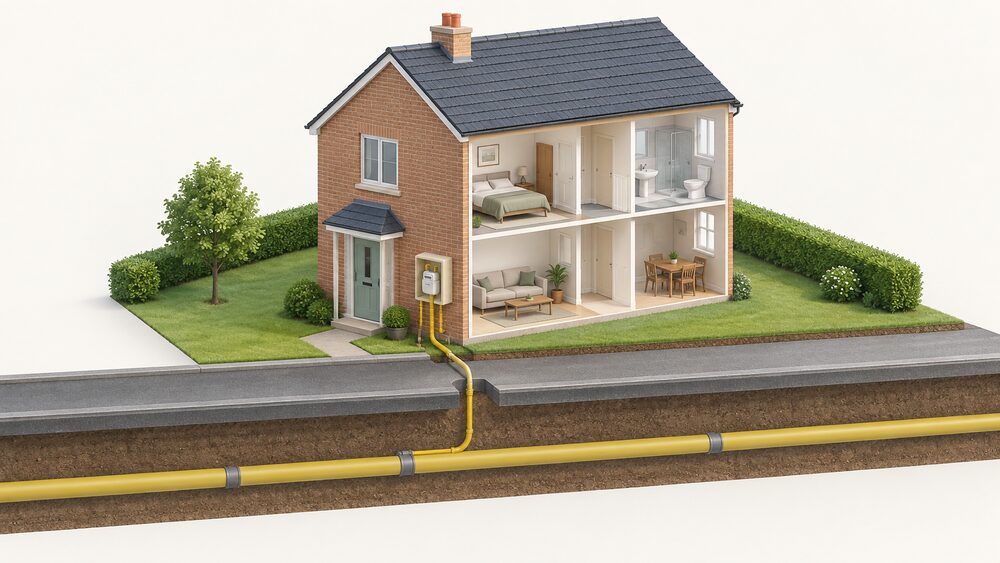
Wales & West Utilities owns and maintains the physical gas pipes and infrastructure across its network area, and does not bill customers for the gas they use1. It is the gas emergency and pipeline service for the whole of Wales and the South West of England, delivering energy to over 7.5 million people through an underground network of more than 35,000 kilometres of pipes2. It connects around 5,000 homes and businesses to the gas network every year1.
For a household, the distinction that matters is between the pipe and the bill. Wales & West Utilities is the gas transporter: it moves gas, responds to emergencies, replaces ageing mains and issues the Meter Point Reference Number that identifies a supply point. The company that sells the gas and sends the bill is a separate supplier, and the two are frequently confused. A new gas connection for a house or small business starts from £3,912 plus VAT, and a standard connection typically takes 6 to 8 weeks from payment to completion4.
What Wales & West Utilities does: the pipes, not the bills
Wales & West Utilities describes its role plainly: it "owns and maintains the physical gas pipes and infrastructure across our network area, we don't bill customers for the gas they use"1. That single sentence separates it from every energy supplier a household deals with. The company is one of the four gas distribution network operators in Great Britain, alongside Cadent Gas Ltd, Northern Gas Networks Limited and SGN7. Ofgem lists Wales & West Utilities Limited as the transporter for Wales and South-West England7.
The services it offers a household are specific: requesting a new gas supply, making changes to an existing supply such as moving a pipe for an extension, altering the location of an existing gas meter, and disconnecting a supply that is no longer needed1. It does not install gas meters, which must be arranged with a gas supplier, and it is not authorised to repair appliances, though it will explain what to do next3.
That boundary is the household's first point of independence and dependence. The pipe network is a monopoly: there is one transporter for the area and no choice in who maintains the connection. The supplier, by contrast, is a market choice. A household can switch supplier without any change to the pipes, and the transporter's charges reach the home through the supplier's bill rather than directly. The physical connection to the gas grid is therefore a fixed dependence, while the commercial relationship on top of it is not.
Network area and scale: Wales, the South West and 35,000 km of pipes
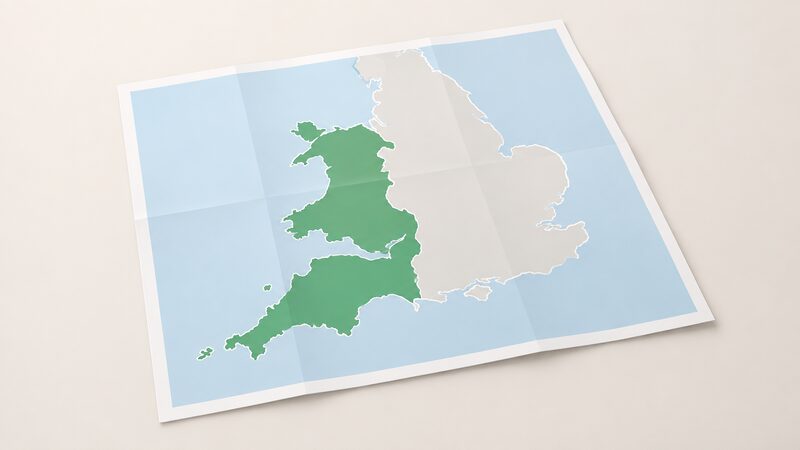
The network covers the whole of Wales and the South West of England, and the company's scaled plans of the gas distribution network cover the same area1. It brings energy to 7.5 million people across the south west of England and Wales, and its operations include a base at Cullompton, from which it completes around 4,500 repairs and upgrades more than 3,000 metres of gas pipes a year while responding to over 25,000 gas emergency calls annually9.
The scale is worth holding alongside the demand it serves. Gas use in Wales in 2020 was 14.9 TWh for domestic purposes and 9.7 TWh for non-domestic use10. That domestic figure is the heating and hot water load of Welsh homes, and it moves through the pipes Wales & West Utilities maintains. The network is not a generation asset or a storage asset; it is the delivery layer between the national transmission system and the meter.
For a household, the network's extent has one practical consequence: the same company handles connections, meter moves, pipe diversions and emergencies across a very large area, so the process and the published prices are consistent whether the property is in Pembrokeshire, Cardiff, Bristol or Cornwall. What varies is workload. The company states that a connection can take up to 12 weeks depending on workload in the area and other factors, against the standard 6 to 8 weeks3.
Getting a new gas connection: cost, timescale and what's involved
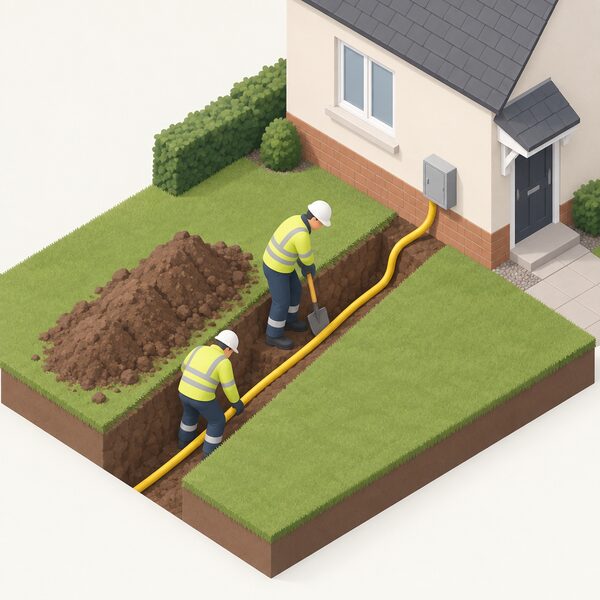
A new gas connection for a house or small business starts from £3,912 plus VAT4. The exact price depends on factors like the distance from the existing gas main and any groundworks needed, so the online figure is a starting point rather than a quote4. Once payment is made, a standard connection typically takes 6 to 8 weeks to complete4. The company's own guidance elsewhere puts the same 6 to 8 week window on a standard new connection, measured from the point payment is made to the work being completed1.
The process has a sequence a household can plan around. A quote is arranged by contacting the company on Freephone 0800 912 29993. Where the connection crosses land the household does not own, consent from the landowner is required, and the company states it cannot do any work until these permissions are received3. Once the connection is paid for, Wales & West Utilities issues a Meter Point Reference Number, the identifier a supplier needs to open an account3. The meter itself is not installed by the network: that is arranged with a gas supplier3.
There are four places a meter box can go: surface mounted, built in, Unibox or internal entry, and the cost is the same irrespective of which meter box is chosen3. A two-person team carries out the work3. If a visit cannot proceed for reasons within the customer's control, a fee of £40 plus VAT per visit applies3. Road closures need at least three months advanced notification to the local council before work starts3.
For a business or multiple homes, the route differs: the company provides tailored pricing on 0800 072 6814, and larger or multi-unit jobs are quoted individually once the scale of the work is understood4.
Moving or altering a meter and supply pipes
Moving a domestic gas meter starts from £1,000 plus VAT, and only Wales & West Utilities, or an approved contractor working on its behalf, can move a gas meter5. An independent guide states that the cost of moving a gas meter starts at £1,200, so the two figures differ and the network's own starting price is the lower of the two11. The work typically takes 6 to 8 weeks from payment to completion, in the same way as a new connection5. For business premises or multiple homes, the £1,000 plus VAT starting price still applies as a baseline, and where several meters are involved the company provides a bespoke quote covering meter moves across the whole site rather than pricing each one individually5.
Gas meters can only be moved or removed by the energy supplier or Wales & West Utilities, never independently, for safety and regulatory reasons1. Moving a meter outside is a common reason customers make contact, and it is possible in many cases subject to an assessment of the property and pipework5. An engineer attending to move a meter for a supply alteration has a 4-hour appointment slot3.
Two conditions catch households out. First, if an extension affects the existing gas supply pipe, a pipe alteration is likely needed before work can safely proceed5. Second, altering the supply pipe and moving the meter may result in loss of the meter's wireless connectivity, which the supplier may need to re-establish, possibly at a cost to the customer12. Where the network replaces a gas supply, it may also need to reposition the gas meter13.
Disconnection is the mirror service. Wales & West Utilities does not charge for the meter removal part of the process14. If a meter has not been replaced within 12 months of removal, the company will get in touch with the property owner and may assess whether the pipe itself should come out too14.
Digging near gas pipes: safety distances, plans and the law
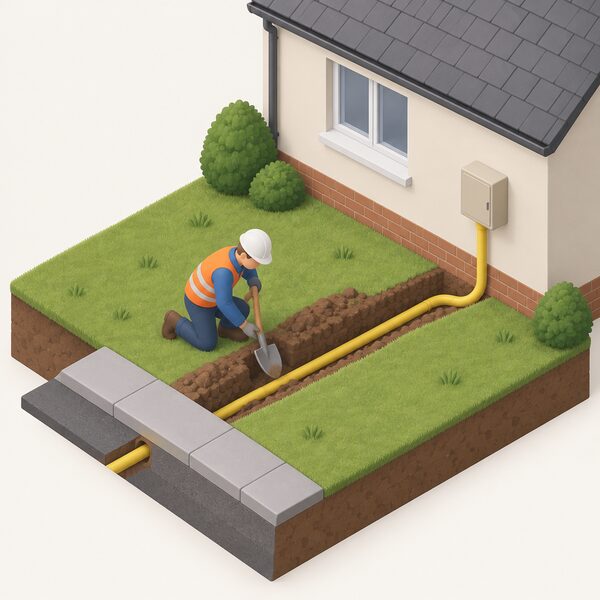
Anyone digging or building near a gas pipe needs to check for its location first, which is a legal requirement, and damaging a live pipe is a criminal offence14. The company states that damaging a gas pipe is a criminal offence5. The main legal frameworks are the Health and Safety at Work Act 1974, the Pipeline Safety Regulations 1996, and, for professional contractors, the CDM Regulations 20158. Failing to check before excavating near the gas network can breach the Health and Safety at Work Act 1974 and the Pipeline Safety Regulations 1996, and employers also have obligations under the CDM Regulations 20156.
The distances are specific. Excavation within 10 metres of above-ground gas installations or pipes requires consultation with the company first8. Piling, boring, welding, hot works and directional drilling each require a 15 metre exclusion8. Explosives require 250 metres8. Mains gas pipes are typically buried between 375mm and 750mm deep, though this varies depending on the type of pipe and its age, and service pipes can be shallower6.
Plans are a starting point, not a guarantee. The company's plans show approximate locations only, and individual service pipes to properties are not shown6. A household or contractor can request them by calling the Plant Protection team on 029 2027 8912 or emailing dig@wwutilities.co.uk6.
"our plans show approximate locations only and individual service pipes to properties are not shown"
The pipe replacement programme and what it means for your supply
The replacement programme is part of a larger 30-year programme that began in 2002 and is a requirement of the Health and Safety Executive13. The company is replacing ageing mains and service pipes with longer-lasting plastic pipes13. The work is described as essential, carried out to make sure an area continues to have a safe and reliable gas supply13. Every week, the company states, it is investing millions to make the gas network more reliable and ready for the future13.
For a household, the practical effects are three. The supply may be interrupted while the pipe is replaced, and to turn the gas supply back on the company needs access to the property; gas appliances cannot be used until safety is confirmed13. If a fault is found, the supply cannot be reconnected until a Gas Safe engineer has carried out checks13. And where the network replaces a gas supply, it may also need to reposition the gas meter13.
The reinstatement commitment is worth knowing. The company states it will fill in holes dug on customer property and replace the patch removed with turf, seed, tarmac or paving within five working days13. During the works, an adult aged 18 or over needs to be at the property all day to let the team in13.
The programme is also the clearest expression of the network's long-term bet. Replacing metal with plastic extends the life of a system that carries fossil gas today but is designed to remain in service for decades. That is a commitment to the pipe as an asset, and it keeps the household on the gas grid rather than moving it off.
Hydrogen and biomethane: where the network is heading
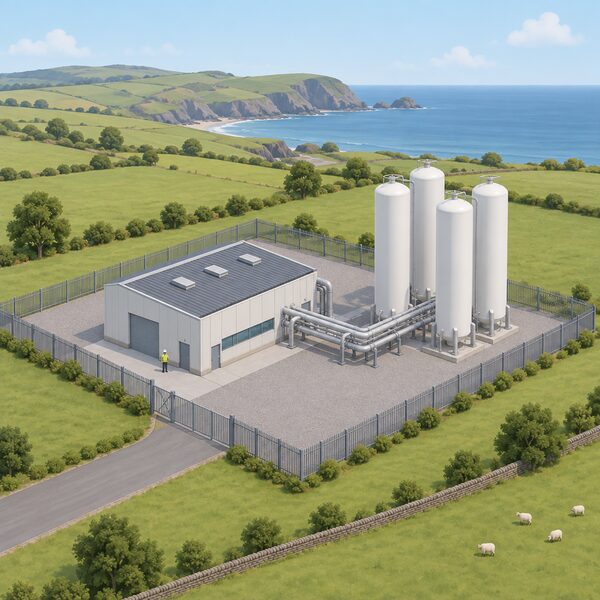
Wales & West Utilities set out plans for hydrogen infrastructure across Devon and Cornwall at the South West Business Council Spring Conference in May 2026, presenting the HyLine South West hydrogen feasibility study9. The direction of travel in Welsh policy is set out separately. The Welsh Government's hydrogen pathway contains ten key objectives which aim to add momentum to the Welsh hydrogen sector15. A Welsh Government objective was establishing a 10 MW renewable hydrogen production facility by 202415. Welsh Government guidance states that hydrogen may start to take the lead as the most effective way to decarbonise heavy duty vehicles after 203016.
The wider energy picture in Wales is one of rising electricity demand, which the Welsh Government states is projected to increase17. Gas use in Wales in 2020 was 14.9 TWh domestic and 9.7 TWh non-domestic10. The devolution boundary matters here: heat and cooling networks, but not the regulation of them, and schemes providing incentives to generate or produce heat or cooling from sources other than fossil fuel or nuclear fuel, together with the encouragement of energy efficiency otherwise than by prohibition or regulation, are devolved matters to Wales18. In Wales heat networks are devolved, but regulation of heat networks is reserved to the UK Parliament19.
For a household, hydrogen blending in the existing network is a change to the fuel mix in the pipes, not a change to the connection. It does not make a home independent of the grid or of a supplier. Biomethane and hydrogen both keep the household on a delivered-fuel model, with the same transporter and the same billing relationship.
Contacting Wales & West Utilities: who to call for what
The company publishes a distinct number for each job, and using the right one avoids a misdirected call.
| What you need | Contact |
|---|---|
| Gas emergency, smell of gas | 0800 111 9996 |
| New gas connection quote | Freephone 0800 912 29993 |
| Customer service, meter box delivery or collection | 0800 0726 8143 |
| General customer service | 02921 678 455 or Freephone 0800 912 29993 |
| Business or multiple homes connections | 0800 072 68144 |
| Changes, meter moves, enquiries | 0800 072 68145 |
| Plant protection, digging near pipes | 029 2027 8912 or dig@wwutilities.co.uk6 |
| Pipe diversions | diversionrequests@wwutilities.co.uk5 |
| Automated card payment | 029 202789913 |
| Finding your gas supplier | 0870 608 152412 |
The customer service email address is enquiries@wwutilities.co.uk13. For a pipe diversion, the company asks for detailed plans by email before work starts, will confirm within 21 working days whether a diversion is needed and its cost, and will usually start work 100 working days after payment, though complicated projects may take longer5. Because every diversion is different, the company provides a bespoke quote once it understands the scope of work5.
To identify a gas supplier, the Find My Supplier service requires only a postcode and reveals the supplier, the Meter Point Reference Number and the gas transporter20. The Meter Number Helpline on 0870 608 1524 does the same12.
Where the network's role ends
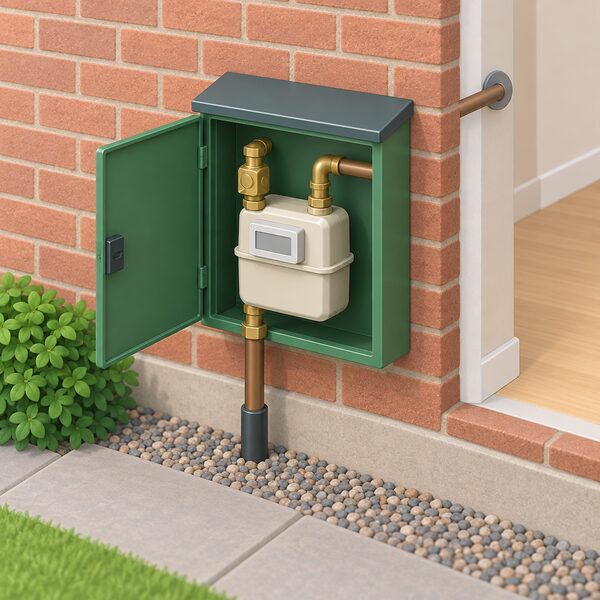
Wales & West Utilities is a pipe company, and the limits of its role are as important as its services. It does not sell gas, does not bill for it, does not install meters and is not authorised to repair appliances1. It cannot move a meter independently of the supplier relationship, and it cannot reconnect a supply after a fault until a Gas Safe engineer has carried out checks13.
The dependence a household retains is structural. A home connected to the gas grid depends on the transporter for the pipe, on a supplier for the fuel and the bill, and on the national transmission system and imports for the gas itself. The network's replacement programme, its hydrogen feasibility work and its investment keep that chain in place rather than shortening it. What a household controls is the supplier choice, the timing of connection or alteration work, and the decision whether to remain on gas at all. Welsh Government support for heating changes sits outside the network: the Nest scheme funds replacement of a boiler or electric storage heaters to ensure a safe and reliable heating system, and Green Homes Wales offers project cost top-up funding alongside a Boiler Upgrade Scheme grant for heat pump technology, supply and fitting, and associated pipework and radiator costs21. The Boiler Upgrade Scheme applies to England and Wales23.
Sources23 cited
- Gas connections, Wales & West Utilities, 2026-09-20
- Pembrokeshire FRAME energy support, Wales & West Utilities, 2026-08-05
- Connections FAQ, Wales & West Utilities, 2026-09-20
- Connect, Wales & West Utilities, 2026-09-20
- Make changes, Wales & West Utilities, 2026-09-20
- Dial Before You DIG, Wales & West Utilities, 2026-09-20
- Energy terms explained, Ofgem, 2026
- Can you dig it, Wales & West Utilities, 2026-09-20
- New Cullompton base, Wales & West Utilities, 2025-08-04
- Energy use in Wales, Welsh Government, 2022-06
- How to move your gas or electricity meter, Uswitch, 2026-08
- Smart meters, Wales & West Utilities, 2026-09-20
- Domestic customers FAQs, Wales & West Utilities, 2026-09-20
- Disconnect, Wales & West Utilities, 2026-09-20
- Energy generation in Wales 2021, Welsh Government, 2022-12
- Electric vehicle charging strategy Wales, Welsh Government, 2021-03
- Energy generation and energy use in Wales, Welsh Government, 2026-03-18
- Tackling fuel poverty outcome summary, Welsh Government, 2021-04
- Heat networks in Wales, House of Commons Library, 2026
- Who supplies my electricity and gas, Uswitch, 2026-06-29
- Get help with unexpected costs, Welsh Government, 2026-04-15
- Green Homes Wales, Development Bank of Wales, 2026-09-17
- Evaluation of the Boiler Upgrade Scheme 2025, UK Government, 2026-01-21