
In this guide
A new gas connection is arranged with the gas distribution network that owns the pipes in your region, not with an energy supplier. The household applies online, the network quotes, and the work is carried out by the network or its contractor. SGN emails a quote immediately for a standard connection1, and for most jobs sends a quote straight away2. Cadent offers a pricing tool that gives an indicative cost of a standard domestic new connection in your area along with current delivery timescales3.
The headline figures are these. A standard new gas connection typically takes 6 to 8 weeks from the point payment is made to the work being completed4, and Cadent gives the same average from payment3. SGN's published standard estimates are £3157 plus VAT in Scotland, £3336 plus VAT inside the M25 and £3198 plus VAT outside it where SGN digs the trenches, falling to £2526, £2669 and £2559 plus VAT where the householder digs them1. Where the main is some distance from the property, or the job is not standard, the price is quoted for that property and no published range applies.
What a connection buys is a supply of natural gas delivered by a network the household does not own and cannot substitute. It removes the need for delivered fuels and for storage on site, and it adds a standing charge, network costs and a supplier relationship that remain for as long as the meter is in place. The sections below set out the process, the regional differences, the VAT position, the timescales and what the direction of gas policy means for a household deciding whether to connect at all.
How to apply: start with an online quote
Every network in Great Britain runs the same first step. You can apply online to get a quote for a new household gas connection, alteration or disconnection7, and SGN's own process page says simply to apply online for a quote2. Northern Gas Networks also accepts applications by postcode lookup, by telephone, or on downloadable PDF forms8. SGN's standard domestic application covers any single domestic property; business premises, multiple properties, or one property needing multiple connections must use the commercial application form instead1.
Have the details ready before starting, because an incomplete application delays the quote. Cadent asks for the full address, the property owner's full name and telephone number, the meter position, whether there is private land between the property and the nearest footpath or road, and the distance in metres from the gas meter to the property boundary. For new builds it also wants approved planning permission and site plans3. Northern Gas Networks cannot provide a quotation without accurate hourly gas load details, which it needs to size the pipework correctly8.
Once a quote is accepted, payment is made online. SGN accepts credit card, debit card or PayPal2. Cadent allows up to 90 days to send in a signed acceptance and pay for the works3. After payment, SGN provides a Meter Point Reference Number to help arrange the meter installation2, and Cadent calls the week before works are due to start to make sure everything is ready3.

Who provides the connection: the gas distribution network in your region
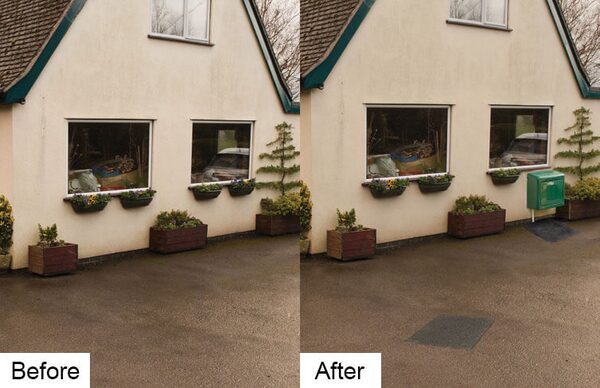
The connection is built by the gas distribution network for the area, and the household has no choice of provider for that part of the work. SGN Connections provides new gas connections for residential and business customers, and also moves gas meters, alters gas pipes and disconnects properties from the mains7. Wales & West Utilities offers the same set of services: requesting a new gas supply, making changes to an existing supply such as moving a pipe for an extension, altering the location of an existing gas meter, and disconnecting a supply no longer needed4. Cadent runs a household new connection service with its own pricing tool and lead times3.
Where a property is not connected to gas or electricity mains, the route is to request a connection from a gas transporter or distribution network operator, and there will be a charge9. Multiple new connections can also be undertaken by Independent Gas Transporters, which are able to build and operate their own networks10. For a single house the practical answer is the regional network; for a development, an independent transporter may be involved.
The regional split matters because prices, lead times and contact routes differ. SGN covers Scotland and southern England, and its published estimates and lead times are given separately for Scotland, for southern England inside the M25 and for southern England outside it1. Northern Gas Networks covers its own region and requires the applicant to have permission for a new gas connection to be installed8. In Northern Ireland the picture is different again: not all areas are connected to the gas network, urban and suburban areas tend to be well served, and many rural and western parts have limited or no access11. A household in those areas may find that no connection is available at any price.
VAT on your gas bill: how it is applied
VAT sits at two points in this process and they are not the same. On the connection itself, the published network prices are quoted exclusive of VAT. SGN's standard estimates are shown as plus VAT1, and Ofgem's benchmark maximum charges state that all values are exclusive of VAT, which is applied by suppliers to consumers' bills13. A household comparing a quotation with a budget should treat the plus VAT figure as the one that will be invoiced.
On the ongoing bill, domestic energy carries VAT at 5%, listed by Ofgem among the components used to calculate a bill alongside wholesale costs, network costs, operating, debt and industry costs, EBIT and policy costs, and varying with the type of energy used, the type of meter installed and how the bill is paid14. The 5% rate is also shown in Ofgem's breakdown of what a household is owed or owes on an energy account15.
The VAT treatment of gas used as a fuel in road vehicles is different again: VAT is due on the duty-inclusive value16. That does not apply to a domestic connection, but it illustrates that the rate depends on the use, not on the fuel alone.
For a household, the practical consequence is that the connection quotation and the annual bill are both stated before VAT in the official figures, and both attract VAT when invoiced. The connection is a one-off capital cost with VAT added; the bill is a recurring cost with VAT added. Neither figure should be compared with the other without that adjustment.
Timescales: what happens after you apply
The clock that matters starts at payment, not at application. A standard new gas connection typically takes 6 to 8 weeks from the point payment is made to the work being completed4, and Cadent states that on average it takes 6 to 8 weeks from payment to carry out the works3. That is the shortest realistic expectation for a straightforward job.
SGN's figures are given from quote acceptance and vary by region. In Scotland the lead time is normally between 6 and 12 weeks after accepting the quote, and the same range applies in southern England inside the M25. Outside the M25 it is normally between 10 and 12 weeks. SGN notes in each case that this could vary depending on the work required1. The same ranges apply to alterations: 6 to 12 weeks in Scotland and 10 to 12 weeks outside the M2517.
Two things can extend the programme. Local traffic management or highway restrictions in your area can push the date back4. And the quote itself may take time to produce: SGN emails a standard quote immediately but otherwise is in touch within 7 working days to arrange the connection planning stage1.
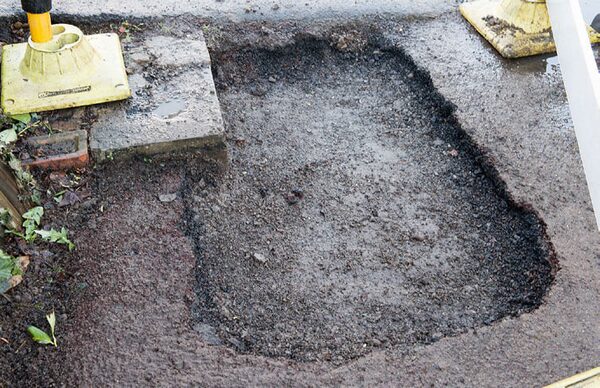
Once work begins, most jobs can be completed within one day1. Reinstatement follows quickly: SGN restores any areas it has disturbed within 5 working days2, and states that anything dug up to install the new connection will be tidied up within 5 working days of the job by its specialist reinstatement team1.
Whether a new gas connection still makes sense for energy independence
A gas connection delivers convenience and removes some dependencies, and it creates others. On the positive side, it replaces delivered fuels with a piped supply that arrives without ordering, storage or a tank on the property, and it makes gas central heating available where no mains gas existed. Northern Gas Networks notes that applicants may be able to access funding for a new gas connection with first-time gas central heating or a renewable alternative, along with energy efficiency upgrades, free advice and support, welfare benefit checks and help with managing debt, subject to eligibility8.
The dependencies it creates are structural. The household does not own the pipe, cannot choose the network, and must hold an account with a supplier to have a meter fitted at all1. The bill then carries network costs, policy costs and a standing charge alongside the gas itself14. Gas take-on debt has grown: the average arrears balance for gas at the time of agreeing a repayment plan rose from around £592 in 2020 to £862 in 202520. A household in debt but actively engaging with its supplier to manage the bill will not be disconnected21, but the obligation remains.
There is also a forward-looking constraint. Government policy aims to phase out the installation of new and replacement natural gas boilers by 2035 at the latest6. Existing fossil fuel powered heat networks will be required to decarbonise upon replacing their heat generation assets from 2023, and by 2045 at the latest22. A household connecting now is connecting to a network whose role is expected to change within the life of the connection.
Where a gas-fired combination boiler is installed in an existing dwelling, Approved Document L requires at least one energy efficiency measure from a set including flue gas heat recovery, weather compensation, load compensation, or a smart thermostat with automation and optimisation23. That applies to the heating installation, not to the connection itself, but it is part of the cost of using the connection.
Where gas supply is heading: unit rates and the wider picture

The cost of the gas itself has moved sharply. The latest unit prices for gas are around 120% higher than their mid-2021 levels5. The causes identified in official analysis include the return of global gas demand after pandemic restrictions, high demand from cold weather, supply unable to keep up, regional factors in Europe, debate about whether Gazprom could increase supply, low levels of wind, outages at nuclear plants, and a fire that shut down a key electricity interconnector24. Several of those are electricity-side events, which shows how far gas and power prices move together.
Policy costs are being added to gas bills as well. The Green Gas Levy is modelled to add approximately £4.70 to annual bills at the peak of the levy in 2028, assuming a transition to a volumetric levy25. Adjustments to gas network costs were adding 72p a month to the price rise announced in August 202526. Ofgem has also consulted on the gas disconnections framework, seeking quantitative data on the current and expected costs of disconnection works and on current and future disconnection volumes for domestic and small business consumers27.
The network itself is being reshaped. In Scotland, a small percentage of annual heat provided through some new networks may need to be sourced from natural gas for peaking and backup in the near term, determined case by case28, and the same point appears in the Heat Networks Delivery Plan29. The Scottish Government has also noted that 100% hydrogen may become available in parts of the gas network towards the end of the decade22. Scotland has a legally committed net zero target for 204530.
For a household, the direction of travel is a supply that remains available, costs more in real terms than it did in 2021, and carries a growing share of policy and network cost. That is the context in which a connection decision sits.
Brands and networks sold in the UK
The organisations a household deals with are regional monopolies for the connection itself, so this is a description of coverage rather than a comparison.
- SGN covers Scotland and southern England, publishes standard connection estimates by region, and handles new connections, meter moves, alterations and disconnections7. Its published lead times differ between Scotland, inside the M25 and outside it1.
- Cadent runs a household new connection service with an indicative pricing tool and a 6 to 8 week average from payment to works3.
- Northern Gas Networks covers its own region, requires hourly gas load details to quote, and can supply a meter kiosk or accept one supplied by the applicant where gas loads exceed 65kWh8.
- Wales & West Utilities handles new supplies, alterations, meter relocations and disconnections in Wales and the south west4.
- Independent Gas Transporters can build and operate networks for multiple new connections10.
In Northern Ireland, coverage is the limiting factor rather than brand: not all areas are connected, and rural and western parts are the least served11.
Sources30 cited
- Apply for a new gas connection, SGN, 2026
- Connections: how it works, SGN, 2026
- New gas connection, Cadent Gas, 2026
- Gas connections, Wales & West Utilities, 2026
- Research briefing CBP-10958, House of Commons Library, 2026
- Heat pumps investment roadmap, Department for Energy Security and Net Zero, 2023
- Connections FAQ, SGN, 2026
- Apply now for a gas connection, Northern Gas Networks, 2026
- Moving house gas and electricity guide, Uswitch, 2026
- Installing, altering and disconnecting gas services.pdf), Energy Networks Association, 2026
- Continuous Household Survey: Heat and Insulation 2024/25, Northern Ireland Statistics and Research Agency, 2025
- Registration to carry out gas work, GOV.UK, 2026
- Energy price cap levels, 1 July to 30 September 2026, Ofgem, 2026
- How your electricity or gas bill is calculated, Ofgem, 2026
- Check if you are owed money on your energy bill, Ofgem, 2026
- VAT Fuel and Power manual VFUP2100, HM Revenue & Customs, 2026
- Alter your gas connection, SGN, 2026
- Gas only, Confused.com, 2026
- Switch your home energy supplier, Ofgem, 2026
- Consumer vulnerability strategy progress report, Ofgem, 2026
- Code of Practice for Consumers in Vulnerable Circumstances, Utility Regulator Northern Ireland, 2025
- Draft Heat in Buildings Strategy, Scottish Government, 2021
- Approved Document L, Volume 1: Dwellings, Department for Levelling Up, Housing and Communities, 2023
- Research briefing CBP-9340, House of Commons Library, 2022
- Price cap decision on the Green Gas Levy allowance, Ofgem, 2022
- Energy price cap will rise 2 percent in October, Ofgem, 2025
- Call for input: review of the gas disconnections framework, Ofgem, 2025
- New build heat standard consultation, part 2, Scottish Government, 2022
- Heat Networks Delivery Plan, Scottish Government, 2022
- Heat pump grant, Department for Energy Security and Net Zero, 2026
 New Electricity ConnectionWho do you contact for a new or upgraded electricity connection, and what will it cost?
 Disconnecting From the Gas GridThe practical route to removing a gas connection, including abandonment versus capping, who does the work, what it costs and the standing charge saved.
 Servicing and MaintenanceWhat an annual gas or oil boiler service covers, the intervals manufacturers specify, the link between servicing records and warranty validity, and what servicing means for a household's energy independence.
 Energy Security for HouseholdsCan a household really protect itself from gas and electricity price shocks, and what actually makes a difference?
 Unit Rates by RegionWhy do electricity and gas prices differ depending on where you live?
 Moving Home Energy AccountsMoving home means you get a new energy supplier whether you choose one or not, so who supplies your new place and what happens to your old account?