
In this guide
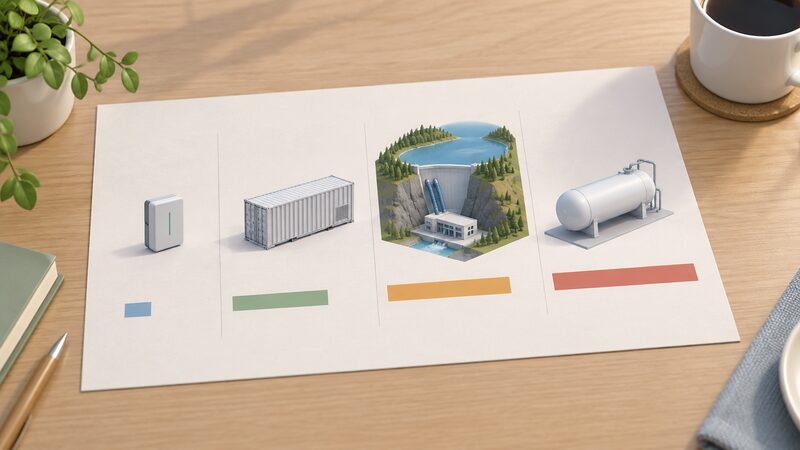
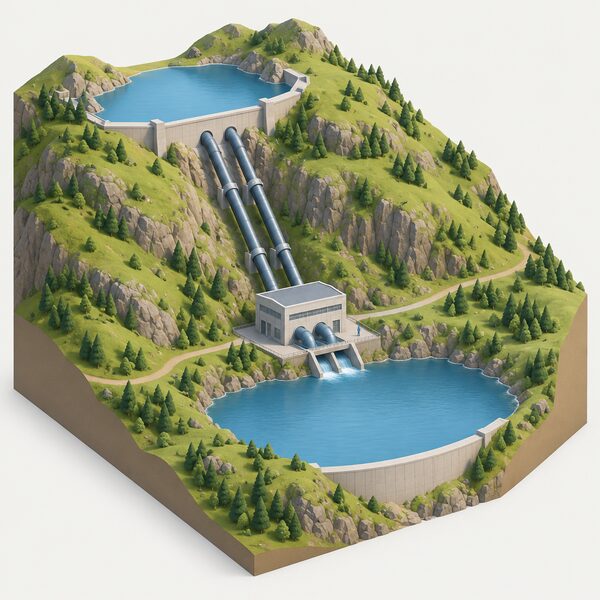
Long-duration electricity storage (LDES) is the part of the storage fleet that can hold power for far longer than a conventional grid battery: hours into days, and in some designs across seasons. Government has committed cap and floor investment support to 7.6GW of new Long Duration Electricity Storage projects, sixteen schemes that collectively represent 137GWh of new electricity storage capacity1. The technologies named for the mechanism are pumped storage hydro, compressed air energy storage, liquid air energy storage and flow batteries2.
The scale of the gap explains the intervention. Long duration electricity storage in operation stood at 2.8GW and 23.9GWh in June 20261, and the United Kingdom's existing pumped hydropower storage is around 2.8 GW, the majority of it contributed by Ffestiniog and Dinorwig3. By contrast, batteries, both domestic and grid-scale, store electricity for up to eight hours4, which covers an evening peak but not a still, cold week. Government material points to deploying 4 to 6GW of LDES by 20304.
For a household, none of this is something to buy. It is infrastructure that decides how reliable and how expensive the electricity coming down the wire will be in a winter when wind output is low. Household independence is a separate question, answered by behind-the-meter solar and batteries, and the two only meet in the bill.
What long-duration storage means, and how it differs from a battery
An energy storage system stores electricity or heat for use when it is needed6, or more formally, technology that stores energy for it to be used later, like batteries7. Electrical storage batteries store energy in the form of chemical energy which is then converted back to electrical energy when the battery is discharged8. What separates long-duration storage from that familiar description is not the chemistry but the ratio of energy to power: how many hours of output a unit can sustain before it is empty.
Most of the fleet Britain has built in the last decade is short duration. Batteries, both domestic and grid-scale, store electricity for up to eight hours4. That is enough to shift solar generation into the evening or to ride through a frequency event, and it is the basis of grid-scale battery storage as a business. It is not enough to cover a multi-day wind lull, which is the risk that sets electricity margins in a cold, settled January.
Long-duration technologies stretch that window. Pumped hydro storage extends hydro-electricity capacity to support the transition away from fossil fuels9 and remains the dominant existing form, described further on hydropower and pumped storage. Compressed air and liquid air energy storage hold energy mechanically and thermally; flow batteries separate the stored electrolyte from the cell stack, so energy and power can be sized independently2. Hydrogen sits at the far end of the spectrum, suited to storing very large amounts of energy, for very long time periods10, and is covered under hydrogen in the gas grid.
The trade body formed for the sector spans all of these. The Energy Storage Association (UK) describes bringing together the full range of storage technologies: electrical, thermal, hydro, and hydrogen-based, with founding members including GivEnergy, Octopus Energy, Powervault, Sunsynk and academic partners such as Durham and Keele Universities11. It has set out a mission to ensure that energy storage takes its rightful place at the heart of the UK's net-zero transition, and has said it will publish a first Roadmap for Energy Storage in the UK covering planning, permitting and grid access, funding and investment priorities, cybersecurity and interoperability standards, workforce development, and a case for storage as a driver of economic growth, energy security and decarbonisation11. That is a maker-side body speaking for its members, and its roadmap is a proposal rather than policy.
The figures: 7.6GW supported, 137GWh of new capacity
The headline numbers attach to the cap and floor awards. Cap and floor investment support schemes have been offered to 7.6GW of new Long Duration Electricity Storage projects, with the 16 projects involved collectively representing 137GWh of new electricity storage capacity1. Set against an operating LDES fleet of 2.8GW and 23.9GWh in June 20261, the awarded pipeline is several times the size of what exists.
| Measure | Figure | Period | Source type |
|---|---|---|---|
| LDES in operation | 2.8GW / 23.9GWh | June 2026 | official1 |
| LDES awarded cap and floor support | 7.6GW across 16 projects | 2026 | official1 |
| New capacity those projects represent | 137GWh | 2026 | official1 |
| UK pumped hydropower storage | around 2.8 GW | 2022 | official3 |
| LDES deployment ambition | 4 to 6GW | by 2030 | official4 |
| GB electricity storage | less than 30 GWh | July 2022 | official5 |
| GB electricity storage, Consumer Transformation and Leading the Way | more than 115 GWh | 2035 | official5 |
The short-duration fleet is a useful contrast. UK grid-scale battery storage power capacity reached 7.5 GW by the end of 2025, with a record new 2.3GW energised in 2025 alone1. Power capacity and energy capacity are different measures, and the two should not be added together: 7.5 GW of batteries able to run for up to eight hours is a different asset from 23.9GWh held in reservoirs and caverns that can discharge over days.
Projections beyond 2030 diverge because they answer different questions. NESO scenarios published in July 2022 put more than 115 GWh of electricity storage in Great Britain in 2035 under Consumer Transformation and Leading the Way, compared to less than 30 GWh at the time5. An independent trade projection puts battery storage at 50 GW by 2035, with commercial solar and battery storage accounting for a total capacity of 15 GW and 8 GW respectively12. The first is a system-operator scenario expressed in energy; the second is a sector estimate expressed in power. Neither is a forecast, and the difference in units is the main reason they look incompatible.
Project sizes are also growing. Some utility-scale systems in the pipeline are able to handle a gigawatt of power or more, around the capacity of two nuclear power stations13, a trade-association characterisation of what developers have proposed rather than of what has been built.
What drives the need for multi-day storage
The underlying driver is the shape of a renewables-heavy system. Battery storage supports energy system flexibility and helps avoid peaks and troughs in supply, particularly in relation to renewable energy14. A wind and solar system produces too much at some hours and too little at others, and the gap is not always measured in hours. Once the shortfall runs for days, an eight-hour asset cannot bridge it, and the system falls back on gas plant, interconnectors or demand reduction.
Security-of-supply policy is written against a standard, not a hope. The electricity reliability standard is expressed as a Loss of Load Expectation of three hours per year4. Every megawatt of firm, dispatchable capacity, including storage that can actually deliver when called, is assessed against that target, which is why duration matters more than nameplate power in a capacity assessment. The mechanics of paying for firm capacity are set out under the Capacity Market.
Demand is also changing. A smart energy system is being developed that will use digital technology to actively monitor what electricity the country needs, when it needs it, so suppliers can generate enough to meet demand15. Electric vehicles add both load and potential storage: having electric vehicles as battery storage will allow better management of the UK's energy16. One independent estimate holds that a delayed phase-out of internal combustion vehicles could see UK drivers use a cumulative 55TWh more energy by 2030, including 65TWh more imported energy17, figures from an independent analysis of a hypothetical policy path rather than a projection of the current one. The broader picture is covered under rising electricity demand.
Thermal storage is the quiet part of the same argument. Existing installed hot water storage capacity in the UK is around 27GW18, and excess renewable generation could be used to heat up full cylinders of water relatively cheaply, providing cost-effective storage to the UK electricity system19. That capacity is already in homes and needs no cap and floor award, though it stores heat rather than returning electricity. Guidance on flexibility solutions to reduce peak demands asks for both thermal and electrical energy storage to be considered20.
Cap and floor: how the support scheme is built
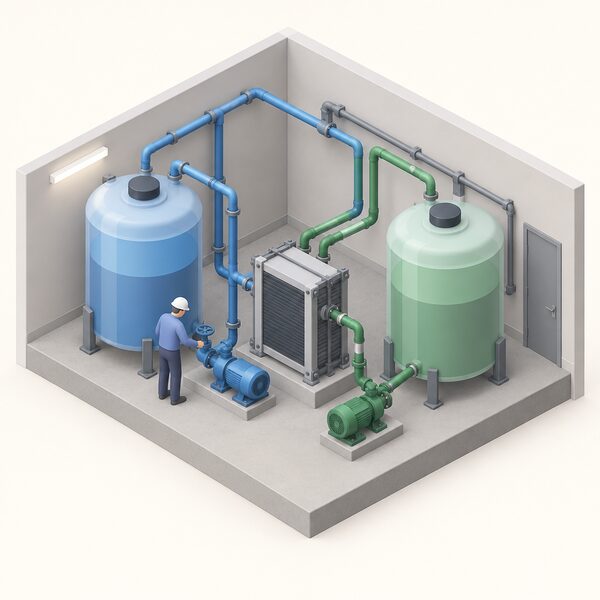
The mechanism is a cap and floor revenue support scheme for long duration energy storage technologies such as pumped storage hydro, compressed air energy storage, liquid air energy storage and flow batteries2. The logic is straightforward. A pumped hydro scheme or a salt cavern costs an enormous amount up front and earns from price spreads that no one can predict over a forty-year life. A floor sets a minimum revenue, which is what a lender needs to see; a cap returns excess revenue above a ceiling, which is what protects consumers from paying an open-ended subsidy.
The route to this point ran through policy and planning as much as funding. The 2022 British Energy Security Strategy committed to amend National Policy Statements to enable investment in long-duration energy storage21, recognising that consenting, not technology, was a binding constraint. Earlier public funding came through the Longer Duration Energy Storage Demonstration programme, administered by the Department for Business, Energy and Industrial Strategy as part of the Net Zero Innovation Portfolio22.
Related schemes work differently and should not be confused with cap and floor:
- Contracts for Difference guarantee a set price per MWh of electricity for 15 years, indexed to inflation23. That supports generation, not storage, and is described under Contracts for Difference.
- The Smart Export Guarantee supports small exporters. Eligible technologies include solar photovoltaics, wind, micro-combined heat and power, hydropower and anaerobic digestion, up to 5 megawatts in capacity, or up to 50 kW for micro-CHP, and installations must be located in Great Britain24.
- Great British Energy is intended to support the transition to a "cleaner, more secure energy system"25, with £4.0 billion of guarantees capacity recorded and £0.0 billion of additional capacity announced at Spending Review 202526.
The Smart Export Guarantee's Great Britain requirement is one of several places where storage-adjacent rules stop at a national border, which matters for the next section.
Scotland, Wales, England and Northern Ireland
Long-duration storage is unusually geographic. It needs mountains, caverns or salt, so its map does not follow the map of demand.
| Nation | What the record shows |
|---|---|
| Scotland | National Planning Framework 4 identifies Pumped Hydro Storage as a national development in the North, the Central area, and the North and West Coast and Islands9. Renewables made up a far higher share of generation than elsewhere: 29.3% for the UK as a whole, or 25.6% for the rest of the UK excluding Scotland27. |
| Wales | Ffestiniog and Dinorwig currently contribute the majority of the UK's existing 2.8 GW of pumped hydropower storage3. |
| England | Holds the bulk of small-scale deployment: 77.80% of installed capacity under the Feed-in Tariff over the scheme's lifetime28. |
| Northern Ireland | Operates separately in several respects. Energy-saving materials rules applying to Northern Ireland took effect on 1 May 202329, and support schemes have differed: the Energy Price Guarantee operated, for the most part, in the same way for households across the whole of the UK, with differences for Northern Ireland30. |
The practical consequence is that the storage is built where the geology allows and paid for across the whole system, so households in England fund assets in the Scottish Highlands and north Wales, and households in Scotland and Wales host infrastructure whose benefit is shared. That is the same bargain as transmission, and it appears on bills through network charges. Nation-level detail sits on the pages for Scotland, Wales and Northern Ireland.
Northern Ireland's electricity system is not part of Great Britain's, and the cap and floor scheme's projects and the Smart Export Guarantee's Great Britain eligibility rule do not extend to it24. Divergence is not limited to storage: a regulator's review found that the public charging experience is significantly different in Scotland to the rest of Britain, with a greater variety of charge point operators and processes in Great Britain outside of Scotland31, a reminder that even a Britain-wide policy can land differently.

How electricity storage compares with gas storage
Britain's existing answer to a long, cold, still spell has been gas in storage and in pipelines rather than electricity in reservoirs. The UK has the capacity to store the equivalent of four per cent of the country's annual consumption of gas, reported as about fourteen days' supply32. That is the benchmark against which electricity storage looks small: Great Britain held less than 30 GWh of electricity storage as of July 20225, and 23.9GWh of long duration electricity storage was in operation in June 20261.
The comparison should not be pushed too far. Gas storage holds a fuel that is burned once; electricity storage cycles, charging from surplus generation and discharging repeatedly. A gigawatt-hour of storage that cycles through a winter delivers far more than a gigawatt-hour of gas held once. But the direction of travel is clear enough: as gas plant retires and coal has gone, the multi-day buffer has to be rebuilt in a different form. The gas side of the picture is set out under UK gas storage and Rough.
The dependence that storage is meant to reduce is well documented. The UK has been described as a net energy importer with a high dependence on gas and oil33. Fossil fuels accounted for 76.6% of UK energy consumption in 2023, a fall of 1.6% on 2022, and 75.2% in 2024, a further fall of 1.4%34. Those are whole-energy figures covering transport and heat as well as power, so they move slowly, and long-duration electricity storage on its own will not shift them quickly. What it does is make a high-renewables electricity system dependable enough that electrification of heat and transport can proceed without importing more gas to cover the still weeks.
What it means for a household's independence
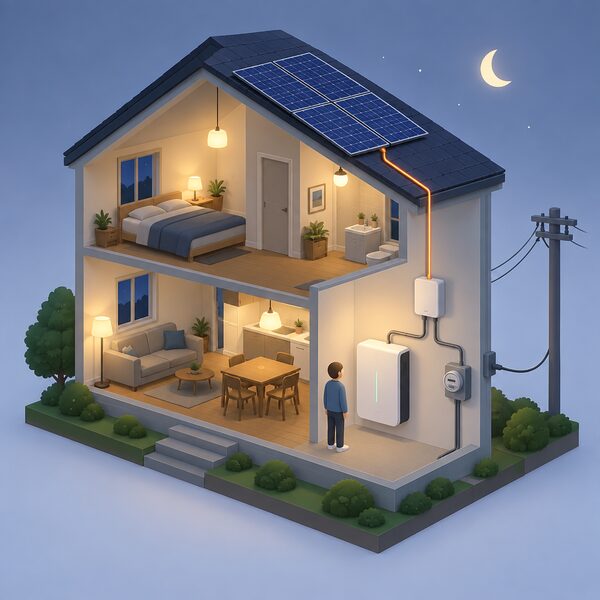
The honest answer is that long-duration storage does not make any individual home independent. It is national infrastructure. It changes the reliability and the cost of the electricity a household buys, and it changes how often the system has to call on gas plant or imports, but the meter, the supplier, the network connection and the standing charge all remain. A household with no generation of its own is exactly as dependent on the grid after 137GWh of new storage is built as before1, simply on a grid that is cleaner and, if the scheme works as intended, firmer.
Independence at the property boundary is measured differently. One certification body defines grid electricity independence, or self-sufficiency, as the percentage of electricity consumed in the property over a year which is met by either behind-the-meter solar or electrical energy storage, the fraction of electricity consumed in the property which is met by self-consumed electricity35. On that measure, storage does move the number: Great British Energy states that adding a battery to a solar installation increases self-consumption from 30 to 40% to 70 to 80%36. A home battery stores the extra energy created during the day for use at times when generating less, such as at night37, and in a recorded case study a household's battery allowed them to use more of the renewable energy they generate by storing it, saving money on their bills and reducing stress on the grid38. Low-carbon housing developments have been built on the same principle, at Etopia Homes in Corby, Northamptonshire, where the householder's use of solar generated electricity is maximised by battery storage and exported to the grid, and at Active Homes in Neath, South Wales39.
What remains after all that is worth stating plainly:
- Seasonal mismatch. A domestic battery holds hours, not months. Solar output collapses in the months when heating demand peaks, and no household-scale electrical store bridges that. Inter-seasonal storage is a system-level job.
- The connection stays. Whatever share a household self-consumes, the rest is bought from a supplier, along with the fixed costs of the connection.
- Thermal storage is the cheap half. Around 27GW of hot water storage capacity already exists in the UK18, and heating full cylinders relatively cheaply from excess renewable generation is a real contribution to system flexibility19, though it returns heat rather than electricity.
- Flexibility is a two-way relationship. Participating through a smart system that monitors what electricity the country needs and when15 means accepting a degree of external control, discussed under household demand flexibility.
The clearest way to read the cap and floor scheme from a householder's chair is as insurance bought collectively. It is the difference between a system that needs gas on standby for a week of low wind and one that has stored the surplus from the week before. Nothing in it removes the supplier relationship, and nothing in it substitutes for insulation, a cylinder or a battery on the wall. The wider context sits on the UK energy supply pillar and under energy security and household independence.
Sources39 cited
- Clean Flexibility Roadmap, July 2026 update, GOV.UK, 2026-06-26
- Long duration energy storage briefing, House of Commons Library, 2025-03
- Energy generation in Wales 2021, Welsh Government, 2022-10
- Statutory Security of Supply Report 2025, GOV.UK, 2025-12-17
- Future Energy Scenarios documentation, NESO, 2022-07
- Storing energy advice, Energy Saving Trust, 2026-07-15
- Energy jargon buster, Energy Saving Trust, 2026-03-20
- VAT on energy-saving materials: electrical storage batteries, HMRC, 2026-09-17
- National Planning Framework 4, Scottish Government, 2023-02-13
- How does storage help us balance the grid, NESO, 2026-09-17
- Why the UK needs a storage revolution, Energy Storage Association (UK), 2025-07-07
- Economic Impact of Solar and Battery Storage, Solar Energy UK, 2025-04
- Homes with batteries to cash in from free power offer, Solar Energy UK, 2026-04-14
- Permitted development rights sustainability appraisal, Scottish Government, 2019-06
- A smarter future: the smart energy system revolution, Smart Energy GB, 2026-04-24
- Vehicle-to-grid best practice guide, Energy Saving Trust, 2026-05-05
- Energy insecurity analysis, ECIU, 2024
- Written evidence on storage capacity, UK Parliament, 2026
- Hot water cylinders and flexibility, LCP, 2024
- GLA Energy Assessment Guidance, Greater London Authority, 2022-06
- British Energy Security Strategy, UK Government, 2022-04
- Sunamp heat batteries project, Energy Systems Catapult, 2022-11-28
- UK Solar Roadmap, DESNZ, 2025-06
- Smart Export Guarantee briefing, House of Commons Library, 2026-05-13
- Great British Energy explained, Energy Saving Trust, 2026-05-20
- Spending Review 2025, HM Treasury, 2025-06-30
- Annual Energy Statement 2019, Scottish Government, 2019-05-15
- Feed-in Tariffs quarterly report, issue 63, Ofgem, 2026-03-30
- VAT on energy-saving materials: Northern Ireland, HMRC, 2023-05-01
- Energy Price Guarantee up until 30 June 2023, GOV.UK, 2026-09-17
- Electric vehicle charging phase 1 publication, Ofgem, 2021-07-06
- Is the UK's limited gas storage capacity a problem, Carbon Brief, 2013-03-25
- Spring Statement 2022, HM Treasury, 2022-03
- DESNZ Annual Report and Accounts 2025 to 2026, performance report, DESNZ, 2026
- MCS 032 standard, MCS, 2025-01-01
- POSTnote on home energy storage, UK Parliament POST, 2026-06-25
- Solar power facts, Energy Saving Trust, 2026-08-13
- Solar success in the West Midlands, MCS, 2023-09-23
- Building for 2050: low cost, low carbon homes, GOV.UK, 2022-12-05
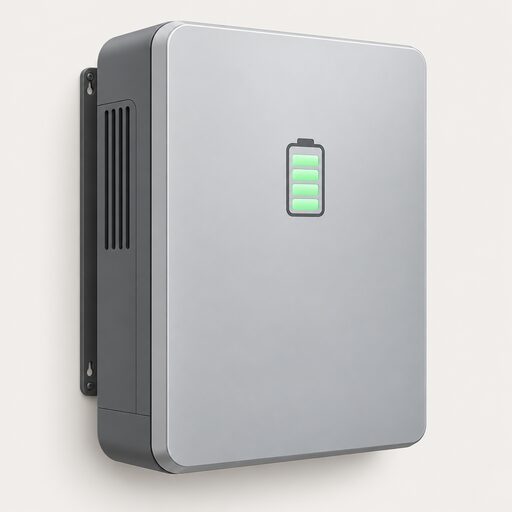 The Full Home Batteries GuideA home battery stores cheap or solar power for later, but will it really cut your bills enough to be worth it?
 Storage Heaters GuideHow night storage heaters charge on off-peak electricity and release heat through the day, and how high heat retention models with fans and controls differ from older bricks.
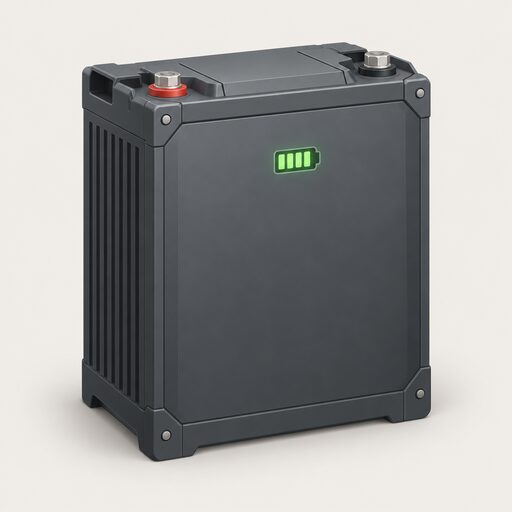 Off-Grid in a UK WinterHow does a home with no mains connection keep the lights on through the darkest, stillest weeks of a UK winter?
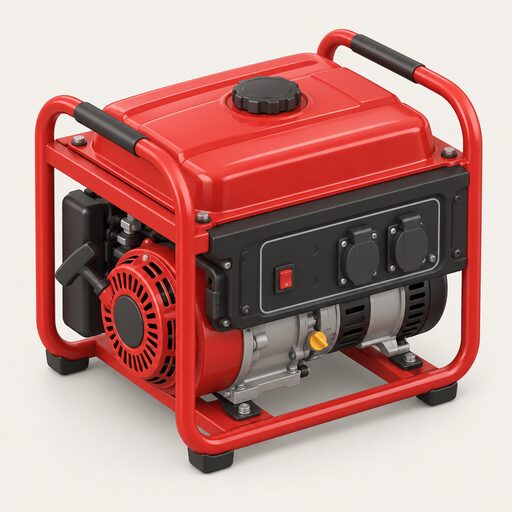 The Full Backup Power GuideHow long do UK power cuts usually last, and what can keep your fridge, heating or phone going until the power comes back?
 Backup Power and EPSWill your lights stay on when the power goes out?
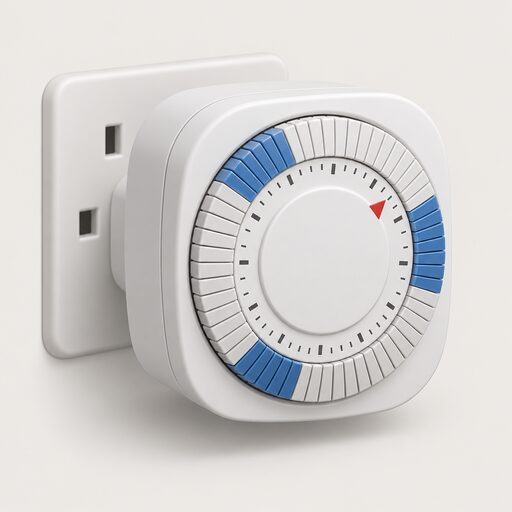 Controls and Time-of-Use TariffsCheaper electricity at night only saves money if your heating actually uses it then.