In this guide
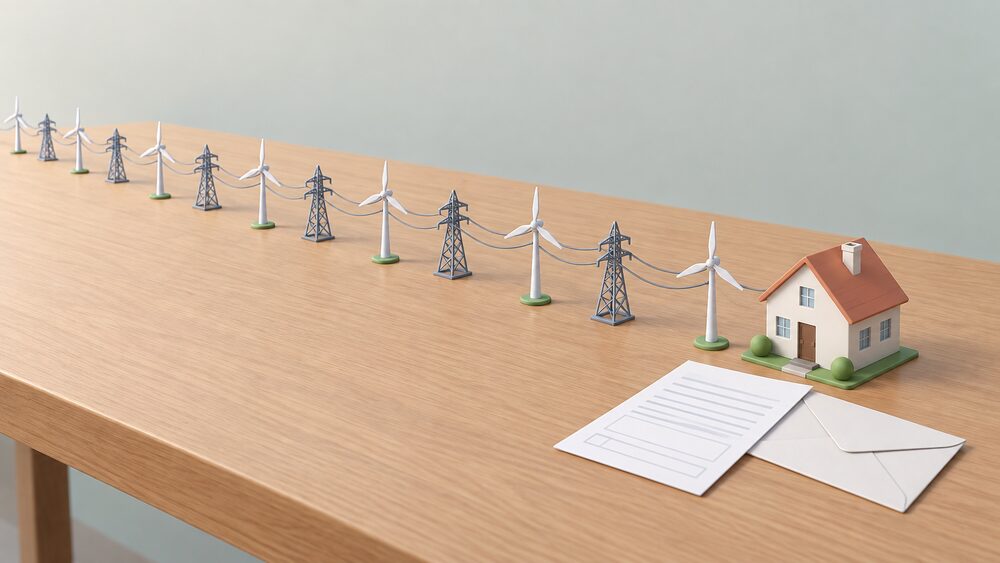
The queue of projects waiting for a grid connection in Great Britain has cumulatively reached over 700GW, a figure that is around four times Britain's projected need by 20301. That single comparison explains the problem. The queue is not a list of projects that will be built; it is a list of projects that have asked for space on the network, many of which will never proceed, and it is ordered in a way that lets unbuilt projects hold places ahead of ones that are ready.
The consequence is delay. Some green energy projects have to wait for up to a decade before they can be brought online, and the National Audit Office has warned that grid upgrade delays risk adding billions to energy bills3. The same reporting puts the cost to consumers at a £60 increase in network charges by 20303. For a household, the queue is not an abstraction: it sets the pace at which cheap generation reaches the grid, the speed at which new housing can be connected, and the cost of the network that every bill pays for.
Reform is under way. The National Energy System Operator has planned a connections reform to address issues faced by those seeking access to and using the electricity network, and the proposals would deprioritise almost 500GW of projects in the oversubscribed queue2. Alongside that, the Planning and Infrastructure Bill 2024-2025 carries a target of deciding 150 nationally significant infrastructure projects4. This page sets out how the queue works, what the reforms change, and what remains outside a household's control.
Why the grid connections queue matters for households
A household rarely interacts with the transmission queue directly. It interacts with what the queue produces: the generation mix, the network charges on the bill, and the speed at which the local distribution network can accept new demand. When renewable projects sit in a queue for years, the generation that would have set the wholesale price arrives later, and the network reinforcement that would have carried it is built later and at a cost that is recovered from consumers.
The scale of what is waiting is the clearest measure. The queue for transmission and distribution of generation and storage projects has cumulatively reached over 700GW, and NESO's reform proposals would deprioritise almost 500GW of projects in that oversubscribed queue2. Reporting in September 2026 described the old queue for grid access as reaching over 700GW and sitting at around four times Britain's projected need by 20303. The same reporting found that some green energy projects have to wait for up to a decade before they can be brought online, and that the National Audit Office warned grid upgrade delays risk adding billions to energy bills3.
The cost lands on bills. Network charges consumers pay are reported to increase by £60 by 20303. National Grid is investing £1.2bn through its UK supply chain partners and delivering upgrades across 1,000km of overhead line routes3. Those are the physical works behind the queue, and they are the reason the queue matters to a household that will never sign a connection agreement.
There is a second, quieter effect. Households that want to add load, whether a heat pump, an electric vehicle charger or a battery, depend on the distribution network having capacity at their address. The transmission queue and the distribution queue are different lists, but they draw on the same supply chain, the same skilled workforce and the same regulatory process. Delay at one end slows the other.
What the grid connections queue is and how projects join it
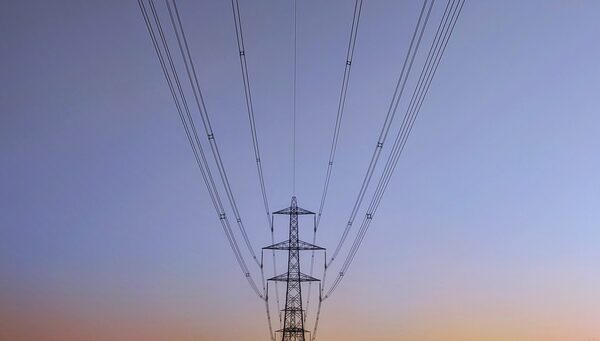
The queue is the ordered list of projects that have applied for, and in many cases been offered, a connection to the electricity network. A project joins by applying to the relevant network operator. For a household-scale generator, that is the distribution network operator. Electrical grid connection requires approval from the distribution network operator6. For a large generator or storage project, the application runs to the transmission network and its own process.
A grid connection is not mandatory for a behind-the-meter system, but it enhances the value of that system by enabling the export of surplus electricity5. That distinction matters: a home can generate and consume without exporting, but exporting requires the connection and the approval that goes with it.
The queue became oversubscribed because connection agreements were historically offered on a first-come basis, and holding a place cost little. Projects that were not ready to build kept their places, and projects that were ready queued behind them. The result is a list far longer than the build programme it serves. NESO's reform is designed to address issues faced by those seeking access to and using the electricity network, and its proposals would deprioritise almost 500GW of projects in the oversubscribed queue2. The National transmission network connection queue is described in official guidance as delaying the delivery of renewable energy projects7.
For a household, the practical route is through the distribution network operator rather than the transmission queue. The pages on getting a new or upgraded electricity connection and on who your distribution network operator is set out that process. The queue described here is the one that governs the large projects feeding the grid a household draws from.
The Planning and Infrastructure Bill: what it changes and where it applies
The Planning and Infrastructure Bill 2024-2025 was introduced to the House of Commons and had its first reading on 11 March 2025, with second reading scheduled for 24 March 20254. Its stated ambitions include delivering 1.5 million homes and deciding 150 nationally significant infrastructure projects4. The bill would extend to England and Wales, with some provisions for infrastructure also extending to Scotland4.
That territorial split is the part households most often get wrong. Planning is devolved. The bill's main planning provisions cover England and Wales. Some infrastructure provisions reach into Scotland, but the planning system that governs most development in Scotland is separate. The same pattern appears across energy policy: the Energy Company Obligation operates as an energy efficiency scheme in England, Scotland and Wales, and the smart meter rights and expectations guidance applies to England, Scotland and Wales8. Consumer protection guidance from Citizens Advice is set out for England and Wales10.
The bill sits alongside a wider set of planning changes. The Town and Country Planning (General Permitted Development) (England) (Amendment) Order 2025 came into force on 29 May 202511. A consultation on changes to various permitted development rights applies to England12. Reforms to the Energy Performance of Buildings regime apply to England and Wales13. The Planning Act 2008, which governs consent for power lines and wood poles, extends so far as relevant to England and Wales14.
For a household, the bill's relevance is indirect but real. Faster decisions on nationally significant infrastructure mean transmission capacity arrives sooner, which shortens the queue behind it. The 150-project decision target is the government's own measure of that pace4.
NSIP decision targets: 150 nationally significant infrastructure projects
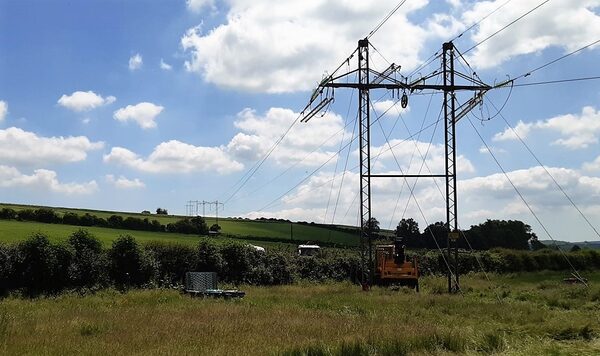
The target of deciding 150 nationally significant infrastructure projects is the government's stated ambition, set out alongside the 1.5 million homes figure4. Nationally significant infrastructure projects are the large schemes, generation, transmission, and major network works, that go through a dedicated consent regime rather than ordinary planning. The decision target is a measure of throughput through that regime.
The connection between the NSIP target and the queue is direct. A transmission project that clears consent can be built; a project that waits for consent holds up the reinforcement that would let queued generation connect. Official guidance states that the national transmission network connection queue is delaying the delivery of renewable energy projects7. NESO's reform proposals would deprioritise almost 500GW of projects in the oversubscribed connections queue, which is the mechanism intended to separate projects that can proceed from those that cannot2.
The physical programme behind the target is substantial. National Grid is investing £1.2bn through its UK supply chain partners and delivering upgrades across 1,000km of overhead line routes3. Those works are the transmission capacity that the queue is waiting for.
"This is delaying the delivery of renewable energy projects"
For a household, the NSIP target is a proxy for how quickly the grid it depends on is being rebuilt. It does not change what a home can install today, but it changes how much headroom exists on the network in five or ten years.
Housing delivery ambitions: 1.5 million homes and what they mean for connections
The government's housebuilding ambition is 1.5 million homes over the course of this parliament, and the stated intention is that those homes will be high quality15. England has a target to build 1.5 million new houses7. The figure appears again in the Planning and Infrastructure Bill's stated ambitions, alongside the 150 NSIP decisions4, and in the Plan for Change to build 1.5 million homes16.
Every one of those homes needs a connection, and most will need an electricity connection with more capacity than the home it replaces, because heating and transport are electrifying. The connection queue and the housing target are therefore competing for the same network capacity and the same workforce.
New build standards are tightening at the same time. Rooftop solar for new builds is promoted as a way to save people money16. The government has set a target for as many homes in England and Wales as possible to achieve EPC band C by 2035, with a further update to requirements for new homes planned, and the devolved timetables differ: England and Wales in 2025, Scotland in 2024 and Northern Ireland in 2026 or 20274. Building regulations changes under discussion include measures on energy efficiency and carbon performance, ventilation, overheating and electric vehicle infrastructure17.
The practical effect is that a new home is being asked to carry more electrical load than its predecessors, at the same time as the network that supplies it is being reinforced. Where the local distribution network has no headroom, the connection can be delayed or made conditional on reinforcement. That is the point at which the national queue becomes a household experience.
| Ambition | Figure | Applies to | Source |
|---|---|---|---|
| Homes to be built | 1.5 million over the parliament | Government ambition | 15 |
| England housebuilding target | 1.5 million new houses | England | 7 |
| NSIP decisions | 150 | Government ambition | 4 |
| EPC band C target | As many homes as possible by 2035 | England and Wales | 4 |
Flexible capacity: from around 55 GW to 204 GW of projected headroom
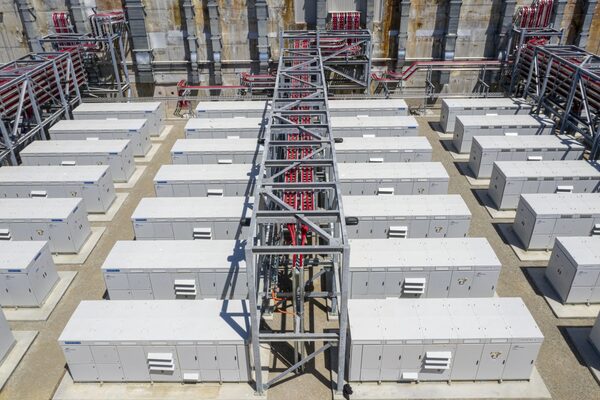
The queue is not only a problem of too many projects. It is also a problem of a system that needs far more capacity than it has. Flexible capacity is projected to reach 204 GW by 2050, against around 55 GW expected in 2030, described as an eight-fold increase in clean flexibility capacity from 2024 to 20505.
The underlying projections show the scale of the build. Total installed capacity in Great Britain is projected at 156 GW in 2030, 190 GW in 2035 and 276 GW in 205018. Peak demand is projected at 78 GW in 2035 and 114 GW in 205018. Interconnector capacity is projected at 13 GW in 2050, and total storage capacity at 27 GW in 205018. Vehicle-to-grid capacity is projected at 0 GW in 2030 and 8 GW in 205018.
Storage is already moving. UK grid-scale battery storage power capacity reached 7.5 GW by the end of 2025, with a record new 2.3GW energised in 2025 alone5. GB interconnection capacity currently stands at 10.3GW, and the UKRI CLF Challenge is aiming to deliver at least 2GW of flexibility by 20305. The Smart Systems and Flexibility Plan is credited with saving up to £50 billion to 2050 from reducing generation build out and up to £26 billion to 2050 from reducing network build out8.
The gap between the queue and the projections is the whole argument for reform. A queue of over 700GW against a projected need of around a quarter of that by 2030 means most of the queue will never be built2. Reordering it by readiness, rather than by date of application, is intended to let the projects that match the projections move forward.
| Projection | 2030 | 2035 | 2050 |
|---|---|---|---|
| Total installed capacity | 156 GW | 190 GW | 276 GW |
| Peak demand | 78 GW | 114 GW | |
| Vehicle-to-grid capacity | 0 GW | 8 GW | |
| Interconnector capacity | 13 GW | ||
| Total storage capacity | 27 GW |
Source: NESO projections18
Type A power generating modules and where household equipment fits
Connection rules classify generators by size, and the classification determines the process. Under EREC G99, a Type A power generating module has a registered capacity of more than 16A per phase but less than 1MW, and connects below 110kV, which in Great Britain practice means 66kV or below19. Emerging Technology status applies only to Type A generation, which has a generating capacity of 0.8 kW to 1 MW19. Larger modules, at or above 1MW, or connected at or above 110kV, which in practice in Great Britain means 132kV or above, fall into Types B to D19.
That range covers most household and small commercial equipment. A domestic solar array, a home battery, or a small combined heat and power unit sits inside the Type A band. Domestic sized micro combined heat and power models are now available in Northern Ireland20. The Type A classification is what determines the application route, the protection settings and the information the network operator requires.
For a household, the practical point is that equipment at this scale connects to the distribution network under a defined process, not to the transmission queue. The queue described on this page is the one that governs the large projects. A home adding a battery or solar array is dealing with a different, shorter process, though it still requires approval from the distribution network operator6.
Territorial extent: England, Wales and Scotland provisions

Energy and planning powers are split across the four nations, and the connections reform follows that split. The Planning and Infrastructure Bill would extend to England and Wales, with some provisions for infrastructure also extending to Scotland4. The Planning Act 2008, which governs consent for power lines and wood poles, extends so far as relevant to England and Wales14. The permitted development changes made by the 2025 Order apply in England, and the consultation on further changes applies to England11. Energy Performance of Buildings reforms apply to England and Wales13.
Scotland's position is distinct. The Scottish Government has legally committed to a net zero greenhouse gas emissions target by 204521. Scotland holds a substantial share of the generation that depends on transmission connections: 12.24% of scheme lifetime capacity and 7.52% of scheme lifetime installations under the Feed-in Tariffs scheme22. The Balanced Pathway scenario projects variable renewables capacity in Scotland, offshore and onshore wind and solar, increasing to 66 GW by 204521.
Wales has its own targets and its own network concerns. The Welsh Government has been advised to work with the distribution network operators and the development community to better understand grid net capacity requirements to meet Net Zero 2050 targets and the impacts of connection delay times by region23. Northern Ireland operates a separate electricity system and a separate connections regime, and its building regulations discussion documents cover a different set of measures24.
| Nation | Planning and Infrastructure Bill | Notes |
|---|---|---|
| England | Applies | Permitted development changes in force 29 May 202511 |
| Wales | Applies | EPB reforms apply to England and Wales13 |
| Scotland | Some infrastructure provisions | Separate planning system; net zero target 204521 |
| Northern Ireland | Does not apply | Separate connections regime24 |
What connections reform means for household energy independence
Connections reform is intended to address issues faced by those seeking access to and using the electricity network, and NESO has planned a reform of the connections process7. The proposals would deprioritise almost 500GW of projects in the oversubscribed queue2. The effect, if it works, is that projects able to build move ahead of projects holding places they cannot use.
For a household, the honest assessment is that the queue is a dependency, not something a home can control. A home that installs solar and a battery reduces what it draws from the grid, and a grid connection enhances the value of a behind-the-meter system by enabling the export of surplus electricity5. But the export depends on the network, the network depends on reinforcement, and reinforcement depends on the queue clearing and the transmission programme being built.
The scale of household participation is already large. Domestic solar installations recorded on detached houses in the UK reached 697,538 by April 202625. Heat pump deployment is tracked quarterly, with 1,077 Home Upgrade Grant installations in 2025 Q126. Consumer confidence remains a constraint: one estimate puts as many as 5 million UK households as being deterred from installing energy-efficiency measures by unfamiliarity or lack of a reliable installer27. An estimated 4.8 million households across Great Britain were not connected to the gas grid in 2024, and those homes have the strongest case for self-generation1.
What remains outside a household's control is the pace of the network. The queue, the NSIP decision target, the flexible capacity projections and the housing target all describe a system being rebuilt around electrification. A home can reduce its exposure to that system, but it cannot remove its dependence on it while it remains connected. The pages on household demand flexibility and on energy security and household independence set out what a home can and cannot control.
Sources27 cited
- Households off the gas grid, House of Commons Library, 2024
- Electricity Distribution Networks Study: government response, GOV.UK, 2025
- Grid upgrade delays risk adding billions to energy bills, NAO warns, E&T, 2026
- Planning and Infrastructure Bill 2024-25, House of Commons Library, 2025
- Behind-the-meter energy systems guidance, Welsh Government, 2026
- Generating your own energy: solar electricity, Welsh Government
- National transmission network connection queue, POST briefing, 2025
- Clean Flexibility Roadmap: July 2026 update, GOV.UK, 2026
- Consumer Consent Solution impact assessment, Ofgem, 2026
- Energy Bill 2022-23, House of Commons Library
- Changes to various permitted development rights: consultation, GOV.UK, 2024
- Town and Country Planning (General Permitted Development) (England) (Amendment) Order 2025, legislation.gov.uk, 2025
- The Boiler Upgrade Scheme (England and Wales) (Amendment) Regulations 2024, legislation.gov.uk, 2024
- Planning Consent for Power Lines and Wood Poles, DESNZ, 2025
- Reforms to the Energy Performance of Buildings regime, GOV.UK, 2024
- Rooftop solar for new builds to save people money, GOV.UK, 2025
- Building regulations discussion document, Northern Ireland Executive, 2023
- NESO future energy scenarios, NESO
- G98 Single Premises, Energy Networks Association
- Micro combined heat and power, nidirect, 2026
- Scotland's Carbon Budgets, Climate Change Committee
- Feed-in Tariffs quarterly report, issue 63, Ofgem, 2026
- Preparing Wales for a renewable energy 2050, Welsh Government, 2024
- Smart meters: your rights and expectations, GOV.UK, 2025
- Domestic solar installations, House of Commons Library, 2026
- Heat pump deployment quarterly statistics, UK 2025 Q2, GOV.UK, 2025
- Energy efficiency pledges undermined by lack of consumer confidence, CTSI, 2024
 Grid-Scale Battery StorageConnected and pipeline battery capacity in Great Britain, what these assets are paid to do, how long they can run, and how grid batteries differ in purpose and scale from a home battery.
 New Electricity ConnectionWho do you contact for a new or upgraded electricity connection, and what will it cost?
 Data and Energy IndependenceHow many UK homes actually make their own power, and is that number really growing?
 Can a Home Be Self-Sufficient?Can a UK home really run on its own energy all year, or does the grid still do the heavy lifting in winter?
 Apply for a Home Energy GrantThe application sequence common to funded schemes: the checker, the survey or assessment, the installer, the paperwork and the sign-off.
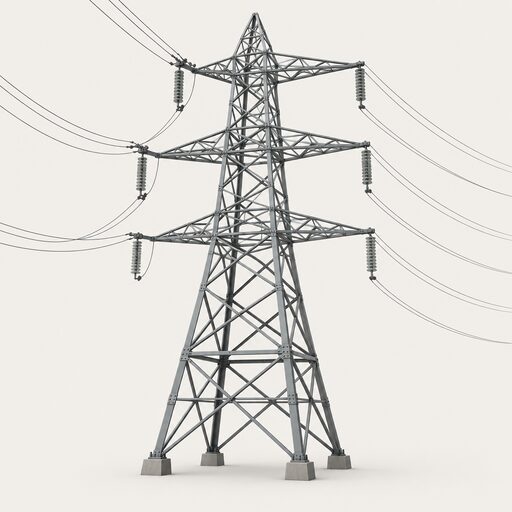 The Transmission NetworkWondering who owns the pylons near your house, or why the grid needs upgrading before you can run a heat pump or an electric car?