In this guide
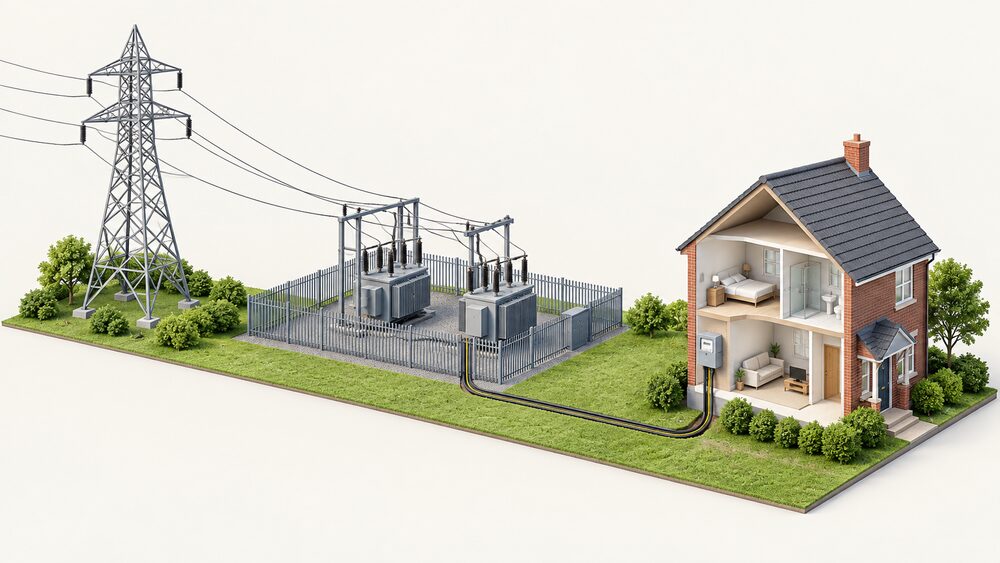
The electricity transmission network is the high-voltage backbone that moves bulk power around Great Britain. It is not the same thing as the wires on your street, and it is not owned by your energy supplier. The grid is, in the plain definition used in independent guidance, "the system that handles the distribution of electricity around the UK"1, and it splits into two layers: a transmission layer of pylons and large substations, and a distribution layer of local cables that finally reaches your meter.
Who owns the pylons near your house depends on where you live. In England and Wales the system operator is National Grid2, while the physical transmission assets in different regions belong to separate transmission owners. Northern Ireland runs a different arrangement again, with its own system operator and network company. The lower-voltage equipment on your street belongs to a distribution network operator, and part of what you pay on your bill is passed to that company for running and maintaining the cables in your area3.
The network is under active reinforcement because heat pumps and electric cars add demand at the same time as generation shifts to renewables. Government-supported heat pump installations rose 30% in the year to June 2025 compared with the preceding 12 months4, and flexibility is projected to grow from around 55 GW in 2030 to 204 GW by 2050. What follows explains what the transmission network does, who runs it, what the kit on the ground is for, and how much of your supply you actually control.
What the transmission network is and what it does
The transmission network exists to move large quantities of electricity at high voltage from where it is generated to where it is needed, then hand it down to the local distribution networks that serve homes and businesses. Independent guidance describes the electrical grid as "the system that handles the distribution of electricity around the UK"1, and the transmission layer is the part that carries power between regions rather than down individual streets.
Two things follow from that. First, the transmission network is a bulk transport system, not a retail one: it does not know or care which supplier you buy from. Second, it is a shared national asset with regional ownership. National Grid acts as system operator in England and Wales2, balancing supply and demand second by second, while the physical wires in each area are maintained by a transmission owner. Distribution network operators then take over at lower voltages. UK Power Networks, for example, describes its work as owning and maintaining electricity cables and lines, maintaining and upgrading power equipment, and moving and connecting new electricity cables3.
The network is also increasingly renewable. It is estimated that about 42% of the UK power grid comes from renewable sources, with wind being the biggest contributor5. That matters for households because it changes the pattern of when power is abundant and when it is scarce, which is one reason the network is being reinforced and made more flexible rather than simply expanded.
Where the four nations differ, the differences are real. Heat networks are devolved in Wales, but regulation of heat networks is reserved to the UK Parliament9. That split matters for anyone trying to work out which body sets the rules for a local energy scheme. For the transmission network itself, Great Britain operates as one synchronous system, while Northern Ireland sits in a separate arrangement with its own operator.
From power station to plug: how electricity reaches your home
The journey from generation to your plug passes through several hands, and knowing which is which explains most household queries about the grid.
- Generation. Power stations, wind farms and other generators produce electricity and feed it into the transmission network at high voltage.
- Transmission. The high-voltage network moves that power across the country. National Grid is the system operator in England and Wales2.
- Distribution. Distribution network operators take power from the transmission network and run it at lower voltages to streets and buildings. UK Power Networks maintains and upgrades power equipment and connects new cables3.
- Supply. Your energy supplier buys wholesale power and bills you. Part of what you pay is passed to the network operator for running and maintaining the cables in your area3.
The practical consequence is that a fault at any stage can interrupt your supply, but the causes differ. Transmission faults are rare and usually affect large areas; distribution faults are common and usually local. That is why a storm can take out your street while the national system is fine.
The market above all this is concentrated. Six large companies dominate the domestic market with 91% market share, and Octopus is now the largest electricity supplier and second largest gas supplier in Great Britain10. That concentration sits above the network, not inside it: the wires themselves are regional monopolies, regulated rather than competed for.
For a household, the useful distinction is between the company you pay and the company you call. If your power is off, the supplier cannot help; the network operator can. If your bill is wrong, the network operator cannot help; the supplier can. The Energy Ombudsman treats network operators as a distinct group it can help with11, which reflects that split.
Pylons, substations and the other kit on the ground
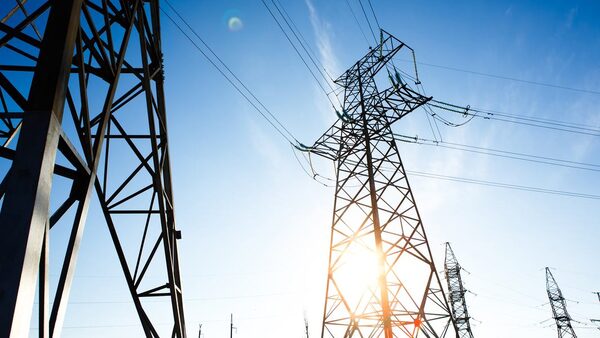
The visible equipment of the transmission network falls into a few categories, and each does a specific job.
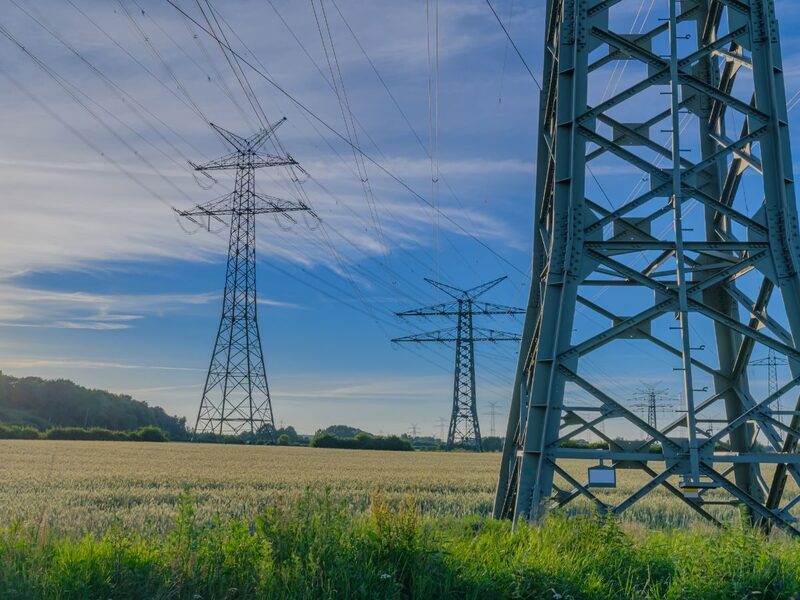
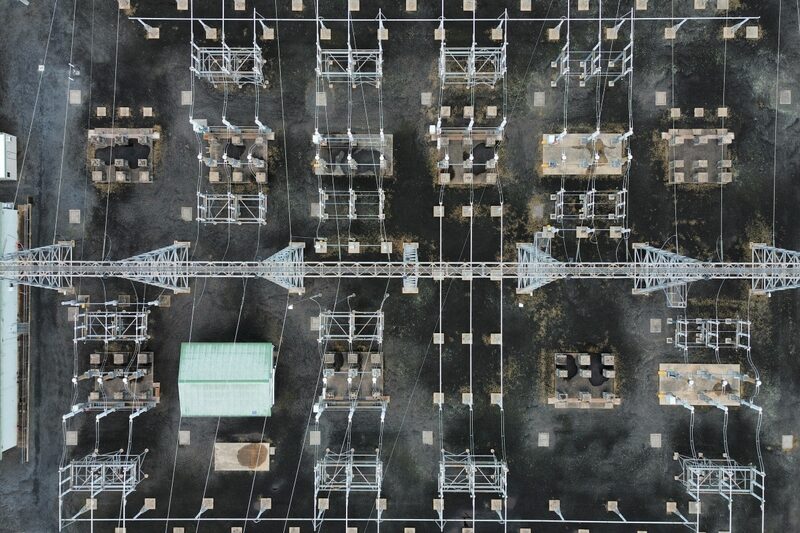
Pylons and overhead lines carry high-voltage conductors across country. They are the cheapest way to move bulk power over distance, and they are also the most visible and most objected to. Substations step voltage up or down and provide switching and protection. A transmission substation connects the high-voltage network to the distribution network; a distribution substation steps down again for a street.
The question of why substations have two transformers has a practical answer: duplication. A substation with two transformers can keep supplying power if one is taken out for maintenance or fails, which is why the arrangement is standard on networks where continuity matters. The sources here do not give a figure for transformer counts, so the general principle is what can be stated.
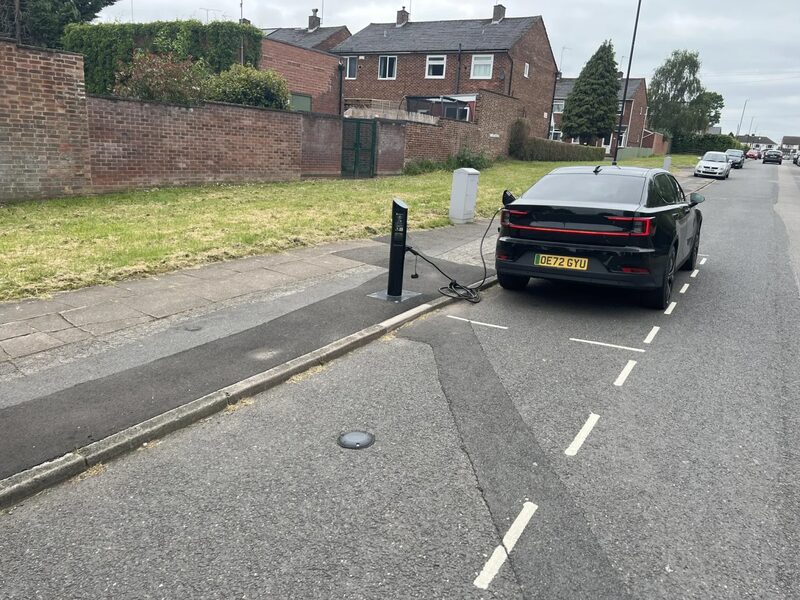
Other kit includes the connections that households add themselves. Solar PV systems require approval from the distribution network operator before they connect to the grid12. Small-scale wind works on the same principle: any unused or excess electricity can be exported to the grid and sold to the local electricity supply company13. EV charge points are the newest addition, and the grant statistics show how small the household side still is: the Electric vehicle chargepoint grant for households with on-street parking funded 59 socket installations, of which 31 were in the last 12 months, while the grant for residential landlords funded 1,912 socket installations, of which 410 were in the last 12 months, both as at 1 July 202614.
Who owns and runs the grid: the companies behind the wires
The ownership picture is more fragmented than the phrase "the national grid" suggests. Independent guidance lists several companies as electricity network operators covering regions of Great Britain, including National Grid, Northern Powergrid and Scottish and Southern Electricity Networks8. Alongside them, UK Power Distribution is described as an independent electricity network operator running smaller electricity networks in parts of the country8.
Above the transmission owners sits the system operator. In England and Wales the system operator is National Grid2. That role is about balancing the system in real time, not about owning every wire. The distinction between system operation and asset ownership is one of the most commonly confused points about the grid, and it is why the same company name can appear in two different contexts.
Northern Ireland is separate. It has its own system operator and network company, and its consumer rules differ too. Under Northern Ireland legislation, where a distributor disconnects a consumer, it must serve notice giving the reasons and any required remedial measures as soon as reasonably practicable after the disconnection15. That is a different regime from Great Britain's.
The gas side of the energy system has a comparable structure, with four Gas Distribution Networks: Cadent, Northern Gas Networks, SGN and Wales and West Utilities16. Households that heat with gas deal with those companies for connections and emergencies, just as electricity households deal with their distribution network operator.
For a household, the ownership question usually reduces to one practical need: knowing which company to contact. The Energy Ombudsman directs people to the Energy Networks Association website to find out who their network provider is11, and the same association runs the postcode lookup that lists all the electricity distribution network operator companies17. That lookup is the fastest route from an address to a company name.
Why the grid is being upgraded for heat pumps and electric cars
The reinforcement programme is driven by two changes arriving at once: more electricity demand in homes, and more variable generation on the system.
On demand, the heat pump figures show the direction of travel. In the year to June 2025 there was a 30% increase in the number of Government-supported heat pumps installed compared with the preceding 12 months4. The funding mix has shifted too: 49% of Government-supported heat pump installations were funded by the Boiler Upgrade Scheme in the year to September 202418, rising to 60% in the year to June 20254, and 63% in the year to September 2025, when the Energy Company Obligation accounted for 29%7. Those are Government-supported installations only, not the whole market, but they show the scale of new electrical load being added to homes.
On generation, the grid is already substantially renewable, with about 42% estimated to come from renewable sources and wind the biggest contributor5. Variable output means the network needs more capacity to move power when and where it is available, and more flexibility to absorb it.
The connection rules reflect the new load. Solar PV needs distribution network operator approval before it connects12. In Scotland, the EV charge point requirement for new residential buildings carries an exemption where the additional cost of the electricity grid connection exceeds £2,00019. The Boiler Upgrade Scheme has its own condition: the property must not be attached to a heat network20.
Wales has set its own direction, with electricity demand projected to increase21, and a proposed single public energy company for Wales that would build on existing Welsh Government-supported energy delivery functions22. Scotland, Wales and Northern Ireland each have distinct arrangements, and households there should check the devolved rules rather than assume the English position applies.
Local demand: what growth looks like in one Hampshire town
National figures hide the local picture, and the local picture is where households actually experience the network. Growth in demand is not spread evenly: it clusters where new housing, heat networks and charging infrastructure arrive together.
Heat network zoning is one driver. The Government will be supporting at least 10 of the largest English towns and cities to establish their heat network zones soon after heat network zoning regulations go live later in 202623. Bristol shows what incremental growth looks like in practice, with further growth already underway and up to four new connections planned within the next year24.
For a town in Hampshire, the pattern is likely to follow the same shape: a cluster of new electrical load from heat pumps and EV charging, a distribution network that needs reinforcement at specific points rather than everywhere, and a transmission connection that may or may not need upgrading depending on how much generation is added locally. The sources here do not give Hampshire-specific figures, so the honest statement is that the local picture depends on the local distribution network operator's own reinforcement plan.
What a household can expect in practice is a connection process rather than an automatic upgrade. A solar installation needs distribution network operator approval12. A heat pump grant application has conditions attached20. An EV charge point in a new Scottish building may be exempt from the requirement where the connection cost exceeds £2,00019. Each of these is a checkpoint where the network's capacity is tested against the new load.
The Welsh picture adds a further layer, with electricity demand projected to increase21 and a proposed public energy company intended to build on existing Welsh Government-supported energy delivery functions22. That is a different model from England's, and it reflects the devolved split noted earlier: heat networks are devolved in Wales, but regulation of heat networks is reserved to the UK Parliament9.
Flexibility: from around 55 GW to a projected 204 GW
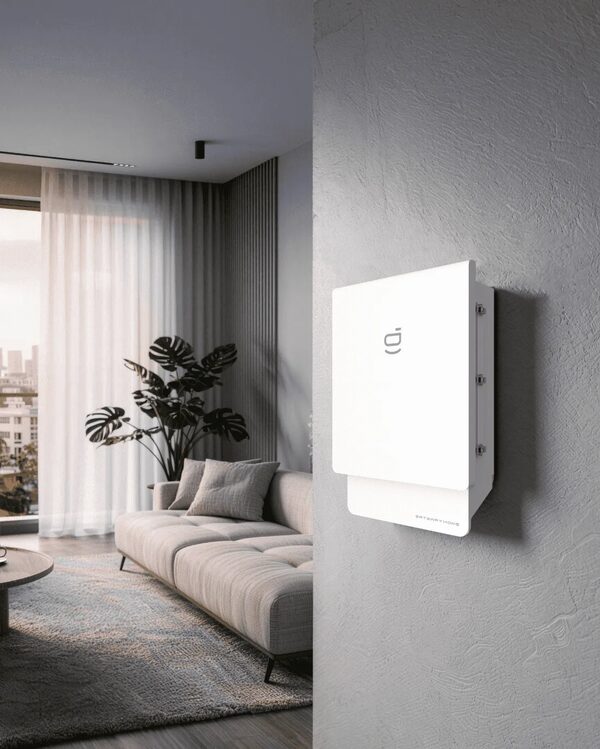
The flexibility figures are the clearest statement of how much the system is expected to change. Great Britain's flexible capacity is projected to reach around 55 GW in 2030 and 204 GW by 2050. The gap between those two numbers is the scale of the shift.
Several sources put figures on what flexibility saves. Reducing network build out saves up to £26 billion to 205025. The Electricity Networks Strategic Framework describes a £40-50 billion system cost reduction to 2050, with £10-20 billion saved from lower distribution network reinforcement and £30 billion from lower generation and storage capital costs25. Distribution network flexibility delivers savings of £6.7-£7.9 billion across the period from 2024 to 205026.
Vehicle-to-grid is one of the mechanisms. If 50% of the UK's EVs were V2G enabled, they could provide around 16GW of daily flexible capacity to the grid by 203027. That is a projection, not a current figure, and it depends on adoption rates that are not guaranteed.
Interconnection is another. Interconnectors are expected to bring total operational capacity to 11.7GW including NeuConnect6. That capacity lets Britain trade power with neighbours rather than building enough generation for every peak.
For a household, flexibility means the network can absorb new load without a like-for-like reinforcement everywhere. It also means the value of a home's own flexibility, whether from a battery, an EV or a smart appliance, depends on market arrangements that are still developing. The savings figures above are system-level, not household-level, and no source here puts a number on what an individual home earns from being flexible.
What the network means for household energy independence
The transmission network is the part of the energy system a household can influence least. It is a shared, regulated monopoly, and no amount of household investment changes who owns the pylons or how the system is balanced.
What a household can do is generate and store. Solar PV can be connected with distribution network operator approval12, and surplus can be sold back to the grid28. Small wind can export unused electricity and sell it to the local supply company13. In Northern Ireland, Power NI will buy back electricity spilled onto the grid, but at a cost below the supply cost29, which is a reminder that export terms vary by jurisdiction and are not always generous.
The dependence that remains is structural. A grid-connected home relies on the transmission and distribution networks for both import and export, on a supplier for billing, and on the system operator for the frequency and voltage that appliances need. A home with solar and a battery reduces its reliance on imported power but does not become independent of the network unless it disconnects entirely, which the sources here do not address.
The measurement of household demand itself differs by nation. In Great Britain, electricity meters with a profile class of 1 or 2 are classified as domestic meters30, while in Northern Ireland meters are classified as domestic based on their tariff type31. That is a technical distinction, but it explains why household consumption statistics are not directly comparable across the two.
For most homes, the realistic position is reduced dependence rather than independence: less imported power, some export income, and continued reliance on the network for the times when generation and storage fall short. The network's own reinforcement programme is what makes that partial independence possible at scale, and it is also what keeps the household connected to a system it does not control.
Sources31 cited
- Balancing the grid, Uswitch, 2026-02-09
- Energy Committee report, UK Parliament, 2026-09-20
- What's the difference between you and my electricity supplier, UK Power Networks, 2026-09-17
- Heat pump deployment quarterly statistics, United Kingdom 2025 Q2, GOV.UK, 2025
- Home energy efficiency key terms explained, Development Bank of Wales, 2024-10-17
- Statutory security of supply report 2025, GOV.UK, 2025-12-17
- Heat pump deployment quarterly statistics, United Kingdom 2025 Q3, GOV.UK, 2025
- Power cut 105, Powercut105, 2026-09-17
- Heat networks research briefing, House of Commons Library, 2026-09-17
- State of the energy market report: retail, Ofgem, 2025-04-15
- Network operators, Energy Ombudsman, 2026-09-20
- Generating your own energy: solar electricity, Welsh Government, 2026-09-17
- Wind, nidirect, 2026-05-18
- Grant schemes for electric vehicle charging infrastructure statistics, 1 July 2026, GOV.UK, 2026-07-01
- The Electricity (Standards of Performance) Regulations (Northern Ireland) 2012, section 27, legislation.gov.uk, 2026-09-17
- Call for input: disconnections, Ofgem, 2025-01-13
- Raise a dispute: UK Prime Utility, Energy Ombudsman, 2026-09-19
- Heat pump deployment quarterly statistics, United Kingdom 2024 Q3, GOV.UK, 2024
- Electric vehicle charge points for new buildings: consultation response, Transport Scotland, 2026-09-20
- Boiler Upgrade Scheme: installers, Ofgem, 2026-09-17
- Energy generation and energy use in Wales: first combined edition report, Welsh Government, 2026-03-18
- Formation of a consolidated Welsh public energy company, Welsh Government, 2026-09-07
- Carbon Budget and Growth Delivery Plan: heat and buildings factsheet, GOV.UK, 2026
- Our climate action on buildings, Bristol City Council, 2026
- Consumer consent solution impact assessment, Ofgem, 2026-01
- Electricity distribution networks study: government response, GOV.UK, 2025-07-07
- Case study: UK electric vehicle grid V2G charging, Ofgem, 2030
- Solar panels, Oxfordshire County Council, 2026-09-17
- Micro combined heat and power, nidirect, 2026-09-17
- Domestic electricity consumption indicator, Office for National Statistics, 2025-12-18
- Domestic electricity consumption indicator (Northern Ireland), Office for National Statistics, 2026-09-20
 Distribution Networks and DSOsWho actually owns and runs the cables and substations bringing power to your home?
 Who Owns Which Energy SupplierWho is actually behind the company that sends your energy bill?
 Gas Distribution NetworksWho actually owns the pipes under your street, and who do you call when gas smells or the supply fails?
 Who Owns Which Energy BrandMaps the corporate groups that sit behind familiar UK boiler, cylinder, heating and renewables brands, and which names are badges rather than separate factories.
 TNUoS, BSUoS and Network ChargesWondering why your electricity bill mentions network costs, or whether where you live changes what you pay?
 The Full Energy Suppliers GuideWho the UK's domestic gas and electricity suppliers are, how the market is structured across Great Britain and Northern Ireland, what a supplier is licensed and obliged to do, how the price cap limits bills, what happens when a supplier fails, and who regulates it all.