

In this guide
The Capacity Market is the mechanism by which Great Britain buys firm electricity capacity in advance, paying generators, interconnectors, storage operators and demand-side providers to be available when the system is tight. Its stated purpose is to ensure security of Great Britain's electricity supply at least cost to consumers, and it is technology neutral: the auction does not pick a fuel or a technology, it buys availability from whoever will provide it most cheaply1.
Capacity is bought through two auctions for each delivery year. The T-4 auction runs roughly four years ahead, a lead time long enough for new plant, refurbishment or a new battery site to be financed and built. The T-1 auction runs roughly a year ahead and tops up the requirement once demand forecasts and plant availability are clearer. Successful bidders hold capacity agreements and receive payments for the duration of those agreements, in return for an obligation to deliver when the system operator calls a stress event. The price is set by the auction: all successful bidders are paid the clearing price, which is why the market is described as procuring capacity at least cost.
For a household, none of this appears on the bill as a named charge. The cost is recovered through electricity suppliers, and the regulator sets a Capacity Market Cost Allowance inside the default tariff cap methodology so that suppliers can pass the cost through to customers on capped tariffs2. That cap, and therefore the allowance, applies to the Great Britain energy market3. Northern Ireland is outside it.
Paying for availability, not for electricity
Most of the money in the electricity system flows for energy delivered: a megawatt hour produced, traded and settled. The Capacity Market pays for something different, which is the standing promise that a megawatt will be there on the worst winter evening of the delivery year. A plant that never runs can still earn capacity payments, and a plant that runs constantly earns no more for it. The payment is for firmness.
That distinction matters because a decarbonising system produces a growing share of its energy from sources whose output depends on weather. Wholesale energy prices reward production when production happens; they do not, on their own, reliably fund the plant that sits idle for eleven months and is indispensable in the twelfth. The Capacity Market exists to put a price on that idleness. Because it is technology neutral, the same agreement can be won by an old gas engine, an interconnector, a battery or an industrial site that agrees to reduce demand1. Each is de-rated according to how much of its nameplate capacity can be counted on during a stress event, which is how a four-hour battery and a gas turbine are made commensurable in the same auction.
The consequence for the household is indirect but real. The reliability of the supply arriving at the meter is not a property of the wires; it is bought, year by year, in these auctions, and paid for by electricity customers through their suppliers.

T-4 and T-1: two auctions, one delivery year
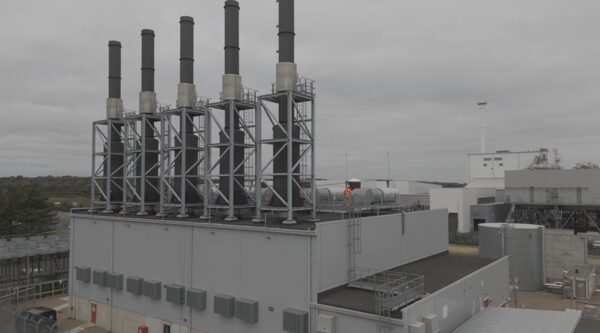
The split between the two auctions is a deliberate hedge against forecasting error. A requirement set four years out rests on projections of peak demand, plant closures and interconnector flows that will not all prove correct. Setting the whole requirement at T-4 would risk over-procuring, and therefore over-charging consumers, or under-procuring and leaving no route to correct it. Holding back a slice for the T-1 auction allows the volume to be adjusted against a much better picture of the delivery year.
The two auctions also suit different providers. Long lead times favour new build and major refurbishment, which need bankable revenue before construction starts. Short lead times favour existing assets and demand-side response, where the commitment is operational rather than capital: an aggregator putting together a portfolio of controllable load needs months, not years. That is one reason demand-side participation is more visible in T-1.
The volumes procured across both auctions have to track a demand picture that is expected to grow substantially. The Climate Change Committee has factored in a 50% increase in demand on electricity to reflect the decarbonisation of transport, industry and buildings5. A larger, more electrified peak has to be covered by firm capacity, and the auctions are the instrument by which that cover is bought.
Storage and flexibility in the mix
Batteries and other storage now compete directly for capacity agreements, and the scale of what is expected is significant: industry analysis points to an up to 6GW storage capacity gap to be plugged in the lead up to 20306. Storage is a natural capacity provider because it can be dispatched on command, but its contribution is duration-limited, which is why de-rating factors matter so much to storage economics.
Alongside storage, the flexibility of demand is becoming part of the same answer. Great Britain's approach here is explicitly market-based: the UK is taking a market-driven approach to flexibility, with customers incentivised to run appliances such as heat pumps flexibly through half-hourly electricity pricing structures7. That is a different lever from the Capacity Market, operating on price signals rather than procurement contracts, but it bears on the same problem, which is the size of the peak that firm capacity has to cover. The generation side is shifting too: solar capacity is expected to grow by up to 17 per cent in 2025, and to be about triple current levels by 20308. More weather-dependent output on the system does not remove the need for firm capacity; it changes when and for how long that capacity is called.
Further detail sits on the pages for grid-scale battery storage, long-duration electricity storage and household demand flexibility.
The margin problem the mechanism was built to solve
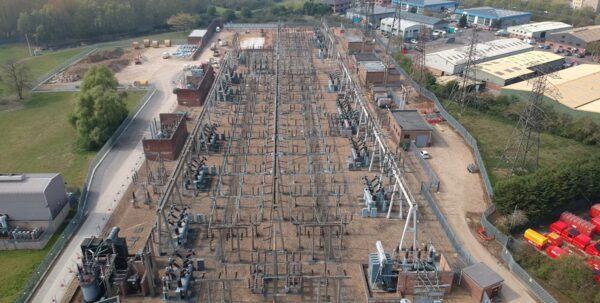
The Capacity Market was introduced against a specific fear, which was a collapsing capacity margin. Independent analysis of peak demand set out the position plainly: the difference between peak demand and supply, the capacity margin, is above 20 per cent, which is the level needed to maintain continuous supply, and Ofgem estimated at the time that this margin would decline from around 14 per cent in 2012 to just over 4 per cent by 2015/20164. A margin in low single figures leaves very little room for a cold, still evening coinciding with plant outages.
Those figures are dated and describe the period in which the mechanism was designed rather than today's system, but they explain its shape. A margin is not something the market produces incidentally; it is spare capacity that has to be paid for by someone, and the Capacity Market is the decision about who pays and how the payment is allocated.
"The difference between peak demand and supply, which is the capacity margin, is above 20 per cent, which is needed to en..."
The generation fleet behind that margin has changed beyond recognition since. The phase out of coal from UK electricity generation, alongside ongoing expansion of the second largest national offshore wind capacity, has replaced a fleet of always-available thermal plant with one that is cleaner and more variable9. See the end of coal power and electricity margins and shortfall notices for how margins are assessed and communicated today.
What it costs on a bill, and how the allowance is set
There is no Capacity Market line on a domestic electricity bill. Suppliers pay capacity charges and recover them within their tariffs, and for customers on the default tariff cap the regulator makes room for that recovery through a Capacity Market Cost Allowance within the cap methodology. That methodology is revisited by consultation; when a change to the Capacity Market Cost Allowance Methodology was consulted on, one response was received, from an energy supplier, who noted they would have welcomed more advance notice of how the prospective new Capacity Market input changes would be structured2.
The cap itself applies to default tariff customers in the Great Britain energy market, and is set by the regulator to constrain what an efficient supplier can charge3. The practical effect is that the Capacity Market cost is one of several wholesale and policy inputs bundled into unit rates and standing charges rather than itemised.
| Element | How it reaches the household |
|---|---|
| Capacity agreement payments | Paid to capacity providers, funded by electricity suppliers1 |
| Capacity Market Cost Allowance | Set within the price cap methodology so suppliers can recover the cost2 |
| Default tariff cap | Applies to default tariff customers in the GB energy market3 |
| Visible bill line | None; the cost is embedded in tariff rates2 |
Because the amount procured and the clearing price change with each auction, the size of that embedded cost changes between delivery years. Related bill components are covered under transmission and balancing charges and contracts for difference.
Capacity market notices and the delivery obligation
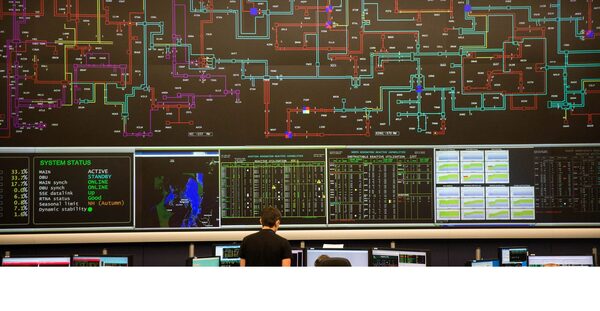
The obligation attached to a capacity agreement is not theoretical. When the expected margin for a settlement period falls below a threshold, a capacity market notice is issued. It is a warning to capacity providers that a stress event may follow and that their agreements may be called upon. A notice is not an interruption of supply, and notices are frequently cancelled once the margin picture improves, whether because a plant returns, demand comes in lower than forecast or interconnector flows change.
If a stress event is declared, providers must deliver against their obligation or face penalties. That penalty regime is what converts an availability payment into a firm commitment, and it is the reason de-rating factors are set conservatively: a provider that cannot sustain output for the required duration has an exposure, not just a forgone payment.
Great Britain, Northern Ireland and the wider market
The Capacity Market covers Great Britain. Northern Ireland participates instead in the all-island Single Electricity Market, with its own capacity arrangements and its own system operator; the Great Britain price cap that carries the Capacity Market Cost Allowance does not extend there3. The page on energy supply in Northern Ireland sets out that structure, and SONI covers the system operator.
Within Great Britain, Scotland and Wales sit inside the same market and the same auctions as England; there is no separate Scottish or Welsh capacity auction, and no devolved variation in the charge. What differs is where capacity is physically located, and the distribution of small-scale generation is markedly uneven: across the Feed-in Tariff scheme, installed capacity is split 77.80% in England, 12.24% in Scotland and 7.56% in Wales11. That is a different scheme from the Capacity Market, but it illustrates why network and locational questions, rather than market design questions, are where the nations diverge.
Market structure above the Capacity Market is also settled policy: government confirmed its decision to retain a single UK wide wholesale market and to proceed with Reformed National Pricing, rather than splitting the market into zones12. Households off the gas grid sit outside these arrangements for heat entirely: heating oil is supplied through a highly competitive market, unlike the circumstances that led to the gas and electricity price cap13. See heating oil and LPG supply.
Where the Capacity Market sits among the other schemes

It is easy to conflate the mechanisms that appear in the same policy conversation. Contracts for Difference fund low-carbon generation by stabilising the revenue per unit generated. The Renewables Obligation, now closed to new entrants, did something comparable for an earlier generation of projects. Balancing services procure second-by-second control of frequency and voltage; the Smart Systems and Flexibility Plan described the creation of a regional reactive power market as the first of its kind in Great Britain14. The Capacity Market does none of these things. It buys one product only: availability at peak.
The distinction is worth holding on to when reading a bill or a policy announcement, because the schemes have different beneficiaries, different durations and different cost recovery routes. Contracts for Difference, the Renewables Obligation and balancing services are treated separately.
What it means for a household's energy independence
The honest answer is that the Capacity Market secures the grid a household depends on; it does not reduce that dependence. Every pound spent in these auctions buys reliability in a national system, and the mechanism is funded by the same customers who are dependent on it. A home with no generation and no storage gains from the Capacity Market exactly what it gains from the transmission network: a supply that is more likely to be there, at a cost embedded in the unit rate.
The wider context is a country that has long been described in government terms as a net energy importer with a high dependence on gas and oil, which is the condition the British Energy Security Strategy set out to change by accelerating homegrown power for greater energy independence15. Capacity procurement is part of keeping the lights on while that transition happens, not part of the transition itself.
For a household, genuine independence comes from assets it owns and controls: on-site generation, storage, and demand that can be shifted. Those can touch the Capacity Market only indirectly, through an aggregator that bundles many small controllable loads into a demand-side response portfolio large enough to prequalify. Even then, the household is contracting with an aggregator, and the dependence shifts rather than disappears: on the aggregator's platform, on a smart meter and its communications, and on the supplier relationship that carries the settlement. A household that cuts its peak demand outright, rather than selling that reduction into a scheme, keeps the benefit without acquiring a new counterparty, and household flexibility is where the capacity question meets the home most directly.
What remains outside a household's control is the entire procurement chain described above: the requirement volume, the clearing price, the technologies that win, and the allowance through which the cost is recovered. Those are decided in auctions and consultations, and the only household lever on the resulting bill is how much electricity is bought and when. See energy security and household independence and the overview of UK energy supply for how these pieces fit together.
Sources16 cited
- Statutory Security of Supply Report 2025, GOV.UK, 2025-12-17
- Energy price cap wholesale adjustment decision, Ofgem, 2024-02
- Price cap decision on the EBIT allowance methodology, Ofgem, 2023-08-25
- The challenge of shifting peak electricity demand, Nesta, 2013-11-01
- A reliable, secure and decarbonised power system by 2035, Climate Change Committee, 2023-03-09
- Accelerating heat electrification by providing customer choice, BEAMA, 2025-09-22
- Efficiency and flexibility: a UK perspective on heat pumps in the electricity system, Heat Pumping Technologies, 2024
- The UK is seizing the solar opportunity, Solar Energy UK, 2025-07-01
- Progress in Reducing Emissions: 2025 Report to Parliament, Climate Change Committee, 2025-06-25
- Energy price caps explained, Ofgem, 2020-12
- Feed-in Tariffs Quarterly Report, Issue 64, Ofgem, 2026-06-29
- DESNZ Annual Report and Accounts 2025 to 2026: performance report, GOV.UK, 2026-09-17
- Heating Oil Support debate, Hansard, 2026-03-16
- Upgrading our energy system: smart systems and flexibility plan, Ofgem, 2017-07
- Spring Statement 2022, HM Treasury, 2022-03
- British energy security strategy, GOV.UK, 2022-04-07
 The Full Energy Bills and the Price Cap GuideWondering why your bill went up even when you used less power?
 Flexibility Payments for HomesCan you really get paid for using less electricity at peak times, and how much would a household actually earn?
 Standing ChargesWhy is there a daily charge on a gas or electricity bill even when nothing is used, and what does it actually pay for?
 Balancing Services and FrequencyKeeping the lights on means matching what the country uses with what is being generated, second by second.
 Network Operators and 105When the lights go out, who do you actually ring?
 Electricity Margin ShortagesWill the lights stay on this winter, and what would have to happen before homes lose power?