
In this guide
Network costs are the part of an electricity bill that pays for the wires, the pylons and the job of keeping the whole system steady. Ofgem's own breakdown of how a bill is calculated lists network costs among the components, alongside wholesale costs, policy costs, VAT at 5%, the supplier's operating costs and its margin1. In the price cap, network costs are the next most important component after wholesale, making up almost 30% of the total2.
Two charges sit behind that figure. TNUoS, transmission network use of system, pays for the high-voltage network that moves power around the country, and its tariffs vary by location. BSUoS, balancing use of system, pays for the day to day balancing of supply and demand. Neither is billed to a household directly. Both are levied on suppliers and generators, and suppliers recover them through the unit rate and the standing charge.
What TNUoS and BSUoS actually are
TNUoS is the charge for using the transmission network, the high-voltage system that carries electricity between power stations and the regions that consume it. It is not a single national rate. Transmission tariffs are set by location, so the cost of moving power to a particular part of the country is reflected in what users in that area pay. The network itself, the pylons, substations and cables, is described in more detail on our page on the electricity transmission network.
BSUoS is different in kind. It pays for the operation of the system rather than the assets: the actions the system operator takes to keep supply and demand matched in real time, second by second and half hour by half hour. That work is closely related to the balancing services and frequency response that hold the grid stable, and to the wider question of grid inertia and system stability as the generation mix changes.
Both charges are settled through industry codes rather than through consumer contracts. A household never sees a TNUoS or BSUoS invoice, and never receives a separate charge for either. What a household sees is the consequence: a unit rate and a standing charge that already contain the supplier's network costs.
The distinction matters for a simple reason. TNUoS is about where power is generated and where it is used, so it is inherently geographic. BSUoS is about how well the system is balanced at any moment, so it is inherently temporal. One rewards or penalises location; the other reflects the cost of keeping the lights on minute by minute.
"network costs to build, fix and repair pipes and wires to move energy"
Where these charges appear on your bill and how they are recovered

Nothing on a domestic bill is labelled TNUoS or BSUoS. The charges arrive inside the supply element, spread across the two parts of a tariff that households recognise: the unit rate, charged per kWh used, and the standing charge, charged per day regardless of use.
The standing charge exists to recover the costs required to provide energy company services, including providing and maintaining the wires, pipes and cables that deliver power to a customer's door, through to the staff and buildings required for the energy business to function5. That description covers distribution network costs directly, and the same recovery logic carries transmission and balancing costs into the unit rate.
Ofgem's list of what shapes a bill is explicit about the components: VAT at 5%, wholesale costs, network costs, operating, debt and industry costs, EBIT, policy costs, the type of energy used, the type of meter installed and how the bill is paid1. Network costs sit in that list as a single block, which is why a household cannot separate the transmission part from the distribution part on a statement.
The price cap allowance for network costs is built using the same model used to calculate and update the existing safeguard tariffs, applied regionally8. That regional application is the mechanism by which a household in one part of Great Britain ends up with a different network allowance from a household in another, even where the rest of the cap is identical.
How TNUoS is calculated: location, network use and the triad mechanism
Transmission charges are built from several elements, and the way they are calculated has changed materially in recent years. The traditional signal was the triad: three half-hour periods in a winter, identified after the event, that set a large share of the following year's transmission charges for the users they applied to. Shifting demand away from those peaks reduced the charge.
That signal has been substantially removed for the users it covered. Ofgem's Targeted Charging Review moved charging of certain types of network costs from a unit cost basis to a fixed basis10. The effect is that a portion of network cost is now recovered regardless of when or how much a user draws power, which weakens the incentive to avoid particular half hours.
The same review reshaped distribution charging. Ofgem noted that DUoS residual charges, the elements of distribution network charges that contribute to standing charges, were currently high across most regions in 2024/25, and were not expected to continue in all areas into future years10. That is a statement about direction rather than a settled outcome.
For a household, the practical consequence is that time-shifting electricity still matters for the wholesale part of the bill and for any time of use tariff, but it no longer carries the same weight in network charges that it once did. Time of use tariffs use a smart meter to log electricity use and charge different rates during different time windows11, and that is where the household's own lever now sits.
| Charge | What it pays for | Basis | Varies by |
|---|---|---|---|
| TNUoS | Transmission network assets | Location and network use | Region |
| BSUoS | System balancing and operation | System-wide costs | Time and system conditions |
| DUoS residual | Distribution network costs in standing charges | Fixed, following the Targeted Charging Review | Region10 |
Why where you live changes what you pay
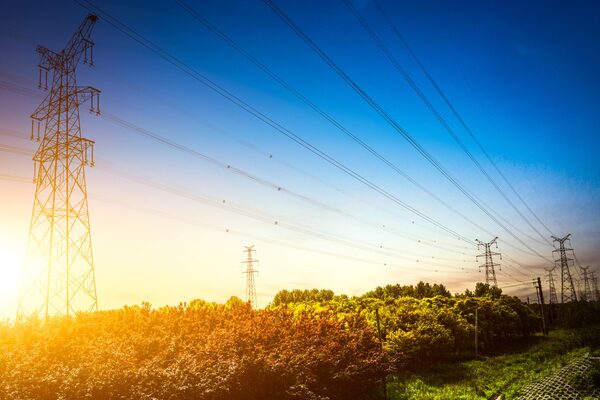
Location is built into transmission charging because the network is not uniform. A region far from generation, or one that carries heavy flows, uses more of the transmission system to be served, and the tariff reflects that. The price cap allowance for network costs is applied regionally using the same model as the safeguard tariffs8, so the difference survives all the way into the capped domestic bill.
The scale of network costs in the overall picture is significant. Network charges and green levies account for 20% and 6% respectively of the rise in bills since pre-crisis levels3. That is a statement about the increase rather than the total, and it shows how much of the recent movement in bills came from the network and policy side rather than from wholesale energy alone.
Distribution charging adds a second geographic layer. Residual charges, the part that feeds standing charges, were high across most regions in 2024/25 and were not expected to continue in all areas into future years10. Where a household sits on that map therefore affects both the transmission element and the distribution element, and the two do not necessarily move together.
There is a limit to what a household can do about any of this. The charges follow the property and the network it connects to, not the occupant. What a household can change is the supplier or tariff it buys through: if you have to pay your energy bills, you can choose to switch your supplier or tariff at any time12. That changes who recovers the network costs from you, not how much network the property uses.
BSUoS: paying for balancing the system
Balancing charges pay for the work of keeping the system matched in real time. That work has grown more complex as the generation mix has shifted, and it connects directly to the balancing services and frequency response that the system operator procures, and to the capacity market that pays for firm capacity to be available.
BSUoS is recovered from users of the transmission system and passed through to suppliers, which is why it appears in a domestic bill only as part of the supply element. The costs are not stable: they depend on system conditions, on how much balancing action is needed, and on the prices at which that action can be bought. A winter with tight margins and volatile wholesale prices produces a different balancing bill from a mild one.
The interaction with household behaviour is indirect but real. Demand flexibility, whether from a smart meter, a time of use tariff or a battery, reduces the amount of balancing action needed at peak times. Ofgem's own work on how costs are recovered has looked at where charges should sit: in considering a debt relief scheme, Ofgem set out that these would fall on the unit rate for gas and the standing charge for electricity, which it recognised as a particular allocation basis13. The same question, whether a cost belongs on the unit rate or the standing charge, runs through the whole network charging debate.
A separate allowance illustrates how specific these items can be. The Network Charge Compensation scheme allowance added £3 in the 1 April to 30 June 2025 price cap period4. Small, named and time-limited allowances of this kind are how network-related costs reach a capped bill.
Who sets and reviews the charges: NESO, Ofgem and the CUSC process

The institutional split matters for anyone trying to follow a charging decision. NESO is the whole system planner, the operator of the electricity system and expert advisor to government and Ofgem14. It runs the system, publishes the transmission tariff forecasts and administers the code processes through which charging modifications are developed.
Ofgem is the regulator and decides. Its role in the related energy schemes shows the pattern: it administers ECO4 on behalf of DESNZ15, and from time to time consults on how it administers aspects of the ECO scheme16. The same consult-then-decide approach applies to network charging, with the modification process doing the development work and Ofgem making the final call.
NESO has also been building a wider coordination role. It will establish a GB-wide National Steering Committee including representatives from NESO, government and Ofgem14. That structure sits above the individual code processes and reflects the fact that network planning and charging decisions increasingly interact with government policy.
The CUSC, the Connection and Use of System Code, is the document that contains the charging methodology and the modification process. Changes to transmission charging arrive as numbered modifications, developed by workgroups, consulted on, voted on by a panel, and then sent to Ofgem with a recommendation. The timetable for the current review is set out below.
| Stage | Date |
|---|---|
| Workgroup vote on implementation option | 31 March 20266 |
| Workgroup meeting | 16 April 20266 |
| Code Administrator Consultation opens | 28 April 20266 |
| Code Administrator Consultation closes | 20 May 20266 |
| Draft Final Modification Report published | 18 June 20266 |
| Panel recommendation vote | 26 June 20266 |
| Final Modification Report due to Ofgem | 6 July 20266 |
Separately, NESO's next transmission tariff publication, the initial forecast of 2027/28 TNUoS tariffs, is scheduled for April 20266. A further modification, CMP463, stabilises the Specific Onshore Expansion Factors from 1 April 20266.
The CMP417 review of locational charging and what it could change
CMP417 is the live modification on locational charging, and its progress through 2026 is the clearest example of how a charging change is made. The workgroup met to carry out their vote on the best option to implement the change on 31 March 2026, met again on 16 April, and the Code Administrator Consultation opened on 28 April and closed on 20 May6. The Draft Final Modification Report was published on 18 June, the panel was scheduled to meet on 26 June to carry out their recommendation vote, and the Final Modification Report is scheduled for 6 July 2026, with that date also the deadline for it to be sent to Ofgem6.
What the modification is about is where transmission charges fall, and therefore which parts of the country carry more or less of the cost of the network. That is a distributional question as much as an engineering one, which is why it runs through a formal consultation rather than being settled by the system operator alone.
For a household, the honest answer is that the effect is indirect and not yet determined. Any change to TNUoS tariffs changes what suppliers and generators pay, and suppliers recover their costs through the unit rate and standing charge. The route from a modification to a domestic bill is real but slow, and it passes through Ofgem's decision and then through each supplier's pricing.
The wider direction of travel is visible in other decisions. Ofgem's Targeted Charging Review already moved certain network costs from a unit basis to a fixed basis10, and the residual charges that feed standing charges were described as currently high across most regions in 2024/25, not expected to continue in all areas into future years10. CMP417 sits within that same debate about how much of the network bill should follow usage and how much should be fixed.
What these network charges mean for households with solar, batteries and export
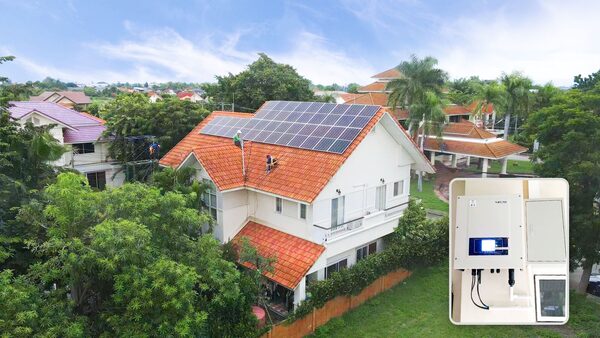
Generating at home changes the arithmetic of a bill without removing network costs from it. A household with solar still imports at times, and imported units carry network costs like any others. What falls is the number of units bought, and therefore the network cost recovered through the unit rate.
Export is paid for on a separate basis. Under the Smart Export Guarantee, households installing renewable power technologies will be paid by their energy supplier for each unit of electricity they supply to the grid17. That payment is for exported units and is not a network charge or a network credit.
The VAT treatment of a solar and battery installation is worth knowing because it turns on the split between materials and labour. In the worked example for Northern Ireland, where materials are more than 60% of the total cost, an installer charges £5,385 excluding VAT, made up of £3,500 for materials and £1,885 for labour; materials are 65% of the total, so standard 20% VAT applies to materials and 5% VAT to labour18. The VAT position therefore depends on the composition of the quote, not just its size.
Connecting generation also brings a network process. A G99 application is required because the DNO needs to check whether the grid can take the extra electricity load before the system is up and running19. That is a distribution network question rather than a transmission charging one, but it is the point at which a household's generation meets the network formally.
How network charges relate to the wider cost of grid independence
The honest position is that network charges are the clearest illustration of what a household cannot control. Almost 30% of the price cap total is network costs2, and network charges account for 20% of the rise in bills since pre-crisis levels3. Those costs are set by methodologies, reviews and code modifications, decided by NESO and Ofgem, and recovered through a supplier. A household can change supplier, change tariff, and change how much it imports, but it cannot opt out of the network that serves its property.
What a household can influence is the volume and timing of what it draws. Time of use tariffs use a smart meter to log electricity use and charge different rates during different time windows11, and a ToU tariff is a plan where the price of a unit of energy varies during a 24 hour period20. Static time of use tariffs offer the same prices at the same times each day, while dynamic tariffs can vary continually and be calculated in real time depending on various factors20. Those structures move the wholesale and balancing element of a bill, which is where household flexibility has its effect.
The distribution side is where the household's own connection sits, and it is covered in more detail on our page on electricity distribution networks. The transmission side, and the question of who owns and operates it, is set out on the electricity transmission network page. For the wider picture of where power comes from and what a home can genuinely control, the UK energy supply hub is the starting point.
The practical summary is this. Network charges are a fixed feature of a grid-connected home, they vary by region, and they are decided through a process a household can read but not vote in. What a household controls is consumption, timing and the tariff it chooses, and those levers act on the parts of the bill that are not network costs.
Sources20 cited
- How your electricity or gas bill is calculated, Ofgem, 2026
- Energy prices in Great Britain, House of Commons Library, 2026
- Electricity prices in Great Britain, House of Lords Library, 2026-06
- Summary of changes to the energy price cap, 1 April to 30 June 2025, Ofgem, 2025
- Energy bills and standing charges, House of Commons Library, 2026
- CMP417 modification documents, NESO, 2026
- Check if you are owed money on your energy bill, Ofgem, 2026
- Default tariff cap: policy consultation overview, Ofgem, 2018-05-25
- Energy price cap operating cost and debt allowances decision, Ofgem, 2025-05-23
- Standing charges domestic retail options, Ofgem, 2024-08-23
- Five top tips to cut your energy bills, Welsh Government, 2026-03-18
- Switch your home energy supplier, Ofgem, 2026
- Resetting the energy debt landscape, Ofgem, 2024-12-12
- Electricity distribution networks study: government response, Department for Energy Security and Net Zero, 2025-07-07
- Energy Company Obligation (ECO), Ofgem, 2026-09-17
- ECO consultations and feedback, Ofgem, 2026-09-17
- Smart Export Guarantee, House of Commons Library, 2026-09-17
- VAT on energy saving materials, HM Revenue & Customs, 2026-09-20
- Building regulations renewables guidance, Bedford Borough Council, 2026-09-17
- POST note: time of use tariffs, Parliamentary Office of Science and Technology, 2026-09-17
 Electricity Network ChargesWhy are network charges on my bill so high, and who decides how much they are?
 Distribution Networks and DSOsWho actually owns and runs the cables and substations bringing power to your home?
 The Transmission NetworkWondering who owns the pylons near your house, or why the grid needs upgrading before you can run a heat pump or an electric car?
 Standing ChargesWhy is there a daily charge on a gas or electricity bill even when nothing is used, and what does it actually pay for?
 The Full Energy Bills and the Price Cap GuideWondering why your bill went up even when you used less power?
 What Makes Up a BillBreaks a domestic energy bill into wholesale costs, network charges, policy levies, operating costs, supplier margin and VAT, with the share each takes and how those shares have moved since the energy crisis.