In this guide
Grid inertia is the resistance a power system offers to a sudden change in frequency, and it comes from the rotating mass of large generators and motors. Those machines store kinetic energy and release it instantly when supply or demand shifts, which buys the system operator time to balance the grid. As coal, gas and nuclear plant give way to wind and solar connected through power electronics, the amount of that rotating mass on the British system falls, and inertia has to be procured deliberately rather than inherited for free.
The scale of the change is visible in the carbon intensity of the grid. Electricity generated in the UK in 2023 reached its lowest-ever carbon intensity, with an average of 171gCO2/kWh, and forecasts suggest that by 2050 it will emit as little as 33gCO2/kWh1. The UK electricity grid is supplied by a mix of sources: wind, nuclear, gas and solar, and it is estimated that about 42% of the UK power grid comes from renewable sources, with wind being the biggest contributor2.
For a household, the practical question is what a lower-inertia grid means for the lights staying on. National Grid ESO, the electricity system operator for Great Britain, is responsible for the management of the GB electricity grid, and its central view remains that there will be adequate electricity supplies through the winter to ensure Great Britain remains within the reliability standards set by Ofgem3. The number of power cuts has fallen since 20154. The risk is not that the grid is failing, but that the margin for error is narrower and the tools used to hold frequency steady are changing.
What grid inertia is and why it matters
Inertia is a property of mass in motion. A large turbine generator spinning at speed holds a substantial amount of kinetic energy, and when the balance between generation and demand is disturbed, that energy is exchanged with the grid almost instantaneously. The effect is to slow the rate at which frequency moves away from 50Hz, giving control systems and reserve plant time to respond.
A grid with plenty of inertia is forgiving. A grid with little inertia is quick. The same loss of generation that would once have produced a gentle dip in frequency now produces a steeper one, and protection equipment has less time to act before it begins disconnecting plant to protect it. That is the whole reason inertia has moved from an engineering footnote to a procurement category.
The emissions intensity of the electricity grid changes throughout the day and year as different mixes of generation technologies are used to meet electricity demand10. At off-peak times, for example overnight when it is windy, demand is lower and more electricity comes from renewable sources, meaning lower emissions. At peak times, such as 5pm on a calm day, there is more demand, so more electricity comes from gas, meaning higher emissions11. Inertia varies with that mix in much the same way, which is why it is measured and managed hour by hour rather than assumed.
For a household, inertia is invisible until it is insufficient. It is the reason a fault on one part of the network does not cascade into a countrywide outage, and the reason the system can absorb the loss of a large generator or interconnector without shedding load. It is a shared, system-level service: no individual home can hold it, and no individual home can opt out of depending on it.
Why the UK's low-carbon grid has less inertia than before
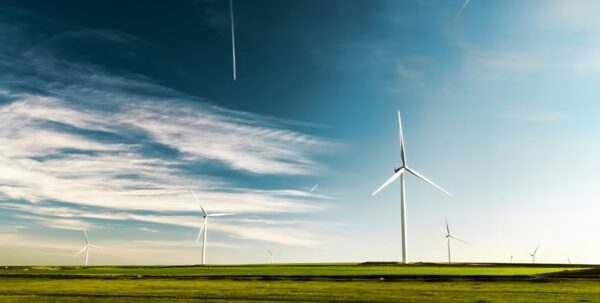
The shift is a consequence of decarbonisation, not a side effect of it. The UK's greenhouse gas emissions are approximately 50% lower than 1990 levels12, and the country's emissions are now less than half the levels they were in 199013. By the middle of the Seventh Carbon Budget, on the Climate Change Committee's pathway, emissions in the UK will be only a quarter of the level they were in 1990, or 87% lower than levels in 1990, and 90% lower excluding emissions from international aviation and shipping14.
That progress has been concentrated in electricity. Emissions from UK residential buildings are now 33% lower than in 2008, and emissions from UK surface transport are 16% lower than in 200815. The grid itself has decarbonised fastest of all, which is precisely why its mechanical characteristics have changed.
Most wind and solar generation connects through power electronic converters. These can be controlled with great precision, but they do not inherently contribute the physical rotating mass that a synchronous generator does. As renewables take a larger share, the total system inertia declines even as the installed capacity of generation rises. The system operator therefore has to replace an incidental by-product of the old fleet with an explicitly purchased service.
"It is estimated that about 42% of the UK power grid comes from renewable sources, with wind being the biggest contributor"
The change is not confined to Great Britain. The Grids Package aims to modernise Europe's electricity grids, and connect them up better, and the EU Grid Connection Code sets the rules for connecting users, like power generators and consumers, to the electricity grid16. A lower-inertia system is a continental phenomenon, and the technical standards that govern it are increasingly set at that level.
What happens when inertia falls: frequency events and power cuts
Frequency falls when generation is lost or demand rises faster than the system can respond. In a high-inertia system the fall is slow enough for reserve plant to pick up load and for demand-side measures to take effect. In a low-inertia system the fall is faster, and the window for intervention narrows.
If the situation cannot be corrected, the system operator can move to controlled disconnection. National Grid ESO would legally instruct distribution network operators to disconnect power supplies17. Emergency power cuts mean switching power off to at least 5% of UK households at once9. Depending on the severity of the situation, power may be interrupted multiple times over the period of the event, which may last several days6.
The mechanics of a rota cut are well documented by the network operators. Different block letters will be timetabled to be without power for around three hours once or twice a day where there is time to implement an emergency rota18. Power could be switched off or reconnected around 30 minutes before or after a published rota time depending on national electricity use19. Normally those customers who have been subject to a rota cut will not suffer a second one for several days, and there is a possibility that you may experience some short duration effects of under three minutes, such as dimming of lights or low power, even if your rota block is not affected9.
Most interruptions have nothing to do with system stability. Power cuts are commonly caused by cables and equipment becoming damaged, especially in storms4. The distinction matters: a low-inertia grid raises the consequence of a large fault, but the everyday outage a household experiences is far more likely to be a local network failure.
Grid stability services: how National Grid ESO keeps the frequency steady
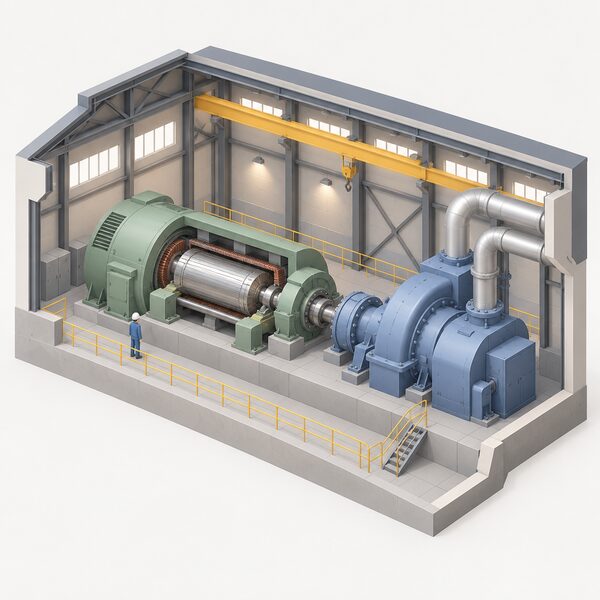
National Grid ESO is the electricity system operator for Great Britain and is responsible for the management of the GB electricity grid6. Its job is to hold frequency close to 50Hz second by second, and to do so it buys services rather than owning most of the plant that provides them.
Before any emergency instruction is given, the operator takes several steps to protect customers. These include encouraging additional generation through the supply market, asking heavy industrial users to limit their demand during peak periods, and reducing domestic power demand, including paying customers to change appliance use or reducing voltage across the country by a small percentage10. Reducing voltage across the country by a small, indiscernible percentage reduces demand without most customers noticing9.
The operator also publishes an annual winter outlook. National Grid ESO undertakes a winter outlook every year which has raised the possibility of emergency power cuts but said it was unlikely they would be needed9. Its view remains that there will be adequate electricity supplies across the UK this winter20.
Stability services are procured separately from energy. Inertia, frequency response and voltage support are bought as distinct products from generators, storage and demand-side providers, and the contracts are designed around the largest loss the system must survive. That largest loss risk, historically the trip of a single large generator or interconnector, sets the size of the reserve that has to be held and therefore the cost of the service.
Alternatives to spinning mass: grid-forming inverters, batteries and synchronous condensers
The replacement for rotating mass comes in three broad forms: machines that spin without generating much energy, electronics that imitate the behaviour of machines, and demand that can be moved or switched off.
Synchronous condensers are essentially generators that spin freely, providing inertia and voltage support without exporting significant power. They are the closest physical substitute for the old fleet's behaviour. Grid-forming inverters take the electronic route, controlling batteries and other converter-connected assets so that they resist frequency change in a way that mimics a synchronous machine.
Battery storage has grown quickly. UK grid-scale battery storage power capacity reached 7.5 GW by the end of 20255. That capacity can respond in milliseconds, which makes it well suited to the fast frequency response a low-inertia system needs, though the energy it can sustain is limited by duration.
At household scale, the same inverter technology appears in a different form. A hybrid inverter can connect to the grid and provide backup power during grid outages, and it charges the battery from the solar panel or the grid, using the grid to charge batteries when solar produces almost no electricity at night21. An off-grid inverter works differently: in off-grid systems, the batteries must be large enough to meet your needs, and large batteries ensure power availability even in cloudy or low-sunlight periods21.
Interconnection and imports: how links to Europe add stability
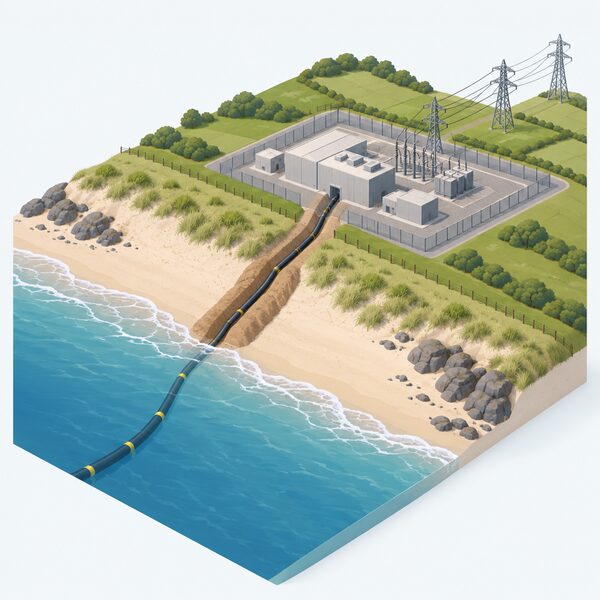
Interconnectors cut both ways. They allow Britain to import power when domestic generation is short, and to export when it is long, which spreads risk across a wider pool of plant. They also concentrate it: the loss of a large interconnector is one of the biggest single contingencies the system has to be able to survive, and it is a contingency that arrives without warning.
The direction of travel in Europe is towards tighter integration. The Grids Package aims to modernise Europe's electricity grids, and connect them up better, while the EU Grid Connection Code sets the rules for connecting users, like power generators and consumers, to the electricity grid16. Closer coupling means more shared reserve and more shared exposure.
Balancing the grid across borders makes the UK less reliant on expensive foreign imports, which both saves money and gives more control over the country's own energy supply23. The government's stated aim is to secure the energy system through infrastructure investment in every part of the UK24. Imports remain a dependence, but a diversified one: a link that can flow in either direction is a different proposition from a pipeline that can only deliver.
For a household, interconnection is the reason a still, cold evening does not automatically mean the lights go out. It is also the reason a fault in another country's network can be felt on the British system within seconds.
What grid upgrades mean for household bills
The network that carries this balancing act needs replacing and extending. £70bn of investment is required in the grid between 2025 and 20316. Some £63 has been added to bills since 2021 as a result of rising network charges7. The same analysis projects that the work will increase the network charges consumers pay by £60 by 2030, but that it will also save them £30 overall compared to the increased constraint costs if projects are not accelerated6.
Constraint payments, the cost of paying generators to turn down or up when the network cannot carry the power, are set to rise to £2 billion in the mid-2020s25. Delayed grid upgrades risk adding billions to energy bills, according to the National Audit Office, which warned that constraint costs could rise substantially by 20306.
The bill impact is not evenly spread. Network charges are levied on suppliers and passed through, and the standing charge element is where most households see them. The figures above are national aggregates, not a per-household forecast, and the £60 and £30 figures are projections to 2030 rather than observed costs.
| Item | Figure | Period | Source |
|---|---|---|---|
| Grid investment required | £70bn | 2025 to 2031 | 6 |
| Network charges added to bills | £63 | since 2021 | 7 |
| Projected network charge increase | £60 | by 2030 | 6 |
| Projected overall consumer saving | £30 | by 2030 | 6 |
| Constraint payments | £2 billion | mid-2020s | 25 |
Preparing your home for power cuts on a changing grid
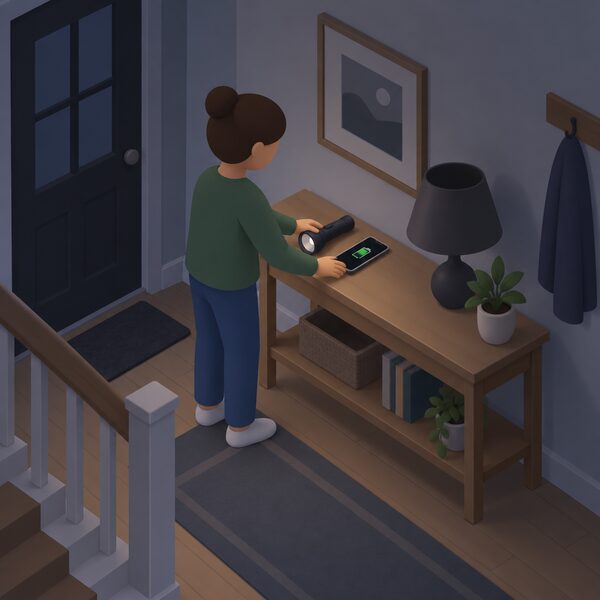
Preparation is mostly about information and small practical steps, and the network operators publish consistent advice. Keep a mobile phone fully charged so you can use it to go online for updates or call if you have a power cut, keep a torch handy, have warm clothes, blankets and food which does not need heating accessible, and follow your network operator on social media for local updates17.
Where a rota cut is expected, the advice is more specific. Refrain from using more electricity in preparation, such as boiling kettles for flasks or charging mobile phones, because the system is struggling with the demand and a surge from other areas may make the situation more unstable26. Have warm clothes and blankets accessible in case you experience a prolonged power cut, back up your work before the power is anticipated to go off if you are working or studying, and remember to open or shut as appropriate any electric gates or access points26. Check on elderly or vulnerable neighbours, family and friends and make them aware of the planned emergency power cuts26.
Network operators also act directly. Purely as a precaution, UK Power Networks contacts its most vulnerable customers with support and advice, and urges them to make a personal plan20. The Energy Networks Association runs the care and assisted living providers register that underpins priority support27.
For households that want to keep some supply during an outage, the equipment matters more than the intent. Not all home battery systems are suitable for power cuts, and the Energy Saving Trust advises asking your installer whether your battery will work in a power outage, and for how long28. A DC-coupled battery system cannot be charged from the grid, according to the Energy Saving Trust, which limits how much energy it can hold in reserve through a dull spell28.
What household energy independence does for grid stability
A household that generates, stores and shifts its own electricity changes its relationship with the grid in two directions at once. It draws less at peak, which reduces the demand the system has to meet with gas plant, and it can export or absorb power at times that help rather than hinder balancing.
The environmental case is straightforward. Balancing the grid means the grid needs to generate less electricity from fossil-fuelled generators, because enough renewable energy is generated to cover more homes for longer throughout the day23. The financial case is that it makes the UK less reliant on expensive foreign imports, which both saves money and gives more control over the country's own energy supply23.
The dependence that remains is real. A home battery that cannot be charged from the grid is limited in a long outage. A hybrid inverter that can connect to the grid and provide backup power during grid outages still depends on the grid for most of its charging21. A behind-the-meter system with no grid connection loses the value of exporting surplus electricity22. And every household remains dependent on the system operator holding frequency, on the network operator maintaining the cables, and on the interconnectors and generators that balance the whole system.
Support for efficiency and low-carbon heating is delivered differently across the four nations. The Home Upgrade Grant funds the installation of energy efficiency measures in domestic properties, and the published statistics monitor measures installed under the scheme in domestic properties29. The February 2025 release covers England31. In Scotland, Home Energy Scotland can offer free advice on improving the energy efficiency of your home32. In Wales, the energy efficiency strategy includes making sure people know how to switch energy supplier to save money33.
Off-gas-grid households are a distinct case. An estimated 4.8 million households across Great Britain were not connected to the gas grid in 20248. In Inner London, 26.6% of domestic properties are off the gas grid34. Those homes are already more dependent on electricity for heat, which makes the stability of the grid a more immediate question for them than for a household with a gas boiler as well.
Sources34 cited
- The best heating for your home, Which?, 2025
- Home energy efficiency key terms explained, Development Bank of Wales, 2024
- Electricity supply emergency code, SSEN, 2026
- Power cuts, Powercut105, 2026
- Clean Flexibility Roadmap: July 2026 update, GOV.UK, 2026
- Grid upgrade delays risk adding billions to energy bills, NAO warns, E&T, 2026
- Electricity prices in Great Britain, House of Lords Library, 2026
- Households off the gas grid, House of Commons Library, 2024
- Emergency power cuts, Electricity North West, 2026
- Rota load disconnections, National Grid, 2026
- Should I switch to a time of use tariff, Energy Saving Trust, 2026
- UK greenhouse gas emissions, House of Commons Library, 2025
- UK off track for net zero, say country's climate advisors, Climate Change Committee, 2024
- The Seventh Carbon Budget, Climate Change Committee, 2025
- Progress in reducing emissions: 2025 report to Parliament, Climate Change Committee, 2025
- Annual report 2025: the flexibility fix, European Heat Pump Association, 2026
- What happens in an energy shortage, Energy Networks Association, 2026
- Make a plan to be winter ready, UK Power Networks, 2026
- Care and assisted living providers, Energy Networks Association, 2026
- Is there any action I should take in preparation, NIE Networks, 2026
- Hybrid inverter vs off-grid inverter, LuxPowerTek, 2024
- Behind the meter energy systems guidance, Welsh Government, 2026
- Balancing the grid, Uswitch, 2026
- Spending Review 2025, GOV.UK, 2025
- Constraint payments, Parliamentary Office of Science and Technology, 2025
- Preparing for a power cut, Centre for Sustainable Energy, 2026
- Energy efficiency strategy for Wales, Welsh Government, 2016
- Solar panel battery storage, Which?, 2026
- Green Homes Grant Local Authority Delivery and Home Upgrade Grant release: August 2025, GOV.UK, 2025
- Green Homes Grant Local Authority Delivery and Home Upgrade Grant release: July 2025, GOV.UK, 2025
- Green Homes Grant Local Authority Delivery and Home Upgrade Grant release: February 2025, GOV.UK, 2025
- Financial help for energy efficiency and low carbon heating improvements, City of Edinburgh Council, 2026
- Electric vehicle charging infrastructure statistics: 1 July 2026, GOV.UK, 2026
- Technical annex for chapter 2: what EPCs measure, GOV.UK, 2026
 Balancing Services and FrequencyKeeping the lights on means matching what the country uses with what is being generated, second by second.
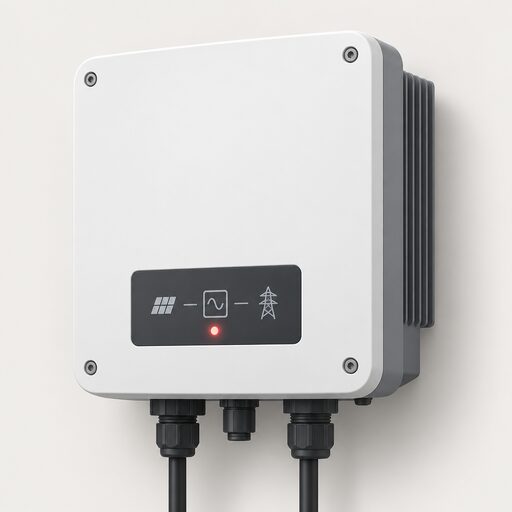 Islanding and Anti-IslandingWhy do solar panels switch off in a power cut, and can you keep the lights on anyway?
 The End of Coal PowerBritain no longer makes electricity from coal.
 Backup Power and EPSWill your lights stay on when the power goes out?
 Electricity Margin ShortagesWill the lights stay on this winter, and what would have to happen before homes lose power?
 Leaving the Electricity GridCan you really cut your home off the grid completely, and what does it cost to have your electricity supply removed for good?