

In this guide
Wales generated 23.2 TWh of electricity in 2023, of which approximately 7.8 TWh came from renewables, and consumed 14.8 TWh including losses1. Renewable generation was therefore equivalent to 53% of Welsh electricity consumption on that measure, a figure that describes annual equivalence rather than a moment by moment match between Welsh output and Welsh demand1. Two years earlier, in 2021, Wales generated 27.1 TWh in total: 7.7 TWh from renewables and 19.5 TWh from fossil fuels2.
The direction of travel is set by policy rather than by the current plant mix. The Welsh Government has adopted a goal to generate 100% of its electricity from renewable sources by 2035, and a broader vision for Wales to generate renewable energy to at least fully meet its energy needs, using surplus generation to tackle the nature and climate emergencies3. The Climate Change Committee frames the same shift as low-carbon electricity generation moving from 27% to 100% by 2035, cutting Welsh power sector emissions5.
For a household, the practical picture is a country that generates more electricity than it consumes, exports the surplus across the GB grid, and still depends on that grid, on gas for heat, and on UK level decisions about energy, because generation, transmission, distribution and supply are reserved matters6. What follows sets out the figures, what drives them, how Wales compares with the other UK nations, the rules that govern installations, and what all of it means for a home trying to stand on its own.
What Wales generates, and from what
The headline totals hide a system with two very different halves. In 2021, fossil fuels generated 19.5 TWh of electricity in Wales, representing 72% of total electricity generation, from 102 projects with 4,338 MW of capacity and an estimated 19,521 GWh of output2. By 2023 the total capacity of fossil fuel electricity generation in Wales was 4.3 GW, and natural gas represented 94% of Wales' fossil fuel based electricity generation1. Coal has effectively gone from the mix; what remains is gas, plus a smaller diesel fleet.
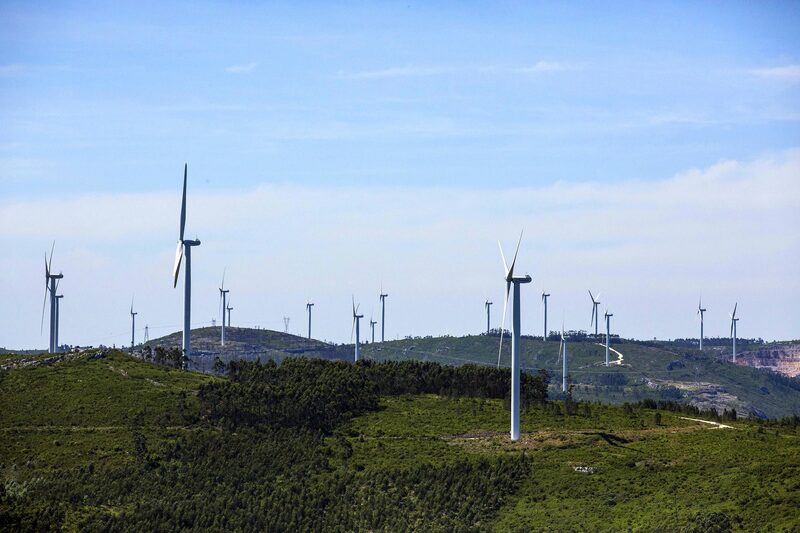
Renewables are the other half, and they are dominated by wind. In 2021, 70% of all renewable electricity generation in Wales was from onshore and offshore wind2. Renewable electricity generation reached nearly 8 TWh in 2022 and approximately 7.8 TWh in 20231. Growth has been modest rather than explosive: renewable electricity generation in Wales increased by 5% in the five years to 2023, and by 9% over the five years to 2022, against 140% in the preceding period1.
Capacity is concentrated geographically. Two thirds of renewable electricity capacity in Wales comes from the Swansea Bay City and Cardiff Capital regions, which represent 33% (925 MW) and 29% (824 MW) respectively, with North Wales at 23% (639 MW) and Mid Wales at 15% (419 MW)2. That concentration matters for grid planning: the resource, the demand and the network are not in the same places.
| Region | Share of Welsh renewable electricity capacity | Capacity |
|---|---|---|
| Swansea Bay City | 33% | 925 MW |
| Cardiff Capital | 29% | 824 MW |
| North Wales | 23% | 639 MW |
| Mid Wales | 15% | 419 MW |
Source: Energy Generation in Wales 20212
What drives the figures
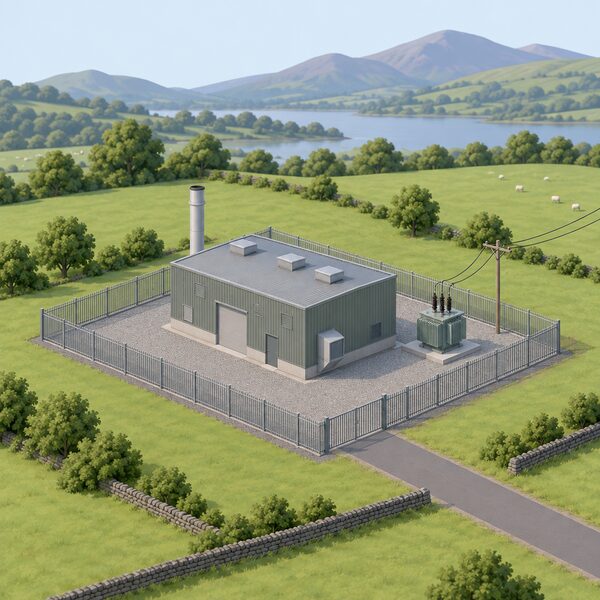
Three forces explain the shape of Welsh generation. The first is the fossil fleet's role in the GB market. Smaller gas generators in Wales have a combined capacity of 482 MW across more than 70 sites, operating principally as flexible peaking plants, and small-scale diesel generation accounts for 269 MW, with the largest single generator at 22.4 MW2. These are not baseload stations; they run when the system needs them, which is why Welsh fossil output swings sharply year to year.
The second is demand growth. Demand for electricity is expected to double in Wales and the rest of the UK by 2050, and the Climate Change Committee states that new demands for clean electricity from transport, buildings and industry mean electricity supply in Wales must double by 20505. Welsh electricity demand was about 14 TWh in 2021, and the Welsh Government's own reporting notes that electricity demand is projected to increase9. Electric vehicles illustrate the scale: charging demand at the end of 2021 increased electricity demand by approximately 27 GWh annually while reducing petroleum demand by between 90 and 140 GWh11.
The third is the gap between electricity and heat. Electricity consumption represents approximately 16% of Wales' estimated 92.8 TWh total energy consumption, and energy consumption for heat in homes, businesses and industry is more than four times the consumption of electricity2. Wales can approach self-sufficiency in electricity while remaining heavily dependent on gas for heat, which is why the Welsh Government's targets extend to heat pumps and renewable heat as well as power.
How Wales compares with the other UK nations
Wales is a mid-sized generator in UK terms. On Feed-in Tariff scheme capacity across its lifetime, the figures are 77.80% in England, 12.25% in Scotland and 7.56% in Wales12. The same pattern appears in the annual report for scheme year 13, which records Wales at 6.53% of installations and 7.56% of capacity13. Those percentages describe a support scheme for small-scale generation, not the whole system, but they show how much of the UK's distributed generation sits south of the border.
The comparison across the nations is best made on the share of consumption met by renewable generation. For the UK as a whole the figure was 29.3% in 2019, or 25.6% for the rest of the UK excluding Scotland14. Wales' equivalent figure in 2021 was 55% of electricity consumption from renewable sources, and 53% including losses in 20231. Wales therefore sits well above the UK average, a position explained by its onshore and offshore wind resource set against a relatively small population, while Scotland's larger wind and hydro fleet places it higher still.
The Climate Change Committee's advice for Wales sets a distinct pathway. Its Balanced Pathway for Wales has variable renewables providing 78% of electricity generation by 2033, catering for increasing demand in Wales as well as the rest of Great Britain16. That is a modelled pathway rather than a target, and it implies a Welsh system that is a net exporter of power for much of the year while still relying on the wider GB system for firm capacity when the wind does not blow.
| Measure | Wales | UK | Rest of UK excluding Scotland |
|---|---|---|---|
| Renewable generation as share of consumption | 55% (2021), 53% including losses (2023)1 | 29.3% (2019)14 | 25.6% (2019)14 |
| Share of Feed-in Tariff capacity, lifetime | 7.56% | 12.25% in Scotland | 77.80% in England |
Sources: Scottish Government14, Ofgem12, Welsh Government15
The rules that govern energy in Wales
The constitutional split is the first thing to understand. Energy, including generation, transmission, distribution and supply of electricity, oil and gas, is reserved to the UK Government, together with consumer protection, product standards, and weights and measures6. Heat and cooling networks, though not the regulation of them, and schemes providing incentives to generate heat or cooling from sources other than fossil fuel or nuclear fuel, together with the encouragement of energy efficiency otherwise than by prohibition or regulation, are devolved to Wales6. The Welsh Government's own energy efficiency strategy puts it plainly: laws about energy efficiency are made by the UK Government, but Wales wants to do everything it can so that Wales is using and managing its energy well17.
Where Wales does legislate, it is through Building Regulations and planning. Policy 45 of Net Zero Wales commits Wales to set higher energy efficiency standards for new builds through reviewing Building Regulations Part L (Conservation of Fuel and Power)18. The Building Regulations etc. (Amendment) (Wales) Regulations 2022 changed the way on-site electricity generation systems are regulated, requiring that information about those systems be provided to the owner and that confirmation be given to a local authority that a system has been commissioned19. A second set of 2022 regulations made the same change to the treatment of on-site generation20.
Planning rules set the thresholds. Permitted development rights in Wales apply to solar installations where capacity does not exceed 50kW for the generation of electricity and 45kW for the production of heat21. Small-scale energy from waste plants below 10 MW are only permitted if regionally necessary1. For replacements, guidance on the commissioning of fixed building services states that a replacement renewable electricity system such as a solar PV array or wind generator should have an electrical output not less than that of the original system17.
"the replacement system should have an electrical output that is not less than that of the original system"
Electrical installation work in a home or garden in England and Wales must comply with the Building Regulations, and the Planning Portal notes that the policy in Wales may differ from England on matters such as electric vehicle charging22. Building Regulations influence emission reductions in both new and existing buildings in Wales, which is the mechanism through which devolved standards reach a household's own walls24.
Locally owned generation and community energy
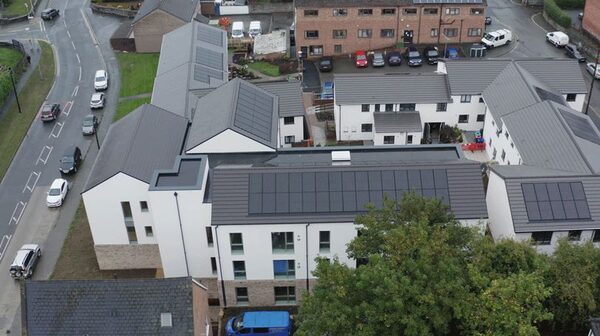
Local ownership is the part of Welsh energy policy closest to a household's own decisions. In 2023, locally owned renewable electricity capacity in Wales totalled 688 MW, with 211 MW of locally owned heat capacity, across 89,632 projects1. In 2021, domestic projects alone accounted for 70,575 installations, 209 MWe of electrical capacity, 142 MWth of heat capacity and 500 GWh of generation2. Locally owned fossil fuel generation, by contrast, was estimated at approximately 100 MW of gas, diesel and coal capacity, largely small-scale projects such as farm diesel generators2.
The Welsh Government has supported this sector directly. It provided £45,000 of funding through the Welsh Government's Energy Service to Egni Solar Coop, and a £45,500 grant to support the development costs of Egni Co-op's rooftop solar rollout25. A separate programme has made £10 million available to support community led energy projects across Wales26. The stated ambition is to scale up renewable energy generation in Wales in a way that maximises economic and social benefits for the people of Wales27.
The scale should be kept in proportion. Locally owned electrical capacity of 688 MW sits alongside 4.3 GW of fossil fuel capacity and a renewable fleet measured in gigawatts1. Local ownership changes who benefits from generation; it does not change the physics of when the wind blows or the fact that a Welsh home remains connected to, and dependent on, the GB transmission and distribution system.
What it means for household energy independence
Wales is unusual among the UK nations in generating more electricity than it consumes, and the policy direction is to extend that margin. The vision is for Wales to generate renewable energy to at least fully meet its energy needs and utilise surplus generation to tackle the nature and climate emergencies, with a goal of 100% of electricity from renewable sources by 20353. The Climate Change Committee's advice supports a decarbonised and resilient power system by 2035, alongside a 2050 net zero target for Wales28.
What that does not deliver is household independence. Three dependencies remain. The first is the grid: generation, transmission, distribution and supply are reserved to the UK Government, and a Welsh home's power comes through the same GB network and market as anywhere else6. The second is gas for heat: heat consumption in Wales is more than four times electricity consumption, and natural gas is 94% of fossil fuel based electricity generation, so Welsh homes remain tied to the gas network for warmth even as the power sector decarbonises1. The third is timing: renewable output is variable, and the 53% equivalence figure for 2023 describes a year, not an evening in a still January1.
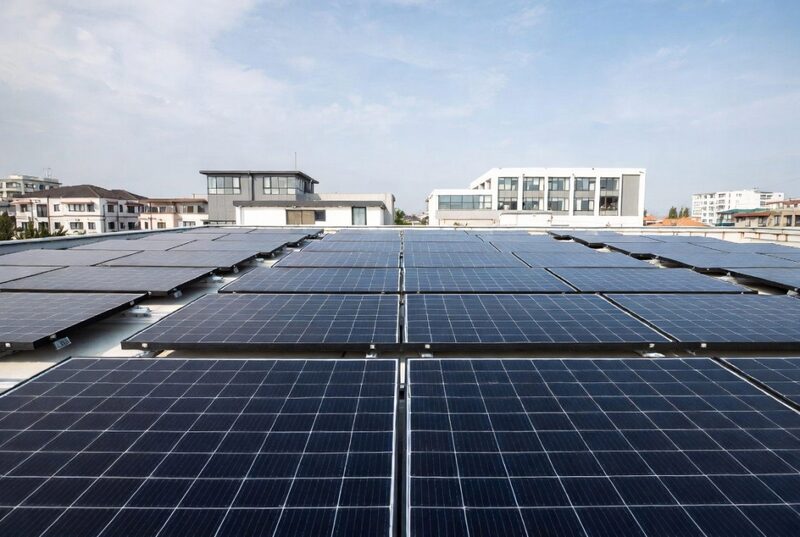
For a household, the levers that exist are the ones covered by Building Regulations and permitted development: on-site generation within the 50kW and 45kW thresholds, commissioning that is properly recorded, and replacement systems that meet the output rule21. Those are the points at which a Welsh home can reduce what it draws from the network, and they sit inside a policy framework that is largely set elsewhere.
Sources28 cited
- Energy Generation in Wales 2023, Welsh Government, March 2025
- Energy Generation in Wales 2021, Welsh Government, December 2022
- Renewable Energy Deep Dive: Biannual Recommendations Update 3, Welsh Government, 12 March 2024
- Renewable Energy Deep Dive: Biannual Recommendations Update 2, Welsh Government, 27 April 2023
- The Path to Net Zero and Progress Reducing Emissions in Wales, Climate Change Committee
- Outcome Summary: Tackling Fuel Poverty 2020 to 2035, Welsh Government, 2 March 2021
- Energy Use in Wales Report, Third Edition, Welsh Government
- Net Zero Wales by 2050, Climate Change Committee, 17 December 2020
- Future Energy Grids for Wales Report, Welsh Government
- Energy Generation and Energy Use in Wales, First Combined Edition, Welsh Government
- Energy Use in Wales Report, Welsh Government, June 2022
- Feed-in Tariffs Quarterly Report, Issue 57, Ofgem, 30 September 2024
- Feed-in Tariffs Annual Report, Scheme Year 13, Ofgem, December 2023
- Annual Energy Statement 2019, Scottish Government
- Energy Generation in Wales 2021, Welsh Government
- Wales Fourth Carbon Budget, Climate Change Committee
- Building Regulations Guidance Part L: Conservation of Fuel and Power, Welsh Government, 31 July 2014
- Part L Wales Impact Assessment: Domestic Existing and New Build, Welsh Government, April 2022
- The Building Regulations etc. (Amendment) (Wales) Regulations 2022, Welsh Government, 24 May 2022
- The Building Regulations (Amendment) (Wales) (No.2) Regulations 2022, Welsh Government, 29 September 2022
- Permitted Development Rights and Non-Domestic Solar Photovoltaic and Thermal Panels, Welsh Government
- Building Regulations: General Information, Planning Portal
- Electric Vehicle Charging: Building Regulations, Planning Portal, 17 September 2026
- Building Regulations Part L Review, Welsh Government
- £45,000 Grant to Egni Co-op to Install Solar Panels Across Wales, Welsh Government, 27 September 2019
- £10 Million Support for Community Led Energy Projects Across Wales, Welsh Government
- Energy Generation in Wales 2020 and Energy Use in Wales Second Report, Welsh Government
- The Climate Change (Wales) Regulations 2021: Integrated Impact Assessment, Welsh Government, 10 February 2021
 Wales Renewable Energy TargetsWales aims for renewable sources to meet the equivalent of 70% of its electricity consumption by 2030 and 100% by 2035, with at least 1.5 GW locally owned by 2035.
 Energy Policy in WalesWhat help can you get in Wales to make your home warmer and cheaper to run?
 Community Energy in WalesWales wants more of its energy owned by local people, not big companies.
 Community Energy StatisticsHow much of the UK's energy comes from projects owned by local people, and is that number growing?
 Renewable Generation by NationHow much of our electricity comes from renewables, and why do the figures keep changing?
 Housing Stock Data for WalesHow energy efficient are Welsh homes, and how many have a rating?