

In this guide
Electricity met only around 12 per cent of total UK energy demand in 2023, and the UK's total electricity demand in 2024 was 319 TWh1. Almost everything else that British homes, vehicles and industry run on is still gas, oil or solid fuel. The growth in electricity demand is the story of that remaining share moving onto the wires.
The Climate Change Committee has factored in a 50 per cent increase in demand on electricity, to reflect the expected increase in transport, industry and buildings decarbonisation3. Ofgem has cited predictions that demand will increase by 50 per cent by 20354. The Committee's seventh carbon budget requires twice as much electricity as today by 20405, and its earlier work described demand doubling or even trebling by 20506.
Peak demand is the figure that shapes the network. NESO puts GB peak demand at 59 GW in 2021, 67 GW by 2030, 78 GW by 2035 and 114 GW by 20502. Cables, transformers and substations are sized for the highest simultaneous draw, not the annual total, so a doubling of annual demand and a near doubling of peak demand are two different engineering problems.
What the figures show
The headline numbers come from two directions: how much electricity is used across a year, and how much is drawn at the single busiest moment. The annual figure for the UK in 2024 was 319 TWh2. The peak figures are published for Great Britain, and they climb steeply: 59 GW in 2021, 67 GW by 2030, 78 GW by 2035 and 114 GW by 20502.
Those two series do not move at the same rate, and the difference matters. Annual demand roughly doubles between 2024 and 2050 on the Committee's trajectory, while GB peak demand roughly doubles between 2021 and 2050 on NESO's. A grid built for 59 GW of simultaneous draw is being asked to carry 114 GW.
The growth is already visible at the margin. Electricity generation by Major Power Producers rose by 3.0 per cent in the three month period from September 2025 to November 2025 compared with the same period a year earlier9. That is generation rather than demand, and it covers a short window, but it shows the direction of travel in the most recent official statistics.
For context on the household scale, average annual electricity consumption across all GB households was 3,955 kWh per year, against average annual gas consumption of 13,697 kWh8. A household that moves its heating from gas to electricity is not adding a small load to its supply; it is moving a much larger energy figure from one meter to the other.
| Measure | Figure | Date or period | Source |
|---|---|---|---|
| UK total electricity demand | 319 TWh | 2024 | 2 |
| Electricity share of total UK energy demand | around 12 per cent | 2023 | 1 |
| GB peak demand | 59 GW | 2021 | 2 |
| GB peak demand | 67 GW | 2030 | 2 |
| GB peak demand | 78 GW | 2035 | 2 |
| GB peak demand | 114 GW | 2050 | 2 |
| Projected increase in electricity demand | 50 per cent | by 2035 | 4 |
| Electricity required | twice as much as today | by 2040 | 5 |
| Average GB household electricity consumption | 3,955 kWh per year | 2024 | 8 |
| Average GB household gas consumption | 13,697 kWh per year | 2024 | 8 |
What drives the growth
Three shifts sit behind the projections, and they are not equally advanced.
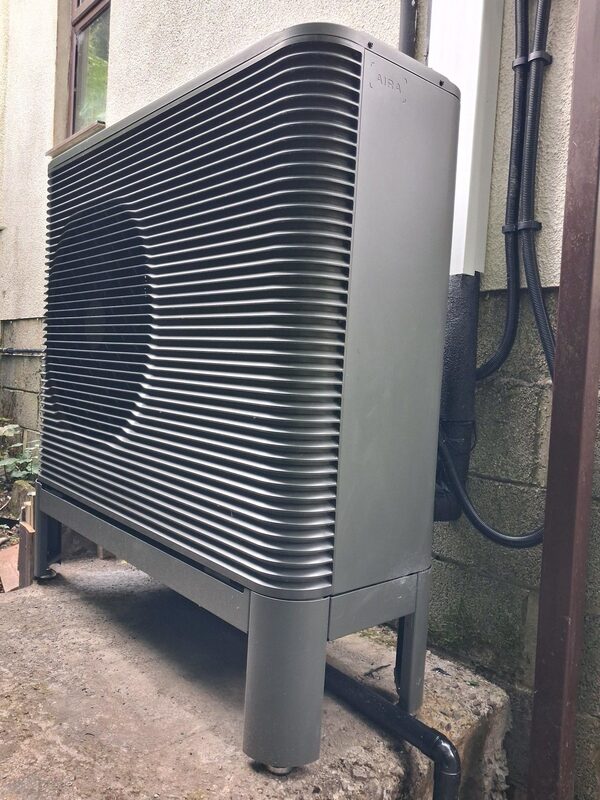
The first is heat. Energy for heat makes up approximately one third of the UK's demand for energy10. That heat is overwhelmingly gas today, and moving it onto electricity is the single largest transfer in the projections. Air source heat pumps are the technology doing most of that work: they represent 82.6 per cent of heat pump units sold in the UK in 202411. They are devices that transfer heat from outside a home into it using electricity, rather than generating the heat themselves, and the amount of heat produced is more than the electricity needed to power them12.
The second is transport. The UK net zero strategy will completely ban the sale of petrol and diesel cars in 2030, with the car industry moving to hybrid, electric and hydrogen vehicles6. Every one of those vehicles charges from the grid.
The third is the general shift of energy use onto electricity, which is what makes the 12 per cent figure so significant. Electricity only met around 12 per cent of total energy demand in the UK in 20231, so the headroom for growth is most of the energy system.
How demand differs across the UK nations
The projections are UK-wide, but the starting points differ, and so do the policy levers.
Welsh Government analysis states that demand for electricity is expected to double in Wales and the rest of the UK by 205013, and a 2026 written statement records that electricity demand is projected to increase14. Wales has its own building regulations route for heat pumps, under which installation of either a ground source or air source heat pump will have to comply with the Building Regulations15.
Scotland's position has historically been stronger on generation than on demand. In 2019, renewable sources accounted for 29.3 per cent of electricity generation for the UK as a whole, against 25.6 per cent for the rest of the UK excluding Scotland16. Scotland has also legislated separately on building standards, with energy standard work for new domestic buildings within the Scottish Building Regulations17, and it has consulted on proposals in a Heat in Buildings Bill18.
Northern Ireland operates its own arrangements. The Warm Healthy Homes Fund consultation sets out a scheme in which the air source heat pump will be the primary heating measure offered to households, where the Home Assessment has determined that it is technically feasible and economically viable19.
England and Wales share the permitted development framework for heat pumps, though on different timetables: changes to permitted development rights eased planning restrictions for air source heat pumps in England from 20 September 2025 and in Wales from 1 June 202612.
| Nation | Position on demand growth | Source |
|---|---|---|
| Wales | Demand for electricity expected to double in Wales and the rest of the UK by 2050; electricity demand projected to increase | 13 |
| Scotland | Renewable generation share historically ahead of the rest of the UK; separate building standards and Heat in Buildings proposals | 16 |
| Northern Ireland | Air source heat pump as primary heating measure in the Warm Healthy Homes Fund, where technically feasible and economically viable | 19 |
| England | Permitted development rights for air source heat pumps eased from 20 September 2025 | 12 |
How networks plan for higher peak demand

Network planning runs on peak figures and scenarios rather than on a single forecast. NESO publishes peak demand projections out to 2050, which is why the 114 GW figure exists at all: it is a planning number, not a prediction of a particular Tuesday evening2.
The planning problem is local as much as national. A transmission network can be reinforced with new circuits, and the connection queue for new generation and large loads is a separate process. Distribution networks, which serve streets and individual properties, face a different question: how much additional load can an existing low voltage feeder and substation carry before it needs work.
Demand flexibility is the alternative to building for the peak. Ofgem has examined how domestic consumers can be engaged in energy flexibility, which shifts some consumption away from the busiest periods rather than reinforcing the network to meet it4. That approach depends on households and appliances responding to price or signal, and it changes the shape of demand rather than its total.
Charges follow the same logic. Ofgem's October 2025 price cap decision noted increases to parts of the costs of transporting energy in Great Britain and costs towards government schemes and essential support20. Those transport costs are what pay for network capacity, and they rise as the network is reinforced.
What the rules require of households adding load
The rules that bear on rising demand are mostly about what a household can install without planning permission, and what certification the installation must meet.
For air source heat pumps in England, permitted development rights apply to the installation, alteration or replacement of an air source heat pump on a house or block of flats, or within the curtilage of a house or block of flats, including on a building within that curtilage21. Development is permitted only if the installation complies with the Microgeneration Certification Scheme Planning Standards (MCS 020a)21. The volume of the outdoor compressor unit, including housing, must not exceed 1.5 cubic metres on a house or 0.6 cubic metres for a block of flats21.
Only the first installation would be permitted development on a house which is not detached or a block of flats; for detached houses, the first two air source heat pumps are considered permitted development21. Additional wind turbines or air source heat pumps at the same property require an application for planning permission21. Installations on pitched roofs are not permitted development21.
Noise is the constraint most likely to bite in a dense street. Noise levels for an air source heat pump on its own must stay at or below 42 decibels (dB) from a metre distance away from any habitable room22. Where the unit exceeds the MCS standards and permission is needed, noise emitted must not exceed 37 dB LAeq at any time, as measured on the boundary of the site with any neighbouring residential property22.
"Development is permitted only if the air source heat pump installation complies with the Microgeneration Certification Scheme Planning Standards (MCS 020a)"

What it means for energy independence
Electrification moves a household's energy use from fuels the UK imports to a grid the UK generates from. That is the independence gain, and it is real but partial.
The UK is a net energy importer with a high dependence on gas and oil23, and the British energy security strategy sets out how Great Britain will accelerate homegrown power for greater energy independence24. The Climate Change Committee has found that the UK has been strongly affected by the energy crisis due to its dependence on natural gas for heating, electricity generation and industry25. Fossil fuels met 75.2 per cent of UK energy consumption in 2024, down from 76.6 per cent in 2023 and 78.2 per cent in 20227.
What electrification does not remove is dependence on the grid, a supplier and a network operator. A household that replaces a gas boiler with a heat pump and a petrol car with an electric one has moved its exposure, not eliminated it. It now depends on the electricity distribution network serving its street, on the transmission network behind it, and on whatever generation mix is running at the moment it draws power.
There is a price dimension too. In the second half of 2025, household electricity prices in the UK were higher than in all but three EU states, and 18 per cent above the EU average26. UK electricity prices for businesses are higher than those in comparable countries, such as France and Germany27. Electrifying heat and transport therefore moves consumption onto a more expensive unit of energy, even where it reduces the total number of units used.
The counterweight is efficiency. Domestic energy demand has fallen by 19 per cent since 2000, despite a 12 per cent increase in the number of households and a 10 per cent increase in population28. In 2024 consumption per household increased by 2.9 per cent, as consumption increased more sharply than the number of households29. Efficiency gains and demand growth are running at the same time, and the net figure is what the network has to carry.
Where the growth is least certain
The projections span a wide range, and the range is the honest answer. The Climate Change Committee's seventh carbon budget requires twice as much electricity as today by 20405. Its 2020 assessment described demand being pushed up by a half over the next 15 years and doubling or even trebling by 20506. Ofgem cited predictions of a 50 per cent increase by 20354. NESO's peak series runs from 59 GW in 2021 to 114 GW in 20502.
Those figures are not inconsistent so much as differently framed: some are annual energy, some are peak power, and some are scenario ranges rather than central cases. What they agree on is direction and rough scale. Electricity demand is set to rise substantially, peak demand with it, and the network is being planned against the upper end of the range rather than the lower.
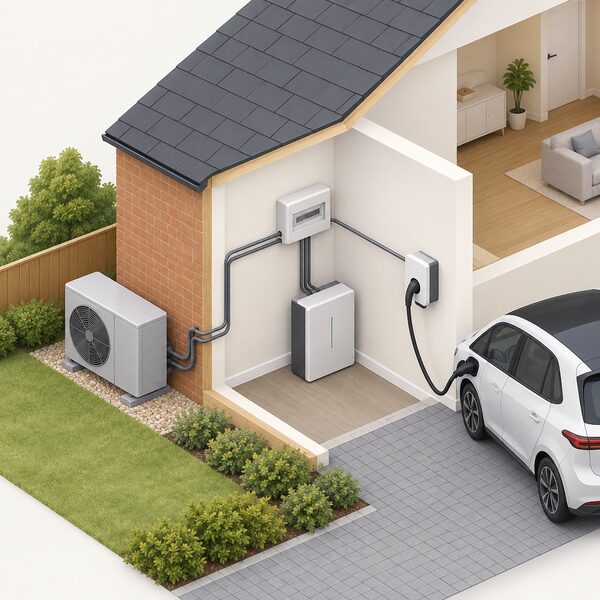
For a household, the practical implication is that the capacity of the local network is becoming a more visible constraint than it has been for decades. A heat pump, an electric vehicle charger and a home battery on the same supply is a combination that distribution networks are now actively planning for, and in some streets it will require reinforcement before it can be accommodated.
Sources29 cited
- POSTnote: Electricity demand and the grid, UK Parliament, 2024
- NESO peak demand projections, NESO
- A reliable, secure and decarbonised power system by 2035, Climate Change Committee, 2023
- Smoothing the Journey: engaging domestic consumers in energy flexibility, Ofgem, 2023
- The Seventh Carbon Budget, Climate Change Committee
- Building Back Better: raising the UK's climate ambitions for 2035, Climate Change Committee, 2020
- DESNZ Annual Report and Accounts 2025 to 2026, Department for Energy Security and Net Zero
- Ofgem archetypes update 2024, Ofgem, 2024
- Energy Trends and Prices statistical release, 29 January 2026, Department for Energy Security and Net Zero, 2026
- Microgeneration, House of Commons debate, UK Parliament, 2004
- EINAS 2025: Heat and Buildings, Department for Energy Security and Net Zero, 2025
- Air source heat pumps, MCS Certified
- Net Zero Wales by 2050, Climate Change Committee, 2020
- Written statement: Energy Generation and Energy Use Wales report, Welsh Government, 2026
- Building Regulations and heat pumps in Wales, Welsh Government
- Annual Energy Statement 2019, Scottish Government, 2019
- Energy Act 2023 and heat network consumer protections, Scottish Government
- Delivering net zero for Scotland's buildings, Scottish Government, 2023
- Warm Healthy Homes Fund consultation, Department for Communities, 2026
- Changes to the energy price cap between 1 October and 31 December 2025, Ofgem, 2025
- Planning permission: air source heat pump, Planning Portal
- Building regulations and renewables guidance, Bedford Borough Council
- Spring Statement 2022, HM Treasury, 2022
- British Energy Security Strategy, Department for Energy Security and Net Zero, 2022
- Climate policy that cuts costs, Climate Change Committee
- Household electricity prices compared with the EU, House of Commons Library
- UK climate action has reduced emissions without increases in household energy bills, Climate Change Committee, 2017
- Ofgem Future Insights Series 4, Ofgem, 2017
- Energy Consumption in the UK 2025, Department for Energy Security and Net Zero, 2025
 The Full Statistics GuideHow many homes in the UK have solar panels, heat pumps or batteries?
 Check Supply Capacity FirstAdding a heat pump, car charger or home battery can push your electricity supply past what it can safely handle.
 UK Cooling DemandPublished data on air conditioning ownership and home overheating, with projections for summer temperatures in each UK nation, and what rising cooling demand means for summer electricity use.
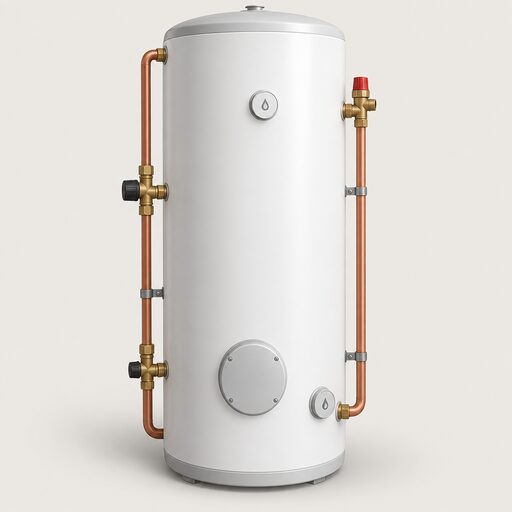 Whole-Home Energy DesignHeating and hot water use more energy than anything else at home, so that choice shapes everything.
 Energy IndependenceA heat pump runs your heating on electricity instead of gas or oil, so how much does that really cut what you pay and how exposed you are when fuel prices jump?
 Heat Pump Install StatisticsHow many heat pumps are actually being fitted in the UK each year, and is that number going up?