

In this guide
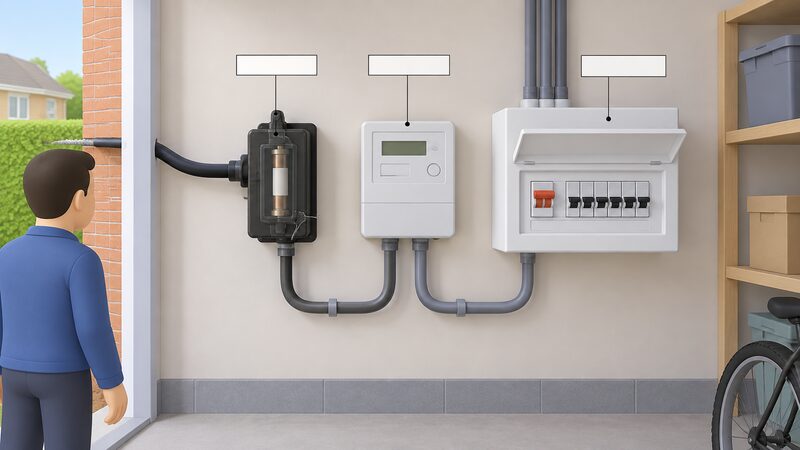
The question of whether a home's electricity supply is big enough for a heat pump is answered by the network operator, not by the householder, and the answer turns on one number: the maximum demand of the property once the new equipment is added. SSEN states that an "adequacy of the supply" assessment is required prior to installing any electrical device1. Where the new maximum demand is greater than the cut-out rating, or above 60A (13.8kVA single phase) for a residential property, the supply capacity must be confirmed with the network operator before installation1.
That threshold matters because it splits households into two groups. Below it, the installer can assess the addition as within the existing rating of the supply equipment and the network operator is notified retrospectively within 28 days2. Above it, an application goes in first and the operator either approves the connection or quotes for an upgrade3. For most domestic customers there is no charge for the connection, but for larger heat pumps a supply upgrade may incur a cost3.
The wider context is that heat pumps are technically suitable for most UK homes if installed appropriately, and 90% of UK homes already have sufficient insulation and electrical capacity to operate a heat pump4. The constraint is rarely the individual property. It is the shared network, the fuse rating at the cut-out, and whether the cable serving the house is dedicated or shared.
Why the supply check comes before the order
The sequence is fixed by the network rules rather than by preference. An adequacy of supply assessment is required prior to installing any electrical device, and the installer is expected to have completed one1. The application itself carries specific information: the details of the heat pump proposed, the details of any existing heat pumps at the address, the maximum demand, and the supply capacity or cut-out rating1. Without those four items the operator cannot judge the addition.
The reason the check sits at the front of the process is that the electricity distribution system currently assumes a diverse load across the grid, but heat pumps and some other green technologies such as EVs are not compatible with that assumption8. Diversity is the statistical smoothing that lets a network serve many homes from a cable sized for far less than the sum of their peak draws. A heat pump draws a large load for long periods, and an EV charger draws a large load at whatever hour the household chooses. Both erode the smoothing.
There is also a metering condition. Domestic Renewable Heat Incentive rules require an electricity meter arrangement that measures the electricity consumed by the heat pump to generate heat9. That is a scheme rule rather than a connection rule, but it shows how closely the electrical arrangement and the heating equipment are tied together.
For a household, the practical consequence is that the supply check is not an administrative afterthought. It determines whether the equipment can be installed at all, and it is the point at which a hidden cost either appears or does not. Doing it first means the equipment choice is made against a known supply, rather than discovering the limit after a unit has been specified.
What a typical UK household supply can handle
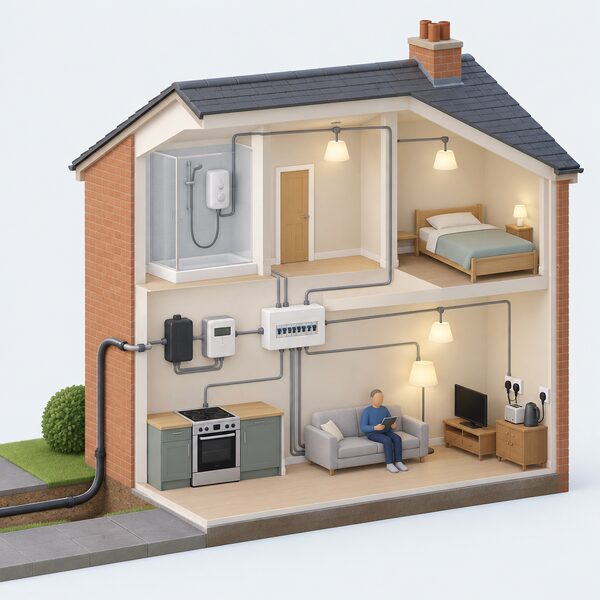
A single phase supply can take up to 17kW maximum; above this capacity a three phase supply is required6. That is the hard ceiling on the common domestic arrangement, and it sits well above the load of an ordinary home. The pressure comes from adding large continuous loads to a supply that was sized for lights, a cooker, a shower and a few appliances.
The evidence on housing stock is more encouraging than the wiring rules suggest. Parliamentary research states that 90% of UK homes have sufficient insulation and electrical capacity to operate a heat pump10. Government campaign material puts the insulation figure at 90% of UK homes already having enough insulation to run a heat pump5. Heat pumps are technically suitable for most UK homes if installed appropriately4, and Energy Saving Trust states they are suitable for most houses in the UK11.
Those two positions are not in conflict. The stock is broadly capable; individual connections vary. A home with a 60A fuse, an electric shower and an existing 7kW charger is in a different position from a home with a 100A fuse and gas cooking, even though both are "typical". The assessment is property-specific for that reason.
The deployment statistics show the scale of what is being connected. Government statistics cover hydronic heat pumps with a capacity up to 45kW installed in the United Kingdom, and heat pumps up to a capacity of 45kW are in scope12. That upper bound is far above any domestic unit, which indicates that the statistics are tracking a market in which the domestic connection is one part.
Heat pumps, chargers and batteries: what each adds
The load a heat pump adds is best understood through its efficiency. For every unit of electricity it uses, it produces three units of heat11. That ratio is what makes a heat pump a lower-carbon and often lower-cost heat source than direct electric heating, but it also means the electrical draw is substantial and sustained.
Electricity North West describes the network effect directly: heat pumps can use as much electricity as a domestic power shower, but for much longer, which can have a significant impact on demand for electricity on that part of the network3. A power shower is a familiar reference point for most households, and the comparison is the clearest available statement of why a heat pump is not simply another appliance.
An EV charger adds a load of a different shape. It is high and controllable, and it can be timed. The connection rules treat it alongside heat pumps: NIE Networks handles EV chargers and heat pumps through the same application type, and its guidance covers both under one process15. A battery sits between the two, drawing power to store and returning it later, and it is treated as generation and storage for connection purposes rather than as a pure load.
The planning side of an EV charger is separate from the connection side. If a home has off-street parking, installation of a domestic electric vehicle charger is likely to fall under permitted development with no planning application required, provided it meets the criteria17. Planning permission is usually required for on-street parking, conservation areas, listed buildings, areas where installation is restricted, and more than one upstand per parking space18. A pavement cable crossing needs separate planning permission unless the crossing is owned by the Highways Authority, and it is unlikely to be covered under householder permission where it sits outside the curtilage of the building on highway pavement19.
| Equipment | What it adds to the supply | Connection treatment |
|---|---|---|
| Air source heat pump | Large sustained load, roughly a power shower but for much longer3 | Adequacy of supply assessment before installation1 |
| EV charge point | High controllable load, timed by the household | Same application type as heat pumps in Northern Ireland15 |
| Battery storage | Draws and returns power | Treated as generation and storage, G98 or G99 route20 |
How the connection assessment works
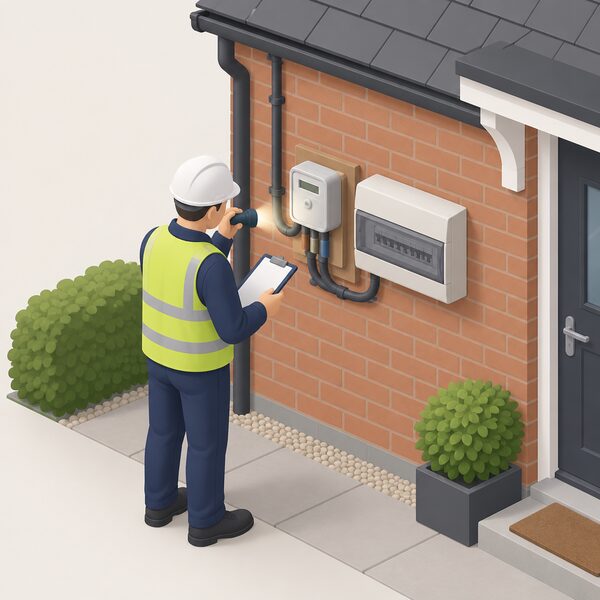
The process has three parties: the householder, the installer and the network operator. The householder chooses the equipment. In Northern Ireland the first step is stated plainly: choose the equipment that you want to install16. The installer then carries out checks at the property and submits the application, managing the whole application on the customer's behalf16. All applications are submitted through the Energy Networks Association's Connect Direct website16.
The operator's role is to assess the new equipment and the existing electricity supply once the application arrives16. Electricity North West describes its own outcome in the same terms: it will carry out an assessment and confirm if there are any network restrictions, then send either an approval to connect or a quote to upgrade the network3.
The two possible outcomes are clean. If the assessment shows the existing supply can cope with the new equipment, the customer and installer are notified and the new equipment can be installed safely16. If it shows the supply cannot cope, the equipment cannot be installed and the operator advises how to proceed15. There is no third outcome in which the equipment goes in anyway.
The timescales are set by the size of the application. For a maximum demand application between 60A and 100A, SSEN will assess the supply capacity within 10 working days of receiving the fully completed form1. Bedford's building regulations guidance gives the same figure: the distribution network operator will subsequently assess the supply capacity within 10 working days7. Timescales for a maximum demand above 100A are as per the Electricity Distribution Licence and the Electricity Guaranteed Standards of Performance Regulations 20101.
"Anyone who is competent to install an electric vehicle charge point or heat pump can submit a form"
G98 and G99: the standards the installer works to
Connection applications are made under one of two engineering recommendations, and which one applies depends on the size and nature of what is being connected. G98 covers smaller installations and G99 covers larger ones. The forms differ by site as well as by size: G98 Form A is for installations of generation or storage at multiple premises, and G98 Form B is for installations of generation or storage at a single premise20.
For a household adding a battery, the distinction between multiple premises and a single premise is the one that decides the form. A domestic battery at one address falls on the single premise side. A landlord connecting storage across several properties falls on the multiple premises side, and the application is structured accordingly.
The installer's competence is part of the framework. It is advisable to contact an installer who can provide the necessary advice, preferably one who belongs to either the Microgeneration Certification Scheme or the relevant Competent Person Scheme21. That applies in England and in Wales, where the same advice is given22. Membership of a competent person scheme is also what allows certain electrical work to be certified without a separate building control application.
The connection standards sit alongside building regulations rather than replacing them. In Scotland, the draft domestic building services compliance guidance sets out how heat pump systems are expected to be designed and installed23. In Northern Ireland, building regulations are a devolved matter and have been the subject of separate consultation24. The connection application is the network's concern; the installation standard is the building regulations' concern.
When the network itself needs an upgrade
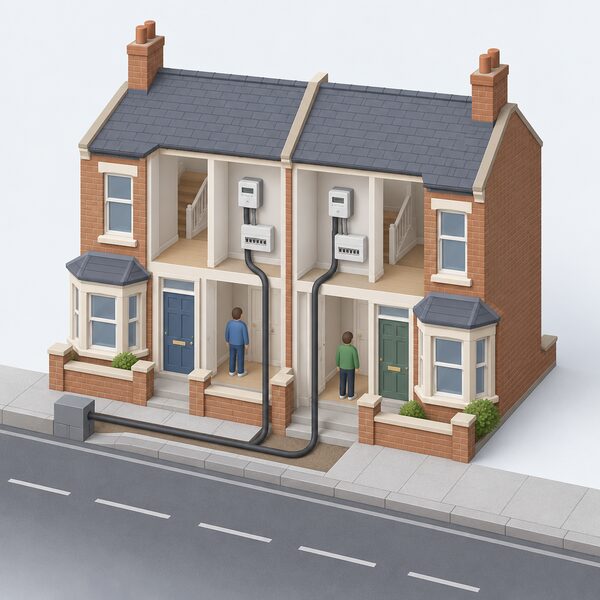
An individual property can pass its own assessment and still sit on a network that needs work. The trigger is cumulative load on a shared asset. Where EV chargers or other low-carbon technologies push demand above the available supply, an upgrade may be required, and the operator will assess the work and provide costs before proceeding15.
The clearest case is a looped supply, where two or more homes share a single cable from the street. Homes sharing a looped electricity cable with a neighbour need their own dedicated cable installed before an EV charger can go ahead15. The loop is not a fault and it is common in older terraces and in some estates, but it means the two homes are not electrically independent of one another. One household's charger affects the other's available capacity.
The upgrade route for a property that needs more than its single phase supply can deliver is a three phase connection. Electricity North West reports that this is a chargeable service and the average cost of upgrading to three phase power, rated at 80A per phase, is £5,3703. The trigger for that route is a single phase supply rated between 60A and 100A where more than 100A is required after maximum demand and diversity calculations3.
Reinforcement of the shared network is a different matter from upgrading one connection, and it is the operator's investment rather than the householder's. The distinction matters when a quote arrives: a charge for work at the property boundary is not the same as a charge for work on the street.
What happens if the supply is judged inadequate
An inadequate assessment does not end the project. It changes its order. The operator advises how to proceed, and the routes are an upgrade to the connection, a smaller item of equipment, or a managed arrangement in which the new load is controlled so that it does not coincide with other peaks.
The design rules already anticipate that a heat pump may not carry the whole heating load in every circumstance. The Home Energy Model methodology provides for backup energy where the energy provided by the heat pump is insufficient to meet the total demand for all the required services25. It also sets out an operating sequence: the heat pump will not provide any space heating until water heating demand is satisfied25. That sequencing is a control strategy, and it is one reason a heat pump's electrical profile differs from a resistive heater's.
Sizing rules are strict. Heat pumps should be selected to meet the full space heating requirement at the design condition chosen for heat loss calculations26. A unit sized below that will not meet the demand at peak, and a supplementary heating appliance is only acceptable in the Boiler Upgrade Scheme context so long as the heat pump can provide the full space heating demands of the property27.
Where a heat pump cannot meet the criteria for permitted development, a planning application is required28. The criteria include limits on the number of units: detached houses can install up to two heat pumps, while a non-detached house or a block of flats can install only one unit30. Ground source and water source heat pumps on domestic premises are usually considered permitted development and do not need a planning application31.
For a household, the meaning is that an inadequate supply is a design constraint with several answers, not a refusal. The cheapest answer is usually to reduce the peak the equipment creates. The most expensive is a new connection.
Costs, quotes and who pays

The cost position has two layers: the equipment and its installation, and any network work. Heat pump installation costs are higher than gas boilers, in part due to the need for additional retrofitting4. That is the general position on the equipment side, and it is separate from anything the network operator charges.
On the network side, the position for most domestic connections is favourable. For most domestic customers there will be no charge for the connection, but for larger heat pumps a supply upgrade may incur a cost3. Where an upgrade is needed, the operator outlines the work including any network reinforcement and provides a formal quotation, and no work proceeds until the quote is accepted15. That acceptance step is the householder's decision point.
The advice on obtaining prices is consistent. Energy Saving Trust recommends getting at least three quotes to compare costs11. The government's own checking service compares the cost and carbon emission savings available and what is needed to install a heat pump, and it takes as inputs the nation (England, Scotland, Wales or Northern Ireland), the heating system type and the number of bedrooms32. That service is a starting point for a budget, not a substitute for a quote.
Support exists on the supply side as well as the demand side. Support is also available for installers and manufacturers to expand supply chains4. The supply chain has significant growth potential, but stakeholders indicate it is currently constrained by a lack of consumer demand and government policy uncertainty4. A lack of qualified heat pump installers is a further potential barrier to rollout, as are constraints imposed by planning rules and the need for electricity infrastructure upgrades4.
| Cost item | Position | Source |
|---|---|---|
| Domestic connection, most customers | No charge | Electricity North West3 |
| Larger heat pump supply upgrade | May incur a cost, quoted before work | Electricity North West3 |
| Three phase upgrade, 80A per phase | £5,370 average | Electricity North West3 |
| Heat pump installation overall | Higher than a gas boiler, partly due to retrofitting | Parliamentary research4 |
Northern Ireland: how the process differs
Northern Ireland runs a separate process through NIE Networks, and the differences are procedural rather than technical. An application must be sent before installing the equipment so that NIE Networks can check the supply can handle the new electrical loading15. The customer chooses the equipment and nominates an EV charge point or heat pump installer, who carries out checks at the property and submits the application, managing the whole application on the customer's behalf16.
Installers have their own obligation to inform NIE Networks under the Standard Connection Terms and Conditions, Section 4 Paragraph (h)15. Applications go through the Energy Networks Association's Connect Direct website, and there is a separate contact route for commercial installs or help with the application process16.
The outcomes mirror those in Great Britain. If the assessment shows the existing supply can cope, the customer and installer are notified and the new equipment can be installed safely16. If it cannot cope, NIE Networks advises how to proceed15. Where an upgrade is needed, it outlines the work including any network reinforcement and provides a formal quotation, and no work proceeds until the quote is accepted15.
Two further points are specific to Northern Ireland. There are no dedicated heat pump schemes in Northern Ireland, unlike the grant schemes available elsewhere in the UK11. And in Northern Ireland both consumer protection and regulation of heat networks are devolved to the Northern Ireland Assembly10. For a household considering a heat network connection rather than an individual heat pump, the regulatory framework is set in Belfast rather than Westminster.
The practical effect for a Northern Ireland household is that the installer relationship carries more of the process. The homeowner chooses the equipment and nominates the installer; from that point the installer manages the application, the assessment and any quotation.
Where the household's independence ends

A completed connection assessment and an approved upgrade deliver something specific: the property can carry the new load. That is a real gain in energy independence, because it removes the electrical barrier to running a heat pump, charging a car at home or storing power on site.
What it does not deliver is independence from the network. The home remains connected to a distribution network operated by a monopoly, and the supply capacity that has been confirmed is a permission to draw, not a guarantee of supply at any moment. A battery improves the position by shifting when power is drawn, but it does not remove the connection. An EV charger makes the household more dependent on electricity for transport, which is a shift in the fuel rather than a reduction in dependence.
The assessment also fixes a ceiling. The figure confirmed at the cut-out is the figure the property can use, and any later addition, a second charger, a larger heat pump, an extension with electric heating, starts the process again. Households planning a sequence of improvements are better served by assessing the supply once against the intended end state than by returning to the operator for each addition.
The paperwork matters here. The application, the approval or quotation, and the installer's adequacy of supply assessment are the record of what the property is permitted to draw. Keeping them with the paperwork from every energy improvement makes the next application quicker, and it is the evidence a buyer or an installer will ask for later.
Sources32 cited
- Heat pump connections, SSEN, 2026-09-17
- Frequently asked questions about connecting to the networks, Energy Networks Association, 2026-09-17
- Heat pumps, Electricity North West, 2026-09-19
- Heat pumps for domestic heating, Parliamentary Office of Science and Technology, 2026-09-19
- Heat pump, UK Government, 2026-09-10
- Connections FAQs, NIE Networks, 2026-09-19
- Building regulations renewables guidance, Bedford Borough Council, 2026-09-17
- What impact can heat pumps have in domestic heating today, UK Government, 2023-11-21
- Domestic Renewable Heat Incentive: eligible heating systems, Ofgem, 2026-09-19
- Heat networks, House of Commons Library, 2026-09-17
- Heat pumps, Energy Saving Trust, 2026-06-11
- Heat pump deployment statistics: December 2025, UK Government, 2026-03-12
- Heat pump deployment statistics: June 2025, UK Government, 2025-09-04
- Heat pump deployment quarterly statistics, United Kingdom, UK Government, 2026-06-11
- EVs and heat pumps, NIE Networks, 2026-09-19
- Your connections process, NIE Networks, 2026-09-19
- Electric vehicle charging, Planning Portal, 2026
- Electric vehicle charging: planning permission, Planning Portal, 2026
- Approved pavement crossings, Planning Portal, 2026
- G98 and G99 application forms, Sell2Wales, 2026-06-15
- Heat pumps: building regulations, Planning Portal, 2026-09-17
- Building regulations: heat pumps, Welsh Government, 2026-09-17
- Draft guidance: domestic building services compliance guide, Scottish Government, 2021-07
- Building regulations discussion document, Northern Ireland Department of Finance, 2023-10-11
- Home Energy Model: heat pump methodology, UK Government, 2026-01
- Approved Document L, Volume 1: Dwellings, UK Government, 2026-09-17
- Boiler Upgrade Scheme guidance for installers, Ofgem, 2026-07-02
- Air source heat pump guide, Eastleigh Borough Council, 2024-04
- Air source heat pump guide, Eastleigh Borough Council, 2025-05
- Planning guidance: heat pumps, London Borough of Richmond upon Thames, 2026-04-22
- Heat pumps, Planning Portal, 2026-09-17
- Check if a heat pump could be suitable for you, UK Government, 2026-09-17
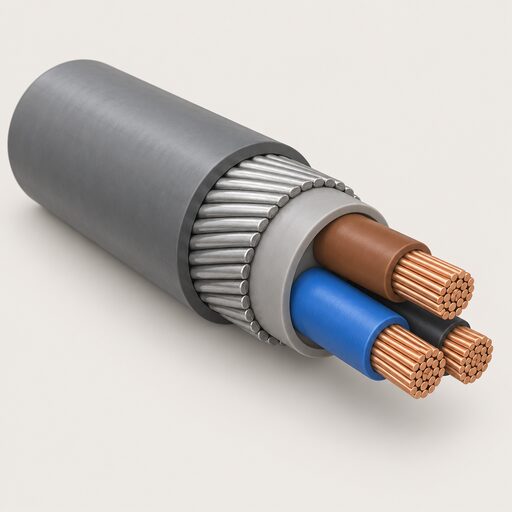 Electricity Supply and WiringWill your fuse box cope with a heat pump, and will the mains supply need upgrading?
 Energy IndependenceA heat pump runs your heating on electricity instead of gas or oil, so how much does that really cut what you pay and how exposed you are when fuel prices jump?
 Insulation a Heat Pump NeedsWill a heat pump still work if your home is not well insulated, and would you need to add loft, wall or floor insulation first?
 Replacing a Gas or Oil BoilerSwapping a gas, oil or LPG boiler for a heat pump changes how your home is heated and how much it costs.
 Heat Network SuppliersWho supplies the heating in your home if it runs on a communal or district system?
 Disconnection and WarrantsCan your energy supplier force you onto prepayment or cut you off for debt?