
In this guide
Free energy advice in England comes from a small number of national services, each with a different job. Citizens Advice runs the statutory consumer service for problems with bills and supply, on 0808 223 1133 for England and Wales, with a separate England line on 0808 144 88441. National Energy Action's Energy Advice and Support Service covers bills, keeping warm and benefits advice on 0800 304 71593. The Local Energy Advice Programme, known as LEAP, offers free energy and money saving advice on 0800 060 7567 and includes a free home visit from a qualified Home Energy Advisor5.
None of these services sells anything. The advice is free at the point of use, and the impartial services have no product or tariff to push. What they cannot do is decide for a household: they explain the rules, the schemes and the options, and the householder chooses.
The practical value for energy independence is indirect but real. An advisor can identify a grant that pays for insulation, a supplier obligation that covers a heating upgrade, or a billing error that has been quietly draining a household budget. What they cannot do is remove the underlying dependence: the home still draws from the grid, still buys gas or electricity from a supplier, and still relies on whatever company installed the measure. Advice is the first step, not the last.
The national services at a glance
England has no single government-funded energy advice network of the kind Scotland operates. The services that exist are a mix of a statutory consumer body, a fuel poverty charity, a government-funded phoneline and a local authority programme. Each covers a different slice of the problem, and the fastest route to the right one depends on what the household actually needs.
| Service | Number | Covers | Home visit |
|---|---|---|---|
| Citizens Advice consumer service | 0808 223 1133 (England and Wales); 0808 144 8844 (England); 0808 223 1144 (Welsh language) | Bills, supply, complaints, better deal1 | No |
| National Energy Action | 0800 304 7159 | Bills, keeping warm, benefits and income maximisation3 | No |
| LEAP | 0800 060 7567 | Energy and money saving advice, benefits, money and bill problems5 | Yes, from a qualified Home Energy Advisor6 |
| Energy Saving Trust | 0300 123 1234 | Energy efficiency, water, carbon emissions, renewables5 | No |
| GOV.UK home energy advice phoneline | 0800 098 7950 | Tailored and impartial information on home energy performance, England and Wales12 | No |
Citizens Advice is the statutory consumer advocate for energy in England and Wales. Its free consumer service helps with problems with energy bills or supply, and its wider remit covers struggling to pay bills, problems with a supplier or supply, saving energy at home and getting a better energy deal1. Opening hours are Monday to Friday, 9am to 5pm7.
National Energy Action is a fuel poverty charity rather than a statutory body. Its Energy Advice and Support Service provides free advice about energy bills and keeping warm and safe at home, and can also help with benefits advice and income maximisation4.
Energy Saving Trust is the impartial advice body most often associated with energy efficiency. It offers free and impartial advice on reducing carbon emissions, using water more sustainably and saving money on energy bills, and runs a helpline on 0300 123 12345. It also publishes a guide to how renewable energy works and a guide to green renovation, arranged room by room10.
The GOV.UK home energy advice phoneline, on 0800 098 7950, provides consumers in England and Wales with tailored and impartial information about improving the energy performance of their homes12. It sits alongside the online tools rather than replacing them.
Citizens Advice: the statutory consumer advocate

Citizens Advice occupies a different position from the charities and advice bodies, because it is the statutory consumer advocate and the route into the formal complaints system. Its free consumer service can help if there are problems with energy bills or supply, and it may refer a householder to the Extra Help Unit where the complaint is difficult or urgent, the person cannot deal with the supplier alone because of personal circumstances, they are considered vulnerable, or they are at risk of being disconnected14.
The referral criteria matter. The Extra Help Unit is not a general advice line; it is a specialist service for cases that meet those conditions. A householder who is vulnerable, or facing disconnection, is in the category the unit exists for.
Citizens Advice also handles the ordinary end of supplier problems. The issues that belong with a supplier include:
- late, incorrect or missing bills
- back billing
- being overcharged
- a faulty meter
- poor customer service
- refusing to refund credit from an account15
Those are the matters to raise with the supplier first, before any escalation.
The England line, 0808 144 8844, and the main consumer line, 0808 223 1133, both reach the service, with the Welsh language option on 0808 223 11447. Opening hours are Monday to Friday, 9am to 5pm7.
For a household thinking about energy independence rather than a billing dispute, Citizens Advice is the wrong first call. Its strength is consumer protection: it can force a supplier to answer, and it can route a vulnerable household into the unit that exists to protect it. That is a different function from planning a retrofit, and the two should not be confused.
National Energy Action: bills, benefits and staying warm
National Energy Action's Energy Advice and Support Service is built around the household that is struggling to keep warm rather than the household planning an upgrade. It provides free advice about energy bills and keeping warm and safe at home, and can also help with benefits advice and income maximisation4. The number is 0800 304 7159, covering England, Wales and Northern Ireland3.
The income maximisation element is the part that is often underestimated. A household that is not claiming everything it is entitled to is effectively paying more for its energy than it needs to, and benefits advice can change the household budget more than a modest efficiency measure would. That is why the service pairs the two.
Suppliers themselves operate in this space. Ofgem's guidance sets out what a supplier can do where a customer is struggling to pay for energy or thinks they may get into difficulty:
- agree a payment plan, a payment break or a reduction
- review payments and debt repayments
- give access to hardship funds16
Suppliers also refer customers who are struggling to pay bills to organisations offering free, independent debt advice17. National Energy Action is one of the bodies in that referral network.
The limits are worth stating. This is advice and advocacy, not money. It cannot write off a debt, and it cannot compel a supplier to do anything beyond what the rules require. What it can do is make sure a household knows what the rules are, what the supplier is obliged to offer, and what benefits it is not claiming.
Energy Saving Trust and the one-stop shop services
Energy Saving Trust is the impartial advice body for energy efficiency in England and Wales. It offers free and impartial advice on reducing carbon emissions, using water more sustainably and saving money on energy bills, and runs a helpline on 0300 123 12345. Its published guidance includes a guide to how renewable energy works and a guide to green renovation arranged room by room10.
The Energy Savings Advice Service provides free impartial advice on energy and renewables in England and Wales18. That is the England-facing service; Home Energy Scotland is the equivalent for Scotland, offering free impartial advice on energy efficiency and renewable energy18.
Energy Saving Trust also delivers services under contract. It has administered Scottish Government heat and energy efficiency grant and loan schemes since 1 December 2023, under a contract whose initial term runs until November 202613. The amount paid for that administration was withheld under the environmental information rules covering commercial confidentiality13. That is a delivery role, separate from its advice role, and it does not change the impartiality of the advice line.
For a household in England, the practical use of Energy Saving Trust is as a starting point for understanding what a measure involves before spending money. Its material is written for householders rather than installers, and it covers the questions that come before a quote: how a technology works, what it costs to run, and what to expect.

Regional advice services and local delivery
England's advice landscape is uneven. A parliamentary committee recommended in March 2021 that the government's basic energy advice service in England be upgraded to a specialist bespoke advice service similar to the Home Energy Scotland network19. That recommendation describes the gap rather than closing it.
What exists instead is a patchwork. Local authorities run their own schemes and advice pages, and some commission services directly. LEAP, the Local Energy Advice Programme, is a free energy and money saving advice service that offers a free home visit from a qualified Home Energy Advisor, and it also runs a free telephone advice service to help with benefits, money and bill problems5. The freephone number is 0800 060 75675.
The pattern across the UK is that the devolved nations have named national services and England relies more on local delivery. Home Energy Scotland provides free, independent and impartial energy advice to householders, community groups and businesses throughout Scotland20. NI Energy Advice offers free independent and impartial energy advice to domestic householders in Northern Ireland, including referrals to energy grants and other sources of help21. Wales has its own arrangements, and the Welsh language line on 0808 223 1144 reflects that7.
For an English household, the practical consequence is that the quality and availability of local advice depends on where you live. A council with an active retrofit programme will have more to offer than one without. The national lines are the constant.
What the advice covers
The scope of free energy advice in England falls into three broad areas: money, supply and the fabric of the home.
On money, the coverage includes energy costs, paying off energy debt, and making energy-saving improvements to the home16. Suppliers can agree a payment plan, a payment break or a reduction, review payments and debt repayments, and give access to hardship funds16. Citizens Advice covers struggling to pay bills and getting a better energy deal2.
On supply, the coverage includes problems with a supplier or supply, complaints, and the process when a supplier fails. Ofgem's position is that a household does not need to do anything if its supplier goes out of business: it will be moved automatically to a new supplier and the supply will not be interrupted23. That is worth knowing before a failure happens, because the instinct to switch immediately is the wrong one.
On the home itself, the coverage includes saving energy at home, insulation and home improvements, renewable energy, damp and condensation, and heating and energy use2. The Energy Saving Trust material covers how renewable energy works and green renovation room by room10.
What the advice does not cover is as important. An advisor will not design a whole-house retrofit, specify a heating system or certify an installation. Those are the jobs of a retrofit assessor and coordinator, and the advice services exist to point a household towards them rather than to replace them.
Grants and schemes, and the ECO4 deadline

The Energy Company Obligation is the main supplier-funded efficiency scheme for Great Britain, first introduced in 20139. Its fourth wave, ECO4, is set to end on 31 December 20268. One local authority page states that ECO4 runs to 31 March 2026, which conflicts with the Ofgem guidance and the scheme rules; the two dates disagree, and the Ofgem guidance and the extension notice both give 31 December 20268.
The official route into ECO funding is through an advice organisation rather than direct application. The guidance is to speak to an organisation that can offer free and impartial energy and bill saving support and assess whether you might be eligible for funding24. That is precisely the role the national advice services play.
Other schemes sit alongside ECO. The Local Authority Delivery scheme supported energy efficiency upgrades for low-energy efficiency households, with an EPC of D or lower, and low-income households with income below 30,000 pounds, across England25. The Warm Home Discount is another scheme an advisor can explain26.
For a household, the practical point is that grant eligibility is assessed, not assumed. An advisor can tell you whether you are likely to qualify before you spend money on a survey or a quote.
Free advice in Scotland, Wales and Northern Ireland
England's services stop at the border, and the devolved nations run their own.
| Nation | Service | Number | Notes |
|---|---|---|---|
| Scotland | Home Energy Scotland | Not given in the sources here | Free, independent and impartial advice to householders, community groups and businesses20 |
| Scotland | energyadvice.scot | 0808 196 8660 | Free service for questions about a supplier, complaints process or energy bills2 |
| Wales | Citizens Advice consumer service | 0808 223 1133; Welsh language 0808 223 1144 | Covers England and Wales1 |
| Wales | Energy Savings Advice Service | Not given in the sources here | Free impartial advice on energy and renewables in England and Wales18 |
| Northern Ireland | NI Energy Advice | 0800 111 4455; nienergyadvice@nihe.gov.uk | Free independent and impartial advice, including referrals to grants21 |
Home Energy Scotland provides free, independent and impartial energy advice to householders, community groups and businesses throughout Scotland, and can offer free advice on improving the energy efficiency of a home20. Energyadvice.scot runs a free service for Scottish citizens with questions about their energy supplier, wanting to understand a supplier's complaints process, or with problems with their energy bills, on 0808 196 86602.
In Northern Ireland, NI Energy Advice offers free independent and impartial energy advice to domestic householders, including referrals to energy grants and other sources of help21. Its advice topics include energy grants and support, heating and energy use, energy bills and fuel poverty support, damp, condensation and ventilation, insulation and home improvements, renewable energy, changing electricity or gas supplier, and heating-oil savings22.
The Northern Ireland service is notable for covering heating-oil savings, which reflects the different fuel mix there. That is a reminder that advice is shaped by the housing stock and fuel supply of each nation, not just by the schemes available.
How to tell a genuine free advisor from a cold caller
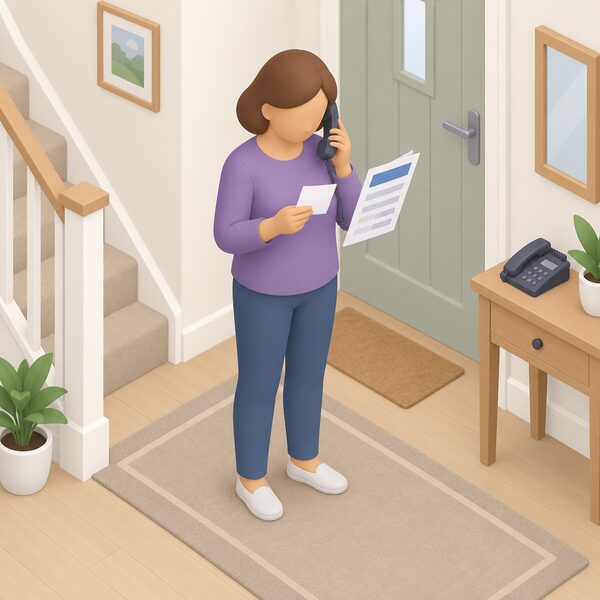
The genuine services share a set of characteristics. They are free at the point of use, they describe themselves as impartial, and they do not sell the measures they discuss. NI Energy Advice states plainly that its advice is free and impartial22. LEAP describes itself as a free energy and money saving advice service5.
A cold caller offering a free survey, a grant that must be claimed today, or a discount that expires when the caller leaves is not one of these services. The official route into ECO funding runs through an organisation offering free and impartial support, not through an unsolicited approach24.
There is also a technical advice route for older and traditional buildings. The Historic England technical advice line is a free and confidential service open to anyone with a technical enquiry relating to traditional buildings12. That is a specialist line rather than a general energy advice service, but it matters for the many English homes built with solid walls, where standard retrofit advice can be wrong.
Choosing the right service
The choice follows from the problem.
- A billing dispute, a meter fault or a supplier that will not refund credit: Citizens Advice, the statutory consumer route, which can escalate to the Extra Help Unit where the criteria are met1.
- A household struggling to keep warm, or not claiming everything it is entitled to: National Energy Action, whose service covers bills, keeping warm and benefits advice4.
- Planning work on the home, or wanting to understand a measure before getting quotes: Energy Saving Trust, whose advice covers energy at home and green renovation5.
- Wanting someone to visit and look at the property: LEAP, which offers a free home visit from a qualified Home Energy Advisor6.
- Grant eligibility: any of the national services, because the official route into ECO funding is through an advice organisation that can assess eligibility24.
- A traditional or listed building: the Historic England technical advice line, which covers technical enquiries about traditional construction12.
The wider point is that advice is the cheapest step in any energy plan and the one most often skipped. A household that starts with an advisor, rather than a quote, is better placed to judge what it is being offered. From there, the sequence of work, the assessment and the paperwork are separate questions, and the getting started guide sets out how they fit together.
Sources27 cited
- Complain about your energy supplier, Ofgem, 2026
- Get help with your energy bills, Ofgem, 2026-09-17
- Worried about your energy bills, Energy Ombudsman, 2026-03-24
- Getting help with your energy bills, Birmingham City Council, 2026-06-24
- Energy Efficiency Advice, Torridge District Council, 2026-09-17
- Grants and funding, Tameside Metropolitan Borough Council, 2026-09-17
- Consumer protection rights, GOV.UK, 2026-09-17
- ECO Flexibility Funding, Ceredigion County Council, 2026-09-17
- ECO4 guidance: supplier administration guidance, Ofgem, 2026-07-06
- Financial help, energy efficiency and low carbon heating improvements, City of Edinburgh Council, 2026-09-20
- Home energy generation, Planning Portal, 2026
- Adapting historic homes for energy efficiency: a review of the barriers, GOV.UK, 2024-01-03
- FOI 202500462873, Scottish Government, 2025-07-22
- Complain about your energy supplier or network operator, Ofgem, 2026
- Complain about your energy supplier or network operator, Ofgem, 2026
- Getting help if you can't afford your energy bills, Ofgem, 2026-09-17
- Advice if you're struggling to pay your energy bills, nidirect, 2026-09-17
- Who to contact, Ofgem, 2026-09-17
- Heat in Buildings progress report 2025, Scottish Government, 2025-10-02
- Area Based Schemes, Glasgow City Council, 2026-06-08
- Energy efficiency tips, nidirect, 2026-09-17
- Insulation, nidirect, 2026-09-02
- Switch your home energy supplier, Ofgem, 2026
- Home energy efficiency, Bridgend County Borough Council, 2026-09-17
- Summary of the Green Homes Grant Local Authority Delivery and Home Upgrade Grant statistics: March 2025, GOV.UK, 2025-03-27
- Energy Company Obligation (ECO): homeowners and tenants, Ofgem, 2026-09-17
- Change in delivery of the Affordable Warmth Scheme, Department for Communities, 2023-06-02
 Who to Call for Energy HelpA single reference to the right contact for each situation: gas escapes, power cuts, water leaks, meter faults, billing disputes, scams and free advice.
 The Full Grants and Schemes GuideWhich grants can you actually get right now, and how do you apply for them?
 Energy Consumer BodiesWho do you call about an energy problem where you live?
 The Full Installers GuideHow do you find an installer you can trust, and what should you check before signing anything?
 The Full Where to Start GuideWhich home improvements actually cut your bills, and which should you do first?
 Grant ScamsGrant schemes attract cold callers, doorstep sellers and fake approval letters using real scheme names.