

In this guide
Most of the mistakes UK householders make when starting energy work are ordering errors, not product errors. The work gets done in the wrong sequence, or a measure is bought before anyone has established whether the dwelling can take it. The Scottish Government's Heat in Buildings Strategy is blunt about the sequence: "Making buildings waste less energy through energy efficiency is the first step to zero emissions."1
The second most common error is assuming that a modelled figure will be delivered. A 2019 Scottish Government consultation on domestic EPCs records that "Savings predicted by EPCs are not representative of actual savings experienced."2 The recommendation report attached to a certificate gives an indication of cost and typical savings for each improvement over three years, but it is a model, not a measurement of the home in front of you2.
The third is paperwork and eligibility. Ofgem's ECO4 delivery guidance states that "ECO and WHD funding cannot be combined for any measures"3, and the replacement rules under Approved Document L turn on what was installed before, which can only be shown from records4. None of these errors is exotic. All of them are avoidable before a single order is placed.
The five recurring mistakes
The recurring mistakes cluster into five groups, and each has a documented consequence.
The first is buying equipment before assessment. The Scottish Government's Heat & Energy Efficiency Technical Suitability Assessment work sets out the objective plainly: that building owners "understand which measures are not appropriate, i.e. be aware of the 'wrong' measures, energy efficiency measures which could cause dampness, mould, or condensation, or clean heating systems insufficiently sized to maintain warmth"7. A household that orders a heat pump or insulation before that assessment has no way of knowing which group its home falls into.
The second is treating an EPC as a prediction. It is a modelled rating with a recommendation report, and the savings it shows are not representative of what households actually experience2.
The third is ignoring ventilation and fabric risk. Approved Document L is explicit that "The energy efficiency of historic and traditional dwellings should be improved only if doing so will not cause long-term deterioration of the building's fabric or fittings"8. The same principle, applied to any dwelling, is why measures are assessed rather than applied generically.
The fourth is getting the funding rules wrong. ECO and WHD cannot be combined for any measures3, and the Warm Home Discount research found that "giving consumers advice about energy efficiency or engagement with the market does not guarantee positive behaviour change"9, so advice alone is not a plan.
The fifth is losing the paperwork. Replacement service efficiency rules, warranty terms and scheme compliance all depend on records that are hard to reconstruct afterwards4.
"PAS 2035 was introduced in 2019 as a clear framework for best practice in the energy retrofit of domestic properties."
The figures behind the mistakes
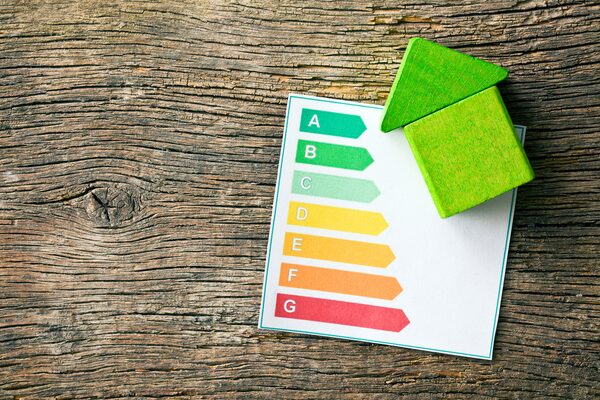
The figures that matter here are mostly about scale and about the limits of the data a household is working from.
On the housing stock, the English Housing Survey reports that the proportion of homes in the lowest bands of E to G decreased from 23% to 9% over the last decade6. That is a real improvement across England, and it also means roughly one home in eleven remains in the lowest bands, where the case for assessment before purchase is strongest.
On the data itself, two caveats are worth carrying into any decision. The Energy Performance of Building Certificates statistics "do not cover the entire building stock across England and Wales"10, and the Energy Performance Dashboard "does not take into account properties that are exempt from the Minimum Energy Efficiency Standards"11. A household reading a national statistic and assuming it describes its own street is reading it wrong.
On triggers, the Able to Pay retrofit research found that potential triggers for installing energy efficiency improvements were other building work (14%) or the heating system failing (11%)12. Both are reactive. Neither is a plan.
On the policy backdrop, the Climate Change Committee's assessment of the Heat and Buildings Strategy states that "the policies needed to drive improvements in energy efficiency in homes that are not fuel poor are currently inadequate"13, and its response to the British Energy Security Strategy said it was "disappointing not to see more on energy efficiency and on supporting households to make changes that can cut" energy bills14. Households waiting for a policy signal before acting are waiting on something the advisory body itself describes as inadequate.
| Figure | Value | Applies to | Source |
|---|---|---|---|
| Homes in E to G bands, change over a decade | 23% to 9% | England | 6 |
| Trigger: other building work | 14% of respondents | Able to Pay households | 12 |
| Trigger: heating system failing | 11% of respondents | Able to Pay households | 12 |
| PAS 2035 introduced | 2019 | Domestic retrofit | 5 |
What drives them
The drivers behind these mistakes are structural rather than personal, and the evidence names them.
The first driver is that the moment of decision is usually a crisis or a coincidence. Other building work accounts for 14% of triggers and a heating failure 11%12. When the trigger is a broken boiler or a kitchen extension, the decision window is short, and short windows favour whatever can be ordered quickly over whatever the dwelling actually needs.
The second is that advice does not automatically convert into action. Ofgem's Warm Home Discount research found that giving consumers advice about energy efficiency or engagement with the market does not guarantee positive behaviour change9. The Energy Efficiency Guide produced for Credit Union staff covers domestic fuel, energy efficiency and income maximisation related issues15, which shows how long the advice infrastructure has existed without closing the gap.
The third is automation and monitoring arriving late in the process. The SeeZero home energy management system is described as taking away "a lot of the effort for consumers wanting to make greener choices" through automation and intelligence16. That is a maker's description of its own product, and it addresses effort, not sequence.
The fourth is that the assessment profession itself has been evolving. PAS 2035 has to be managed by a qualified Retrofit Coordinator5, and the distinction between a Domestic Energy Assessor and a PAS 2035 Retrofit Assessor is a live source of confusion for households commissioning work.
Rules that differ across the four nations

The rules, the advice routes and the data all differ by nation, and a household applying an English rule in Scotland or Northern Ireland will get it wrong.
England works to Approved Document L, with the National Calculation Methodology for buildings other than dwellings in England set at the 2026 version18. Scotland works to Section 6 of its Building Standards technical handbook, whose stated intention is "to ensure that effective measures for the conservation of fuel and power are incorporated" in dwellings and buildings consisting of dwellings19. Wales works to Approved Document L Volume 1, and the Building Regulations 2010 Part 6 imposes additional specific requirements for energy efficiency on building work20. Northern Ireland works to Technical Booklet F1, which points to BRE Report BR 262: Thermal insulation: avoiding risks for the measures to avoid the risks that might arise21.
Advice routes differ too. The Simple Energy Advice website offers impartial energy efficiency advice for England and Wales, including help with schemes like the Warm Home Discount22. In Northern Ireland, homeowners are directed to seek independent advice on solar panels, heat pumps and other energy efficiency measures from organisations providing that service23. Wales has run a ten-year energy efficiency strategy covering 2016 to 2026, which includes making sure people know how to switch energy supplier to save money24.
On spend, written evidence to a parliamentary committee records Northern Ireland and Wales spending 3x and 2x as much respectively per capita on energy efficiency in 201725. That is a dated figure and should be read as such, but it illustrates that the nations have not moved in step.
Replacement, averaging and funding rules
The rules that householders most often trip over are the ones governing replacement, averaging and funding.
On replacement, Approved Document L Volume 1 sets out that a replacement fixed building service using the same fuel "should have an efficiency that is not lower than that of the service being replaced"; using a different fuel, it should not produce more CO2 emissions per kWh of heat nor have a higher primary energy demand per kWh of heat4. This is why the old appliance's details matter: without them, compliance cannot be demonstrated.
On new dwellings, the dwelling primary energy rate, dwelling emission rate and dwelling fabric energy efficiency rate "must not exceed the target primary energy rate, target emission rate and target fabric energy efficiency rate, respectively"8. Averaging is restricted: an average dwelling primary energy rate, emission rate or energy use intensity should not be calculated across separate buildings on a site, and average dwelling energy use intensity should not be calculated for a row of terraced houses4.
On funding, ECO and WHD funding cannot be combined for any measures3. Ofgem's guidance for homeowners and tenants on the Energy Company Obligation sets out the scheme from the household side22.
On enforcement, the Part 9 energy performance of buildings regime gives the Secretary of State power to make regulations requiring assessment, certification and publication of energy usage or efficiency, prohibiting marketing, letting and leasing of properties without assessment, and requiring EPCs for new premises27. The direction of travel is toward more documentation, not less.
"it should have an efficiency that is not lower than that of the service being replaced"
What it means for energy independence

Every one of these mistakes costs a household independence, and the mechanism is worth stating plainly.
Buying before assessment leaves the household dependent on whatever the installer happened to stock, rather than on what the dwelling can take. The Scottish Government's objective for technical suitability assessment exists precisely so that owners can identify the wrong measures before they are fitted7. A home that has had the wrong measure fitted is not more independent; it is committed to a system that may need replacing.
Getting the funding rules wrong leaves the household dependent on a scheme it cannot use. Because ECO and WHD cannot be combined for any measures3, a household that has already had work done under one route has closed the other for that measure. That is a permanent loss of leverage.
Losing paperwork leaves the household dependent on the goodwill of whoever it deals with next. Replacement efficiency rules turn on the previous service4, and warranty and compliance questions turn on records.
What remains dependent regardless is the grid, the supplier and, for most homes, gas. The measures described here reduce how much of those a household needs, and they do not remove the connection. The realistic gain is a home that needs less, is documented well enough to prove it, and has been assessed before money was committed.
Sources27 cited
- Heat in Buildings Strategy: easy read, Scottish Government, 2022-03-07
- Domestic EPC reform consultation, Scottish Government, 2021-07-23
- ECO4 delivery guidance v3.2, Ofgem, 2025-12-08
- Building Regulations Approved Document L Volume 1, Welsh Government, 2026-04
- Home energy efficiency key terms explained, Development Bank of Wales, 2024-10-17
- English Housing Survey 2024 to 2025: introduction and key findings, UK Government, 2024
- Scoping consultation: Heat and Energy Efficiency Technical Suitability Assessment, Scottish Government, 2025-06-06
- Approved Document L: Conservation of fuel and power, Volume 1: Dwellings, UK Government, 2026-09-17
- Warm Home Discount research: consumer experiences receiving energy advice, Ofgem, 2014-11-05
- Energy Performance of Building Certificates in England and Wales, April to June 2025, UK Government, 2025-07-31
- Energy Performance, Rent Smart Wales, 2026-09-20
- Able to Pay retrofit research: executive summary, Bristol City Council, 2022-07
- Taking stock of the UK Government's Heat and Buildings Strategy, Climate Change Committee, 2022-03-09
- CCC responds to UK Government's Energy Security Strategy, Climate Change Committee, 2022-04-07
- Energy Efficiency Guide, Ofgem, 2002-03-05
- How smart can a smart meter be in the connected home, Smart DCC, 2024
- Quality Assurance Short Life Working Group report, Scottish Government, 2019-03-26
- Notice of approval of the methodologies for expressing energy performance, UK Government, 2026-03-24
- Building Standards Technical Handbook 2020: Domestic, Section 6 Energy, Scottish Government, 2020-12-02
- Approved Document L Volume 1 consultation version, Welsh Government, 2026-09-17
- Technical Booklet F1, Building Control Northern Ireland, 2012-10
- Energy Company Obligation: homeowners and tenants, Ofgem, 2026-09-17
- Support to generate your own electricity, nidirect, 2025-09-22
- Energy Efficiency in Wales: A Strategy for the next 10 years 2016 to 2026, Welsh Government, 2016
- Written evidence 98696, UK Parliament, 2017
- Building regulations: general information, Planning Portal, 2026
- Energy performance of buildings regime, House of Commons Library, 2026-09-20
 The Full Installers GuideHow do you find an installer you can trust, and what should you check before signing anything?
 The Full How To GuideSwitching supplier, sending meter readings, sorting an EPC, claiming a grant, complaining when something goes wrong, coping in a power cut: where do you start with any of it?
 The Full Where to Start GuideWhich home improvements actually cut your bills, and which should you do first?
 Moving Home Energy ChecklistThe immediate energy tasks on moving in: finding the supplier and meters, taking opening readings, checking whether the meters are smart, setting up billing, prepayment top-ups, the Priority Services Register, and your rights as a buyer or renter.
 Apply for a Home Energy GrantThe application sequence common to funded schemes: the checker, the survey or assessment, the installer, the paperwork and the sign-off.
 Where to Start ImprovementsThe first steps are assessment, not purchase: read the home's EPC and its recommendation report, see actual consumption on a meter or in-home display, and take the no-cost adjustments such as turning the thermostat down one degree.