

In this guide
- Mis-Selling and Pressure Selling
- Unfair Practices and Redress
- Consumer Protection Regulations
- Renewable Energy Consumer Code
- RECC Selling Rules
- Deposits and Cooling-Off Rights
- Installer Insolvency Protection
- Trading Standards Enforcement
- RECC Dispute Resolution
- CTSI Polling and Trust
- Where the Rules Leave You
Mis-selling in the energy sector is not a single act. It is a set of practices, from a claim about savings that no evidence supports, to a salesperson who will not leave the kitchen until a form is signed. The law treats both ends of that range as unfair commercial practices, and it gives a householder who was caught by them three specific remedies: the right to unwind the contract, the right to a discount and the right to damages1.
The rules that created those remedies were the Consumer Protection from Unfair Trading Regulations 2008, which applied to business-to-consumer practices across the UK2. Those Regulations were revoked on 6 April 2025 by the Digital Markets, Competition and Consumers Act 2024, and the provisions on rights of redress are being replaced by similar ones in that Act, not yet in force3. In practice, a householder complaining about a sale made before that date is dealing with the old regime, and one complaining about a sale made since is dealing with a transitional position where the replacement provisions are still coming into force.
Alongside the general law sits an industry code. The Renewable Energy Consumer Code was formed in 2006 and sets standards for the selling or leasing of small-scale heat and power generators, whether from renewable or other low carbon sources, to domestic consumers4. It covers marketing, pre-contractual information, quotations, deposits, contracts, guarantees and after-sales service, and it dovetails with MCS4. For a household, the code is where the practical protections live: a ban on pressurised selling, a defined cancellation position, and an arbitration route when a complaint is not resolved.
What mis-selling and pressure selling look like in the energy sector
The energy sector attracts a particular kind of bad sale because the product is expensive, the benefits are hard to verify at the point of purchase, and the buyer is usually making a one-off decision without a benchmark. A solar photovoltaic system is sold on a promise about future export income and future bill savings, and the householder cannot check either claim until months or years later. The Smart Export Guarantee is the mechanism by which a household can sell surplus energy it does not use back to the grid, and the rate and terms are set by the supplier rather than the installer8.
Mis-selling takes recognisable forms. A savings figure presented as certain when it is modelled. A payback period quoted without the assumptions behind it. A claim that a system will eliminate bills. A statement about planning permission that turns out to be wrong, when installing solar panels may require approval under the Building Regulations9. A failure to mention that the roof must be in good condition before panels go on it, or that solar panels are not light and the roof must be strong enough to take their weight, especially if the panel is placed on a particular elevation10.
Pressure selling is the second half of the problem, and it is easier to identify because it is about conduct rather than claims. The Renewable Energy Consumer Code states the rule directly: sales staff must not use selling techniques designed to pressurise you into making an immediate decision6. That covers the discount that expires tonight, the representative who will not leave, the insistence on a signature before a survey, and the suggestion that a price will rise tomorrow.
The consequences of both are not only financial. The Scottish Government's review of retrofit assessment in Scotland found an urgent need to address the lack of trust amongst householders when it comes to retrofit projects, resulting from poor advice, poor and costly installations, and cowboy operators11. That finding is about the market as a whole, and it explains why the rules and the code exist: a household that has been misled once is unlikely to buy again, and the damage spreads to every legitimate installer.

The law: unfair commercial practices and your rights of redress

The general law on unfair commercial practices is the foundation, and its test is worth stating precisely. Under the Digital Markets, Competition and Consumers Act 2024, a commercial practice is unfair if it is likely to cause the average consumer to take a transactional decision which they would not have taken otherwise as a result of the practice2. That is a low threshold in the householder's favour: it does not require proof of intent, only that the practice changed the decision.
Where a supplier misled a consumer or used an aggressive commercial practice, the rights of redress are the right to unwind the contract, the right to a discount and the right to damages1. These are three distinct remedies and they do different things. Unwinding puts the parties back where they were, which is what a householder usually wants when the installation has not yet happened or has been badly done. A discount adjusts the price to reflect what was actually received. Damages compensate for loss.
The Consumer Rights Act 2015 sits alongside this and covers the quality of what was supplied: when buying goods and services, a consumer is protected by that Act against faulty goods, poor service and problems with contracts12. The Energy Ombudsman describes the same framework from the dispute side, covering the protections a consumer has when buying goods and services12. A mis-selling complaint and a quality complaint can therefore run together, and a householder does not have to choose one characterisation at the outset.
There is a separate route for one closed scheme. The Financial Ombudsman Service can consider a complaint if a householder thinks they were mis-sold the Green Deal, for example if the Green Deal provider did not make them aware of the facts, and it also handles other financial issues arising from that scheme13. The Green Deal is closed, so this is a historical route rather than a live one, but it remains open to households who were sold Green Deal finance.
The Consumer Protection from Unfair Trading Regulations: what they banned and what replaced them
The Consumer Protection from Unfair Trading Regulations 2008 implemented Directive 2005/29/EC of the European Parliament and of the Council concerning unfair business-to-consumer commercial practices3. They applied across the UK to business-to-consumer practices, and they were the instrument that made misleading actions and aggressive practices actionable by a householder rather than only by a regulator2.
Their structure is worth understanding because it explains what replaced them. Regulation 5 set out the general prohibition on unfair commercial practices, and Regulation 6 dealt with misleading actions14. Regulation 15 covered offences committed by bodies of persons, which is the provision that allowed a company rather than only an individual to be prosecuted15. The legislation record now states that Regulation 15 no longer has effect, generally meaning that the provision has been repealed, and that there are currently no known outstanding effects for Section 615.
The revocation is dated and specific. The Regulations were revoked on 6 April 2025 by the Digital Markets, Competition and Consumers Act 2024, with additional savings made under sections 235, 243 and 252 of that Act3. Those savings matter because they preserve the effect of the old rules for certain purposes during the transition, which is why a householder with an older complaint is not left without a route.
What replaced them is a regime built on the same principle but housed in the 2024 Act. The unfair practice test in that Act asks whether a practice is likely to cause the average consumer to take a transactional decision which they would not have taken otherwise2. The rights of redress are being carried across in similar form1. For a householder, the practical effect is continuity of principle with a change of procedure, and the date of the sale determines which set of provisions applies.
The Renewable Energy Consumer Code: the industry's own standards

The Renewable Energy Consumer Code was formed in 2006 and is the industry's own standard for selling small-scale heat and power generators to domestic consumers4. It was developed and is sponsored and run by Renewable Energy Assurance Ltd, and it sets out the standards applicable to the selling or leasing of small-scale heat and power generators, whether from renewable or other low carbon sources, to domestic consumers4.
Its scope is deliberately wider than the installation itself. The code covers marketing, pre-contractual information, quotations, deposits, contracts, guarantees and after-sales service4. That means the sales conversation, the paperwork handed over before signature, the deposit taken at the point of order, the terms of the guarantee and the handling of a complaint afterwards all fall inside the code's reach. It also dovetails with MCS, so the certification of the installation and the conduct of the sale are covered by two connected instruments4.
The code is approved under the Consumer Codes Approval Board framework, which is the mechanism by which a trading standards body recognises a code as offering real consumer protection4. That approval is what distinguishes a code with teeth from a trade association's statement of good intentions: an approved code has to include independent dispute resolution and a redress mechanism.
For a household, the code's value is that it creates obligations at the point where mis-selling happens. A salesperson working for a member is bound by the code's conduct rules, and a breach is a matter for the code's own complaint process rather than only for a court. The code is also the reason a member's cancellation terms are stated in a consistent way, which is the subject of the next section.
What RECC members must and must not do when selling to you
The central conduct rule is short and unambiguous. Sales staff must not use selling techniques designed to pressurise you into making an immediate decision6. That single sentence rules out the time-limited discount used as leverage, the refusal to leave, and the demand for a signature on the day of the visit. It is the clearest statement in the material of what pressure selling is, and it comes from the code itself rather than from a regulator.
Around that rule sit the information obligations. The code covers pre-contractual information and quotations, which means the household should have the terms in writing before committing4. The code also covers deposits and contracts, so the amount taken up front and the terms on which it is held are within its scope4.
After the work, the code covers guarantees and after-sales service4. Separately, solar installers should provide a certificate for the electrical installation and make the notification to Building Control through their certification body such as NAPIT16. That notification is not a courtesy: it is the step that brings the electrical work within the building control system, and its absence is a defect a householder can raise.
Where a scheme imposes its own specification, the requirements go further. The Barcud solar panel installation scheme specification requires that solar photovoltaic systems should only be installed and certified by MCS certified contractors working to the latest published MIS3002 standards, and that products are new17. It also requires handover at practical completion of record drawings, test and completion certificates, maintenance instructions, manufacturers' directory and colour product literature, a full description of works and commissioning certificates17. Those are the documents a household should expect to hold at the end of a compliant job.
"Sales staff must not use selling techniques designed to pressurise you into making an immediate decision"
Deposits, cancellation periods and cooling-off rights
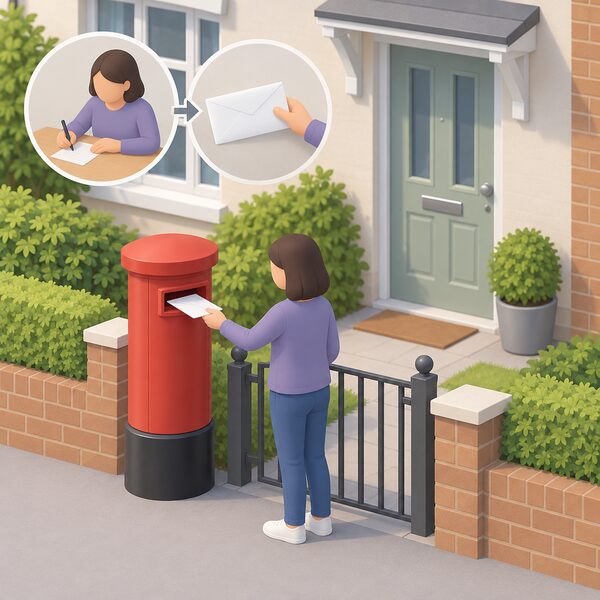
The cancellation position is the most practically important protection in the whole area, and it is more generous than many households realise. For most distance and off-premises contracts, including energy contracts, the cancellation period is 14 days5. The right to cancel does not apply to on-premises contracts, which is why the location of the signature matters so much1.
For a contract signed with a sales representative in the home, or solely by distance means, the Renewable Energy Consumer Code states that the cancellation period runs from the date the contract is signed, up to 14 days from when the goods are delivered6. That is a longer window than the headline 14 days suggests, because it is measured from delivery rather than from signature where delivery comes later.
Where finance is involved, there is a second and separate period. For contracts with finance provided by a member, there are 14 days from the date the documentation from the finance provider is received in which to cancel the agreement6. A householder who has signed both an installation contract and a credit agreement therefore has two clocks running, and cancelling one does not automatically cancel the other.
The validity rule is a genuine protection against administrative delay. A notice of cancellation sent at any time during the cooling off period will be valid even if it is actually received by the trader after the 14-day cooling off period has expired18. Sending within the period is what counts, not receipt, so a householder who posts or emails on day 14 is within their rights.
If the installer goes out of business: how your money and guarantee are protected
Deposit protection is not automatic, and this is where the difference between a code member and an unaffiliated trader is sharpest. Under HIES Deposit and Stage Payment Protection, deposit and stage payments can be protected if the installer stops trading before completing the installation, with completion by another installer or a refund subject to policy terms7. If completion by another installer cannot be arranged, a householder may be eligible for a refund, again subject to policy terms7.
The conditions are specific and worth checking before any money changes hands. There must be a contract with the installer named on the certificate, and the installation must be registered with HIES by the HIES Accredited installer7. A household that pays a deposit to a company which is not the named certificate holder, or which never registers the installation, falls outside the protection.
The wider consumer protection guidance published for the solar sector covers the same ground from the buyer's side: it exists to help households make informed decisions when planning a solar installation, understand the benefits of battery storage with solar, and know their rights if something goes wrong19. It also covers the potential benefits of installing a battery with solar panels, financing options, and how to pick a reliable installer to ensure the work is carried out to a high standard, and it highlights red flags and things to avoid, what to do if something goes wrong, and how to maintain a solar panel system19.
Where a scheme specification applies, battery work is treated separately from the solar retrofit. Under the Barcud specification, battery systems are not to be installed during routine solar panel retrofit works, and are covered separately under PAS 63100:202417. That separation matters for a household whose installer proposes to add a battery to a solar job: the two are different scopes with different standards.
Trading Standards and Trading Standards Scotland: reporting and enforcement

Reporting a trader is a separate act from claiming a remedy, and it is worth understanding what each does. In Northern Ireland, Trading Standards inspectors can investigate complaints about traders and businesses which trade unfairly20. That is the enforcement function: an investigation into conduct, which may lead to action against the trader but does not by itself put money back in a householder's account.
The enforcement powers extend to the courts. Local authorities' Trading Standards may apply to the court for an enforcement order or interim enforcement order over a relevant infringement of consumer law2. An enforcement order is a court order requiring a trader to stop a practice, and an interim order can be granted while a case is proceeding. These are market-wide remedies rather than individual compensation.
The devolved picture matters. Building standards in Scotland are the responsibility of the Scottish Government, which creates the building standards regulations and technical guidance, oversees the building approval process, and is strengthening the building standards system in Scotland21. The Building Standards Technical Handbook for domestic buildings gives guidance on how to comply with the Building (Scotland) Regulations22. Enforcement of environmental regulation in Scotland sits with the Scottish Environment Protection Agency23. A household in Scotland therefore deals with a different set of public bodies from one in England, even where the underlying consumer protection law is shared.
For scheme-funded work, there is a further reporting route. To report fraud connected with the Energy Company Obligation, the contact is counterfraud@ofgem.gov.uk24. The ECO4 scheme is set to end on 31 December 2026, so the window for reporting fraud connected with it is finite25. A household that was misled about what a funded measure would cost, or about eligibility, has both a consumer protection complaint and a scheme fraud report available.
RECC dispute resolution: complaints, arbitration and what it has recovered for consumers
The code's dispute machinery is what makes membership meaningful. RECC offers a mediation service and an independent arbitration service, which members must cooperate with6. The obligation to cooperate is the operative part: a member cannot simply decline to take part, and arbitration produces a decision rather than a negotiation.
The route runs from the trader to the code and then, if needed, to arbitration. A householder who believes they were misled or pressured should first raise the complaint with the member, then escalate to the code. The code's contact details are +44 (0)207 981 0850 and info@recc.org.uk6. The code was developed and is sponsored and run by Renewable Energy Assurance Ltd4.
The remedies available through the general law run in parallel. Where a supplier misled a consumer or used an aggressive commercial practice, the rights of redress are the right to unwind the contract, the right to a discount and the right to damages1. For digital content and services, the consumer has the right to repair or replacement and the right to a price reduction26. Those statutory remedies are not displaced by the code's arbitration; a householder can use the code's process and still rely on statutory rights.
The practical value of arbitration is that it produces a decision without the cost and delay of court proceedings, and it is binding on the member. The practical limit is that it depends on the trader being a member. A household that bought from a non-member has the statutory remedies and the Trading Standards route, but not the code's arbitration.
CTSI polling: why trust and approval matter to homeowners
The case for the code and for certification rests on evidence about trust, and the evidence is consistent. The Scottish Government's retrofit review found an urgent need to address the lack of trust amongst householders when it comes to retrofit projects, resulting from poor advice, poor and costly installations, and cowboy operators11. That is a government finding about the state of the market, not a trade body's complaint.
The same concern appears in the certification side. MCS certifies, quality assures and provides consumer protection for microgeneration installations and installers, covering small-scale renewable electricity technologies such as solar photovoltaic panels, biomass, wind, heat pumps and heat products25. The MCS Foundation supported the relevant bill and reported YouGov surveys finding a majority of both MPs and the public are in favour of solar panels on new homes27. The National House Building Council's position is conditional rather than enthusiastic: providing the maintenance costs and pay-back periods are accurately predicted, this reliable technology has a role27.
That conditionality is the point. The technology is not in question; the accuracy of the claims made about it is. A household that is given a modelled payback period presented as a certainty has been misled in the way the rules are designed to catch, and the trust damage that follows affects every installer in the market.

Where the rules leave a household

The protections are real but they depend on two things: the date and place of the sale, and whether the trader is a code member. A contract signed at home is an off-premises contract with a 14-day cancellation period, extended to 14 days from delivery where the code applies, and a notice sent within the period is valid even if it arrives late5. A contract signed on the trader's premises has no cancellation right at all1.
The remedies for a sale that was actually misleading or aggressive are the right to unwind, a discount or damages, and those survive the replacement of the 2008 Regulations by the 2024 Act1. Enforcement sits with Trading Standards, which can seek an enforcement order, and with the scheme administrators where public money was involved2.
What remains outside a household's control is the trader's solvency and the accuracy of a performance estimate. Deposit protection exists through HIES for registered installations, subject to policy terms, and it does not cover a payment made outside the scheme7. The performance estimate is a prediction, and the rules require it to be presented as one.
Sources27 cited
- Remedies and redress: an overview of your key consumer rights, Trading Standards Wales, 2025-09
- The Consumer Protection from Unfair Trading Regulations 2008, House of Commons Library, 2026-09-17
- The Consumer Protection from Unfair Trading Regulations 2008, Regulation 5, legislation.gov.uk, 2025-04-06
- The Renewable Energy Consumer Code, Chartered Trading Standards Institute, 2026-09-20
- Cooling off report, Ofgem, 2016-12
- RECC consumer leaflet, Renewable Energy Consumer Code, 2026-09-17
- Deposit and Stage Payment Protection, HIES, 2026-07-15
- Solar panels, Oxfordshire County Council, 2026-09-17
- Solar panels guidance, City of York Council, 2026-09-17
- Solar electricity photovoltaics, Planning Portal, 2026-09-17
- Review of retrofit assessment in Scotland, Scottish Government, 2025-06-06
- Understanding your rights, Energy Ombudsman, 2026-09-20
- Green Deal energy saving measures, GOV.UK, 2026-09-17
- The Consumer Protection from Unfair Trading Regulations 2008, Regulation 6, legislation.gov.uk, 2026-09-17
- The Consumer Protection from Unfair Trading Regulations 2008, Regulation 15, legislation.gov.uk, 2026-09-17
- Building regulations renewables guidance, Bedford Borough Council, 2026-09-17
- Barcud solar panel installation tender specification, Sell2Wales, 2026-06-15
- Cooling off background paper, Ofgem, 2014-02-20
- Consumer protection guidance, Solar Energy UK, 2026-09-17
- Unfair trading, nidirect, 2026-09-17
- Building standards, Scottish Government, 2026-09-17
- Building Standards Technical Handbook, Domestic, Scottish Government, 2026-03
- F gas regulation in Great Britain, Defra, 2025-09-02
- Energy Company Obligation contacts, guidance and resources, Ofgem, 2026-09-17
- ECO4 Flex information document, Ceredigion County Council, 2026-09-17
- Consumer Rights Act 2015, Part 1, Chapter 3, legislation.gov.uk, 2026-09-17
- Research briefing on solar panels on new homes, House of Commons Library, 2026-09-17
 Scams and Mis-SellingHow energy supplier scams present, what the doorstep and phone selling rules require, the redress available when a contract was mis-sold, and how the Energy Ombudsman handles a dispute.
 Selling a Home With Energy KitCovers the paperwork a sale requires when a home has solar panels, a heat pump, insulation or a leased roof, and how warranties, export payments and guarantees transfer.
 Insulation Scams and Cold CallsHow funded insulation mis-selling works, from the cold call and the fake 'illegal insulation' claim to spray foam removal bills, plus the TrustMark check, the guarantee position, and where to report a scam.
 Spot and Report an Energy ScamThe common approaches used in rebate texts, grant cold calls, doorstep sales and fake supplier emails, and the checks that confirm whether contact is genuine.
 Energy Theft and TamperingExplains what counts as energy theft, how to report a suspected tampered or bypassed meter, and what a supplier may do on investigation.
 Grant ScamsGrant schemes attract cold callers, doorstep sellers and fake approval letters using real scheme names.