

In this guide
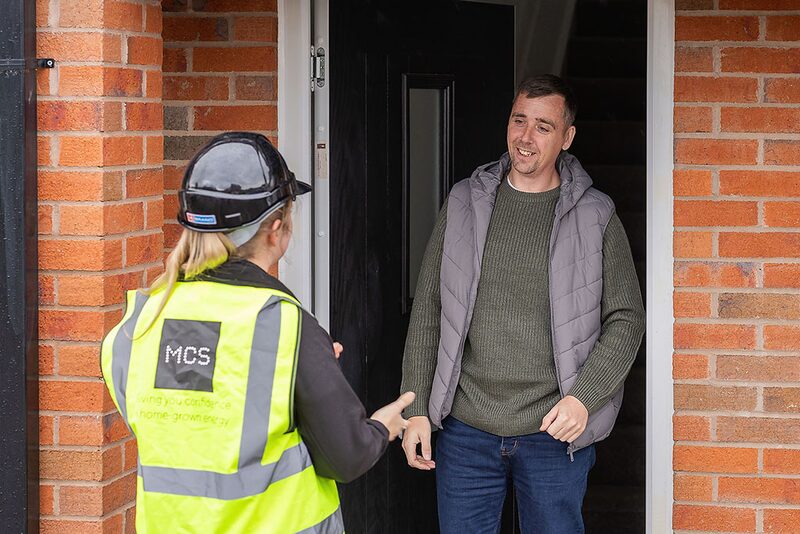
Heat pump installation in the UK is governed by a layered set of requirements rather than a single licence. Building regulations guidance for England and Wales states that the person carrying out heat pump installation work should be suitably competent, and that the work must be certified by one of two routes: self-certification by a registered competent person, or certification by a building control body1. Official guidance goes further and advises contacting an installer who can provide the necessary advice, preferably one who belongs to either the Microgeneration Certification Scheme or the relevant Competent Person Scheme1.
For grant-funded work the bar is higher and simpler to state. Installers must be MCS certified and certified to install heat pumps or biomass boilers to apply to the Boiler Upgrade Scheme4. Independent guidance on the scheme puts it bluntly: the installer must be MCS certified, and no certification means no grant6.
Behind those two requirements sit individual qualifications, trade body membership and a workforce that is still far short of the numbers the government's own targets imply. The Heat Pump Association projected 19,100 installers in 2026 rising to 69,500 in 2035, against a need it estimated at a minimum of 50,200 installers by 20307.
What qualifications a heat pump installer needs
There is no single national licence for heat pump installation. What exists instead is a competence requirement in building regulations, a certification requirement for grant work, and a set of individual qualifications that schemes and manufacturers recognise.
The building regulations position is deliberately broad. Approved Document L for dwellings requires that the person carrying out the work is suitably competent, without prescribing a particular certificate3. Welsh guidance repeats the practical advice: contact an installer who can provide the necessary advice, preferably one who belongs to either the Microgeneration Certification Scheme or the relevant Competent Person Scheme1. The Planning Portal gives the same steer for ground source and air source heat pumps2.
For any work funded through a government scheme, competence in the abstract is not enough. Heat pump installers under government schemes must be certified by the Microgeneration Certification Scheme or equivalent12. Installation contractors must be certified by MCS and install MCS certified products to qualify for government incentive schemes such as the Renewable Heat Incentive or Green Homes Grant13.
The individual qualification most often cited is at Level 3. For air-to-air heat pump installation, a technical supervisor must hold competence in Refrigeration, Air Conditioning and Heat Pumps (RACHP) at Level 3 or above9. That is a specific requirement attached to a specific route, and it illustrates the pattern: the qualification sits with a named role, and the certification sits with the business.
In practice a household is buying a package. The business holds MCS certification or Competent Person Scheme registration; the people on site hold the trade qualifications and manufacturer training that the scheme and the manufacturer require. Checking one without the other leaves half the picture.

The Level 3 heat pump qualification and its plumbing prerequisite
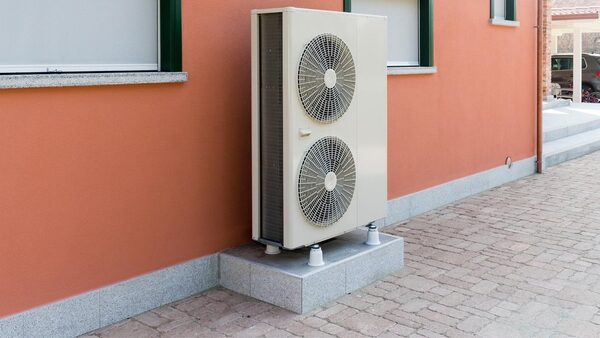
Level 3 is the vocational level at which heat pump competence is normally expressed. The clearest published example is the air-to-air route, where a technical supervisor must hold competence in Refrigeration, Air Conditioning and Heat Pumps at Level 3 or above9. That requirement is tied to MCS certification for air-to-air heat pumps, which opened to installer applications once installer certification bodies gained accreditation through UKAS9.
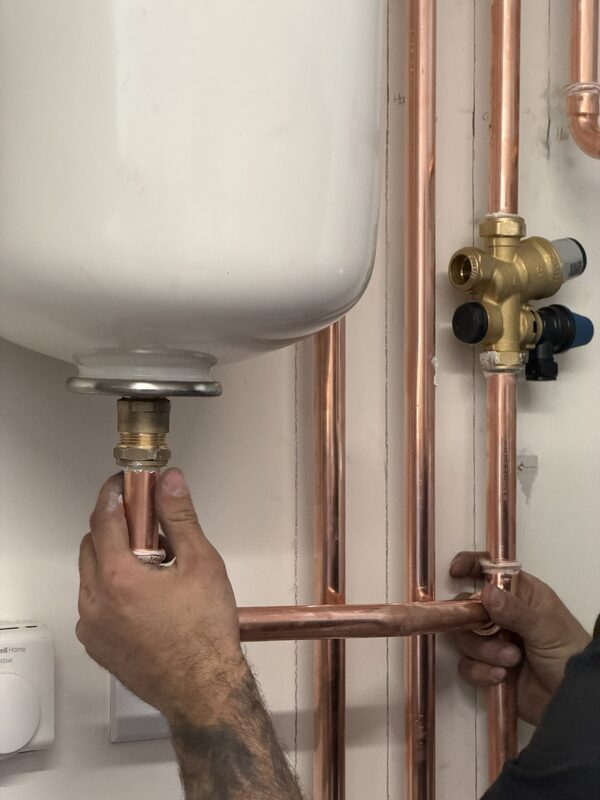
The plumbing prerequisite is less a formal rule than a practical reality. Heat pump installation is not a single-trade job. An independent case study of an air source heat pump installation describes the work being carried out by a team of accredited installers involving plumbers and electricians14. The hydraulic side, the cylinder, the emitters and the commissioning sit with the heating trade; the electrical supply, controls and protection sit with the electrical trade.
That split matters when a household is checking credentials. A firm may hold MCS certification while subcontracting the electrical work, and the electrical work is where the newer competence rules apply. The Electrotechnical Assessment Specification sets out common minimum technical competences across a long list of annexes, including annex 11 for heat pump systems11. Most of those minimum technical competences are also used to assess the competence of Green Deal installers and, where relevant, installers registered with the Microgeneration Certification Scheme11.
So the Level 3 qualification is best understood as one component. It evidences an individual's technical depth in a defined area. It does not certify a business, it does not by itself unlock grant funding, and it does not replace the scheme registration that a household will be asked to check.
MCS certification: why installers must be certified
MCS certification is the pivot on which grant funding turns. The Boiler Upgrade Scheme installer guidance is unambiguous: installers must be MCS certified to apply to the scheme, and must also be certified to install either heat pumps or biomass boilers15. The current scheme guidance repeats the requirement in the same terms4.
The consequence for a household is direct. Independent guidance on the scheme states that the heat pump must be MCS certified or certified to an equivalent scheme recognised by MCS, and that no certification means no grant, full stop6. The £7,500 grant is not payable on an installation carried out by an uncertified business, however well the work is done.
Certification also carries paperwork obligations that reach the household. For heat pump installations under the Domestic Renewable Heat Incentive, metering information must be added to the MCS Certificate16. The installer applies for the Boiler Upgrade Scheme grant on the householder's behalf through Ofgem, and the route to finding one is the MCS find a heat pump installer tool or the household's energy supplier17.
MCS certification is a business-level certification, and it is being redeveloped. The transition phase is due to end on 31 March 2027, by which date all MCS certified installers must operate under the redeveloped scheme9. Air-to-air heat pumps were brought into MCS in phases, with installer certification bodies needing UKAS accreditation before installers could apply9.
The Electrotechnical Assessment Specification: new competence rules for low-carbon work
The Electrotechnical Assessment Specification, usually shortened to EAS, is the document that sets the competence expectations for businesses certified on electrotechnical schemes. It matters to heat pump households because the electrical side of an installation is where the newest rules bite.
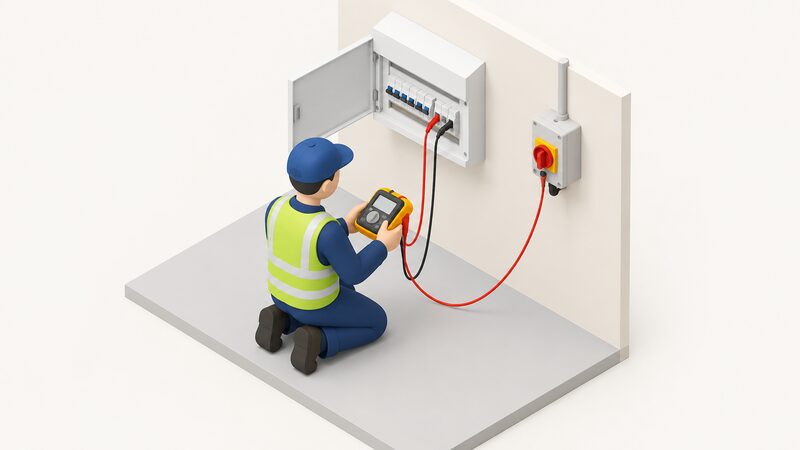
A revised EAS takes effect on 1 October 2026. It introduces clearer competence requirements for inspection and testing and new qualification standards for electric vehicle charging, solar photovoltaic and battery storage installations11. From the same date, businesses certified on an electrotechnical scheme will be required to hold certain qualifications for specified low-carbon installation work11.
The EAS is not new in principle. It has long set out common minimum technical competences across annexes 2a to 19, covering heating, oil, solid fuel, biomass, water, hot water, solar thermal, wet heating, underfloor heating, warm air heating, heat pumps, micro CHP, energy efficiency, sanitary appliances, ventilation, air conditioning, solar photovoltaic and wind turbine systems11. Annex 11 covers heat pump systems11.
What changes in October 2026 is the tightening. The competence requirements for inspection and testing become clearer, and the low-carbon categories gain specific qualification standards. For a household, the practical effect is that the electrician who connects a heat pump, a solar array or a battery will increasingly be expected to hold a named qualification rather than a general registration.
The EAS also reaches beyond its own schemes. Most of the minimum technical competences are used to assess the competence of Green Deal installers and, where relevant, installers registered with the Microgeneration Certification Scheme11. That overlap is why the document matters even to households who never deal with an electrotechnical scheme directly.
Who checks installer competence: APHC, CIPHE and the Heat Pump Association
Three bodies appear repeatedly in the guidance a household is likely to read, and they do different jobs.
APHC is a trade association with a quality gate. Only those plumbing and heating businesses that have passed its quality assurance criteria are accepted as members18. Members must comply with industry standards including Building Regulations, Water Regulations and appropriate British Standards, must adhere to the APHC Customer Charter setting out minimum trading standards, and must operate a customer complaints procedure designed to achieve an amicable resolution18. APHC is also a participant in the overarching WaterSafe initiative18.
CIPHE, the Chartered Institute of Plumbing and Heating Engineering, publishes consumer-facing guidance and a directory. Its stated purpose is to give consumers an insight into alternative solutions that might be considered when heating systems are replaced, and it encourages homeowners and developers to consider sustainable alternatives to traditional heating and hot water systems where possible19. It offers a find a plumber tool for locating plumbing and heating engineers19. On low temperature technologies specifically, it advises engaging installers and designers who are competent and confident with the variety of options available19.
The Heat Pump Association is a trade association that promotes the use of heat pumps as a low carbon solution to heating20. It publishes workforce projections and policy recommendations, including a call to provide market confidence and clarity on the heat pump installation pipeline7.
None of these three bodies certifies an installation for building regulations purposes. That is the job of a Competent Person Scheme or a building control body. Trade body membership is evidence of a business having met a membership standard; it is not the same as scheme registration, and a household checking credentials needs both where grant funding is involved.
The installer gap: how many trained installers the UK needs
The workforce numbers are the clearest evidence that qualification and training are not a formality. Parliament's own research identifies a lack of qualified heat pump installers as a potential barrier to rollout, alongside planning rules and the need for electricity infrastructure upgrades21.
The Heat Pump Association's projections show the scale. It projected 19,100 installers in 2026, 41,200 in 2029, 57,700 in 2032 and 69,500 in 203522. Its earlier estimate, cited in parliamentary material, put the need at at least 33,700 trained installers by 2028 and a minimum of 50,200 installers by 20308.
Government figures tell a shorter story. By May 2024 the department reported being on track towards meeting its target to reach 12,000 trained heat pump installers by 2025, and that it had trained 7,000 installers so far, including 3,000 as part of the Heat Training Grant8. The Heat Training Grant had funded training for around 3,000 heat pump installers since July 202323.
The target these numbers serve is 600,000 heat pump installations a year by 202810. The gap between the trained workforce and the installation target is the reason qualification routes have been under pressure to scale.
| Measure | Figure | Date or period | Source |
|---|---|---|---|
| Installers projected | 19,100 | 2026 | 22 |
| Installers projected | 41,200 | 2029 | 22 |
| Installers projected | 57,700 | 2032 | 22 |
| Installers projected | 69,500 | 2035 | 22 |
| Trained installers needed | at least 33,700 | 2028 | 8 |
| Trained installers needed | minimum 50,200 | 2030 | 8 |
| Government training target | 12,000 | 2025 | 8 |
| Installers trained | 7,000 | to May 2024 | 8 |
How training is scaling up to meet the target
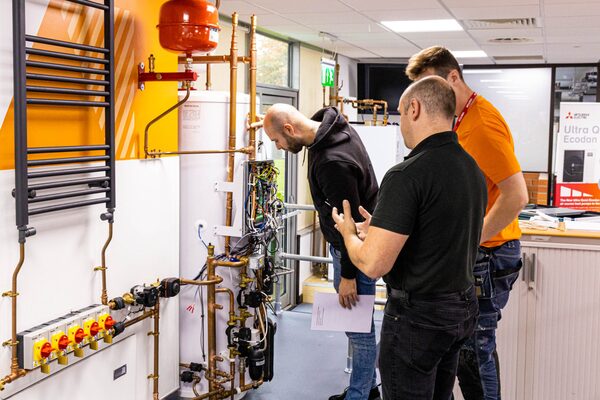
The training pipeline is measured in candidates per year, and the published figures vary with the scenario. The Heat Pump Association put the lower annual training requirement at 4,581 candidates each year until 2028, the average at 10,267 candidates each year until 2035, and the upper requirement at 12,961 candidates trained in heat pump installation each year until 20357. The same analysis states that 132,353 trained installers are needed to deliver 1.6 million heat pump installations annually by 20357.
Those are modelled figures, and they should be read as such. They describe what would be required if installation volumes reached the stated levels, not what is currently happening.
The government's own contribution has been the Heat Training Grant, which funded training for around 3,000 heat pump installers between July 2023 and May 202423. The department reported 7,000 installers trained in total by May 2024 against a 12,000 target for 20258.
Scotland operates a separate support route. Funding through the Scottish Government's Heat Pump Skills Fund is available until 31 March 202724. That is a distinct scheme from the GB-wide training grant, and it reflects the devolved split in building standards and support.
The Heat Pump Association's policy recommendation is not about course capacity but about demand certainty: provide market confidence and clarity on the heat pump installation pipeline7. The argument is that training providers and installers will not invest in qualifications without a visible, stable volume of work.
How to find and verify a qualified installer
Verification has two layers, and both are checkable before work begins.
The first layer is scheme registration. Official guidance advises contacting an installer who can provide the necessary advice, preferably one who belongs to either the Microgeneration Certification Scheme or the relevant Competent Person Scheme1. For grant-funded work the requirement is not a preference: installers must be MCS certified and certified to install heat pumps or biomass boilers4. The MCS find a heat pump installer tool is the published route, alongside contacting an energy supplier17.
The second layer is building control. Where a heat pump installer is not a registered competent person, the installer must notify an appropriate building control body before work begins3. Welsh guidance sets out the same two procedures: self-certification by a registered competent person, or certification by a building control body25. Where a firm is not in an approved Competent Person scheme, the firm or the householder will need to give notice to the local authority of the intention to carry out the work in advance26.
After the work, paperwork follows. A registered competent person should give notice to the building control authority that commissioning has been carried out in accordance with the approved document, give the certificate or a copy of the information on it to the building control authority, and give a copy of the Building Regulations compliance certificate to the occupier3.
Trade body directories are a useful supplement. APHC accepts only businesses that have passed its quality assurance criteria18. CIPHE offers a find a plumber tool19. Neither substitutes for scheme registration where a grant is claimed.
Can you install a heat pump yourself?
Building regulations guidance does not prohibit a householder from carrying out heat pump installation work, but it does set conditions that make DIY impractical for most.
The core requirement is competence. Approved Document L states that the person carrying out the work is suitably competent3. The work must then be certified by one of two procedures: self-certification by a registered competent person, or certification by a building control body3. A householder who is not a registered competent person falls into the second route, which means notifying building control before work begins and having the work certified.
Grant funding is closed to DIY installation. Installers must be MCS certified to apply to the Boiler Upgrade Scheme, and must be certified to install heat pumps or biomass boilers4. Since the installer applies for the grant on the householder's behalf through Ofgem, a self-installed heat pump cannot access the £7,500 grant17.
The same pattern appears in adjacent technologies. Guidance on solid fuel central heating systems states that only persons who are competent should carry out the installation, for example installers who are registered with HETAS27. The wording is repeated across consultation and final guidance versions, which suggests a settled position rather than a draft one.
Sources27 cited
- Building regulations: heat pumps, Welsh Government, 2026-09-17
- Heat pumps: building regulations, Planning Portal, 2026-09-17
- Approved Document L, Volume 1: Dwellings, HM Government, 2026
- Boiler Upgrade Scheme guidance for installers v5.1, Ofgem, 2026-07-02
- Boiler Upgrade Scheme guidance for installers V5, Ofgem, 2026-04-28
- Free money: the link between certification and incentives, Eurovent Certification, 2026-05-21
- Projecting the future domestic heat pump workforce, Heat Pump Association, 2035
- Heat pump installer workforce estimates, UK Parliament, 2024-05-26
- Implementation of air-to-air heat pumps into MCS enters next phase, MCS Certified, 2026-09-08
- Heat pump deployment target, UK Parliament, 2028
- Competent Person Scheme: current schemes and how schemes are authorised, HM Government, 2013-04-04
- Heat pump installer certification requirements, UK Parliament, 2022-05-17
- Register energy devices in homes or small businesses, HM Government, 2021-03-31
- Vanessa and Patryk's air source heat pump, Energy Saving Trust, 2022-07-20
- Boiler Upgrade Scheme installer guidance, Ofgem, 2022-07-21
- Domestic Renewable Heat Incentive: eligible heating systems, Ofgem, 2026-09-17
- Heat pump installation: applying for the grant, HM Government, 2026-09-10
- Why use an APHC member, APHC, 2025-10-31
- The future of home heating, CIPHE, 2026-09-17
- Draft Domestic Building Services Compliance Guide, Scottish Government, 2021-07
- Heat pump rollout barriers, UK Parliament, 2026-09-19
- Start at home for newly trained heat pump installers, Nesta, 2026
- Demand for heat pumps rises following increase in applications to the Boiler Upgrade Scheme, HM Government, 2024-05-23
- Heat Pump Skills Fund, Energy Saving Trust, 2027-03-31
- Approved Document L, Volume 1: consultation version, Welsh Government, 2026-09-17
- Building regulations: boilers and heating, Welsh Government, 2026-09-17
- Domestic Building Services Compliance Guide 2022, Scottish Government, 2022-06
 Appliance Standards and MarkingWhich marks should a boiler, heat pump or cylinder have before you buy, and what do they actually prove?
 MCS ExplainedMCS is the quality mark for solar panels, heat pumps and other home renewables.
 Standards and CertificationHow do you know a heat pump will really perform as promised?
 Installation Survey to HandoverWalks through the survey, design, pipework and electrical stages of a domestic heat pump installation and what happens on each day.
 MCS Installation StatisticsHow many homes have had solar panels, heat pumps or batteries fitted by certified installers, and is that number still rising?
 Building Regulations EnglandAdding a heat pump, solar panels or an extension usually needs building regulations approval, and it is separate from planning permission.