

In this guide
Finance for a home energy installation is not one product. It is a set of arrangements that differ in who lends the money, who is regulated, what happens if the work goes wrong, and how the debt sits alongside a grant. The Boiler Upgrade Scheme pays an up-front capital grant towards approved heat pumps and biomass boilers in England and Wales, and the current grant value published in the scheme rules is £2,5001. The scheme has £2.7bn of investment in grants behind it, with awards of up to £7,500 cited in the Government's own consultation on consumer protection2.
For a boiler, the sums are smaller but the credit question is the same. Independent guidance puts a new or replacement boiler at £600 to £2,500 depending on model and system type, while a parliamentary committee report gives the cost of a new gas boiler as typically £2,500 to £3,0003. Where a household cannot pay that in one go, the installer may offer to arrange credit, which makes the installer a credit broker and brings the lender's regulatory duties into play.
What follows sets out the finance routes, the costs, the grant position, the protection that comes with different payment methods, and the complaint routes when something fails. The recurring theme is that finance buys time, not independence: a financed heat pump still depends on the grid, and a financed boiler still depends on gas.
What finance is available for boilers, solar, batteries and heat pumps
The finance itself comes from lenders, not from installers. An installer that offers "pay monthly" is almost always acting as a credit broker, introducing the household to a bank or finance house that underwrites the agreement. That distinction matters because the lender, not the installer, is the party regulated for the credit, and the lender's affordability checks decide whether the agreement is offered at all.
The products fall into a few recognisable shapes. Interest-free credit over a short term, typically tied to a promotional period, is the most common offer on boilers. Longer-term loans at a stated APR spread the cost over several years and carry a total cost of credit that exceeds the cash price. Rental or subscription arrangements, where the household pays monthly and never owns the equipment outright, are a separate category again: independent guidance notes that boiler rental contracts can last as long as 12 years, and that most companies offer different contract lengths5.
For renewable work, the finance question is bound up with the grant. The Boiler Upgrade Scheme provides upfront capital grants to support the installation of heat pumps and biomass boilers in homes and non-domestic buildings, and it is described in official statistics as making these technologies more affordable and appealing to households4. The grant reduces the sum that needs financing; it does not remove the need for the household to fund the balance.
Solar and battery installations are financed on the same lender model, and Solar Energy UK has been producing a Consumer Protection Guide, set out in a Q&A style, that covers financing options alongside the benefits of pairing a battery with solar panels and how to pick a reliable installer5. The guide's existence reflects a real gap: the finance market for renewables is younger than the mortgage and personal loan market, and the paperwork a household signs is often the first place the terms appear.
Typical costs: what a £2,000 or £3,000 boiler costs per month on finance
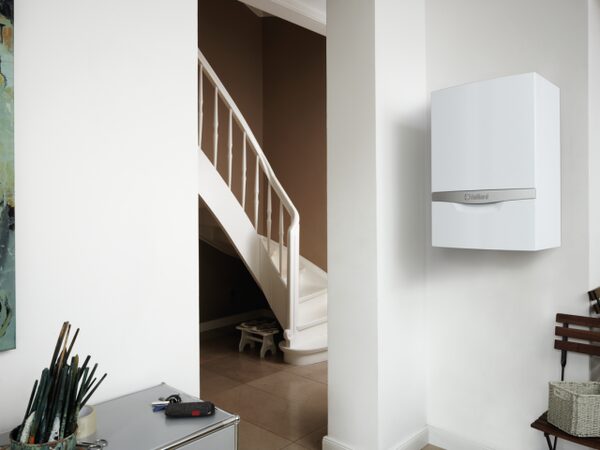
The published material does not give monthly repayment figures for boiler finance, and no APR or term is stated for a typical agreement. What it does give is the underlying capital cost, which is the figure any repayment calculation starts from. Independent guidance puts a new or replacement boiler at £600 to £2,500 depending on the model and system type4. A parliamentary committee report gives the cost of a new gas boiler as typically £2,500 to £3,0003.
Those two figures describe different things. The £600 to £2,500 range covers the spread from a straightforward replacement to a more complex system change. The £2,500 to £3,000 figure is the typical cost of a new gas boiler as recorded in evidence to a committee, which sits at the upper end of the first range. A household comparing quotes should expect the quoted price to include the boiler, the labour and any flue or control work, and should treat the two figures as the bounds of what the work commonly costs rather than as competing estimates.
Because no monthly figure is published, the honest position is that repayments are set by the lender on the capital sum, the term and the APR in the individual agreement. A shorter term at a low rate produces a higher monthly payment and a lower total cost; a longer term does the reverse. The pre-contract information the lender must provide sets out both, and that document, not a headline monthly figure, is what determines the cost.
| Item | Figure | Source basis |
|---|---|---|
| New or replacement boiler, typical range | £600 to £2,500 | Independent guidance4 |
| New gas boiler, typical cost | £2,500 to £3,000 | Parliamentary committee report3 |
| Boiler rental contract length | Up to 12 years | Independent guidance5 |
| Boiler Upgrade Scheme grant | £2,500 | Official scheme rules1 |
Anglian finance plans: APR, deposit and term in detail
Anglian is a national home improvement company whose published pages cover windows, doors, roofline and Rooftrim products. Its own material sets out order deadlines for installation before Christmas: customers must place a qualifying contract for eligible windows, doors or Rooftrim by 5.59pm on 20 October 2026 to be considered for installation before Christmas 2026, with terms and conditions applying. The same deadline appears across its product pages, including double glazing, guttering and downpipes, bargeboards and the general offers page.
What the published material does not contain is any APR, deposit or term for an Anglian finance plan. No figure for a deposit appears, and no finance term is stated. That absence is itself the answer to the question: the terms are set out in the individual credit agreement and the pre-contract information, not in general marketing material. A household considering an Anglian finance plan would see the APR, the deposit and the term in those documents before signing.
For context on how long pay-monthly arrangements in this sector can run, independent guidance notes that boiler rental contracts can last as long as 12 years, and that most companies offer different contract lengths5. That is a rental product rather than a credit agreement, so the comparison is indicative only. The point it illustrates is that long terms exist in home energy and home improvement finance, and that the total cost over a long term is materially higher than the cash price.
Grants and schemes: what the Boiler Upgrade Scheme funds
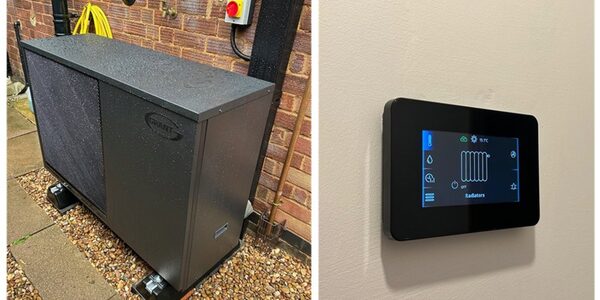
The Boiler Upgrade Scheme is the main grant route for renewable heating in England and Wales. It provides grants to assist with installation costs, and more specifically upfront capital grants to support the installation of heat pumps and biomass boilers in homes and non-domestic buildings6. The scheme's purpose is to support the decarbonisation of heat in buildings, and it covers approved heat pumps and biomass boilers in homes and small non-domestic buildings in England and Wales7.
The grant values published across the scheme's own documents do not all agree, and the disagreement is worth stating plainly. The current notice of approved grant categories and values gives £2,5001. The Government's consultation on reforming consumer protection for home upgrade schemes cites £2.7bn of investment in grants with awards of up to £7,5002. Earlier material gives grants of up to £6,000 to support the purchase of low carbon heating8, and a 2024 parliamentary report describes an up-front grant of £7,500 for households in England and Wales3.
The scheme budget is also stated inconsistently. Official installer guidance gives a 2026 to 2027 budget of £400m9, and separate official guidance gives the same £400m for the 2026 to 2027 financial year10. A conflict ruling records a £400m figure against a £150m figure in official guidance of the same date, unresolved. Where the budget matters to a household, it matters only indirectly: it determines how long the scheme can keep paying, not what an individual installation receives.
Eligibility is set out in the scheme's own guidance. A household must own the property, whether it is a main home or a second property, be replacing an existing fossil fuel heating system such as gas, oil, electric or LPG, and the property must be located in England and Wales11. Self-build properties can qualify where the property was built mainly using the labour or financial resources of the individual who will live in it7. The grant is a contribution, not a full funding package, and the balance is where finance enters.
| Scheme element | Published position |
|---|---|
| What it funds | Upfront capital grants for heat pumps and biomass boilers4 |
| Where it applies | England and Wales6 |
| Current grant value in scheme rules | £2,5001 |
| Investment cited in consultation | £2.7bn, awards up to £7,5002 |
| 2026 to 2027 budget | £400m9 |
MCS financial protection: what the new approved products cover
MCS certification carries a financial protection requirement, and that requirement was redeveloped during 2026. MCS published an article on 28 January 2026 explaining new financial protection products linked to the redeveloped installer scheme, and said the first approved financial protection products would be listed on its website by mid-February12. By February 2026, MCS had approved new financial protection products and continued to require installers to purchase an MCS approved financial protection product for each customer.
The older protection architecture rested on consumer codes. Property owner rights are protected by the consumer codes HIES and RECC, certified by the Chartered Trading Standards Institute, and membership of HIES or RECC is a condition of MCS certification13. That condition is the mechanism: an MCS certified installer is, by virtue of certification, a member of a code that carries deposit and guarantee protections.
The practical effect for a household is that the protection attaches to the installer's certification status, not to the finance agreement. If an installer ceases trading, the code membership and the approved financial protection product are the routes to a remedy, and the finance agreement with the lender continues independently. A household that has borrowed to pay for work that was never completed still owes the lender unless the credit agreement itself provides otherwise.
"A condition of MCS certification is membership to HIES or RECC."
The redeveloped scheme is recent, and the approved products were listed from February 2026. Households checking an installer should confirm both the MCS certification and the specific financial protection product in place for their job, since the requirement is per customer rather than per company.
Paying by card, PayPal or buy now, pay later: how protection differs

Payment method determines which protection regime applies, and the regimes are not equivalent. A credit card payment for goods or services can engage the lender's liability for a breach of contract or misrepresentation, which is why card payment is often treated as a form of insurance on a large purchase. A debit card payment does not carry the same statutory protection, though a chargeback scheme may apply through the card network.
Buy now, pay later is a credit product, and credit complaints fall to the Financial Ombudsman Service. The Energy Ombudsman's remit is different: it covers consumer complaints about energy bills, mis-selling, problems with energy supply and problems with switching supplier14. A dispute about a buy now, pay later agreement is therefore a financial services complaint, while a dispute about the energy supply or the installation quality is an energy or consumer code complaint.
The Green Deal, now closed, illustrates how finance and redress interact. The official guidance states that a household can complain to the Financial Ombudsman Service if it thinks it was mis-sold the Green Deal, for example if the Green Deal provider did not make it aware of the full terms, and about any other financial issues15. The same guidance directs complaints about the installer's work, or about a loan the seller or landlord did not disclose on moving in, to the Energy Ombudsman15. Two ombudsmen, two subject matters, one installation.
Solar Energy UK's Consumer Protection Guide is being produced to introduce homeowners and tenants to the potential benefits of installing a battery with solar panels, financing options, and how to pick a reliable installer to ensure the work is carried out to a high standard5. Its scope confirms that financing options sit alongside installer selection as the two decisions a household makes.
If something goes wrong: complaining to the Financial Ombudsman Service
The complaint route depends on what went wrong. For the Boiler Upgrade Scheme, complaints about installation quality, workmanship or installer behaviour go first to the installer, then to the installer's consumer code, HIES or RECC, or to MCS7. Complaints about Ofgem's administration of the scheme go to feedback@ofgem.gov.uk7. Complaints about the scheme's underlying policy, including eligibility criteria, go to the Energy Department at boilerupgradescheme@energysecurity.gov.uk8. Suspected fraud or misuse can be reported to Ofgem at counterfraud@ofgem.gov.uk7.
For energy supply disputes, the Energy Ombudsman is the escalation route. A household can complain if a reported problem is not fixed within 8 weeks, if the household and the energy company cannot agree how to fix it, if a deadlock letter is received, or if the household is not happy with the decision received16. The Energy Ombudsman can tell suppliers to take practical action such as crediting or cancelling an account or changing a tariff, to make an apology, or to offer a financial award, or a combination of these, and it may make recommendations to prevent the issue happening again17. The service is free for consumers to use18, and free to consumers looking to resolve energy disputes19.
Heat network consumers have access to a free and independent dispute resolution service through the Energy Ombudsman20. The prerequisite is the same as elsewhere: the complainant must have complained to the supplier first, for example Theodore Stevenage Limited21.
What finance means for household energy independence

Finance changes the timing of a purchase, not the nature of it. A household that borrows to install a heat pump gets the equipment sooner and pays for it over a term, but the heat pump still draws electricity from the grid, and the household still buys that electricity from a supplier. The Boiler Upgrade Scheme exists to help with the cost of installing renewable heating systems in domestic properties and small non-domestic properties in England and Wales, and it aims to incentivise the installation of low carbon technologies through providing a grant towards the upfront costs11. The grant lowers the barrier; it does not remove the grid connection.
The dependence that remains is specific and worth naming. A financed boiler depends on gas supply and on a gas network. A financed heat pump depends on electricity supply, on a supplier, and on the grid's carbon intensity at the time it runs. A financed solar and battery installation depends on the grid for backup and on an export arrangement for any surplus, and on the manufacturer for warranty service and, where an app is involved, on a cloud service. A financed installation also depends on the lender: the debt survives the installer, and in some cases survives the equipment.
What finance does buy is optionality. Spreading the cost over a term can make a larger, better-specified installation affordable at the point of purchase, and a better-specified installation is more likely to perform as estimated. The trade-off is the total cost of credit, which is real money that buys no additional energy independence. The household that pays cash and the household that borrows end up with the same equipment and the same grid connection; they differ in what they paid for it and how long they are committed.
Sources21 cited
- Notice of approved grant categories and values for the Boiler Upgrade Scheme, GOV.UK, 2026
- Reforming consumer protection for home upgrade schemes, GOV.UK, 2026
- Public Accounts Committee report on the Boiler Upgrade Scheme, UK Parliament, 2024
- Boiler Upgrade Scheme quarterly report, issue 12, Ofgem, 2025
- Consumer protection guidance, Solar Energy UK, 2026
- Boiler Upgrade Scheme: grants for heat pump installations across England and Wales, Welsh Government, 2026
- Boiler Upgrade Scheme guidance for property owners V5, Ofgem, 2026
- Boiler Upgrade Scheme guidance for installers V5.1, Ofgem, 2026
- Boiler Upgrade Scheme guidance for property owners V5.1, Ofgem, 2026
- Boiler Upgrade Scheme guidance for installers V5, Ofgem, 2026
- Boiler Upgrade Scheme: help with the cost of renewable heating, House of Commons Library, 2026
- Heat pump deployment tables, Q2 2026, Department for Energy Security and Net Zero, 2026
- Boiler Upgrade Scheme property owner guidance V2.3, Ofgem, 2023
- Problems with your energy supply: complain about your supplier, Ofgem, 2026
- Green Deal energy saving measures, GOV.UK, 2026
- Energy Ombudsman: what to expect, Energy Ombudsman, 2026
- Energy Ombudsman: understanding your rights, Energy Ombudsman, 2026
- Energy Ombudsman FAQs, Energy Ombudsman, 2026
- Energy Ombudsman: Metropolitan Infrastructure Limited, Energy Ombudsman, 2026
- Energy Ombudsman: Theodore Stevenage Limited, Energy Ombudsman, 2026
- Energy Ombudsman: Citizen, Energy Ombudsman, 2026
 Deposits and Staged PaymentsHow much deposit should you pay for solar panels or a heat pump, and what happens to your money if the installer goes bust?
 Buying Energy Equipment OnlineWho fits your solar panels, battery or heat pump when you buy them online, and who puts things right if they go wrong?
 Replacing a Gas or Oil BoilerSwapping a gas, oil or LPG boiler for a heat pump changes how your home is heated and how much it costs.
 Manufacturer WarrantiesHow long does a boiler, heat pump or solar panel warranty actually last, and what do you have to do to keep it valid?
 Grants and Energy IndependenceCan you get a grant for solar panels or a battery?
 Heat Pump Running CostsWhat does a heat pump cost to run each year, and is it cheaper than a gas boiler?