In this guide
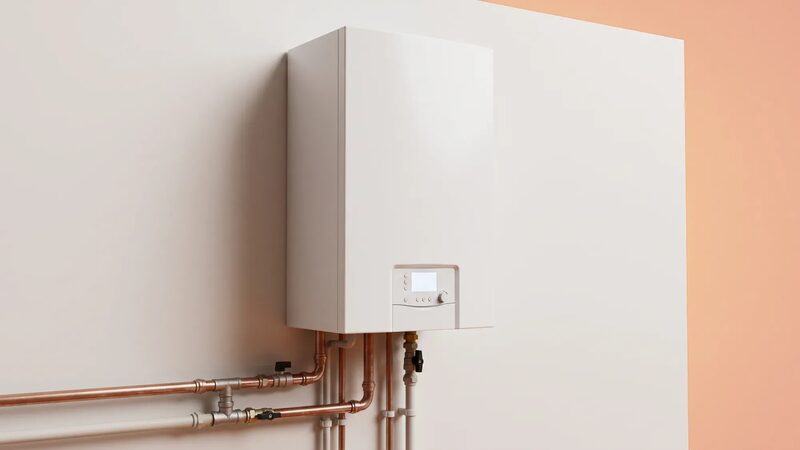
A replacement boiler in the UK costs most households somewhere between £1,500 and £4,000 installed. The lower end is a straightforward swap: Checkatrade puts a new boiler at around £1,5001. The upper end reflects a larger or more complex job, and Energy Saving Trust gives around £3,700 on average for a gas boiler replacement2. A parliamentary committee recorded the cost of a new gas boiler as typically £2,500 to £3,0003.
The gap between those figures is not disagreement about the price of a boiler. It is disagreement about what is being priced. A like-for-like replacement of an existing gas boiler in the same position, on the same flue, with the same controls, is a day's work and a modest appliance. A change of boiler type, a move to a different wall, a new flue route or a system that has to be flushed and rebalanced is a different project with a different total.
What a new boiler costs in the UK: £1,500 to £4,000 for most homes
The headline range holds because the appliance itself is a minority of the bill. Ideal Heating states the cost of the new boiler itself is typically upward of £1,0007. Everything above that is labour, materials, controls, commissioning and certification.
The published figures cluster in three bands. At the bottom, around £1,500, is the Checkatrade figure for a new boiler1. In the middle, £2,500 to £3,000, is the parliamentary committee's figure for a new gas boiler3. At the top, around £3,700, is Energy Saving Trust's average for a gas boiler replacement2. The committee figure is dated 2024 and the Energy Saving Trust figure 2026, so part of the difference is simply time.
Installation time varies as much as price. New boiler installations can take anywhere between four to six hours up to a couple of days1. A two-day job is not a more expensive boiler; it is a more involved installation, and the labour is what the household is buying.
For a household's energy independence, the cost structure matters more than the total. A boiler replacement keeps the home on mains gas, which means continued dependence on the grid and on a supplier. It does not reduce exposure to fuel prices, and it does not remove the standing charge. What it does buy is reliability: a new appliance with a warranty, in place of one that is failing. The independence question is separate, and it is answered by what the boiler is replaced with, not by the fact of replacement.
Where the boiler is being replaced because it has failed rather than because it is old, the interim option exists. Nesta describes interim boilers at around £1,500 upfront, generating a monthly cost to consumers of about £12.508. That is a rental model rather than a purchase, and it is a bridging measure rather than a route to independence.
What drives the price up or down
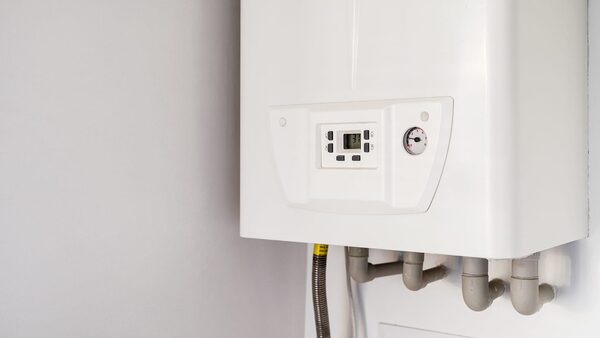
Four things move the number: the boiler, the labour, the system around it, and where the property is.
The boiler itself is the smallest variable. Type matters more than brand. A heat-only boiler is the cheapest type of boiler to buy9, and a heat-only or conventional gas boiler is quoted at £2,500 to £4,100 installed9. A combi sits differently again, and the type change is where costs escalate.
The system around the boiler is the largest variable. Changing boiler type from heat only to a combi boiler or even a heat pump increases costs further, because the full heating system often needs replacing7. That is the single most important sentence in the pricing picture: a conversion is not a swap.
Location and access matter. British Gas HomeCare renewal pricing is influenced by where you live, your claims history, and the age and model of your boiler10, and the same factors broadly shape installation quotes, because access, flue routing and local labour rates vary.
Controls are a smaller but real line. Boiler flow temperature adjustment savings depend on what your boiler was set to before you made the change, whether your home was too warm before, and how much you are prepared to experiment with your boiler's flow temperature12. A replacement is the moment to get the controls right, because the labour is already on site.
Combi, system or regular: how the type changes the cost
The three types are not priced the same, and the difference is mostly about what else has to change.
A regular or heat-only boiler is the cheapest type of boiler to buy9. It needs a cylinder and a feed and expansion tank, so it suits homes that already have them. A system boiler is a sealed-system version of the same idea, and a system boiler can last 10 to 15 years5. A combi boiler heats water on demand and needs no cylinder, which is why it is the default for smaller homes and flats.
The cost consequence is asymmetric. Replacing a combi with a combi is the cheapest job in the market. Replacing a heat-only boiler with a combi is a conversion: the cylinder comes out, the tanks come out, pipework changes, and the flue usually moves. Ideal Heating states plainly that changing boiler type from heat only to a combi boiler or even a heat pump increases costs further as the full heating system often needs replacing7.
| Type | Installed cost | What it needs |
|---|---|---|
| Heat-only or conventional (gas) | £2,500 to £4,1009 | Cylinder and tanks |
| System | Priced with the cylinder and controls | Sealed system, cylinder |
| Combi | Conversion costs more than a swap7 | Mains pressure, no cylinder |
For a household weighing independence, the type choice is also a future-options choice. A combi removes the cylinder, and a cylinder is what a heat pump or a solar thermal system would use. That is a real constraint, and it is worth stating as a constraint rather than a preference.
Gas, oil or biomass: fuel choice and price ranges
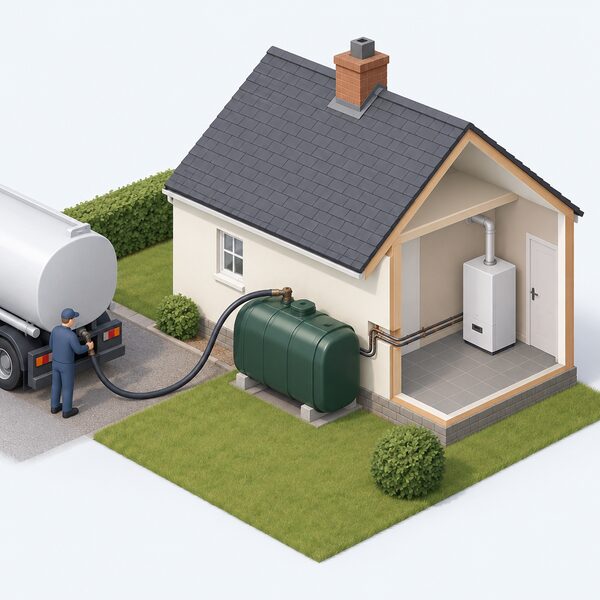
Fuel is the biggest single determinant of both installation cost and running cost, and the ranges are wide.
Gas is the cheapest fuel to install for, because the infrastructure exists. Oil and LPG serve homes off the gas grid, and boilers are usually fuelled by gas or oil, but sometimes liquid petroleum gas (LPG) or biomass13. Biomass is the most expensive to install and the cheapest to run.
| Fuel | Installed cost | Running cost |
|---|---|---|
| Gas | £2,500 to £4,100 for heat-only9 | Not stated in the sources used here |
| Biomass | £19,000 to £31,0009; £8,000 to £15,000 for automatic-fed wood pellet, per Energy Saving Trust estimate9 | £400 to £600 a year, based on average medium usage of 12,500 kWh per year9 |
The biomass figures disagree, and the disagreement is instructive. The £19,000 to £31,000 range is the headline installation figure; the £8,000 to £15,000 figure is an Energy Saving Trust estimate specifically for automatic-fed wood pellet boilers9. Different technologies, different numbers. Biomass running costs are typically cheaper than gas and oil, currently around £400 to £600 a year9.
For off-grid households, fuel choice is the independence decision. Oil and LPG mean a tank, a delivery contract and price exposure. Biomass means a fuel store and a supply chain, but a fuel that can in principle be sourced locally. The off-grid heating page covers the trade-offs in full.
Installation costs and what the quote should include
The installation element is where quotes diverge most, and it is worth understanding what is inside it.
A quote should cover the appliance, the labour, the flue, the controls, the chemical flush, commissioning and the building regulations notification. Independent guidance is to get at least three quotes from qualified heating engineers11. The reason is not to find the cheapest; it is to find out whether the specification is consistent.
Installation time runs from four to six hours up to a couple of days1. A same-position swap on an existing flue is at the short end. A conversion, a relocation or a new flue route is at the long end.
Clearance matters at the quotation stage. A boiler should be fitted with at least 60 mm clearance if housed in a cupboard11. If the intended position does not allow that, the quote changes.
For a household, the installation cost is a one-off and the running cost is not. That distinction is the whole of the independence argument: a cheaper installation that locks in a fuel and a supplier for fifteen years is not cheaper in any meaningful sense.
Running costs and potential savings from a replacement

Savings from a replacement are real but modest, and the sources are careful about them.
Energy Saving Trust gives around £3,700 as the average cost of a gas boiler replacement2. Against that, a boiler upgrade is credited with a £440 saving in Northern Ireland13. The two figures are not directly comparable, but they show the shape: a four-figure capital cost against a three-figure annual saving.
Modelling for 2030 puts the picture in context. For a weighted average household with a gas boiler installed in 2030, the total annual cost is £1,190 after subsidy, against £1,120 for a heat pump15. Across archetypes, the annualised total cost for gas boilers installed in 2030 falls between £710 and £1,96015. Those are modelled figures for a future year, not current bills, and they are presented as such.
The cheapest saving available is not a new boiler at all. Turning a combi's flow temperature down is credited with saving around £65 a year16. How much you save depends on what your boiler was set to before you made the change, whether your home was too warm before, and how much you are prepared to experiment with your boiler's flow temperature12. That is a control change, not a capital project.
Gas demand varies enormously with the home. Modelled annual gas demand is 11,733 kWh for an EPC D home with a gas boiler, 16,000 kWh for EPC E and 20,800 kWh for EPC F17. The same modelling puts a bio-hybrid at 3,520 kWh, 4,800 kWh and 6,240 kWh respectively17. Fabric and controls drive consumption more than the appliance does.
Servicing and maintenance: £60 to £150 a year
Servicing is the recurring cost, and it is smaller than most households expect.
The average cost of a boiler service varies from around £90 to £1004. A gas boiler service is typically around £90 to £100, and an oil boiler service around £90 to £954. One source gives a gas boiler service at £80 to £120 including VAT4, and Checkatrade puts the average at £100 as of March 20264. A service takes about an hour for a system boiler4.
The frequency is settled. A boiler should be serviced at least once a year, in other words every 12 months11. The same interval applies to heat pumps18. The boiler should be serviced annually to ensure that it stays in good working order and maintains its efficiency11.
In a rented home the cost sits with the landlord. In Northern Ireland, the landlord is responsible for servicing boilers and appliances annually and must provide an up-to-date gas safety record, which is a legal requirement20. Independent guidance is the same across the UK: a landlord is legally required to service a boiler on an annual basis in all properties21, and should arrange and pay for the service18.
For independence, servicing is the maintenance of a dependency rather than a step away from one. It keeps a gas appliance safe and efficient, and it does not change what the home runs on.
How long a boiler lasts and when replacement makes sense
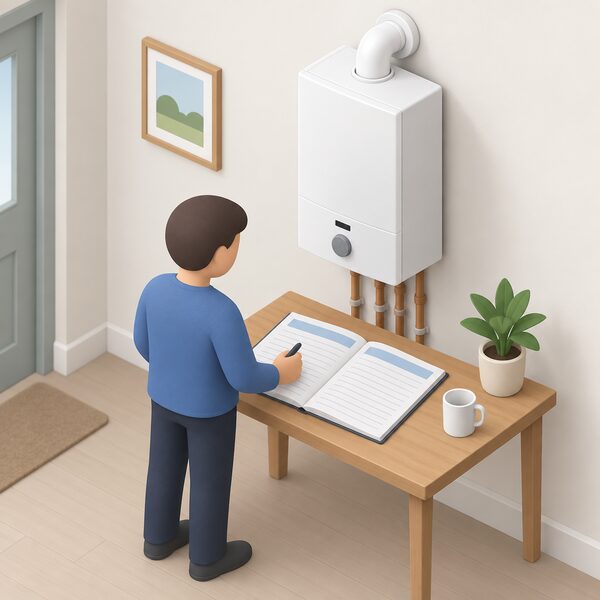
Most boilers are designed to last around 15 years22. A boiler typically lasts 10 to 15 years in an average household if it has been regularly serviced and looked after5, and in some cases boilers can go longer than 15 years and even up to 205. A well-maintained heat-only boiler can generally last between 15 and 20 years7. The current lifespan of a boiler is around 15 years23.
The replacement trigger is age plus condition. If a boiler is over fifteen years old, it could be time to replace it22. A well-maintained boiler can last up to 15 years, with a minimum lifespan of ten years and recommended replacement at 151.
The counter-argument is worth stating. If a boiler is under eight years old, repairing it is likely a more sensible idea than replacing it19. That is a repair-versus-replace rule of thumb, and it is the reason a service history matters: it is the evidence on which the decision rests.
| Age of boiler | Position |
|---|---|
| Under 10 years, low repair costs | Repair is usually the right call19 |
| 10 to 15 years | Most boilers are replaced in this window; frequent faults or breakdowns weigh towards replacement22 |
| Approaching or beyond 12 to 15 years | Replacement becomes the more sensible option, particularly where repair costs are stacking up19 |
For a household, the lifespan figure is also a planning figure. Fifteen years is roughly the window in which the UK's low-carbon heating transition is expected to bite, which means a boiler bought today may be the last one the home has.
Where boilers fit in the UK's move to low-carbon heating
A boiler bought now sits inside a policy transition, and the direction is set even where the dates are not.
New boilers in the UK are all required to be condensing boilers, which are at least 90% energy efficient24. That is the current standard, not a future one. Beyond it, the Sixth Carbon Budget states that by the early 2030s all new cars and vans and all boiler replacements in homes and other buildings are low-carbon, largely electric25.
The Boiler Upgrade Scheme provides upfront grants to help reduce the cost of installing a low-carbon heating system, such as a heat pump or, in limited circumstances, a biomass boiler, in properties in England and Wales26. The scheme provides upfront capital grants of up to £7,5006. Fossil fuel heating systems for the purposes of the scheme include oil, gas, electric or LPG27, and the replacement requirement is a fossil fuel heating system such as gas, oil or LPG, or an electric heating system excluding existing heat pumps28. Eligible technologies include biomass boilers29, and the BUS also provides £5,000 towards the cost and installation of a biomass boiler, but only in rural locations and in properties not connected to the gas grid30. The average total quote for biomass under the scheme, including the grant value, is £16,22331.
The scheme is England and Wales only28. Scotland and Northern Ireland have separate arrangements, covered on the grants pages for each nation.
In Wales, the New Warm Homes Programme states that gas boiler replacements will move to be the exception rather than the default, with the programme instead favouring repair of fossil fuel assets and a shift towards low carbon heating instead32. Wrexham Council has publicised homes and businesses grants for a new boiler33.
For a household, the practical reading is this. A gas boiler replacement is a purchase with a fifteen-year horizon inside a policy environment that is moving away from gas. It maintains comfort and reliability, and it maintains dependence on the grid, a supplier and imported gas. The alternatives, whether a heat pump, biomass or a hybrid, trade that dependence for a different set of dependencies: electricity, a fuel supply chain, or a manufacturer's service network. The energy independence page sets out how those trade-offs work in practice.
Sources33 cited
- New boiler costs and installation, Uswitch, 2025
- Renewable technologies: what really cuts energy bills, Energy Saving Trust, 2026
- Public Accounts Committee report on boiler costs, UK Parliament, 2024
- How much does a boiler service cost, Uswitch, 2026
- How long does a boiler last, Uswitch, 2024
- Boiler Upgrade Scheme grant, Find government grants, 2026
- How long a heat only boiler lasts, Ideal Heating, 2026
- Interim boilers for broken heating, Nesta, 2026
- Different boiler types, Uswitch, 2026
- British Gas HomeCare, Uswitch, 2026
- Upgrading and replacing your boiler, Centre for Sustainable Energy, 2026
- Should I turn my boiler's flow temperature down, Energy Saving Trust, 2026
- Boiler maintenance, Uswitch, 2026
- My boiler isn't working, SGN, 2026
- How to make heat pumps more affordable: scenario 2, Nesta, 2030
- Energy saving tips for the home, Confused.com, 2025
- Green Gas Taskforce report on bio-hybrids, Cadent Gas, 2026
- Take control of your heating at home, Energy Saving Trust, 2026
- Boiler repair, Uswitch, 2024
- Gas safety and carbon monoxide, nidirect, 2025
- Boiler servicing guide, Confused.com, 2025
- Hot water guide, Uswitch, 2025
- Heating and hot water, Planning Portal, 2026
- Sustainability and boilers, Planning Portal, 2026
- Sixth Carbon Budget, Climate Change Committee, 2020
- Boiler Upgrade Scheme guidance for property owners, Ofgem, 2026
- Apply for the Boiler Upgrade Scheme, GOV.UK, 2026
- Boiler Upgrade Scheme draft guidance for property owners, Ofgem, 2026
- Boiler Upgrade Scheme installers, Ofgem, 2026
- Boiler Upgrade Scheme research briefing, UK Parliament, 2026
- Boiler Upgrade Scheme annual report 2024 to 2025, Ofgem, 2025
- New Warm Homes Programme children's rights impact assessment, Welsh Government, 2024
- Homes and businesses grants for a new boiler, Wrexham Council, 2026
 The Full Boilers and Heating GuideWhich boiler suits your home, and when is it worth swapping the old one?
 Boiler Manufacturers in the UKCovers the manufacturers supplying gas, oil, LPG and electric boilers to UK homes, their main ranges and where they are made.
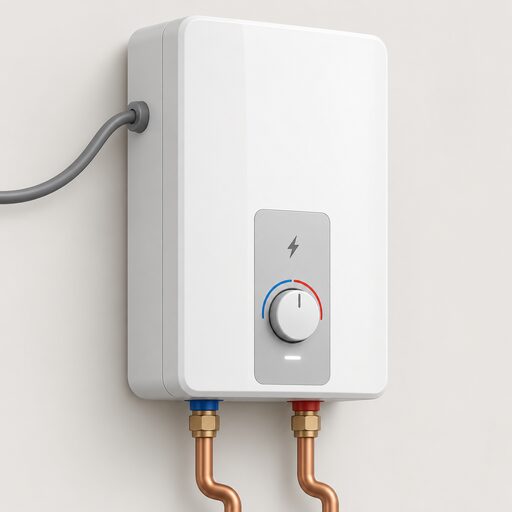 Electric BoilersHow electric flow boilers heat a conventional wet system, what they cost to buy and run, where they suit UK homes, and why point-of-use efficiency near 99% does not translate into cheap heating at the meter.
 How Much Does a Heat Pump CostA heat pump usually costs around eleven thousand pounds installed, though quotes vary a lot depending on your home.
 Oil Boilers and Heating OilHow oil-fired boilers work, the kerosene they burn, and the tanks, burners and servicing they need.
 Replacing a Gas or Oil BoilerSwapping a gas, oil or LPG boiler for a heat pump changes how your home is heated and how much it costs.