
In this guide
Electric heating running costs come down to one number and one habit: the price of a unit of electricity, and when the heater draws it. Every resistive electric heater converts the electricity it uses into heat in the room, so a 2 kW panel heater and a 2 kW infrared panel draw the same power and cost the same per hour on the same tariff. What separates the options is not efficiency at the heater but the tariff the heater runs on, the amount of heat the building loses, and whether the heat is stored or delivered on demand.
The headline figures are wide. Heat pumps cost around £800 to £1,050 a year to run, making them one of the cheapest electric heating options1. Panel heaters run at around £1,080 a year for a flat, dynamic storage heaters at around £1,080 per year for a flat, and night storage heaters at £912 a year for a flat, depending on the type of heater1. Official statistics put electric storage heaters at £3,000 to £3,800 a year in a three-bed semi-detached house, the most expensive fuel type in that comparison2. The gap between those sets of numbers is the whole subject: it is the difference between a flat and a house, between a well-used off-peak tariff and standard-rate electricity, and between a heat pump and a resistance heater.
The reason the numbers run high is the fuel price, not the heater. Electricity is around four times more expensive than gas per unit3, and the Scottish Government's consultation analysis put the retail price of electricity at approximately four times the price of gas per kWh at the time of that consultation4. A heater that is 100% efficient at the point of use is still buying an expensive unit of energy.
Why electricity costs around four times as much per kWh as gas
The ratio is the single most useful figure on this page, because it explains why an electric heater that wastes nothing can still cost more to run than a gas boiler that wastes some. Energy Saving Trust states that electricity is around four times more expensive than gas per unit3. The Scottish Government's analysis, published for a consultation on the buildings heat bill, records that at the time of that consultation the retail price of electricity per kWh was approximately four times more expensive than gas4. Two different documents, one independent and one official, land on the same ratio.
That ratio is not a property of the heater. It is a property of how the two fuels are priced, and it is the reason direct electric heating has high running costs even though it is simple and cheap to install, since it does not need pipes, radiators or underfloor systems3. The same logic applies to hot water: heating water using electricity is more expensive than using gas6.
For a household, the ratio sets the terms of the trade. A heat pump can beat a gas boiler on running cost because it moves heat rather than making it, and the figure of £800 to £1,050 a year to run reflects that1. A resistance heater cannot make that move. It buys the expensive unit and turns all of it into heat, which is the best a resistance heater can do and also the limit of what it can do.
The ratio also explains why the running cost of any electric heater is so sensitive to the tariff. If the unit price is the dominant term, then a tariff that halves the unit price for part of the day changes the annual figure more than any choice of panel, radiator or element. That is the mechanism behind off-peak storage heating, and it is why the same heater can appear cheap in one household and expensive in another.
Where the ratio narrows, the case for electric heating improves. A modelled saving of £110 a year for a typical home from removing electricity environmental and social levies would reduce heat pump running costs7. That is a policy change to the price of the unit, not to the efficiency of the heater, and it is the kind of change that moves the whole comparison.
The price cap: what it limits and what it doesn't
The energy price cap is widely misread as a cap on bills. It is not. Ofgem states that it does not limit the cost of the total bill, and that the more energy used, the higher the bill will be8. What it limits is the maximum price for a unit of energy and the daily standing charge, with separate caps for gas and electricity9. A household that uses more units pays more, whatever the cap level.
The cap protects people on standard variable tariffs, where the unit rate can go up or down depending on the energy market8. It applies where a customer has not signed up for a fixed-term contract with their supplier9. Fixed tariffs, business energy contracts, heat networks and heating oil sit outside it8. The cap came into force at the beginning of 2019 and Ofgem revises it each quarter9, with the level set every three months8 and updated every three months5.
The cap is set for each energy supply region of Great Britain, so the same household usage produces different maximum figures in different parts of the country9. The July to September 2026 tables show the spread: a standing charge of £187.52 and an annual bill of £815.65 at 2,500 kWh single-rate in the Eastern region, against £223.48 and £824.03 in the Northern region, and £201.24 and £829.48 in the Southern Western region10. Network costs are the next most important component of the price cap, making up almost 30% of the total9.
For electric heating, the practical consequence is that the cap does not make electric heating cheap. It limits the unit rate a supplier can charge on a default tariff, and the unit rate is still the term that drives the bill. A household on a standard variable tariff has protection against the rate rising without limit; it does not have protection against using a lot of units.
Unit rates and standing charges: how your bill is actually built
An electricity bill has one charging structure made up of a standing charge and the unit prices of the gas and electricity11. The standing charge is paid whatever the household uses, so it is the part of the bill that electric heating cannot influence by turning a heater down. The unit price is the part that responds to usage, and it is the number to compare when weighing one electric heater against another.
Ofgem lists the components used to calculate bills: VAT at 5%, wholesale costs, network costs, operating, debt and industry costs, EBIT, policy costs, the type of energy used, the type of meter installed, and how the bill is paid12. The bill can also vary based on how the home is heated, for example if it uses heating oil or sits on a heat network13. That last point matters for electric heating because a household on a heat network is not buying electricity at a domestic unit rate at all, and heat network consumers have separate protections: legislation provides for a condition that an authorised person must not charge domestic heat network consumers an amount that exceeds a specified price cap14.
The published cap figures give a sense of the scale of the standing charge relative to usage. In the Northern region for July to September 2026, the single-rate figures are a £223.48 standing charge with an £824.03 annual bill at 2,500 kWh, and a £220.70 standing charge with an £986.44 annual bill at 3,400 kWh multi-rate10. In the Midlands, the same table gives £207.57 and £810.72 at 2,500 kWh single-rate, and £206.15 and £977.09 at 3,400 kWh multi-rate10. The standing charge is a substantial fixed element before a single unit is used.
For a household working out electric heating running costs, the arithmetic is therefore: standing charge plus (units used multiplied by the unit rate), plus VAT. One worked hourly figure is available for an electric water heating appliance: an immersion heater costs around 78p to run for an hour at current electricity prices6. That is the shape of the calculation, and the unit rate is the term that changes.
Direct radiators, storage heaters or infrared: which type runs cheapest
All three convert electricity to heat at the point of use, so the difference in running cost comes from the tariff and the timing, not from the element. Direct electric heating, such as panel heaters, is simple and cheap to install because it needs no pipes, radiators or underfloor systems3. That low installation cost is real, and it is the main argument for direct heating. The running cost is the counterweight: standard rate electricity is more expensive than gas or oil3.
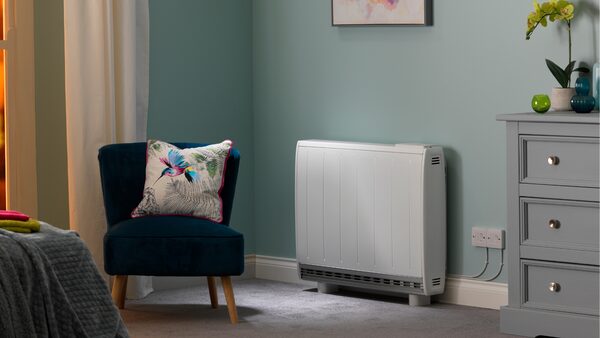
Storage heaters take a different approach. They work by charging up when electricity is cheaper, then releasing heat gradually through the next day3. They are often used with special energy tariffs that offer lower rates during off-peak times, helping to lower heating costs3. Official guidance recognises electric storage heaters on an off-peak or Economy 7 tariff as qualifying as efficient heating15. The trade-off is timing: the heat is bought at night and delivered over the following day, so the household has to accept a slower response and a heat store that may run out before the next charge.
Infrared panels are resistance heaters with a different distribution pattern. The efficiency fact is general to resistance heating rather than specific to infrared: electric resistance heating is assumed to be 100% efficient16. That assumption is about conversion, and it applies to infrared as much as to a panel heater or a storage heater's element. It does not make infrared cheaper per unit of heat than any other resistance heater on the same tariff.
Electric underfloor heating sits in the same category as other secondary electric heaters: it is typically expensive to run because it uses standard-rate electricity3. Secondary electric heating generally costs more per unit of heat than main heating systems, because the electricity it uses costs more per unit of heat3.
| Heater type | How it runs | Annual running cost where a figure is available |
|---|---|---|
| Panel heaters | Direct, standard rate | Around £1,080 a year for a flat1 |
| Night storage heaters | Off-peak charge, gradual release | £912 a year for a flat1 |
| Dynamic storage heaters | Off-peak charge, fan-assisted release | Around £1,080 per year for a flat1 |
| Electric storage heaters, three-bed semi | Off-peak charge | £3,000 to £3,800 a year2 |
| Heat pumps | Move heat rather than make it | £800 to £1,050 a year1 |
The table shows why the type of heater matters less than the household and the tariff. The same category of storage heater appears at £912 a year for a flat and at £3,000 to £3,800 a year for a three-bed semi-detached house, because the building, the heat demand and the usage pattern differ1.
Storage heaters and off-peak tariffs: cheaper heat with timing trade-offs
Storage heating is the one electric heating method with a structural cost advantage, and it comes entirely from the tariff. Time-of-use tariffs have electricity prices that vary throughout the day, usually with a cheaper overnight charging window17. Storage heaters are built to exploit exactly that window: they charge when electricity is cheaper and release heat through the next day3.
The recognition is official as well as practical. Northern Ireland's decent homes standard summary table lists electric storage heaters on an off-peak or Economy 7 tariff as qualifying as efficient heating15. That is a statement about the heating method being acceptable in a decent home standard, and it reflects the fact that off-peak storage heating is a recognised approach rather than a workaround.
The trade-offs are timing and control. A storage heater has to be charged in advance of the heat being wanted, so a mild day followed by a cold one, or a household that is out during the day and home in the evening, will not match the charge pattern perfectly. The heat store also has a finite capacity, and once it is depleted the household is either cold or drawing on peak-rate electricity.
There is a further consideration for households weighing storage heating: the tariff itself. A household on an off-peak tariff typically pays a higher rate for the electricity it uses at other times, so the benefit depends on shifting a large share of consumption into the cheap window. Additional savings are possible with flexible electricity tariffs for domestic heat pumps18, which is the same mechanism applied to a different appliance.
For energy independence, storage heating has a specific character. It runs on electricity, so it depends on the grid and a supplier, but it can absorb cheap off-peak units and, where a household has solar PV, it can in principle charge on self-generated electricity. One official scheme rule classes electric heating systems as renewable heating systems when installed in a home that has solar PV or is receiving solar PV as part of the same project19. That classification is about the installation as a whole, and it is the closest the evidence comes to linking storage heating with a renewable supply.
Infrared heating: the running-cost claims and the evidence behind them
Infrared heating is marketed on efficiency, and the efficiency claim is technically true and practically misleading. Electric resistance heating is assumed to be 100% efficient16. Every unit of electricity that reaches an infrared panel leaves it as heat. The same is true of a panel heater, a fan heater and the element in a storage heater. There is no resistance heater that converts less than all of its input into heat, so 100% efficiency is the baseline for the category, not an advantage held by one product.
What actually determines the running cost is the price of the unit and the amount of heat the building needs. Electricity is around four times more expensive than gas per unit3, and the retail price of electricity per kWh was approximately four times the price of gas at the time of the Scottish Government's consultation4. A 100% efficient heater buying a unit that costs four times the gas equivalent will cost more to run than a gas system that is less than 100% efficient, unless the building's heat demand is much lower or the tariff is much cheaper.
Infrared panels also deliver heat differently, warming surfaces and people rather than the air, which can allow a lower air temperature for the same perceived comfort. No measured running-cost figure for infrared panels specifically is available, so no annual figure can be given for them here. What is supported is the general position: secondary electric heating costs more per unit of heat than main heating systems because the electricity costs more per unit of heat3, and electric underfloor heating, like other secondary electric heaters, is typically expensive to run because it uses standard-rate electricity3.
The honest summary for a household is that infrared is a resistance heater with a particular distribution pattern. Its efficiency at the point of use is not in question and is not the deciding factor. Its running cost is set by the tariff and the heat demand, exactly as for every other resistance heater.
Maintenance, safety checks and lifetime costs
Electric resistance heaters have few moving parts compared with a boiler, and no annual service requirement for them is stated. The servicing guidance that does exist is written for combustion appliances: all heating appliances should be installed correctly and need annual servicing to stay in safe, working order, in the context of domestic oil installation and boiler servicing20. That is a rule about oil-fired equipment, and it should not be read across to an electric panel heater as though it were an electric heater servicing rule.
The maintenance question for electric heating is better framed around lifetime cost than annual servicing. The lifetime cost breakdown for heat pumps is that upfront, running and installation cost make up approximately 15-20%, 55-65% and 20% respectively of the total cost over the heat pump's lifetime, a NESTA estimate21. The striking part of that split is that running cost is the majority of the lifetime total, at 55-65%. For a resistance heater, which has a lower upfront cost than a heat pump but a higher running cost per unit of heat, the running share of lifetime cost would be at least as dominant.
Installation cost for storage heating is given as £900 to £1,400 per room3. That is a per-room figure, so a whole-house installation scales with the number of rooms heated, and it sits alongside the annual running figures rather than replacing them.
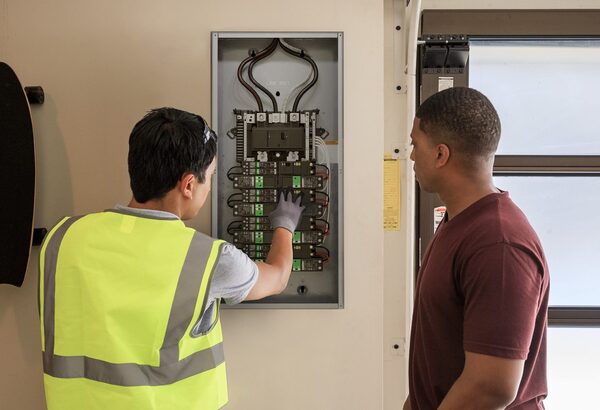
Electrical safety is the relevant concern for fixed electric heating. Any new circuit, fixed wiring or high-load appliance installation is electrical work, and the safety material for electric heating sits under the electrical safety heading rather than under boiler servicing. Households weighing a fixed electric heating installation should expect the electrical supply and circuit capacity to be assessed as part of the job.
VAT, grants and policy changes that affect running costs
VAT treatment depends on whether the work is grant-funded. In Great Britain or Northern Ireland, a household pays 5% VAT on heating equipment work funded through an energy efficiency grant if eligible22. Heating equipment that is not funded through an energy efficiency grant carries 20% VAT22. The 5% rate covers installation of heating appliances, installation, repair and maintenance of central heating systems, and installation, repair and maintenance of renewable source heating systems when grant-funded22.
The list of grant-funded equipment eligible for the 5% rate is specific and includes electric storage heaters, electric dual immersion water heaters with factory-insulated hot water tanks, radiators, and the installation, repair and maintenance of renewable source heating systems, for people aged over 60 or in receipt of certain benefits23. The relief is not a general discount on electric heating; it is tied to the funder and the recipient.
There is also a change to the scope of VAT relief for energy-saving materials. Legislation adds electrical batteries that store electricity generated by certain energy-saving materials and from the National Grid, water source heat pumps and diverters, and certain preparatory groundworks for ground and water source heat pumps24. That widens what qualifies for relief rather than changing the rate on heaters.
On the running-cost side, there is a modelled effect of removing policy costs from electricity. Removing electricity environmental and social levies would reduce heat pump running costs by £110 a year for a typical home7. For Scotland, the modelling of removing the Renewables Obligation levy and ending the Energy Company Obligation scheme gives a mean fuel bill reduction of £530 per year for households with electricity as the primary heating fuel25. The Warm Home Discount cost recovery response gives a different figure again: approximately £395 of costs removed from energy bills for a high usage electric heated household when both measures are taken together26. These are modelled and consultation figures for policy changes, not current prices, and they differ because they model different measures and different household types.
How to cut your electric heating bill
The savings figures are mostly about reducing demand rather than changing fuel. Reducing the thermostat by 1 degree could save up to 25% of heating bills and associated carbon, according to one local authority's guidance27. Northern Ireland's official guidance gives a smaller figure for the same action: turning the central heating down by one degree could cut heating bills by up to 10 per cent28. A second Northern Ireland page gives the same 10 per cent figure for a one degree Celsius reduction29.
Insulation is the other lever, and it is the one that reduces the heat a building loses before any heater is chosen. Northern Ireland's official guidance covers insulation as a separate topic29, and the same source carries the thermostat advice28. For an electrically heated home, where the unit of energy is the expensive one, reducing the heat demand is worth more than it is in a gas-heated home, because every avoided unit is an expensive unit.
Tariff choice is the third lever, and for storage heating it is the main one. Storage heaters are designed around off-peak charging3, and time-of-use tariffs have a cheaper overnight window17. A household that can shift its electric heating into that window pays less per unit for the same heat. A household that cannot, because it needs heat during the day, will draw on peak-rate electricity and lose the advantage.
The fourth lever is the choice of heating system itself. Heat pumps cost around £800 to £1,050 a year to run, making them one of the cheapest electric heating options1. That is a running-cost statement about a different technology, and it is the comparison that matters for a household deciding how to heat an electrically heated home over the long term.

What electric heating means for a household's energy independence
Electric heating removes one dependency and creates another. It removes the gas connection, the gas supplier and the flue, and it removes the need for a fuel store or a delivery for oil and LPG households. Direct electric heating is simple and cheap to install because it needs no pipes, radiators or underfloor systems3. For a household off the gas grid, that simplicity is a genuine gain.
What remains is dependence on the electricity grid and on an electricity supplier. Every resistance heater draws from the grid, and the unit rate is set by the tariff the household is on. The price cap limits the unit rate on default tariffs8, but it does not limit the number of units used8, so the bill still tracks consumption. A household on a fixed tariff is outside the cap altogether8.
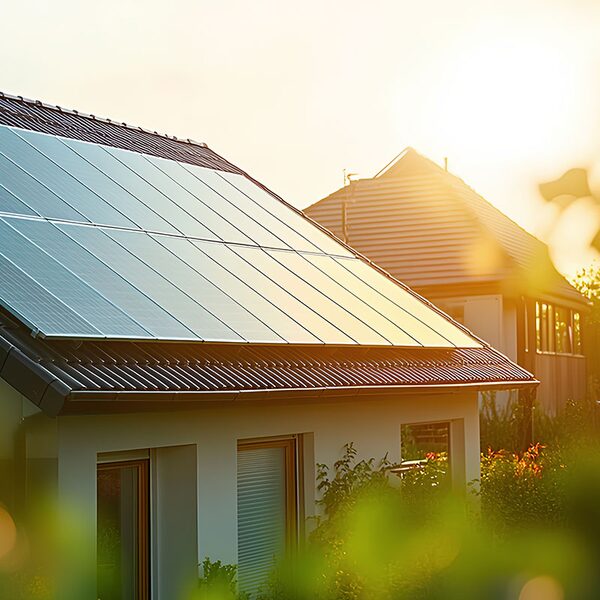
The independence case improves where the household generates its own electricity. One official scheme rule classes electric heating systems as renewable heating systems when installed in a home that has solar PV or is receiving solar PV as part of the same project19. That is a classification within a scheme, and it reflects the fact that an electrically heated home with its own generation is buying less from the grid. Storage heating pairs with this particularly well, because the heat store can be charged when generation is available or when the tariff is cheapest3.
The dependence that does not go away is the manufacturer and the control system. Electric heaters are simple appliances, but the controls, timers and app-connected thermostats that manage them are proprietary, and a household that relies on an app to schedule its heating is dependent on that manufacturer's platform continuing to work. No failure or administration notice applies to any electric heating manufacturer here. The general point stands: the heater is a resistive element, and the intelligence around it is a service.
The wider direction of travel is set out in independent guidance: to meet climate targets, nearly all of this will need to change to electric heating over the next 10 to 15 years1. That is a statement about the heating stock as a whole, and it means the running cost of electricity is likely to matter to more households over time, not fewer.
Sources29 cited
- Electric heating advice, Centre for Sustainable Energy, 2026-06
- Fuel poverty statistics and heating costs, House of Commons Library, 2026
- Electric heating, Energy Saving Trust, 2026-07-01
- Delivering net zero for Scotland's buildings: heat in buildings bill consultation analysis, Scottish Government, 2026-01-29
- Energy price cap explained, Welsh Government Climate Action, 2026-03-04
- Immersion heaters, Which?, 2026-06-01
- Written evidence on heat pump running costs, UK Parliament Committees, 2023-08
- Energy price cap, Ofgem, 2026-09-17
- The energy price cap and its effects, House of Commons Library, 2026-09-20
- Energy price cap levels, 1 July to 30 September 2026, Ofgem, 2026
- Consumer advice: problems with services, Isle of Anglesey County Council, 2025-10
- How your electricity or gas bill is calculated, Ofgem, 2026
- Understand your electricity and gas bills, Ofgem, 2026
- Heat networks consumer protection: draft guidance, legislation.gov.uk, 2025-03-02
- Current decent homes standard summary table, Northern Ireland Department for Communities, 2025-08-05
- Approved document L, volume 1 consultation version, Welsh Government, 2026-09-17
- EV tariffs and home charging: what consumers need to know, Energy Ombudsman, 2026-09-11
- Heat pumps and flexible tariffs, Parliamentary Office of Science and Technology, 2026-09-19
- ECO4 measures table, Ofgem, 2023-08-09
- Domestic oil installation and boiler servicing, nidirect, 2024-08-27
- Energy in buildings: heat and buildings, Department for Energy Security and Net Zero, 2025-06
- Tax on shopping: energy-saving products, GOV.UK, 2026-09-17
- VAT rates on different goods and services, GOV.UK, 2026-07-10
- VAT relief for energy-saving materials: explanatory memorandum, legislation.gov.uk, 2026-09-17
- Scenario modelling of removing the Renewables Obligation and ECO in Scotland, Scottish Government, 2026
- Warm Home Discount cost recovery: government response, UK Government, 2026-04-02
- Home and business grants, schemes and advice, East Herts Council, 2026-09-17
- Energy efficiency tips, nidirect, 2026-09-17
- Insulation, nidirect, 2026-09-02
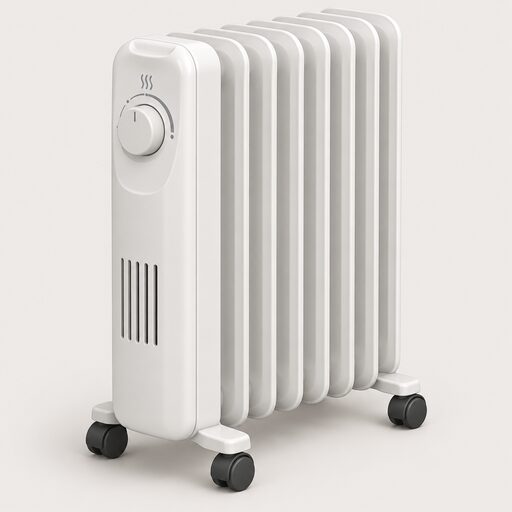 Electric Radiators and PanelsDo electric radiators cost more to run than gas heating, and are they worth it for one room or a whole house?
 Infrared Heating and PanelsDo infrared heating panels cost less to run than normal electric heaters, and how much do they add to a bill?
 Electric Radiator ControlsElectric heaters cost far more to run than gas, so the controls really matter.
 Running Costs by FuelHow the cost of heat compares across mains gas, heating oil, LPG, electricity, solid fuel and heat pumps once efficiency and the price cap are applied.
 Heat Pump Running CostsWhat does a heat pump cost to run each year, and is it cheaper than a gas boiler?
 Heat Pump Electricity TariffsA heat pump tariff gives you cheaper electricity for part of the day, so running your heating costs less than on a standard rate.