
In this guide
Scotland runs its own heating support, separate from the schemes that operate in England and Wales. The main route is the Home Energy Scotland Grant and Loan Scheme, which offers grant funding of up to £7,500 for clean heating systems such as heat pumps, with an additional £7,500 available as an optional interest-free loan1. The same scheme provides up to £7,500 for energy-efficiency improvements such as insulation2.
Alongside it sits Warmer Homes Scotland, a fuel poverty programme funded by the Scottish Government that installs heating systems and insulation in eligible households3. For households off the gas grid, the Scottish Government's Emergency Heating Oil Scheme pays £300 directly to the fuel supplier for homes using heating oil or LPG4.
The direction of travel is set by the Heat in Buildings Strategy, which targets over 1 million homes converting to zero emissions heating by 2030, and by the New Build Heat Standard, which has required clean heating systems in new buildings applying for a building warrant since April 20245. What follows sets out who qualifies, what each scheme pays, and where the limits lie.
What heating grants exist in Scotland
Scottish heating support is not a single pot. It is a set of programmes aimed at different households, different fuels and different parts of the building stock, and the one a household can use depends on tenure, fuel and, in some cases, where in Scotland the property sits.
The largest household-facing route is the Home Energy Scotland Grant and Loan Scheme, which provides grants and loans to install clean heat and energy efficiency measures5. It is open to all domestic owner-occupiers in Scotland9. Alongside it, the Social Housing Net Zero Heat Fund offers capital grant funding to support social housing landlords across Scotland to install clean heating systems and energy efficiency measures, so tenants in social housing are reached through their landlord rather than by applying themselves3.
For households in or at risk of fuel poverty, Warmer Homes Scotland provides fully funded support, retrofitting privately occupied homes with heating systems and energy efficiency measures10. The measures installed under that programme include high heat retention electric storage heating systems, air source heat pumps, energy efficient gas boilers and a suite of insulation options12.
Heat networks are a separate strand. Scotland's Heat Network Fund supports the rollout of new zero-emission heat networks and communal heating systems, and the expansion and decarbonisation of existing heat networks across Scotland13. The fund has awarded approximately £14.5 million in grant funding to seven heat network projects in Scotland, up from approximately £14.1 million to five projects and approximately £10.1 million to four projects at earlier points14. For individual households, the Home Energy Scotland Grant and Loan scheme now includes grant support to enable connections to heat networks, with applications opening in December 20257.
Home Energy Scotland: the gateway to Scottish Government funding

Home Energy Scotland is the entry point for most Scottish Government heating support. It is administered by the Energy Saving Trust on behalf of the Scottish Government, and the Grant and Loan Scheme is run by the Energy Saving Trust on the Scottish Government's behalf2.
The service is described in official guidance as a free independent advice and referral scheme2. Its advisors give free and impartial advice on energy efficiency and renewable energy in Scotland, and calls are free from landlines and most mobile networks8. Local authorities signpost households to it directly: Argyll and Bute describes Home Energy Scotland as funded by the Scottish Government and providing free and impartial advice and support, while the City of Edinburgh Council notes that it can also offer free advice on improving the energy efficiency of your home19.
The practical value of the service is that it holds the map of what is available. Home Energy Scotland operates a Funding Finder that households can use to search for funding and support on improving a home's energy efficiency, reducing energy bills and making the home warmer20. That matters because the Scottish landscape includes grant and loan funding, fuel poverty programmes, area-based schemes run with councils, and heat network support, each with its own eligibility rules.
"Home Energy Scotland, funded by the Scottish Government, provides free and impartial advice and support to help you stay warm and reduce your energy bills."
The advice line is 0808 808 2282, free to call, with phone lines open Monday to Friday from 8am to 8pm and from 9am to 5pm on Saturdays21. The Grant and Loan Scheme also has a direct email address, heesgl@gov.scot, for scheme enquiries18.
For a household, this is the point where energy independence starts to become concrete. The advice is free and independent, but the funding behind it is government money administered by a third-sector body, so the household remains dependent on a scheme that can change with each spending review. The Funding Finder is the fastest way to see what is currently open.
Home Energy Scotland Grant and Loan: up to £7,500 grant plus an optional interest-free loan
The Home Energy Scotland Grant and Loan Scheme is the main capital funding route for Scottish homeowners replacing a heating system or improving the fabric of a home. For clean heating systems such as heat pumps, grant funding of up to £7,500 is available, with an additional £7,500 of funding available as an optional interest-free loan1.
The scheme supports the installation of clean heating systems and energy efficiency measures1. On the energy efficiency side, the grant can reach up to £7,500 for improvements such as insulation, alongside the separate clean heating grant2. The two pots are distinct, which means a household improving insulation and installing a heat pump is looking at two separate grant ceilings rather than one combined figure.
| Support | Amount | Purpose |
|---|---|---|
| Clean heating grant | Up to £7,500 | Heat pumps and similar clean heating systems1 |
| Optional interest-free loan | £7,500 | Added to the clean heating grant1 |
| Energy efficiency grant | Up to £7,500 | Insulation and similar measures2 |
| Heat network connection grant | Up to £9,000 | Island and remote rural households connecting to district heat networks7 |
The heat network strand is the newest part of the scheme. The Scottish Government has introduced grant support for homeowners to enable connections to heat networks through the long-running Home Energy Scotland Grant and Loan scheme, with grants of up to £9,000 together with loans for households in island and remote rural areas connecting to local district heat networks7. Applications for that support opened in December 202514.
The loan element is what makes the scheme unusual by UK standards. An interest-free loan of £7,500 alongside a grant of the same size substantially changes the upfront cost of a heat pump installation, though it remains a loan and therefore a repayment obligation. The grant itself does not need to be repaid.
Who qualifies for the Grant and Loan scheme

The Home Energy Scotland Grant and Loan Scheme is open to all domestic owner-occupiers in Scotland9. That is a broad eligibility base: unlike the fuel poverty programmes, it does not require the household to be on a means-tested benefit or in fuel poverty. The scheme helps eligible homeowners pay for energy efficiency improvements and clean heating18.
Owner-occupation is the key condition. Tenants, whether private or social, are not the applicants under this scheme. Social housing tenants are reached through the Social Housing Net Zero Heat Fund, which offers capital grant funding to support social housing landlords across Scotland to install clean heating systems and energy efficiency measures3. Private rented tenants may be covered by Warmer Homes Scotland where they meet the fuel poverty criteria, since that programme covers tenants in private rented homes as well as owner occupiers17.
For the heat network connection support, geography matters as well as tenure. The grants of up to £9,000 with loans are aimed at households in island and remote rural areas connecting to local district heat networks7. A household on the mainland connected to a heat network may still be able to access the standard clean heating grant, but the enhanced island and remote rural figure is tied to that geography.
Warmer Homes Scotland has its own, narrower test. It is available to households, both owner-occupiers and some private rented sector tenants, who are living in or at risk of fuel poverty and who meet the qualifying eligibility criteria2. The programme helps households in, or at risk of, fuel poverty improve their heating and energy efficiency3.
Warmer Homes Scotland and other routes to support
Warmer Homes Scotland is the Scottish Government's national fuel poverty programme. It is funded by the Scottish Government and offers funding and support to eligible households struggling to stay warm and keep on top of energy bills19. Its purpose is to help households in, or at risk of, fuel poverty improve their heating and energy efficiency, and it also supports climate goals by installing more clean heating systems and reducing emissions through improved energy efficiency3.
The measures installed are substantial rather than cosmetic. Warmer Homes Scotland retrofits privately occupied homes with heating systems and energy efficiency measures, including high heat retention electric storage heating systems, air source heat pumps, energy efficient gas boilers and a suite of highly effective insulation options12. It funds the installation of a range of heating measures, including renewable and micro-renewable heating, and insulation measures to improve the energy efficiency of the property11.
Beyond the national programmes, councils run area-based schemes with Scottish Government funding. The Heat and Energy Efficient Scotland Area Based Scheme provides grant funding to help homeowners improve the energy efficiency of their properties, focusing on solid wall insulation and other measures for homes that are hard to treat due to non-standard construction22. These schemes are geographically targeted, so availability depends on where a household lives.
There is also the Warm Home Discount, which operates differently in Scotland from the rest of the UK. The Core Group in Scotland consists of households receiving Pension Credit Guarantee Credit, while households in the Broader Group must apply for a rebate from their energy supplier's scheme23. That is a bill rebate rather than a heating installation grant, but it forms part of the wider picture of Scottish energy support.
The Emergency Heating Oil Scheme for oil and LPG households
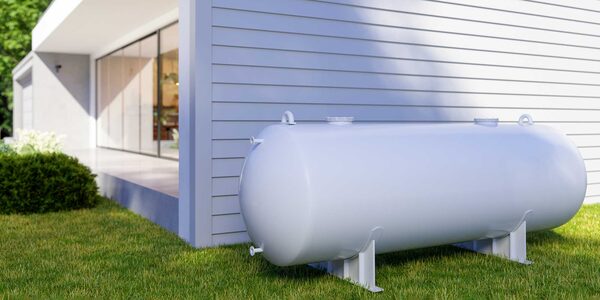
Households off the gas grid have a separate, time-limited route. The Scottish Government's Emergency Heating Oil Scheme is a fund that helps people on lower incomes pay for heating oil or LPG4. It is only for homes that use heating oil or LPG, and the fund will pay the fuel supplier directly4.
The payment is £300 per eligible household, paid directly to the supplier24. The scheme is aimed at low-income and vulnerable households facing increased oil and LPG heating costs, and it covers heating oil and LPG as fuels24. The Scottish Government has said households struggling with the rising cost of oil and LPG for heating will be able to apply for £300 of support with their bills from 1 April25.
Eligibility is tightly drawn. A household must have a home heated by oil or LPG, pay the fuel bill for that home, and have the home as their main or only home. They must have placed an order for fuel after 1 April but not paid for it, or be planning to place an order shortly, and no one at the address may have had an award in the last three months4. Applicants need to provide evidence including eligible benefits, proof of income such as recent bank statements or payslips, a current utility bill in their name, and documentation confirming any relevant health conditions4.
Applications can be made via the website, by telephone and by post, and can be submitted on behalf of someone else via the application form4. The scheme is delivered by Advice Direct Scotland, and the application line is 0800 048 741321. Only domestic and residential applicants can apply; commercial contracts are excluded4.
Scotland's Heat in Buildings Strategy: the targets behind the grants
The grant schemes sit inside a statutory and policy framework that sets the pace of change. The Heat in Buildings Strategy aims to decarbonise over 1 million homes and the equivalent of 50,000 non-domestic buildings by 20306. Emissions from heat in buildings will have to fall by 68% by 2030 compared with 20208.
On energy efficiency, the strategy sets a standard for homes at least equivalent to an EPC Band C, with a large majority of homes meeting it by 2030 and all homes meeting at least that standard by 20338. Households should treat the 2030 milestone as the firmer of the two.
The strategy also describes the need for at least 50% of the building stock to use zero emission heating systems by 203026. Funding behind it includes £1.8 billion committed to 2026 to support delivery6. The Scottish Government's own assessment suggests the additional jobs supported in 2030 will exceed those displaced by an estimated 16,400 as a result of investment in zero emissions heat6.
The Heat in Buildings Bill is intended to give industry and homeowners the certainty they need to invest, boost heat network development and set a long-term direction of travel that is deliverable and affordable for households and businesses16. Alongside it, the Scottish Government has legislated for clean heat in new homes and is introducing a new Heating System Rating on domestic EPCs showing the home's current heating system2.
For a household, the strategy is the reason the grants exist and the reason they may change. The targets are government targets, not household obligations, but they shape which technologies are funded and for how long. A home that installs a heat pump now is moving with the direction of policy; a home that replaces a gas boiler is not, though nothing in the current rules prevents it.
The New Build Heat Standard: clean heating in new homes
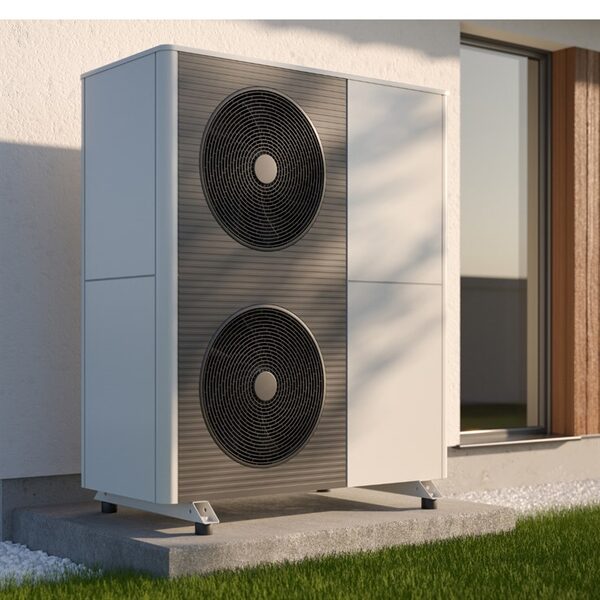
The New Build Heat Standard is the clearest of Scotland's heating rules because it is a requirement set out in law5. It comes into force from 1 April 2024, and all new buildings applying for a building warrant from April 2024 need to install clean heating systems, a requirement that also applies to some conversions5.
The purpose is to make sure that any new buildings are future-proofed by using clean heating systems which will not require future retrofit5. The Scottish Government has said the standard, introduced in April 2024, will continue to ensure that new buildings are future-proofed15.
The practical effect is that a new Scottish home cannot be built around a gas boiler in the way it could before. That removes one source of future retrofit cost for the household that buys it, and it shifts the installation base for heat pumps and other clean systems. It does not, however, apply retrospectively to the existing stock, which is where the great majority of Scottish homes sit and where the grant schemes do their work.
How to apply and what the process involves
Applications for Scottish Government heating grants are made to the administering agency rather than to the government directly. The Home Energy Efficiency Scheme (Scotland) Regulations 2006 state that an application for a grant shall be made to the administering agency27. In practice, that means Home Energy Scotland for the Grant and Loan Scheme, and Advice Direct Scotland for the Emergency Heating Oil Scheme18.
The sequence for a household typically runs through advice first. Home Energy Scotland provides free and impartial advice and operates the Funding Finder, which is the practical starting point for establishing what is open20. From there, an application goes to the Energy Saving Trust, which runs the Grant and Loan Scheme on the Scottish Government's behalf18. The Scottish Government publishes application and claim processing times for the scheme, which is the authoritative source for how long each stage takes18.
For the Emergency Heating Oil Scheme, the route is simpler and faster by design. Applications can be made online, by telephone on 0800 048 7413, or by post, and can be submitted on behalf of someone else4. Evidence requirements are set out in advance: eligible benefits, proof of income, a current utility bill in the applicant's name, and documentation of any relevant health conditions4.
The volume of work moving through the government-supported schemes gives a sense of scale. Government statistics record 487 government-supported heat pump installations in Scotland in the fourth quarter of 2024, covering October to December28. That figure describes installations rather than applications, and it is a quarterly count rather than a waiting time.
What this means for a household's energy independence
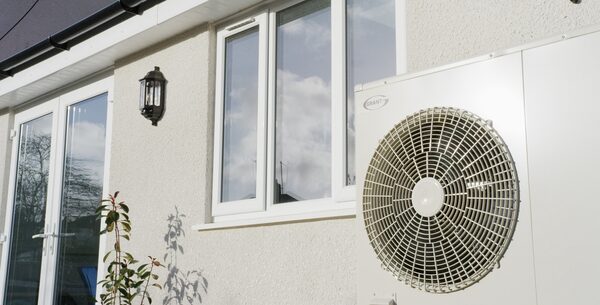
Scottish support is unusually broad by UK standards, and it is aimed squarely at reducing a household's dependence on imported fossil fuel. A heat pump grant of up to £7,500, with an optional interest-free loan of the same size, materially changes the economics of moving off gas or oil1. The Emergency Heating Oil Scheme's £300 goes directly to the supplier, which keeps oil and LPG households running through a price spike but does not change what they burn4.
The dependence that remains is worth stating plainly. The grants are government money, administered by the Energy Saving Trust and, for the oil scheme, by Advice Direct Scotland, so the household depends on a scheme that can close or change18. A heat pump runs on electricity, so the household remains connected to the grid and to a supplier, and the running cost depends on the tariff and on the fabric of the home. A heat network connection ties the household to a network operator rather than to a fuel supplier, which is a different kind of dependence rather than an absence of one13.
The strategy targets are the clearest signal of direction. Over 1 million homes converting to zero emissions heating by 2030, at least 50% of the building stock on zero emission heating by the same year, and £1.8 billion committed to 20266. For a household weighing a heating replacement, the grants reduce the upfront cost, the New Build Heat Standard removes the option of a gas boiler in new homes, and the Heat in Buildings Bill is intended to give homeowners the certainty to invest16. What the schemes do not do is remove the household's exposure to electricity prices, to the performance of the installed system, or to the possibility that a future government changes the rules.
Sources28 cited
- Energy saving home improvements, Scottish Government, 2026-09-17
- Heat in Buildings progress report 2025, page 10, Scottish Government, 2025-10-02
- Heat in Buildings progress report 2025, page 8, Scottish Government, 2025-10-02
- Emergency Heating Oil Scheme FAQs, Home Heating Advice Scotland, 2026-09-17
- The Heat in Buildings Programme, Scottish Government, 2026-09-17
- Heat in Buildings Strategy: business regulatory impact assessment, Scottish Government, 2026-09-17
- Heat in Buildings Bill update from the Cabinet Secretary, Scottish Parliament, 2025-11-18
- Heat in Buildings Strategy: Fairer Scotland duty assessment, Scottish Government, 2021-11
- Heat in Buildings progress report 2024, page 7, Scottish Government, 2024-10-10
- Scottish Government response to the Green Heat Finance Taskforce, Scottish Government, 2022-11-11
- Tackling fuel poverty: a strategic approach, Scottish Government, 2021-12-23
- Heat in Buildings national scheme: island communities impact assessment, Scottish Government, 2022-09-29
- Heat networks, Scottish Government, 2026-09-17
- Heat networks delivery plan review report 2026, Scottish Government, 2026-03-25
- Scotland's climate change plan 2026 to 2040, page 13, Scottish Government, 2025-11-06
- Heat in Buildings progress report 2025, Scottish Government, 2025-10-02
- Warmer Homes Scotland scheme headline data, Scottish Government, 2024-10-10
- Home Energy Scotland Grant and Loan scheme: application and claim processing times, Scottish Government, 2026-03-12
- Home energy efficiency, Argyll and Bute Council, 2026-09-17
- Financial help for energy efficiency and low carbon heating improvements, City of Edinburgh Council, 2026-09-20
- Scottish Emergency Heating Oil Scheme, Home Heating Advice Scotland, 2026-09-17
- Energy Efficient Scotland area based schemes, West Lothian Council, 2026-09-17
- Tackling fuel poverty in Scotland: periodic report 2021 to 2024, Scottish Government, 2025-04
- Fund opens for Scots to claim £300 heating oil support, Advice Direct Scotland, 2026-04-01
- Support for households using heating oil and LPG, Scottish Government, 2026-09-17
- Heat pump sector deal expert advisory group: Scottish Government response, Scottish Government
- The Home Energy Efficiency Scheme (Scotland) Regulations 2006, legislation.gov.uk, 2006-11-29
- Heat pump deployment quarterly statistics, United Kingdom, 2024 Q4, Department for Energy Security and Net Zero, 2024
 Community Energy in ScotlandCommunity energy in Scotland lets you join a local scheme for cheaper, greener heat and power, or get advice and funding to make your own home warmer and cheaper to run.
 Energy Policy in ScotlandWho decides how your home in Scotland is heated and improved?
 Planning Permission in ScotlandDo you need planning permission for a heat pump in Scotland?
 Planning Permission ScotlandHow Scottish permitted development rules treat external air conditioning and air-to-air heat pump units, where they differ from England, and the position for conservation areas, listed buildings and flats.
 Home HeatingMost Scottish homes are heated by mains gas, so what happens to the rest?
 Home Energy Planning ScotlandDo you need planning permission for solar panels or a heat pump in Scotland?