

In this answer
Short answer
Warmer Homes Scotland funds a mix of heating and insulation measures, delivered as a bespoke package rather than a fixed list, and support is worth £10,000 or more for eligible households1. The Scottish Government funds the programme and Warmworks manages delivery, with installers carrying out the work. In most cases the Scottish Government meets all the costs, though in some rare cases a household may need to pay some costs2.
The scheme is aimed at households in, or at risk of, fuel poverty, and it operates throughout Scotland, including the islands3. It has helped more than 46,000 households throughout Scotland, according to official statistics published in October 20255. The measures themselves fall into three broad groups: heating and hot water systems, fabric measures such as insulation, and enabling measures that clear the way for the main installation.
What Warmer Homes Scotland funds: heating and insulation measures
Warmer Homes Scotland has a strong focus on heating and insulation measures1. The scheme helps households in, or at risk of, fuel poverty improve their heating and energy efficiency, and it is funded by the Scottish Government3. The measures are not offered as a menu a household picks from: the contract specifies a list that includes a mix of fabric (insulation) and heating measures, including micro-renewables and measures specifically aimed at pre-1919 homes, with some mandatory and some highly recommended9.
That structure matters for what a household can expect. A package is assembled around the property, so the starting point is the condition of the home and its existing heating, not a preference for one technology. The most common type of measures installed in 2018/19 were heating and hot water systems, followed by boilers, which shows where the bulk of the work has historically gone6. Loft insulation was the most common fabric measure installed10.
The scheme was originally launched in 2015 and relaunched in 2023 with increased funding for clean heating systems3. The new phase launched on 2 October 2023 with a greater focus on clean heating where this is possible11. That shift runs alongside the wider Scottish direction of travel: new homes in Scotland cannot have oil or gas boilers and must have a low-carbon heating system such as a heat pump, as of April 202412.
For a household, the independence question is straightforward. A funded heating and insulation package reduces the amount of bought energy needed to keep the home warm, and where a heat pump or a renewable system replaces a fossil fuel boiler, it reduces exposure to the fuel being burned on site. It does not remove dependence on the electricity grid, and the work is delivered through a managing agent and its installer network rather than by the household itself.
How much support is worth: £10,000 or more per household

The headline figure is consistent across the independent guidance: support worth £10,000 or more for eligible households1. The same figure appears in Home Energy Scotland's funding pages, which describe £10,000 or more of funding for energy efficiency improvements like heating or insulation for eligible homeowners and private rented sector tenants13. Oftec's consumer funding page describes support worth up to £10,000 or more for eligible households14, and the National Energy Action retrofit guidance uses the same £10,000 or more figure15.
The wording differs slightly between them, and the difference is worth reading carefully. "£10,000 or more" is a floor, not a cap: it describes the value of a package rather than a cash sum paid to the household. "Up to £10,000 or more" is looser phrasing of the same idea. None of these sources publishes a maximum, and none sets out a schedule of amounts by measure.
On cost sharing, the scheme rules state that the work is done by Warmworks' installers and that in most cases the Scottish Government will meet all the costs2. The same source notes that in some rare cases a household may need to pay some costs2. There is no published list of what those rare cases are, so a household cannot know in advance from the public guidance whether its own package will attract a contribution.
The value sits in the context of what the scheme has spent overall. Official guidance published in November 2025 records that the scheme has invested around £399 million and helped over 47,000 households across Scotland16. An earlier official progress report, from April 2025, put the figures at around £289 million invested since the launch of the first scheme in 2015, across both phases, and over 40,000 households helped17. The two documents disagree on both totals, and the later figure is the newer of the two.
Heating measures: heat pumps, renewables and micro-renewable heating
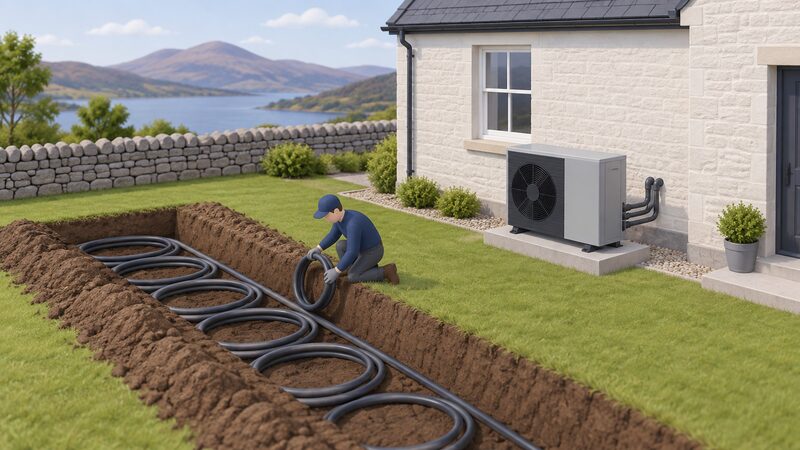
Renewable and micro-generation measures have been made available under the scheme, including ground source heat pumps, micro-wind, micro-hydro and micro-CHP systems1. Earlier official guidance describes the same family of measures as renewable heating systems such as ground source heat pumps, micro-wind and micro hydro systems18.
The scheme's successor direction is set out in the Heat in Buildings strategy, which adopts a zero emissions first approach19. That is the policy frame within which the 2023 relaunch and its increased funding for clean heating sit3. The practical effect is that a household with a suitable property and an existing fossil fuel heating system is more likely to be offered a low-carbon system than was the case in the scheme's earlier years.
Scotland's wider installation rate gives a sense of scale. Recent years have seen around 3,000 renewable heating systems installed in Scotland's homes annually20, a figure repeated in an earlier official consultation as around 3,000 renewable heating systems installed in Scotland's homes per year21. That is the national backdrop against which Warmer Homes Scotland packages are delivered, and it indicates that funded installations are a small part of a much larger retrofit effort.
For household energy independence, a heat pump or a micro-renewable system changes what the home buys. A ground source heat pump draws heat from the ground rather than from a delivered fuel, and micro-wind or micro-hydro generation produces electricity on site. What remains is the grid: a heat pump runs on electricity, so the household still depends on a supplier and on the network, and the running cost depends on the tariff and the price cap rather than on the scheme. The scheme funds the installation, not the ongoing energy.
Insulation and fabric measures, including for pre-1919 homes
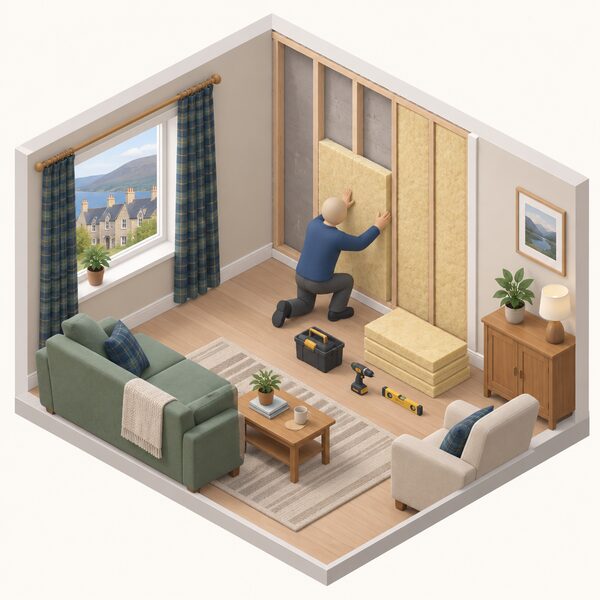
Fabric measures are the other half of the scheme. The contract list includes a mix of fabric (insulation) and heating measures, including measures specifically aimed at pre-1919 homes9. Loft insulation was the most common fabric measure installed10. The Scottish building regulations consultation describes the wider policy direction as reducing energy demand through measures such as improved fabric insulation22.
Pre-1919 homes get specific attention because of how many there are. Around a fifth of Scotland's homes were built before 191920. These traditional buildings are harder to treat: solid walls, original features and ventilation requirements all constrain what can be installed, which is why the scheme's contract list names them separately rather than treating them as ordinary cases.
Fuel use in these homes is also distinctive. Among pre-1919 terraced households in Scotland, 18% are reliant on other fuels24. That figure matters because homes off the gas grid have fewer options for a straightforward heating swap, and the package has to work with whatever fuel is already in place. Across Scottish dwellings as a whole, other forms of heating such as warm air systems and room heaters are used by 2% of dwellings24.
The independence gain from fabric measures is different from the gain from a new heating system. Insulation reduces the heat the home loses, so it reduces the amount of any fuel that has to be bought, whether that is gas, oil, electricity or LPG. It does not change where the energy comes from, and it does not remove the need for a heating system. It is the measure that makes every other measure work better, which is why it sits alongside heating in the same package rather than as an alternative to it.
Enabling measures: asbestos removal, fuel storage tanks and light bulbs
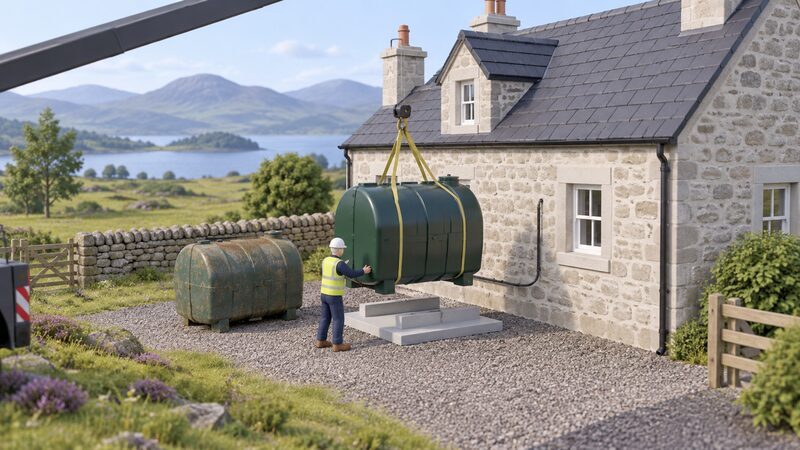
Enabling measures cover the preparatory work that has to happen before a main measure can be installed. The 2018/19 annual review records new enabling measures including asbestos removal, the installation of fuel storage tanks and energy efficient light bulbs25. Official guidance confirms that the scheme provides assistance with loft clearances, asbestos removal, the installation of fuel storage tanks and the removal of failed cavity wall insulation prior to infill4.
The same set is repeated in the fuel poverty strategy, which notes that through Warmer Homes Scotland the government already provides assistance with loft clearances and has introduced additional enabling measures, including the removal of failed cavity wall insulation prior to infill26. New measures were also introduced in 2021, including electrical energy storage, a smart ventilation system and the extraction of failed cavity wall insulation in advance of infill of cavity wall insulation18.
The fuel storage tank point answers a common question directly. A tank that is not up to standard can be replaced as an enabling measure within a Warmer Homes Scotland package4. Separately, the Scottish Government's Emergency Heating Oil Scheme helps households whose home is heated by oil or LPG, who pay the fuel bill for the home, for whom the home is the main or only home, who have placed an order for fuel after 1 April but not paid for it or who are planning to place an order shortly, and where no one at the address has had an award in the last 3 months27.
Asbestos removal as an enabling measure is significant for older properties, where asbestos-containing materials can block loft or wall work. Without it, a fabric measure could not proceed. The light bulbs and smart ventilation items are smaller, but they sit in the same category: they are included because they form part of making the home work as a whole.
Who the measures are for and how the work is carried out
Warmer Homes Scotland is available to households, including owner-occupiers and some private rented sector tenants, who are living in or at risk of fuel poverty and who meet the qualifying eligibility criteria1. It operates throughout Scotland, including the islands, and improvements are recommended as bespoke packages28. Private sector tenants can apply, but Warmworks needs the landlord's permission before any energy-saving home improvement can be installed2.
The scheme also targets funding at households most exposed to the health risks of staying in a cold home, because of age, disability or caring responsibilities18. That targeting sits alongside the fuel poverty criteria rather than replacing them.
The delivery model is a managing agent and an installer network. Warmworks manages the scheme, and the work is done by Warmworks' installers2. A household does not choose an installer in the way it would for a private retrofit; the package and the delivery route come through the scheme. Home Energy Scotland's own guidance distinguishes its advice service from Warmer Homes Scotland and from paid retrofit services, and sets out what to check before choosing a paid service29.
For energy independence, the picture is mixed and worth stating plainly. The scheme reduces the amount of energy a home needs and can change the fuel it uses, which lowers exposure to delivered fossil fuels and to price movements in those fuels. What it does not do is remove the household's dependence on the electricity grid, on a supplier, or on the managing agent and its installers for the work itself. The measures are installed once; the running costs continue.
Sources29 cited
- Energy saving home improvements, Scottish Government, 2026-09-17
- Warmer Homes Scotland, Home Energy Scotland, 2026-09-20
- Warmer Homes Scotland scheme headline data, Scottish Government, 2025-10-29
- Tackling fuel poverty: strategic approach, Scottish Government, 2021-12-23
- Heat in buildings progress report 2025, Scottish Government, 2025-10-02
- Warmer Homes Scotland programme annual review 2018-19, Scottish Government, 2018
- Home energy efficiency programmes Scotland: Warmer Homes Scotland annual review 2017-2018, Scottish Government, 2017
- Home energy efficiency, Argyll and Bute Council, 2026-09-17
- Warmer Homes Scotland business case, Scottish Government, 2015-07
- Warmer Homes Scotland first annual review, Scottish Government, 2016-11-03
- Heat in buildings progress report 2024, Scottish Government, 2023-10-02
- New homes heating requirement, House of Commons Library, 2024-04
- Find funding, Home Energy Scotland, 2026-09-20
- Funding schemes, Oftec, 2026-09-20
- Retrofit support, National Energy Action, 2026-05-19
- Scotland's climate change plan 2026-2040, Scottish Government, 2025-11-06
- Tackling fuel poverty in Scotland: periodic report 2021-2024, Scottish Government, 2025-04
- Tackling fuel poverty: strategic approach, Scottish Government, 2021-12-23
- Heat in buildings strategy, Scottish Government, 2021-11
- Heat in buildings strategy: achieving net zero emissions in Scotland's buildings, Scottish Government, 2021-10
- Heat in buildings strategy consultation, Scottish Government, 2021-02-05
- Building regulations: proposed changes to energy and environmental standards, Scottish Government, 2024-07-31
- Scottish house condition survey 2023: key findings, Scottish Government, 2023
- Scottish house condition survey 2024: key findings, Scottish Government, 2024
- Warmer Homes Scotland programme annual review 2018-19, Scottish Government, 2018
- Tackling fuel poverty: strategic approach, Scottish Government, 2021-12-23
- Home heating advice FAQs, Home Heating Advice Scotland, 2026-09-17
- National islands plan annual report 2022, Scottish Government, 2023-03-31
- A simple guide to retrofit services, Home Energy Scotland, 2026-08
 The Full Heat Pumps GuideWill a heat pump keep my house warm in winter, and what does one cost to buy and run?
 New Build Homes and EnergyWhat heating will a new build actually have, and will it be a heat pump rather than a gas boiler?
 Community Energy in ScotlandCommunity energy in Scotland lets you join a local scheme for cheaper, greener heat and power, or get advice and funding to make your own home warmer and cheaper to run.
 Energy Policy in ScotlandWho decides how your home in Scotland is heated and improved?
 Scottish Building StandardsBuilding or extending in Scotland means meeting Scottish rules on insulation, glazing and ventilation.
 Home Energy Planning ScotlandDo you need planning permission for solar panels or a heat pump in Scotland?