
In this answer
Short answer
Around 3,000 renewable heating systems are installed in Scotland's homes each year, according to Scottish Government figures published in the Heat in Buildings Strategy and its supporting papers1. That is the domestic installation rate, not the country's total renewable heat output. Measured as heat rather than as units, useful renewable heat produced in Scotland reached 5,008 GWh in 2020, equivalent to 6.4% of fuels other than electricity consumed for heat, against a target of 11% for that year2.
The two numbers answer different questions and are often confused. The 3,000 a year describes how many households are adding a renewable system. The 6.4% describes how much of Scotland's non-electrical heat demand those systems and others meet. Both matter to a household weighing up a heat pump, biomass boiler or solar thermal array, because they show a market that is established but still small relative to the housing stock.
The uptake figure: around 3,000 systems a year
The headline uptake figure is around 3,000 renewable heating systems installed in Scotland's homes annually in recent years1. The same rate appears across several Scottish Government documents from 2021, including the Heat in Buildings Strategy, its summary, the business and regulatory impact assessment, and the earlier draft strategy consultation5. The consistency is useful: it means the figure was the government's working assumption across the policy papers that set the current framework, rather than a one-off estimate.
Set against that, the output figures show how far the share has to travel. In 2019, renewable heat in Scotland produced an estimated 5,205 GWh of useful heat, equivalent to 6.5% of fuels other than electricity consumed for heat, a 5% increase in useful heat and a 1% increase in capacity on 20188. In 2020, useful renewable heat was 5,008 GWh, or 6.4% of non-electrical heat demand, with a 4% increase in capacity2. The 2017 figure was 5.9%9. The share has therefore moved within a narrow band rather than climbing steadily, and the 11% target for 2020 was not met.
Most of what is counted comes from biomass, which contributed 70% of useful renewable heat in 20202. That matters for households because it means the national statistic is dominated by wood fuel and similar sources rather than by heat pumps, and a household installing an air source heat pump is joining a smaller part of the total than the headline share suggests.
The forward target is provisional: the Heat in Buildings Strategy set out a provisional target for renewable heat of at least 22% by 20303. Separately, over one million households in Scotland are expected to need a low-carbon heating system by 2030, alongside an aim to reduce emissions from buildings by 68% by 2030 against a 2020 baseline4. The gap between 3,000 installations a year and a million households is the central fact of Scottish renewable heating policy.
Who the schemes cover
The installation figures cover Scotland's homes, and the funding landscape that sits behind them is Scotland-specific in part and GB-wide in part. The distinction matters when a household is working out what it can actually claim.
The Domestic Renewable Heat Incentive was the main GB scheme for domestic renewable heating. It was designed to encourage consumers in England, Scotland and Wales to switch to renewable heating systems, and it was open to customers across those three nations who installed eligible renewable heating technologies in their homes10. Ofgem administers it, and its quarterly reporting continues to break down scheme activity by nation13.
In Scotland specifically, the Home Energy Scotland Grant and Loan scheme provides grants and loans to all domestic owner-occupiers in Scotland to install clean heat and energy efficiency measures15. Its published terms confirm it covers funding for energy efficiency improvements, low and zero emission heat, other renewables systems or connections to a heat network, and that it applies to existing Scottish homes only16. Independent guidance describes it as offering financial assistance to Scottish homeowners looking to install renewable heating systems17.
Warmer Homes Scotland is the other route, aimed at eligible households rather than all owner-occupiers. It funds the installation of a range of heating measures, including renewable and micro-renewable heating, and insulation measures, to improve the energy efficiency of the property18.
| Scheme | Who it covers | What it funds |
|---|---|---|
| Domestic Renewable Heat Incentive | England, Scotland and Wales10 | Eligible renewable heating technologies in homes11 |
| Home Energy Scotland Grant and Loan | Existing Scottish homes, all domestic owner-occupiers15 | Clean heat, energy efficiency, other renewables, heat network connections16 |
| Warmer Homes Scotland | Eligible households in Scotland18 | Renewable and micro-renewable heating, plus insulation18 |
For a Scottish household, the practical position is that the GB-wide incentive and the Scotland-only grant and loan scheme have both been part of the picture, and the Scotland-only scheme is the one tied to existing Scottish homes. The Home Energy Scotland Grant and Loan scheme page sets out the detail, and the wider guide to how the four nations differ is useful where a household is comparing what is available either side of the border.
Conditions and exceptions
Several conditions shape what counts as renewable heating in Scotland and where it can be installed. The most consequential is the New Build Heat Standard, which applies in Scotland and restricts direct emission heating in new buildings.
New buildings applying for a building warrant in Scotland, which are not served by a heat network, must meet their space and water heating demand without direct emissions19. The standard also applies to the conversion of existing buildings where the conversion involves a change in occupation or use of the part of the building in which an existing direct emission heating system is located, and where it is reasonably practicable to do so20. That second limb catches conversions that might otherwise have kept a gas boiler.
The treatment of wood burning stoves under the standard has changed. Under the original regulations, which came into force in April, wood burning stoves were only permitted in new homes and buildings for emergency heating21. The Scottish Government has since announced that wood burning stoves are to be permitted in new homes, which widens what a new build can include.
Heat networks carry their own rules. From 2023, only renewable and low or zero emissions heat networks would be consented22. From early 2024, the legislative framework requires that new heat networks, and extensions of existing networks, are powered using low and zero emissions heat sources19. New networks run from renewable sources were also given a 90% relief from non-domestic rates until 31 March 202422.
For a household, the exceptions matter in two directions. A home on a heat network is treated differently from one that is not, and a conversion project can trigger the standard where a straightforward renovation would not. The planning rules for home energy equipment in Scotland page covers the consent side, and how Scottish homes are heated sets out the fuels in use.
How a household moves from a boiler to a renewable system
The route from a gas boiler to a renewable system runs through assessment, funding and installation, and the Scottish schemes are structured around that sequence.
Warmer Homes Scotland funds the installation of a range of heating measures, including renewable and micro-renewable heating, and insulation measures, to improve the energy efficiency of the property18. That combination is deliberate: fabric measures and heating measures are funded together because a heat pump performs differently in a draughty home than in an insulated one.
The Home Energy Scotland Grant and Loan scheme provides grants and loans to all domestic owner-occupiers in Scotland to install clean heat and energy efficiency measures15. Its terms confirm the funding covers energy efficiency improvements, low and zero emission heat, other renewables systems or connections to a heat network, and that it is for existing Scottish homes only16.
On the GB-wide side, the Domestic Renewable Heat Incentive was set up to encourage consumers in England, Scotland and Wales to switch to renewable heating systems, and covered customers in those nations who installed eligible technologies in their homes10. Ofgem's quarterly reporting continues to record scheme activity, including Scotland's share of scheme lifetime installations at 7.52% and of installed capacity at 12.24%13.
The scale of what remains is set out in Scottish Government guidance: over one million households are expected to need a low-carbon heating system by 2030, against an aim to reduce emissions from buildings by 68% by 2030 against a 2020 baseline4. Scotland's wider targets sit behind that, including a legally committed net zero target for all greenhouse gases by 204523, and a fuel poverty target that in 2040 no more than 5% of households are fuel poor, no more than 1% are in extreme fuel poverty, and the fuel poverty gap is no more than £250 in 2015 prices5.
What it means for a household's energy independence
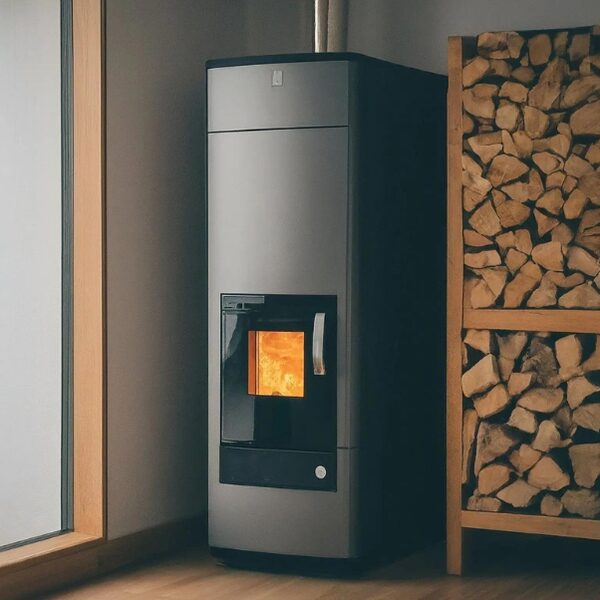
A renewable heating system changes where a household's heat comes from, and how much of it depends on outside infrastructure. A heat pump or biomass boiler running on a self-contained fuel source reduces exposure to the gas grid and to wholesale gas prices. It does not remove dependence: a heat pump runs on electricity, so the household remains connected to the grid and to a supplier, and the carbon intensity of that electricity is set at national level rather than by the household.
Biomass carries a different set of dependencies. Because biomass contributed 70% of useful renewable heat in 20202, the national picture is heavily weighted towards a fuel that must be bought, stored and delivered. A wood fuel supply chain is a dependence of its own kind, distinct from a gas connection but not the same as generating heat on site from nothing.
The funding routes carry their own conditions. The Home Energy Scotland Grant and Loan scheme applies to existing Scottish homes only16, so a household in a new build is outside it, and the New Build Heat Standard already governs what that new build can install19. The Domestic Renewable Heat Incentive covered England, Scotland and Wales10, which means a Scottish household was inside a GB-wide scheme rather than a Scotland-only one for that support.
The scale of the transition is the context for any individual decision. Around 3,000 renewable heating systems a year1 against over one million households expected to need low carbon heating by 20304 describes a rate that has to change substantially. For a household, that means the funding rules, the building standards and the available installer base are all likely to shift during the life of any system installed now. The renewable heating target page covers the target itself, and fuel poverty in Scotland sets out the affordability picture that sits alongside it.
Sources24 cited
- Heat in Buildings Strategy: Achieving Net Zero Emissions in Scotland's Buildings, Scottish Government, 2021
- Update to the Renewable Heat Target and Action: 2021, Scottish Government, 2021
- Delivering Net Zero for Scotland's Buildings: Heat in Buildings Bill Consultation, Scottish Government, 2023
- Heat in Buildings Progress Report 2024, Scottish Government, 2024
- Heat in Buildings Strategy: Summary Document, Scottish Government, 2021
- Heat in Buildings Strategy: Business and Regulatory Impact Assessment, Scottish Government, 2021
- Draft Heat in Buildings Strategy Consultation, Scottish Government, 2021
- Update to the Renewable Heat Target and Action: 2020, Scottish Government, 2020
- Annual Energy Statement 2019, Scottish Government, 2019
- Domestic Renewable Heat Incentive: Applicants, Ofgem, 2026
- Domestic Renewable Heat Incentive Essential Guide, Ofgem, 2024
- Domestic Renewable Heat Incentive Quarterly Report Issue 32, Ofgem, 2022
- Feed-in Tariffs Quarterly Report Issue 64, Ofgem, 2026
- Feed-in Tariffs Quarterly Report Issue 63, Ofgem, 2026
- Heat in Buildings Progress Report 2024, Scottish Government, 2024
- Home Energy Scotland Grant and Loan Terms and Conditions, Home Energy Scotland, 2026
- Heat Pumps vs Boilers, The CPA, 2025
- Tackling Fuel Poverty in Scotland: A Strategic Approach, Scottish Government, 2021
- New Build Heat Standard Part Two Consultation, Scottish Government, 2022
- New Build Heat Standard Part Two: Consultation View, Scottish Government, 2026
- Wood Burning Stoves to be Permitted in New Homes, Scottish Government, 2026
- Heat Networks Delivery Plan, Scottish Government, 2022
- Scotland's Climate Change Plan 2026 to 2040, Scottish Government, 2026
- Climate Change Policy, Scottish Government, 2026
 Home HeatingMost Scottish homes are heated by mains gas, so what happens to the rest?
 Climate TargetsScotland aims to stop adding greenhouse gases by 2045, five years before the rest of the UK.
 Housing Stock Data for ScotlandScotland's housing is measured differently from England's, so the numbers you see may not compare directly.
 Home HeatingMost Welsh homes still run on mains gas, so what are the alternatives in rural areas?
 Home Energy Planning ScotlandDo you need planning permission for solar panels or a heat pump in Scotland?
 Microgeneration UptakeScotland has more solar panels and heat pumps per household than England, while Wales has built larger solar schemes and Northern Ireland lags behind.