In this guide
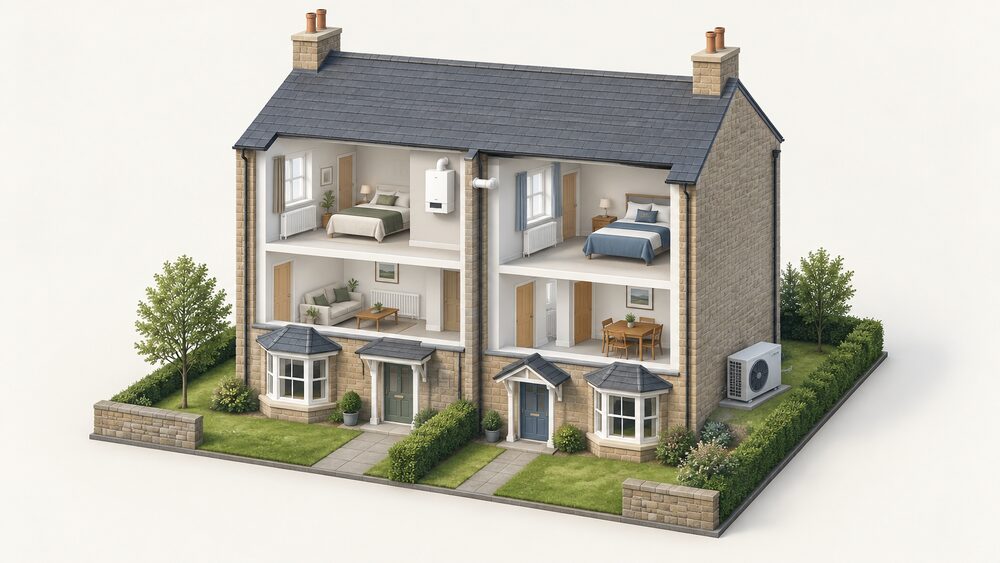
Scotland heats its homes overwhelmingly with mains gas. Around 81% of Scottish households, roughly 2.1 million, use mains gas for heating, and the same 81% figure holds for households living in flats as for Scotland as a whole1. That single number explains most of the politics and most of the practical difficulty of Scottish home heating: the fuel that has to be replaced is the one piped into four homes in five.
The replacement is under way but small in scale. Only around 11% of households, approximately 278,000, have a renewable or very low emissions heating system such as a heat pump. Just over 260,000 homes use electric heating such as storage heaters2, and around 12,000 homes, about 0.5% of all dwellings, use biomass as their primary fuel3. Around 90,000 households, 4% of the total, heat with communal heating, LPG bulk or bottled, solid mineral fuel or biomass1.
The direction of travel is set by statute and standard rather than by consumer choice. New homes cannot have oil or gas boilers, a position in place since April 2024, and must have a low-carbon heating system such as a heat pump4. The Scottish Government has proposed a Heat in Buildings Bill to require homeowners in Scotland to meet a minimum energy efficiency standard by 20334. For a household, the practical question is not whether the heating system will change but who pays, and what support exists in the meantime.
Gas dominates, with 81% on the gas grid
The 81% figure is unusually stable across sources and years, which makes it a reliable starting point. The Scottish House Condition Survey 2024 records 81% of Scottish households, around 2.1 million, using mains gas for heating1. The 2023 survey gives the same 81% and the same approximate household count7. The 2022 fuel poverty analysis uses the same figure8. The Heat in Buildings Strategy consultation, published in February 2021, already described around 81% of homes using mains gas for heating9.
What the headline hides is the households on the gas grid that do not use it. Around 9% of dwellings on the gas grid use an alternative fuel, such as electricity, as their main heating fuel1. A gas connection is therefore not the same as gas heating, and the difference matters for any estimate of how much of Scotland could switch without new infrastructure.
The remainder is a long tail of off-grid and unusual arrangements. Around 90,000 households, 4% of all households, were estimated to heat their homes with communal heating, LPG bulk or bottled, solid mineral fuel or biomass1. More than 2 million homes use mains gas or oil as their primary heating fuel8, which places oil as the main off-grid fossil fuel in the Scottish stock.
The concentration on gas is also a concentration of dependence. A household on mains gas depends on the grid, on a supplier and on imported gas, and has no storage of its own. A household on oil depends on deliveries and a tank. A household on a heat pump depends on electricity, and on the grid and a supplier just as firmly, though it can pair the system with its own generation and storage. None of these is independence in the literal sense; the difference is in what the household controls and what it can store.

Fuel poverty in Scotland: what the survey shows
Fuel poverty in Scotland is measured against a legal definition, and the estimates from 2022 reflect households being placed on one of the four heating regimes defined in The Fuel Poverty (Enhanced Heating) (Scotland) Regulations 20208. That matters because the heating regime assumed changes the result, and comparisons across years need care.
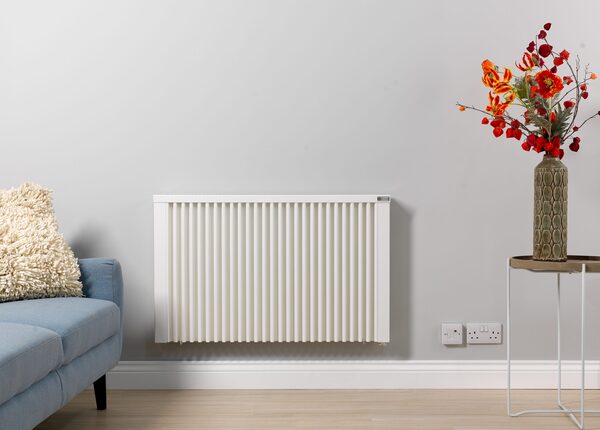
The 2022 survey found 46% of households using electricity as their primary heating fuel were fuel poor, higher than for households using gas at 29% and oil at 28%8. Households using other fuel types had a rate of 41%10. The 2023 survey put the rate for households using gas at 32% and for electricity at 52%11. The 2023 survey also found 17% of fuel poor and 18% of extreme fuel poor households report that they cannot afford to heat their home11.
The pattern is consistent: electric heating carries the highest fuel poverty rate, gas the lowest of the main fuels, and oil sits close to gas. That is a difficult finding for policy, because the fuels with the lowest fuel poverty rates are the fossil fuels being phased out, and the fuel with the highest rate is electricity, which is the replacement. The Scottish Government's own scheme rules recognise this directly: households are offered a clean heating system in the first instance, although only where installation of these systems will avoid pushing households into fuel poverty or worsen their depth of fuel poverty6. Where clean heating would increase energy bills, an emission-producing system may be provided instead7.
The geography is uneven. The Scottish House Condition Survey local authority tables for 2022 to 2024 show fuel poverty rates ranging from 22% in Stirling to 51% in Orkney Islands against a Scotland average of 31%. Rural and island rates sit above the national figure, which is where off-gas-grid heating and older, harder-to-treat housing concentrate. More detail on the definition and the 2040 target sits in fuel poverty in Scotland, and the fuel-by-fuel breakdown is set out in how fuel poverty differs by heating fuel type in Scotland.
Warmer Homes Scotland: the national fuel poverty scheme
Warmer Homes Scotland is the Scottish Government's national fuel poverty programme, funded by the Scottish Government and offering funding and support to eligible households struggling to stay warm and keep on top of energy bills12. It was launched in September 201512 and relaunched in 2023 with increased funding for clean heating systems7. It has helped more than 46,000 households throughout Scotland5, and around 21,000 households have been referred through to the fuel poverty support programme since the new scheme launched in October 20235.
The scheme has a strong focus on heating and insulation measures12. Renewable and micro-generation measures have been made available, including ground source heat pumps, micro-wind, micro-hydro and micro-CHP systems12. Most homes also get energy-saving upgrades, no matter which heating system is installed7. It also supports climate goals by installing more clean heating systems and reducing emissions through improved energy efficiency7.
The managing agent is Warmworks, which assesses householder eligibility for the scheme and procures contractors to deliver appropriate measures13. Households apply for the scheme via Home Energy Scotland13. Warmworks was re-appointed to the managing agent role in 2023.
The scheme sits alongside other Scottish routes. The Home Energy Scotland Grant and Loan Scheme provides grants and loans to all domestic owner-occupiers in Scotland to install clean heat and energy efficiency measures14, and offers eligible homeowners support to install clean heating systems and energy efficiency measures15. Area Based Schemes are for private homeowners and landlords in Scotland to help with the cost of certain energy efficiency measures16, with grant funding focused on solid wall insulation and other measures for homes hard to treat due to non-standard construction16. The wider grant landscape is compared in why home energy grants differ across the four nations.
Clean heating first, and when a gas boiler is still installed
The ordering principle in Scottish Government schemes is that clean heating comes first where it can. Where technically suitable, households are offered clean heating systems first7. The qualification is financial rather than technical: a clean system is offered only where it will not push the household into fuel poverty or worsen its depth6. If clean heating would increase energy bills, an emission-producing system may be provided instead7.
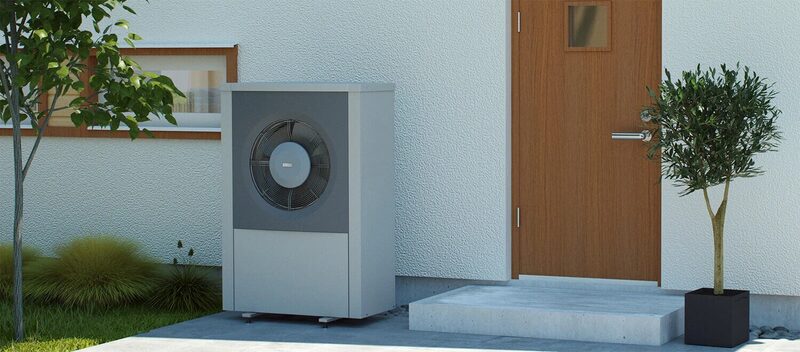
For new build, the rule is absolute. As of April 2024, new homes cannot have oil or gas boilers and must have a low-carbon heating system such as a heat pump4. That removes new housing from the fossil fuel count entirely and means the 81% gas share can only fall as the stock turns over, however slowly.
For existing homes, the position is a mix of support and standard. The Home Energy Scotland Grant and Loan Scheme offers an additional £7,500 as an optional interest-free loan for clean heating systems such as heat pumps, alongside grant funding12. The technical floor for any installation is set by the Non-domestic Building Services Compliance Guide for Scotland, which sets the minimum performance of space heating and hot water systems, heating appliances and controls, and applies to new systems, replacement in whole or in part, and improvement work to existing systems17.
The scale of what remains is the point. The Climate Change Committee's pathway has 60% of home heating systems in Scotland still powered by fossil fuels in 2035, with around a quarter of existing homes heated by a heat pump, either as standalone or communal systems18. That is a projection, not a target, and it describes a slow transition rather than a rapid one. For a household, it means a gas boiler installed today is likely to run for its full life, and the decision point comes at replacement rather than before.
Eligibility: who qualifies, including private tenants
Warmer Homes Scotland is available to households, owner-occupiers and some private rented sector tenants, who are living in or at risk of fuel poverty and who meet the qualifying eligibility criteria12. The scheme mainly supports owner occupiers, but it also covers tenants in private rented homes14. Independent guidance describes the target group as qualifying low income home owners and private tenants13.
Area Based Schemes take a different route to eligibility. They are for private homeowners and landlords in Scotland16, and to qualify a household must be a homeowner or a privately rented landlord or tenant and be in Council Tax Band A, B or C14. That is a band test rather than an income test, which makes it broader in some areas and narrower in others.
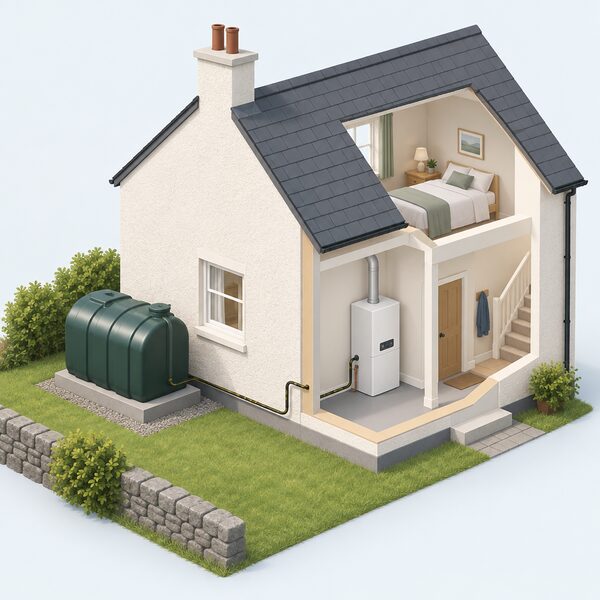
The Emergency Heating Oil Scheme is narrower still and is not a heating system grant. It is only for homes that use heating oil or LPG19. To qualify, the home must be heated by oil or LPG, the applicant must pay the fuel bill, the home must be the main or only home, an order for fuel must have been placed after 1 April but not paid for, or be about to be placed, and no one at the address may have had an award in the last 3 months19. Only domestic and residential applicants can apply19. Those in financial hardship who are at risk of cutting back on heat due to rising costs, and who are classed as vulnerable, may also qualify20.
The National Heat in Buildings Scheme, as designed, will be accessible to all households in Scotland, which will include island households where they meet the eligibility requirements for the scheme criteria21. That matters for the islands, where off-gas-grid heating and higher fuel poverty rates coincide.
What the scheme is worth: £10,000 or more, and around £350 a year
The financial value of Scottish support varies by route and by household, and the published figures should be read with their dates. So far in 2025/26, the average fuel bill savings across all completed Warmer Homes Scotland applications is around £350 per year6. Across the Scottish Government's heat in building programmes, over 20,000 households are being supported to save up to £500 on their energy bills in the year to November 202522.
On capital cost, the Home Energy Scotland Grant and Loan Scheme offers an additional £7,500 as an optional interest-free loan for clean heating systems such as heat pumps, alongside grant funding12. Where a home is selected for a future Area Based Scheme programme, an interest-free loan through Home Energy Scotland may be available to cover the customer contribution to the scheme16.
| Support route | What it covers | Value as published |
|---|---|---|
| Warmer Homes Scotland | Heating and insulation measures, clean heating first where suitable | Fully funded for eligible households; average saving around £350 per year in 2025/266 |
| Home Energy Scotland Grant and Loan | Clean heating systems and energy efficiency measures | Grant funding plus an optional £7,500 interest-free loan12 |
| Area Based Schemes | Solid wall insulation and measures for hard-to-treat homes | Grant funding; interest-free loan may cover the customer contribution16 |
| Emergency Heating Oil Scheme | An unpaid or imminent heating oil or LPG order | Fuel cost support for eligible oil and LPG homes19 |
The £350 figure is an average across completed applications, not a promise for any individual home, and it is stated for 2025/26 to date6. The £500 figure is a ceiling across a wider programme and a different population22. The two are not comparable and should not be added.
How to apply: Home Energy Scotland and the Warmworks survey
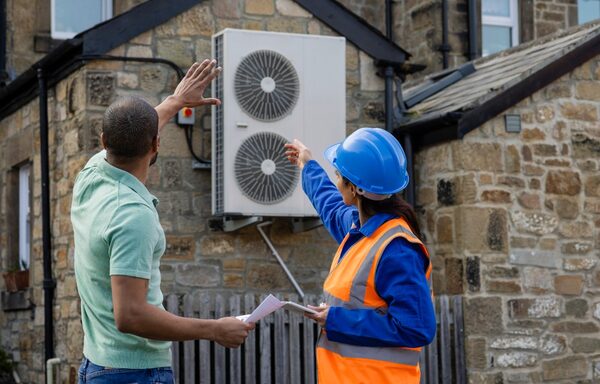
Applications to Warmer Homes Scotland go through Home Energy Scotland, which is the referral partner for Area Based Scheme eligibility enquiries and provides free and impartial advice funded by the Scottish Government14. Warmworks then assesses householder eligibility and procures contractors to deliver the measures13. The Home Energy Scotland Grant and Loan Scheme helps eligible homeowners pay for energy efficiency improvements and can be contacted at heesgl@gov.scot23.
The Emergency Heating Oil Scheme runs on a separate track. Eligible customers can apply at homeheatingadvice.scot, call 0800 048 7413, or send a form by post20.
Rejections are recorded and published. Freedom of information figures show 4,409 applications turned down by Home Energy Scotland in 2016/17 and 2,226 by Warmworks the same year, 941 in 2021/22, 739 in 2020/21, 728 in 2019/20, 680 in 2023/24 and 249 in 2024/2524. The fall in later years reflects a smaller applicant pool as much as a change in approval rates, and the figures are counts rather than rates.
The published scheme material does not set out a warranty or service visit after installation. What it does set out is the standard the work must meet: the minimum performance of space heating and hot water systems, heating appliances and controls is set by the Non-domestic Building Services Compliance Guide for Scotland, which applies to new systems, replacement in whole or in part, and improvement work to existing systems17. Householders relying on a warranty should confirm its terms with the installer or managing agent directly, because no warranty term appears in the published scheme rules.
H100 Fife and the hydrogen question
Hydrogen heating has been trialled in Scotland at Fife. The H100 Fife 100% Hydrogen Project was consulted on in February 2021 with a proposal to construct and operate a hydrogen network in Fife able to service around 300 houses9. That is the scale of the demonstration: hundreds of homes, not thousands.
The trial matters for the wider question because it tests whether the existing gas network can carry a zero-carbon fuel to domestic properties. If it can, part of the 81% on mains gas could in principle be converted rather than replaced, which would change the cost and disruption profile of the transition considerably. If it cannot, the alternative for those households is electrification, with a heat pump and the associated fabric work.
The safety measures and standards for hydrogen networks are a matter for the trial and its regulators. Excess flow valves are installed in every home using hydrogen, designed to limit gas flow below the amount needed to cause a dangerous build-up, and odour is added so the hydrogen has the same familiar smell of natural gas9. Ventilation may need to be added to allow potential small leaks to disperse safely, and measures are identified during home surveys and vary by property9. Competent Gas Safe Registered engineers trained specifically for hydrogen at Fife College inspect homes regularly throughout the project9. Before H100 Fife can go ahead, the Health and Safety Executive needs to be satisfied that the trial will be run safely; SGN received a Letter of Assistance following independent assessment of its Safety Dossier, which details how 100% hydrogen will be produced, stored, distributed and used safely in homes9. The trial is a network demonstration serving around 300 houses9, and no decision to convert the Scottish gas grid to hydrogen follows from it.
For a household, the honest position is that hydrogen is a possibility, not a plan. Nothing in the current scheme rules offers a hydrogen heating system, and the support routes described above fund heat pumps, insulation and, where clean heating would raise bills, emission-producing systems7. A household deciding what to install now is choosing between electrified heating and a fossil fuel system, not between electrified heating and hydrogen.
What it means for energy independence
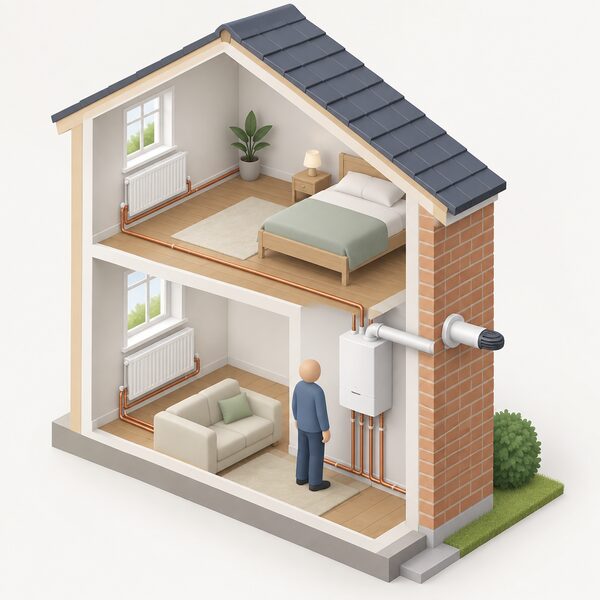
Scottish home heating is dependent on gas, and the dependence is structural rather than incidental. Around 81% of households, roughly 2.1 million, use mains gas for heating1, and more than 2 million homes use mains gas or oil as their primary heating fuel8. That gas is imported, delivered through a network the household does not control, and billed by a supplier the household chooses but cannot replace with its own supply.
The targets describe the intended direction. By 2030, over 1 million homes and the equivalent of 50,000 non-domestic buildings are to be converted to zero emissions heat, with at least 1 million homes currently using mains gas converting to zero emissions heating2. The Climate Change Committee's pathway, by contrast, has 60% of home heating systems in Scotland still powered by fossil fuels in 203518. A target and a pathway are different things, and the gap between them is the transition.
The measurement framework is changing too. Domestic EPCs in Scotland will carry a Heat Retention Rating based on annual heat demand in kWh/m2, a Heating System Rating showing the home's current heating system, and an Energy Cost Rating5. The reformed set of three domestic EPC ratings covers a Heat Retention Rating, a Heating System Type Rating covering emissions category, thermal efficiency and running cost, and an Energy Cost Rating25. The regulations adopt the UK Government's new Home Energy Model as the calculation methodology for producing domestic EPCs in Scotland26, and the approach to highlighting potential non-polluting heating systems is technology-neutral25.
What that means for a household is that the certificate will describe the heating system as well as the fabric, and that the standard a home must meet is being defined now. The proposed Heat in Buildings Bill would require homeowners in Scotland to meet a minimum energy efficiency standard by 20334. The practical effect is that the heating decision and the fabric decision become one decision, taken at the point a system is replaced. More on the stock and its ratings sits in Scotland's housing stock and EPC ratings, and the wider devolution picture in which energy powers are devolved and which are reserved.
Sources26 cited
- Scottish House Condition Survey 2024: Key Attributes of the Scottish Housing Stock, Scottish Government, 2026
- Heat in Buildings Strategy: Achieving Net Zero Emissions in Scotland's Buildings, Scottish Government, 2021-10-07
- Heat in Buildings Progress Report 2024: Biomass and Electric Heating, Scottish Government, 2024
- New Homes and the Heat in Buildings Bill, House of Commons Library, 2024
- Heat in Buildings Progress Report 2025, Scottish Government, 2025-10-02
- Scottish Government Response to the Green Heat Finance Taskforce, Scottish Government, 2025
- Warmer Homes Scotland Scheme Headline Data, Scottish Government, 2025-10-29
- Scottish House Condition Survey 2022: Fuel Poverty, Scottish Government, 2024-02-29
- Scotland's Carbon Budgets, Climate Change Committee
- Scottish House Condition Survey 2022: Key Findings Summary, Scottish Government, 2022
- Scottish House Condition Survey 2023: Key Findings Summary, Scottish Government, 2023
- Energy Saving Home Improvements, Scottish Government, 2026-09-17
- Government Funded Schemes and ECO4, Energy Saving Trust, 2025-04-02
- Home Energy Efficiency Advice, Argyll and Bute Council, 2026-09-17
- Home Energy Scotland Grant and Loan Scheme Awards, Scottish Government, 2025-05-12
- Heat in Buildings Strategy: Achieving Net Zero Emissions in Scotland's Buildings, Scottish Government, 2021-10
- Draft Heat in Buildings Strategy Consultation, Scottish Government, 2021-02
- Fuel Poverty Statistics: Scotland, House of Commons Library
- Fund Opens for Scots to Claim Heating Oil Support, Advice Direct Scotland, 2026-04-01
- Energy Efficient Scotland: Area Based Schemes, West Lothian Council, 2026-09-17
- Heat in Buildings National Scheme: Island Communities Impact Assessment Screening, Scottish Government, 2022-09-29
- Energy Performance of Buildings (Scotland) Regulations 2025: Impact Assessment, Scottish Government, 2025-10-10
- Home Energy Scotland Grant and Loan Scheme: Application and Claim Processing Times, Scottish Government, 2026-03-12
- FOI 202400434886: Warmer Homes Scotland Statistics, Scottish Government, 2024-11-13
- Building Standards Technical Handbook 2022: Standard 6.3 Heating System, Scottish Government, 2022-06-01
- EPC Reform Consultation: Government Response, Scottish Government, 2025-01
 Home HeatingMost Welsh homes still run on mains gas, so what are the alternatives in rural areas?
 Climate TargetsScotland aims to stop adding greenhouse gases by 2045, five years before the rest of the UK.
 Housing Stock Data for ScotlandScotland's housing is measured differently from England's, so the numbers you see may not compare directly.
 Home HeatingWhy do so many homes in Northern Ireland run on heating oil, and will that ever change?
 Energy Policy in ScotlandWho decides how your home in Scotland is heated and improved?
 Future Homes StandardWill your new build still have a gas boiler, and when do the new rules actually start?