In this guide
Home Energy Scotland is the Scottish Government's free energy advice service for households, funded by ministers and managed by the Energy Saving Trust1. It gives free, impartial advice on energy efficiency and low and zero emission heating, and it acts as the referral route into Warmer Homes Scotland and the Home Energy Scotland Grant and Loan3. It is not an installer, a supplier or a broker, and it does not sell work.
The service is the front door to public money for Scottish homes. The Home Energy Scotland Grant and Loan Scheme provides grants and interest free loans to all domestic owner-occupiers in Scotland for clean heat and energy efficiency measures, and it launched in December 20224. Warmer Homes Scotland, the separate scheme for households in or at risk of fuel poverty, has helped more than 39,000 households since it began operating in September 20156.
For a household, the practical value is a single named route: one phone number, one advice conversation, and a referral into whichever scheme fits. The limit is that the service advises and refers; it does not carry out work, does not guarantee an award, and does not remove the need to find and vet an installer.
What Home Energy Scotland is and who runs it
Home Energy Scotland is administered by the Energy Saving Trust on behalf of the Scottish Government1. The same arrangement covers the grant scheme: the Home Energy Scotland Grant and Loan Scheme is run by the Energy Saving Trust on the Scottish Government's behalf10. The service itself states that it is funded by the Scottish Government and managed by the Energy Saving Trust2.
That structure matters when reading anything the service publishes. Advice is government-funded and delivered by a charity, so it is not tied to sales targets. The Energy Saving Trust and Home Energy Scotland are grant funded by the Scottish Government to provide advice, support, grants and loans to domestic consumers on all aspects of energy efficiency and renewable technologies11. The service describes itself as providing free, independent advice on energy efficiency and low and zero emission heating, and as a referral scheme for Warmer Homes Scotland3.
Scale is significant. Home Energy Scotland provides support to around 90,000 households a year, a figure given in written evidence to a parliamentary committee12. It operates a network of advice centres across Scotland, with advisors providing local knowledge and expert advice13. The service also runs events, shares resources, offers free training and workshops, and invites organisations to refer people who need support through a secure online portal13.
For household energy independence, this is an advice and access layer rather than a supply one. It does not change where a home's heat or electricity comes from. What it does is shorten the route to funded measures, which is often the step that decides whether a heat pump, insulation or battery storage gets installed at all.
Free, impartial advice: what it covers and what it does not do
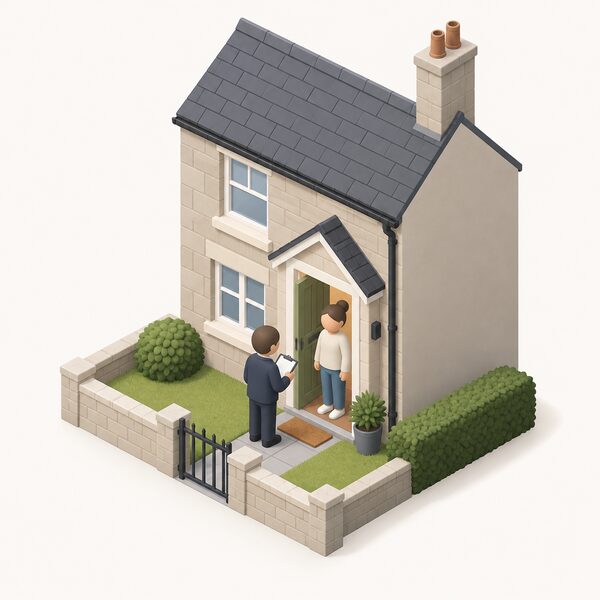
The advice covers how to use energy in the home more efficiently, information on switching energy supplier, referrals for benefit checks, and home visits from HES Energycarers who can assess eligibility14. The Scottish Government funds Home Energy Scotland to provide impartial advice and support to fuel poor households covering all four drivers of fuel poverty15. Government strategy has also set out growing advice services and support to access funding and finance16.
What the service does not do is install, quote for work, or name a preferred company. Where a scheme requires accredited work, the requirement is for TrustMark approval rather than a named firm: the actions taken, such as requiring TrustMark approval, initially apply as a requirement for the Home Energy Scotland loans and cashback scheme17. That is a quality gate on the installer, not a recommendation of one.
There is a boundary with supplier complaints. Energyadvice.scot runs a free service for Scottish citizens with questions about their energy supplier, wanting to understand their supplier's complaints process, or with problems with their energy bills18. Ofgem sets out the separate route for complaining about a supplier or network operator18. Home Energy Scotland's own advice is not the place for a billing dispute.
"Home Energy Scotland, funded by the Scottish Government, provides free and impartial advice and support to help you stay"
The practical expectation is a conversation about the property and the household's circumstances, followed by signposting. Advice is tailored, which is why third-party contact needs consent.
How to get advice: phone, online, WhatsApp and home visits
The main route is the phone. Home Energy Scotland can be reached free on 0808 808 22827. Phone lines are open Monday to Friday 8am to 8pm, and 9am to 5pm on Saturdays8. Advisors can be contacted on behalf of someone else, but the service needs that person's permission so it can give them the best, tailored advice for them13.
Beyond the phone, the service runs a network of advice centres across Scotland13. It has offered a virtual tour format, where an advisor talks a householder through ways to make savings in different areas of their home over the phone16. It also publishes a Funding Finder to search for funding and support on improving a home's energy efficiency, reducing energy bills and making a home warmer19. Local authority pages point residents to the same service for free advice on improving the energy efficiency of their home19.
For households whose issue is a supplier rather than a measure, Energyadvice.scot is the parallel route: a free service for Scottish citizens, reachable on 0808 196 8660 or through its webchat20. Heat network customers are directed to the same webchat function or phone number22.

The Home Energy Scotland Grant and Loan: up to £7,500, or £9,000 in rural and island homes
The Home Energy Scotland Grant and Loan Scheme provides grants and loans to all domestic owner-occupiers in Scotland to install clean heat and energy efficiency measures4. It provides homeowners in Scotland a grant, interest free loan or a combination of both23. The scheme launched in December 20225, and an earlier iteration launched in 20225.
The published figures do not agree, and both should be read with care. Independent guidance dated 20 September 2026 gives a grant amount of £7,50019. Separate scheme rules dated 17 September 2026 give a figure of up to £18,0008. A household should treat the figure quoted at application as the one that applies.
There is a distinct rural and island strand. For households in island and remote rural areas connecting to local district heat networks, grants of up to £9,000 together with loans are available24. Applications for that heat network connection grant support opened in December 202525.
The loan side is not a commercial credit product. Home Energy Scotland loans are interest-free loans funded by the Scottish Government, available where the Warmer Homes Scotland grant level is insufficient to cover the cost of measures26. Repayment is in affordable instalments following a financial assessment as part of the loan application process8.
| Element | Detail | Source |
|---|---|---|
| Grant, general guidance | £7,500 | 19 |
| Grant, scheme rules | up to £18,000 | 8 |
| Rural and island heat network grant | up to £9,000, with loans | 24 |
| Loan type | Interest free, Scottish Government funded | 26 |
| Repayment | Affordable instalments after financial assessment | 8 |
| Eligibility | All domestic owner-occupiers in Scotland | 4 |
Warmer Homes Scotland and other funding the service unlocks
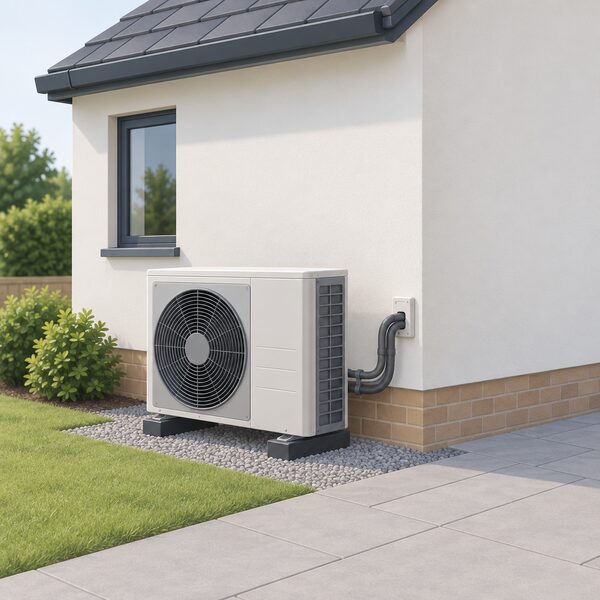
Warmer Homes Scotland is funded by the Scottish Government and offers funding and support to eligible households struggling to stay warm and keep on top of energy bills7. It helps households in, or at risk of, fuel poverty improve their heating and energy efficiency6. It has been operating since September 2015 and has helped more than 39,000 households throughout Scotland4.
The scheme is fully funded for those who qualify. Under Warmer Homes Scotland, energy efficiency measures and a heat pump can be installed with all the work planned and carried out for the household, fully funded by the Scottish Government, if certain criteria are met27. That is a materially different proposition from a grant contribution: the work is arranged and paid for.
Where the Warmer Homes Scotland grant level is insufficient, the interest-free Home Energy Scotland Loan is the fallback26. The Home Energy Scotland Scheme also offers grants to homeowners to install heat pumps28.
Local authority schemes run alongside. West Lothian Council lists Energy Efficient Scotland Area Based Schemes8, and Edinburgh Council directs residents to financial help for energy efficiency and low carbon heating improvements19. Argyll and Bute lists the Home Energy Scotland Grant and Loan as providing interest free loan funding for energy efficiency measures or to install renewable measures such as heat pumps or battery storage, with grant funding possibly also available7.
Who the service works with: NHS, local authorities and referral partners
Home Energy Scotland does not work alone. It supports events, shares resources, offers free training and workshops, and invites organisations to refer people who need support through a secure online portal13. That referral model is how households who would never phone an energy advice line on their own reach the service.
Local authorities are the most visible partners. West Lothian, Edinburgh and Argyll and Bute all point residents to Home Energy Scotland for advice and funding routes8. The service is described by Argyll and Bute as a referral partner for area based scheme eligibility enquiries, providing free and impartial advice funded by the Scottish Government7.
Health and care routes matter for the fuel poverty strand. The Scottish Government funds Home Energy Scotland to provide impartial advice and support to fuel poor households covering all four drivers of fuel poverty15. Research into lived experience of fuel poverty in Scotland underpins that approach16. Home Energy Scotland also runs Energycarers who can make home visits and assess eligibility, alongside advice on efficient energy use, supplier switching information and referrals for benefit checks14.
The referral portal is the mechanism a support organisation uses. A housing officer, health visitor or advice worker can put a household forward, and the household then receives tailored advice. For a household already in contact with a council or a health service, that is often a faster route than starting from a search.
What to expect on timescales, payments and applications
The application process has published service standards. The Energy Saving Trust aimed to process applications within 15 working days where all paperwork was fully completed and supporting documentation was submitted, prior to 1 December 202329. In the reporting period from the start of October 2023 to the end of November 2023, 92% of applicants had their applications processed within 15 working days29. Monthly data from April 2025 to January 2026 has since been published10.
Once approved, there is a deadline on the work. Applicants have a set period of time to complete work and submit their claim, currently 9 months for the Home Energy Scotland Grant and Loan9. That window is the single most important date in the process: work not completed and claimed within it risks the award.
The application itself is the householder's. Installers supply quotes and specification details, and the scheme requires TrustMark approval for the work under the loans and cashback scheme17. Repayment of any loan element is in affordable instalments following a financial assessment as part of the application8.
A separate change is coming to the paperwork behind all of this. The Energy Performance of Buildings (Scotland) Regulations 2025 will adopt the UK Government's new Home Energy Model as the calculation methodology for producing domestic EPCs in Scotland30. The Scottish Government plans to bring the new Regulations into force in the second half of 2026, to align with the introduction of the UK Home Energy Model30, pending confirmation from the UK Government that the Home Energy Model will become available in the second half of 202630. For a household, that means the EPC underpinning a funding application may be produced on a different basis within the next year.

How Home Energy Scotland fits into household energy independence
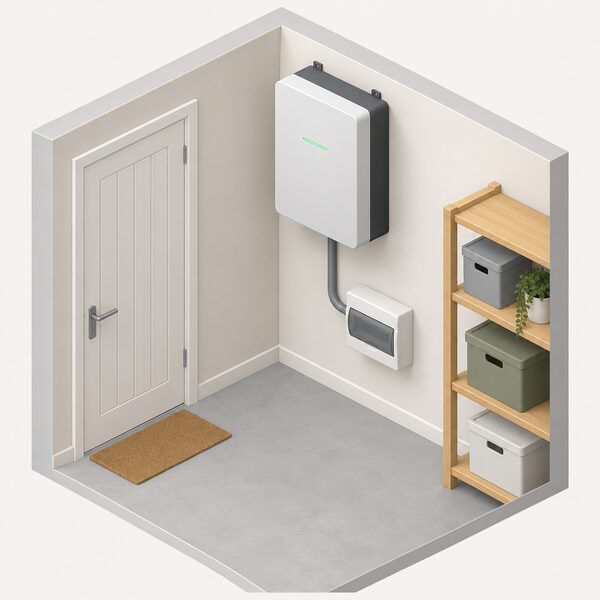
The service is an access route, not an energy source. It does not generate electricity, does not supply gas or heat, and does not change the physical dependence of a Scottish home on the grid, a supplier or a fuel. What it changes is the funding and information position, which is often what determines whether a measure happens.
The measures it unlocks do shift dependence. The Home Energy Scotland Grant and Loan can fund energy efficiency measures or the installation of renewable measures such as heat pumps or battery storage7. A heat pump moves a home off gas and onto electricity, which trades a gas supplier for an electricity supplier and the grid. Battery storage paired with generation reduces the share of electricity drawn at peak times, but does not remove the connection. Insulation reduces the demand itself, which is the only measure that lowers dependence without substituting one supply for another.
The remaining dependencies are clear. Advice is free but finite: the service advises and refers, and the household still has to choose and appoint an installer. Funding is awarded against criteria and a claim deadline of 9 months9. The loan element is repaid in instalments after a financial assessment8. And the underlying schemes are government policy, which can change: the grant figures published in September 2026 already differ between documents8.
For a household planning a route to lower bills and lower carbon, Home Energy Scotland is the sensible first call in Scotland, because it is the named route into the grant, the loan and Warmer Homes Scotland. It sits alongside the wider question of what to do first and in what order, which is covered in what should you do first to make a home more energy efficient and what order home energy improvements should be done in. Households outside Scotland have equivalent services, described in free home energy advice in England, free home energy advice in Wales and free home energy advice in Northern Ireland.
Sources30 cited
- Home Energy Scotland and the Energy Saving Trust, UK Parliament, 2026-05-13
- Helping avoid energy scams, Home Energy Scotland, 2024-06
- Heat in Buildings Strategy, Scottish Government, 2021-10-07
- Heat in Buildings progress report 2024, Scottish Government, 2024-10-10
- Home Energy Scotland Grant and Loan Scheme awards, Scottish Government, 2025-05-12
- Warmer Homes Scotland scheme headline data, Scottish Government, 2025-10-29
- Home energy efficiency advice, Argyll and Bute Council, 2026-09-17
- Energy Efficient Scotland Area Based Schemes, West Lothian Council, 2026-09-17
- FOI release: Home Energy Scotland Grant and Loan claim periods, Scottish Government, 2025-01-20
- Home Energy Scotland Grant and Loan Scheme: application and claim processing times, Scottish Government, 2026-03-12
- Green home loans, Scottish Government, 2017-05-02
- Written evidence on Home Energy Scotland, UK Parliament, 2019-01
- How we help people in fuel poverty, Home Energy Scotland, 2025-11
- Tackling fuel poverty in Scotland: strategic approach, Scottish Government, 2021-12-23
- Tackling fuel poverty in Scotland: strategic approach, Scottish Government, 2021-12-23
- Research into lived experience of fuel poverty in Scotland, Scottish Government, 2021-02
- Heat in Buildings quality assurance statement, Scottish Government, 2022-06-07
- Complain about your energy supplier or network operator, Ofgem, 2026
- Financial help for energy efficiency and low carbon heating, City of Edinburgh Council, 2026-09-20
- Energy terms explained, Ofgem, 2026
- Get help with your home or business energy bills, Ofgem, 2026
- Heat networks, Scottish Government, 2026-09-17
- Local and small scale renewables, Scottish Government, 2026-09-17
- Heat in Buildings Bill update from the Cabinet Secretary, Scottish Parliament, 2025-11-18
- Heat networks delivery plan review report 2026, Scottish Government, 2025-12
- Warmer Homes Scotland programme annual review 2018-19, Scottish Government, 2020-07-30
- Delivering net zero for Scotland's buildings consultation, Scottish Government, 2023-11
- The Heat in Buildings programme, Scottish Government, 2026-09-17
- FOI release: Home Energy Scotland Grant and Loan processing times, Scottish Government, 2024-04-03
- Energy Performance of Buildings (Scotland) Regulations 2025, UK Parliament, 2025-10-10