
In this comparison
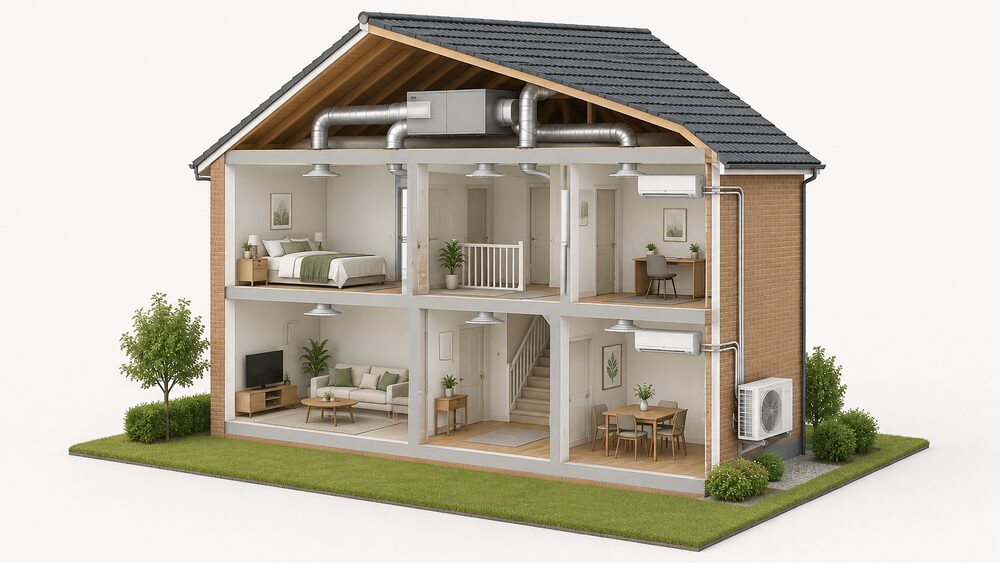
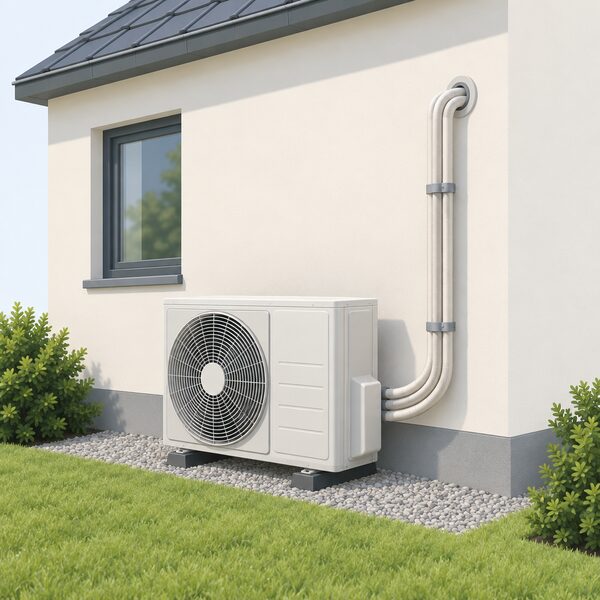
Ducted and multi-split air conditioning are the two routes to cooling more than one room in a UK home, and they solve the problem in opposite ways. A ducted system hides a single indoor air handling unit in a loft, ceiling void or utility space and pushes conditioned air through ducts to each room. A multi-split keeps the ductwork out of it entirely: one outdoor unit on a wall, roof or balcony, connected by pipework to two or more indoor units, each mounted in the room it serves1.
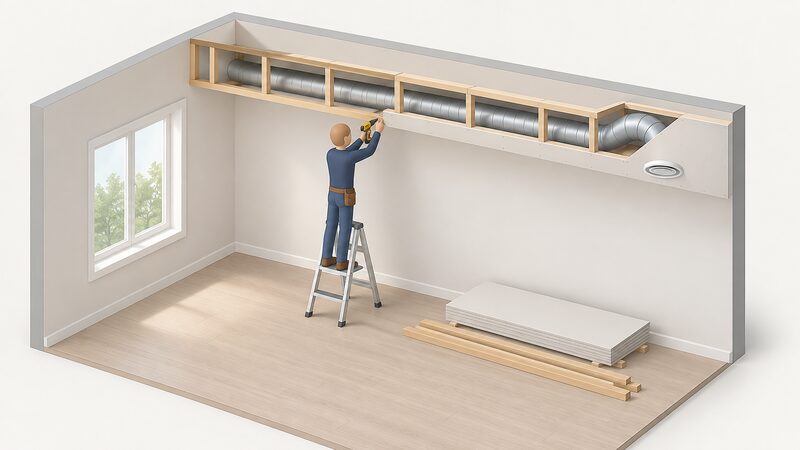
The practical difference is where the hardware lives. Ducted systems need ducts running through the building's interior ceiling and walls, with the indoor unit out of sight and connected to the ducting, which is why they suit new builds, homes that already have ducts, and refurbishment projects with a loft or false ceiling to work in1. Multi-split systems need no ductwork at all, which is why they are described as ideal for homes with several rooms that need individual temperature control without ductwork, and for buildings where ducted systems are not suitable1.
On capacity, a multi-split outdoor unit typically serves two to five indoor units, and Daikin's Multi+ Class 90 and 5 Port Multi+ Class 68 units each connect up to four5. On running cost, a multi-split or ducted system rated at 1 to 5 kW is put at £0.26 to £1.31 per hour, based on the July 2026 Ofgem price cap of 26.11p per kWh8. Neither figure separates the two system types, so the choice turns on the building, the number of rooms and how the household wants to control them.
Ducted vs multi-split: the short answer
The short answer is that ducted suits a whole-home installation where a ceiling void or loft exists, and multi-split suits a room-by-room installation where it does not. Hitachi's guidance puts ducted air conditioning as ideal if a home already has ducts fitted, for new builds, or for homeowners who want to control the climate of the entire house, and states it is not appropriate for small apartments, registered buildings or smaller budgets1. The same guidance describes a multi-split as one outdoor unit connected to two or more indoor units, and places it as the right choice for people who live in buildings where ducted systems are not suitable but who still want multi-room cooling1.
That split in suitability is the whole decision in miniature. Ducted systems concentrate the equipment in one hidden location and distribute air; multi-split systems distribute the equipment itself, with an indoor unit in each room and refrigerant pipework running between them and the single outdoor unit. Mitsubishi Electric describes multi-split systems as ideal for homes with several rooms that need individual temperature control without ductwork, and notes that a split system in its simplest form is one indoor unit connected to one outdoor unit4.
Neither is a like-for-like swap for the other. A household with a loft, a willingness to accept building work and a wish to condition most of the house is in ducted territory. A household in a flat, a listed building or a home with no void, wanting two or three specific rooms addressed, is in multi-split territory. The rest of this page sets out how each works, where each fits, what each costs and what each leaves the household dependent on.
How a ducted system works
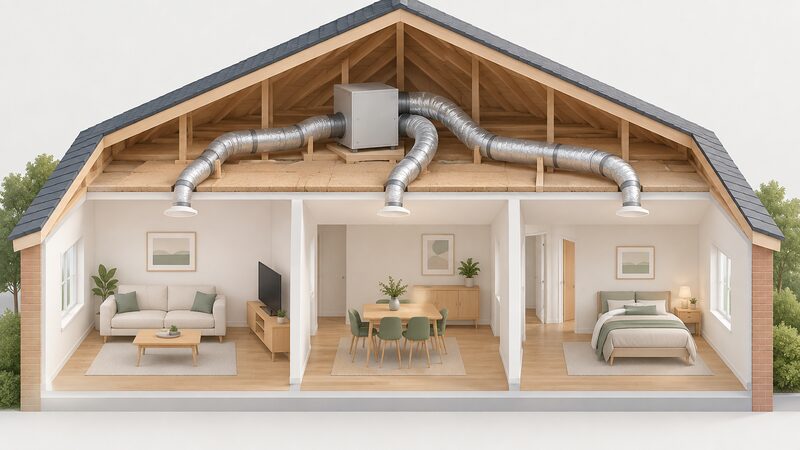
A ducted system moves air rather than placing a unit in each room. The Energy Saving Trust describes the principle for air-to-air heat pumps: ducts move air through slim pipes hidden in ceiling voids, and the heat pump warms the air in an air handling unit roughly the size of a boiler, normally in a loft or utility room10. The same arrangement cools in summer where the system is reverse cycle. Hitachi's description is consistent: ducted air conditioning requires ducts that run through the building's interior ceiling and walls, with the indoor unit located out of sight and connected to the ducting1.
The air handling unit is the single point of conditioning, and the ducting is the distribution network. Hitachi's airHome Ducted unit is designed to fit into attics or false ceilings, in houses or apartments, and is described as especially ideal for corridors and narrow spaces2. That is the shape of a ducted install: one concealed unit, a run of ducting, and outlets into each room served.
Ducted ventilation is a well-established building pattern in the UK, which is why the ductwork itself is not novel. Mechanical ventilation with heat recovery typically uses concealed ducting in ceiling cavities leading to a heat exchanger unit in a cupboard, utility room or sometimes a loft11. Centralised mechanical extract ventilation draws moist air from wet rooms through ducts to a central unit, often in a loft, and is described as complex and expensive to install, and only suitable where there is sufficient space for ductwork12. Ducted air conditioning inherits both the advantage and the constraint: the plant is out of sight, and the void has to exist.
How a multi-split system works
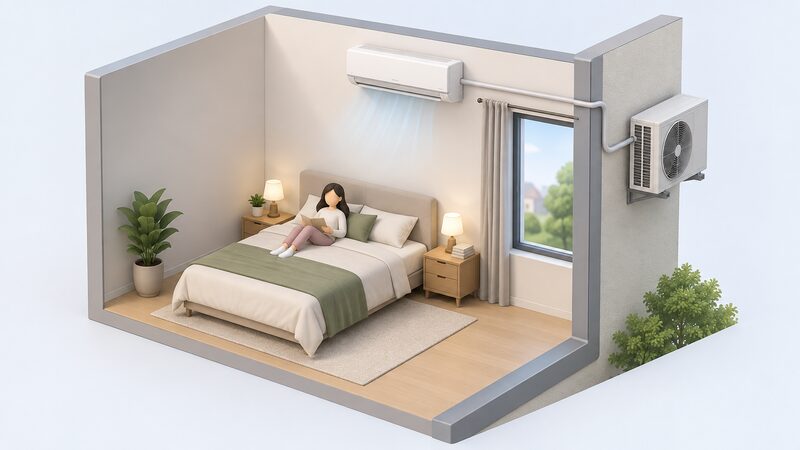
A multi-split is a split system scaled up. Hitachi describes a standard split system as essentially two halves, an indoor unit and an outdoor unit, with five main components working together to create the cooling cycle13. A single split is one indoor unit connected to one outdoor unit, offering targeted climate control for a single space14. A multi-split takes the same outdoor half and connects it to several indoor halves: one outdoor unit and several indoor units, all connected to the outdoor unit, cooling several rooms15.
The outdoor unit is the shared resource. Ferroli states that multi-split systems can climatise several rooms using a single outdoor unit16. Panasonic describes one outdoor unit for multiple rooms as ideal for whole-home comfort17. Midea frames the same architecture as individual room control, flexible installation and smart climate management18.
The critical operating rule is mode. Multi-split systems are designed for multiple rooms, running one outdoor unit with multiple indoor units, and all indoor units must be operating in cooling or heating mode simultaneously19. Individual temperature control is real, but it happens within one mode: rooms can be set to different setpoints, not to opposing duties. A household wanting one bedroom cooled while another is heated cannot do it on a single multi-split.
Where ducted systems fit: whole-home, hidden comfort
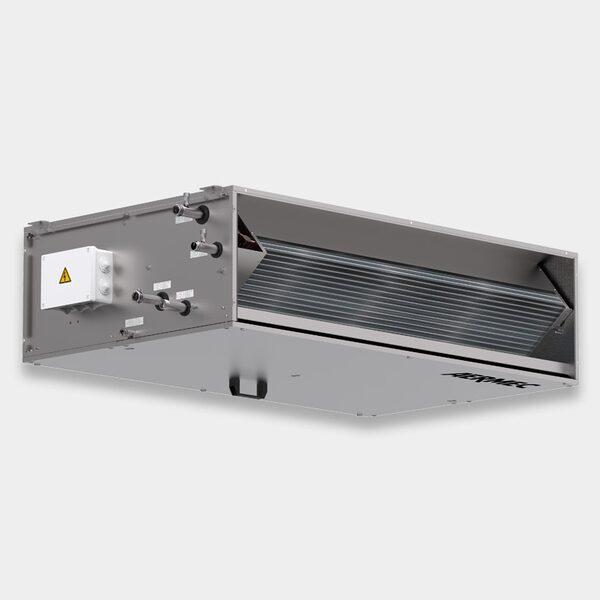
Ducted systems fit homes where the whole interior is the target and the equipment can disappear. Hitachi's guidance places ducted air conditioning as ideal for homeowners who want to control the climate of the entire house, and for new builds or homes that already have ducts fitted1. The airHome Ducted unit is optimised for refurbishment projects and fits into attics or false ceilings in houses or apartments, which widens the field beyond new build to any home with a usable void2.
The independent view is more cautious about the building envelope. The Energy Saving Trust notes that ducted systems are typically seen in energy efficient houses such as Passivhauses, and may not be suitable for older or larger houses with high heating needs10. That is a statement about heat load rather than cooling: a leaky, large or poorly insulated house asks more of an air-based system than a fabric-first home does. For cooling alone the constraint is gentler, but the same principle applies to how hard the air handling unit has to work to hold a temperature across a whole dwelling.
The zoning question is where ducted systems have improved. Hitachi's airHome Ducted is compatible with AIRZONE plenums, enabling independent temperature control across multiple rooms using a single outdoor unit, and the range lists individual temperature settings per room2. That closes much of the gap with multi-split on room-by-room control, though it does so through motorised dampers in the ducting rather than separate indoor units.
For energy independence, a ducted system is a single appliance doing the work of several. It draws electricity from the grid like any other air conditioner, and it depends on one manufacturer's control ecosystem and one installer's commissioning. What it removes is the visual and spatial cost of hardware in every room, and what it adds is a building fabric requirement: the void, the duct runs and the access for maintenance.
Where multi-split fits: room-by-room control
Multi-split fits homes where the rooms to be conditioned are known and finite, and where no ceiling void is available. Hitachi places multi-split as appropriate for both houses and apartments, and suitable where ducted systems are not suitable but multi-room cooling is wanted1. Netatmo describes the configuration as one outdoor unit and several indoor units, each adjustable independently, cooling several rooms15. Mitsubishi Electric's framing is the same: ideal for homes with several rooms that need individual temperature control without ductwork4.
The contrast with a single split is the point of the category. A mono-split has an indoor unit and an outdoor unit connected by a pipe and can only be used for cooling one room, the one in which the indoor unit is located20. A single split is designed for one room or location14. A multi-split extends that to several rooms without multiplying the outdoor units, which matters where external wall space, planning constraints or lease terms limit how many condensers can be mounted.
The applications go beyond bedrooms. Midea positions multi-split systems for residential, retail, office and light commercial applications18. Panasonic lists split air conditioners as efficient cooling and heating for individual rooms17. For a household, the practical shape is two to five rooms, each with its own indoor unit, all governed by one outdoor unit and one mode at a time5.
The independence picture is mixed. A multi-split gives each room its own control and its own setpoint, which is genuine autonomy inside the home. It also multiplies the number of indoor units that need filter cleaning and the amount of refrigerant pipework in the building, and it still depends on grid electricity, a single outdoor unit and the manufacturer's controls. Where the outdoor unit is shared, a fault takes every room with it.
Costs: installation and running
Published UK prices for multi-split hardware are available from one retailer. The electriQ iQool Multi-Split range is listed at £899.00 for a 2 x 9000 BTU system with heat pump, £999.97 for 2 x 12000 BTU, £1349.98 for a 3 x 9000 BTU system in black, and £2399.98 for a 5 x 12000 BTU system with heat pump22. These are equipment prices for the named models, not installed prices, and ducted systems have no equivalent published figure: ducted costs are installer-quoted, because the duct design, void and outlet count are specific to the building.
The general cost position is that a single-packaged air conditioner costs less than installing a system with multiple units, and that a split air conditioning system is a cost-effective solution with lower upfront costs and simpler installations compared to the alternatives13. A mono-split reverse cycle unit is generally more expensive than a monobloc reverse cycle air conditioner, especially given the outdoor unit and other components5. Multi-split sits above mono-split on hardware count, and ducted sits above both once building work is included.
Running cost has one published figure covering both system types. A multi-split or ducted system at 1 to 5 kW is put at £0.26 to £1.31 per hour, based on the July 2026 Ofgem price cap of 26.11p per kWh8. The range is wide because it spans a small system running one room to a larger system running several, and because the price cap itself is a moving reference.
| System | Published price | Basis |
|---|---|---|
| electriQ iQool Multi-Split 2 x 9000 BTU with heat pump | £899.00 | Equipment only22 |
| electriQ iQool Multi-Split 2 x 12000 BTU with heat pump | £999.97 | Equipment only22 |
| electriQ iQool Multi-Split 3 x 9000 BTU, black | £1349.98 | Equipment only22 |
| electriQ iQool Multi-Split 5 x 12000 BTU with heat pump | £2399.98 | Equipment only22 |
| Ducted system | Installer-quoted | No published UK price |
Installation and disruption to the home
Ducted installation is the more disruptive of the two because the distribution network has to be built into the fabric. Ducted air conditioning requires ducts that run through the building's interior ceiling and walls1. Hitachi's airHome Ducted fits into attics or false ceilings, which is the route in for a retrofit: a false ceiling or bulkhead creates the void the ducting needs2. Where a home has neither a loft nor a void, that construction is the project.
The building regulations context matters here. Where an existing house has air bricks, ducting should be provided to allow air through the solid floor and into the void under the existing house, with air bricks placed in the new wall23. Where a pitched roof is insulated at ceiling level, care must be taken to ensure reliable ventilation pathways are created, normally at eaves and ridge level, or via cross-ventilation using low level ventilation on more than one side24. Duct runs through a roof space interact with insulation and ventilation, and that is a design task, not a drilling task.
Multi-split installation is less invasive but not trivial. The disadvantages listed for multi-split air conditioning are complex and potentially expensive fitting work, outdoor units that can be noisy, and a high purchase price15. The outdoor unit is typically mounted on an outside wall, the roof or even a balcony25. Pipework still has to run from each indoor unit to that single outdoor point, and refrigerant work is regulated.
Efficiency and zoning: which wastes less
On efficiency, the multi-split argument is about consolidation. Mitsubishi Electric states that a multi-split is more energy-efficient than using several separate units, as it uses one outdoor unit for multiple indoor units, reducing overall energy consumption and maintenance costs compared to multiple single-split systems4. That is a maker's claim for its own category, and it is a fair statement of the physics: one compressor serving several rooms avoids duplicating the most expensive and least efficient part of the system.
The independent position on split systems generally is that they can be more efficient because some of the heat transfer takes place inside the building where it is warmer27. Split units are described as quieter, sleeker and more efficient at cooling than portables, and as known to be very energy efficient25. Panasonic lists split air conditioners as efficient cooling and heating for individual rooms17.
Zoning is where the two diverge in operation. A multi-split gives each indoor unit its own control, so an unused room can be left off entirely15. A ducted system conditions from one air handling unit, and without zoning dampers it tends to condition the whole served area. Hitachi's AIRZONE compatibility addresses this by enabling independent temperature control across multiple rooms from a single outdoor unit2. Where zoning is fitted, ducted can match multi-split on avoiding waste; where it is not, ducted conditions the zone as a whole.
The wider point is that neither system fixes a leaky building. In a pre-1914 mid-floor flat case study, draught proofing and upgrading windows and external door alone gave about 10% and 16.5% reduction in energy use and carbon emissions respectively28. Fabric measures reduce the load the air conditioning has to meet, whichever distribution method is chosen.
"Multi-split systems: These use a single outdoor unit to connect to multiple indoor units (typically two to five), allowing"
Heating, controls and what each system leaves you dependent on

Both systems can heat where the units are reverse cycle. A multi-split reverse cycle air conditioner consists of several indoor units, all connected to an outdoor unit, and each unit can be controlled individually, cooling and heating several areas in the house21. Daikin's Multi+ range goes further: it is described as a heat pump system that looks after heating, cooling and hot water from one outdoor unit, with the Class 90 and 5 Port Class 68 units each connecting up to four indoor units6. That is a whole-home proposition rather than a cooling-only one.
The heating comparison with a boiler is a hybrid question. In hybrid heating systems, the heat pump alone can be used in milder weather and the boiler can take over, or even run in parallel to the heat pump, in the winter when the building's heat load is at its maximum29. Air-to-air systems can also offer cooling, which is the reverse-cycle advantage over a wet heating system30. A ducted or multi-split air-to-air system therefore covers both seasons, but it does not produce hot water unless it is a Multi+ type arrangement.
Maintenance is modest but not zero. Keeping filters clean and ensuring the outdoor unit is clear of obstructions keeps a system running efficiently14. The tasks listed for homeowners are washing the filter, removing dust, and checking for mould and other build-ups1. Netatmo states an air conditioner filter needs cleaning about once a year9. Ductwork itself has no published cleaning interval in the guidance reviewed here, which is a gap a household should raise with its installer at commissioning.
What remains is dependence. Both systems run on grid electricity, both depend on a manufacturer's controls and spares, and both depend on a certified installer for refrigerant work. A ducted system adds dependence on the building's void and on access to the air handling unit for servicing. A multi-split adds dependence on one outdoor unit that serves every room, and on the mode rule that ties all indoor units together19. Neither removes the household from the grid; both reduce how much of the home depends on opening windows and moving air by hand.
Sources30 cited
- Air conditioner buying guide: which one is right for your home, Hitachi Air Conditioning, 2026-09-17
- airHome Ducted, Hitachi Air Conditioning, 2026-09-17
- RAD Ducted, Hitachi Air Conditioning, 2026-09-17
- How to choose the right home air conditioning, Mitsubishi Electric Living Environmental Systems, 2025-04-07
- Air-to-air heat pumps: a low-carbon solution for UK homes, Nesta, 2026-02-17
- Daikin Multi+ Class 90 Split Air Conditioner, Quiet Mark, 2026-09-17
- Daikin 5 Port Multi+ Class 68 Split Air Conditioner, Quiet Mark, 2026-09-17
- Is air conditioning worth it in the UK?, Uswitch, 2026
- Reverse cycle air conditioner, Netatmo, 2026-09-20
- Air-to-air heat pumps, Energy Saving Trust, 2026-09-11
- Mechanical ventilation with heat recovery, Centre for Sustainable Energy, 2026-07
- Ventilation, Centre for Sustainable Energy, 2025-07
- How does air conditioning work, Netatmo, 2026-09-17
- Easy-Fit single split air conditioning systems, Cool Easy, 2026-09-23
- Home air conditioning, Netatmo, 2026-09-20
- Air conditioners, Ferroli, 2026-09-17
- Domestic ranges, Panasonic Air Conditioning, 2026-09-17
- Multi Split Systems, Midea UK, 2026-09-17
- FAQs, Cool Easy, 2026-09-23
- Home air conditioning, Netatmo, 2026-09-20
- Reverse cycle air conditioner, Netatmo, 2026-09-20
- electriQ iQool Multi-Split air conditioners, electriQ, 2026-09-23
- Building regulations: flooring, Planning Portal, 2026
- Guide to the conversion of traditional buildings, Scottish Government, 2026-08-10
- Guide to air conditioning units, EDF Energy, 2024-05-22
- Building Standards 2017 domestic: ventilation, Scottish Government, 2017-03-01
- Air source heat pumps, Energy Saving Trust, 2026-07-16
- How heat Scotland's homes, Nesta, 2021-09-09
- Your home guide to heat pumps, OFTEC, 2026-09-17
- Air source heat pump, MCS Certified, 2026-07-24
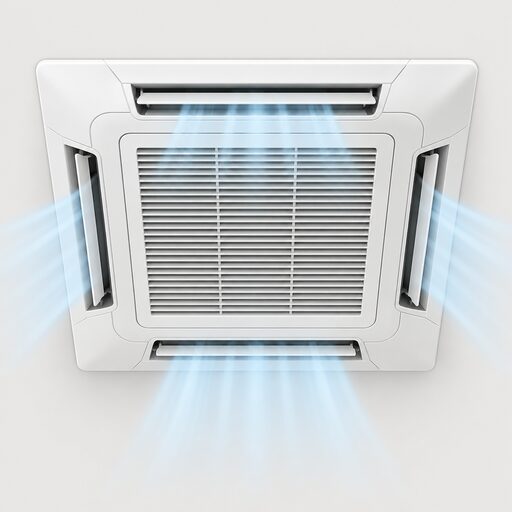 Ducted and Cassette ACDucted air conditioning hides the unit in a loft or ceiling, while a ceiling cassette sits in the ceiling with only vents on show.
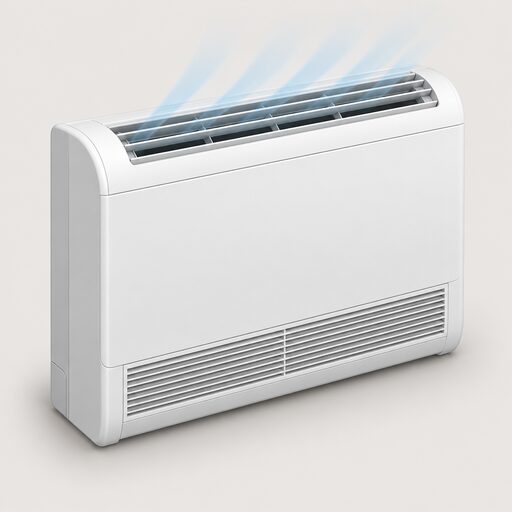 Split Air ConditioningA split air conditioning system cools or heats one room using an indoor unit and an outdoor unit linked by pipes.
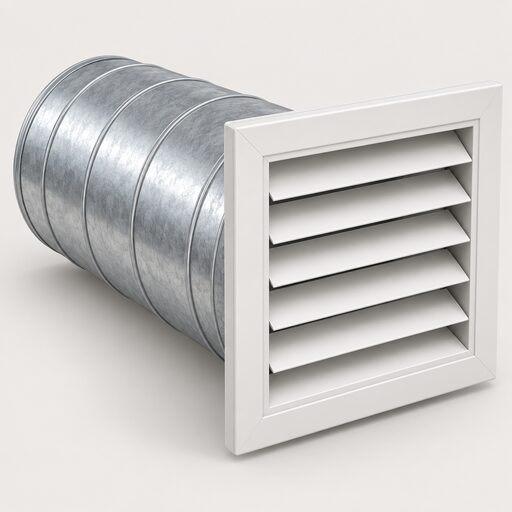 Types of Air ConditioningPortable, wall-mounted, multi-room or ducted: which air conditioning suits your home?
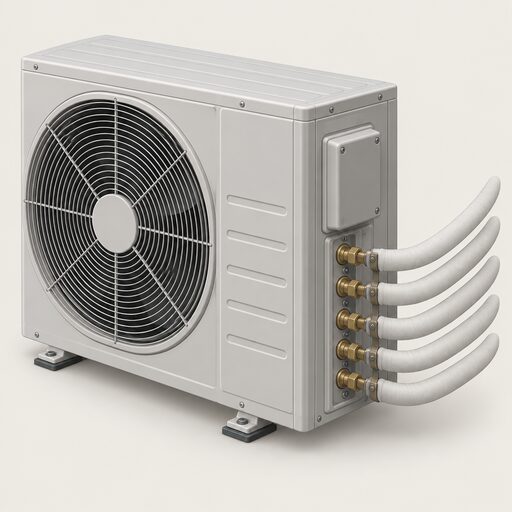 Multi-Split ACHow multi-split air conditioning works when one outdoor unit serves several indoor units: how many rooms one system can serve, independent room control, efficiency, outdoor unit size and sound, planning rules in England and Scotland, servicing and lifespan, the 0% VAT position and how it compares with separate single splits.
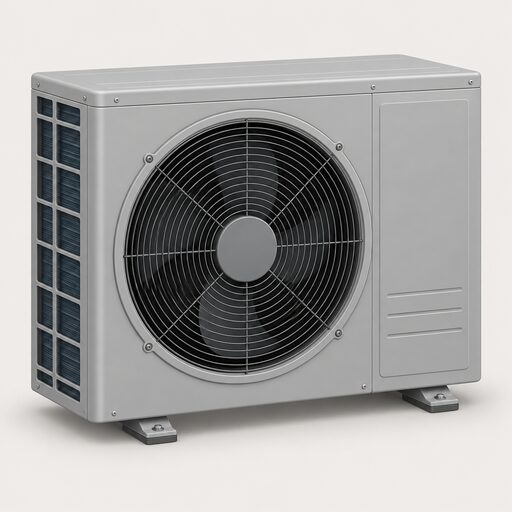 Cooling and Heat PumpsCan an air conditioner heat your home as well as cool it?
 Monobloc and Split Heat PumpsWhich heat pump suits your home, a monobloc or a split?