
In this answer
Short answer
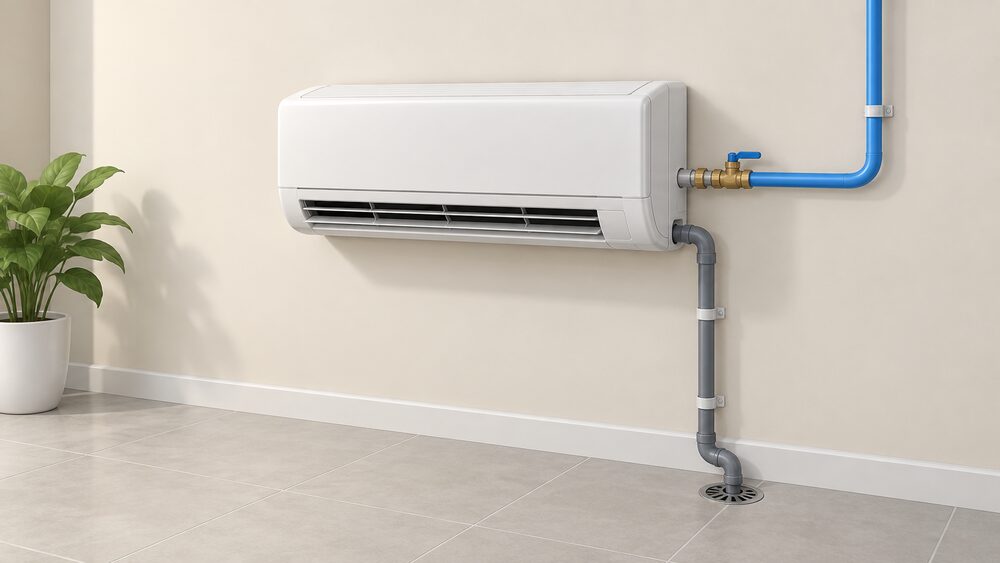
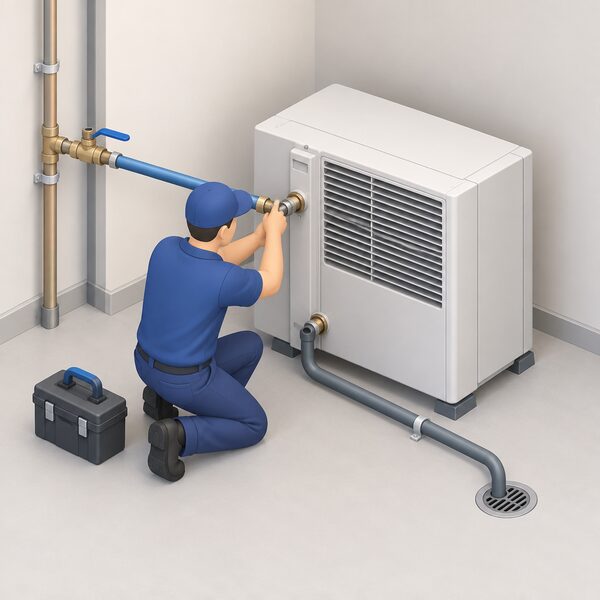
A water-cooled air conditioner with no outside vent is a genuine product type, but it is not what most UK buyers end up with. A true water-cooled unit rejects the heat it removes from a room into water, which then goes to a drain, so there is no hot air duct and no outdoor condenser. That is why it needs a mains water supply and a drainage route, and why it is normally specified by an installer rather than bought off a shelf.
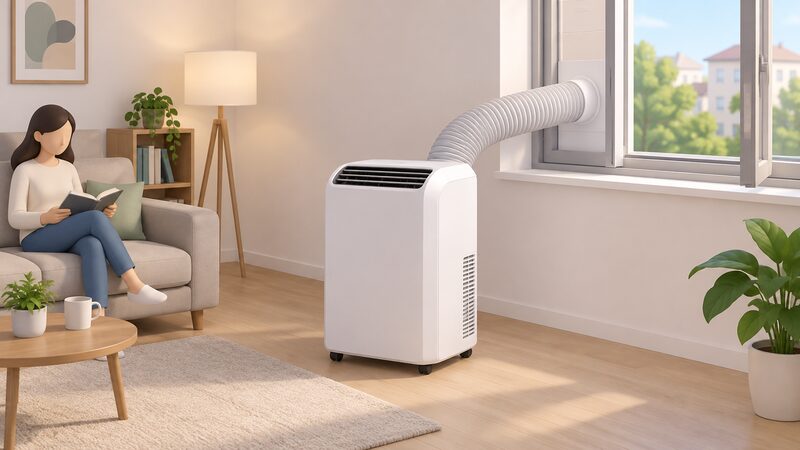
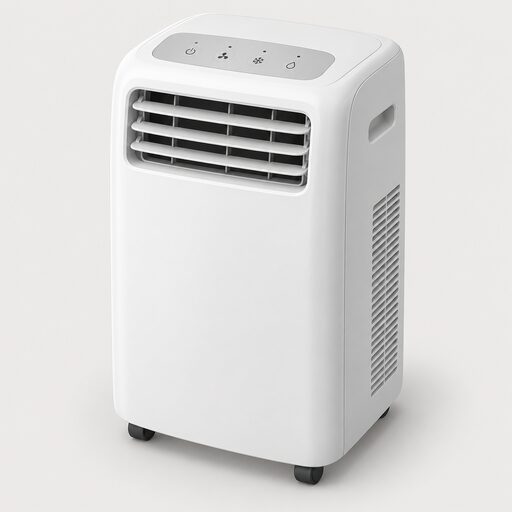
The units most often described as ventless are monobloc or packaged air conditioners. A monobloc or single-packaged model has only one indoor unit and no outdoor unit, with the refrigerant liquid and the main components, including the evaporator and compressor, contained in the unit, expelling hot air via a duct1. So the heat still leaves the room, just through a duct rather than a refrigerant pipe to an outdoor unit. Portable air conditioners are the same idea in a wheeled case, and they need to be properly vented to the outside using a special fitting for the window2.
For a household, the distinction matters for energy independence. A monobloc unit keeps you off a fixed installation and off an installer's schedule, but it still draws grid electricity and still depends on a manufacturer for parts and warranty. A water-cooled unit adds a dependence on mains water and drainage on top of that. Neither type removes the grid connection, and neither stores cooling.
What a water-cooled air conditioner is, and how it differs from an air-cooled unit
Every air conditioner moves heat rather than creating cold. An air-conditioning unit works in a similar fashion to a fridge or freezer at home, containing refrigerant which flows around a circuit5. The difference between an air-cooled and a water-cooled unit is where that heat is finally dumped. An air-cooled unit, which is nearly every domestic model sold in the UK, rejects it to the outside air through a condenser coil. A water-cooled unit rejects it into a stream of water that runs to waste.
That single design choice changes everything about the installation. A monobloc or single-packaged model has only one indoor unit and no outdoor unit, with the refrigerant liquid as well as the main components contained in the unit, expelling hot air via a duct6. The duct is the air-cooled answer to the same problem. A water-cooled unit replaces the duct with a water connection and a drain, which is why it is rare in homes and common in commercial settings where chilled water is already piped around a building.
The nearest domestic parallel is the sealed system boiler, where the main difference is that they don't have a cold water tank2. Both examples show the same principle: removing one component from the conventional arrangement changes what the rest of the system must do. In a water-cooled air conditioner, the water circuit takes the place of the outdoor condenser, and the household takes on the plumbing that the outdoor unit would otherwise have avoided.
Why no outside vent is needed: where the heat goes instead
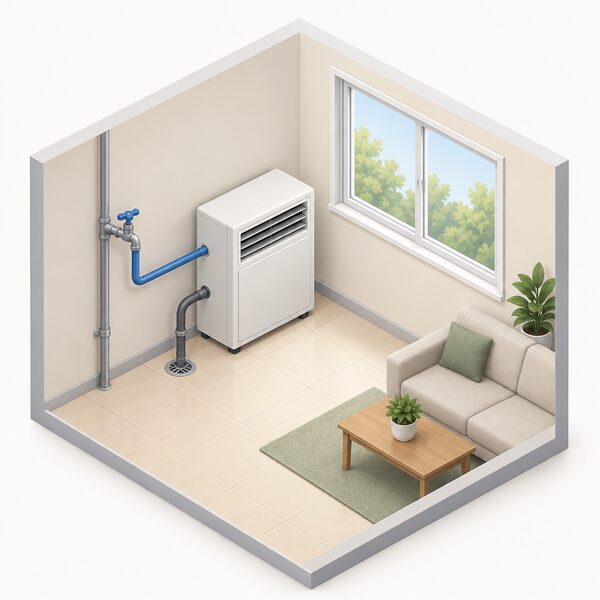
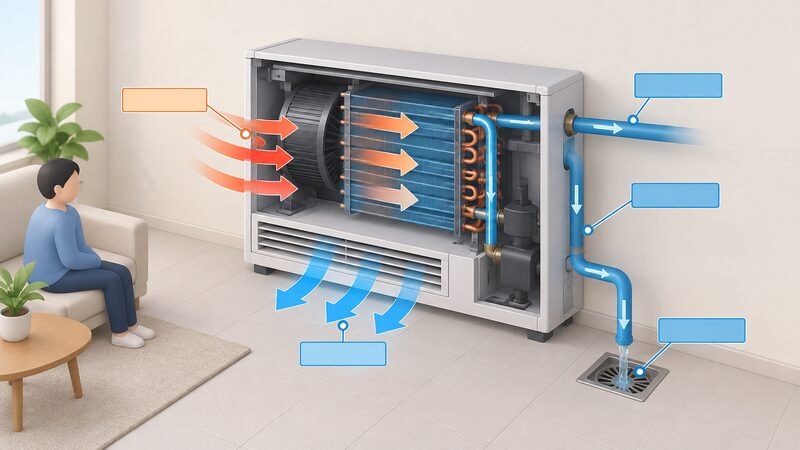
In a water-cooled unit the heat removed from the room is absorbed by water and carried away down the drain. There is no hot air to discharge, so there is no duct, no window kit and no wall penetration for air. The trade is a permanent water supply and a waste connection, which is a bigger intervention than a window fitting in most flats.
Air-to-air systems solve the same problem differently. Air-to-air heat pumps typically use fans to circulate warm air around the home and cannot be used to heat water7. They do not blow fresh air into the room; instead they recirculate the existing air7. That recirculation is why an air-to-air unit can cool a room without a fresh air supply, and it is also why it cannot ventilate a home on its own.
Ventilation is a separate job. Natural ventilation supplies air to and removes air from a building without the use of mechanical equipment such as fans8. A well insulated home is usually easier to keep cool, with ventilation by opening windows at night and using extractor fans and vents9. So a household choosing a ventless cooling route still needs a ventilation strategy, whether that is opening windows, trickle vents or an extractor fan.
What a water-cooled unit needs in your home: a water supply and drain
A water-cooled air conditioner needs two things a standard unit does not: a mains water supply and a drain. Standard air conditioners and portable air conditioning units do not require a water connection, because air conditioning is a sealed system running refrigerant3. That is the baseline against which the water-cooled option should be judged, and it explains why the plumbing is the deciding factor rather than the cooling performance.
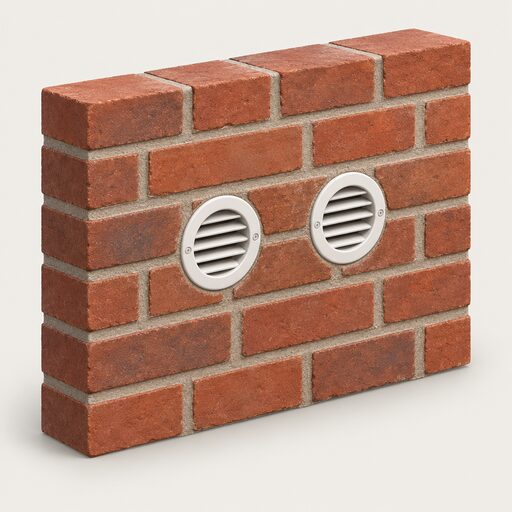
The alternative route to cooling without an outdoor unit is a monobloc air-to-air heat pump. They don't need an outdoor unit, just a couple of holes drilled through an external wall11. That is a smaller intervention than a water supply and drain, and it keeps the refrigerant circuit sealed and factory-charged. A packaged air conditioner needs no plumbing work or outdoor units, which makes it suitable for tenants or temporary spaces1.
Where a system does need outdoor space, the requirement is specific. Air-source heat pumps require an external unit roughly similar in size to an air conditioning condenser, with good airflow and minimal obstruction12. Ground source heat pumps avoid that, and unlike air source heat pumps, ground source heat pumps don't need an outdoor unit13. Water source heat pumps require space for a compressor and controls, plus an internal unit that is often smaller than a standard boiler14.
For a flat with no outside access, the practical options narrow to a monobloc or packaged unit, or a portable unit with a window fitting. Each keeps the household dependent on grid electricity and on a manufacturer for servicing and parts.
Cooling performance and water use in practice
No published water consumption figure exists for domestic water-cooled air conditioners, so any per-hour figure would be invented. What is published is the cooling demand side of the equation. In analysis of UK solar output during a heatwave, the equivalent of a 3 kW air conditioning unit can be run for 5.1 hours a day, rounded down to 5 hours4. That is a modelling assumption about how long homes run cooling, not a water figure, and it is the closest published anchor for how a domestic cooling load is sized.
Water does cool air, but by evaporation rather than by a refrigeration circuit. Air coolers use water to slightly cool air and are more effective than fans in dry conditions15. Water has a natural cooling effect through evaporation, and even a small pond can lower surrounding air temperatures16. Those effects are real but modest, and they are not the same as the heat rejection a water-cooled air conditioner performs.
On the heating side, water circuits can reach high temperatures. The maker states that the Panasonic Aquarea M-series delivers up to 75 °C flow temperature without relying on an electric heater in many operating conditions, with an average application climate predesign output of 14.0 kW17. That is an air-to-water heat pump rather than an air conditioner, and it shows what a water-based circuit in a home is capable of when it is designed for it.
Water-cooled versus portable and split air conditioners: which suits which home
The three routes suit different homes, and the deciding factors are outdoor space, plumbing and room size rather than brand.
| System | Outdoor unit | Plumbing | Typical fit |
|---|---|---|---|
| Water-cooled unit | None | Water supply and drain | Rare in homes; needs installer design |
| Monobloc or packaged | None | None | Small areas, tenants, temporary spaces1 |
| Portable | None, but needs a window vent | None | Rooms where a window fitting is possible2 |
| Split | One outdoor unit per system | Condensate drain only | Homes with external wall access18 |
Packaged air conditioners generally have less cooling capacity than split systems, and a single-packaged air conditioner is ideal for small areas of up to 30 m21. Split air conditioning is divided into an outdoor unit and one (mono-split) or several (multi-split) outdoor units18. That configuration is what gives splits their greater capacity, and it is also what rules them out where there is no external wall or landlord consent.
Air-to-air heat pumps sit alongside these as a cooling option. They offer the added benefit of supplying air conditioning, keeping your home cool during the summer19. An air-to-air heating and cooling system can be especially cost-effective if you have a smaller house or flat with relatively few rooms, especially homes that overheat in warm weather11. For a flat that overheats, that is often the more capable route than a portable unit, provided the installation is possible.
Where a water-cooled unit falls short: running costs and plumbing
The running cost picture is the weakest part of the case for any small cooling unit, and water-cooled units have no published domestic running cost at all. What is published is comparative. Portable units use 30 to 50% more electricity than fixed systems2. Fans are far cheaper to run than air conditioning, and air conditioning increases electricity use and can add significantly to summer energy bills16. Those two figures frame the whole decision: a fixed system is more efficient than a portable one, and doing without mechanical cooling is cheaper than either.
Efficiency also depends on the building. Air source heat pumps are less efficient in poorly insulated homes20. The same principle applies to cooling: a well insulated home is usually easier to keep cool9. Insulation and shading reduce the load the unit has to meet, which reduces both running cost and the size of unit required.
Plumbing is the second limit. A water-cooled unit needs a supply and a drain, and that work is quoted per property rather than published as a standard price. Where a system does need an outdoor unit, planning rules apply: air source heat pump installations are covered by permitted development subject to conditions, and the unit must not be used solely for cooling purposes to fall within them21. That condition matters for anyone considering a heat pump primarily as an air conditioner.
The wider point for energy independence is that none of these options generates cooling. A monobloc unit removes the outdoor unit and the installer visit, but it still draws grid electricity and still relies on a manufacturer for parts. A water-cooled unit adds a water and drainage dependence on top. Households wanting to cut that dependence look first at shading, night ventilation and insulation, and treat mechanical cooling as the last step rather than the first.
Sources21 cited
- Packaged air conditioning, Netatmo, 2026-09-20
- How to keep your home cool in hot weather, Centre for Sustainable Energy, 2026-07
- Air conditioning FAQs, Cooleasy, 2026-09-23
- UK solar homes power equivalent of five hours of daily air con use during heatwave, Ember, 2026-06-21
- The refrigerant cycle: what is it?, Daikin UK, 2026-09-17
- Home air conditioning, Netatmo, 2026-09-20
- Air-to-air heat pumps, Energy Saving Trust, 2026-09-11
- Ventilation, BESA, 2026-09-20
- Make sure your home is energy efficient, Citizens Advice, 2026-09-19
- DIY draught-proofing, Centre for Sustainable Energy, 2026-07
- How a heat pump can cool your home, Which?, 2026-07-17
- Is your home suitable for a heat pump?, The CPA, 2026-02-18
- Air source heat pumps vs ground source heat pumps, Energy Saving Trust, 2026-07-16
- Everything you need to know about air source heat pumps, Plymouth Energy Community, 2025-09-02
- Summer energy tips, National Energy Action, 2026-08-13
- Make your home more comfortable in warmer weather, Plymouth Energy Community, 2026-09-20
- Panasonic Aquarea M-series 16kW WH-WDG16ME8 air to water heat pump, Quiet Mark, 2026-09-17
- How does air conditioning work?, Netatmo, 2026-09-20
- What it's really like to have a heat pump, Which?, 2025-09-22
- Air source heat pump, Plymouth Energy Community, 2026-09-20
- Planning permission: air source heat pump, Planning Portal, 2026-09-17
 Passive Cooling at HomeKeeping a home cool without air conditioning comes down to blocking heat before it gets in, then letting trapped heat out.
 Without an Outdoor UnitFlats and listed homes often cannot have a box on the outside wall, so how does air conditioning work with everything indoors?
 Cooling and Heat PumpsCan an air conditioner heat your home as well as cool it?
 Air Conditioning and HumidityExplains how air conditioners remove moisture as they cool, what dry or dehumidify mode does and how extraction rates are stated.
 Air Conditioning in FlatsExplains the lease, freeholder and landlord consents that govern fixed air conditioning in flats, and building safety points for higher-risk buildings.
 Using a Heat Pump for CoolingCan a heat pump cool your home in summer as well as heat it in winter?