
In this answer
Short answer
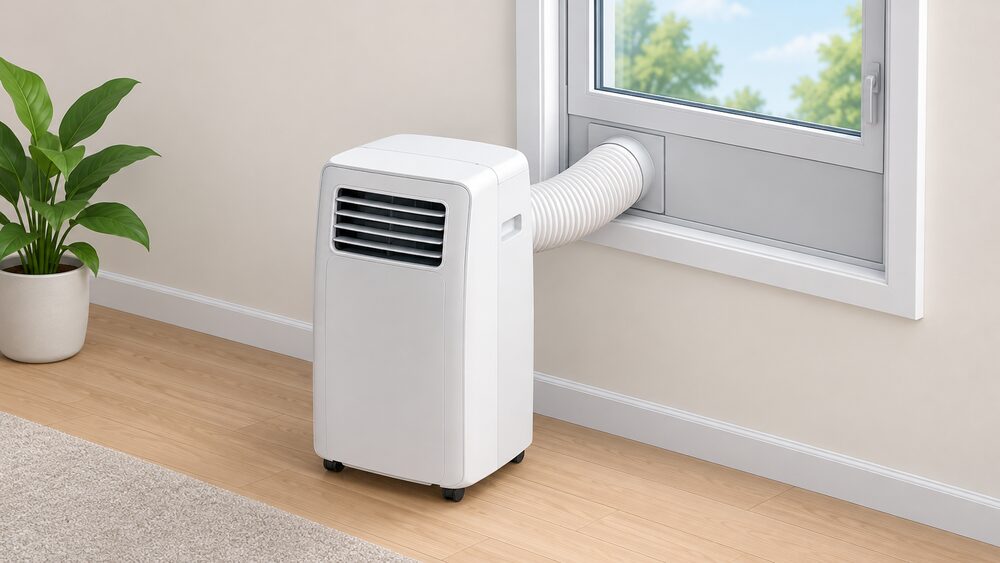
Yes. A portable air conditioner must be vented outside whenever it is cooling, because it does not destroy heat, it moves it. The unit takes warmth out of the room air and dumps it through the exhaust hose. If that hose ends inside the room, the heat returns and the room does not cool. Every maker instruction behind this guide says the same thing: all portable air conditioners must be vented out so the heat is removed from the room being cooled1.
The practical answer depends on the mode. In cooling mode the hose is essential. In heating mode, most heat pump portables still need it, because the unit continues to expel air through the vent2. Only fan mode escapes the requirement on at least one model, where the exhaust kit is needed solely for cooling3. Independent guidance is blunt about the alternative: a vent simply put through an open window lets heat back in, so the unit needs a proper fitting for the window4.
What follows covers why venting matters, how to do it with a hose, window kit or wall vent, the rules in heating mode, drainage and other running requirements, and how a portable compares with a fixed split system on cost and efficiency.
Why venting matters: the unit moves heat, it does not destroy it
A portable air conditioner works like a fridge in reverse. It absorbs heat from the room air, passes it through a refrigerant circuit, and rejects it to the outside through the exhaust hose. The cooling effect inside the room and the heat rejected outside are two ends of the same process. Block the exhaust and the process stalls: the heat has nowhere to go but back into the space it came from.
That is why the maker instructions are unanimous. The electriQ P16HP, P12C and P18HP pages all state that all portable air conditioners must be vented out so the heat is removed from the room being cooled1. The A2/EcoSilent12HPW page repeats the same wording8. This is not a manufacturer preference; it is how the appliance physically works.
Independent guidance from the Centre for Sustainable Energy adds the detail that matters in practice. Portable units need to be properly vented to the outside using a special fitting for the window, and if the vent is just put through an open window, heat comes back in4. The distinction is between an opening and a seal. An open window is a hole both ways.
There is a wider household point here. Ventilation is not the enemy of a comfortable home; some ventilation is good, both to reduce condensation and to ensure the safety of open fires, stoves and gas appliances9. The trick with a portable air conditioner is to ventilate deliberately, through a controlled exhaust route, rather than leaving a window ajar and hoping.
How to vent: hose, window kit and the openings that work
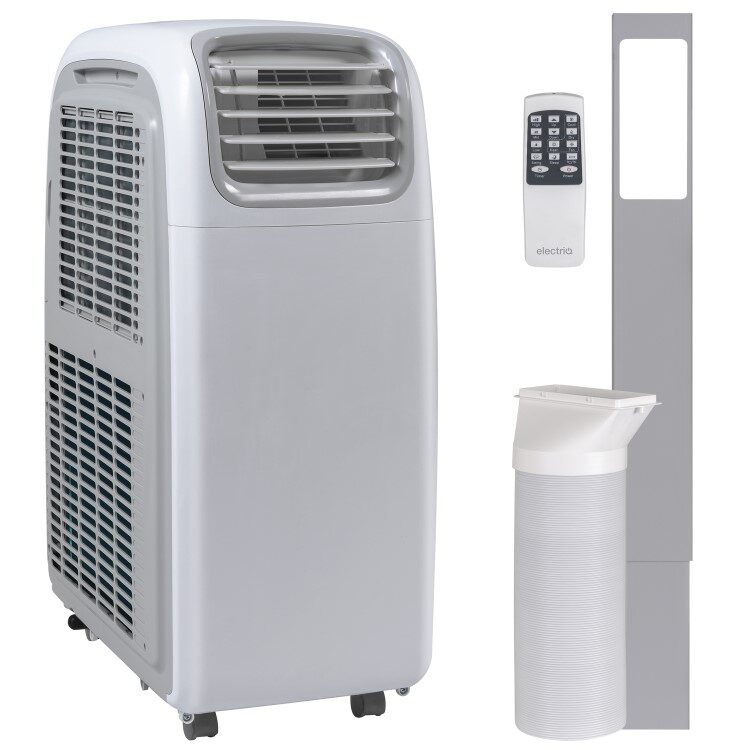
The exhaust hose is the core of the system. One electriQ model ships with a 1.5 m hose5, and the P12C exhaust hose matches a 150 mm (6 inch) wall vent kit or flange3. The maker recommends that the standard hose be used, because an extension can put additional strain on the unit3. A longer run also means more resistance to airflow, which reduces how much heat the unit can shift.
There are three common routes to the outside:
- Window kit. A fabric or rigid panel sits in the window opening with a port for the hose. The window closes onto the panel, so the exhaust leaves and the room air stays in. This is the route independent guidance describes as a special fitting for the window4.
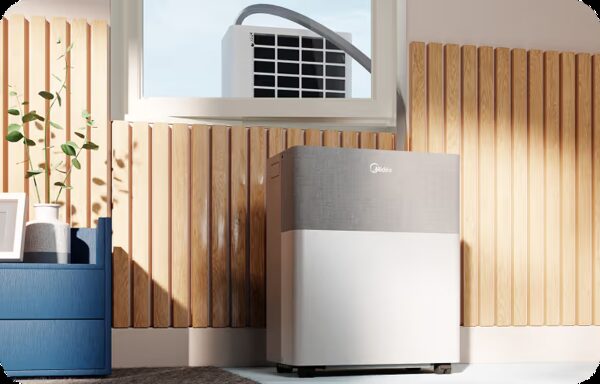
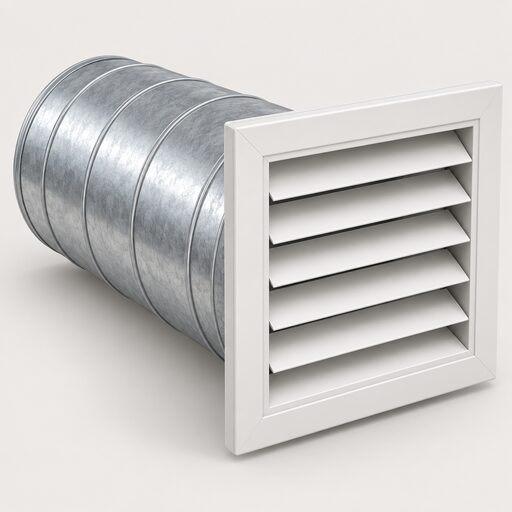
- Wall vent. A permanent 150 mm flange through an external wall, matched to the hose diameter3. This suits a room used regularly for cooling, and removes the need to open a window at all.
- Door with a sealing kit. The P18CW page lists a door with a sealing kit alongside a window, wall vent or suitable opening as acceptable routes10.
Whichever route is used, the principle is the same: the hose must discharge outdoors, and the opening around it should be closed as far as practical. A permanently open air vent, where one is fitted for other reasons, should be non-adjustable and positioned where it is unlikely to become blocked11. That is a building rule for fixed vents, but it illustrates the design logic: controlled openings, not random gaps.
Venting in cooling and heating mode: the hose is needed either way
This is where buyers are most often caught out. A portable air conditioner with a heat pump can warm a room as well as cool it, but it does so by reversing the refrigerant cycle, not by becoming a different appliance. The exhaust hose still has a job.
The electriQ EcoPlus10HPW page is explicit: the exhaust hose must always be vented outside, even when using heating mode12. The P18HP page says the model needs the vent hose whether cooling or heating, because it always expels air through the vent2. The P16HPW page states the unit must be vented externally when used in air conditioning (cooling) mode, using the supplied exhaust hose and window kit13.
The exception is fan mode. On the P12C, the exhaust and vent kit is only required when using the unit in cooling mode3. Fan mode simply circulates room air, so there is no heat to reject. That is a genuine distinction, but a narrow one: it applies to air movement, not to cooling or heating.
For heat pump portables generally, most models require venting through a window or suitable outlet when in cooling mode14. The pattern across the range is consistent: if the unit is changing the temperature of the room, the hose is in use.
| Mode | Vent hose needed? | Why |
|---|---|---|
| Cooling | Yes, on every model | Heat removed from the room must be rejected outside1 |
| Heating (heat pump models) | Yes, on most models | The unit still expels air through the vent2 |
| Fan only | No, on the P12C | No heat is being moved, only air circulated3 |
| Dehumidifier | Yes, and drainage may be needed | Condensate volume rises; the tank or drain hose comes into play5 |
Sealed rooms, drainage and other running requirements
A portable air conditioner is not a sealed appliance in the way a gas boiler can be. It draws room air across its coils and pushes it out through the hose, which means replacement air has to come into the room from somewhere. In a well-sealed modern home, that replacement air is pulled through gaps, trickle vents or an open door. In a very airtight room with no path for make-up air, the unit struggles.
This is the same principle that governs other household appliances. Gas appliances in bath or shower rooms must be of the room-sealed type15, and open flues require additional air vents in the room where the appliance is installed to re-supply fresh air16. A portable air conditioner is not a combustion appliance and carries no such safety requirement, but the airflow logic is comparable: an appliance that pushes air out needs air coming in.
Drainage is simpler than many buyers expect. Standard air conditioners and portable air conditioning units do not require a water connection6. Many portables are self-evaporating in cooling mode, so condensate is carried out with the exhaust air. A drain hose is needed only when the internal tank fills or in dehumidifier mode5. Where a drain hose is used, the maker states one with an internal diameter of about 13 mm (half inch) suits the condensate drain port5.
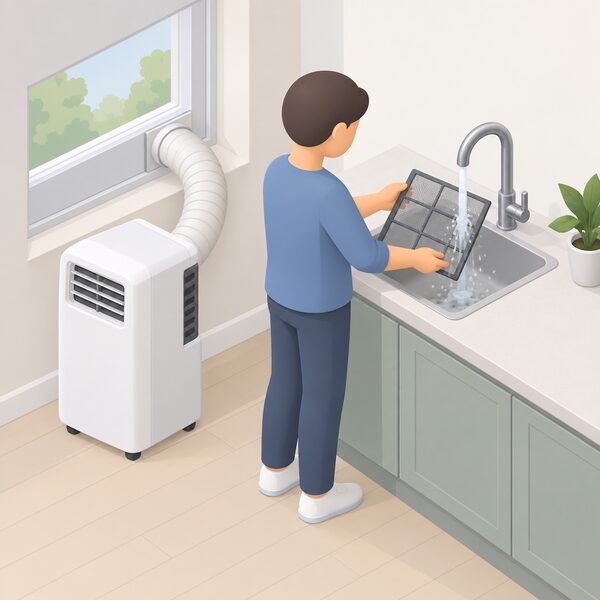
Servicing is light. Portable air conditioning units are not usually equipped with service valves, so they do not require full services, but the mesh filters require regular cleaning6. Vents should be kept clear and airflow should not be restricted by dust and fluff17. That is the whole maintenance regime for most households: clean the filters, keep the hose clear, and check the tank.
Portable vs split: cost, efficiency and what suits your home
The venting requirement is the visible symptom of a deeper difference. A portable air conditioner sits inside the room it cools, so its own heat and noise are in the same space, and its exhaust has to be routed through a window or wall. A split system puts the noisy, heat-rejecting half outside, which is why it performs better.
Independent guidance puts the efficiency gap at 30 to 50% more electricity for portable units than fixed systems4. Maker guidance agrees on the direction: portable air conditioning units are not as efficient as split units19. The Midea PortaSplit, a split portable that keeps the compressor outdoors, is claimed by its maker to be 4x more efficient and to deliver 6x more cooling power than conventional portable AC units20. That is a maker claim for its own product, not an independent measurement, but it illustrates the scale of the difference the category can reach.
Running costs follow. Independent guidance puts a typical portable air conditioner of 1,000 to 1,500 W at around 26 to 39p per hour, roughly 14 to 20 times more than a fan7. A maker figure for the AirFlex 14000 BTU model is £1.50 per day based on four hours of typical use5. Another maker estimate for the P16HPW puts 12 hours of running at around £4 to £7, with an average estimate of about £5.70 at full power throughout13. These are estimates, and the spread reflects tariff and workload.
| Portable (single unit) | Split system | |
|---|---|---|
| Where the heat goes | Out through a hose to a window, wall or door10 | To an outdoor unit |
| Installation | No plumbing or outdoor unit needed21 | Refrigerant pipework and an outdoor unit |
| Efficiency | 30 to 50% more electricity than fixed systems4 | Higher, per independent guidance4 |
| Servicing | Filters cleaned by the household; no service valves6 | Refrigerant circuit, qualified engineer |
| Suits | Tenants, temporary spaces, rooms with a usable opening21 | Homes where a permanent installation is possible |
For a household weighing energy independence, the portable unit is a compromise. It runs on mains electricity, so it depends on the grid and a supplier exactly as before, and it uses more of that electricity than a fixed system to deliver the same cooling. What it offers is portability and no installation: packaged air conditioning needs no plumbing work or outdoor units, which makes it suitable for tenants or temporary spaces21. That is a real advantage, but it is a convenience advantage, not an independence one.
Where a room has no window and no other opening, a portable air conditioner is not the answer. The heat has to leave. Options for those rooms, and the wider picture on cooling a UK home, are covered in Portable Air Conditioners: How They Work and Their Limits and the Home Cooling and Air Conditioning: The Full UK Guide.
Sources21 cited
- electriQ P16HP 16000 BTU Portable Air Conditioner, electriQ, 2026-09-23
- electriQ P18HP 18000 BTU Portable Air Conditioner with Heat Pump, electriQ, 2026-09-23
- electriQ P12C 12000 BTU Portable Air Conditioner, electriQ, 2026-09-23
- How to keep your home cool in hot weather, Centre for Sustainable Energy, 2026-07
- electriQ AirFlex 14000 BTU Portable Air Conditioner, electriQ, 2026-09-23
- CoolEasy FAQs, CoolEasy, 2026-09-23
- Summer energy tips, National Energy Action, 2026-08-13
- electriQ A2/EcoSilent12HPW Air Conditioner, electriQ, 2026-09-23
- How to reduce heat loss from sash windows, Historic Environment Scotland, 2026-09-20
- electriQ P18CW 18000 BTU Smart Portable Air Conditioner, electriQ, 2026-09-23
- Checking your home is fit to live in, nidirect, 2026-09-17
- electriQ EcoPlus10HPW Air Conditioner, electriQ, 2026-09-23
- electriQ P16HPW Air Conditioner, electriQ, 2026-09-23
- Heat pump portable heating units, CoolEasy, 2026-09-23
- Building Regulations guidance Part J, Welsh Government, 2026-09-17
- Your home guide to liquid fuel heating, OFTEC, 2026-09-20
- Portable heaters, Electrical Safety First, 2026-09-17
- DIY draught-proofing, Centre for Sustainable Energy, 2026-07
- Guide to air conditioning units, EDF Energy, 2024-05-22
- Midea PortaSplit, tado, 2026
- Packaged air conditioning, Netatmo, 2026-09-20
 Using a Heat Pump for CoolingCan a heat pump cool your home in summer as well as heat it in winter?
 Passive Cooling at HomeKeeping a home cool without air conditioning comes down to blocking heat before it gets in, then letting trapped heat out.
 Cooling and Heat PumpsCan an air conditioner heat your home as well as cool it?
 Radiators and EmittersWill your radiators still heat the house properly with a heat pump?
 Ventilation and TemperatureWhere can you put a home battery so it stays warm enough in winter and cool enough in summer?
 Types of Air ConditioningPortable, wall-mounted, multi-room or ducted: which air conditioning suits your home?