
In this guide
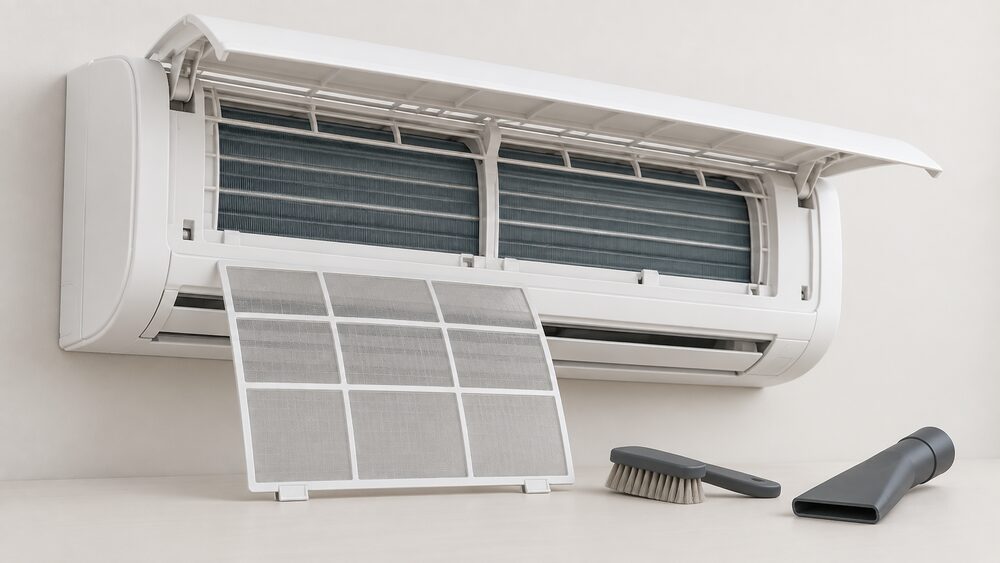
Air conditioning servicing is the routine that keeps a cooling system working at its rated output and keeps its warranty intact. For a fixed system, maker guidance is that the system should be serviced annually by an F-Gas registered engineer, with the indoor unit cleaned every one to three months and the outdoor unit every six to twelve months depending on usage1. Portable units sit outside that schedule: they are not usually equipped with service valves, so they do not require full services, but their mesh filters need regular cleaning2.
The householder's own share of the work is real and worth doing. Independent safety guidance is simply to clean all filters regularly as per the manufacturer's instructions3, and the checks that matter most are the ones a household can see: damp and mould, condensation, draughts and poor ventilation4. Everything involving refrigerant, the sealed circuit or electrical connections belongs to a registered engineer.
Cost is the part most people search for and the part with the least firm published data. Independent guidance on boiler servicing puts a service at around £79 on average, with some up to £120 depending on where you are5. For air conditioning specifically, the figures circulating are distributor guidance of £70 to £120 per unit against £60 to £100 per unit, and those two documents disagree, so both are given here rather than one2.
What air conditioning servicing covers
A service is not one task but a sequence of checks on two separate pieces of equipment, and the split between indoor and outdoor work explains why the intervals differ. The indoor unit handles air: filters, coil, fan blades, drain pan and condensate route. The outdoor unit handles heat rejection and the sealed refrigerant circuit, which is why it is checked less often but by someone qualified to touch it.
Independent guidance for heat pumps, which share the same refrigeration cycle and much of the same hardware, lists the tasks as cleaning coils, cleaning fan blades, inspecting filters, checking refrigerant level and pressure, and checking that all electrical connections are safe7. That is a useful description of what a competent service visit involves on the outdoor side. On the indoor side, the same logic applies to the evaporator coil and the condensate drain, which is where mould and blockages begin.
The refrigerant work is the part a household cannot do and should not attempt. Checking refrigerant level and pressure requires access to the sealed circuit, and the annual service by an F-Gas registered engineer is the point at which that happens1. For a portable unit there is no equivalent: no service valves, no sealed circuit access, and therefore no full service, only filter cleaning2.
Ventilation hardware that often sits alongside air conditioning follows a similar pattern. Mechanical ventilation with heat recovery systems do require servicing, because all equipment such as filters and fans must be kept clean to ensure effective operation8. The principle is consistent across cooling and ventilation equipment: the moving air path clogs, and cleaning it is what restores performance.
| Task | Interval | Who does it |
|---|---|---|
| Indoor unit clean (filters, coil face) | Every 1 to 3 months1 | Householder or engineer |
| Outdoor unit service | Every 6 to 12 months1 | F-Gas registered engineer |
| Full annual service | Annually1 | F-Gas registered engineer |
| Portable unit mesh filter | Regularly2 | Householder |
| Portable unit full service | Not required2 | Not applicable |
What you can do yourself: filter washing, dust removal and checking for mould
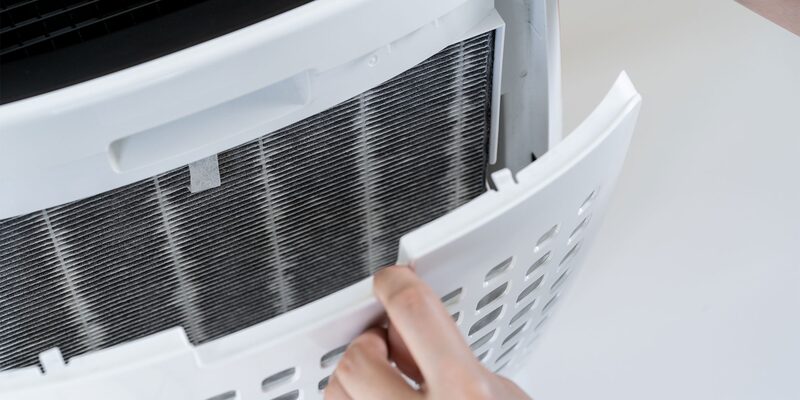
The householder's tasks are the ones that need doing most often and cost nothing. Filters are first: clean all filters regularly as per the manufacturer's instructions3. On a portable unit the mesh filters are the only part that needs routine attention, since these units are not usually equipped with service valves and so do not require full services2. On a fixed system, the indoor unit's one to three month cleaning interval is largely a filter and coil-face job1.
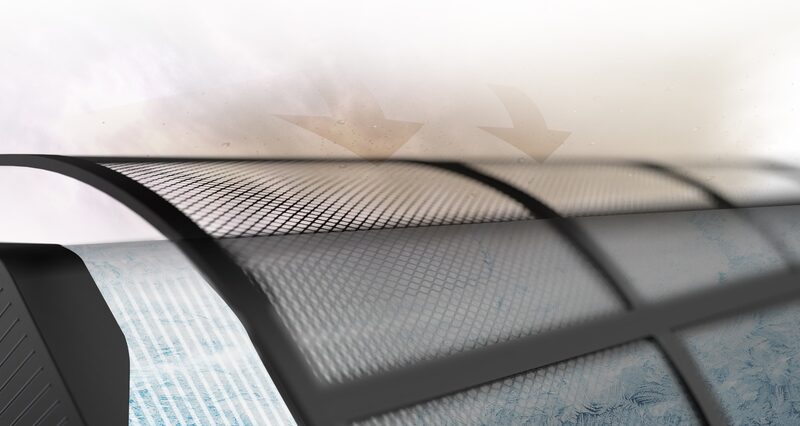
Dust removal follows the same path as the air: filter, coil face, fan blades, and the grille. Independent guidance for heat pumps names cleaning coils and cleaning fan blades as service tasks7, and there is no reason the accessible parts of an indoor unit should be treated differently between visits.
Mould is the check that matters most for health and for smell. Independent guidance on inspecting a home lists the signs to look for as damp and mould, condensation, draughts and poor ventilation4. On an air conditioner, mould establishes itself where water sits: the evaporator coil, the drain pan and the filter. A musty smell at start-up is the usual first signal. Some systems address this directly, with air filtration and optional UV light for air disinfection that removes odours, mould and bacteria from the home10.
When a professional service is needed and what it includes
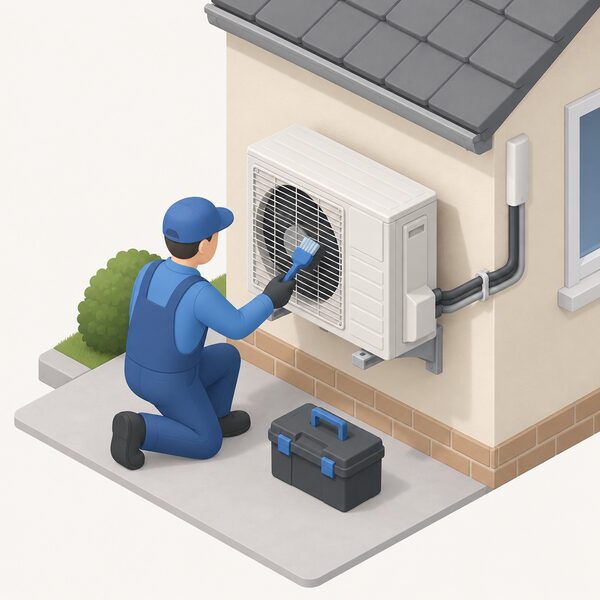
The dividing line is refrigerant and electricity. Anything that touches the sealed circuit, the compressor, the refrigerant charge or the fixed wiring needs a qualified person, and for fixed air conditioning the annual service is specified as the work of an F-Gas registered engineer1. That is the same boundary that applies across heating: heat pumps need to be serviced annually by a specialist who is accredited by the manufacturer11.
Fixed units also require professional intervention at the outset, unlike their portable counterparts1. That matters for servicing because a fixed system is a permanent installation with pipework, drainage and a refrigerant charge, all of which are part of what a service inspects. A portable unit is a plug and play set up with a hose vented out a window or door, and it carries no refrigerant service requirement at all2.
The wider pattern in home heating and cooling is that annual servicing by a specialist is the norm, and that the manufacturer's requirements govern. Independent guidance for solid fuel appliances states that a routine service should be carried out at least once a year and must meet the appliance manufacturers' requirements given in any maintenance instructions12. The same structure applies to air conditioning: the annual interval is the baseline, and the maker's maintenance instructions set the detail.
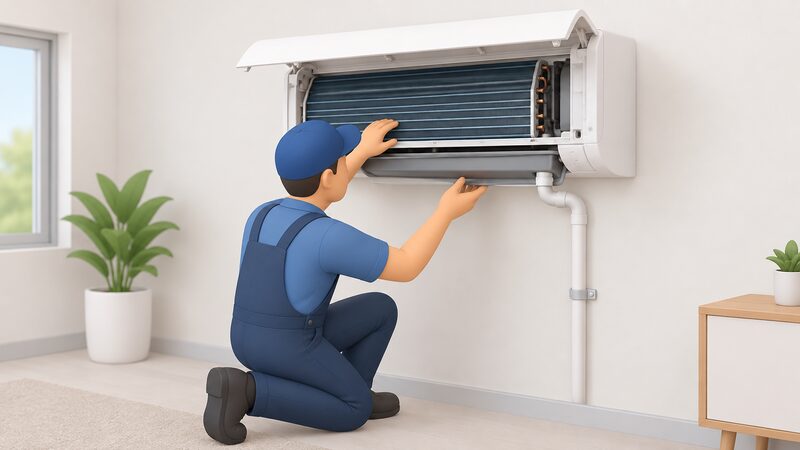
What a professional visit includes, then, is the outdoor unit's coil and fan, the refrigerant level and pressure, the safety of electrical connections7, the indoor coil and drain, and a check that the system is performing as rated. It is also the moment at which the service record is created, which is what a warranty claim will ask for.
Servicing cost: £70 to £120 per unit
Published air conditioning service pricing is thin, and where it exists the figures conflict. Distributor guidance gives £70 to £120 per unit, and separately £60 to £100 per unit, and that conflict is unresolved, so both figures stand2. Neither should be treated as a quotation: air conditioning service prices are installer-quoted, and the figure depends on the number of units, their accessibility and whether the visit includes the outdoor unit.
The nearest independently sourced benchmark is boiler servicing, where a service costs around £79 on average, though some can be up to £120 depending on where you are5. That is a different appliance and a different trade, and it is offered here only as a reference point for what a domestic annual service visit costs in the UK, not as an air conditioning price.
For a multi-unit installation the per-unit figure is the one that matters, because a multi-split system has several indoor units sharing one outdoor unit, and each indoor unit carries its own cleaning interval of one to three months1. A household with three indoor units is therefore looking at three indoor cleans on a short cycle and one outdoor service on a longer one.
Duct maintenance and other tasks for the household
Ducted systems add a maintenance surface that wall-mounted units do not have: the ductwork itself, plus the filters at the unit and at any return grilles. The service tasks that apply to the air path, cleaning coils, cleaning fan blades and inspecting filters7, apply at each point where air passes, and a ducted installation has more of those points than a single indoor head.
Ventilation and air quality testing sits alongside this. One testing service lists background ventilation testing, air quality monitoring, heat transfer coefficient testing, thermography and borescope investigation among its offerings13. A borescope inspection is the tool for looking inside ductwork without dismantling it, and air quality monitoring is how a household establishes whether a ducted system is actually delivering clean air.
Mechanical ventilation with heat recovery, which is common in newer airtight homes and often runs alongside cooling, does require servicing, because all equipment such as filters and fans must be kept clean to ensure effective operation8. In a home with both MVHR and air conditioning, the filter cleaning regime is doubled, and both systems depend on the same principle: a clogged air path wastes energy.
For solid fuel and biomass appliances, independent guidance describes a service as checking over all aspects of the installation including things such as door rope seals, air intake and Carbon Monoxide alarms15. That is a different appliance class, but it illustrates what a thorough annual visit looks like: not just the heat exchange surface, but the safety devices and the air supply around it.
How servicing fits with permitted development rules for cooling systems
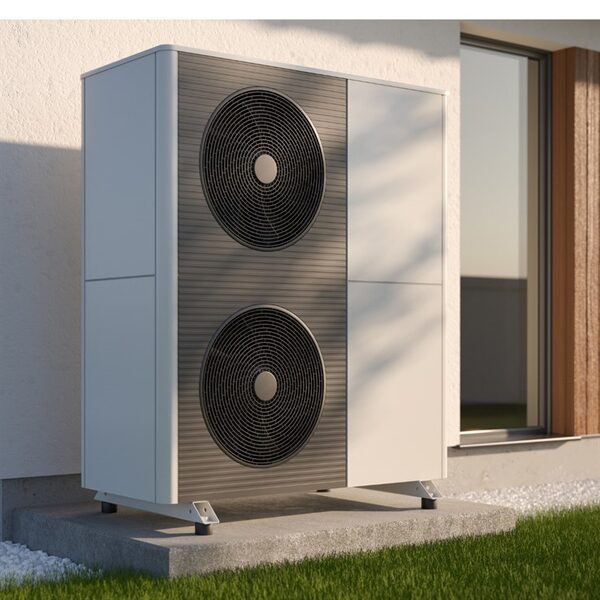
Servicing does not change a system's planning status, but the planning status determines whether the system should be there at all, and it is worth knowing before a service contract is signed. Official guidance states that adding air conditioning to your home may be considered permitted development provided all the limits and conditions in legislation are met, and those limits cover function, size, placement and quantity of units16.
The function condition is the one that catches people out. The rights only apply if the system provides a heating function, including if it can provide both heating and cooling16. A cooling-only air conditioner therefore requires a planning application, while a reverse-cycle unit that also heats may fall within permitted development. That distinction is central to how a household thinks about independence: a unit that heats as well as cools is doing more of the work a boiler would otherwise do.
Where permitted development does apply, the installation conditions are strict. Development is not permitted by Class G unless the air source heat pump complies with the MCS Planning Standards17, and permitted development rights for wind turbines and air source heat pumps will only be accorded for equipment installed by an installer who has been certificated through the scheme using a certificated product19. An installer must comply with the Microgeneration Certification Scheme or equivalent in order to be permitted development20.
Protected areas change the position entirely. If your home is in a protected area such as a Conservation Area then permission will be required, and if you live in a listed building, listed building consent is required16. Permitted development rights do not apply for ASHP installations within the curtilage of a listed building, so planning permission and listed building consent must both be applied for21, and the same restriction applies within a site designated as a Scheduled Monument18.
Building regulations run in parallel. Putting in a fixed air-conditioning system is covered alteration work requiring approval22. The installation of air conditioning must comply with building regulations, and it is advisable to contact an installer who belongs to the Microgeneration Certification Scheme or a relevant Competent Person Scheme16.
Noise is assessed under the MCS 020 Planning Standard, which produces a pass or fail against the permitted development noise limit. Where the assessment result is equal to or lower than 42.0 dB(A), the air source heat pump will comply with the permitted development noise limit for that assessment position and may be permitted development23. That is a planning test, not a servicing one, but it is the kind of condition a service record helps demonstrate is still being met.
VAT on air conditioning units: the 0% rate and its end date
The temporary zero rate is a dated relief with a fixed end, and it applies to installation rather than to servicing. Official guidance describes a rate of 0% VAT on both certain products supplied by your installer and the cost of all work to install those products in your home24. The temporary zero rate for installations of energy-saving materials in residential accommodation runs until 31 March 202725, and the legislation states the rate applies from 1 February 2024 to 31 March 20276.
The relief is not uniform across the UK. A temporary zero rate of VAT applies to the installation of qualifying energy-saving materials in residential accommodation in Northern Ireland, running from 1 May 2023 to 31 March 202726. The consultation outcome confirms that qualifying installations benefit from a temporary VAT zero rate, having previously benefited from the reduced rate27.
What the relief does not clearly cover is the annual service. The drafting is built around installation: the products supplied by an installer and the work to install them24. A maintenance visit is a different supply, and none of these documents states a VAT rate for air conditioning servicing. A household budgeting for a service contract should treat the VAT position on the service itself as unsettled by the published material and confirm it with the contractor.
The end date matters for the wider decision. VAT relief on air source heat pumps and air conditioning units runs until 31 March 2027, with a 5% reduced rate from 1 April 20276. A household weighing a fixed system against a portable one is therefore weighing a dated installation relief against a unit that carries no installation relief at all, because a portable air conditioner is bought as goods rather than installed as a qualifying material.
Common faults and what servicing prevents
The faults that servicing addresses are mostly the slow ones: a filter that clogs over months, a coil that loses heat transfer as dust builds, a condensate drain that silts up and starts to smell. The service tasks named for heat pumps, cleaning coils, cleaning fan blades, inspecting filters, checking refrigerant level and pressure, and checking that all electrical connections are safe7, map directly onto those failure modes.
The warranty consequence is the sharpest argument for keeping to the schedule. Independent guidance on boilers states that not keeping up with annual servicing can invalidate any warranty you may have on your boiler5. Air conditioning warranties are written on the same principle, with the maker's service condition forming part of the terms, and the annual F-Gas registered service is the record that satisfies it1.
Cold weather behaviour is a separate matter from servicing, and it is worth separating the two. A reverse-cycle unit that provides heating will run through defrost cycles in low temperatures, and the planning position for such a unit depends on it providing a heating function16. A cooling-only unit has no heating mode and therefore no defrost behaviour, and it also falls outside permitted development. Servicing does not change either characteristic; it only keeps whatever the unit does working at its rated performance.
For a household thinking about energy independence, the maintenance regime is the part of the system that stays under their control. A fixed unit depends on a registered engineer, a refrigerant supply and a manufacturer's parts network. A portable unit depends on nothing but a filter and a plug, which is why it needs no full service at all2. Neither removes the household's dependence on grid electricity, and a fixed system adds a dependence on the installer and the maker for anything beyond filter cleaning.
Sources27 cited
- Home air conditioning comfort guide, Netatmo, 2026-09-20
- Air conditioning FAQs, Cool Easy, 2026-09-23
- Demand flexibility: running appliances at cheaper times, Electrical Safety First, 2026-09-19
- Energy saving house viewing tips, Energy Saving Trust, 2026-05-20
- Why you need a boiler service and what to ask about, Which?, 2025-10-27
- The Value Added Tax (Installation of Energy-Saving Materials) Order 2024, legislation.gov.uk, 2024-01-10
- Is now a good time to get a heat pump, Energy Saving Trust, 2025-12-12
- Mechanical ventilation with heat recovery, Centre for Sustainable Energy, 2026-07
- British Gas HomeCare guide, Uswitch, 2026-06-01
- Unico 3-in-1 system, CIPHE, 2025-03-19
- Living with heat pumps, Local Energy Scotland, 2026-09-20
- Moving home advice, HETAS, 2026
- Ventilation and air tightness testing, IAA, 2026-09-20
- Air tightness testing, IAA, 2026-09-20
- Servicing, HETAS, 2026
- Is permission needed for installing new roof tiles, Planning Portal, 2026
- Class G paragraph G.2, legislation.gov.uk, 2026-09-01
- Class G: installation of air source heat pumps on domestic premises, legislation.gov.uk, 2026-09-17
- The Microgeneration Certification Scheme, Planning Portal, 2026
- Air source heat pumps, Cornwall Council, 2026-09-17
- Planning permission: air source heat pump, Planning Portal, 2026-09-17
- Building regulations approval, GOV.UK, 2026-09-17
- ASHP noise and permitted development rights in Wales: phase 1 report, Welsh Government, 2023-12-13
- Tax on shopping: energy saving products, GOV.UK, 2026-09-17
- Extension of VAT energy saving materials relief, GOV.UK, 2024-01-11
- VAT energy saving materials relief explanatory memorandum, legislation.gov.uk, 2023
- VAT energy saving materials relief: summary of responses, GOV.UK, 2023-12-11
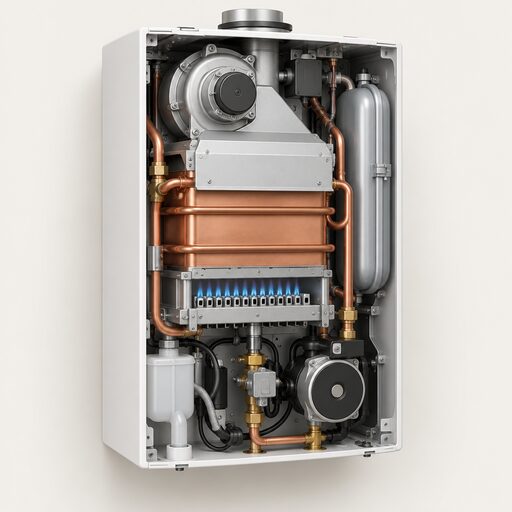 Servicing and MaintenanceWhat an annual gas or oil boiler service covers, the intervals manufacturers specify, the link between servicing records and warranty validity, and what servicing means for a household's energy independence.
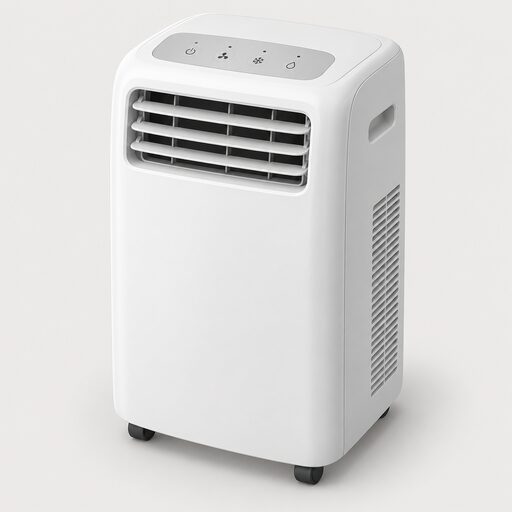 Air Conditioning and HumidityExplains how air conditioners remove moisture as they cool, what dry or dehumidify mode does and how extraction rates are stated.
 Air Conditioning SafetyA safety guide to home cooling appliances: plug and circuit loading, flammable refrigerants in portable units, condensate and water damage, venting, window sealing and product recalls, with the markings to look for.
 Air Conditioning InstallationHow long does air conditioning installation take, and what happens on the day?
 Prepare a Home for WinterA seasonal checklist covering heating and hot water checks, controls and timers, alarms, draughts, outside pipework and stocking up on off-grid fuel.
 Servicing and MaintenanceHow often does a heat pump need servicing, and what actually happens during the visit?