In this guide
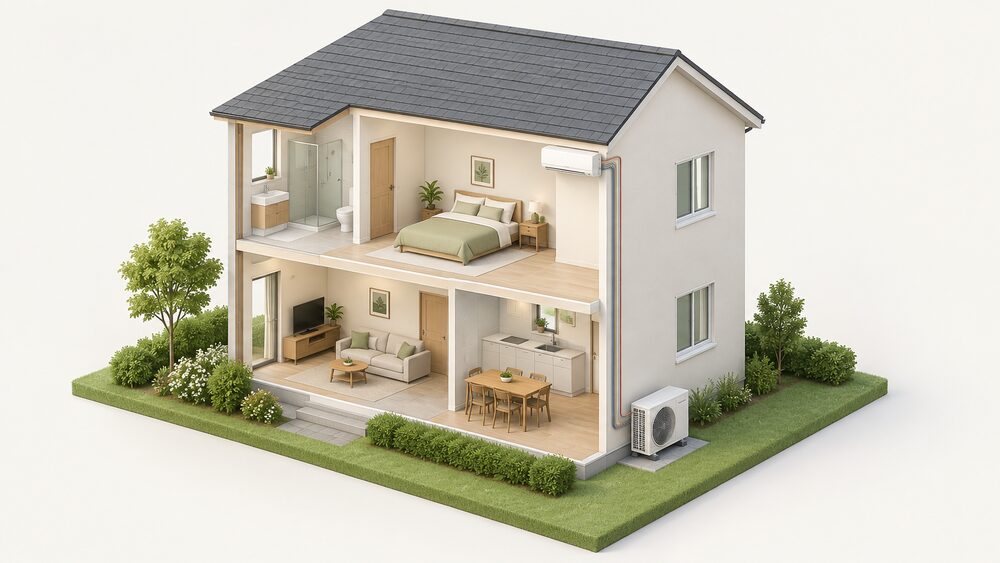
A split air conditioning system is a cooling (and usually heating) system in two parts: an indoor unit that sits in the room and an outdoor unit that sits outside the building, joined by refrigerant pipework and wiring. In its simplest form, the single split or mono-split, "a split system consists of just one indoor unit being connected to one outdoor unit", and Mitsubishi Electric describes it as suited to cooling a single room or an open-plan space, with lower upfront costs and simpler installation than the alternatives1.
Single split systems pair one indoor unit with one outdoor unit to heat or cool a single room2. The connecting pipes are small: Nesta reports that air-to-air systems typically need refrigerant pipes of 6 to 12mm diameter between the outdoor and indoor units, and that a multi-split version typically runs two to five indoor units from one outdoor unit3. In the common 3.5 kW class, a wall-mounted indoor unit on a single phase ~230 V supply is quiet enough at its lowest setting to register 21 dB(A), and weighs 11 kg.
For a household, a split system replaces reliance on a gas boiler or plug-in heaters for comfort in one room with reliance on electricity. It does nothing on its own to reduce dependence on the grid: electrical appliances stop working in a power cut4, and the unit depends on a refrigerant circuit that only a certified engineer can open, a manufacturer for parts, and in many cases an app and cloud service for remote control. Paired with rooftop solar, it can use daytime generation on the hottest days, which is when cooling is wanted.
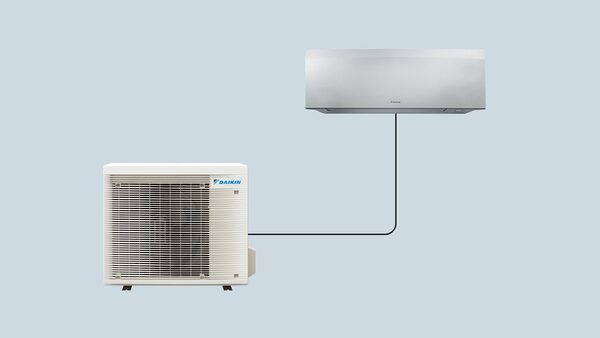
One indoor unit, one outdoor unit: what a split system is
Every split system divides the machinery in two. Mitsubishi Electric's Mr Slim range is described as "a split air conditioning system that has two components, an indoor and outdoor unit"9, and Hitachi calls a standard split system "essentially in two halves"10. Daikin defines the single split in the same terms: one outdoor unit connected to one indoor unit11.
The split is what distinguishes the type from a portable or through-wall monobloc unit, where all the machinery sits in one box inside the room. Moving the compressor and the fan that rejects heat outdoors takes the noisiest parts out of the living space and removes the need for a hose through a window. The cost of that is a permanent installation: Hitachi states that a single split system needs an indoor and outdoor unit connected via wiring and piping, needs no ductwork, and requires professional installation12. Netatmo describes the mono-split as an indoor and an outdoor unit "connected by a pipe", which means it can only cool one room13.
Three things run between the two halves:
- Refrigerant pipework: small-bore pipes carrying the refrigerant that moves heat3.
- Electrical and control wiring: power and signals between the units12.
- A condensate hose: the indoor unit has a hose to take away the condensate generated in cooling mode14.
The pipe run brings its own limits. A heat pump maker lists the main boundaries on a split system as refrigerant pipe length, height difference between the units, onsite refrigerant work, leak control, indoor refrigerant safety, and condensate and drainage15. These are the reasons a split system is surveyed before it is fitted, and why the outdoor unit cannot simply go anywhere. The details are covered in air conditioning installation and in why there is a minimum pipe length.
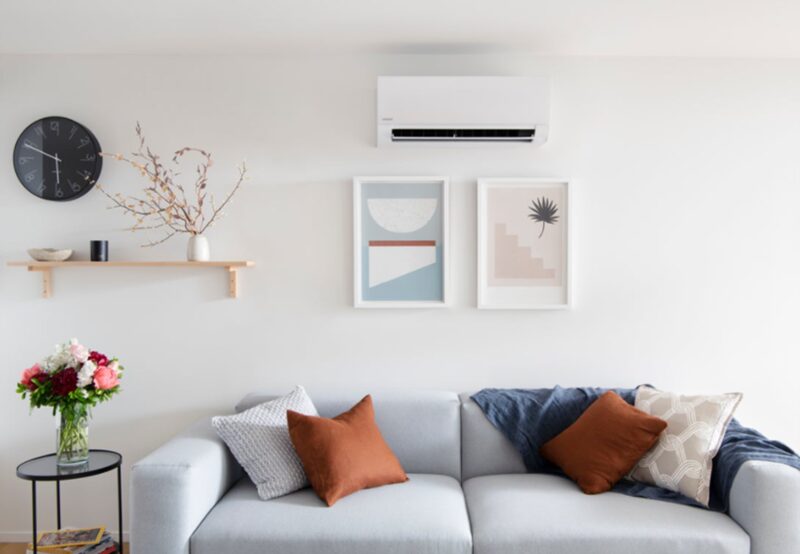
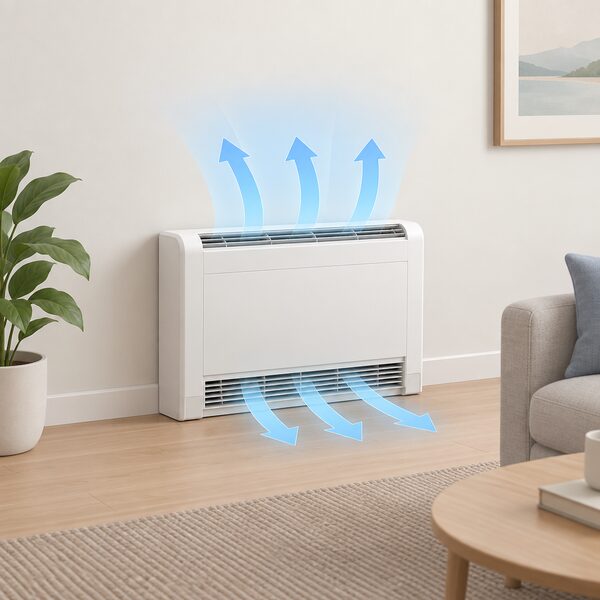
Indoor units come in several styles. The wall-mounted, or high wall, unit is the most common in homes; low wall and floor-standing console units sit near the floor; ceiling and ducted types sit above the room. Mitsubishi Electric's floor-mounted systems, for example, still comprise "two units, an indoor and outdoor unit", so a console is a split system in a different body9. The whole range is set out in types of air conditioning.
Mono-split or multi-split: which fits which home
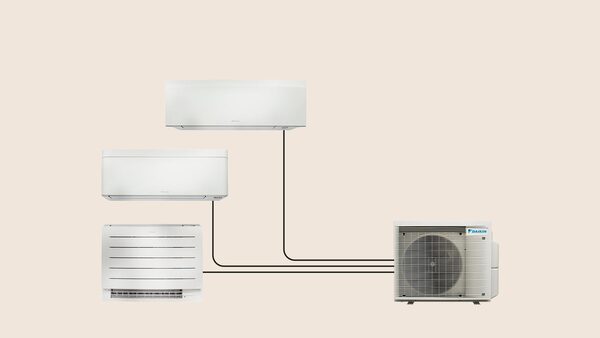
A mono-split serves one room; a multi-split serves several rooms from one outdoor unit. Mitsubishi Electric calls the multi-split "a more advanced version of the split system, where one outdoor unit is connected to multiple indoor units", and describes it as suiting homes with several rooms that need individual temperature control without ductwork1. Netatmo notes that the indoor units on a multi-split are adjustable independently, making it possible to cool several rooms "unlike with a mono-split system", which serves only the room where its indoor unit is located16.
| Mono-split (single split) | Multi-split | |
|---|---|---|
| Outdoor units | One | One |
| Indoor units | One | Typically two to five |
| Rooms served | One room or one open-plan space | Several rooms, each controlled independently |
| Makers' framing | Individual rooms, targeted applications | Several rooms in one house from a single centralised system |
The indoor unit counts in the table are from Nesta3; the room descriptions draw on Mitsubishi Electric, Clivet and Midea1.
The trade-offs are real on both sides. Mitsubishi Electric states that a multi-split is more energy-efficient than several separate units and reduces maintenance costs compared with multiple single-split systems, because only one outdoor unit runs1. Netatmo lists the multi-split's disadvantages as complex and potentially expensive fitting work, outdoor units that can be noisy, and a high purchase price13. A mono-split, by contrast, keeps the fitting simple and means a fault in one system does not take out cooling in every room.
Both types are widely sold as heat pumps. Aermec's SMG and LCG ranges, for example, are mono-split air-to-air conditioners in heat pump versions with DC inverter technology19. Panasonic describes its split air conditioners as "efficient cooling and heating for individual rooms" and its multi-splits as "one outdoor unit for multiple rooms, ideal for whole-home comfort"21.
For energy independence, the difference is mainly one of concentration. A multi-split puts several rooms' comfort on one compressor and one outdoor unit; a set of mono-splits spreads the risk but multiplies the outdoor units, the wall penetrations and the refrigerant circuits. The detailed comparison sits in single split vs multi-split air conditioning and multi-split air conditioning.
The five components and how the cooling cycle works
Hitachi states that between the indoor and outdoor units, "5 main components work in harmony together to create the cooling cycle"10. Netatmo lists four main components: condenser and evaporator coils, a compressor and an expansion valve22. The sources count differently because the condenser coil and evaporator coil can be treated as one item (the coils) or two; the working parts are the same.
- Evaporator coil (indoor unit): cold liquid refrigerant flows through it. Daikin explains that "liquid refrigerant is extremely cold", so room air passing over the components is cooled and then circulated back into the room23.
- Indoor fan: draws warm room air across the evaporator and returns the cooled air. Haier describes the whole process as taking in warm air, cooling it through a refrigeration cycle and redistributing the cooled air back into the space24.
- Compressor (outdoor unit): raises the pressure and temperature of the refrigerant vapour after it has absorbed the room's heat.
- Condenser coil and fan (outdoor unit): release that heat to the outside air, returning the refrigerant to liquid.
- Expansion valve: drops the refrigerant's pressure so it is cold again before it returns to the indoor coil22.
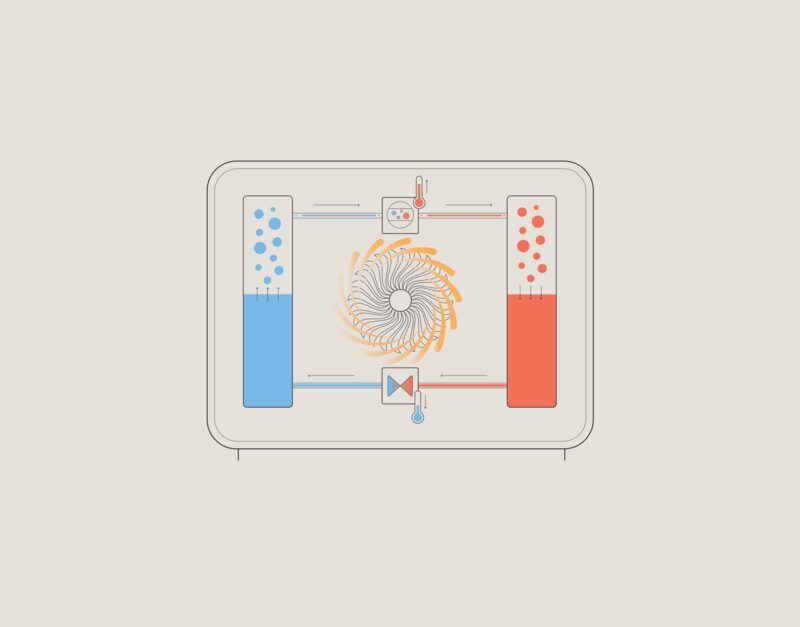
Running the cycle backwards turns the same system into a heater. The MCS consumer guidance notes that an air-to-air system "can also offer cooling" as well as heating25, and CoolEasy states that most modern split systems are also heat pumps that can provide warmth in the cooler months14. Some larger systems go further: Daikin's Multi+ Class 68 and Class 90 are described as providing "heating, cooling and hot water from one system"26. Carrier lists automatic defrosting among its split system features, which is the process that clears ice from the outdoor coil when the unit heats in cold weather28.
The heating role matters for independence. A reverse-cycle split system can take over part of a home's space heating from gas, but it moves the whole load onto electricity. The link between cooling and heating is covered in air conditioning that heats.
Where a split system earns its keep: single rooms and open-plan spaces
The makers agree on where a single split fits. Mitsubishi Electric names a single room or an open-plan space1. CoolEasy lists bedrooms, living rooms, garden offices and small commercial spaces29. Hitachi states that single split wall-mounted units are ideal for single rooms, while multi-split units can be used in various rooms throughout the house30. Ferroli describes monosplit solutions as "ideal for individual rooms or targeted applications"31, and CoolEasy states that single-split systems are designed for one room or location32.
Some makers name particular rooms. Fujitsu describes its split range as covering living rooms, bedrooms and children's rooms, including models with self-cleaning filters and models that clean the room air33. Midea lists bedrooms, living spaces, offices and retail environments34.
In practice, the rooms that benefit most are the ones that overheat: top-floor bedrooms, glazed extensions and garden rooms. Those cases are set out in cooling by home type and air conditioning for a garden room. For a flat, a lease or freeholder may restrict an outdoor unit, which is covered in air conditioning in flats. Planning rules for the outdoor unit differ between England, Scotland, Wales and Northern Ireland.
The refrigerant also sets a boundary. UK government guidance on F-gas bans in new equipment covers smaller single split systems, and lists as exceptions larger systems such as chillers or larger split systems, single split systems used solely for cooling products, air-to-water single split systems, and systems fitted to maritime craft35. Where a single room system does not suit the space, the options are a multi-split or a ducted or cassette system. The refrigerant rules are set out in F-gas rules for air conditioning.
Cost position: lower upfront costs and simpler installation
Mitsubishi Electric describes the single split as "a cost-effective solution with lower upfront costs and simpler installations compared to the alternatives"1. That is a maker's positioning statement rather than an independent cost study, but the reasons are plain from how the system is built: one indoor unit, one outdoor unit, one pipe run, no ductwork12.
Several cost pressures sit on either side of the single split:
- Cheaper: a single-packaged air conditioner, with everything in one box, costs less than installing a system with multiple units36.
- Dearer: a multi-split involves complex and potentially expensive fitting work and a high purchase price13.
- Running cost offset: a multi-split is described as more energy-efficient than several single splits, cutting overall consumption and maintenance1.
A permanent split system also needs a professional installer, which is a fixed cost that portable units avoid12. Pre-charged easy-fit kits exist to reduce that cost; the conditions and limits are covered in DIY air conditioning installation. Installation prices for fitted systems are installer-quoted and vary with the pipe run, the wall construction and access to the outdoor position; the component costs are set out in air conditioning cost, and electricity use in air conditioning running costs. Current equipment prices appear in the final section below.
Uswitch gives a power rating range of 0.8 to 2.5 kW for single-split systems and 1 to 5 kW for multi-split or ducted systems37. Those are electrical ratings rather than cooling outputs, which is why a unit sold as 3.5 kW class can sit within a much lower electrical draw.
Specifications at a glance: the 3.5 kW wall-mounted class
The 3.5 kW class is a common size for a single room. CoolEasy states that a 3.5 kW system provides around 3.5 kW of cooling output and is often better for larger bedrooms, larger home offices, garden rooms, small living rooms, or spaces with more sunlight and glazing6. The smaller step down is compared in 2.5 kW vs 3.5 kW air conditioner, and sizing in air conditioning sizing.
Fujitsu publishes a full specification for its 3.5 kW class wall-mounted indoor unit in its R32 multi range, with two sets of figures for performance7:
| Fujitsu 3.5 kW wall-mounted indoor unit (R32 multi range) | First set | Second set |
|---|---|---|
| kW class | 3.5 kW | 3.5 kW |
| Electrical supply | Single phase, ~230 V | Single phase, ~230 V |
| Sound pressure, cooling (High/Middle/Low/Quiet) | 40 / 35 / 30 / 21 dB(A) | 42 / 38 / 33 / 22 dB(A) |
| Sound power (High) | 55 dB(A) | 58 dB(A) |
| Airflow (High/Middle/Low/Quiet) | 700 / 560 / 430 / 270 m³/h | 770 / 640 / 520 / 330 m³/h |
| Dimensions (H × W × D) | 295 × 950 × 230 mm | 295 × 950 × 230 mm |
| Weight | 11 kg | 11 kg |
| Pipe diameter | 6.35 mm | 6.35 mm |
Nesta gives a typical size for a wall-mounted air-to-air indoor unit of 80cm wide, 30cm tall and 20cm deep5; the Fujitsu unit is wider than that typical figure at 950 mm.
Other 3.5 kW class and multi-split figures from UK sellers and makers:
| Product | Figure |
|---|---|
| LG 3.5kW Console System | Up to 30m²; cooling from top and bottom vents38 |
| Samsung 3.5kW Console System | Suited to low wall installation38 |
| Haier console (multi-split) | 2.5kW, 3.5kW and 5.0kW sizes39 |
| Midea multi-split systems | 2.6kW to 5 kW capacities18 |
| electriQ iQool Multi-Split 2 x 9000 BTU wall mounted with heat pump | £899.0040 |
| electriQ iQool Multi-Split 2 x 12000 BTU wall mounted with heat pump | £999.9740 |
| electriQ iQool Multi-Split 3 x 9000 BTU wall mounted with heat pump (black) | £1349.9840 |
| electriQ iQool Multi-Split 5 x 12000 BTU wall mounted with heat pump | £2399.9840 |
The electriQ prices are published without a stated VAT position.
Noise levels: 21 to 42 dB(A) indoors
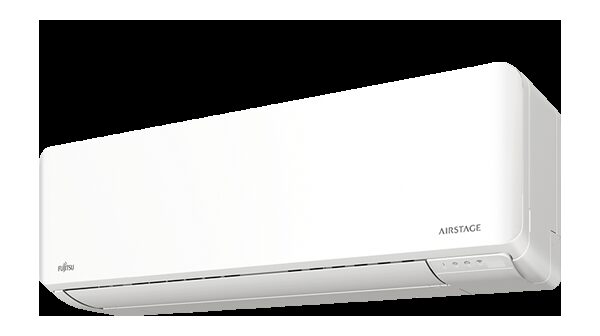
Indoor noise from a split system is set mainly by fan speed. On the Fujitsu 3.5 kW wall-mounted unit, cooling sound pressure at High/Middle/Low/Quiet is 40 / 35 / 30 / 21 dB(A) on the first set of figures, and 42 / 38 / 33 / 22 dB(A) on the second7. A Fujitsu ceiling-type split unit is rated at 42 dB(A) at high and 37 dB(A) at middle speed in cooling41. Haier gives its console range a silence setting of 20 dB(A)39.
| Indoor unit | Setting | Sound pressure |
|---|---|---|
| Fujitsu 3.5 kW wall-mounted unit | High/Middle/Low/Quiet | 40 / 35 / 30 / 21 dB(A), or 42 / 38 / 33 / 22 dB(A)7 |
| Fujitsu ceiling-type split unit | Middle / High | 37 / 42 dB(A)41 |
| Haier console (multi-split) | Silence | 20 dB(A)39 |
Two different measures appear on specification sheets, and they are not comparable with each other. A heat pump maker explains:
"Sound power allows source comparison. Sound pressure determines the impact at a receiver. Local acoustic compliance cannot be determined from sound power alone"
Sound power belongs to the unit and does not change with distance; sound pressure belongs to a place and changes with distance and surroundings15. That is why the same Fujitsu unit carries a sound power figure of 55 dB(A) and a sound pressure figure as low as 21 dB(A)7. Quiet modes work by cutting airflow: the Daikin Multi+ indoor units have a quiet operation mode that "reduces the sound pressure by reducing the airflow rate"27. Less airflow means less cooling, so quiet mode trades capacity for silence.
The outdoor unit is the larger concern for neighbours. Research for the Welsh Government found that sound power levels for heat pumps of any given heat output vary by up to 10dB at around 7kW between manufacturers42. That was measured on air source heat pumps for heating, but the point carries: two units of the same size can differ widely. Outdoor noise and neighbour issues are covered in air conditioning noise, and bedroom choices in quietest air conditioning for a bedroom.
Smart and convenience features: Wi-Fi control, auto changeover and auto restart
The convenience features on a split system are set by the maker, and they vary. Fujitsu describes four on its 3.5 kW wall-mounted unit7:
- Wireless LAN control: an optional WLAN adapter lets the unit be operated by smartphone or tablet from outside the home.
- Auto changeover: the unit switches between heating and cooling according to the temperature setting and the room temperature.
- Auto restart: after a temporary power failure, it restarts in the same operating mode once the supply returns.
- 10°C heat: the room temperature can be set to go no lower than 10°C, so an unoccupied room does not get too cold.
Daikin's Multi+ systems offer app control via Daikin Onecta27, and Midea describes its multi-split systems as offering individual room control and smart climate management18. Smart controls of this kind let heating or cooling be controlled from anywhere by smartphone app43. The dependence that comes with it is on broadband, the maker's app and the maker's servers: if the company withdraws the service, the local remote still works but remote access may not. Voice assistant compatibility is covered in wall mounted air conditioning with Alexa and Google, and controls generally in air conditioning controls and Wi-Fi.
Auto restart therefore only helps if the unit is left switched on at the supply, and there is a tension between that convenience and surge protection. For a household relying on a split system to keep a vulnerable person cool in a heatwave, the unit's value depends on grid supply; the wider picture is in cooling and energy independence and heatwaves and health at home.
Filters, washable panels and maintenance
A split system needs little routine work from the householder, but it does need some. CoolEasy states that "keeping filters clean and ensuring the outdoor unit is clear of obstructions will keep your system running efficiently"29. Hitachi lists washing the filter, removing dust, and checking for mould and other build-ups as tasks homeowners can do12. Netatmo states that an air conditioner's filter needs cleaning about once a year46.
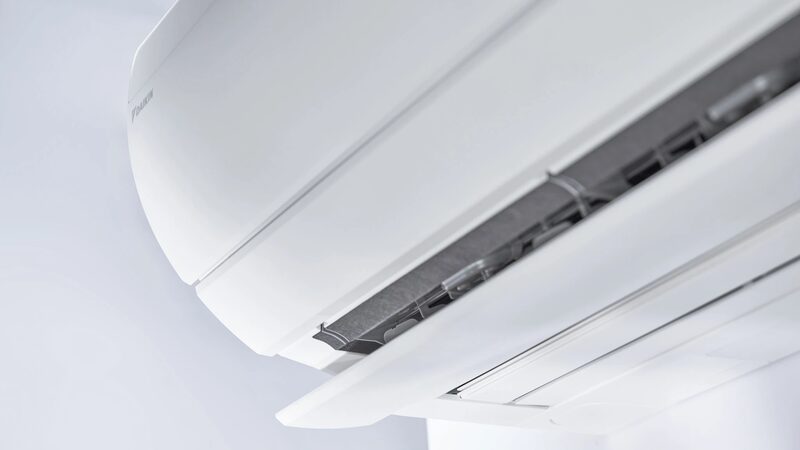
Some work belongs to an engineer. Netatmo lists changing the filter, checking the motor and topping up refrigerant among maintenance tasks22, and Haier describes cleaning or replacing filters as recommended alongside scheduled professional maintenance24. Topping up refrigerant is regulated work, which is why a split system ties a household to a certified engineer in a way a fan or portable unit does not; see F-gas rules.
Makers are building some cleaning into the unit. Carrier lists active cleaning and automatic defrosting among split system features28, and Fujitsu offers models with self-cleaning filters33. These reduce the householder's work but do not remove the need for access. The consultation version of Approved Document F, which covers ventilation, stated that reasonable access should be provided for maintaining ventilation systems, including replacing filters, fans and coils; that is a ventilation rule rather than an air conditioning rule, but the principle of fitting plant where it can be reached applies equally to a high wall unit. Filter routines and servicing are covered in air conditioning maintenance.
Current UK models and prices: Mitsubishi Electric, LG and Samsung
UK prices for complete single split systems vary with the indoor unit style and the range. Mitsubishi Electric positions its M-series as a premium range of split air conditioning units1. CoolEasy lists Mitsubishi Electric systems at these prices:
| System | Price | VAT position |
|---|---|---|
| Mitsubishi Electric Elegance Wall Mounted Air Conditioning System | £812.99 sale price8 | inc VAT |
| Mitsubishi Electric Premium Air Conditioning System | £954.16 sale price8 | ex VAT |
| Mitsubishi Electric Premium Air Conditioning System | £1,286.99 high street comparison8 | inc VAT |
| Mitsubishi Electric ZEN Air Conditioning System | £1,009.992 | not stated |
| Mitsubishi Electric Low Wall Air Conditioning System | £1,599.992 | not stated |
These are equipment prices at September 2026; fitting is quoted separately. The Premium system was listed as available on pre-order47. The Elegance wall-mounted system carried a sale price of £812.99 inc VAT. The differences between the Mitsubishi Electric ranges are set out in Mitsubishi Electric Classic vs Elegance vs ZEN vs Premium and Mitsubishi Electric air conditioning.
LG and Samsung both sell 3.5 kW console systems in the UK for low wall installation. LG's 3.5kW Console System is listed for rooms up to 30m² and delivers cooling from both top and bottom vents; Samsung's 3.5kW Console System is described as suited to low wall installation38. Listings for the LG Artcool Gallery Premium system and Samsung's WindFree AVANT S2 2.5kW high wall system carry prices that differ between listings, and no single confirmed price is given here. The ranges are described in LG air conditioning and Samsung air conditioning, and other makers in air conditioning brands.
Buying from a major maker brings a dependence on that company for parts, warranty and app support over the system's life. Warranty terms vary by brand and installer; the comparison is in air conditioning warranties. The wider guide to cooling a home sits at home cooling.
Sources47 cited
- How to choose the right home air conditioning, Mitsubishi Electric, 2025-04-07
- Single split air conditioning, CoolEasy, 2026-09-23
- Air-to-air heat pumps: a low-carbon solution for UK homes, Nesta, 2026-02-17
- Storms and bad weather, Energy Networks Association, 2026-09-17
- Air-to-air heat pumps: common questions on air conditioning, Nesta, 2026-06-24
- Air conditioning size guide, CoolEasy, 2026-09-23
- Wall-mounted indoor unit, 3.5 kW class, Fujitsu General, 2026-09-23
- Air conditioning heat pump systems for home renovations, CoolEasy, 2026-09-23
- Mr Slim, Mitsubishi Electric, 2026-09-17
- How does air conditioning work?, Hitachi, 2026-09-17
- How to choose your air conditioner location, Daikin, 2026-09-20
- Air conditioner buying guide, Hitachi, 2026-09-17
- Home air conditioning, Netatmo, 2026-09-20
- How does air conditioning work?, CoolEasy, 2026-09-23
- Heat pump limitations and boundaries, iDM Energiesysteme, 2026-08-06
- Home air conditioning guide, Netatmo, 2026-09-20
- Home solutions: air conditioning, Clivet, 2026-09-17
- Multisplit systems, Midea UK, 2026-09-17
- SMG mono-split air conditioner, Aermec, 2024-09-10
- LCG mono-split air conditioner, Aermec, 2024-08-14
- Domestic air conditioning ranges, Panasonic, 2026-09-17
- How does air conditioning work?, Netatmo, 2026-09-20
- The refrigerant cycle: what is it?, Daikin, 2026-09-17
- Cooling guide, Haier, 2026-09-17
- Air source heat pump, MCS, 2026-07-24
- Daikin 5 Port Multi+ Class 68 Split Air Conditioner, Quiet Mark, 2026-09-17
- Daikin Multi+ Class 90 Split Air Conditioner, Quiet Mark, 2026-09-17
- Split systems catalogue, Carrier, 2022
- Easy-Fit single split air conditioning systems, CoolEasy, 2026-09-23
- What size of air conditioner do I need?, Hitachi, 2026-09-17
- Air conditioners, Ferroli, 2026-09-17
- FAQs, CoolEasy, 2026-09-23
- Split air conditioners, Fujitsu General, 2026-09-17
- Split systems, Midea UK, 2026-09-17
- Bans on F gas in new products and equipment, GOV.UK, 2019-08-21
- How does air conditioning work?, Netatmo, 2026-09-20
- Is air conditioning worth it in the UK?, Uswitch, 2026-07-14
- Conservatory cooling and heating systems, CoolEasy, 2026-09-23
- Console multisplit indoor units, Haier, 2026-09-17
- electriQ iQool multi-split air conditioners, electriQ, 2026-09-23
- Ceiling-type split unit, Fujitsu General, 2026-09-23
- ASHP noise and permitted development rights in Wales: phase 1 report, Welsh Government, 2023-12-13
- Take control of your comfort with smart heating, Plymouth Energy Community, 2026-09-20
- Planned power cuts, SSEN, 2026-09-19
- Advice and support FAQs, Electricity North West, 2026-09-20
- Reverse cycle air conditioner, Netatmo, 2026-09-20
- Nursery and baby room air conditioning systems, CoolEasy, 2026-09-23
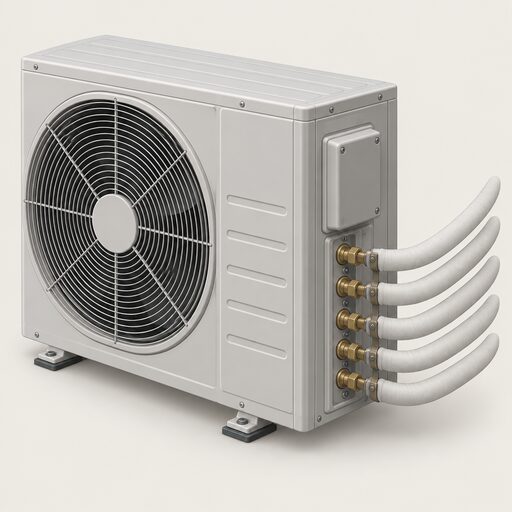 Multi-Split ACHow multi-split air conditioning works when one outdoor unit serves several indoor units: how many rooms one system can serve, independent room control, efficiency, outdoor unit size and sound, planning rules in England and Scotland, servicing and lifespan, the 0% VAT position and how it compares with separate single splits.
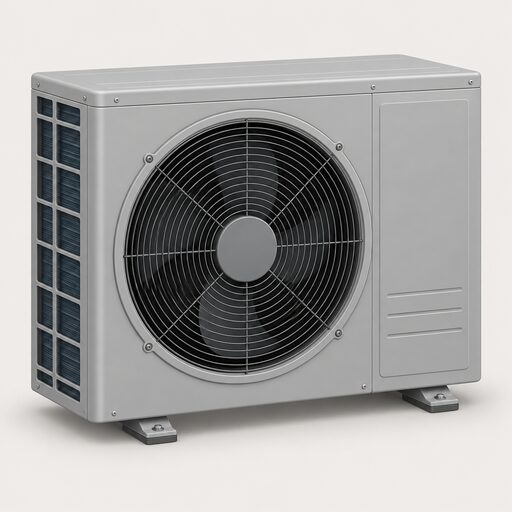 Cooling and Heat PumpsCan an air conditioner heat your home as well as cool it?
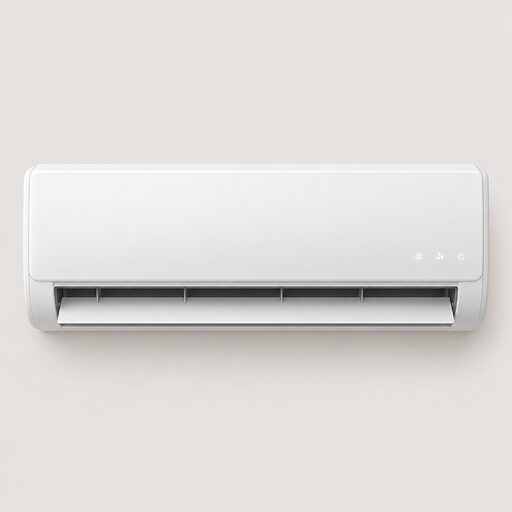 Air Conditioning CostPublished UK equipment prices and the parts of an installed price for portable, single split, multi-split and whole-house air conditioning.
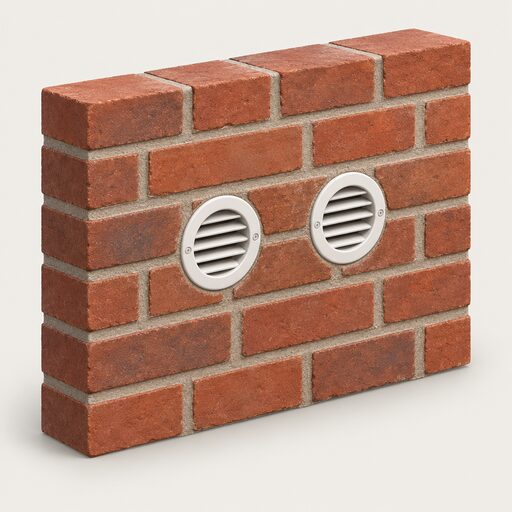 Without an Outdoor UnitFlats and listed homes often cannot have a box on the outside wall, so how does air conditioning work with everything indoors?
 Air Conditioning NoiseHow loud will an air conditioner be inside your home, and how much noise will the outdoor unit make for you and your neighbours?
 Monobloc and Split Heat PumpsWhich heat pump suits your home, a monobloc or a split?