
In this guide
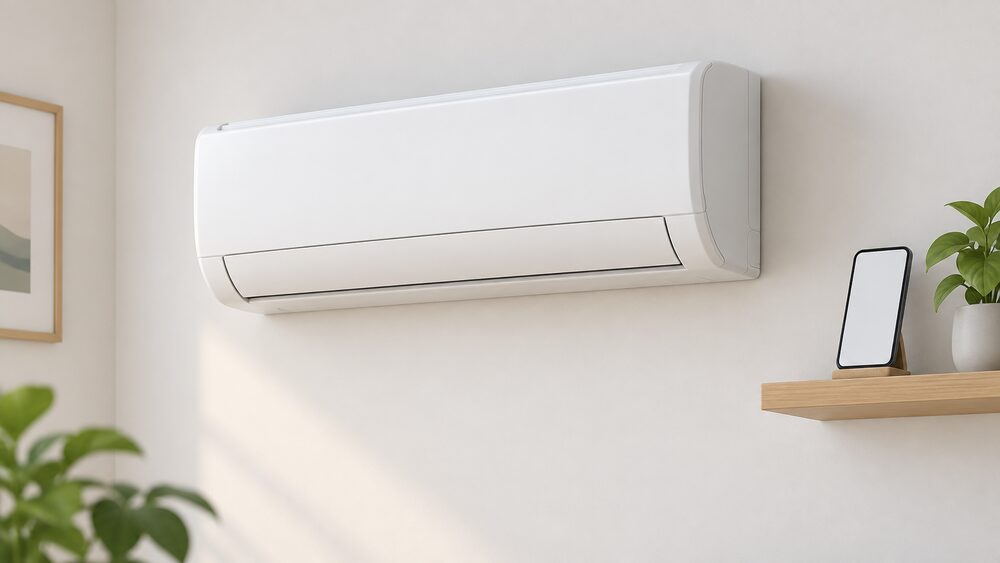
Mitsubishi Electric sells wall mounted split air conditioning in the UK under four family names: Classic, Elegance, ZEN and Premium. The M Series wall mounted range runs from 1.5kW to 5.0kW, so the same family covers a box bedroom and a large open living space1. The differences between the families are not mainly about cooling output. They are about filtration, sensing and finish.
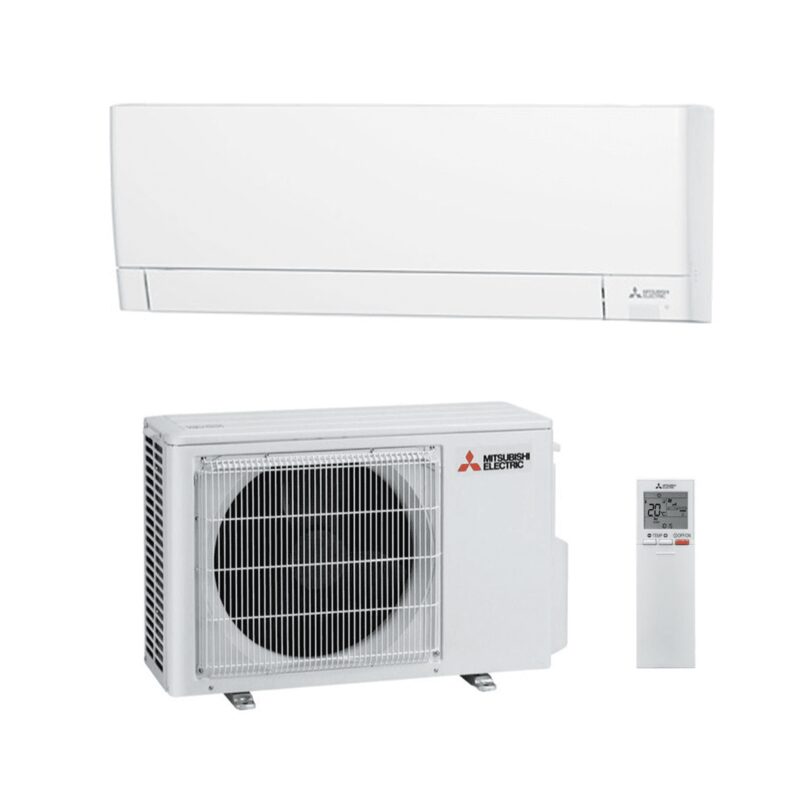
The ZEN is the entry point. It takes the Plasma Quad Connect device as an optional accessory that the maker says neutralises viruses, bacteria and PM2.5, and it is listed in Black, Silver or White2. The Premium builds Plasma Quad purification in as standard and adds a 3D i-see sensor that detects room occupancy, position and body temperature2. The Elegance sits between them with an Advanced V-Blocking filter that the maker says neutralises bacteria, viruses, allergens, dust and mould3.
All three carry built-in Wi-Fi for remote operation through the MELCloud app, with voice control compatible with Alexa and Google Assistant4. That is the pattern across the range: the cooling hardware is shared, and the price steps buy purification, sensing and styling. What follows sets out each family, the sizes, the published prices and the dependence that comes with app control.
ZEN 2.5kW: the entry system and the Plasma Quad Connect option
The ZEN 2.5kW is the smallest and cheapest route into the range, and it is the model most often quoted for a bedroom or a small home office. Its headline feature is not built in. The unit is compatible with the Plasma Quad Connect device, an optional accessory that the maker describes as providing advanced air purification, neutralising viruses, bacteria, PM2.5 and more2. A household that wants that filtration buys it as an addition rather than getting it with the unit.
The same optional accessory is listed against the ZEN 5.0kW and against the ZEN multi-split indoor unit, so the approach is consistent across the family rather than a quirk of the smallest size7. The ZEN's front panel comes in Black, Silver or White, described as a distinctive finish to complement modern interiors2.
Control is standard across the family: built-in Wi-Fi enables remote operation through the MELCloud app, and the unit is compatible with Alexa and Google Assistant for voice control4. That means the ZEN is not a stripped-out model in connectivity terms. The step up to the Premium buys purification and sensing, not remote access.
On price, the published figures for the ZEN 2.5kW do not agree. One listing shows £103.33 and a high street figure of £944.992. Another shows £1,009.995. A further listing gives a high street price of £1,133.99 including VAT and £944.99 excluding VAT4. 33 is not a plausible price for a complete split system, so it is likely to be a deposit, an accessory or a part figure rather than the unit. A household should read any single number as indicative and expect the fitted price to come from an installer.
Premium 2.5kW: built-in Plasma Quad and the 3D i-see sensor
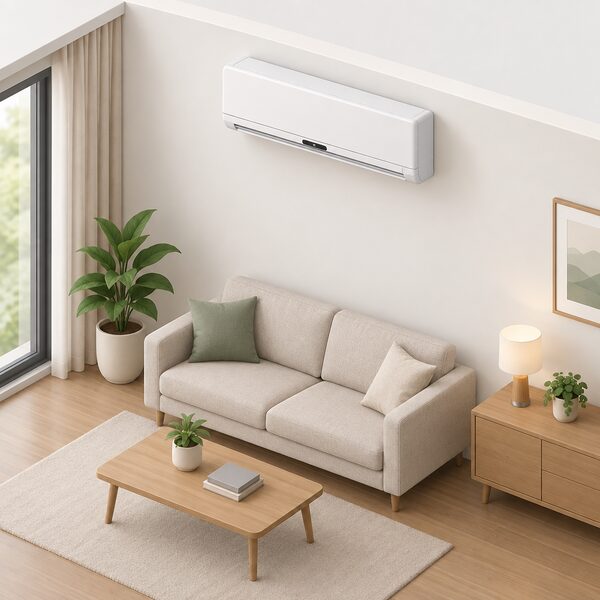
The Premium 2.5kW is where the range's two distinctive technologies both appear as standard. The first is Plasma Quad Technology, built in rather than optional, which the maker says removes viruses, bacteria, allergens and dust2. The second is the 3D i-see sensor, which detects room occupancy, position and body temperature to deliver what the maker calls precise, energy-efficient comfort9.
The sensor is the more consequential of the two for running costs. A unit that knows whether a room is occupied and where the people in it are sitting can adjust its output rather than conditioning an empty space. The same sensor appears across the Premium range, including the 5.0kW size and the multi-split indoor unit, so it is a family feature rather than a single-model extra8. Mitsubishi Electric has described the sensor as monitoring room occupancy, position and body temperatures automatically, and as built into the latest units11.
The Premium is listed in four colours: Red, Black, White or Silver6. That is one more than the ZEN offers, and it reflects the Premium's position as the design-led option in the range. The 2.5kW size carries a heat output of 2.5kW2.
Prices for the Premium 2.5kW also disagree between listings. One shows £954.162. Another shows £1,144.99 including VAT as a sale price, with £954.16 excluding VAT6. A high street figure of £1,286.99 including VAT and £1,072.49 excluding VAT appears elsewhere4. The pattern suggests a list price and a discounted price being quoted side by side, with the VAT position not always stated. One listing shows the Premium as pre-order rather than in stock13.
Elegance 2.5kW: V-Blocking filtration in a wall-mounted unit
The Elegance 2.5kW takes a different approach to air quality. Instead of Plasma Quad, it uses an Advanced V-Blocking filter, which the maker says neutralises bacteria, viruses, allergens, dust and mould for cleaner, healthier air3. The same filter description appears on the Elegance multi-split indoor unit and on the Elegance listings for new-build and renovation projects, so it is the family's standard filtration rather than a size-specific feature14.
The Elegance also carries a self-cleaning mode on the MSZ-AY model, which the maker says prevents mould and odours, alongside a Dual-Barrier coating intended to maintain long-term efficiency4. That combination matters in a UK context: a wall unit that sits idle for much of the year can develop odours, and a self-cleaning cycle addresses the part of the problem that happens inside the unit rather than in the room.
Connectivity matches the rest of the range. Built-in Wi-Fi provides remote control and monitoring through MELCloud, with voice control compatible with Alexa and Google Assistant3. The 2.5kW model is described as having a luxury matt finish suited to residential and light commercial spaces3.
Stock is worth checking before an installation is booked. One listing shows the Elegance 3.5kW as low stock at five units3. Prices for the Elegance family appear in the same inconsistent form as the rest of the range, with a listed figure of £85.00 on one page5. As with the ZEN, that figure is too low to be a complete system and should be read as a component or accessory price rather than the cost of a fitted unit.
ZEN 5.0kW: when a room needs more than 2.5kW
Sizing guidance from a UK supplier puts a 2.5kW system in smaller rooms such as compact bedrooms and small offices, and a 3.5kW system in larger bedrooms, larger home offices, garden rooms, small living rooms, or spaces with more sunlight and glazing17. A 5.0kW unit sits above both, for larger rooms again. The same guidance appears on a second page, so it is consistent within that source18.
The range offers 5.0kW in more than one family. The ZEN 5.0kW, the Premium 5.0kW and the Elegance 5.0kW are all listed at that output8. The M Series as a whole spans 1.5kW to 5.0kW, which sets the ceiling for wall mounted units in this range1. A separate model, the MSZ-RZ25, is listed at 5kW cooling and 3.2kW heating, which illustrates the general pattern that heating output is lower than cooling output for the same unit19.
For a room that a wall unit does not suit, the range extends beyond high wall mounting. The MFZ-KT indoor console unit is available in 2.5kW, 3.5kW and 5.0kW sizes and is described as perfect for floor-level installation, with auto swing vanes for balanced air distribution20. A 4-way blow ceiling cassette is also listed, with four-way airflow distribution for even cooling and heating throughout a room5. Those alternatives matter where wall space is taken by glazing or fitted furniture.
Air purification: what these units remove from the air
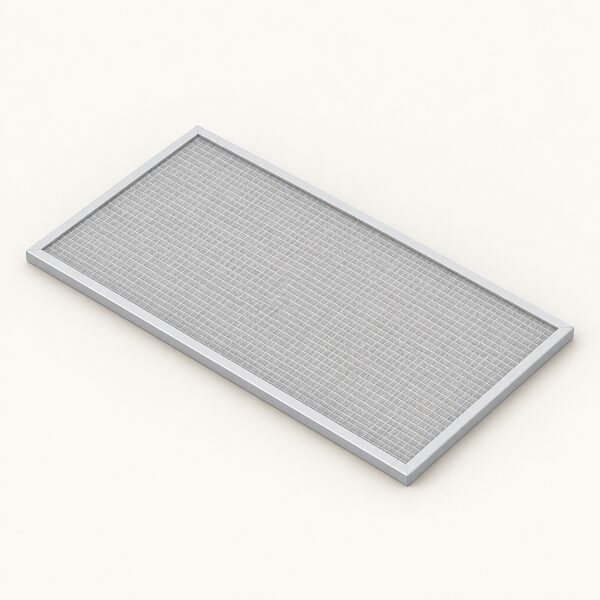
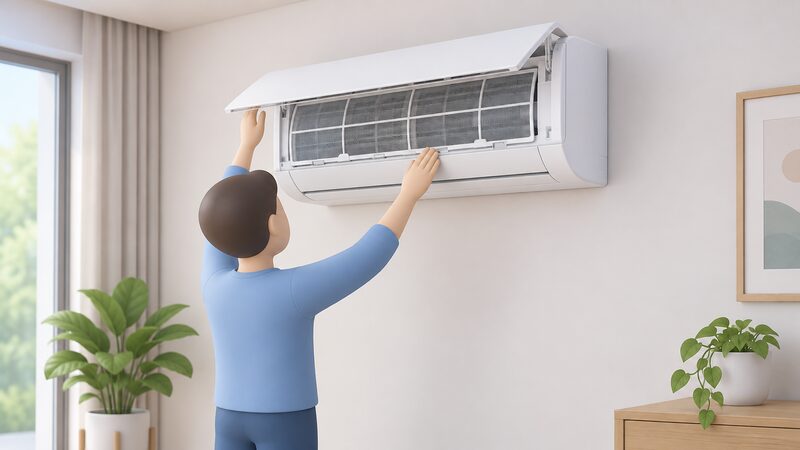
The purification claims differ by family, and it is worth separating what is built in from what is optional. The Premium's Plasma Quad Technology is built in and, in the maker's words, removes viruses, bacteria, allergens and dust2. The ZEN's Plasma Quad Connect is an optional accessory that the maker says neutralises viruses, bacteria, PM2.5 and more2. The Elegance's Advanced V-Blocking filter is built in and, per the maker, neutralises bacteria, viruses, allergens, dust and mould3. The Classic family is described more simply, with advanced filtration that removes dust and allergens10.
These are manufacturer claims about filtration stages within the unit, not independent test results, and they should be read as such. The wider ventilation literature is a useful counterweight. Independent guidance notes that some ventilation units can be equipped with carbon filters to remove a portion of gas-phase pollutants such as nitrogen oxides, and that purge ventilation, delivered simply by opening windows or doors, removes high concentrations of pollutants and water vapour21. A split system recirculates and filters air in a room; it does not replace ventilation, and the two do different jobs.
Other makers make comparable claims, which puts the Mitsubishi Electric position in context rather than making it unique. Hitachi lists up to four air purification technologies across its residential range, covering a pre-filter, an air purification filter, a heat exchange cleaner and an ionizer22. Toshiba's DAISEIKAI 10 uses a Plasma Ionizer that the maker says removes airborne contaminants such as dust, pollen and other allergens24. For a household, the practical question is which filtration stage is included in the price and which is an add-on.
Prices and colour options across the range
Published prices for this range are inconsistent, and the inconsistencies are large enough that no single figure should be treated as the price of a fitted system. The table below sets out what each listing shows, with the model named, so the spread is visible rather than averaged away.
| Model | Published figure | Notes |
|---|---|---|
| ZEN 2.5kW | £103.332 | Too low for a complete system |
| ZEN 2.5kW | £1,009.995 | Separate listing |
| ZEN 2.5kW | £944.99 high street; £1,133.99 inc VAT / £944.99 ex VAT4 | Two figures on one page |
| ZEN 3.5kW | £1,186.99; high street £1,589.997 | |
| ZEN 5.0kW | £1,306.66; high street £1,999.998 | |
| Premium 2.5kW | £954.162 | |
| Premium | £1,144.99 inc VAT sale; £954.16 ex VAT6 | |
| Premium | £1,286.99 inc VAT / £1,072.49 ex VAT high street4 | |
| Classic wall mounted | £702.99 inc VAT / £585.83 ex VAT4 | |
| Low wall unit | £1,599.995 |
The ZEN 2.5kW appears at both £103.33 and £1,009.99, and the Premium 2.5kW at both £954.16 and £1,144.992. The most likely explanation is that some pages quote a list price and others a discounted price, and that some figures cover a component rather than a system. None of the figures states whether installation is included, and none confirms the VAT position consistently.
Colour is more straightforward. The Premium comes in Red, Black, White or Silver6. The ZEN comes in Black, Silver or White, on both the single split and multi-split indoor units2. Colour applies to the indoor unit's front panel, which is the part visible in a room. For wider cost context, including installation, the site's guide to air conditioning cost covers what a fitted system involves.
Smart control: the Alexa skill and what it needs

Voice control on this range runs through MELCloud, and it needs a chain of things in place before it works. The unit must be turned on, connected to power and connected to the home's Wi-Fi network25. The household needs an Alexa-enabled device such as an Echo, Echo Dot or Echo Show, and the MELCloud app, which is the official companion app for the air conditioner and is downloadable on a smartphone or tablet25.
Enabling the skill is done in the Alexa app: open the menu, select Skills and Games, search for the official Mitsubishi Electric air conditioning skill, and enable it by following the on-screen instructions and logging in with the account details25. Once set up, commands are room-specific. The maker's examples include "Alexa, set the living room AC to 22 degrees", "Alexa, increase the temperature of the bedroom AC" and "Alexa, turn off the air conditioner in the kitchen"25.
The M Series units come with a remote control with a built-in Wi-Fi interface, enabling system monitoring through the Mitsubishi Electric app, and are compatible with Alexa and Google Assistant enabled devices26. The range of controls also supports strategies including night cooling and limiting setpoints, and the Remote Monitoring Interface and MELCloud provide a Wi-Fi app interface for remote monitoring and control27.
This is where the range creates its clearest dependence. Local control at the unit and through the supplied remote continues without an internet connection. Scheduling from outside the home, energy monitoring and remote diagnostics depend on home broadband, the manufacturer's servers and the MELCloud app. A household that wants cooling to work independently of a cloud service should treat the app features as an addition rather than the primary control. The site's guide to air conditioning controls and Wi-Fi sets out the wider picture.
Where the range sits in the UK market
Mitsubishi Electric's position in the UK rests on the breadth of the M Series and on the split between families. The wall mounted range covers 1.5kW to 5.0kW, which is the span most domestic rooms fall within1. Above and beside it sit the console unit in 2.5kW, 3.5kW and 5.0kW sizes and the 4-way blow ceiling cassette, so a household is not limited to high wall mounting5. The M Series is described by the maker as a premium range of split air conditioning units, offering top of the range units with a modern look26.
The brand also appears in independent and trade contexts. Mitsubishi Electric's Ecodan heat pump range is described as made in Britain, to British Standard, for British homes28. A case study of a housing project records a system using CO2 as a refrigerant29. The company has also announced pre-plumbed cylinders with FTC-7 controls for Ecodan heat pumps, with a colour touch screen control and a filter designed for heat pump use30. Those are heating products rather than air conditioning, but they indicate the scale of the UK operation behind the split range.
Several models hold Quiet Mark certification for low noise1. For a bedroom installation, noise is often the deciding factor between one unit and another, and the site's guide to the quietest air conditioning for a bedroom covers how indoor and outdoor unit noise is assessed.
For a household weighing energy independence, the position is specific. A split system cools and heats using electricity, so it reduces reliance on gas for the rooms it serves, and a reverse-cycle unit can heat as well as cool19. What remains is a dependence on the electricity grid and on an electricity supplier, on a manufacturer's app and servers for remote features, and on a qualified installer for anything involving the refrigerant circuit. The site's guide to cooling and energy independence sets out how those trade-offs work across cooling options.
Sources30 cited
- M Series wall mounted air conditioning, Mitsubishi Electric, 2026
- Home office cooling and heating systems, CoolEasy, 2026
- Living room cooling and heating systems, CoolEasy, 2026
- High wall mounted single split air conditioning systems, CoolEasy, 2026
- Single split air conditioning, CoolEasy, 2026
- Air conditioning heat pump systems for home renovations, CoolEasy, 2026
- Garden room cooling and heating systems, CoolEasy, 2026
- Kitchen cooling and heating systems, CoolEasy, 2026
- Energy efficient air conditioning with low running costs, CoolEasy, 2026
- Multi-split air conditioning, CoolEasy, 2026
- Coolair showcases stylish new R32 air conditioning, Mitsubishi Electric, 2017
- Air conditioning and heating, Mitsubishi Electric, 2017
- Nursery and baby room air conditioning systems, CoolEasy, 2026
- Air conditioning heat pumps for new build homes, CoolEasy, 2026
- Whole home multi-split air conditioning systems, CoolEasy, 2026
- High wall mounted air conditioning systems, CoolEasy, 2026
- Air conditioning size guide, CoolEasy, 2026
- Mitsubishi Electric low wall indoor unit, CoolEasy, 2026
- MSZ-RZ R290 wall mounted, Mitsubishi Electric, 2026
- Conservatory cooling, CoolEasy, 2026
- Ventilation, BESA, 2026
- Residential air conditioning, Hitachi Cooling & Heating, 2026
- Wall mounted air conditioning units, Hitachi Cooling & Heating, 2026
- Toshiba Carrier launches DAISEIKAI 10, Toshiba Air Conditioning, 2024
- Alexa, make me cool, Mitsubishi Electric, 2020
- How to choose the right home air conditioning, Mitsubishi Electric, 2025
- Understanding controls, Mitsubishi Electric, 2018
- Mitsubishi Electric brand page, Quiet Mark, 2026
- Mitsubishi Electric Tulloch Homes case study, Heat Pump Association, 2026
- Pre-plumbed cylinders with FTC-7, Mitsubishi Electric, 2024
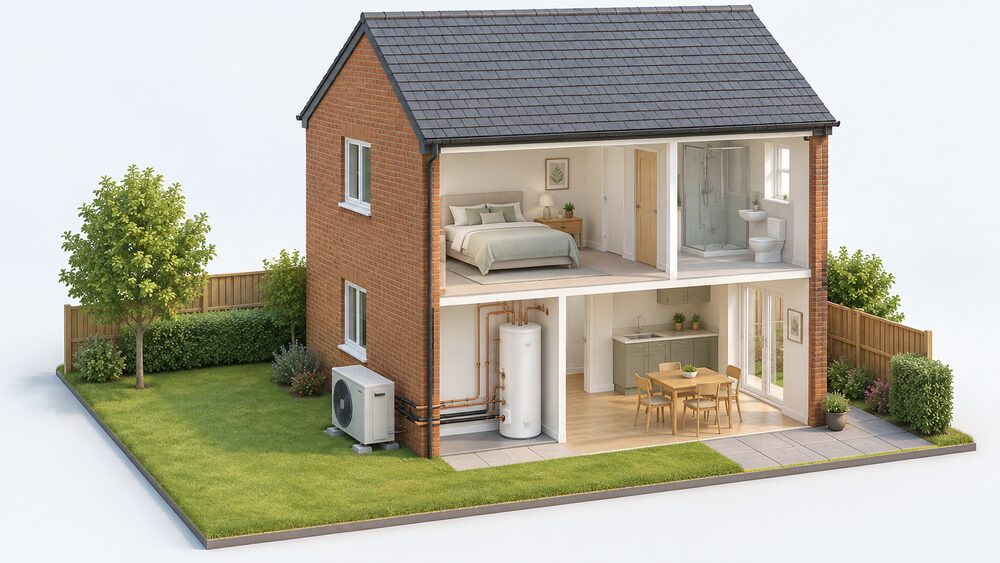 Mitsubishi Electric heat pumpsMitsubishi Electric Ecodan heat pumps are made in Scotland and sold across the UK.