In this guide
Most split air conditioners sold in the UK are heat pumps that run in both directions. In cooling mode the unit takes heat out of a room and rejects it outside. In heating mode the refrigerant circuit reverses and the same hardware takes heat from the outdoor air and delivers it indoors. The Chartered Institution of Building Services Engineers describes a heat pump as a device that, "when operated in reverse, removes heat in the same way as an air conditioner"1, and the Renewable Energy Association puts the principle plainly: "The device which does this can be thought of as a refrigerator operating in reverse"2.
The practical consequence is that a household buying cooling can also buy heating from the same box. Which? notes that "If the unit is reversible, it can provide both heating or cooling. But not all do this"3, so reversibility is a specification to check rather than an assumption. NICEIC makes the same point from the electrical side: air-to-air heat pumps "can also function in reverse, pushing hot air outside to keep your home cool in summer"4.
The efficiency case is the reason this matters for a household's energy position. An SPF of 4.0, the government's own worked example, "means that for every 1 kWh of electricity consumed, the heat pump delivers 4 kWh of heat"5. That is a different proposition from a resistive electric heater, which converts one unit of electricity into at most one unit of heat. The sections below set out how the reverse cycle works, what the ratings mean, what a specific fixed system and a portable unit deliver, what installation and planning require, and where the dependence on the grid and on a certified engineer remains.
Air conditioning that heats: how a reverse-cycle unit works
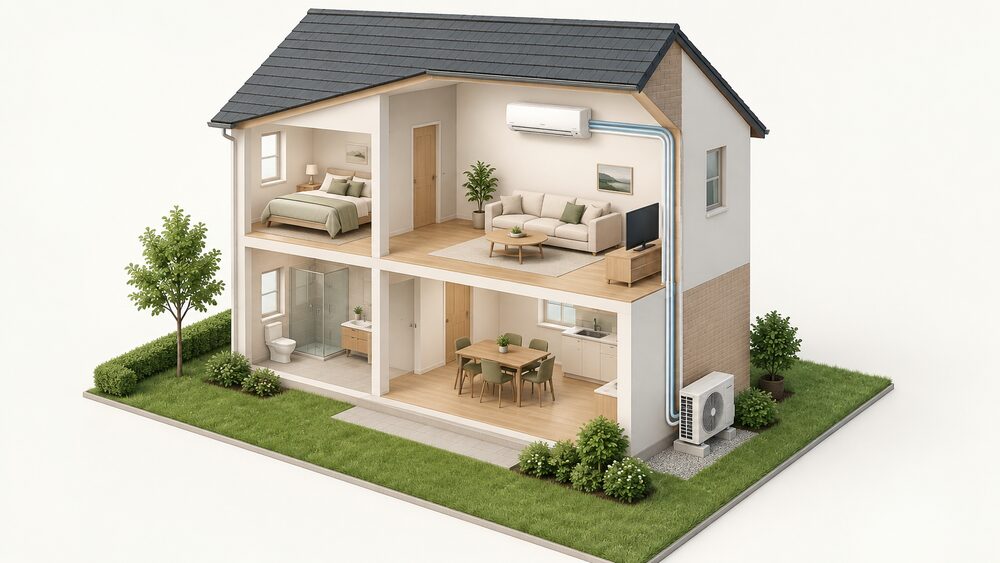
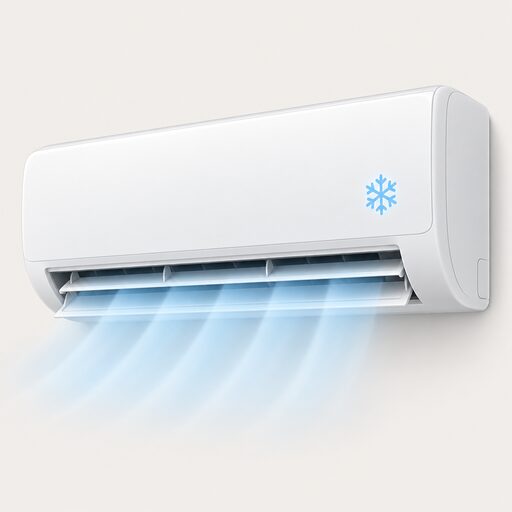
A reverse-cycle air conditioner is a vapour compression heat pump with a reversing valve. In cooling mode the indoor coil is the evaporator: refrigerant at low pressure absorbs heat from room air and carries it to the outdoor coil, which rejects it. In heating mode the valve swaps the roles of the two coils, so the indoor unit becomes the condenser and releases heat into the room while the outdoor unit absorbs it from outside air, even when that air is cold.
The physics is the same as a domestic refrigerator, which is why the trade bodies reach for that comparison. The Renewable Energy Association's description of a heat pump as "a refrigerator operating in reverse"2 is the clearest short statement of it. CIBSE's formulation covers the other direction, describing a heat pump that, "when operated in reverse, removes heat in the same way as an air conditioner"1. Both descriptions are of one machine with a reversible circuit.
What this means for a household is that the same capital purchase serves two seasonal needs. A unit sized for summer cooling will also carry heating in the shoulder months and, depending on the model, through winter. The LUX AIR Designer 5.0kW system, for example, is rated for operation from minus 15 to 52 degrees Celsius across cooling and heating7, which covers UK outdoor conditions year round.
The dependence that remains is on electricity. A reverse-cycle unit does not store heat, does not burn a fuel on site and does not generate anything. It moves heat using a compressor, and the compressor runs on mains electricity from a supplier. The efficiency gain over a resistive heater is real and large, but it is a gain in how much heat each unit of electricity yields, not a step away from the grid. A household that wants to reduce that dependence further is looking at on-site generation, which is a separate question from the heat pump itself.
Fixed inverter systems, portable units and industrial spot coolers: which fits which room
The choice between a fixed system and a portable unit is largely a choice about how much of the home is being served, and how much electricity the cooling costs.
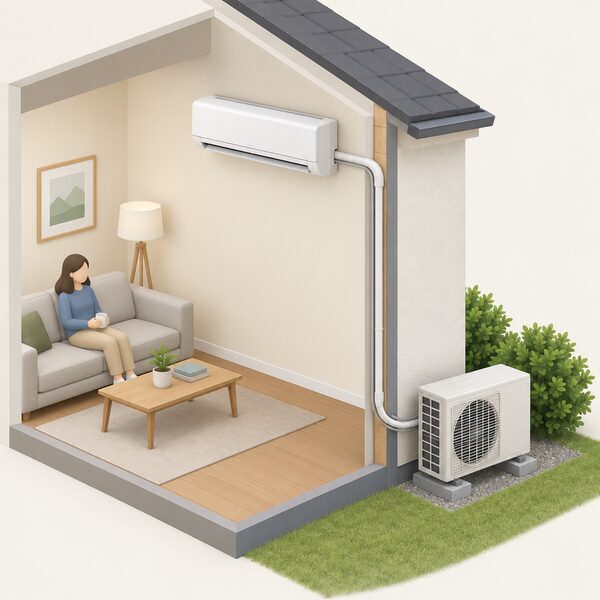
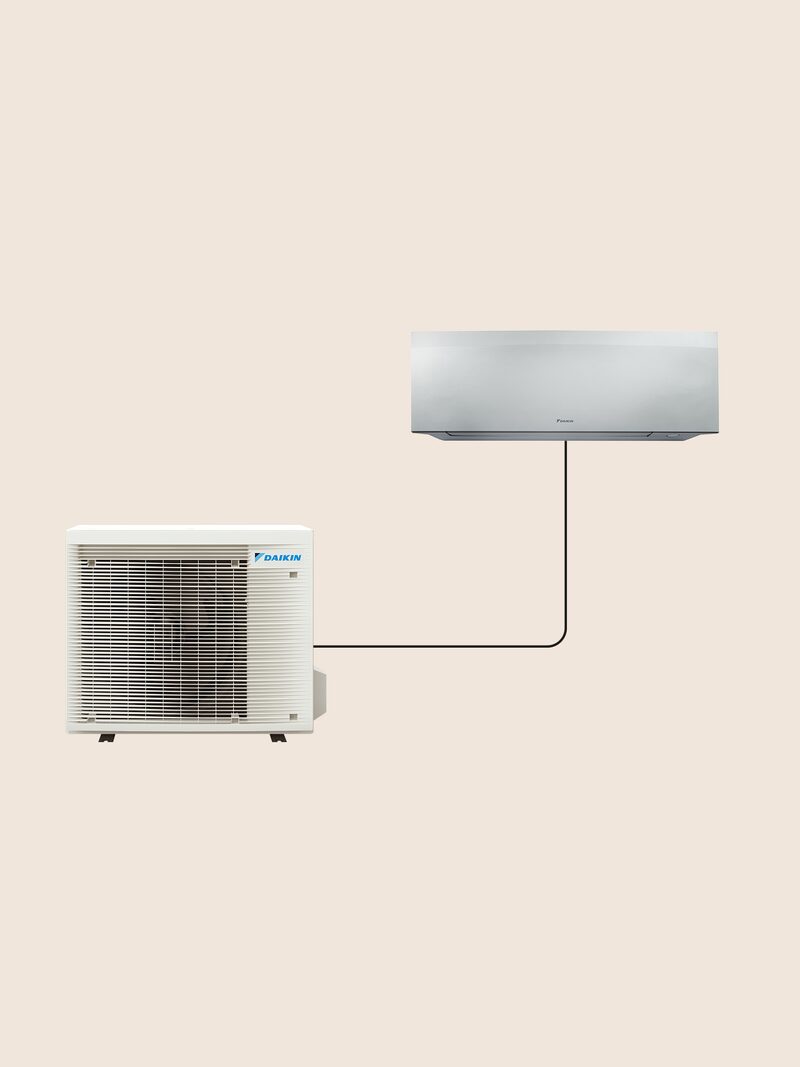
A fixed split system mounts an indoor unit on a wall, in a ceiling void or in a cassette, and pairs it with an outdoor unit. It is the format that covers a room properly and, in reversible form, heats it as well. A multi-split arrangement runs several indoor units from one outdoor unit, which suits a flat or a house where more than one room needs conditioning. The split air conditioning and multi-split air conditioning guides cover the pipework and siting implications of each.
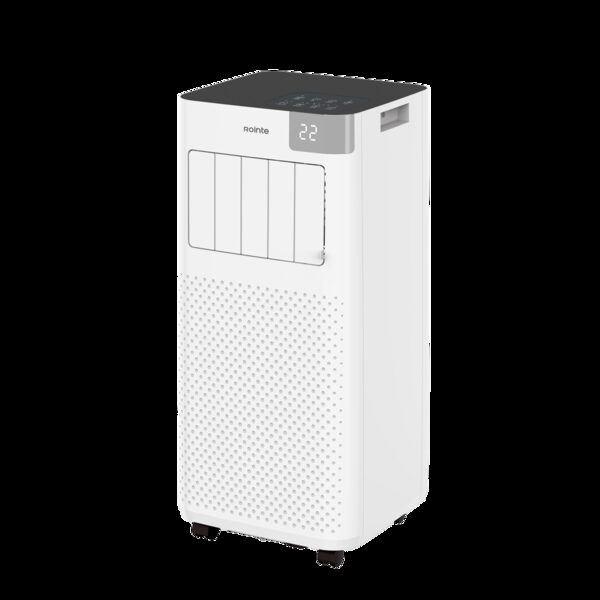
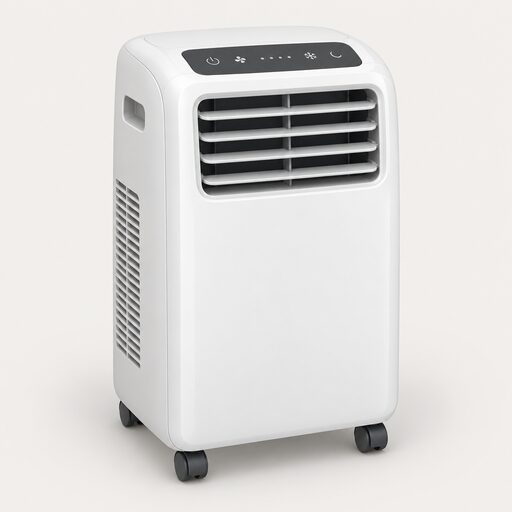
A portable unit is a single box on castors with a hose to a window or wall vent. It is the option for a rental, a room where a fixed installation is not possible, or a household that wants to test whether cooling is worth having before committing. The Centre for Sustainable Energy's advice is blunt about the running cost: "portable units use 30-50% more electricity than fixed systems"11. That gap is the price of the flexibility.
Industrial spot coolers are a third category, aimed at a workstation or a small plant room rather than a living space. They are not domestic heating appliances and do not belong in a comparison of home heating options.
| Format | Best suited to | Heating capability | Relative electricity use |
|---|---|---|---|
| Fixed single split | One room, permanent installation | Yes, if reversible | Baseline |
| Fixed multi-split | Several rooms, one outdoor unit | Yes, if reversible | Baseline |
| Portable unit | Rental, temporary, one room | Some models | 30 to 50% more than fixed11 |
| Industrial spot cooler | Workstation, plant room | No | Not a domestic heating option |
The room-by-room question is really a question about how many hours a year the unit will run. A fixed system earns its installation cost where cooling and heating are both wanted and the room is used daily. A portable unit earns its place where the installation is not possible or not yet justified.
Efficiency: SCOP 4.0, SEER 6.1 and what the ratings mean in practice
Two seasonal ratings matter on a heat-pump air conditioner, and they measure opposite seasons.
SEER is the seasonal energy efficiency ratio for cooling. Approved Document L, the building regulations guidance for England, states that the seasonal energy efficiency ratio for a comfort cooling system "should be a minimum of 4.0"6. The Northern Ireland building regulations discussion document puts the same threshold in a consultation context, proposing "for cooling systems, to increase the seasonal energy efficiency ratio (SEER) to 4.0"12. A unit below that figure is at the bottom of what the guidance contemplates.
SCOP is the seasonal coefficient of performance for heating. NICEIC describes it as "a way to rate a heat pump's performance in a given climate"4, which is the key qualification: SCOP is climate-specific, so a figure quoted for one market does not transfer directly to another. The government's heat pump transition report gives the arithmetic in a form a householder can use: "An SPF of 4.0 means that for every 1 kWh of electricity consumed, the heat pump delivers 4 kWh of heat"5. SPF, the seasonal performance factor, is the measured field equivalent of the laboratory SCOP.
The LUX AIR Designer 5.0kW system carries a SCOP of 4.0 and a SEER of 6.1, with an A+++ heating rating and an A++ cooling rating7. Read together, those figures say the unit is comfortably above the minimum cooling threshold and at the level the government's own example uses for heating.
What the ratings do not capture is how the unit is run. A heat pump held at a steady temperature performs closer to its rated SCOP than one cycled on and off against a wide setback. The ratings are a comparison tool between models, not a prediction of a particular household's bill.
Specifications of the LUX AIR Designer 5.0kW system
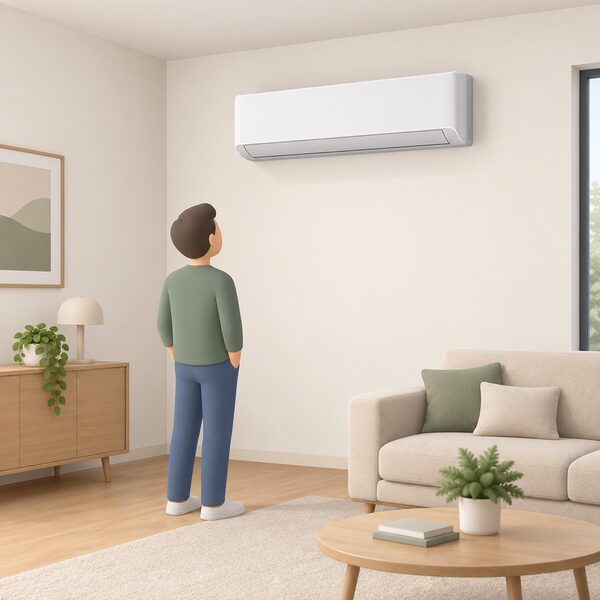
The Designer 5.0kW is a fixed wall-mounted inverter split system with a reversing circuit, sold in the UK as an air conditioning and heat pump unit. The table below sets out the maker's published specification.
| Specification | Figure |
|---|---|
| Heating capacity | 19000 BTU/h / 5.0 kW (max 5.3 kW) |
| Cooling capacity | 18000 BTU/h / 5.0 kW (max 5.2 kW) |
| SCOP | 4.0 |
| SEER | 6.1 |
| Heating efficiency rating | A+++ |
| Cooling efficiency rating | A++ |
| Power input, cooling to heating | 1550 to 1345 W (max 2.4 kW) |
| Current input, cooling to heating | 6.8 to 5.9 A |
| Power rating | 1/220-240V/50Hz |
| Indoor airflow | 520/620/720/820 m³/h |
| Dehumidification | 1.4 L/h |
| Indoor unit dimensions | 900 x 291 x 220 mm (WxDxH) |
| Outdoor unit dimensions | 780 x 270 x 560 mm (WxDxH) |
| Pipe diameter | 1/4 inch and 1/2 inch, liquid and gas |
| Connecting pipe included | 4 m |
| Room size | up to 45m² |
All figures in this table are the maker's published specification for this model7.
The room size figure of up to 45m² is the maker's coverage claim and sits alongside the air conditioning sizing guidance on matching kW to floor area, which is the more reliable route to a decision.
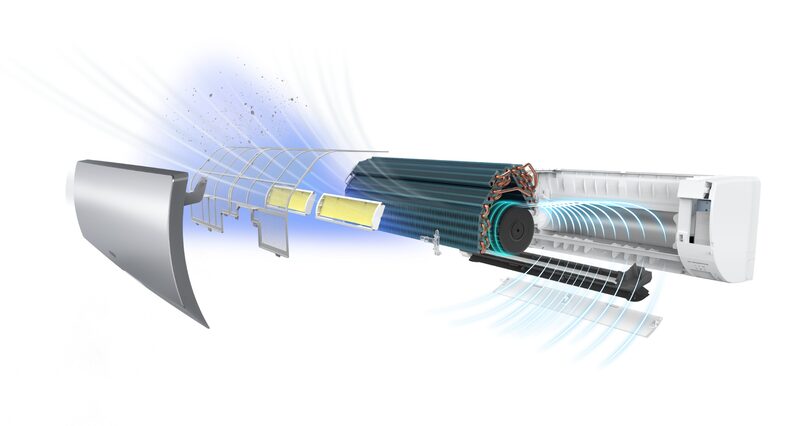
The unit is also specified with UV-C sterilisation for the circulating air7. Filtration and sterilisation features vary between models and are worth checking against the air conditioning maintenance guidance on filter cleaning, since a filter that is not cleaned stops doing its job whatever the specification says.
Portable heat pumps: 4.0kW, 35m² coverage and where they fall short
A portable heat pump is a single-box unit that cools in summer and heats in winter, with a hose that must be vented to outside. The Lux Air 4.0kW portable air conditioning heat pump is stated to cover rooms up to 35m², with conservatories up to 22m² maximum7. That is a one-room appliance, not a whole-home solution.
The limits are worth stating plainly, because they are not fixed by buying a larger portable model.
- One room only. Portable electric heaters are "designed for small spaces and not a substitute for an efficient central heating system"13. The same applies to a portable heat pump in heating mode.
- Higher running cost than fixed. Portable units use 30 to 50% more electricity than fixed systems11, so the heating they deliver costs more per kWh of heat than a fixed split would.
- Venting required. The hose has to go somewhere, which means a window kit or a wall vent, and an unsealed window undermines the performance of the unit.
- Condensate handling. In cooling mode some units self-evaporate and need no drain hose until the tank fills; in dehumidifier mode a hose is required.
- No whole-home control. A portable unit heats the room it stands in. It does not integrate with a central heating system or a cylinder.
For a household weighing a portable heat pump against a fixed system, the split vs portable air conditioning comparison sets out the trade-off in more detail, and the portable air conditioners guide covers how the format works.
Cost: prices from £499.99 to £569.99 and the 0% VAT window
Prices for fixed and portable heat pump air conditioning in the UK are quoted by the seller and vary with the model, the capacity and whether installation is included. The figures below are the published prices for the models named.
| Model | Published price |
|---|---|
| iPAC-40 4.0kW Portable Air Con/Heat Pump Unit | £65.00, high street £664.99 |
| Lux Air Portable Air Conditioning Heat Pump 4.0kW (14000 Btu) | £499.99 to £599.99 |
| LUX AIR Designer 5.0kW Inverter System | £519.99, high street £569.99 |
| iPAC Wall Mounted Air Conditioning Inverter System | £569.99 inc VAT (£474.99 ex VAT), high street £619.99 inc VAT (£516.66 ex VAT) |
| Samsung WindFree COMFORT S2 High Wall System | £599.99 to £719.99 |
| iPAC Ceiling Cassette Air Conditioning Inverter System | £949.99 inc VAT (£791.66 ex VAT) |
These are seller-published prices and some of them conflict: the LUX AIR Designer is listed at both £519.99 and £433.33, and the iPAC-40 at both £65.00 and a high street figure of £664.997. Where a price is not published, air conditioning is installer-quoted and no range should be assumed.
The VAT position is the more consequential number for a household planning a fixed installation. The government's guidance states: "You'll pay a rate of 0% VAT on both:" certain energy-saving products supplied by an installer and the cost of all work to install those products in a home14. That relief applies in Great Britain. It runs until 31 March 2027, with a 5% reduced rate from 1 April 20278. A household commissioning a fixed system before that date is buying inside the window; one commissioning after it is not.
The air conditioning cost and air conditioning running costs guides cover the split between capital and running cost, and the air conditioning grants page covers what support exists.
Installation: F-GAS commissioning, pipework and what arrives in the carton
A fixed split system arrives in two parts and is joined on site. The LUX AIR Designer 5.0kW ships with insulated copper pipes of 4 m, an indoor unit wall mounting bracket, an interconnecting cable, a power cable, an outdoor fitting kit comprising a drain adaptor, pipe wrap and wall cover, and it is pre-charged with refrigerant7. The pipe diameter is 1/4 inch and 1/2 inch, liquid and gas7.
The pre-charge does not make the installation a DIY job. Work on the refrigerant circuit is a reserved activity. The F-Gas Handler profession is regulated under "Regulation 2015/2067 (as retained in UK law)", which "establishes the minimum requirements for the training and certification" of the people who carry it out15. Reserved activities include the leak checks that a commissioned system requires15. Certification is issued through the Building Engineering Services Association, with the Environment Agency regulating in England and Wales, the Scottish Environment Protection Agency in Scotland and the Northern Ireland Environment Agency in Northern Ireland15.
The F-gas rules for air conditioning guide sets out what the certification covers, and the air conditioning installation page covers the survey, pipework and commissioning sequence in full.
For gas work elsewhere in the home, the registration check is separate and free. The Health and Safety Executive states that "consumers can check an engineer is registered by texting Gas and the engineers seven digit licence number to 85080"16, and that "consumers can check a business is registered by texting Gas and the business registration number to 85080"17. That service covers gas engineers, not F-Gas handlers, and the two should not be confused.
Planning permission and permitted development for air source units
In most cases, installing an air source heat pump at a house is permitted development18. The right is Class G, which allows the installation, alteration or replacement of an air source heat pump on a residential property19, and it applies to a house or block of flats or within the curtilage, including on a building within that curtilage21.
Permitted development is conditional, and the conditions matter more for a cooling-led installation than for a heating-led one. The unit must not be "used solely for cooling purposes"10. A reversible unit that heats as well as cools sits inside the right; a cooling-only unit does not. The installation must also comply with the MCS Planning Standards (MCS 020) or equivalent24, and where compliance is not achieved a planning application will be required25.
Quantity limits differ by property type. Only the first installation of an air source heat pump would be permitted development24. On a non-detached property, meaning semi-detached or terraced, or a block of flats, more than one air source heat pump requires planning permission26. One existing air source heat pump on a non-detached dwelling or block of flats, or two existing units on a detached house, also triggers the requirement10.
| Condition | Position |
|---|---|
| First installation at a house | Permitted development if conditions met24 |
| Second unit, detached house | Planning permission required10 |
| More than one unit, semi-detached, terraced or flat | Planning permission required26 |
| Used solely for cooling | Not permitted development10 |
| MCS 020 compliance not achieved | Planning application required25 |
| Listed building or scheduled monument | Not permitted development27 |
| Conservation area | Permission required subject to size and location restrictions28 |
Permitted development rights can also be removed by a planning condition, an Article 4 Direction or another restriction19. Flats and shared buildings face tighter rules, and planning permission is more likely to be required18. Non-domestic buildings are outside the rights altogether23.
The position differs across the UK. In Scotland, Class 6H permits the installation, alteration or replacement of an air source heat pump on a dwelling or within its curtilage29. In Wales, permitted development rights were the subject of a 2025 consultation on changes25. In Northern Ireland the building regulations position is set out in a separate discussion document12. The air conditioning planning permission in England, Scotland, Wales and Northern Ireland pages cover each jurisdiction.
Smart control, filtration and running a heat-pump air conditioner for independence
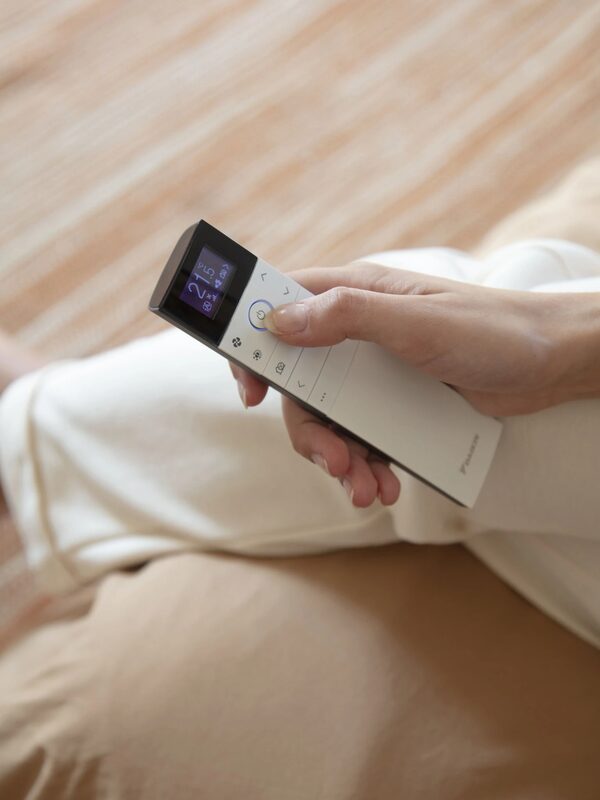
Air-to-air heat pumps are "programmable, just like other heating systems and often come with a remote and/or smart wi-fi option", and many offer dehumidification and air purification functions3. The LUX AIR Designer 5.0kW includes UV-C sterilisation of the circulating air and a dehumidification rate of 1.4 L/h7. Those features are part of the appliance rather than add-ons.
Voice control is model-specific. The Homematic IP Radiator Thermostat Pure is controlled "via app, directly on the device or with voice control via Amazon Alexa and Google Assistant"30. That is a radiator thermostat rather than an air conditioner, but it illustrates the pattern: voice control is a feature of particular products, not a property of heat pumps in general. The air conditioning controls and wifi guide covers the controller options, and the wall mounted air conditioning with Alexa and Google page lists models that support it.
Smart metering is a separate system that can be combined with heating controls. Welsh Government guidance notes that smart meters are "independent of smart heating controls", but that "combining the two can enhance your ability to manage your home's heating and energy use remotely"31. For a household running a heat pump, that combination is what turns the efficiency rating into something visible in the day-to-day.
On independence, the honest position is this. A reverse-cycle air conditioner cuts the amount of electricity needed per unit of heat, which reduces exposure to price. It does not remove the need for a grid connection or a supplier, and it does not store heat. The refrigerant circuit can only be worked on by a certified F-Gas handler, so servicing depends on a regulated trade rather than the householder. The controls may depend on a manufacturer's app and a cloud service. What the household gains is a lower running input for the same warmth, and a single appliance covering both seasons. What it retains is a connection to the grid, a reliance on a certified engineer for anything touching the refrigerant, and, for smart features, a dependence on the maker's software. The cooling and energy independence page sets that balance out in full.
Sources31 cited
- Heat pumps, CIBSE, 2026-09-17
- Heat pumps, Renewable Energy Association, 2026-09-17
- How a heat pump can cool your home, Which?, 2026-07-17
- How heat pumps work: a guide for homeowners, NICEIC, 2025-09-17
- Heat pump transition report, UK Government, 2026-05
- Approved Document L, Conservation of fuel and power, Volume 1: Dwellings, UK Government, 2026-09-17
- LUX AIR 5.0kW Designer Air Con Heat Pump Inverter System, Cooleasy, 2026-09-23
- All year comfort, Daikin UK, 2025
- Class G: installation or alteration of air source heat pumps on domestic premises, legislation.gov.uk, 2025-05-29
- Air source heat pumps, New Forest District Council, 2026-09-17
- How to keep your home cool in hot weather, Centre for Sustainable Energy, 2026-07
- Building regulations discussion document 2023, Northern Ireland Department of Finance, 2023-10-11
- Energy efficient heaters, Uswitch, 2026-07-01
- Tax on shopping: energy-saving products, UK Government, 2026-09-17
- F-Gas Handler for Stationary Refrigeration, Air-Conditioning and Heat Pump Equipment, Regulated Professions Register, 2026-09-17
- Gas safety: frequently asked questions, Health and Safety Executive, 2026
- Gas safety: advice for owner-occupiers, Health and Safety Executive, 2026
- Air source heat pumps, Westmorland and Furness Council, 2026-09-17
- Air source heat pumps, Cornwall Council, 2026-09-17
- Do I need planning permission, Cornwall Council, 2026-09-09
- Planning permission: air source heat pump, Planning Portal, 2026-09-17
- Air source heat pumps, Croydon Council, 2026-09-17
- Air source heat pumps, Pendle Borough Council, 2026-09-17
- Building regulations renewables guidance, Bedford Borough Council, 2026-09-17
- Changes to permitted development rights: summary of responses, Welsh Government, 2025-12
- Air source heat pumps: householder planning advice, Central Bedfordshire Council, 2026-09-17
- Air source heat pumps, London Borough of Hammersmith and Fulham, 2026-09-17
- Planning and listed building consent requirements, West Northamptonshire Council, 2023-12-14
- Householder permitted development rights, Scottish Government, 2024-05-28
- Radiator Thermostat Pure, Homematic IP, 2026
- Smart meters, Welsh Government, 2026
 Using a Heat Pump for CoolingCan a heat pump cool your home in summer as well as heat it in winter?
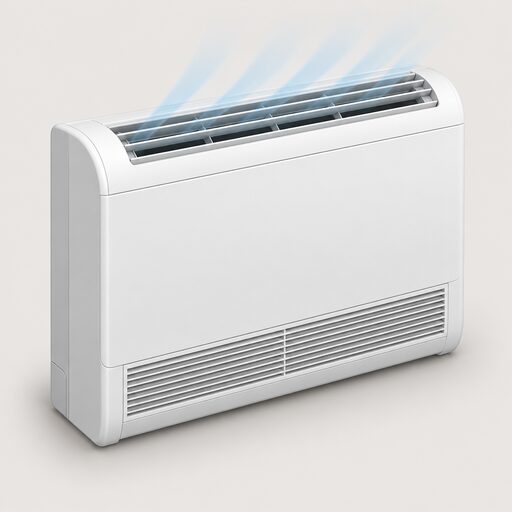 Split Air ConditioningA split air conditioning system cools or heats one room using an indoor unit and an outdoor unit linked by pipes.
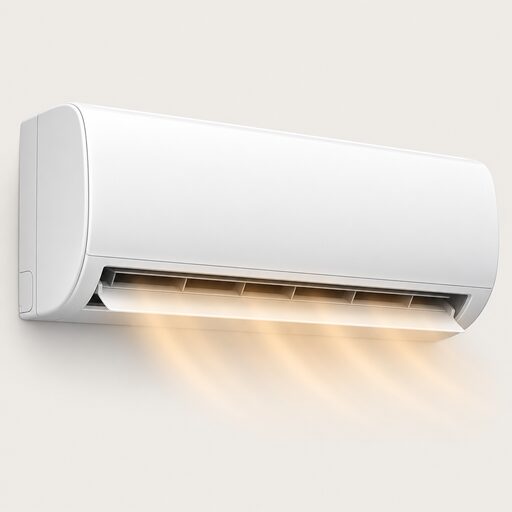 Air-to-Air Heating and CoolingAir-to-air heat pumps deliver warm air through indoor fan units rather than hot water to radiators.
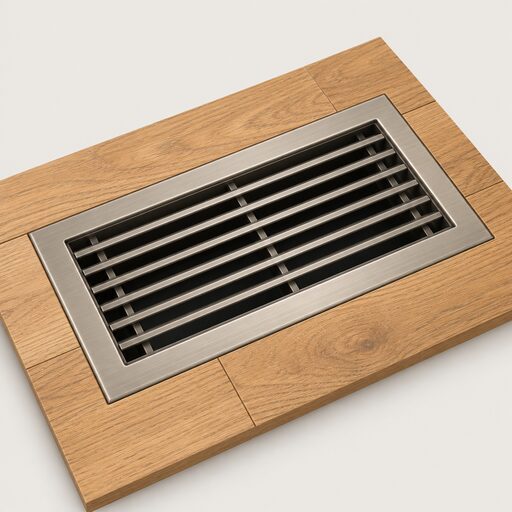 Warm Air Heating SystemsWarm air heating works by pushing heated air through vents in your floors or walls.
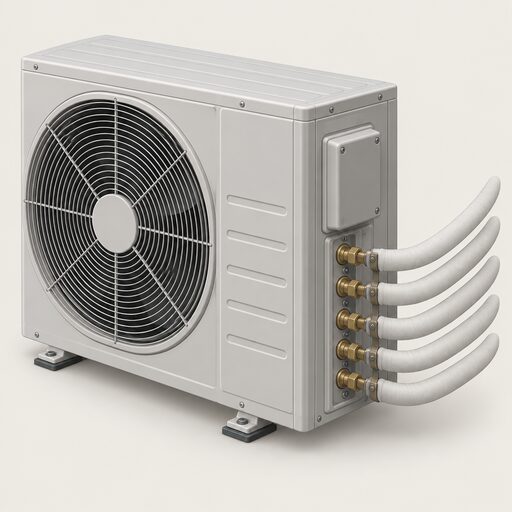 Multi-Split ACHow multi-split air conditioning works when one outdoor unit serves several indoor units: how many rooms one system can serve, independent room control, efficiency, outdoor unit size and sound, planning rules in England and Scotland, servicing and lifespan, the 0% VAT position and how it compares with separate single splits.
 The Full Cooling and Air Conditioning GuideDo you really need air conditioning in a British summer, or would a fan and better shading do the job?