

In this guide
Yes, in a defined set of cases. A pre-charged quick-connect split kit, sold in the UK as an Easy-Fit system, is designed for quick, simple installation without the need for a professional engineer, because the pipework arrives pre-charged and no refrigerant handling is required1. A portable or window-mounted packaged unit needs no refrigerant work at all, since the whole circuit is sealed inside the box2. What no householder can do is install an ordinary split system, because that circuit must be charged and commissioned on site.
The dividing line is the refrigerant, not the electrical work or the brackets. Where the refrigerant circuit is sealed and charged before delivery, the hardest step is removed. Where it is not, an F-gas qualified engineer is needed, and the same rule that governs gas appliances applies in spirit: work on the circuit is not a householder task3.
The practical limits are worth stating at the outset. A single split is one indoor unit connected to one outdoor unit, offering targeted climate control for a defined area rather than a whole house1. An individual wall-mounted monobloc unit heats and cools one room only, so it is not a whole-house solution4. DIY air conditioning is a room-by-room strategy, and the sections below set out what each route involves, what arrives in the box, and what it means for a household's energy independence.
What a DIY air conditioning system is
A DIY air conditioning system is one where the householder can complete the physical installation without touching a refrigerant circuit. Three product families fall inside that boundary, and they differ far more than the marketing suggests.
The first is the portable or packaged unit. A packaged air conditioner is a single indoor unit that draws in warm air from the room and cools it using an air exchanger, recovers or expels moisture, removes hot air through a vent hose and releases cool air into the home2. A window-mounted packaged unit is designed to be installed directly in a window, often used in homes, offices or small rooms where a centralised system is not possible2. Neither involves pipework, brazing or gas.
The second is the through-wall or internal monobloc. The COMPACT range is described as an air conditioner for internal installation without an outdoor unit8. These units sit on an external wall and reject heat through the wall itself, so there is no outdoor box, no interconnecting pipe run and no planning question about a unit on a facade.
The third is the pre-charged quick-connect split, sold in the UK as Easy-Fit. A single split system consists of one indoor unit connected to one outdoor unit, offering targeted climate control for a defined area1. The maker describes the range as perfect for bedrooms, living rooms, garden offices and small commercial spaces1. This is the only one of the three that looks and behaves like a conventional split system, and it is the one most households mean when they ask whether they can install air conditioning themselves.
What all three share is that the refrigerant stays where the factory put it. That single fact is what makes the difference between a weekend job and a job that requires a certified engineer.
Pre-charged and pre-gassed: why it removes the hardest step
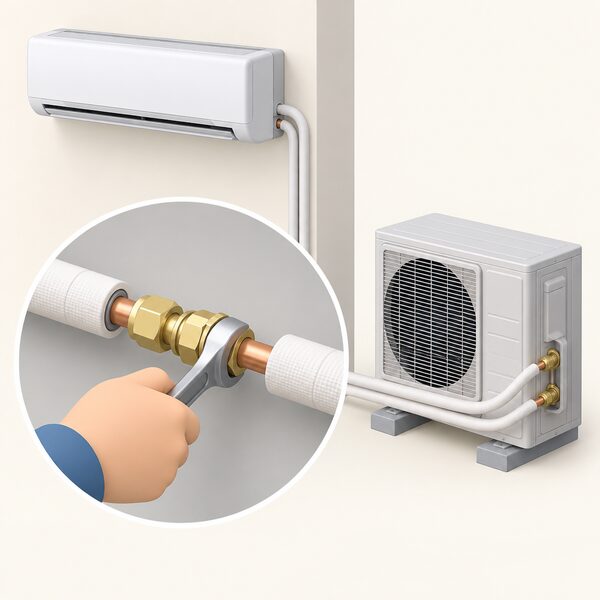
The hardest part of a conventional split installation is not the bracket or the hole in the wall. It is the refrigerant circuit: pulling a vacuum, charging the system to a weighed amount, and leak testing it. That work is reserved to engineers holding F-gas qualifications, and it is the reason a standard split system is not a DIY product.
Pre-charged pipework removes that step entirely. Easy-Fit systems are designed for quick, simple installation without the need for a professional engineer, and the maker's stated reason is that pre-charged pipework means no refrigerant handling is required1. The circuit is sealed and charged at the factory, the pipework arrives with the charge already inside it, and the connection at each end is a mechanical coupling rather than a brazed joint.
The same principle appears in the heat pump market, where it is described in terms of installer qualifications rather than DIY. For monoblock units, all refrigerant is sealed within the outdoor unit, so installers do not require F-gas qualifications9. That is the identical logic: seal the refrigerant at the factory and the on-site skill requirement drops. A monobloc air-to-water heat pump and a pre-charged Easy-Fit split are solving the same problem in the same way.
This is also why the phrase "pre-gassed" is slightly misleading. The unit is not gassed on arrival in the sense of needing a top-up; the charge is already in the sealed circuit and in the pipework that comes with it. There is nothing for the householder to add.
No specialist tools needed: what skills you do need
No refrigerant gauges, vacuum pump or recovery equipment are needed on a pre-charged kit. What is needed is ordinary competence, and it is worth being honest about which parts of the job that covers.
The mechanical work is drilling, fixing brackets, routing pre-charged pipework without kinking it, and setting the indoor unit level so condensate drains properly. The maker's position is that the systems are designed for quick, simple installation without the need for a professional engineer1. That is a statement about the refrigerant step, and it is the maker's own claim about its own product.
The electrical work is the part that carries a legal edge. The installation of air conditioning must comply with building regulations, and it is advisable to contact an installer who belongs to the Microgeneration Certification Scheme or a relevant Competent Person Scheme7. Where a registered installer with the relevant competencies carries out the work, they should be able to self-certify it without the need for close involvement of building control10. A householder fitting the unit themselves does not have that route, so the electrical connection and any new circuit need to be done in a way that satisfies the regulations, which in practice means a qualified electrician for anything beyond a fused spur.
For context on how the wider market handles this, most heat pumps can be installed without having to make changes to your electricity supply11. That is a useful expectation-setter: a single room unit is unlikely to require a supply upgrade, though it does not remove the need for the connection itself to be correct.
What's in the box: everything supplied for installation
What arrives depends entirely on which of the three families the unit belongs to, and the delivery list is the first thing to check before committing to a DIY fit.
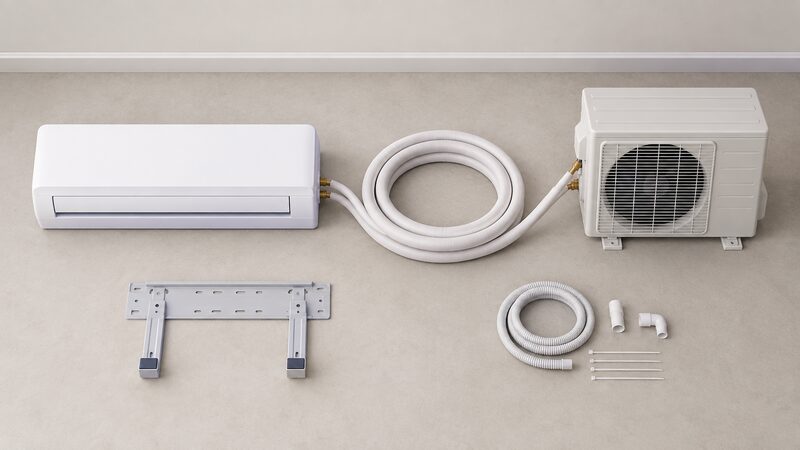
A single split Easy-Fit kit supplies one indoor unit and one outdoor unit, joined by pre-charged pipework1. The pipework is the defining component: it is the part that carries the factory charge and the part that makes the job a DIY one. Brackets, drainage and the electrical connection are the items to confirm against the delivery note, because a missing wall bracket or drain kit turns a weekend job into a wait.
A packaged unit is a single box. It draws in warm air from the room and cools it using an air exchanger, recovers or expels moisture, removes hot air through a vent hose and releases cool air into the home2. The vent hose is the installation: it needs a route to outside, whether through a window, a wall or a purpose-made opening. A window-mounted packaged unit is designed to be installed directly in a window, often used in homes, offices or small rooms where a centralised system is not possible2, which removes the need for any wall penetration at all.
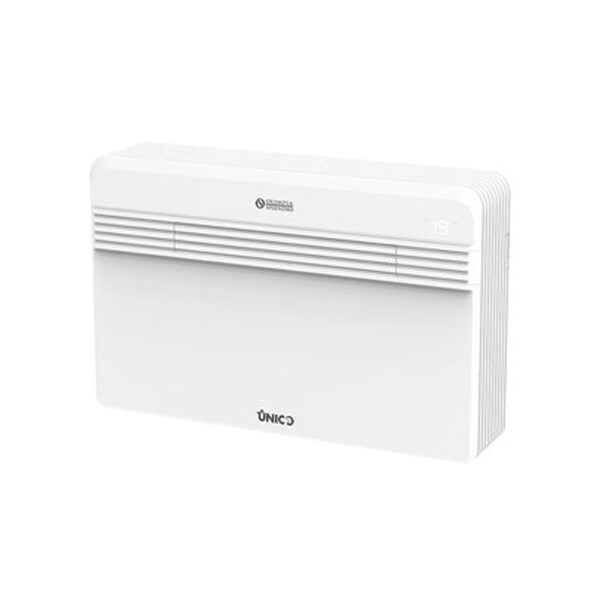
An internal monobloc such as the COMPACT range is supplied as an air conditioner for internal installation without an outdoor unit8. There is no outdoor box to site, no interconnecting pipe run and no external unit to bracket, which simplifies the delivery list considerably.
| System type | What arrives | Refrigerant work on site | Outdoor unit |
|---|---|---|---|
| Pre-charged Easy-Fit single split | One indoor unit, one outdoor unit, pre-charged pipework1 | None required1 | Yes |
| Packaged or window unit | Single self-contained unit with vent hose2 | None required2 | No |
| Internal monobloc (COMPACT) | Internal unit, no outdoor section8 | None required8 | No |
Cooling and heating: heat pump technology in most units

Most air conditioning units are air source heat pumps13. That is HMRC's understanding, stated in its own guidance, and it matters because it means the unit on the wall is not a cooling appliance with a heating mode bolted on. It is a heat pump that runs in both directions.
The independent guidance agrees. Air-to-air heat pumps can be configured for cooling as well as heating14, and many heat pumps function as heating and cooling systems and can even provide summer air conditioning15. Air to air heat pumps are often known as air conditioning units, and they also provide an alternative, efficient heating option16. The terminology is the confusing part: the same box is called an air conditioner in summer and a heat pump in winter.
For a household, the practical consequence is that a DIY-installed unit can contribute to winter heating as well as summer cooling. Some households could install air-to-air heat pumps whilst retaining their previous heating system17, which means the unit does not have to replace a boiler to be useful. It can run alongside one, taking a room or a zone off the main system.
The planning position is more permissive than many householders expect. Domestic heat pumps benefit from permitted development rights, which means that in most cases you do not require planning permission to install them, subject to certain limitations and conditions18. Most heat pumps can be installed under permitted development rules, though some still require planning permission19. The conditions are where the detail lives, and they differ by nation.
That last condition is the one that catches DIY buyers. A cooling-only unit does not benefit from the permitted development route in Wales, so a householder choosing a cheap cooling-only box rather than a reverse-cycle heat pump may find the planning position harder, not easier. The rules for England, Scotland and Northern Ireland are set out on their own pages, and they are not identical.
Inverter technology: consistent temperature with lower energy use
Inverter control is now standard on the units sold into the DIY market, and it is the feature that most affects running cost.
The mechanism is modulation. Rather than switching the compressor fully on and off to hold a temperature, an inverter unit varies its speed. Independent guidance reports that this reduces power consumption by up to 40%5. That figure is a reported reduction rather than a guarantee, and it depends on how the unit is used and what it is compared against, but the direction is consistent across sources.
The maker's own description of the Easy-Fit range is that these systems use inverter technology to optimise energy consumption, providing excellent heating and cooling performance1. The COMPACT range uses inverter technology on both the compressor and the fans8, which extends the same principle to the air movement as well as the refrigeration.
What this means in a room is a steadier temperature. A non-inverter unit swings between slightly too warm and slightly too cool as it cycles, and the compressor start is the noisy part of the cycle. An inverter unit holds closer to the setpoint and runs more quietly for more of the time. For a bedroom or a garden office, that is the difference between a unit that can be left on and one that cannot.
The energy independence angle is modest but real. A more efficient unit draws less from the grid for the same comfort, and a unit that heats as well as cools displaces some gas consumption in the shoulder months. It does not make a household self-sufficient, and it does not remove the need for a grid connection. It reduces the amount of energy bought to achieve a given indoor temperature, which is the only lever a single room unit has.
DIY install or quick professional fit: which suits your home
The choice is not really about difficulty. It is about which parts of the job a householder is willing and able to take on, and which parts the regulations reserve.
A pre-charged Easy-Fit split suits a householder who is comfortable with brackets, a wall penetration, condensate drainage and arranging a qualified electrician for the supply. The maker's stated design intent is that no professional engineer is needed for the refrigerant side1. That is the whole proposition.
A packaged or window unit suits a householder who wants no wall work at all. A window-mounted packaged unit is designed to be installed directly in a window, often used in homes, offices or small rooms where a centralised system is not possible2. The trade-off is efficiency and noise rather than installation difficulty.
An internal monobloc suits a householder who wants no outdoor unit. The COMPACT range is an air conditioner for internal installation without an outdoor unit8, which removes the bracket, the facade and the neighbour question in one step.
Where the job stops being a DIY one is where the refrigerant circuit is not sealed, or where the electrical work goes beyond what the householder can do compliantly. The installation of air conditioning must comply with building regulations, and it is advisable to contact an installer who belongs to the Microgeneration Certification Scheme or a relevant Competent Person Scheme7. For a householder paying for the work themselves, finding an installer is the normal route21, and the advice is not to use a company that cold calls trying to sell the work21.
If an installer is used, the market context is worth knowing. The majority of heat pump installations were carried out by independent installers, at 90%6, with a lead time of one to two months6. A single room unit is a smaller job than a whole-house heat pump, but the same installer availability applies.
What DIY installation means for household energy independence
A DIY air conditioning unit does something specific for a household, and it is worth being precise about how much.
It gives a household direct control over one room's temperature without depending on a central system, a landlord's decision or a shared building service. Where the unit is a reverse-cycle heat pump, it also provides an alternative heating route for that room, and some households could install air-to-air heat pumps whilst retaining their previous heating system17. That is redundancy at room level: if the main heating system is unavailable, one room remains habitable.
The dependence that remains is substantial and should not be understated. The unit runs on electricity from the grid, supplied by a supplier the household does not control. It is manufactured by a company whose warranty, spares and app support sit outside the household's control. If the unit has a smart control app, that app is a further dependency. And a single split covers one zone, not a house: an individual wall-mounted monobloc unit heats and cools one room only, so it is not a whole-house solution4.
The cost picture is where the DIY route pays off, though the figures are installer-quoted rather than published. The cost to install a single unit to cover a single heating zone can be even lower than a whole-house job17, which is the structural reason a room-by-room approach is cheaper than a full system. No published price is available for the kits themselves, so any figure a household sees will be a quote rather than a list price.
There is a wider point about what households can do themselves. Loft insulation is a simple and effective way to reduce heating bills and can be done yourself23. Draught-proofing is a set of small measures that can be done yourself, with no need to spend time and money searching for trustworthy installers24. Self-build guidance recommends installing smart systems that control lighting, heating and cooling based on occupancy and time of day25. A DIY air conditioning unit sits in that same tradition: a household taking a defined, bounded piece of work in-house, with the regulated parts left to the trades that are licensed for them.
The honest summary is that a pre-charged kit removes one dependency, the refrigerant engineer, and leaves the others in place. It reduces the energy bought for a given comfort level and gives a household a second heating route for one room. It does not make a home self-sustaining, and it does not remove the grid.
Sources25 cited
- Easy-Fit single split air conditioning systems, Cooleasy, 2026-09-23
- Packaged air conditioning, Netatmo, 2026-09-20
- Installation of Domestic Microgeneration Equipment, legislation.gov.uk, 2026-09-17
- How a heat pump can cool your home, Which?, 2026-07-17
- Is air conditioning worth it in the UK?, Uswitch, 2026-07-14
- Heat pumps: a user survey, Nesta, 2023-05-23
- Is permission needed for installing new roof tiles?, Planning Portal, 2026
- COMPACT, Aermec UK, 2026-08-13
- Air to air heat pumps added to Boiler Upgrade Scheme, HHIC, 2026-01-20
- Boilers and heating, Planning Portal, 2026
- Find a heat pump installer, GOV.UK, 2022-07-05
- Building Regulations guidance Part J: heat producing appliances, Welsh Government, 2026-09-17
- VAT energy saving materials and grant funded heating supplies, HM Revenue and Customs, 2026-09-17
- Air to air heat pumps, Energy Saving Trust, 2026-09-11
- Heat pumps vs boilers, The CPA, 2025-02-18
- Written evidence 123488, UK Parliament, 2023-08
- Air to air heat pumps, Nesta, 2025-02-03
- Planning permission: heat pumps, Welsh Government, 2026-09-17
- Seven reasons we still need heat pump subsidies, Nesta, 2025-11-20
- Planning guidance: heat pumps, London Borough of Richmond upon Thames, 2026-04-22
- Find an installer for energy efficiency home improvements, Citizens Advice, 2025-04-04
- Home ventilation guide: stop condensation, damp and mould, The IAA, 2026-09-20
- Loft insulation, Planning Portal, 2026
- Draught-proofing, Plymouth Energy Community, 2026-09-20
- Self-build homes: sustainability, Planning Portal, 2026
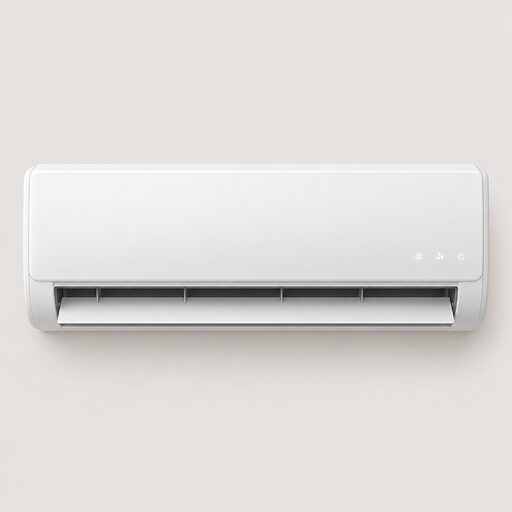 Air Conditioning CostPublished UK equipment prices and the parts of an installed price for portable, single split, multi-split and whole-house air conditioning.
 F-Gas RulesWho is legally allowed to work on the gas in your home air conditioning?
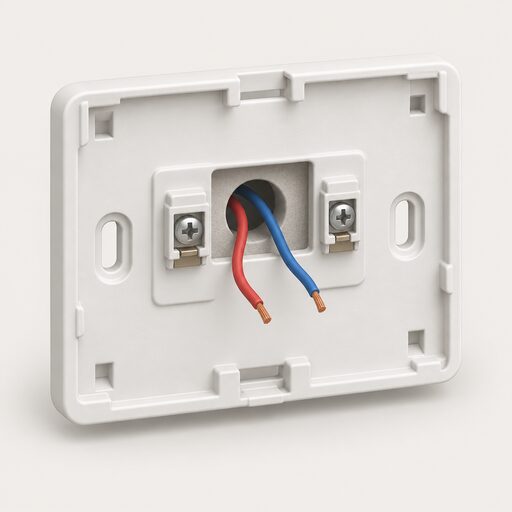 Installing Heating ControlsSwapping a thermostat or programmer looks simple, but which jobs can you safely do yourself and which need a registered installer?
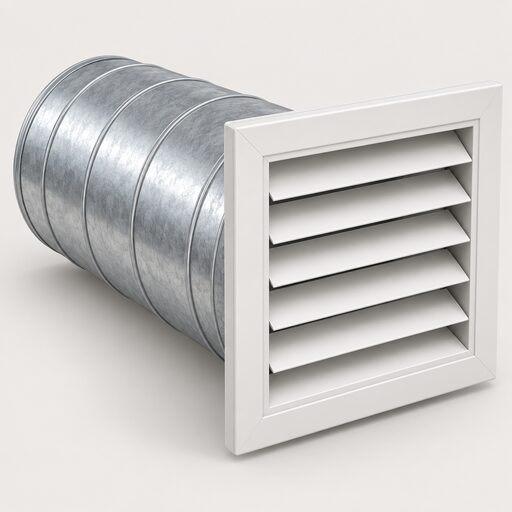 Types of Air ConditioningPortable, wall-mounted, multi-room or ducted: which air conditioning suits your home?
 Split Air ConditioningA split air conditioning system cools or heats one room using an indoor unit and an outdoor unit linked by pipes.
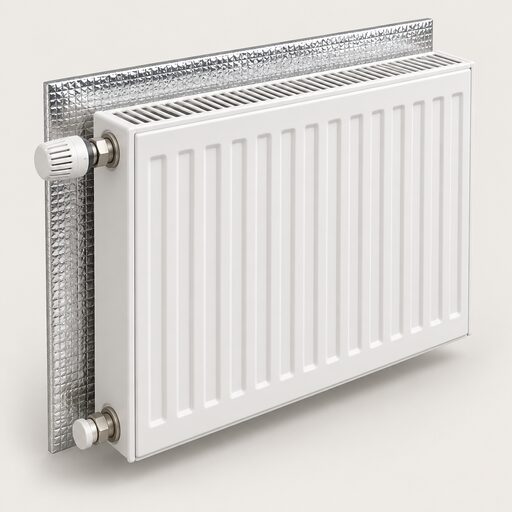 Low-Cost and DIY InsulationCovers the measures a householder can fit without a contractor: radiator reflectors, thermal curtains, chimney draught excluders, draught stripping and letterbox and floorboard sealing.