In this guide
Air conditioning in UK homes is still a minority purchase, and the brands competing for it are a short list. Around 3% of UK homes have air conditioning, and in England the figure is put at 4%1. London is the outlier: approximately 32 per cent of households there report owning air conditioning, around three times higher than in several other UK regions3. The share of UK homes self-reporting air conditioning use has doubled in three years4.
The manufacturers a householder is most likely to meet are LG, Samsung and Mitsubishi Electric in fixed split systems, with Daikin, Panasonic, Toshiba and Fujitsu General also selling into the UK market. Alongside them sit the portable and through-wall brands, and the own-label ranges sold by UK cooling retailers. This page is a directory of those brands and the categories they cover, not a ranking.
The brands householders actually encounter in the UK
The UK cooling market is not the same shape as the UK heating market. Heating is dominated by a handful of boiler names, with Worcester Bosch, Vaillant, Alpha, Viessmann and Ideal the brands a householder is most likely to be offered8. Cooling has no equivalent concentration, because the market is small and split between fixed systems, portables and through-wall units.
Among fixed split manufacturers, the names with published UK product ranges and certification records include Mitsubishi Electric, whose Ecodan range is described as made in Britain to British Standard9, and whose wall units appear in European certification listings under the Mitsubishi Electric brand10. Daikin appears in the same certification and quiet-mark listings, with a multi-split outdoor unit rated at 5.2 to 9.0 kW cooling capacity11. Samsung and LG both sell wall-mounted split systems in the UK and both appear in independent quiet-product listings12.
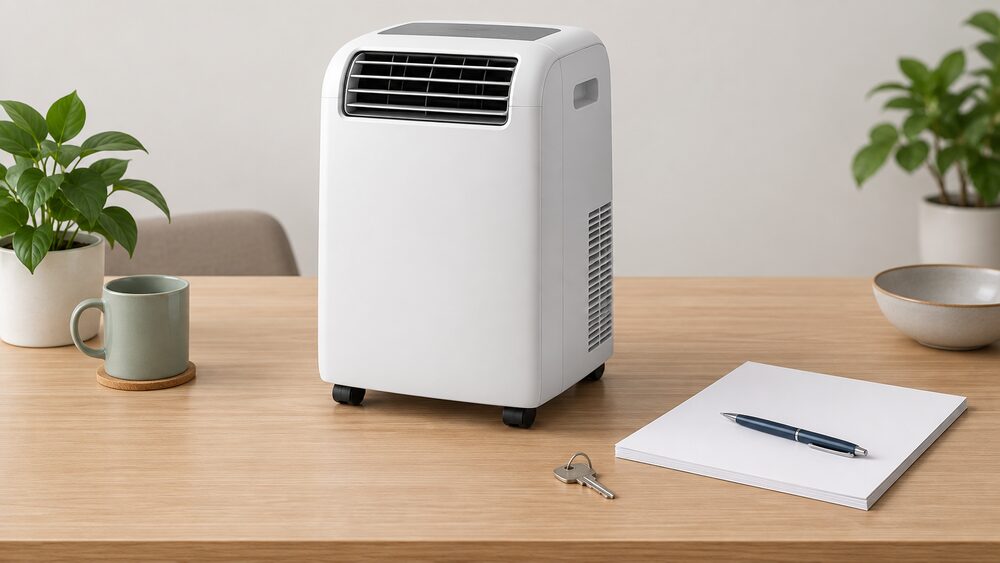
The portable side is served by a different set of names: Meaco, De'Longhi, Honeywell, Duux and Lux Air, alongside retailer own-brands such as electriQ. These are the units a householder can buy and carry home, and they carry no installation requirement, which is why they dominate the entry end of the market.
It is worth being clear about what a brand directory can and cannot tell a household. A brand name indicates who made the equipment and who stands behind the warranty, and it indicates the range of indoor and outdoor units that can be mixed on one system. It does not indicate efficiency, noise or suitability for a particular room, all of which vary by model within a single brand. The pages linked below cover each manufacturer's UK range in more detail.
- Mitsubishi Electric air conditioning
- Daikin air conditioning
- LG air conditioning
- Samsung air conditioning
- Panasonic air conditioning
- Toshiba air conditioning
- Fujitsu General air conditioning
- Meaco cooling
- De'Longhi portable air conditioners
- Honeywell home cooling products
- Duux portable air conditioners and fans
- Lux Air air conditioning
Fixed split systems: LG, Samsung and Mitsubishi Electric compared
The three brands a UK householder is most likely to be quoted for a fixed wall-mounted split are LG, Samsung and Mitsubishi Electric. All three sell high-wall indoor units paired with an outdoor condenser, and all three sell into the domestic market rather than only the commercial one.
The comparison that matters is not brand against brand but model against model within each brand. Mitsubishi Electric's UK range is organised into named tiers, with ZEN, Premium and Elegance sitting at different points, and the Premium tier distinguished by sensing rather than by raw output14. Samsung's wall range is organised around the WindFree name, with AVANT and COMFORT tiers carrying different high street prices5. LG's range includes the Artcool Gallery, a wall unit designed as a framed picture5.
For a household, the practical consequence of choosing between these three is about the outdoor unit as much as the indoor one. A single split needs one outdoor condenser per indoor unit, which is why flats and terraced houses often cannot accommodate more than one. A multi-split, where one outdoor unit serves several indoor units, is available from the same manufacturers and from retailer own-brands. The multi-split page sets out how many indoor units an outdoor unit can serve, and the single split versus multi-split comparison covers the trade-offs.
Retailer own-brand multi-splits give a sense of the price floor for the category. A two-head 12000 BTU system is listed at £999.97, a three-head 9000 BTU system at £1,349.98 and a five-head 12000 BTU system at £2,399.9815. These are equipment prices, not installed prices, and installation is quoted separately.
LG Artcool Gallery: the picture-frame wall unit

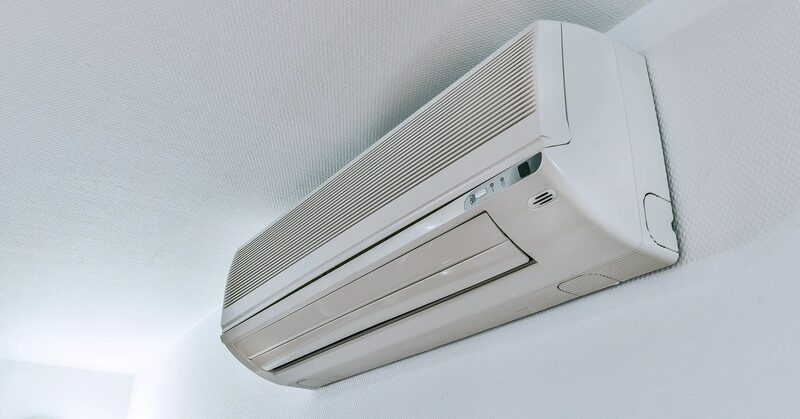
The Artcool Gallery is LG's attempt to solve the aesthetic objection to wall-mounted air conditioning. Instead of a white plastic casing, the indoor unit takes a changeable front panel so that it reads as a framed picture on the wall. It is a design-led product rather than a performance-led one, and it sits in the same category as any other high-wall split in terms of how it is installed and what it needs.
Availability is the point to note. The LG Artcool Gallery Premium System is listed as pre-order rather than as a stocked line14. Pre-order means the unit is not yet generally available to buy and install, so a household planning around it should treat the date as subject to change. LG's wider UK presence in the heating and cooling market is established: the LG THERMA V R290 Monobloc is sold through LG UK with a retailer link to the company's UK site13.
On noise, the Artcool Gallery is named among the models quoted at 19 dB, the lowest figure in the ranges sold in the UK5. That figure applies to specific models at their lowest fan setting, not to the range as a whole, and it is a sound pressure figure quoted by the supplier rather than a sound power figure from a certification body. The quietest air conditioning for a bedroom page deals with how those figures should be read.
The independence question for a picture-frame unit is the same as for any other split. It cools one room, it needs an outdoor condenser, it runs on grid electricity, and it depends on the manufacturer for parts, refrigerant handling and app support. A household that wants cooling without an outdoor unit has a different set of options, covered under air conditioning without an outdoor unit.
Samsung WindFree: cooling without direct airflow
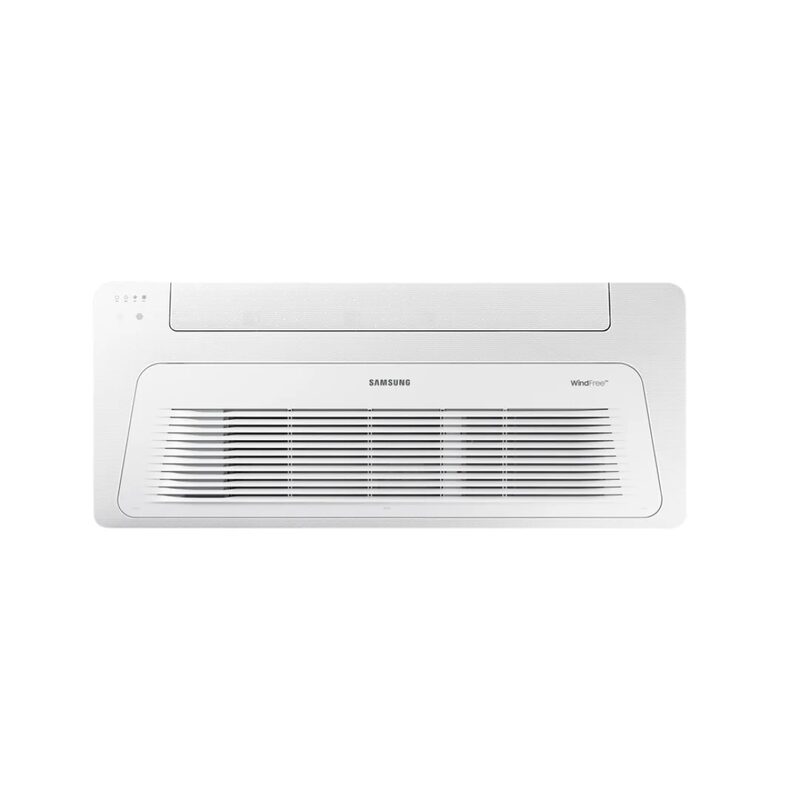
WindFree is Samsung's name for a cooling mode that distributes air through a large perforated panel rather than through a single louvred outlet. The maker describes it as delivering cooling without the discomfort of direct airflow, ensuring a gentle breeze5. The practical effect is a slower, more diffuse delivery of cool air, which some occupants find more comfortable than a directed draught and which reduces the sensation of cold spots in a room.
The UK wall range under the WindFree name includes the COMFORT S2 and the AVANT S2. The COMFORT S2 is described as using inverter technology for energy-efficient performance, reducing electricity consumption while maintaining comfort, and as offering Wi-Fi control through the Samsung SmartThings app for remote access and adjustments5. High street prices are given as £662.49 for the COMFORT S2 and £919.99 for the AVANT S25. A published price for the AVANT S2 3.5 kW system appears as £964.99 in one maker price list and £804.16 in another, and the two figures are not reconciled.
Samsung's presence in UK home heating is separate from its air conditioning range and worth knowing about, because it indicates the depth of the company's UK service network. Samsung EHS Mono HT Quiet heat pumps are listed as capable of reliably providing 100% heating performance even in extremely cold weather, at temperatures as low as minus 25°C16. Samsung heat pumps are also one of only two brands supported by the monitoring equipment in the Smart Flex Heat Pump Trial, alongside Grant18.
Mitsubishi Electric ZEN, Premium and Elegance ranges
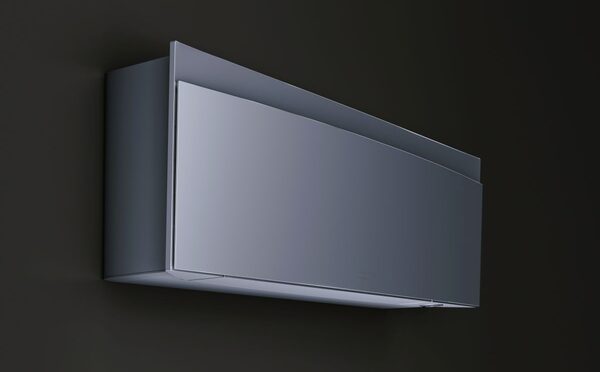
Mitsubishi Electric organises its UK domestic range into named tiers, and the tier names are the main source of confusion for householders comparing quotes. ZEN, Premium and Elegance are not different capacities; they are different specifications of indoor unit, with the differences concentrated in sensing, control and finish.
The Premium tier is distinguished by its sensor. The Mitsubishi Electric Premium 2.5 kW system is described as using an advanced 3D i-see sensor that detects room occupancy, position and body temperature to deliver precise, energy-efficient comfort14. That is a control feature rather than a cooling feature: it changes how the unit decides when and where to direct output, not how much cooling the unit can produce.
The company's UK manufacturing and certification position is a genuine differentiator. Its Ecodan range is described as made in Britain, to British Standard, for British Homes9, and its wall units appear in European certification listings under the Mitsubishi Electric brand10. For a household, that matters less for cooling performance than for parts availability and service over the life of the unit.
Prices for the ZEN 2.5 kW system are not settled. One maker product page gives £103.33 and a maker price list gives £1,009.99, with high street figures of £944.99 and £1,133.99 respectively14. The Mitsubishi Electric Classic versus Elegance versus ZEN versus Premium page sets the tiers against each other, and the Daikin versus Mitsubishi Electric comparison covers the two largest fixed-system manufacturers side by side.
Sizes and outputs: 2.5, 3.5 and 5.0 kW explained
Capacity is the first specification a householder meets and the one most often misread. The figure quoted for a split system is its cooling output in kilowatts, and it maps to floor area rather than to room volume or to the number of occupants.
UK sizing guidance gives a table. A 1.5 kW (5,000 BTU) unit covers up to 12 m² or 120 ft². A 3.5 kW (12,000 BTU) unit covers up to 30 m² or 300 ft². A 4.5 kW (15,000 BTU) unit covers up to 40 m² or 400 ft². A 5.0 kW (18,000 BTU) unit covers up to 45 m² or 450 ft². A 10.0 kW (34,000 BTU) unit covers up to 80 m² or 800 ft²6. A 3.5 kW system is described as often better for larger bedrooms, larger home offices, garden rooms, small living rooms or spaces with more sunlight and glazing6.
| Output | BTU | Floor area | Typical room |
|---|---|---|---|
| 1.5 kW | 5,000 | up to 12 m² | Small bedroom |
| 3.5 kW | 12,000 | up to 30 m² | Larger bedroom, small living room, garden room |
| 4.5 kW | 15,000 | up to 40 m² | Living room |
| 5.0 kW | 18,000 | up to 45 m² | Large living room |
| 10.0 kW | 34,000 | up to 80 m² | Open plan |
The table is a starting point, not a specification. Glazing, orientation, insulation, ceiling height and occupancy all move the figure, and a west-facing room with large windows needs more capacity than the floor area alone suggests. The air conditioning sizing page works through the calculation, and the 2.5 kW versus 3.5 kW comparison covers the most common domestic choice. For a single room, the 45 m² sizing question is answered directly.
Noise levels: from 19 dB to 57 dB and what that means in practice
Noise is the specification that decides whether a unit is usable in a bedroom, and it is the one most often quoted without context. The ranges sold in the UK include models quoted as low as 19 dB, with many running as quietly as 19 dB and described as ideal for night-time use, focused work or peaceful relaxation5. At the other end, a portable unit's sound power level is quoted at 57 dB(A) in one maker document and 59 dB(A) in another, and the two figures are not reconciled.
To make those numbers mean something, reference levels help. A library is around 35 dB, a business office around 65 dB, heavy traffic around 90 dB, a quiet forest around 15 dB and the threshold of hearing 0 dB19. A unit quoted at 19 dB is therefore quieter than a library, and one at 57 dB is between a library and an office.
The gap between 19 dB and 57 dB is the gap between an indoor unit at its lowest fan setting and a portable unit working at full output. It is not a like-for-like comparison, and a household comparing a fixed split against a portable should compare the fixed unit's indoor figure with the portable's figure at the same distance and the same fan speed. The air conditioning noise page covers indoor and outdoor units and the neighbour question, and the quietest air conditioning for a bedroom page deals with the bedroom case specifically.
Air purification and filtration across the brands
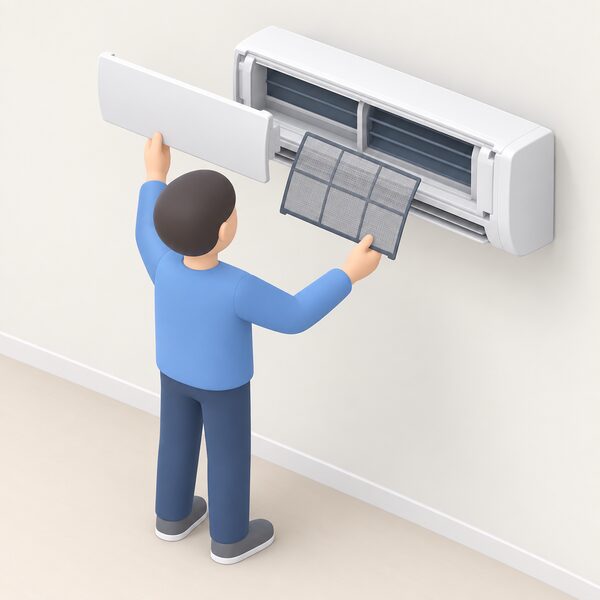
Filtration is where brand marketing runs furthest ahead of the evidence. Wall-mounted split units draw room air across a filter before cooling it, and most manufacturers offer some combination of dust filter, deodorising filter and, on higher tiers, a finer particulate stage. The filtration is a by-product of the air path rather than the purpose of the machine.
The maintenance advice is consistent and unglamorous. Independent guidance is to check and replace dirty or clogged air filters for better airflow, improved indoor air quality and lower energy bills23. That is the whole of the practical case: a clogged filter reduces airflow, which reduces cooling performance and raises running cost, whatever the filter is made of.
For households comparing filtration claims between brands, the useful question is what the filter is and how often it is replaced, not what the marketing calls it. Certification schemes in the solid fuel sector show how filter and efficiency claims can be made searchable by brand, product name, fuel type, efficiency and air control24, but no equivalent public register exists for the filtration stages in domestic split units. The air conditioning maintenance page covers filter cleaning and servicing intervals.
Controls, apps and smart features
Control is where the brands differentiate most visibly, and where the dependence on a manufacturer's cloud service is most obvious. A wall unit with Wi-Fi control can be adjusted remotely, but that function runs through the maker's app and the maker's servers, not through the unit itself.
Samsung's approach is the SmartThings app. The WindFree COMFORT S2 is described as offering Wi-Fi control that allows remote access and adjustments via the Samsung SmartThings app5. LG's approach runs through its own app and, on the wider range, through the LG UK product ecosystem13. Mitsubishi Electric's Premium tier puts the intelligence in the unit rather than the app, with the 3D i-see sensor detecting room occupancy, position and body temperature to deliver precise, energy-efficient comfort14.
Voice control is a separate layer and is not brand-specific. Independent guidance on smart plugs states that voice control uses compatible assistants such as Alexa, Google Assistant or Siri, depending on the product25. That means voice control of an air conditioner depends on the unit or the plug it is connected to supporting the assistant, not on the brand of the air conditioner alone. The wall mounted air conditioners that work with Alexa and Google Home page covers which units support which assistants, and the air conditioning controls and Wi-Fi page covers remotes and wired controllers.
The independence point is worth stating plainly. A unit controlled only through a manufacturer's app depends on that manufacturer continuing to run the service, and on the household keeping a compatible phone. A unit with a physical remote and a wired controller continues to work if the app is withdrawn.
Prices: what each brand costs against high street figures

Prices in this market are quoted in two forms: the maker's or retailer's equipment price, and the installed price from a contractor. The two are not comparable, and the published figures below are equipment prices only.
| Model | High street price | Source |
|---|---|---|
| Samsung WindFree COMFORT S2 | £662.49 | Maker product page5 |
| Samsung WindFree AVANT S2 | £919.99 | Maker product page5 |
| electriQ iQool multi-split, 2 x 12000 BTU | £999.97 | Maker product page15 |
| electriQ iQool multi-split, 3 x 9000 BTU | £1,349.98 | Maker product page15 |
| electriQ iQool multi-split, 5 x 12000 BTU | £2,399.98 | Maker product page15 |
Two conflicts sit inside those figures. The Samsung WindFree AVANT S2 3.5 kW system is listed at £964.99 in one maker price list and £804.16 in another. The LG Artcool Gallery Special System is listed at £360.00 in one maker product page and £300.00 in another, with high street figures of £1,619.99 and £1,349.99. Neither conflict is resolved, and both figures should be treated as live.
Where no published price exists, prices are installer-quoted and no range is given here. The air conditioning cost page covers what an installed system costs, and the high wall air conditioning cost page deals with the most common domestic configuration.
VAT, grants and what a household can claim
VAT relief at 0% applies to energy-saving materials installed in residential accommodation and certain charitable buildings, and official guidance lists air source heat pumps among the qualifying materials, with the relief running until 31 March 20277. The same guidance lists boilers that are wood fuelled, central heating and hot water controls, draught stripping, ground source heat pumps, insulation, micro combined heat and power units, solar panels, water and wind turbines, water source heat pumps, electrical storage batteries and smart diverters7.
Legislation sets the temporary zero rate from 1 February 2024 to 31 March 202726. Independent guidance confirms the zero rate is set to remain in effect until 31 March 202727, and the MCS Foundation states the zero-rated VAT is currently in place until March 202728. Consumer guidance for Northern Ireland households points to the same window, describing 0% VAT on installing energy-saving materials including insulation and solar panels until 31 March 202729.
The independence question here is straightforward. A household that installs a qualifying unit before 31 March 2027 pays no VAT on the qualifying materials and installation. After that date the position changes. The air conditioning grants page covers what support exists, and the cooling and energy independence page sets the VAT position alongside the wider question of what a household can generate and control itself.
What the brands mean for a household's energy independence
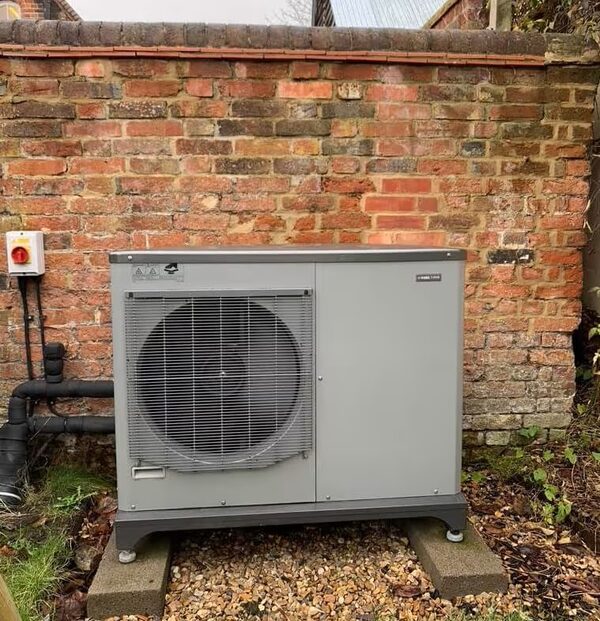
Air conditioning is a cooling load, and cooling load is a grid load. The brands in this directory sell equipment that runs on mains electricity, draws its refrigerant through a supply chain the household does not control, and in most cases reports through a manufacturer's app. None of that is a criticism of any particular brand; it is the shape of the category.
The dependence has four parts. The first is the grid: a split system runs on mains electricity, and the household's exposure is to the price and carbon intensity of that supply. The second is the manufacturer: parts, refrigerant handling and warranty service come from the maker or its UK distributor, and a unit whose maker withdraws from the UK market becomes harder to service. The third is the app: a unit controlled only through a manufacturer's cloud service depends on that service continuing. The fourth is the outdoor unit: a split needs somewhere to put it, and in flats and terraced houses that constraint often decides the purchase before any brand comparison does.
Against that, the brands do offer something. A reverse-cycle split is a heat pump, and a household that installs one for cooling has, in the same equipment, a heating source that does not burn gas. The air conditioning and heat pumps page covers reverse-cycle units and air-to-air heat pumps, and the cooling with solar panels page covers what a household can offset with its own generation. The home cooling pillar sets the whole picture out.
Sources29 cited
- Are London's homes ready for a heatwave?, London Assembly, 2026-06
- Eight facts about air conditioning amid an overheated global debate, Carbon Brief, 2026-07-10
- Can the grid keep up, CIBSE, 2025-10-22
- Why a heatwave is a good time to think about home heating, Nesta, 2026-07-08
- Ultra quiet air conditioning range, CoolEasy, 2026-09-23
- Air conditioning size guide, CoolEasy, 2026-09-23
- VAT rates on different goods and services, GOV.UK, 2026-07-10
- New boiler cost guide, Uswitch, 2024-11-06
- Mitsubishi Electric brand page, Quiet Mark, 2026-09-17
- MUZ-LN35VG2/MSZ-LN35VG2 certification, Eurovent Certification, 2026-09-17
- Daikin 5 port Class 90 multi air conditioner, Quiet Mark, 2026-09-17
- Samsung EHS Mono HT Quiet heat pump, Quiet Mark, 2026-09-17
- LG Therma V R290 Monobloc 14kW, Quiet Mark, 2026-09-17
- Mitsubishi Electric Premium 2.5kW air conditioning system, CoolEasy, 2026-09-23
- electriQ iQool multi-split air conditioners, electriQ, 2026-09-23
- Samsung EHS Mono HT AE080BXYDEG three phase, Quiet Mark, 2026-09-17
- Samsung EHS Mono HT AE120BXYDEG single phase, Quiet Mark, 2026-09-17
- Smart Flex Heat Pump Trial, Low Carbon Hub, 2025-12-19
- Jargon buster, MIMA, 2026-09-20
- Air source heat pumps: householder planning advice, Central Bedfordshire Council, 2026-09-17
- Air source heat pump guide, Eastleigh Borough Council, 2025-05
- Air source heat pump guide, Eastleigh Borough Council, 2024-04
- Spring into home care, APHC, 2025-05-07
- An increasing choice for cleaner choice, HETAS, 2023-10-17
- What are smart plugs and do energy saving plugs work, Smart Energy GB, 2026-08-19
- The Value Added Tax (Installation of Energy-Saving Materials) Order 2024, legislation.gov.uk, 2024-01-10
- Support with energy costs, Consumer Council for Northern Ireland, 2026
- Zero carbon zero VAT, MCS Foundation, 2026-09-20
- Energy Performance Certificates guide, Uswitch, 2027-03-31
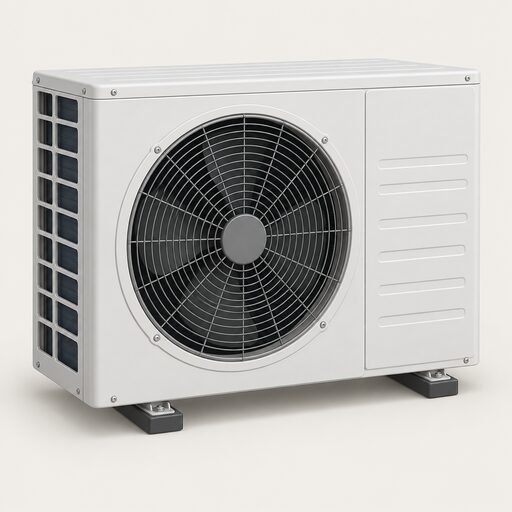 Heat Pump ManufacturersWhich heat pump brands can you actually buy in the UK, and who makes them?
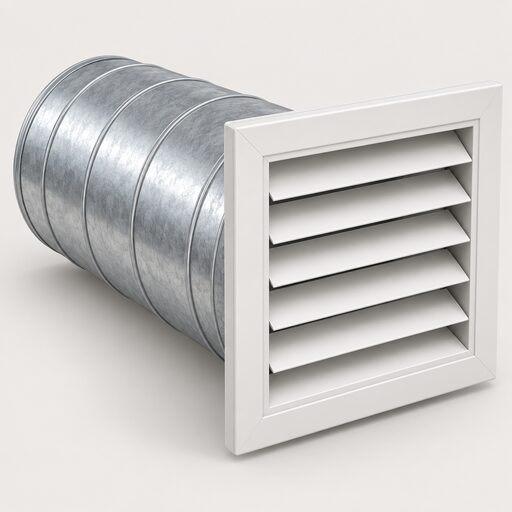 Types of Air ConditioningPortable, wall-mounted, multi-room or ducted: which air conditioning suits your home?
 Boiler Manufacturers in the UKCovers the manufacturers supplying gas, oil, LPG and electric boilers to UK homes, their main ranges and where they are made.
 Ventilation ManufacturersWhich brands make home ventilation equipment, what does each type cost, and is a quiet one genuinely quiet?
 The Full Cooling and Air Conditioning GuideDo you really need air conditioning in a British summer, or would a fan and better shading do the job?
 Air Conditioning CostPublished UK equipment prices and the parts of an installed price for portable, single split, multi-split and whole-house air conditioning.