
In this comparison
Mitsubishi Electric sells four wall-mounted air conditioning ranges in the UK, and the difference between them is not cooling power. Classic, Elegance, ZEN and Premium all come in 2.5kW and 5.0kW sizes, all run as reverse-cycle units that heat as well as cool, and all are controlled from a remote or an app. What separates them is filtration, sensing and finish.
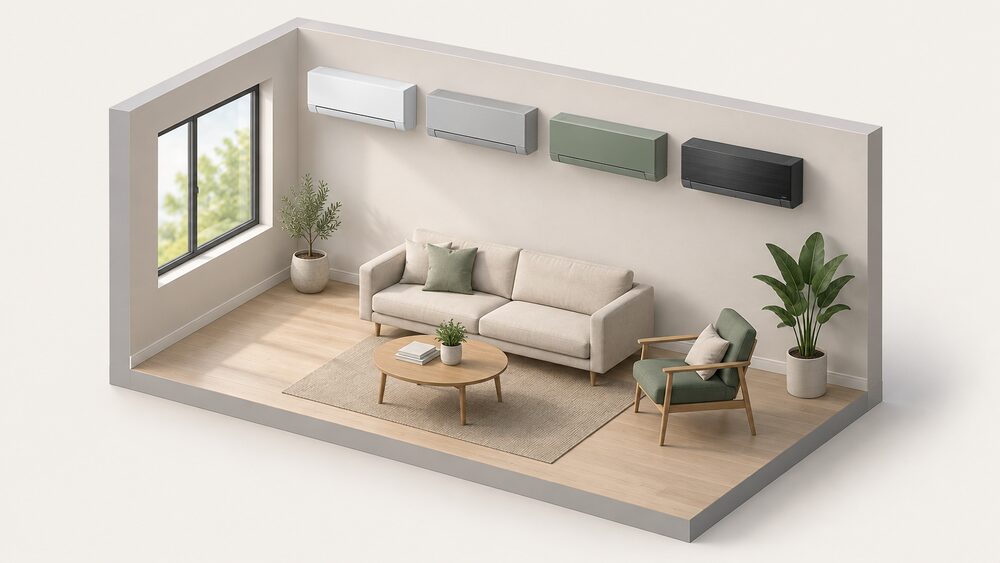
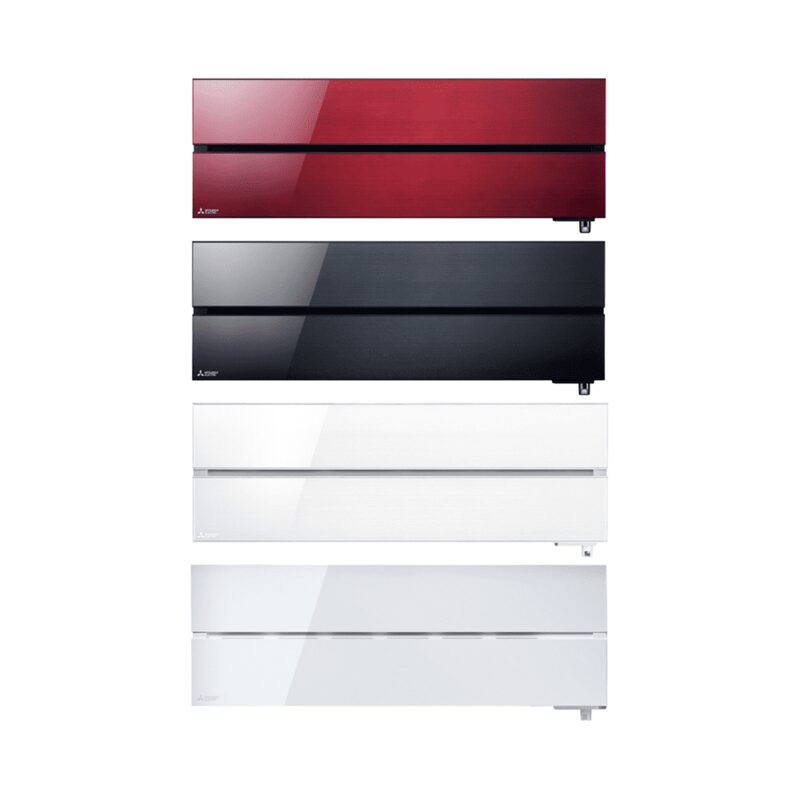
The Premium sits at the top of the M-series, which the maker describes as a premium range of split air conditioning units offering stylish top of the range units with a modern look1. It carries built-in Plasma Quad technology and the 3D i-see sensor, and comes in four colours2. The Elegance adds an advanced V-Blocking filter and a luxury matt finish3. The ZEN offers a distinctive front panel in three colours and compatibility with the optional Plasma Quad Connect device4. The Classic is the plainest of the four, with filtration that removes dust and remote operation with smart home compatibility5.
Prices are published for some models but not consistently, and the figures that exist do not always agree. Installation is quoted separately in every case.
The range at a glance: Classic, Elegance, ZEN and Premium
The four ranges sit inside the M-series, which the maker positions as its premium line of split air conditioning units1. They are all high wall-mounted indoor units, which means the same basic installation: an indoor unit on an external wall, pipework through to an outdoor condenser, and a condensate drain. The differences are in the fascia, the filter stack and the control electronics.
The Elegance is described as having an elegant, sleek appearance with a luxury matt finish (MSZ-AY) that suits residential and light commercial spaces3. That matt finish is the range's visual signature, and the same description is applied to the multi-split indoor version7. The ZEN takes a different approach, with a distinctive front panel in Black, Silver or White to complement modern interiors, and a design that also allows easy cleaning4.
The Classic is the least decorated of the four. Its published description is functional: filtration removes dust for healthier indoor air, and it offers convenient remote operation with smart home compatibility5. The Premium is the range the maker loads with features, and it is the only one of the four with built-in Plasma Quad purification and the 3D i-see sensor as standard2.
All four are sold as single-split systems and as indoor units for multi-split installations, where one outdoor unit serves several rooms. The multi-split indoor versions carry the same descriptions: the Elegance multi indoor unit has the same V-Blocking filter, the ZEN multi indoor unit the same three-colour panel, and the Premium multi indoor unit the same built-in Plasma Quad7. If a household is weighing one outdoor unit against several, multi-split air conditioning sets out how that changes the installation.
What the four ranges share
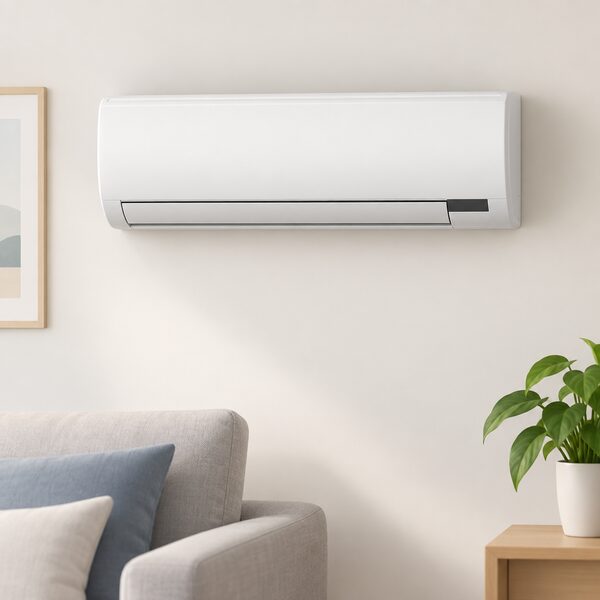
Every range in this group is a reverse-cycle unit. The maker lists heat output in kW for each model, with 2.5kW and 5.0kW versions across the ZEN, Premium and Elegance lines6. That means the same unit that cools a room in July heats it in January, which is what makes these air-to-air heat pumps rather than cooling-only appliances. Air conditioning that heats explains how that compares with a wet heating system.
Control is common ground too. The Elegance 2.5kW model has built-in Wi-Fi for remote control and monitoring via the MELCloud app, with voice control compatible with Alexa and Google Assistant3. The ZEN multi indoor unit carries the same built-in Wi-Fi and the same voice compatibility7. The Classic offers remote operation with smart home compatibility5, and the M-series as a whole is described as voice control compatible with Amazon Alexa and Google Assistant enabled devices1. Air conditioning controls and Wi-Fi covers what the app does and does not give a household.
The ranges also share a servicing requirement. Filters need cleaning, the condensate drain needs to run clear, and the refrigerant circuit needs a certified engineer under the F-gas rules. None of that changes with the fascia. Air conditioning maintenance sets out the routine.
What none of them share is independence from the grid. These are mains-powered appliances: they cut the cost of cooling and heating a room relative to some alternatives, but they do not remove the household's dependence on a supplier. Running them from rooftop solar is the only route to genuine independence, covered in cooling with solar panels.
Air purification: V-Blocking, Plasma Quad and Plasma Quad Connect
Filtration is where the four ranges diverge most sharply, and the maker's own wording separates them into three tiers.
The Classic sits at the base. Its filtration removes dust for healthier indoor air5, and the multi-split version is described as advanced filtration that removes dust and allergens7. There is no named filter technology in the published description.
The Elegance steps up to a named filter. The advanced V-Blocking filter neutralises bacteria, viruses, allergens, dust and mould for cleaner, healthier air3. The same wording is used for the multi-split indoor unit7 and for the 2.5kW model8. Earlier maker guidance described the Elegance series (MSZ-AP) as featuring an air purifying filter that removes odours and captures dust and bacteria9, which is a narrower claim than the current V-Blocking description.
The ZEN takes a different route: rather than a built-in purifier, it is compatible with the Plasma Quad Connect device for advanced air purification, neutralising viruses, bacteria, PM2.5 and more4. That compatibility is listed as an optional accessory across the ZEN pages and price lists7, which means the purification hardware is a separate item rather than part of the indoor unit.
The Premium has purification built in. Built-in Plasma Quad technology removes viruses, bacteria, allergens and dust, ensuring cleaner, healthier air2. The same description appears on the multi-split indoor unit7 and the 2.5kW model11. Earlier maker material described the Premium series (MSZ-LN) as featuring a Plasma Quad Plus filter which captures even microscopic particles, achieving extremely high reduction rates in the removal of allergens, mould, bacteria and virus particles9, and a 2017 press release described a Plasma Quad Plus filter using plasma technology to filter out even microscopic particles12.
The 3D i-see sensor: what the Premium adds
The 3D i-see sensor is the Premium range's other distinguishing feature, and it is the one with a published energy claim attached.
The maker describes it as detecting room occupancy, position and body temperature to deliver precise, energy-efficient comfort2. The same wording appears on the multi-split indoor unit7, the 2.5kW model11 and the energy-efficient systems page13. Earlier maker guidance on the sensor is more specific: fitted with an intelligent 8-element sensor, it switches to energy saving mode after a set period of absence, raising or lowering the set temperature by 2°C as required, which can lead to energy savings of up to 10%14.
That 10% figure is a maker claim, not an independent measurement, and it depends on the room being empty for long enough for the absence logic to trigger. In a room that is occupied continuously, the sensor has less to work with. The mechanism is straightforward: rather than cooling an empty room to the set temperature, the unit drifts the setpoint by 2°C until someone returns.
The sensor first appeared in the M-series with the MSZ-LN range, described in 2017 as an i-see sensor which automatically monitors room occupancy, position and body temperatures12, and in a separate 2017 announcement as a 3D i-see sensor that automatically monitors room occupancy, position and body temperatures15. It is not listed for the Classic, Elegance or ZEN ranges in the material reviewed here.
For a household, the sensor matters in two ways. It is a comfort feature, because the unit responds to where people actually are rather than to a fixed thermostat reading. It is also the only feature in this comparison with a stated efficiency benefit, which makes it the main technical argument for the Premium over the other three.
Sizes and heat output: 2.5kW and 5.0kW models
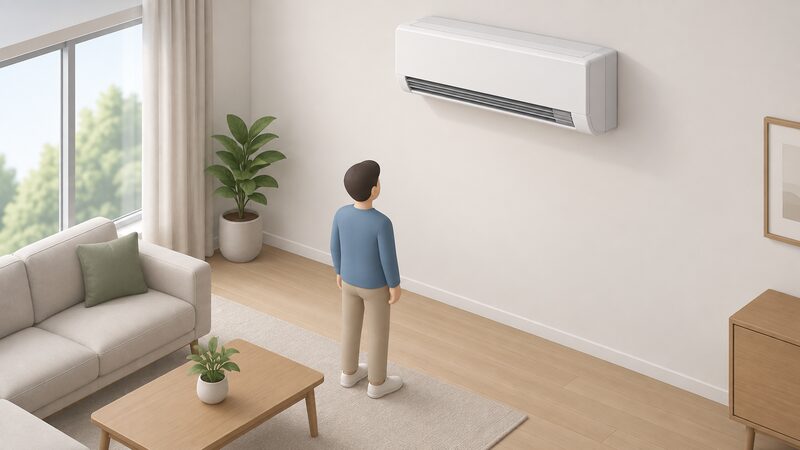
Output is the one specification where the four ranges line up almost exactly. The ZEN, Premium and Elegance ranges each include a 2.5kW and a 5.0kW wall-mounted model6. The MSZ-AP range is listed with 2.5, 3.5 and 5kW models rated either A+++ or A++16, which shows a 3.5kW step existing in the wider wall-mounted offering.
| Range | 2.5kW model | 5.0kW model | Named filtration |
|---|---|---|---|
| Classic | Listed | Not listed here | Filtration removes dust5 |
| Elegance | Yes6 | Yes6 | Advanced V-Blocking filter3 |
| ZEN | Yes6 | Yes6 | Plasma Quad Connect compatible (optional)4 |
| Premium | Yes6 | Yes6 | Built-in Plasma Quad2 |
Choosing between 2.5kW and 5.0kW is a room-size question, not a range question. A 2.5kW unit suits a smaller room and a 5.0kW unit a larger one, and the correct figure depends on floor area, glazing, orientation and insulation. What size air conditioner do you need works through that calculation, and 2.5 kW vs 3.5 kW covers the step between the two smaller sizes.
One practical point sits outside the specification tables. The Elegance 3.5kW model was showing low stock, five units, at the time of the published listing8. Stock position is not a property of the range, but it does affect how quickly a given size can be supplied.
Prices: what each range costs

Published prices for these ranges are inconsistent, and where two figures exist for the same model they do not agree. The figures below are what the maker's pages and price lists state, and they are unit prices rather than installed prices.
| Model | Published price | High street price |
|---|---|---|
| ZEN 2.5kW | £103.3311; £1,009.9910 | £944.9911; £1,133.9910 |
| ZEN 3.5kW | £989.1610 | £1,324.9910 |
| ZEN 5.0kW | £1,306.666 | £1,999.996; £1,666.666 |
| Elegance 2.5kW | £749.1610; £898.99 reduced from £749.168 | £950.0010; £791.678 |
| Premium 2.5kW | £954.1611; £1,144.9913 | £1,286.9913 |
| Premium 5.0kW | Not listed here | £1,749.996 |
| ZEN multi indoor unit | £394.99 inc VAT / £329.16 ex VAT7 | Not listed |
| Elegance multi indoor unit | £257.497 | Not listed |
The disagreements are unresolved. For the ZEN 2.5kW, one maker page gives £103.33 and another gives £1,009.99; for the high street price, £944.99 against £1,133.9911. For the Premium 2.5kW, £954.16 against £1,144.9911. For the ZEN 5.0kW high street price, £1,999.99 against £1,666.666. Where two figures exist, both are given here.
Some figures are quoted ex VAT and some inc VAT, and the listings are not consistent about which. The ZEN system is listed at £841.66 ex VAT as a sale price17, and the Premium at £1,144.99 inc VAT, equivalent to £954.16 ex VAT, with a high street price of £1,286.99 inc VAT13. The Elegance 2.5kW appears at £812.99 as a previous price17.
None of these figures includes installation, which is quoted separately after a survey. How much does air conditioning cost to buy and install covers the installed picture, and high wall mounted air conditioning cost deals with this format specifically.
Which range fits which room
The four ranges are all wall-mounted, so the room type does not rule any of them out. What changes is which features earn their place.
For a bedroom, the Premium's 3D i-see sensor has the clearest logic: the unit responds to occupancy and drifts the setpoint when the room is empty, which is the situation a bedroom is in for most of the day. The Elegance's V-Blocking filter and self-cleaning mode, which prevents mould and odours, with a Dual-Barrier coating for long-term efficiency5, also suit a room where air quality matters overnight. What is the quietest air conditioning for a bedroom deals with the noise question, which is not covered by the published figures here.
For a living room or a home office, the larger 5.0kW models in the ZEN, Premium and Elegance ranges are the relevant sizes6. Living room cooling and heating and home office cooling set out the room-specific considerations.
For a garden room, the ZEN's three-colour front panel and easy-clean design4 are the visible features, and the optional Plasma Quad Connect device4 allows purification to be specified separately. Which air conditioning suits a garden room covers the outbuilding case.
For a kitchen, none of the four ranges is described differently, and the published material does not address grease or cooking odours. Which air conditioning works best in a hot kitchen deals with that.
The Classic is the range with the least published feature set: dust filtration and smart home compatible remote operation5. Where the other three carry a named filter or sensor, the Classic carries neither in the material reviewed here.
On independence, the position is the same for all four. Each is a mains appliance controlled through a manufacturer's app and cloud service, so the household depends on the grid for power and on the maker's platform for remote control. The unit reduces the cost of conditioning one room; it does not reduce dependence on a supplier. Only on-site generation changes that balance, as cooling and energy independence explains.
Sources17 cited
- How to choose the right home air conditioning, Mitsubishi Electric Living Environmental Systems, 2025-04-07
- High wall mounted air conditioning systems, CoolEasy
- Single split air conditioning, CoolEasy
- High wall mounted single split air conditioning systems, CoolEasy
- Heating and cooling systems, CoolEasy
- Kitchen cooling heating systems, CoolEasy
- Whole home multi split air conditioning systems, CoolEasy
- Living room cooling heating systems, CoolEasy
- Air conditioning for garden rooms, Mitsubishi Electric Living Environmental Systems, 2021-02-15
- Garden room cooling heating systems, CoolEasy
- Home office cooling heating systems, CoolEasy
- It's time for stylish new air conditioning units using R32, Mitsubishi Electric Living Environmental Systems, 2017-02-14
- Energy efficient air conditioning with low running costs, CoolEasy
- Air conditioning and heating, Mitsubishi Electric Living Environmental Systems, 2017-10-09
- Coolair showcases stylish new R32 air conditioning, Mitsubishi Electric Living Environmental Systems, 2017-07-25
- New R32 models expand wall mounted offering, Mitsubishi Electric Living Environmental Systems, 2018-01-12
- Air conditioning heat pump systems for home renovations, CoolEasy
 SMETS1 and SMETS2 MetersIs your smart meter an old first generation model or a newer one, and does it matter?
 Air Conditioning BrandsWhich air conditioning brands can you actually buy in the UK, and who makes them?
 Double GlazingMisted up panes, noisy streets, rooms that never feel warm: is new double glazing worth the money, and how much could it cut your bills?
 Electric Radiators and PanelsDo electric radiators cost more to run than gas heating, and are they worth it for one room or a whole house?
 Ventilation ManufacturersWhich brands make home ventilation equipment, what does each type cost, and is a quiet one genuinely quiet?
 Running CostsA portable air conditioner costs roughly twenty to forty pence for every hour it runs, while a fixed unit uses far less electricity for the same cooling.