
In this comparison
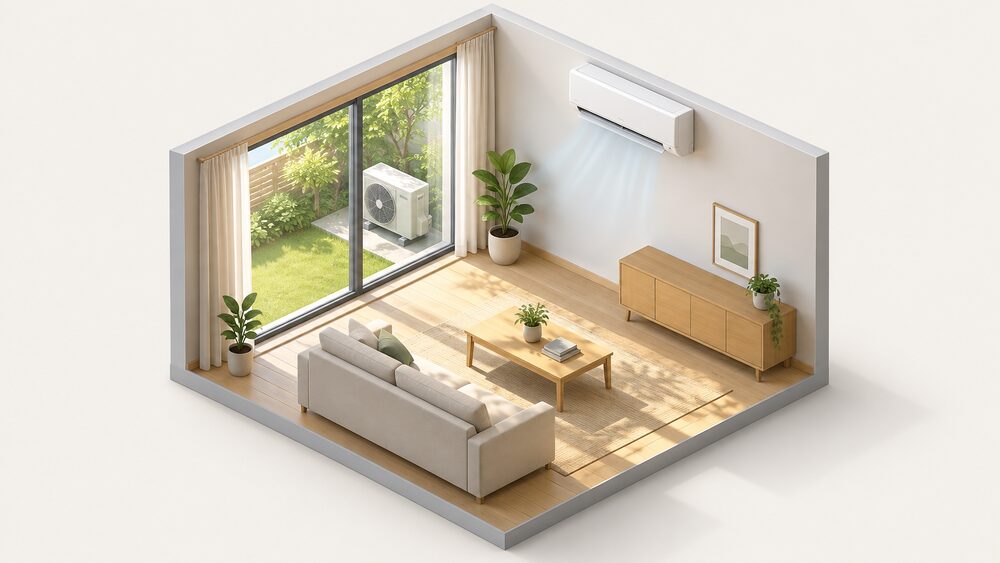
A 2.5 kW air conditioner and a 3.5 kW air conditioner differ by one kilowatt of cooling output, and that kilowatt is the whole question. The published sizing tables pair 2.5 kW with 9,000 BTU and a room of up to 20 m² or 200 ft², and 3.5 kW with 12,000 BTU and a room of up to 30 m² or 300 ft²1. In practice the gap is not just floor area: sizing guidance describes 2.5 kW as often suitable for smaller rooms such as compact bedrooms or small offices, and 3.5 kW as often better for larger bedrooms, larger home offices, garden rooms, small living rooms, or spaces with more sunlight and glazing1.
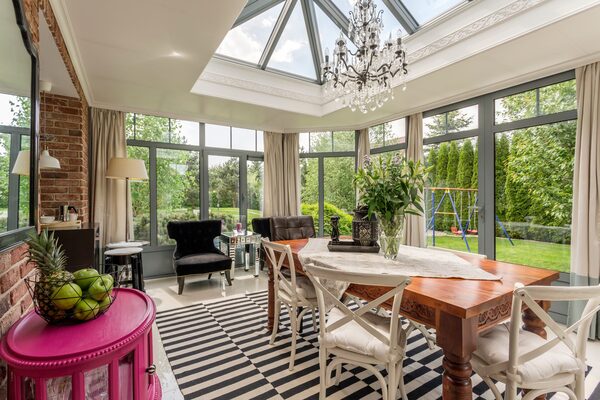
That last clause matters more than the square metres. Two rooms of identical floor area can sit either side of the line if one has a large south-facing window and the other has a small north-facing one. Rooms with large windows, strong sunlight or poor insulation may require a higher cooling capacity, and conservatories are singled out because they usually have a lot of glass and high solar gain2.
The choice also has an energy-independence dimension. A correctly sized unit reaches its set temperature and modulates down; an oversized one cycles, and an undersized one runs continuously without getting there. A 3.5 kW unit drawing on a Coefficient of Performance of 3.5 delivers 3.5 kWh of cooling for each 1 kWh of electricity, so the electricity a household still buys from a supplier is the residual dependence, whatever the unit's rating2.
2.5 kW and 3.5 kW: what the difference comes down to
The kilowatt figure on a split system is its cooling output, not the electricity it draws. A 3.5 kW air conditioning system can provide around 3.5 kW of cooling output, and the sizing tables translate that into 12,000 BTU and a room of up to 30 m² or 300 ft²1. The 2.5 kW class translates into 9,000 BTU and up to 20 m² or 200 ft²1. The step between them is therefore about half as much cooling again, which is why the two classes are sold side by side across almost every wall-mounted range.
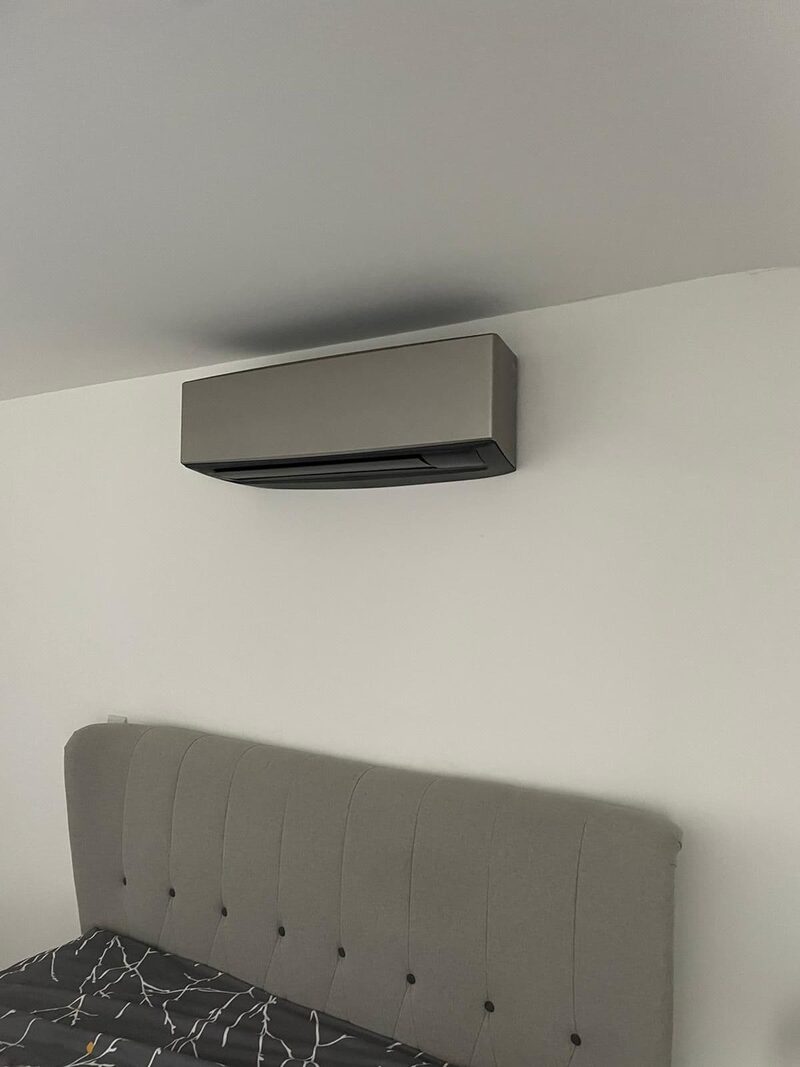
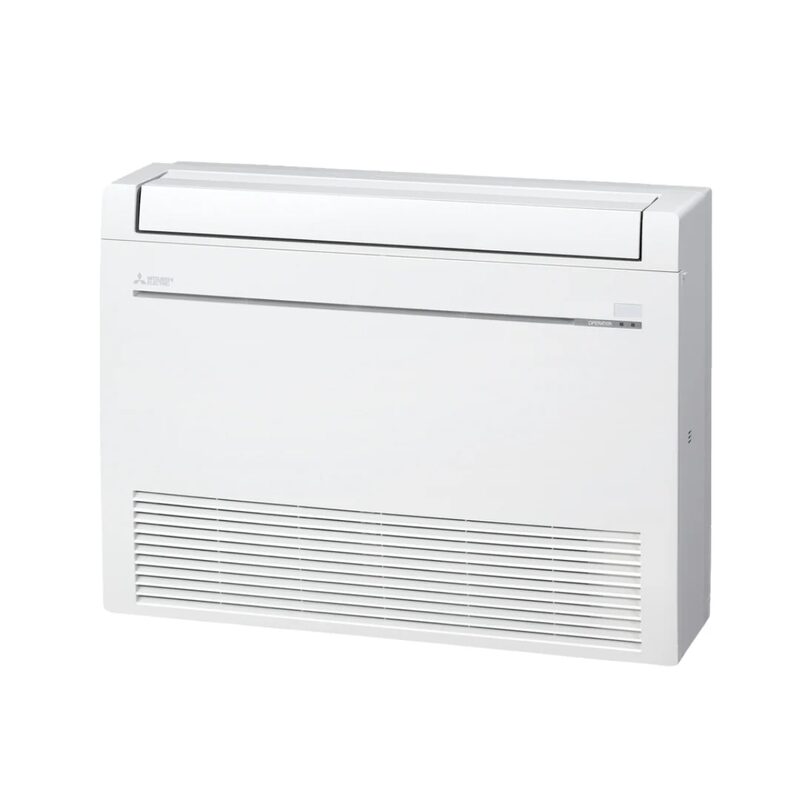
Manufacturers build both classes into the same product families, so the choice is usually a choice of capacity rather than of technology. Mitsubishi Electric's MSZ-AP range was launched with 2.5, 3.5 and 5 kW models rated either A+++ or A++6. Fujitsu's floor console is offered in 2.5 kW and 3.5 kW capacities, and its 3.5 kW multi-split indoor unit sits in the same R32 line as a 2.5 kW wall unit7. Samsung's 1 Way WindFree ceiling system is listed in 2.5 kW and 3.5 kW sizes10. The same split appears in the fan coil market, where Activair units are catalogued at 1.5, 2.8, 3.5 and 4.5 kW11.
What that means for a household is that the two classes are not a quality tier. A 2.5 kW unit from a given range is not a lesser product than the 3.5 kW version; it is the same unit with a smaller compressor and coil, matched to a smaller load. The published sizing tables run in a continuous ladder from 1.5 kW and 5,000 BTU at up to 12 m² or 120 ft², through 2.0 kW and 7,000 BTU at up to 16 m² or 160 ft², 9,000 BTU at up to 20 m² or 200 ft², 12,000 BTU at up to 30 m² or 300 ft², 4.5 kW and 15,000 BTU at up to 40 m² or 400 ft², and 5.0 kW and 18,000 BTU at up to 45 m² or 450 ft², continuing upward to 14.0 kW and 48,000 BTU at up to 110 m² or 1,090 ft²1. The 2.5 kW and 3.5 kW classes are simply two rungs on that ladder, and the ladder assumes rooms with standard heights up to approximately 2.7 metres1.
Sunlight and glazing: why the same room can need a bigger unit
Floor area is the starting point, not the answer. Sizing guidance lists the environmental conditions of humidity and temperature, the thermal insulation of the home, the size of windows or balconies and glass quality, the orientation of the house, and the number of electronic devices connected in the room4. A separate guide adds high ceilings, insulation and the amount of sunlight a room receives, and notes that these can affect the BTU needed5. Another puts it as home size, ceiling height, sun direction, insulation and other factors12. Meaco states plainly that room sizes are approximate and that ceiling height, insulation, glazing and sun exposure can affect cooling performance13.
Glazing is where the effect is largest. Rooms with large windows, strong sunlight or poor insulation may require a higher cooling capacity2. Conservatories usually have a lot of glass and high solar gain, and may need more cooling capacity than a standard room of the same floor area1. The glazing itself matters: certain Low-e glass is good at solar heat gain, which can cause overheating in some situations, and a combination of Low-e and solar control glazing should be considered for large glazed areas, particularly south-facing conservatories14.
Ventilation rules sit alongside this. Building Regulations guidance states that rooms where steam will be produced, such as kitchens, bathrooms and utility rooms, should be provided with higher levels of ventilation, normally mechanical fans and windows, than other rooms where suitably sized window openings and background trickle ventilators may suffice15. A Welsh Government consultation response records a respondent proposal for background ventilators with an equivalent area of 5,000 mm² where multiple windows are provided per room, or 10,000 mm² if only one window is provided16. Older independent guidance puts a whole-dwelling ventilation rate of between 0.5 and 1.5 air changes per hour as usually sufficient17.
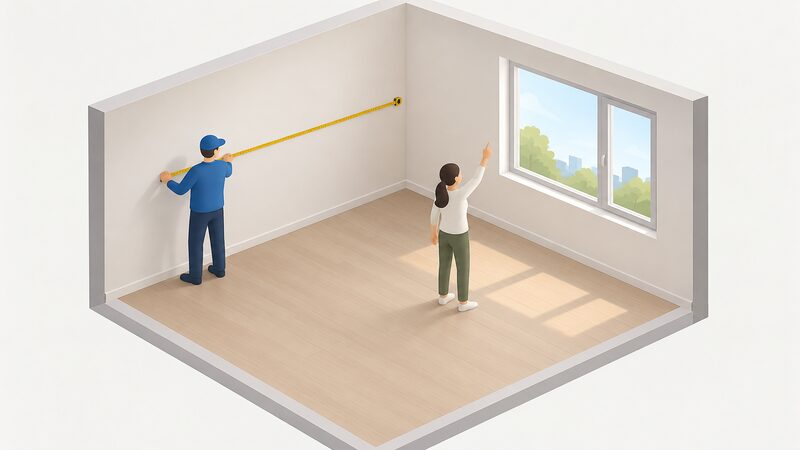
The practical consequence is that a room can be pushed up a class by its glazing alone. A 20 m² room with a modest window sits comfortably in the 2.5 kW band; the same 20 m² with a large south-facing glazed wall is the kind of space the guidance points toward 3.5 kW. Orientation, glass quality and shading are what separate the two.
"Rooms with large windows, strong sunlight or poor insulation may require a higher cooling capacity."
Which rooms suit a 3.5 kW system
The published guidance names the rooms directly: a 3.5 kW system is often better for larger bedrooms, larger home offices, garden rooms, small living rooms, or spaces with more sunlight and glazing1. Each of those has a reason behind it.
Larger bedrooms carry more air volume and often more glazing than a compact one, and the sizing table places 3.5 kW at up to 30 m² or 300 ft²1. Larger home offices add a second load that a bedroom does not have: equipment. Sizing guidance counts the number of electronic devices connected in the room among the factors that set the required power4, and a room with several screens and occupants gains heat from both. Garden rooms are frequently built with a high proportion of glass and a lightweight structure, which raises the load relative to floor area. Small living rooms sit in the 3.5 kW band because occupancy and evening use coincide with the warmest part of the day.
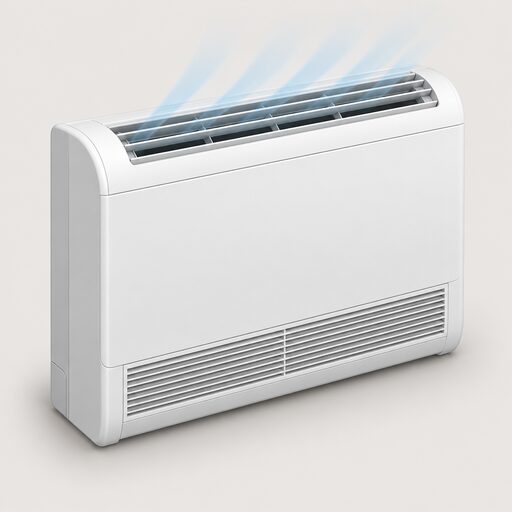
The 3.5 kW class is also the point at which console and floor-standing formats appear. A Samsung 3.5 kW console system is described as perfect for low wall installation, and an LG 3.5 kW console system delivers powerful, even cooling from both top and bottom vents3. Those formats suit rooms where a high wall position is not available, such as a room with a full-height window or a low ceiling.
Above 3.5 kW the ladder continues: 4.5 kW and 15,000 BTU at up to 40 m² or 400 ft², and 5.0 kW and 18,000 BTU at up to 45 m² or 450 ft²1. A 5.0 kW unit is catalogued at 18,000 BTU for up to 45 m² or 450 ft²18. Where a room sits between bands, the survey decides.
| Cooling output | BTU | Room size (metric) | Room size (imperial) | Typical match |
|---|---|---|---|---|
| 1.5 kW | 5,000 BTU | up to 12 m² | up to 120 ft² | Small box room1 |
| 2.0 kW | 7,000 BTU | up to 16 m² | up to 160 ft² | Small bedroom1 |
| 2.5 kW | 9,000 BTU | up to 20 m² | up to 200 ft² | Compact bedroom, small office1 |
| 3.5 kW | 12,000 BTU | up to 30 m² | up to 300 ft² | Larger bedroom, garden room, small living room1 |
| 4.5 kW | 15,000 BTU | up to 40 m² | up to 400 ft² | Large living room1 |
| 5.0 kW | 18,000 BTU | up to 45 m² | up to 450 ft² | Open-plan space1 |
When a 2.5 kW unit is the better match
A 2.5 kW system is often suitable for smaller rooms, such as compact bedrooms or small offices1. The sizing table puts it at up to 20 m² or 200 ft²1. That covers a great many UK rooms: a second bedroom, a box room used as a study, a small spare room, a nursery.
The class is well served across formats. Fujitsu's cassette unit is rated at 2.5 kW, and its wall-mounted multi-split indoor unit is a 2.5 kW class product19. A Lux Air portable unit is catalogued at 2.5 kW, or 9,000 BTU20. The capacity is not confined to split systems.
There is a case for the smaller class beyond room size. A unit that is matched to its load reaches temperature and then modulates, whereas an oversized unit cools quickly and cycles. The efficiency context is that a cooling system operating at a Coefficient of Performance of 3.5 gives 3.5 kWh of cooling for each 1 kWh of electricity2. That figure describes the equipment, not the household's exposure: the electricity still comes from a supplier unless the home generates its own. A domestic battery is rated in the same units as the cooling load, with one residential model listed at 400V/2.5kW of continuous power21. That is the same order of magnitude as the cooling loads discussed here, which is why sizing accuracy matters to a household trying to run cooling from its own generation.
Where a 2.5 kW unit falls short, and where 3.5 kW is wasted
The failure mode of an undersized unit is continuous running. Guidance on air conditioners running constantly notes that a proper assessment takes into account the home's size, ceiling height, sun direction, insulation and other factors before recommending a unit12. A 2.5 kW unit in a room that needs 3.5 kW will not hold its setpoint on the hottest afternoons, and it will draw power for longer to achieve less.
The failure mode of an oversized unit is short cycling: rapid cooling, then a stop, then a restart, with uneven temperature and dehumidification that never gets going. Neither outcome is efficient, and neither is comfortable.
The sizing ladder itself is not a single agreed table. The published figures pair 1.5 kW with 5,000 BTU and up to 12 m² or 120 ft², and separately pair 3.5 kW with 12,000 BTU and up to 30 m² or 300 ft², and 5.0 kW with 18,000 BTU and up to 45 m² or 450 ft²1. Those entries are consistent with each other as a ladder, but they are drawn from different product pages, so not every rung carries the same weight. Where a room falls between two published bands, the two figures should both be treated as indicative rather than as a rule.
A worked example from one manufacturer's guidance illustrates how the arithmetic is done elsewhere: a room of 27 m² would need equipment of 2,700 frigories4. Another cites a US Department of Energy recommendation of a 16,000 BTU air conditioner for a two-room apartment of 800 sq ft4. Those are not UK figures and are given here only to show the method; the UK sizing tables above are the ones to work from.
What the choice means for a household's energy independence
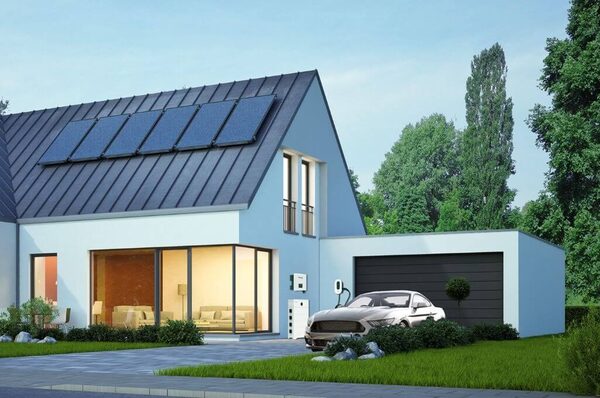
Cooling is a load, and a load is a claim on whatever supplies the home. A correctly sized unit is the one that meets the load with the least running time, and running time is what a household pays for in electricity. The modelling figure of a Coefficient of Performance of 3.5, where 1 kWh of electricity gives 3.5 kWh of cooling, is the efficiency of the equipment rather than a statement about where the electricity comes from2.
The dependence that remains is the same as for any cooling appliance: the grid, a supplier, and the tariff the household is on. A unit sized to its room reduces the size of that dependence by reducing the hours it runs, but it does not remove it. Households with solar panels and a battery can shift some of the load, and the battery capacity figures quoted in the same units as cooling loads show how the two compare directly21.
There is also a summer dimension to the load. Analysis of an extreme heatwave found that UK homes with solar panels had power equivalent to five hours of free daily air conditioning use2. That is a statement about generation coinciding with cooling demand, not a guarantee for any individual home.
The sizing decision is therefore an efficiency decision before it is a comfort decision. A 2.5 kW unit in a 20 m² room with modest glazing and a 3.5 kW unit in a 30 m² room with a large south-facing window are both correctly matched. The error is putting either class in the other's room.
Sources21 cited
- Air conditioning size guide, CoolEasy, 2026-09-23
- As an extreme heatwave hits, UK homes with solar panels have power equivalent of five hours of free daily air con use, Ember, 2026-06-24
- Conservatory cooling and heating systems, CoolEasy, 2026-09-23
- How to calculate the air conditioning power for a given surface area, Hitachi Air Conditioning, 2026-09-17
- Guide to air conditioning units, EDF Energy, 2024-05-22
- New R32 models expand wall-mounted offering, Mitsubishi Electric, 2018-01-12
- AGEG09KVCA floor console, Fujitsu General, 2026-09-23
- AGEG12KVCA multi-split indoor unit, Fujitsu General, 2026-09-23
- ASEH09KNCA multi-split indoor unit, Fujitsu General, 2026-09-23
- Samsung 1 Way WindFree ceiling system, CoolEasy, 2026-09-23
- Activair fan coils, Trianco, 2026-09-23
- Air conditioner running constantly: how to prevent it, Hitachi Air Conditioning, 2023-03-27
- Air conditioners, Meaco, 2026-09-23
- Low-e glass and thermal efficiency, Glass and Glazing Federation, 2026-09-23
- Doors and windows: building regulations, Planning Portal, 2026
- Part L and F review stage 2A: government response, Welsh Government, 2021-10
- Energy efficient ventilation in dwellings, FETA, 2006
- Lux Air 5.0kW 18000BTU designer air con heat pump inverter system, CoolEasy, 2026-09-23
- AUEG09KVLA cassette, Fujitsu General, 2026-09-23
- Lux Air portable AC that cools, heats and sterilises, CoolEasy, 2026-09-23
- BTS 5K residential battery, Sofar Solar, 2026-09-17
 Air Conditioning SizingHow big an air conditioner does a room need?
 Types of Air ConditioningPortable, wall-mounted, multi-room or ducted: which air conditioning suits your home?
 Cooling with Solar PanelsCan solar panels run an air conditioner, and will they cover the whole bill?
 Split Air ConditioningA split air conditioning system cools or heats one room using an indoor unit and an outdoor unit linked by pipes.
 Overheating and Solar GainWhy do well-insulated homes get too hot in summer, and which windows cause the worst solar gain?
 Cooling and Heat PumpsCan an air conditioner heat your home as well as cool it?