
In this answer
Short answer
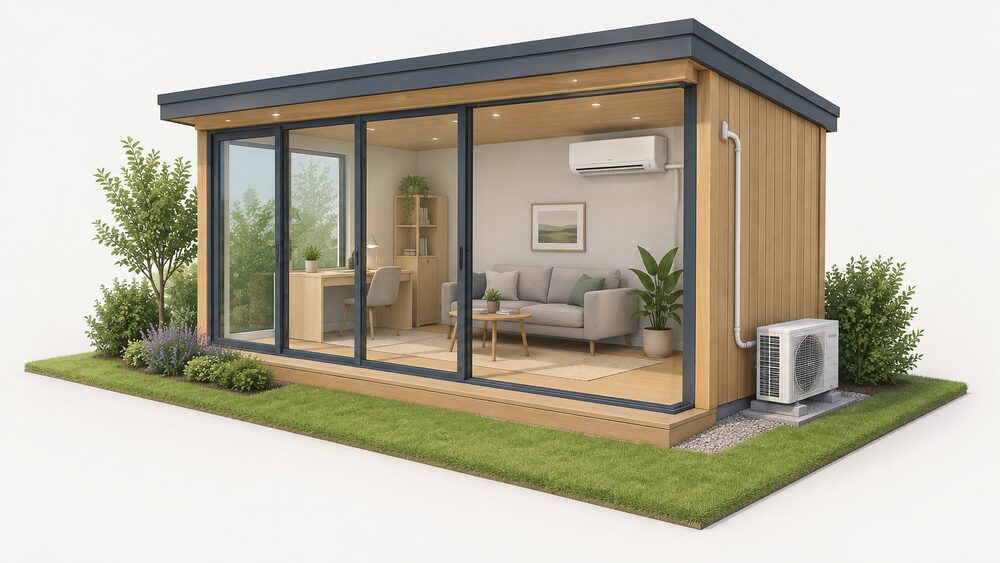
A garden room is one of the hardest spaces in a home to keep comfortable, because it is usually a lightweight structure with a lot of glazing and no connection to the house's heating. Garden rooms can become hot in summer and cold in winter, and often need heating as well as cooling, especially where they are used year round1. That dual demand is what shapes the choice of equipment.
The good news is that the same hardware does both jobs. Many modern air conditioning systems are designed to both cool and heat indoor spaces2, and air-to-air heat pumps can be configured for cooling as well as heating3. A single wall-mounted unit heats and cools one room only, so it is not a whole-house solution, but a garden room is exactly the case where one room is all that is needed4.
Sizing is the part most households get wrong. The major factors affecting the required capacity for a room air conditioner are the size of the room, the ambient outdoor temperatures through the year, the number of doors and windows facing outside, and which way the room faces relative to the sun5. A garden room with three glazed walls and a south-facing aspect will need more capacity than its floor area alone suggests.
Split, portable or monobloc: which suits which garden room
The three families of equipment differ mainly in where the heat goes and how much of the room they take up.
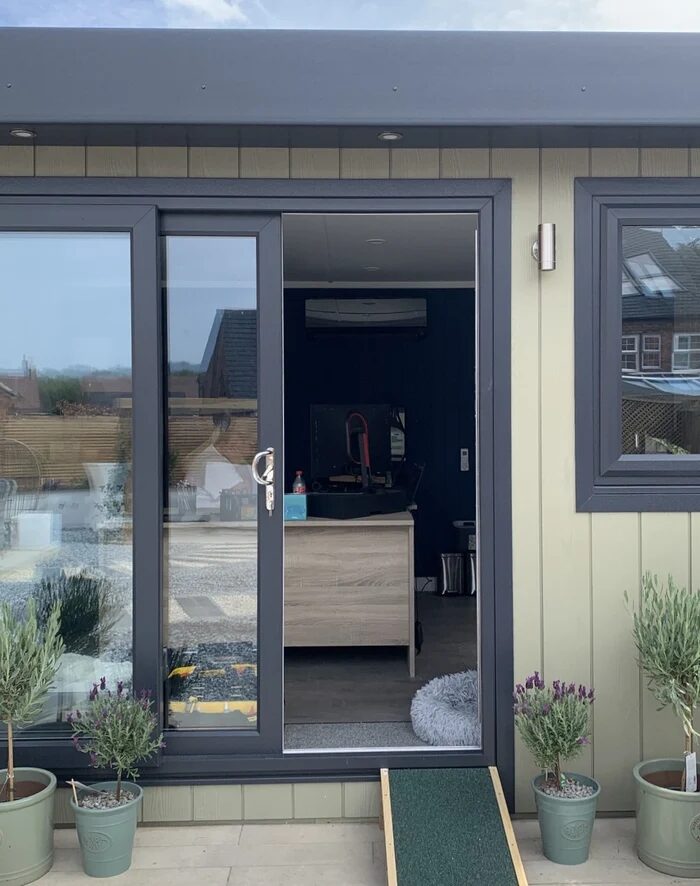
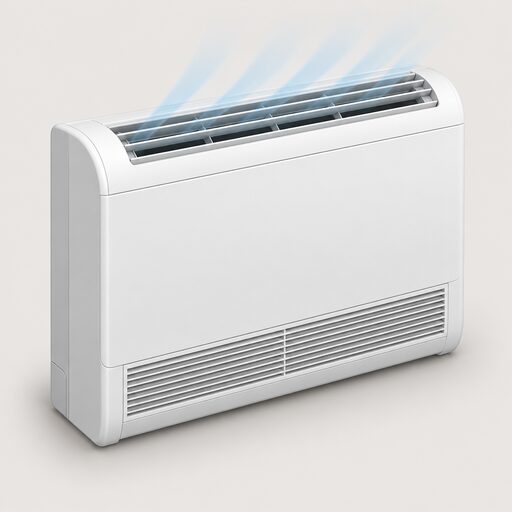
A monobloc, or single-packaged, model has only one indoor unit and no outdoor unit. The refrigerant liquid and the main components, including the evaporator and compressor, sit inside the unit, and it expels hot air through a duct10. That makes it the simplest option for a garden room with no external wall available for a condenser, but the duct has to go somewhere, typically a window or a wall vent. A single-packaged air conditioner is described as ideal for small areas of up to 30 m²8.
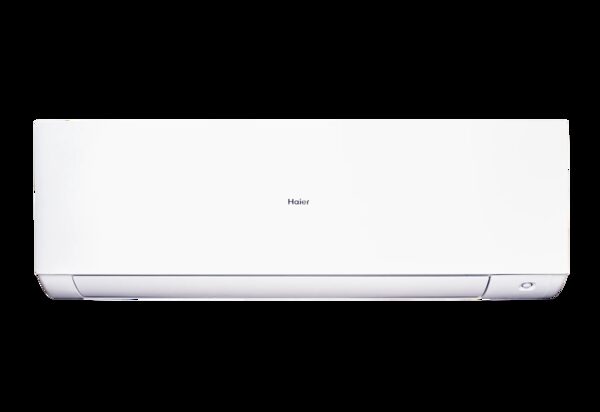
A mono-split consists of an indoor unit and an outdoor unit connected by a pipe, and it cools only one room11. That is a natural fit for a garden room used as a single space, and it removes the compressor noise from the room itself. A monosplit is described by one maker as perfect for a single room such as a bedroom or home office12, which is the closest published match to a garden office.
A multi-split uses one outdoor unit connected to several indoor units, typically two to five, and can modulate air conditioning in several rooms independently. It is more powerful than a monobloc unit, so it can cool larger areas11. For a garden room with a partitioned office and seating area, or a garden room plus an adjoining room in the house, this is the configuration that covers both without a second condenser.
Portable units sit outside this taxonomy in practice: they are monobloc machines on castors, and they carry the same ducting constraint. Where the choice is between a fixed and a portable machine, the trade-offs are covered in split vs portable air conditioning and in monobloc vs split portable air conditioner.
Heating as well as cooling: what a heat-pump unit does in winter
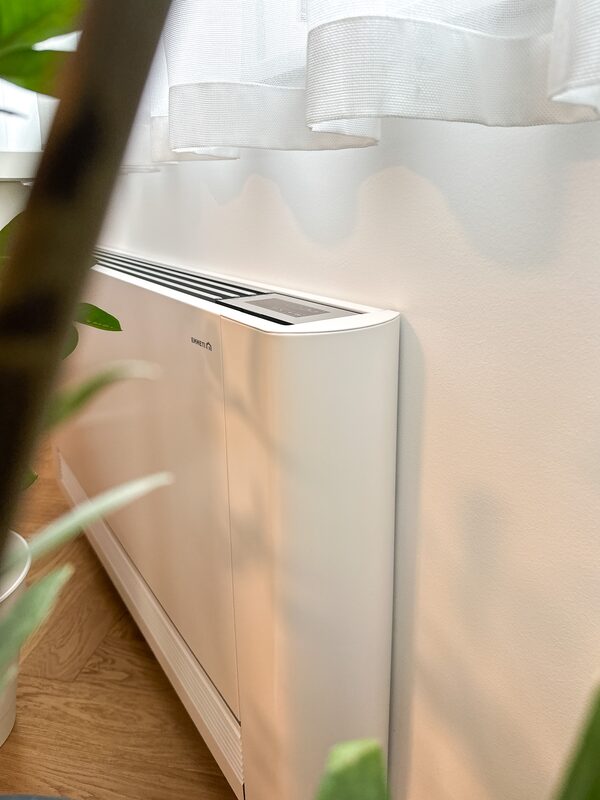
The reason a garden room is a good candidate for air conditioning rather than a fan is that the same unit can carry the winter load. Air-to-air heat pumps take warmth from the air outdoors, put it through a refrigerant, and use that to warm up the air inside the home13. They transfer heat from outside to inside through fan coil units or blowers, and can both heat and cool air14.
The reversibility is not universal. If the unit is reversible it can provide both heating and cooling, but not all units do this4. That distinction matters more in a garden room than in a bedroom, because a garden room is often the only heated space in its structure. Air-to-air heat pumps are described as ideal for park homes precisely because they provide both heating in winter and cooling in summer15, and the same logic applies to any lightweight, separately heated structure.
The wider case for the technology is well documented. Heat pumps keep a home warm and cosy in the winter and cool and comfortable in the summer16, and air-to-air heat pumps can provide heat in winter and air conditioning in summer17. Independent assessment has treated air-to-air heat pumps as a low-carbon option for UK homes9, and consumer research has looked at how a heat pump can cool a home18.
For a garden room, the practical consequence is that one appliance replaces both a heater and a cooling unit, which reduces the number of separate electrical loads the structure has to carry. The dependence that remains is on electricity: the unit is only as independent as the supply feeding it, and a garden room on a long spur from the house is still drawing from the grid. The heating and cooling side of this is set out further in air conditioning that heats.
Sizing: matching output to floor area and insulation
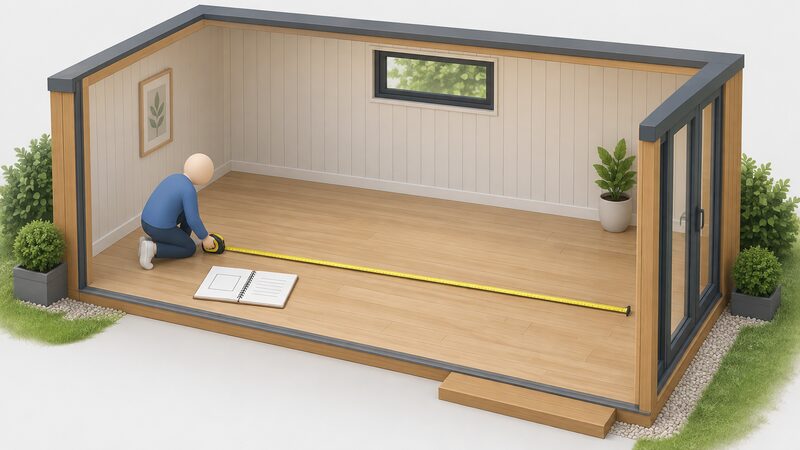
The starting point is floor area. To estimate the size of air conditioner needed, measure the length and width of the room in metres and multiply the length by the width to get the floor area in square metres1. From there, a published sizing table maps area to output.
One version of the sizing guidance gives 80 m² and 800 ft² for a 10.0 kW, 34,000 BTU unit, while another gives 40 m² and 400 ft² for the same output. The two figures are not reconciled, so both are shown here and the discrepancy should be treated as unresolved1.
Floor area is only the first input. The major factors impacting the required capacity for a room air conditioner are the size of the room, the ambient outdoor temperatures throughout the year, the number of doors and windows facing outside, and which way the room is facing relative to the sun throughout the year5. A separate sizing rule adds humidity and temperature, the thermal insulation of the home, the size of windows or balconies and glass quality, the orientation of the house, and the number of electronic items connected in the room19.
That second list is the one that bites in a garden room. A timber-framed structure with a large glazed elevation has poor insulation relative to a modern house and a high solar gain, so the same floor area can need noticeably more capacity than the table implies. One maker states plainly that room sizes are approximate, and that ceiling height, insulation, glazing and sun exposure can affect cooling performance20. The full method is set out in air conditioning sizing, and the specific case of a 12 m² room is covered in what size air conditioner for 20m2.
Running cost and power supply: what a garden room can draw
Running cost is where the garden room decision is most often made, because a garden room is usually occupied for a few hours at a time rather than continuously.
A typical portable air conditioner rated 1,000 to 1,500W can cost around 26 to 39p per hour, roughly 14 to 20 times more than a fan6. Fans are far cheaper to run than air conditioning, and air conditioning increases electricity use and can add significantly to summer energy bills21. For a garden office used eight hours a day through a warm spell, that hourly figure is the number that matters, not the purchase price.
Against that, a fixed system carries a capital cost. It costs around £1,900 to install a single-unit system to serve a single room4. That figure is for the installation of a single-unit system, and prices for a garden room will vary with the length of the pipe run, the electrical supply and the route for condensate, so any quotation is installer-specific.
The power supply question follows from the load. A garden room is often fed by a spur or a sub-main from the house, and the published facts here do not set out circuit capacities for garden rooms. What is clear is that a fixed system is a permanent electrical installation, and the electrical side of that work is covered in air conditioning installation and in air conditioning safety. Where the garden room is to be run from a dedicated supply, the wider question of what the structure can draw is part of the household's overall energy position, discussed in home cooling and energy independence.
Installation limits: where a unit can and cannot go
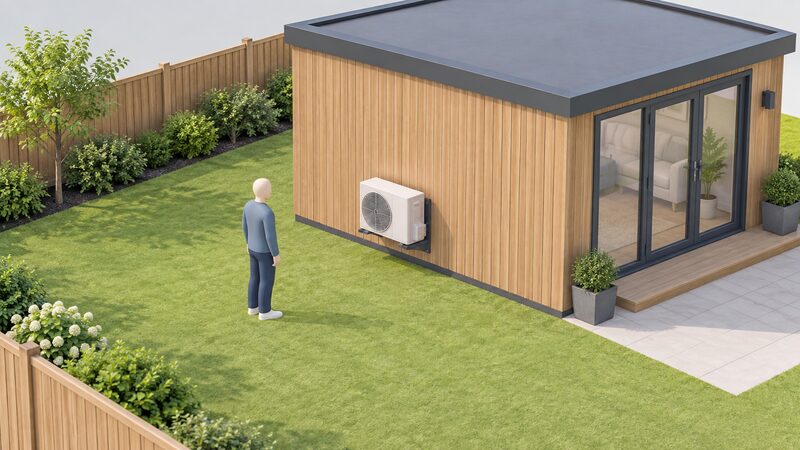
Adding air conditioning to a home may be considered permitted development provided all the limits and conditions set in legislation are met, and those limits cover the function, size, placement and quantity of units22. The size limit is the one most likely to catch a garden room installation.
Under Class G, the volume of the outdoor compressor unit, including any housing, must not exceed 1.5 cubic metres for installation on or within the curtilage of a dwellinghouse, and must not exceed 0.6 cubic metres for a block of flats7. The same 1.5 and 0.6 cubic metre figures appear in the corresponding Welsh instrument23, and the 1.5 cubic metre dwellinghouse limit is repeated in the Scottish consultation material on permitted development rights24. A separate statement of the English position puts the outdoor compressor housing limit at 0.6 cubic metres25, which does not match the 1.5 cubic metre figure in the legislation, and the two are not reconciled.
The conditions go beyond volume. The Class G rules also set out that permission is not granted where any part of the heat pump would be installed within one metre of the boundary of the curtilage of the dwellinghouse or block of flats, and separately where it would be installed on a flat roof within one metre of the external edge of that roof7. Both conditions are stated in the same instrument and both apply; they are not alternatives.
Protected areas change the picture. If a home is in a protected area such as a Conservation Area then permission will be required, and a listed building needs listed building consent22. For comparison, planning permission is not normally needed when installing a biomass system in a house if the work is all internal26, and the same wording appears in the Welsh guidance27, which shows how much the internal or external position of the equipment matters.
Where a garden room installation falls short
Three limits are worth stating plainly. First, a single wall-mounted monobloc heats and cools one room only, so a garden room with a partition or an adjoining space needs either a multi-split or a second unit4. Second, not every unit is reversible, so a machine bought for summer may not carry the winter load4. Third, the running cost of a portable unit is high relative to a fan, at around 26 to 39p per hour for a 1,000 to 1,500W machine6.
Ventilation is a related constraint. In other rooms, suitably sized window openings and background trickle ventilators may suffice28, and in high-moisture rooms such as kitchens, bathrooms and utility rooms extractor fans are required to remove excess moisture, with an open window as the fallback29. A garden room used for exercise, drying or cooking falls into the second category. Where no modern membranes are used in a solid floor, the designer should demonstrate how groundwater pressure will be relieved, most commonly via external perimeter drainage such as a French drain or similar30. Appliances sited in garages should be room-sealed and balanced flued so that fresh air for combustion is taken directly from outside via the flue system31, a reminder that any combustion appliance in an outbuilding needs its own air supply.
On the independence question, a garden room air conditioner reduces dependence on the house's heating system and on opening windows for comfort, and a reversible unit removes the need for a separate heater. It does not reduce dependence on electricity, on the grid connection to the garden room, or on the manufacturer for parts and refrigerant service. The wider picture is in cooling by home type and in home cooling and air conditioning.
Sources31 cited
- Air Conditioning Energy Inspections, Part 4, legislation.gov.uk, 2026-09-17
- Cooling guide, Haier HVAC, 2026-09-17
- Air-to-air heat pumps, Energy Saving Trust, 2026-09-11
- What it's really like to have a heat pump, Which?, 2026-07-17
- Total cooling or heating capacity, Hitachi Air Conditioning, 2026-09-17
- Summer energy tips, National Energy Action, 2026-08-13
- Class G: installation of air source heat pumps on domestic premises, legislation.gov.uk, 2026-09-17
- How does air conditioning work, Netatmo, 2026-09-20
- Air-to-air heat pumps: a low-carbon solution for UK homes, Nesta, 2026-02-17
- Home air conditioning, Netatmo, 2026-09-20
- Home air conditioning, Netatmo, 2026-09-20
- Air conditioning, Clivet, 2026-09-17
- Air-to-air heat pumps, Nesta, 2026-09-17
- Heating your home with renewable energy, Which?, 2025-09-22
- Park homes advice, Centre for Sustainable Energy, 2026-07
- Level up your lifestyle with a heat pump, Plymouth Energy Community, 2026-09-20
- Ministers urged to clarify energy efficiency support funds, End Fuel Poverty Coalition, 2025-11-18
- How a heat pump can cool your home, Which?, 2026-07-17
- How to calculate the air conditioning power for a given surface area, Hitachi Air Conditioning, 2026-09-17
- Air conditioners, Meaco, 2026-09-23
- Make your home more comfortable in warmer weather, Plymouth Energy Community, 2026-09-20
- Is permission needed for installing new roof tiles, Planning Portal, 2026
- Class G: installation of air source heat pumps on domestic premises, legislation.gov.uk, 2026-09-01
- Permitted development rights: impact assessments, Scottish Government, 2026-09-17
- Class G: installation of air source heat pumps on domestic premises, legislation.gov.uk, 2026-03-10
- Biomass fuelled appliances: planning permission, Planning Portal, 2026
- Planning permission: biomass fuelled appliances, Welsh Government, 2026-09-17
- Building regulations: doors and windows, Welsh Government, 2026-09-17
- Ventilation advice, Centre for Sustainable Energy, 2025-07
- Guide to the conversion of traditional buildings, Scottish Government, 2026-08-10
- Your home guide to liquid fuel heating, OFTEC, 2026-09-20
 Split Air ConditioningA split air conditioning system cools or heats one room using an indoor unit and an outdoor unit linked by pipes.
 Monobloc and Split Heat PumpsWhich heat pump suits your home, a monobloc or a split?
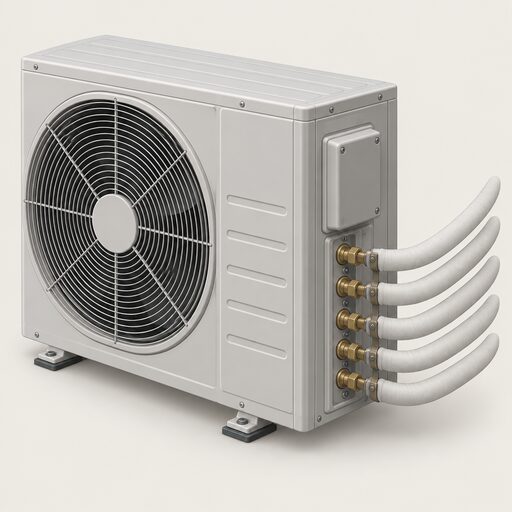 Multi-Split ACHow multi-split air conditioning works when one outdoor unit serves several indoor units: how many rooms one system can serve, independent room control, efficiency, outdoor unit size and sound, planning rules in England and Scotland, servicing and lifespan, the 0% VAT position and how it compares with separate single splits.
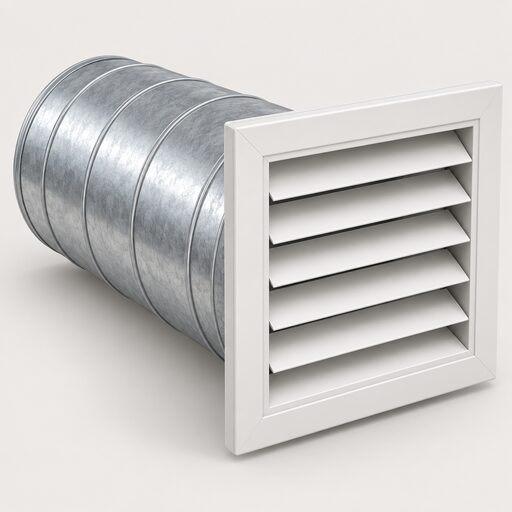 Types of Air ConditioningPortable, wall-mounted, multi-room or ducted: which air conditioning suits your home?
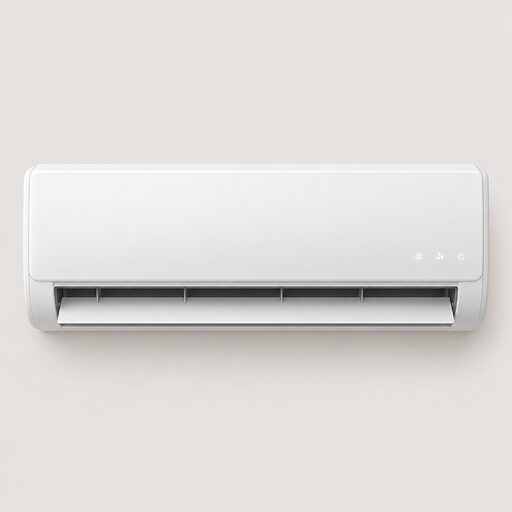 Air Conditioning CostPublished UK equipment prices and the parts of an installed price for portable, single split, multi-split and whole-house air conditioning.
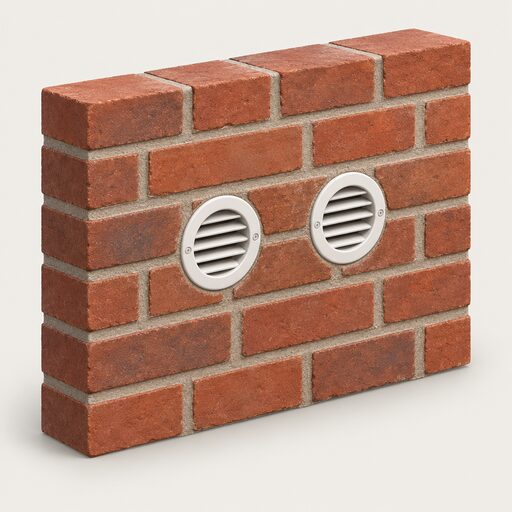 Without an Outdoor UnitFlats and listed homes often cannot have a box on the outside wall, so how does air conditioning work with everything indoors?