
In this answer
Short answer
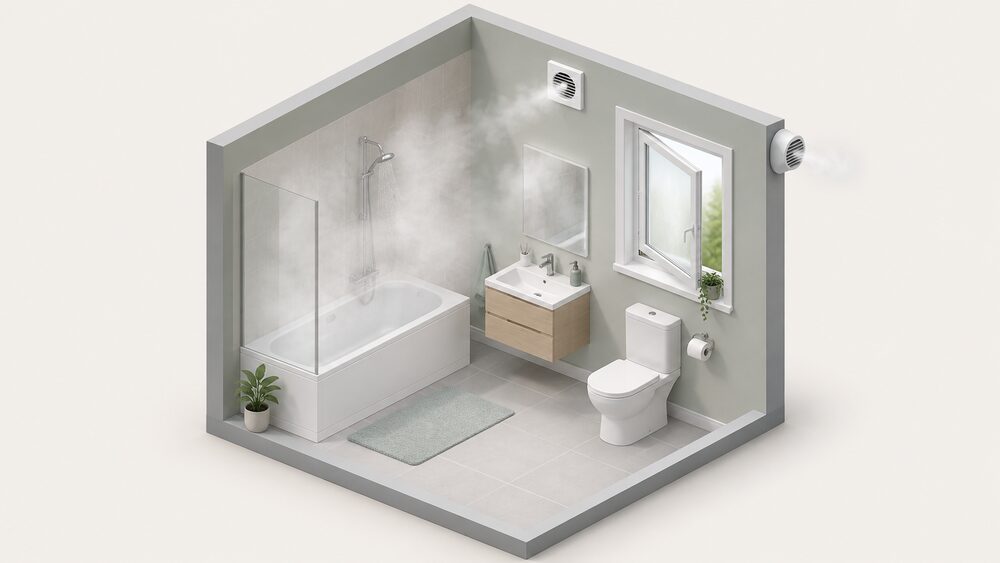
An extractor fan is not a single legal requirement in the way a gas safety check is. What the rules require is ventilation: in a domestic property, ventilation must circulate continuously throughout the whole building, extract ventilation must be used within an area of increased humidity or pollution, and purge ventilation must be possible1. Kitchens, bathrooms and utility rooms are the rooms where steam is produced, and official guidance says they should be provided with higher levels of ventilation, normally mechanical fans and windows, than other rooms where suitably sized window openings and background trickle ventilators may suffice2.
So the practical answer is that a fan is normally the mechanism, not the mandate. Where a room has a suitably sized openable window, that window can form part of the higher level of ventilation the guidance asks for. Where it does not, mechanical extract is the route the guidance points to. Independent guidance puts it more bluntly for householders: in kitchens, bathrooms and utility rooms extractor fans are required to remove the excess moisture, and if you do not have one, opening a window will help4.
The exception that catches people out is the loft conversion. Where a bathroom or shower forms part of a loft conversion, building regulations require an extractor fan to be fitted5. That is a clear, specific requirement rather than a general one, and it applies to the conversion regardless of what windows the new room has.
What an extractor fan does and where it belongs
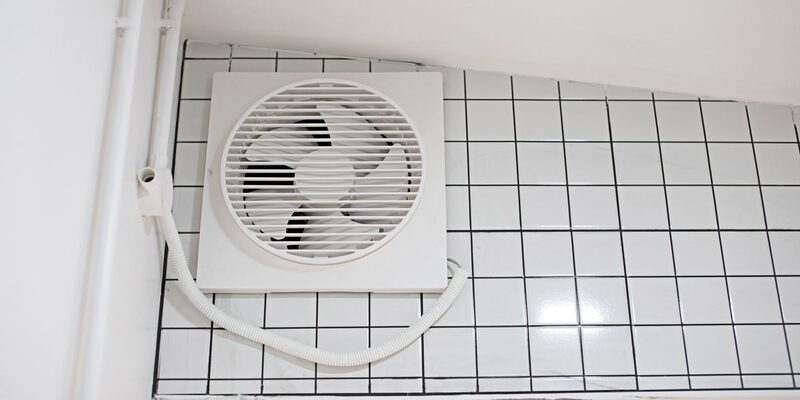
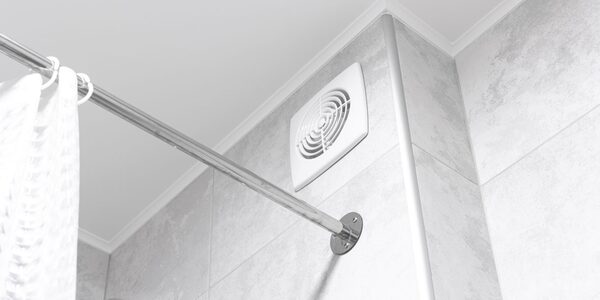
An extractor fan moves air out of a room and discharges it to the outside, either through a wall or roof terminal or through a duct run. The Airflow iCONsmart 30, a UK-market unit, is described as suitable for wall or ceiling recessed mounting and as ideal for toilets, en-suites, shower rooms and bathrooms8. That placement reflects the job: the fan is sited in the room where water vapour or pollutants are most likely to be released, which is how extract ventilation is described in guidance on what gets funded9.
Ducting matters as much as the fan. Any ducts connected to the outside of a property, as well as any that pass through a cold space such as an un-insulated loft, should be insulated to avoid condensation and potential damage to the fan and filters10. A fan that is correctly sized but ducted through a cold loft without insulation can suffer from the very moisture it is meant to remove.
In Scotland, work associated with the provision of an extractor fan falls within building standards scope: the technical handbook lists "any work associated with the provision of an extractor fan" as Building Type 1311. That means the installation itself, not just the finished room, is treated as regulated work north of the border.
Is an extractor fan a legal requirement?
There is no single line in the regulations that says every kitchen and bathroom must have a fan. What exists is a set of requirements about ventilation outcomes, plus specific triggers where mechanical extract becomes mandatory.
The outcome requirements are set out in Approved Document F for dwellings: continuous ventilation throughout the building, extract ventilation in areas of increased humidity or pollution, and purge ventilation capability1. The same document, in its consultation version, proposed that an intermittent extract fan in a room with no openable window should be provided with controls that continue to operate the fan for a minimum of 15 minutes after the room is vacated12. That is a design standard for new work rather than a rule imposed on existing homes.
The specific triggers are narrower. A loft conversion containing a bathroom or shower requires an extractor fan5. In Northern Ireland, fitness checks for private rented housing state that all rooms containing an open flue gas heating appliance and all kitchens, bathrooms and toilets should be provided with enough suitable permanent ventilation by air brick or similar13. That is a permanent ventilation requirement rather than a fan requirement, but it shows how the four nations differ in how they express the same underlying concern.
The window rule: when a fan is not required
The window rule is really a sufficiency rule. Official guidance for doors and windows states that rooms where steam will be produced, including kitchens, bathrooms and utility rooms, should be provided with higher levels of ventilation, normally mechanical fans and windows, than other rooms where suitably sized window openings and background trickle ventilators may suffice2. The wording puts fans and windows in the same bracket for wet rooms, which is why a window can sometimes carry the load and sometimes cannot.
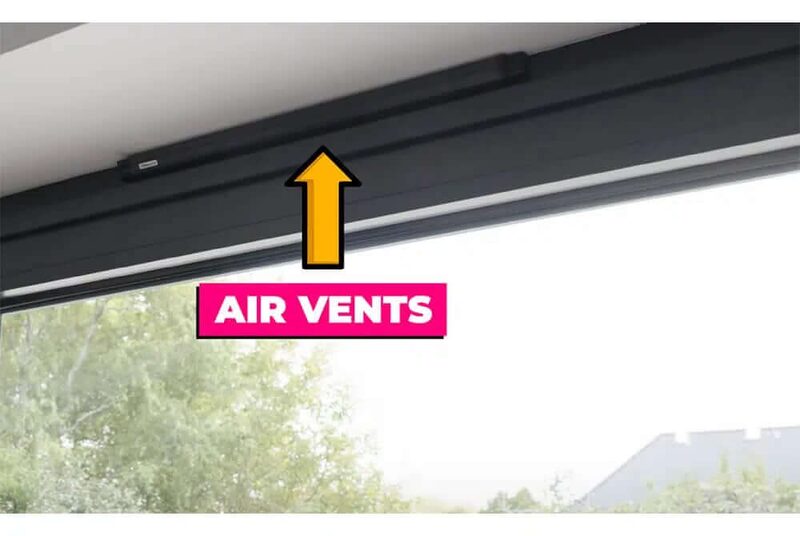
Where adequacy is demonstrated by testing, the requirement can fall away. Guidance on background ventilation states that additional background ventilation does not have to be installed if testing shows the ventilation is adequate16. On trickle vents specifically, if a Pulse Test proves the home has sufficient natural ventilation, trickle vents may not be required17. The same logic applies to extract: the question is whether the room is adequately ventilated in practice, not whether a particular product is present.
There are also cases where ventilation is simply not required at all. A warm roof system does not require ventilation8. Balanced flue gas fires do not need ventilation18. These are construction and appliance specifics rather than general exemptions, but they show that the regulations work by matching the ventilation provision to the source of moisture or combustion.
Kitchens, bathrooms and utility rooms: the high-moisture rooms
These three rooms are grouped together because they are where water vapour is released in volume. Independent guidance describes intermittent extract ventilation as individual extractor fans in bathrooms, kitchens and utility rooms, usually controlled by a light switch, a timer or a humidity sensor, and notes that they are relatively cheap to install and reasonably effective, but not always sufficient for very air-tight or damp-prone properties4. That last clause matters: a fan that meets the letter of the guidance may still not keep a sealed, poorly insulated home dry.
The Building Regulations position for Wales and England is consistent on the grouping. Rooms where steam will be produced, named as kitchens, bathrooms and utility rooms, should be provided with higher levels of ventilation, normally mechanical fans and windows2. Extract ventilation is directed at rooms where water vapour or pollutants are most likely to be released, for example bathrooms and kitchens, and extract fans can be intermittent or continuous9.
| Room | Ventilation expectation | Source |
|---|---|---|
| Kitchen | Higher level, normally mechanical fan and window | 2 |
| Bathroom | Higher level, normally mechanical fan and window | 2 |
| Utility room | Higher level, normally mechanical fan and window | 2 |
| Loft conversion bathroom or shower | Extractor fan required | 5 |
| Room with open flue gas appliance (NI fitness check) | Enough suitable permanent ventilation by air brick or similar | 13 |
For a household, the practical consequence is that the fan is doing continuous work in the background of daily life. It is not a one-off installation that can be forgotten. The controls matter as much as the unit: a humidity sensor or timer will run the fan when the room is actually wet, whereas a light switch alone will not.
Using your fan well: when to run it and what it prevents
Running the fan is where most of the benefit is won or lost. Independent condensation and mould advice is to leave windows open and extractor fans to run for about 20 minutes after cooking to clear any steam7. For bathrooms, the advice is to consider having an extractor fan installed and to use it each time you shower or bathe if you do not have one19.
The single most common way to defeat a fan is to block it. Guidance on draught busting warns: make sure you do not block any intentional ventilation such as air bricks, extractor fans, and vents20. Sealing a fan to stop a draught, or covering an air brick, removes the pathway the moisture needs.
Cleaning is a safety matter as well as a performance one. Electrical safety guidance is to clear your fan of dust build-up, and to unplug your fan and follow the manufacturer's instructions before opening the guard or cleaning21. The same guidance warns against improvised cooling hacks involving fans, which risk electric shock21.
"Make sure you don't block any intentional ventilation such as air bricks, extractor fans, and vents."

Choosing to install one where you don't have to
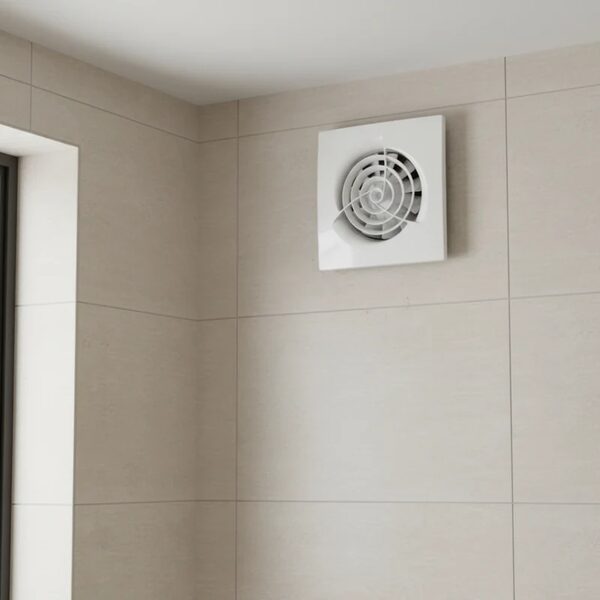
Where a room already has adequate ventilation, a fan is a choice rather than a requirement. The evidence for adequacy is what matters: additional background ventilation does not have to be installed where testing shows ventilation is adequate16, and trickle vents may not be required where a Pulse Test proves sufficient natural ventilation17. A household weighing up a voluntary installation is therefore weighing up the room's measured behaviour, not a blanket rule.
The running cost is small. An extractor fan draws 5 to 10 W and costs less than 1/4p per hour to run6. That is the figure to hold against the cost of the installation itself, which is installer-quoted and not published as a standard rate. The Airflow iCONsmart 30 is described as having low energy consumption and as complying with Building Regulations, and it is app enabled8.
There is also a wider policy direction that treats ventilation as part of the package rather than an optional extra. The Warm Healthy Homes Fund consultation proposes that the installation of loft and cavity wall insulation, draught proofing, and ventilation will be mandatory for all properties, unless existing insulation and ventilation meet acceptable standards18. Ventilation is being written into retrofit programmes alongside insulation, because tightening a home without managing its air changes is how damp problems start.
For flats and shared buildings, the constraints are different again, and the routes for consent and shared ducting are set out in ventilation in flats and apartments. For rented homes, the split between what a tenant can change and what needs the landlord is covered in renting and home energy, and the specific duties around damp are in damp and mould in rented homes.
Sources21 cited
- Approved Document F Volume 1: Dwellings, Planning Portal, 2021-12
- Building Regulations: Doors and Windows, Welsh Government, 2026
- Doors and Windows: Building Regulations, Planning Portal, 2026
- Ventilation, Centre for Sustainable Energy, 2025-07
- Loft Conversions: Insulation and Ventilation, Centre for Sustainable Energy, 2026-08
- Electrical Items Cost, National Energy Action, 2025-04
- Dealing with Condensation and Mould, National Energy Action, 2026-07-13
- Airflow iCONsmart 30 Extractor Fan, Quiet Mark, 2026-09-17
- Ventilation, BESA, 2026-09-20
- Mechanical Ventilation: Efficiency is Not Only About Heat Recovery, Eurovent Certita Certification, 2020-05-05
- Building Standards Technical Handbook 2022: Domestic, Scottish Government, 2022-06-01
- Building Regulations Part L and F Review Stage 2a: Approved Document F, Welsh Government, 2020-11
- Checking Your Home is Fit to Live In, nidirect, 2026-09-17
- Extensions: Building Regulations Energy Efficiency, Planning Portal, 2026
- Exemptions, Building Control Northern Ireland, 2024
- FAQ and Myth Buster, Insulation Assurance Authority, 2026-09-20
- Ventilation and Trickle Vents, Glass and Glazing Federation, 2026-09-20
- Warm Healthy Homes Fund Consultation, Department for Communities, 2026-05
- How to Stop Condensation, Which?, 2026-05-26
- Draught Busting, Low Carbon Hub, 2026-08-05
- TikTok Fan Cooling Hack Warning, Electrical Safety First, 2026-09-19
 Home Ventilation SystemsWhy do modern insulated homes need extra ventilation, and what happens if they do not get it?
 The Full Cooling and Air Conditioning GuideDo you really need air conditioning in a British summer, or would a fan and better shading do the job?
 Electric FansHow electric fans cool people rather than rooms, what the main UK fan types (desk, pedestal, tower, ceiling and bladeless) draw in watts and cost per hour, where they fall short in a heatwave, how to use them safely, and how they fit alongside night ventilation and shading.
 Building Regs Part F VentilationMaking a home airtight without ventilation traps moisture, and Part F is the rule that stops that happening.
 UK Cooling DemandPublished data on air conditioning ownership and home overheating, with projections for summer temperatures in each UK nation, and what rising cooling demand means for summer electricity use.
 Which Homes Suit a Heat PumpMost UK homes can have a heat pump fitted, so the real question is whether yours makes it easy or expensive.