
In this answer
Short answer
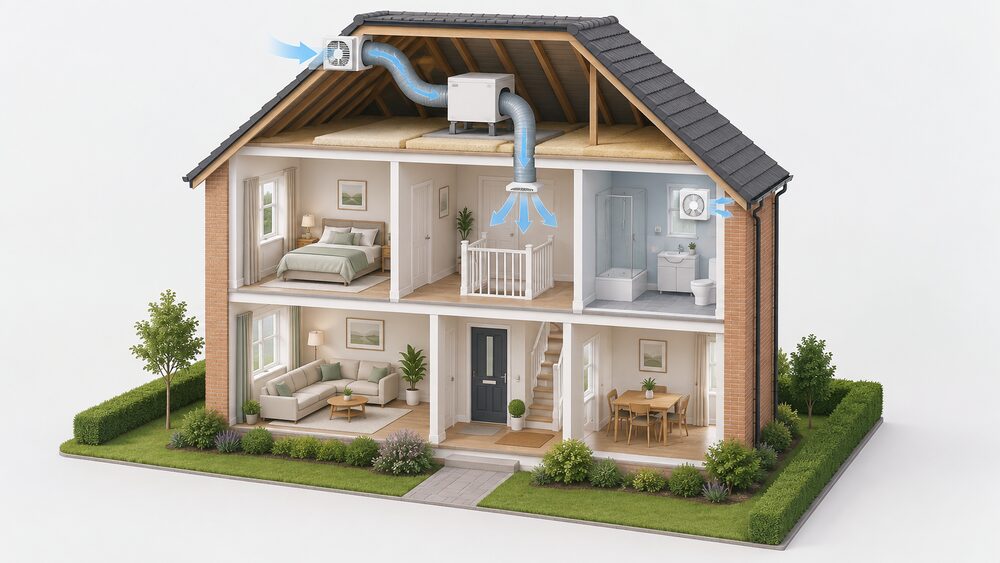
Positive input ventilation (PIV) is a mechanical ventilation system that draws fresh air from outside a building and distributes it into all rooms through a centralised unit, usually mounted in the loft1. Rather than extracting stale air from wet rooms, it works the other way round: it pushes filtered air in continuously, raising the pressure slightly inside the home so that moist air is forced out through background ventilation and the building fabric2.
That inversion is the whole point, and also the source of its limits. Independent guidance notes that a PIV unit can be cold directly under the fan, may not provide fresh air to the rooms that need it most, and that forcing warm moist air into the building fabric can lead to condensation and structural damage2. It is a supply system, not an extract system, and it depends on the home having somewhere for the displaced air to go.
PIV is widely fitted: maker guidance states there are over 1 million PIV systems installed in UK homes, and describes the approach as a popular and proven method for maintaining indoor air quality3. It is most often specified for older properties and homes with existing condensation or mould problems4.
What positive input ventilation is and how it works
A PIV unit sits in the loft or on a wall, pulls air in from outside through a filtered inlet, and delivers it into a hallway or landing at a continuous low rate. The maker description of one standard unit sets out the principle plainly: it introduces filtered air into the dwelling at a continuous rate, encouraging movement of air from inside to outside7. The pressure difference is small, but it is continuous, which is what distinguishes PIV from an extract fan that runs only when a light switch or humidity sensor triggers it.
The contrast with other systems matters. Mechanical ventilation with heat recovery draws air out of warm, moist rooms such as kitchens and bathrooms, transfers heat from the exhaust air to incoming fresh filtered air in a heat exchanger, and blows pre-warmed fresh air into habitable rooms such as living rooms and bedrooms8. An exhaust air heat pump works differently again: a fan sucks ventilation air out of all wet spaces, creating a weak negative pressure so air from other rooms also finds its way to the wet areas, with fresh outside air drawn in through vents on the outer walls9. PIV does neither. It has no heat exchanger and no extract ductwork, which is why it is cheap to retrofit and why it cannot recover heat.
The purpose of ventilation generally is to ensure good indoor air quality and extract indoor pollutants, removing particulates (PM10, PM2.5, PM1), CO2 and VOCs10. PIV contributes to that by encouraging more frequent air changes, replenishing stagnant air with fresh air from outside11. Filters on PIV systems remove particles as small as pollen as standard, with higher grade filters available3. One maker states that its units help prevent and resolve condensation and damp issues while also reducing indoor pollutants and even lowering radon gas levels12; that is a manufacturer's claim for its own product rather than an independently verified figure.
Loft-mounted and wall-mounted PIV: the two system types
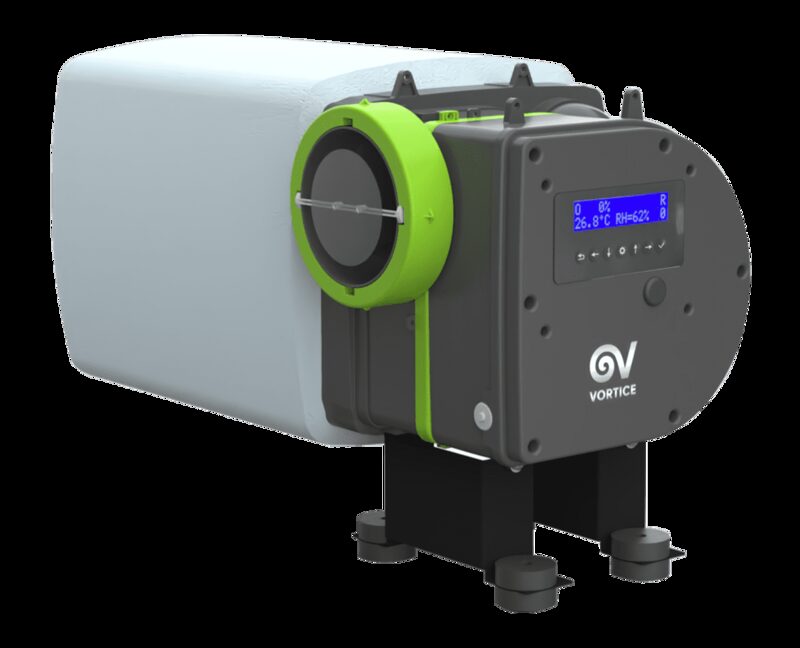
The loft installation is the default. One maker's loft unit is described as a loft mounted positive input ventilation fan designed to improve indoor air quality in homes13, and another maker's range is described as loft mounted PIV systems designed to reduce mould and condensation and improve indoor air quality within a property14. A third maker's loft-mounted unit is described as effectively combating condensation and damp problems15. The loft position gives access to a large volume of air and, in many homes, to air that has already been warmed slightly by the roof space.
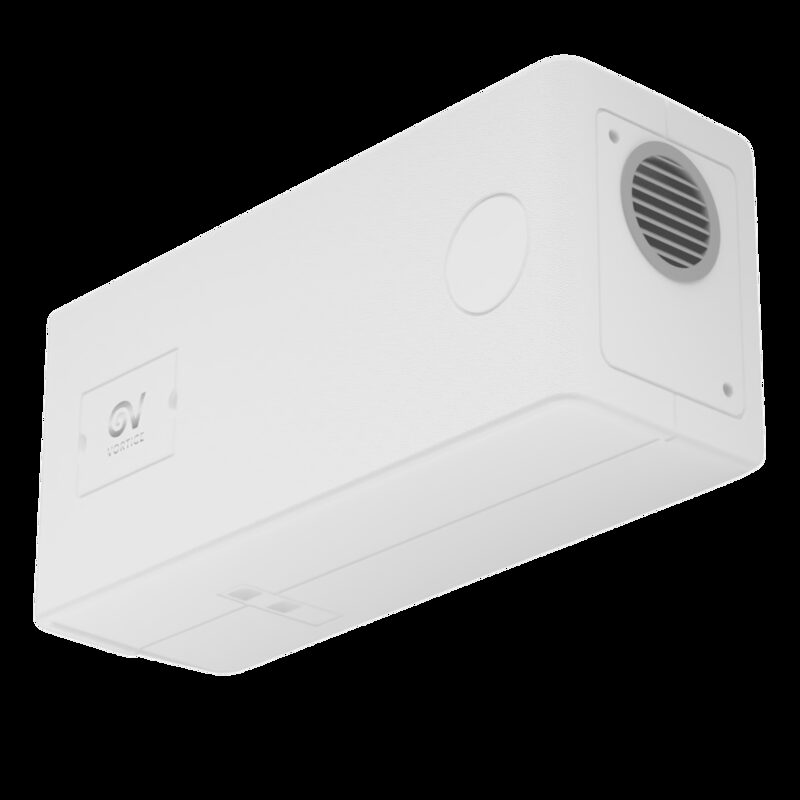
Wall mounting exists for homes that have no loft to use. Maker guidance states that PIV units can be wall-mounted in flats or basements, providing the same airflow benefits as loft installations in houses3. One wall unit is described as a wall-mounted positive input ventilation system designed to improve indoor air quality in homes16, and another wall range is described as wall mounted PIV systems designed to reduce mould and condensation and improve indoor air quality within flats or apartments14. One wall unit is stated to be suitable for homes with or without loft spaces16, and a heated wall unit is described as designed to ventilate homes without lofts, compact and able to be concealed in a convenient location17. More broadly, PIV products can be easily retrofitted in a loft or discreet wall space18.
| System type | Where it is fitted | Suits | Example range |
|---|---|---|---|
| Loft mounted PIV | Roof space, ducted to a ceiling diffuser | Houses with a loft | Vort PIV Loft13; Atmos Air14 |
| Wall mounted PIV | Internal wall, typically hallway or landing | Flats, apartments, basements, homes without lofts | PIV Wall16; Atmos Wall14; Flatmaster Heated17 |
| Multiple input ventilation | Loft, with more than one input point | Larger or more complex dwellings | Atmos Dual and Atmos Air Dual14 |
Cold incoming air is the obvious objection to a supply-only system, and makers address it with heaters. Many units come with optional heaters to temper incoming air during colder months3, and one wall unit has an automatic heat recovery mode that increases airflow when the loft is warm, reducing heating costs16. That is a maker's description of its own control strategy, not a measured saving.
Building Regulations requirements: extract fans and ventilation rates
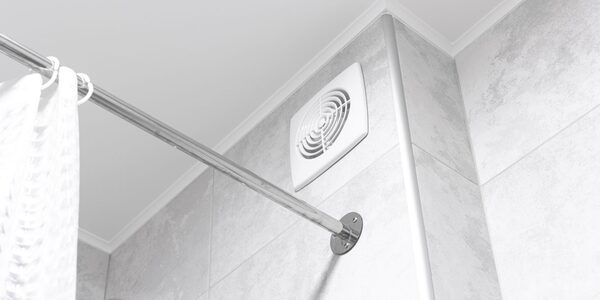
PIV does not replace extract ventilation in wet rooms, and the modelling rules make that explicit. The SAP calculation requires a minimum of two intermittent extract fans to be entered by the SAP assessor when PIV is entered5. In other words, a home with PIV is still assessed as having extract fans in at least two wet rooms, because PIV supplies air rather than removing it at source.
The rates those fans must achieve are set out in independent guidance: 15 l/s for bathrooms and 30 l/s for utility rooms6. The same source records a 20 m3/h ventilation rate for positive input ventilation in the SAP methodology, against 10 m3/h for an intermittent extract fan19. Official guidance for Wales states that rooms where steam will be produced, such as kitchens, bathrooms and utility rooms, should be provided with higher levels of ventilation, normally mechanical fans and windows20. Extract ventilation is applied in rooms where water vapour or pollutants are most likely to be released, for example bathrooms and kitchens, and extract fans can be intermittent or continuous21.
For continuous mechanical supply and extract systems, the proposed Part L 2025 standard would change the maximum specific fan power to 1.4 W/(L.s), against a current standard of 1.5 W/(L.s)22. The notional dwelling used in official guidance assumes natural ventilation with intermittent extract fans23, and the SAP methodology lists the ventilation methods it recognises: natural ventilation, positive input from loft, positive input from outside, mechanical extract centralised, mechanical extract decentralised, whole house mechanical ventilation without heat recovery, and whole house mechanical ventilation with heat recovery24.
Where PIV fits in an older home with condensation problems
Older properties and homes with condensation or mould issues are the applications PIV makers name for their own systems4. The logic is that older homes leak air anyway, so a continuous supply of fresh air raises the air change rate enough to keep surfaces above the dew point without the disruption of installing ductwork. Maker guidance states that older homes with natural gaps may not require trickle vents, while highly sealed modern properties could benefit from additional background ventilators3.
That last point is the boundary of PIV's usefulness. One maker states plainly that PIV would not be a suitable solution for extremely airtight properties, as there is a need for airflow between rooms and out of the dwelling14. A supply-only system in a sealed home has nowhere to push the moist air, and the pressure it creates has to escape somewhere. Independent guidance on trickle vents makes the related point that fitting windows with suitable trickle ventilation may improve the condensation problem, and could potentially reduce consequent mould growth and internal surface damage25. Background ventilation can be provided by simple built-in features like trickle vents on windows or air bricks in walls, though on their own trickle vents do not provide sufficient ventilation2.
Intermittent extract fans, the usual companion to PIV, are described as relatively cheap to install and reasonably effective, but not always sufficient for very air-tight or damp-prone properties2. They work well for individual rooms26. That is the honest division of labour: extract fans deal with the moisture generated in one room at the moment it is generated, and PIV deals with the general humidity level across the dwelling.
For a household, the independence question is straightforward. PIV uses a small amount of electricity continuously and depends on a manufacturer's unit, its filter replacements and, in some cases, an app or control. It does not reduce reliance on gas or the grid, and it does not generate anything. What it does is address a moisture problem that insulation and glazing work can worsen: sealing a home without improving ventilation concentrates the same moisture in less air. Households dealing with that sequence will find the wider context in condensation, damp and mould after insulation and home ventilation, and PIV sits alongside mechanical extract and heat recovery systems described in MVHR.
Installation is not a DIY job in the makers' own terms. Maker guidance states that PIV systems must be installed by qualified professionals, and that this ensures the system is tailored to the property's needs3. Product guidance states that a unit needs to be installed by a person competent to do so14. Maker guidance also states that the cost typically includes site surveys, installation and a warranty3; no published price is given, so PIV is installer-quoted. PIV systems are stated to be suitable for homeowners, landlords and housing providers3.
"Forcing warm and moist air into the building fabric which can then lead to condensation and structural damage."
Sources26 cited
- How to stop condensation, Which?, 2026-05-26
- Ventilation advice, Centre for Sustainable Energy, 2025-07
- The ultimate guide to positive input ventilation, Vortice, 2026-01-14
- Mechanical ventilation systems: benefits, types and installation, Titon, 2025-05-22
- SAP 10.3 full specification, BRE Group, 2026-01-13
- Guidance for improving Indoor Air Quality in Existing Homes, BEAMA, 2023-06
- Flatmaster Standard PIV System, Nuaire, 2026-09-20
- Ventilation systems, nidirect, 2026-09-17
- How an exhaust air heat pump works, NIBE, 2026-09-17
- Insulate and ventilate, BESA, 2024-06-21
- The Building Regulations on log burner ventilation, HETAS, 2023-09-28
- Brookvent product news, Brookvent, 2026-02-03
- Vort PIV Loft, Vortice, 2026-03-18
- Positive input ventilation products, EnviroVent, 2026-09-20
- Manrose launches PIV, Manrose, 2026
- Vort PIV Wall, Vortice, 2026-03-18
- Flatmaster Heated PIV System, Nuaire, 2026-09-20
- How do I choose my ventilation system, Vent-Axia, 2026
- Ventilation rates reference, MCS Certified, 2026-09-17
- Building Regulations: doors and windows, Welsh Government, 2026-09-17
- Ventilation focus area, BESA, 2026-09-20
- The Future Homes and Buildings Standards consultation, UK Government, 2026-09-17
- Approved Document L, Volume 1: Dwellings, UK Government, 2026-09-17
- RdSAP 10 specification, BRE Group, 2024-02-12
- Ventilation and trickle vents, Glass and Glazing Federation, 2026-09-20
- Lo-Carbon PureAir Home with Heater, Vent-Axia, 2026
 Home Ventilation SystemsWhy do modern insulated homes need extra ventilation, and what happens if they do not get it?
 Ducted and Cassette ACDucted air conditioning hides the unit in a loft or ceiling, while a ceiling cassette sits in the ceiling with only vents on show.
 Insulation a Heat Pump NeedsWill a heat pump still work if your home is not well insulated, and would you need to add loft, wall or floor insulation first?
 Types of Air ConditioningPortable, wall-mounted, multi-room or ducted: which air conditioning suits your home?
 Room-in-Roof InsulationTurning a loft into a room changes how the roof keeps heat in, so the insulation has to work with the ventilation rather than being squeezed in afterwards.
 Loft InsulationHow much loft insulation do you need, and is your current depth enough?