
In this answer
Short answer
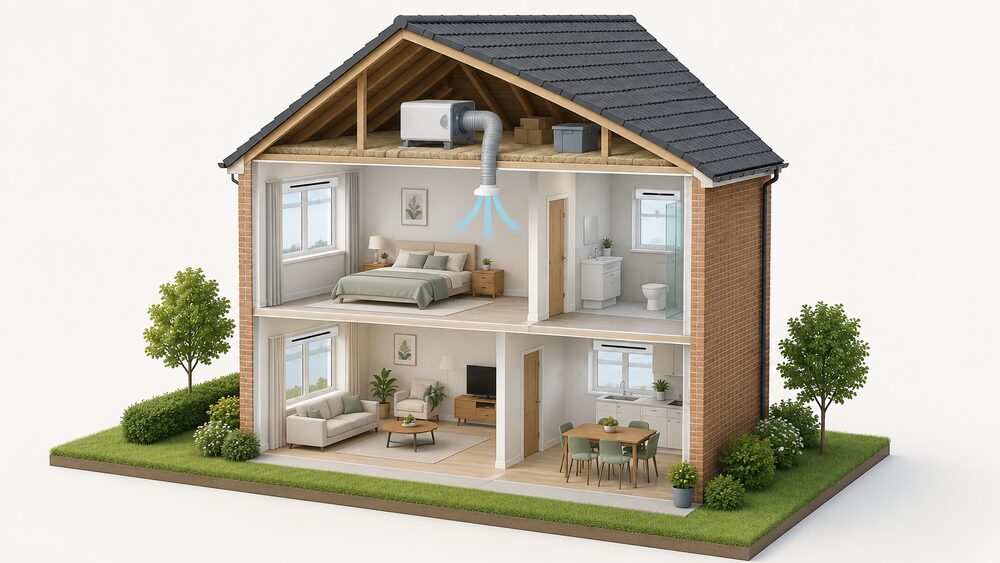
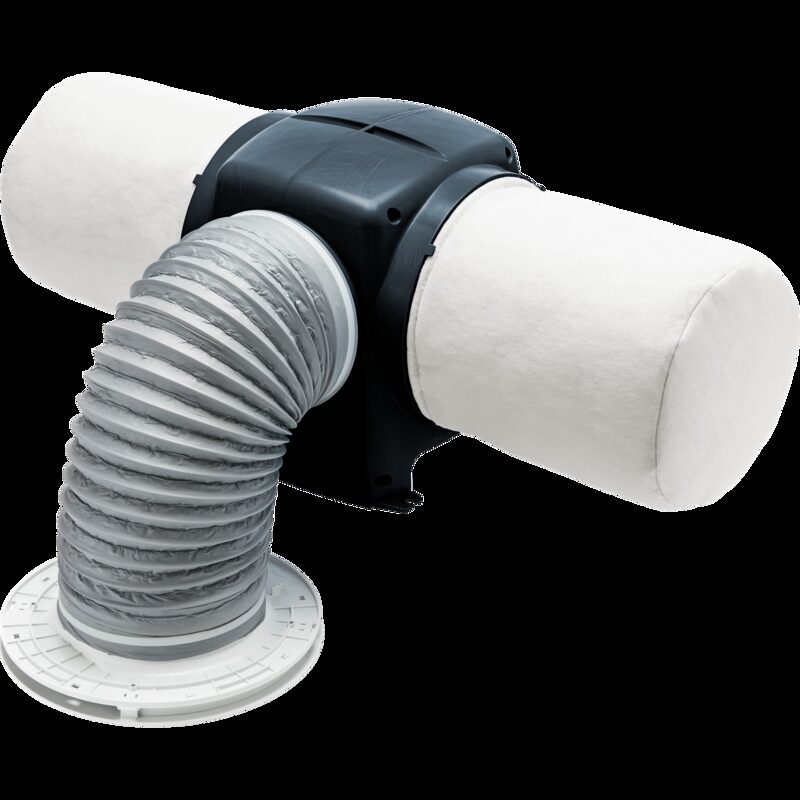
Positive input ventilation (PIV) is a mechanical ventilation system that draws air from outside a building and distributes it into all rooms through a centralised unit, usually mounted in the loft1. It works by pushing air in rather than pulling it out, forcing stale moist air out through background ventilation and the building fabric2. One maker states that more than 1 million PIV systems have been installed in UK homes3.
The drawbacks are real and worth understanding before committing. Independent guidance warns that forcing warm and moist air into the building fabric can lead to condensation and structural damage2. PIV can be cold directly under the fan, may not provide fresh air to the rooms that need it most, and relies on the building fabric and background vents to let air out2. It is not a heat recovery system, so the heat in the outgoing air is lost.
This page sets out what PIV does not do, where it falls short of alternatives, and what a household should weigh up. It does not recommend any product or installer.
What positive input ventilation is and how it works
PIV is one of several mechanical ventilation approaches. Independent guidance lists PIV alongside Mechanical Extract Ventilation (MEV), demand-controlled MEV (d-MEV) and Mechanical Ventilation with Heat Recovery (MVHR) as distinct system types6. A maker product page describes the principle as introducing filtered air into the dwelling at a continuous rate, encouraging movement of air from inside to outside7.
The system depends on somewhere for the air to go. Background ventilation, provided by trickle vents on windows or air bricks in walls, is the usual route, and on its own trickle vents do not provide sufficient ventilation2. Door undercuts also matter: they provide airflow between rooms, which helps cross-flow ventilation and reduces the build-up of moist air8.
That dependency is the first drawback. PIV does not extract air; it supplies it. If the outlets are blocked, closed or undersized, the air has nowhere to go and the system cannot do its job. Independent guidance notes that trickle vents provide effective background ventilation and allow constant ventilation while a window is closed or locked, with an installation footprint that does not enable intrusion9. But they must be open to work.
The SAP calculation reflects this. When PIV is entered, the SAP assessor must enter a minimum of two intermittent extract fans4. In other words, the standard methodology does not treat PIV as a complete ventilation strategy on its own. It is a supply system that sits alongside extract provision, not a replacement for it.
Drawbacks of PIV: heat loss and running costs
The central drawback of PIV is that it has no heat recovery. Air is drawn from the loft or from outside and pushed into the home, and the warmth in the air leaving the building is lost. Independent guidance on MVHR makes the contrast explicit: for heat recovery to work efficiently, the MVHR unit and ducting need to be within the insulation layer, not in an uninsulated loft5. PIV has no such recovery stage at all.
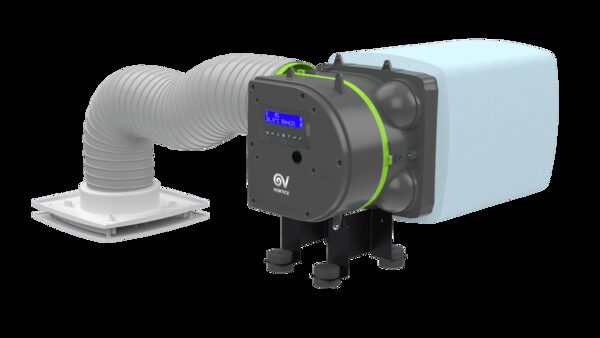
Running costs depend heavily on whether the unit has a heater. One maker states that non-heated units can operate for less than 1p a day3. That is a maker's figure for its own products, not an independent measurement, and it excludes heated operation. The same maker notes that many units come with optional heaters to temper incoming air during colder months3. A heater changes the running cost picture entirely, and no independent UK figure for heated PIV running costs appears in the evidence reviewed here.
Installation cost is quoted rather than published. One maker states that the price typically includes site surveys, installation and a warranty3, but no figure is given. Prices for PIV are installer-quoted.
The wider context is that ventilation and heating interact. Poor ventilation can trap moisture and everyday pollutants indoors, making conditions like asthma and allergies worse over time10. But ventilation that loses heat works against the household's energy position. A room-sealed appliance or one with a directly connected ducted external air supply minimises ventilation energy losses from the room and the risk of cold draughts11. PIV does the opposite: it deliberately introduces outside air into the living space.
Where PIV falls short compared with MVHR
MVHR and PIV are not equivalent systems, and the differences matter most in airtight homes. Independent guidance states that whole-house systems like MEV or MVHR offer more consistent results, especially in newer, more airtight homes12. PIV, by contrast, relies on the building fabric and background vents to release the air it supplies.
MVHR recovers heat; PIV does not. Independent guidance on Passivhaus describes mechanical ventilation with heat recovery as a defining feature of the standard13, and a maker source makes the same point about Passivhaus reliance on MVHR14. The Energy Saving Trust notes that Passivhaus buildings use mechanical ventilation with a heat recovery system attached, and that the technique has higher upfront costs alongside significant cost savings13.
MVHR also has stricter installation conditions. Independent guidance states that the MVHR unit and ducting need to be within the insulation layer, not in an uninsulated loft5. Official guidance recommends that the MVHR unit should preferably be a Passivhaus Certified Unit5. And MVHR suits a particular airtightness range: recommendations vary, but for mechanical ventilation to be appropriate a home will probably want less than half of about 5m3/h.m2@50Pa air permeability5.
A maker source notes that a competing mechanical system effectively reduces humidity levels but is more expensive than other mechanical ventilation systems15. Cost is a genuine differentiator, and PIV is generally the simpler and cheaper intervention. But simplicity is not the same as performance, and in a well-sealed home the absence of heat recovery and the reliance on fabric leakage are real limitations.
| System | Heat recovery | Typical fit |
|---|---|---|
| PIV | None | Older, leakier homes with condensation3 |
| MEV / d-MEV | None | Whole-house extract, more consistent in airtight homes12 |
| MVHR | Yes | Airtight homes; unit and ducting within insulation layer5 |
Condensation and mould: what PIV does not fix
PIV is often sold as a condensation cure, and the evidence is mixed. Independent guidance warns that forcing warm and moist air into the building fabric can lead to condensation and structural damage2. That is the mechanism by which a supply-only system can make things worse rather than better if the moisture has nowhere to escape.
A maker case study reports the opposite. It describes a house refurbishment where the condensation had gone after installing a PIV unit, and returned when the unit was switched off for a week16. That is a single case study from a manufacturer, and it is not independent evidence.
The two positions are not reconciled in the evidence reviewed here. The outcome appears to depend on the property: how leaky it is, whether background vents are open, and whether the moisture source has been addressed.
What PIV does not fix is the underlying cause. Independent guidance states that problems with damp and mould need to be fixed before other energy saving measures like insulation can be installed17. Independent guidance on cavity wall insulation makes a similar point: resolve damp issues and fix leaks before installing insulation, as trapping moisture inside can create problems18. A ventilation system that moves air around a damp building does not repair the damp.
Independent guidance also sets out the health stakes. BEAMA's guidance details the serious health impacts caused by a build-up of condensation and mould in the home, and provides three key ventilation solutions: extractor fans, trickle vents and whole home ventilation systems19. PIV is not among the three named solutions in that list.
Noise, draughts and loft air quality
PIV units run continuously, and continuous operation brings continuous noise. A maker source describing single flow mechanical ventilation notes that it is permanently active and can therefore generate draughts, noise and heating losses15. PIV is a single flow system, so the same characteristics apply.
The draught issue is specific: PIV can be cold directly under the fan2. That is the point where incoming air enters the room, and in winter it is the coldest spot in the house. Units with optional heaters temper the air, but the maker's own framing is that the heater is an option rather than a standard feature3.
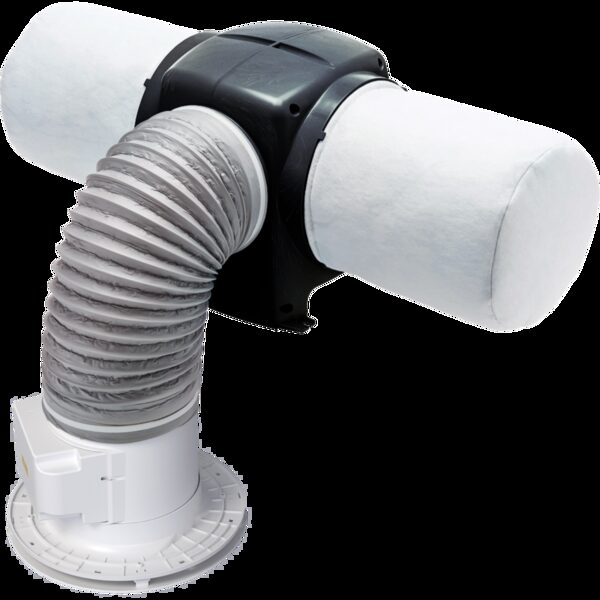
Loft air quality is the other concern. PIV draws air from the loft, and loft conditions vary. Independent guidance notes that loose-fill loft insulation can blow around in draughty lofts18. A filter is the barrier between that environment and the living space, which is why the maintenance interval matters. One maker states that filters typically need cleaning or replacement every five to seven years for loft mounted systems and every 12 to 18 months for wall mounted systems3.
Noise from outside is a related trade-off. Trickle vents provide ventilation without the need to open windows, reducing noise levels as a consequence, and acoustic options are available in noisier locations9. A PIV unit does not offer that acoustic benefit in the same way, because it is a fan running in the loft rather than a passive opening.
Draught-proofing interacts with all of this. Official guidance notes that while draught-stripping is valuable for energy efficiency, it does reduce the free air within the building, and the practitioner should demonstrate how the proposals manage this20. Sealing a home while relying on fabric leakage for PIV exhaust is a contradiction worth resolving before installation.
Is PIV right for your home?
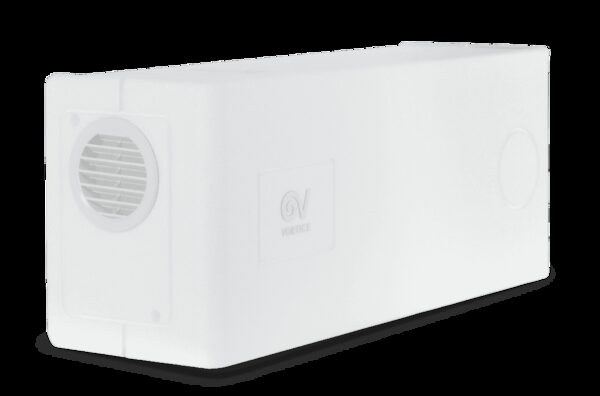
PIV suits some properties and not others. One maker states that PIV systems are suitable for homeowners, landlords and housing providers3, and a maker product page describes PIV as reducing condensation and preventing mould creep in older homes7. The same maker notes that older homes with natural gaps may not require trickle vents, while highly sealed modern properties could benefit from additional background ventilators3.
That last point is the crux. PIV works with leakage; airtight homes need a different approach. Independent guidance is clear that whole-house systems like MEV or MVHR offer more consistent results in newer, more airtight homes12.
For flats and basements without a loft, one maker states that PIV units can be wall-mounted, providing the same airflow benefits as loft installations in houses3. That opens the option to properties that would otherwise be excluded. For loft conversions, the open loft space a loft mounted unit needs is gone, so a wall-mounted unit is the relevant variant.
On approvals, one maker states that PIV systems must be installed by qualified professionals and comply with Building Regulations3. Official guidance notes that internal alterations will probably need building regulations approval21. Installing insulation requires an application for approval under the Building Regulations, which can be included as part of an application for the overall project22. Planning permission for internal wall insulation is usually not required, though both planning and listed building consent may be required in some situations20.
The independence question is worth stating plainly. PIV reduces reliance on opening windows and can improve air movement in a leaky home, but it does not reduce reliance on the grid, a supplier or gas. It adds a continuously running fan and, if heated, a continuous electrical load. It has no heat recovery, so it works against the home's thermal efficiency rather than with it. For a household pursuing energy independence, PIV is a comfort and condensation measure, not an energy measure.
"Forcing warm and moist air into the building fabric which can then lead to condensation and structural damage."
Sources22 cited
- How to stop condensation, Which?, 2026-05-26
- Ventilation advice, Centre for Sustainable Energy, 2025-07
- The ultimate guide to positive input ventilation, Vortice, 2026-01-14
- SAP 10.3 full specification, BRE Group, 2026-01-13
- Airtightness and ventilation, CAT, 2025-06-27
- Ventilation and air quality guide: building regulations explained, The IA A, 2026-09-20
- Flatmaster Standard PIV system, Nuaire, 2026-09-20
- DIY draught-proofing, Centre for Sustainable Energy, 2026-07
- Ventilation and trickle vents, Glass and Glazing Federation, 2026-09-20
- When home improvements don't deliver comfort, Low Carbon Hub, 2026-01-30
- Building regulations guidance Part J, Welsh Government, 2026-09-17
- Home ventilation guide: stop condensation, damp and mould, The IA A, 2026-09-20
- Passivhaus: what you need to know, Energy Saving Trust, 2026-02-16
- Why is Passivhaus gaining momentum in the UK, Nuaire, 2026-09-20
- Ventilation system guide, Netatmo, 2026-09-20
- PureAir Home PIV for condensation and mould, Vent-Axia, 2026
- Energy saving house viewing tips, Energy Saving Trust, 2026-05-20
- Installing blanket insulation, Which?, 2026-05-26
- Mould and condensation infographic, BEAMA, 2026-09-19
- Guide to the conversion of traditional buildings, Scottish Government, 2026-08-10
- Difference between building regulations and planning permission, Planning Portal, 2026-09-17
- Building regulations: energy efficiency, Planning Portal, 2026
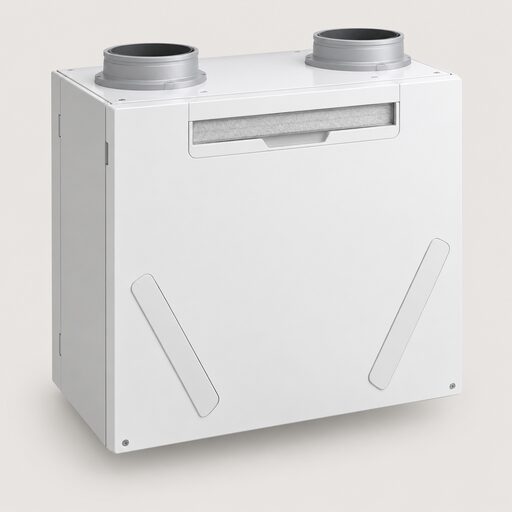 Ventilation and Cooling TechYour home is being made more airtight, so how do you stop stale air and damp building up without wasting heat?
 Room-in-Roof InsulationTurning a loft into a room changes how the roof keeps heat in, so the insulation has to work with the ventilation rather than being squeezed in afterwards.
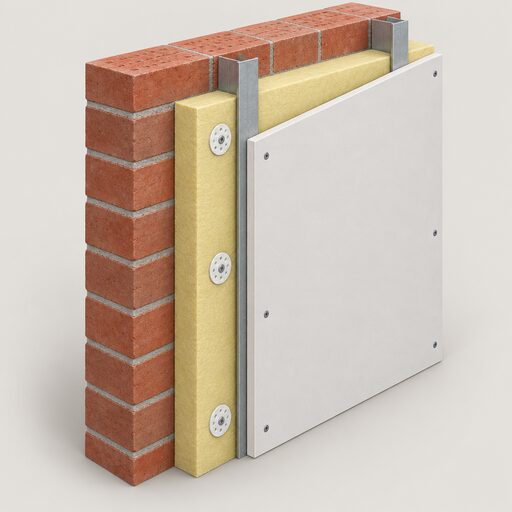 Solid Wall InsulationSolid walls lose far more heat than cavity walls, so what can actually be done about it?
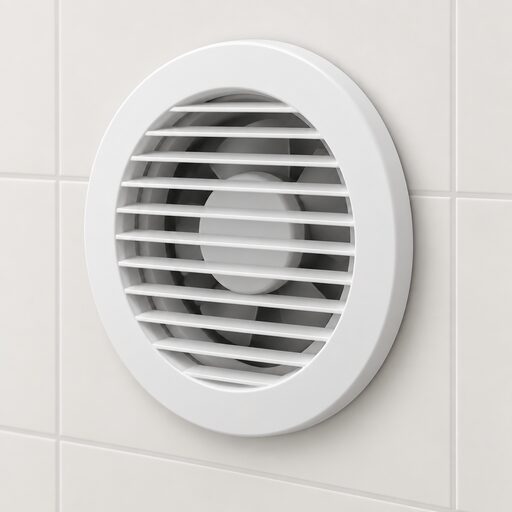 Ventilation in FlatsGetting enough fresh air into a flat is harder than a house, because you often have only one outside wall and neighbours on every other side.
 Fabric First ApproachWhy insulate before replacing the boiler or fitting a heat pump?
 Ducted and Cassette ACDucted air conditioning hides the unit in a loft or ceiling, while a ceiling cassette sits in the ceiling with only vents on show.