
In this comparison
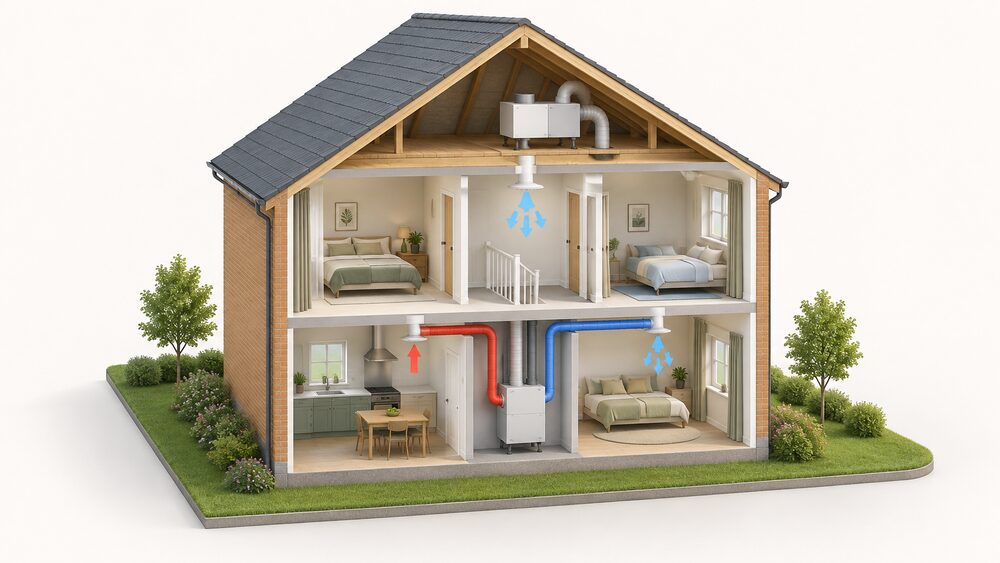
MVHR (mechanical ventilation with heat recovery) and PIV (positive input ventilation) are two different answers to the same problem: how to bring fresh air into a home without losing all the heat paid for. MVHR extracts stale air and supplies filtered air simultaneously, recovering heat from the outgoing air stream1. PIV works differently, typically drawing air from a loft space and pushing it into the home to dilute moisture and pollutants.
The choice matters for a household's energy independence because ventilation sits at the intersection of airtightness, heating demand and indoor air quality. A well-installed MVHR system can reduce the energy needed to warm incoming fresh air, while PIV offers a simpler, lower-cost route to improved ventilation in homes where full ducting is impractical. Neither system removes a home's dependence on the electricity grid to run fans, and neither replaces the need for a well-insulated, airtight building fabric.
This page compares the two approaches on how they work, what they cost, which homes suit each, and what to check before committing. It draws on official guidance, independent research and maker specifications to set out the evidence plainly.
MVHR and PIV in a nutshell: two different answers to one problem
The ventilation landscape includes several system types: PIV, MEV (mechanical extract ventilation), d-MEV (decentralised mechanical extract ventilation) and MVHR4. Each addresses the same requirement, which is to maintain indoor air quality while managing energy loss. The Building Regulations set airtightness specifications that modern homes must follow, and this has driven the adoption of mechanical ventilation with heat recovery in new-build properties1.
MVHR systems simultaneously extract stale air from a building and provide a supply of filtered air1. They can also include filtration of pollutants such as NOx and particulate matter to improve indoor air quality1. This dual function makes MVHR a whole-house solution, but it requires ducting and a central unit.
PIV takes a different approach. Instead of extracting air mechanically, it introduces filtered air into the home, typically from a loft-mounted unit, creating positive pressure that pushes stale air out through natural leakage paths. The system is simpler to install because it does not require a full ducting network.
The distinction matters for energy independence. MVHR recovers heat that would otherwise be lost through ventilation, reducing the demand on the heating system. PIV does not recover heat in the same way, though some products claim passive heat recovery through a different mechanism. A maker of passive ventilation with heat recovery (PVHR) states that its system uses wind power and natural buoyancy for a passive airflow, with no moving parts to break down and no energy required to run3. That is a maker's claim, not an independent finding.
What MVHR is and how it works
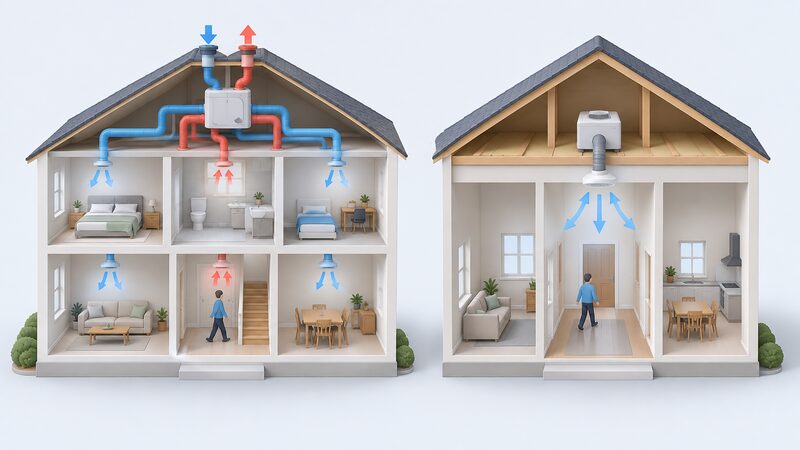
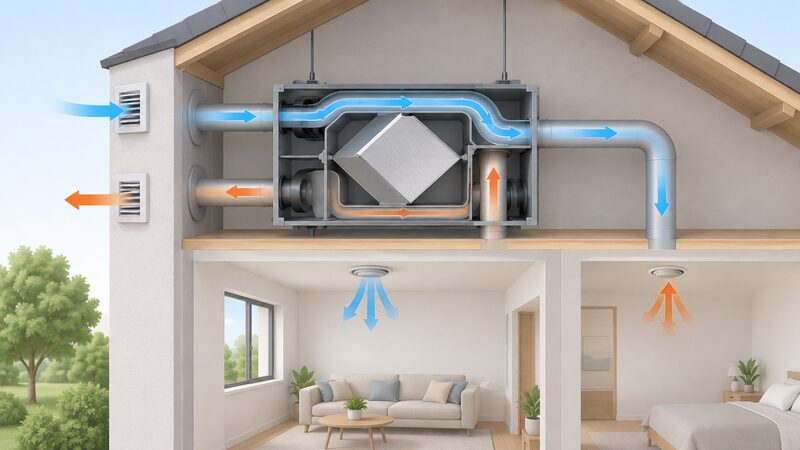
MVHR is a whole-house ventilation system that runs continuously, extracting air from wet rooms such as kitchens and bathrooms while supplying fresh air to living spaces and bedrooms. The two air streams pass through a heat exchanger, which transfers heat from the outgoing stale air to the incoming fresh air. The result is that incoming air is pre-warmed, reducing the heating demand that would otherwise be needed to bring cold outdoor air up to room temperature.
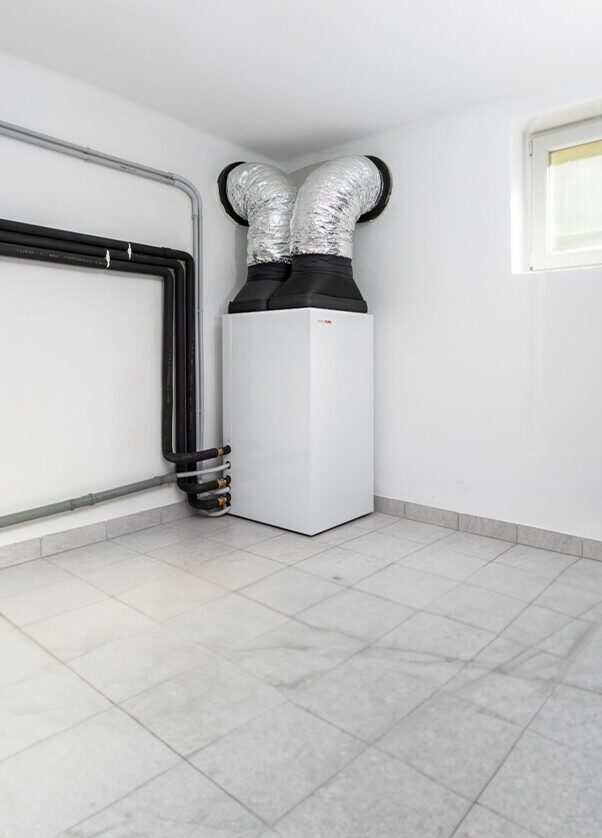
The system requires a central unit and a network of ducting. For heat recovery to work efficiently, the MVHR unit and ducting need to be within the insulation layer, not in an uninsulated loft2. This is a critical installation detail: if the ducting runs through a cold loft, the recovered heat is lost before it reaches the living space.
MVHR works best in buildings that are relatively airtight, such as new-build homes or older properties that are being fully refurbished1. In a draughty home, the uncontrolled air leakage dominates the ventilation, and the MVHR system's heat recovery benefit is diluted. The system is not a remedy for poor building fabric.
Air filtration is commonly built into MVHR systems to prevent pollen and other particles from entering the home1. This can be a significant benefit for households with allergy sufferers. Some units also include filtration of pollutants such as NOx and particulate matter1.
MVHR systems do require servicing as all equipment such as filters and fans must be kept clean to ensure effective operation1. The maintenance burden is real: filters need checking every few months, and the heat exchanger and fans need more thorough cleaning every few years2.
What PIV is and how it works
Positive input ventilation introduces filtered air into a home, usually from a unit mounted in the loft. The unit draws air from outside, filters it, and delivers it into the property, often through a ceiling diffuser in a central hallway or landing. This creates a slight positive pressure that encourages stale, moisture-laden air to escape through natural leakage paths such as trickle vents, extract fans and gaps in the building fabric.
The approach is simpler than MVHR because it does not require a full ducting network. There is no heat exchanger in the conventional sense, though some products incorporate a form of heat recovery. A maker of passive ventilation with heat recovery (PVHR) describes a system developed in 2013 with help from researchers at Imperial College London to retrofit houses with ventilation systems3. The same maker states that its system uses two coaxial heat exchangers with intertwining metallic tubes and aluminium fins, and that longer-term testing has shown 72% thermal efficiency is regularly achieved, at a saving of 1,500kWh per year3. These are maker claims and should be treated as such.
PIV is often considered for homes where condensation and mould are problems, because the continuous supply of fresh air dilutes moisture. However, the effectiveness depends on the home's airtightness and the correct sizing of the unit. In a very leaky home, the positive pressure may not be maintained effectively. In a very airtight home, the system may not provide sufficient ventilation unless designed carefully.
The energy independence angle for PIV is different from MVHR. PIV does not recover heat in the way MVHR does, so the incoming air may need to be warmed by the heating system. Some PIV units include a heater to temper the incoming air, which adds to running costs. The maker claim of no energy required to run applies to a specific passive system, not to all PIV units3.
How the two compare on heat recovery and running cost
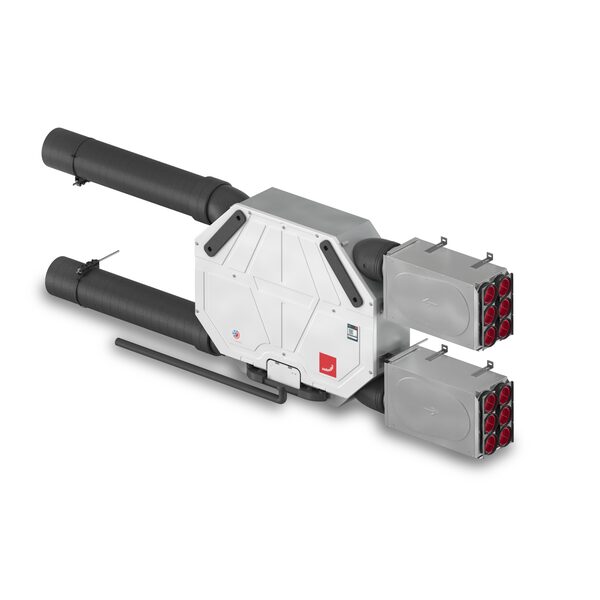
The core difference between MVHR and PIV is heat recovery. MVHR is designed to recover heat from outgoing air, while PIV generally does not. This affects both running costs and the home's overall energy demand.
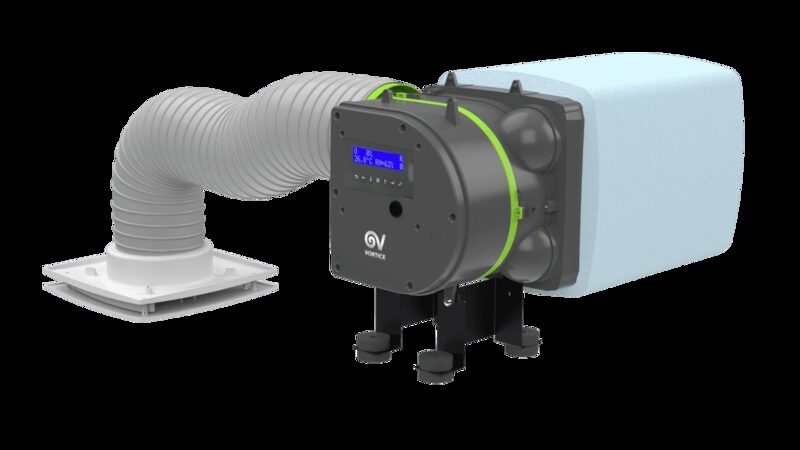
MVHR systems start from around £3,000 but could cost well over £10,0001. For decentralised MVHR systems, prices start from £600 per fan1. A decent Passivhaus-certified system will cost a few thousand pounds2. These are capital costs, before installation.
PIV systems are typically less expensive to install because they require less ducting and a simpler unit. However, no specific PIV price is available in the sources reviewed. Prices are installer-quoted.
On running cost, MVHR uses electricity to run fans but recovers heat energy for maximum efficiency5. The net effect is a reduction in heating demand, though the exact saving depends on the home's airtightness, the system's efficiency and the cost of the fuel used for heating. PIV uses electricity to run a fan, and if the unit includes a heater, that adds to consumption. A maker of a passive ventilation system states that its product requires no energy to run and has no moving parts to break down3. That is a specific product claim, not a general characteristic of PIV.
MVHR systems do not qualify for VAT relief as they are not air source heat pumps6. This means the full rate of VAT applies to the supply and installation of MVHR. Households should factor this into budget calculations.
The energy independence implication is that MVHR reduces the energy needed to heat incoming ventilation air, which lowers the home's overall demand on the grid or on gas. PIV does not offer the same reduction, though it may still improve indoor air quality and reduce condensation. Neither system makes a home independent of the grid, because both rely on electricity to run.
| Feature | MVHR | PIV |
|---|---|---|
| Heat recovery | Yes, via heat exchanger1 | Generally no, though some products claim passive recovery3 |
| Typical capital cost | From around £3,000, potentially over £10,0001 | Installer-quoted, no published range |
| Filter replacement | £10 to £15 for paper filters2 | Not specified in sources |
| Servicing | Filters every few months; heat exchanger and fans every few years2 | Not specified in sources |
| VAT relief | Does not qualify6 | Not specified in sources |
| Best suited to | Airtight homes, new builds, full refurbishments1 | Homes with condensation, where ducting is impractical |
Which homes suit MVHR, and which suit PIV
MVHR works best in buildings that are relatively airtight, such as new-build homes or older properties that are being fully refurbished1. The system's heat recovery benefit depends on the building envelope being tight enough that controlled ventilation dominates over uncontrolled leakage. In a typical older home with open chimneys, suspended floors and draughty windows, the MVHR system may not deliver the expected savings.
For retrofit projects, the MVHR unit should preferably be a Passivhaus Certified Unit7. This is official guidance from a local authority retrofit toolkit, indicating that certification provides assurance of performance. The unit and ducting need to be within the insulation layer, not in an uninsulated loft2. This often means creating a service void or dropping ceilings, which adds to the disruption and cost.
Case studies show MVHR being used selectively in social housing. At Barton Quarter, one house is with MVHR and this will use Posi-Joists to aid ducting, while the rest are dMEV8. This illustrates that MVHR is often reserved for specific plots where the design allows for ducting, rather than being applied across an entire development. In Wales, Three Brewers Court homes use the latest ventilation (MVHR) systems9.
PIV is often considered for homes where condensation and mould are problems, and where full ducting is impractical. It is simpler to install because it does not require a ducting network. However, PIV may not be suitable for every home. In a flat with no loft, a loft-mounted PIV unit cannot be installed. Alternative options include wall-mounted PIV units or other ventilation systems.
The choice between MVHR and PIV is not about one being universally better. It depends on the building's airtightness, the layout, the budget and the specific problem being solved. A household in a draughty Victorian terrace may find that PIV addresses condensation more cost-effectively than MVHR, while a household in a new-build with a mechanical ventilation requirement may find MVHR is the appropriate solution.

Installation, maintenance and disruption
Installation is where the two systems diverge most sharply. MVHR requires a central unit, a network of ducting to every wet room and living space, and careful commissioning to balance airflow. The unit and ducting need to be within the insulation layer, not in an uninsulated loft2. This often means significant disruption during installation, particularly in a retrofit.
PIV installation is less invasive. A loft-mounted unit requires a ceiling diffuser and a connection to the outside, but no ducting network. This makes it a more straightforward retrofit option for many homes. However, the unit still requires an external air intake, which may need a hole through the wall or roof.
Maintenance requirements differ. MVHR systems do require servicing as all equipment such as filters and fans must be kept clean to ensure effective operation1. Filters need checking every few months and cleaning or replacing as necessary2. Replacement paper filters might cost £10 to £152. A more thorough servicing and cleaning of the heat exchanger and fans is needed every few years2.
There is evidence that MVHR maintenance is often neglected. Thousands were installed by unqualified operators, never properly explained to homeowners and never maintained10. Few are being checked or maintained, and many have been switched off by users because of noise issues11. This is a significant caveat for any household considering MVHR: the system only delivers its benefits if it is correctly installed, commissioned and maintained.
PIV maintenance is generally simpler because there are fewer components. Filters still need cleaning or replacing, and the fan may need attention over time. However, the maintenance burden is lower than for a full MVHR system.
For households in flats, installation constraints are different. A loft-mounted PIV unit is not an option without a loft. MVHR in a flat may require ceiling voids or bulkheads for ducting, which can be difficult in leasehold properties. Leasehold consent may be needed for any work that affects the building fabric.
Ventilation and overheating in hot weather
Ventilation and overheating are linked. In hot weather, the priority shifts from heat recovery to heat removal. MVHR systems can provide free cooling by bypassing the heat exchanger when outdoor air is cooler than indoor air, but this only works when outdoor temperatures are lower. During a prolonged heatwave, when outdoor temperatures remain high day and night, MVHR cannot actively cool a home.
The Building Safety Executive has noted that ventilation is a key consideration in hot weather. In a blog on heatwaves, air conditioning and other things, the BESA discusses the role of ventilation in managing indoor temperatures12. The BESA has also published guidance on insulating and ventilating homes, which addresses the balance between airtightness and ventilation12.
MVHR is not an air conditioning system. It can improve indoor air quality and recover heat in winter, but it cannot cool a home in the way a heat pump or air conditioner can. Some MVHR units have a summer bypass mode that routes incoming air around the heat exchanger, but this only provides cooling when the outdoor air is cooler than the indoor air.
PIV can help with overheating by bringing in cooler night air, but the effect is limited. The system does not have a cooling function. In a well-insulated home, PIV may help flush out warm air at night, but it cannot counteract solar gains during the day.
For households concerned about overheating, the primary measures are solar shading, window design and thermal mass. Ventilation systems can support these measures but cannot replace them. The BESA has highlighted that indoor air quality and overheating are both important considerations in modern homes11.
Costs, warranties and what to check before buying

The capital cost of MVHR is significant. MVHR systems start from around £3,000 but could cost well over £10,0001. For decentralised MVHR systems, prices start from £600 per fan1. A decent Passivhaus-certified system will cost a few thousand pounds2. These figures are from independent guidance and give a broad range.
Installation costs are additional and depend on the complexity of the ducting route, the number of rooms served and whether the work is part of a wider refurbishment. In a retrofit, the cost of creating service voids or dropping ceilings can add substantially to the project.
MVHR installation costs have been modelled in research on retrofit schemes. One study gives a total higher rate cost of £2,837.50 and a total lower rate cost of £3,337.50, with a capital cost band of £5,000 to £10,00013. These figures are from a feasibility study and should be treated as modelled costs, not quotes.
PIV costs are not specified in the sources reviewed. Prices are installer-quoted. Households should obtain multiple quotes and check what is included: the unit, the installation, the commissioning and any necessary electrical work.
Warranties for ventilation systems are not covered in the sources reviewed. Households should check the manufacturer's warranty terms and the installer's workmanship guarantee. For MVHR, the warranty may be void if the system is not maintained according to the manufacturer's instructions.
Before buying, households should check several things. First, whether the home is airtight enough for MVHR to deliver its heat recovery benefit. Second, whether there is space for the unit and ducting within the insulation layer. Third, whether the system can be properly maintained. Fourth, whether any planning permission or building regulations approval is needed.
Building regulations approval is different to planning permission although a project may need both14. Installing or replacing a heating system is covered by building regulations15. A building regulations application will not be required if the system is installed by a member of an approved Competent Persons Scheme for microgeneration technology16. Planning permission is not normally needed when installing a micro-combined heat and power system in a house if the work is all internal17. Similar rules apply to biomass systems18.
For households in listed buildings or conservation areas, permitted development rights may not apply. For example, permitted development rights do not apply for ASHP installations within the curtilage of a listed building, so planning permission and listed building consent must be sought19. While this ruling is specific to heat pumps, it illustrates the principle that heritage designations can affect ventilation installations.
Sources19 cited
- Mechanical Ventilation with Heat Recovery, Centre for Sustainable Energy, 2026-07
- Airtightness and Ventilation, CAT, 2025-06-27
- Benefits of Passive Ventilation with Recovery and How It Works, Ventive, 2026-09-17
- Ventilation and Air Quality Guide: Building Regulations Explained, The IAQ Association
- BESA Focus Areas: Ventilation, BESA
- VAT Energy Saving Materials and Grant Funded Heating Supplies, HMRC, 2026-09-17
- Guidance Toolkit on Building Retrofit, Birmingham City Council, 2024-02
- Barton Quarter, Future Homes, 2023-10-11
- Innovative and Energy Efficient Development Will Provide 50 New Homes, Welsh Government, 2024-02-16
- Heatwaves, Air Con and Other Things, BESA, 2026-07-03
- The Election Must Get People Talking About IAQ Again, BESA, 2024-06-03
- Insulate and Ventilate, BESA
- Catalysing Net Zero Retrofit: Feasibility of an Innovative Salary Sacrifice Scheme, CREDS, 2023-11-22
- Planning Permission and Building Regulations Approval, Planning Portal, 2026-09-17
- Building Regulations Approval, GOV.UK, 2026-09-17
- Proposed Local Listed Building Consent Order, Southwark Council, 2026-03-17
- Micro-Combined Heat and Power: Planning Permission, Planning Portal, 2026
- Biomass Fuelled Appliances: Planning Permission, Planning Portal, 2026
- Improving Energy Saving and Sustainability in Conservation Areas and Listed Buildings, Brighton and Hove City Council, 2026-09-17
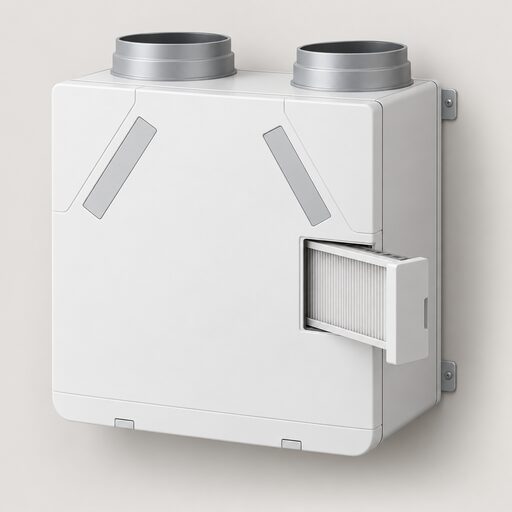 MVHR VentilationDoes an MVHR system really save money on heating, and how much?
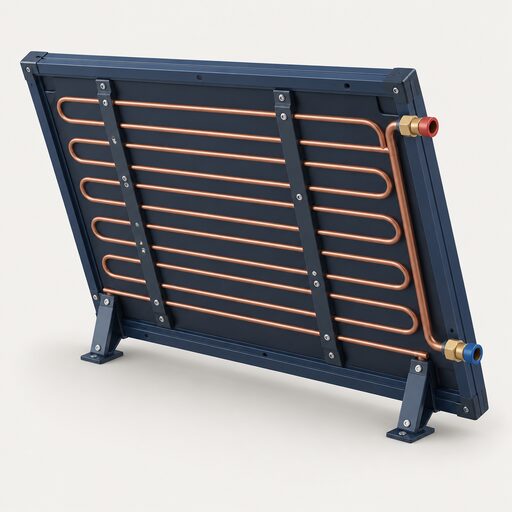 PVT Hybrid PanelsA PVT panel makes electricity and heats water from one roof space, so it suits homes without room for two separate systems.
 Air-to-Air Heating and CoolingAir-to-air heat pumps deliver warm air through indoor fan units rather than hot water to radiators.
 Passivhaus and EnerPHitPassivhaus homes are built to stay warm in winter and cool in summer with very little heating, but what does that mean for your bills and comfort?
 Solid Wall InsulationSolid walls lose far more heat than cavity walls, so what can actually be done about it?
 Warm Air Heating SystemsWarm air heating works by pushing heated air through vents in your floors or walls.