

In this guide
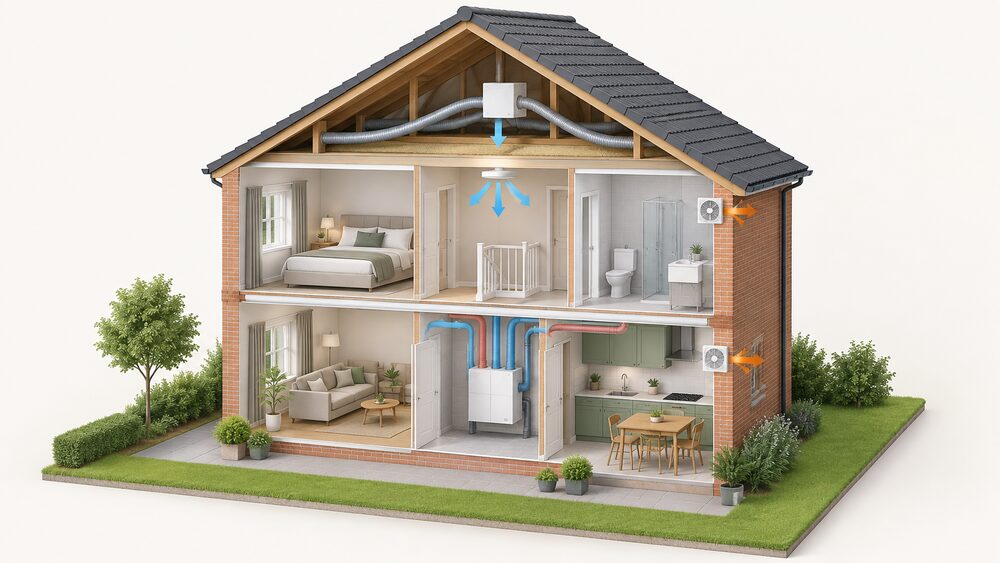
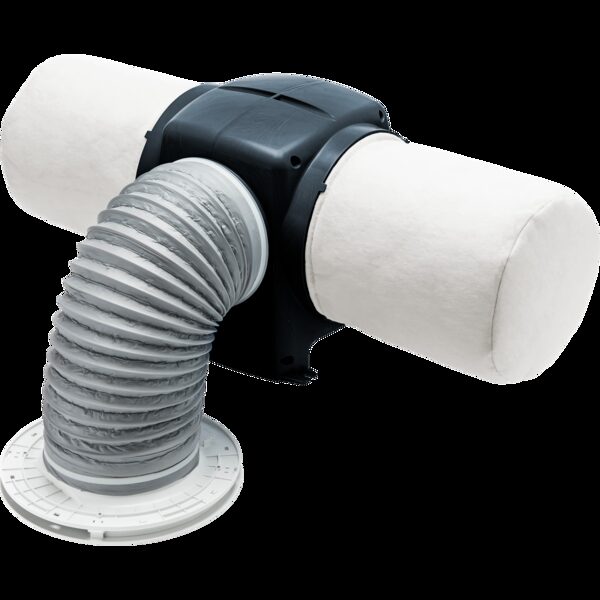
Nuaire is a UK ventilation manufacturer whose domestic range covers the three main approaches to whole-house air management: mechanical ventilation with heat recovery (MVHR), positive input ventilation (PIV) and extract ventilation. The company's MVHR range includes options suitable for wall and ceiling-void installation, which matters for flats and apartments where there is no loft to house a unit1.
The choice between the three is not a matter of brand preference but of building type. MVHR works best in buildings that are relatively airtight, such as new-build homes or older properties that are being fully refurbished2. PIV draws fresh air from outside and distributes it into all rooms through a centralised system usually mounted in the loft3. Extract ventilation is applied in rooms where water vapour or pollutants are most likely to be released, for example bathrooms and kitchens, and can be intermittent or continuous4.
Ventilation is a controlled service, which means the work falls under building regulations rather than being a free choice of equipment5. That single fact shapes everything below: what a household can install, where it can go, and what has to be commissioned and recorded afterwards.
The range: MVHR, PIV and extract ventilation
The three families answer different questions. MVHR simultaneously extracts stale air from a building and provides a supply of filtered air4. PIV does only the supply half: it draws fresh air from outside a building in and then distributes it into all rooms through a centralised system that is usually mounted in the loft3. Extract ventilation does only the removal half, applied in rooms where water vapour or pollutants are most likely to be released, for example bathrooms and kitchens4.
The wider market lists more options than these three: mechanical ventilation with heat recovery, energy recovery ventilators, positive input ventilation, mechanical extract ventilation and natural or passive ventilation7. The distinction between PIV, MEV, d-MEV and MVHR is the one that matters most for a household choosing equipment, because each has a different ducting requirement and a different effect on heat loss5.
Nuaire's own MVHR range sits within the first of these. The maker describes MVHR as recommended for all new-build and self-build properties with high air tightness ratings, and as the ideal solution in that context1. That is a maker's positioning rather than an independent finding, but it aligns with the independent guidance that MVHR works best in relatively airtight buildings2.
| System | What it does | Typical location | Best fit |
|---|---|---|---|
| MVHR | Extracts stale air and supplies filtered air, transferring heat between them4 | Utility room, wall or ceiling void1 | Airtight new-build and full retrofit2 |
| PIV | Draws fresh air in and distributes it to all rooms3 | Loft3 | Homes needing dilution of moist air |
| Extract (intermittent) | Removes moisture and pollutants from wet rooms4 | Bathroom, kitchen, utility4 | Individual rooms8 |
| Extract (continuous) | Constant low-level extraction, boosting on humidity9 | Wet rooms, ducted or decentralised9 | Airtight homes needing steady background rates |
MVHR: what it does and what a householder needs to know
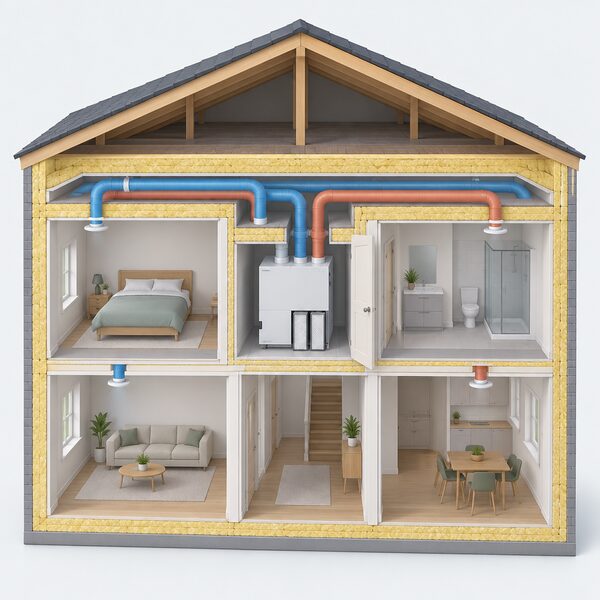
MVHR extracts warm, stale air from a building and replaces it with fresh, filtered air from outside, transferring heat from the stale air to the incoming fresh air10. The result is a constant supply of fresh, filtered air that helps maintain a comfortable indoor temperature and humidity level10. Air filtration is commonly built into MVHR systems to prevent pollen and other particles from entering the home2.
The technology is not new and not niche. Passivhaus buildings use mechanical ventilation with a heat recovery system attached11, and MVHR appears as a standard ventilation provision in the SAP methodology alongside natural ventilation, positive input from loft, positive input from outside, centralised and decentralised mechanical extract, and whole-house mechanical ventilation without heat recovery12. In other words, the assessment framework that produces EPC ratings treats MVHR as one of a defined set of options rather than an exotic addition.
Where MVHR is fitted, the installation detail decides whether it performs. For heat recovery to work efficiently, the MVHR unit and ducting need to be within the insulation layer, not in an uninsulated loft6. A unit installed in a cold loft loses much of the benefit of the heat exchanger, because the ductwork itself becomes a radiator to the outside. This is the single most common reason a system underperforms relative to its specification.
Modern homes are sometimes fitted with MVHR because they have to follow specifications for air-tightness set out in the Building Regulations2. As fabric standards tighten, the case for mechanical ventilation strengthens: whole-house systems like mechanical extract ventilation or MVHR offer more consistent results, especially in newer, more airtight homes8. The trade-off is that MVHR adds a fan, a filter set and a duct network to a home that previously relied on draughts, and those components need power and maintenance.
PIV: positive input ventilation in the home
PIV is usually located in the loft, blowing fresh air into the home and forcing stale moist air out through background ventilation and the building fabric9. It is a simpler system than MVHR: no heat exchanger, no extract ductwork, and a single penetration for the incoming air. That simplicity is why it is often proposed for existing homes with condensation problems rather than for new-build airtight properties.
The independent assessment of PIV is more qualified than the sales case. The same guidance notes that it can be cold directly under the fan, may not provide fresh air to the rooms that need it, and that forcing warm moist air into the building fabric can lead to condensation and structural damage9. Those are the limits a household should weigh before accepting a PIV installation as a cure for damp.
There is also a regulatory condition attached to PIV in the assessment methodology. Where PIV is entered into a SAP calculation, the SAP calculation requires a minimum of two intermittent extract fans to be entered by the SAP assessor13. PIV is therefore not treated as a complete ventilation strategy on its own: it is a supply-side measure that assumes wet-room extraction continues alongside it.
Funding rules recognise PIV as a legitimate measure. Under the Home Improvement loan eligibility published by Cornwall Council, eligible works include mechanical ventilation with heat recovery systems and positive input ventilation systems, under a ventilation category14. That is one local authority's scheme rules and not a national entitlement, but it shows PIV is treated as a recognised improvement rather than a marginal one.
Extract ventilation and where it fits
Extract ventilation is the oldest and simplest of the three approaches. It is applied in rooms where water vapour or pollutants are most likely to be released, for example bathrooms and kitchens, and extract fans can be intermittent or continuous4. Intermittent extract ventilation uses individual extractor fans in bathrooms, kitchens and utility rooms, usually controlled by a light switch, a timer or a humidity sensor; these are relatively cheap to install and reasonably effective but not always sufficient for very air-tight or damp-prone properties9.
Continuous mechanical extract ventilation is the step up. Decentralised mechanical extract ventilation uses extractor-like fans that run continuously, providing constant low levels of ventilation which increase when the system senses high humidity; these are more effective at regulating indoor air quality than basic extractor fans, and cheaper than centralised mechanical extract ventilation9. Centralised mechanical extract ventilation draws moist air from wet rooms through ducts to a central unit, often in a loft, then to the outside, but the systems are complex and expensive to install, and only suitable where there is sufficient space for ductwork9.
The building regulations position is clear on where extraction is required. Rooms where steam will be produced, such as kitchens, bathrooms and utility rooms, should be provided with higher levels of ventilation, normally mechanical fans and windows, than other rooms where suitably sized window openings and background trickle ventilators may suffice15. In places where lots of moisture is produced, extractor fans are required to remove the excess moisture, and if there is no extractor fan, opening a window will help9.
Extractor fans work well for individual rooms8, and good ventilation is achieved through a variety of methods such as trickle vents in windows, door undercuts and extractor fans16. The limit of the approach is that it removes air without replacing it in a controlled way, so the replacement air arrives through whatever openings exist, which in a sealed home may be very little.
Choosing between MVHR, PIV and extract
The decision turns on airtightness and on whether the home has duct routes. MVHR works best in buildings that are relatively airtight, such as new-build homes or older properties that are being fully refurbished2. In a leaky older home, the same system competes with uncontrolled draughts and delivers less benefit per pound spent.
PIV suits a different case: an existing home with a condensation problem, where running extract ductwork to every wet room is impractical. Its limits are documented, including the risk of pushing warm moist air into the building fabric9, and it does not replace wet-room extraction in the assessment methodology13.
Extract ventilation is the minimum and often the right answer for a single problem room. Intermittent fans are cheap and reasonably effective but not always sufficient for very air-tight or damp-prone properties9, which is where continuous mechanical extract becomes the more appropriate choice.
Real projects show the range of approaches in practice. The City of Edinburgh Council's High Rise Retrofit and Upgrade Programme used decentralised ventilation and mechanical ventilation with heat recovery systems to design out damp and mould risk in each block's ventilation strategy17. Priddy's Hard, a Future Homes case study, uses intermittent extract ventilation18. The AECB CarbonLite new-build standard sets its own ventilation expectations for low-energy construction19.
For a household, the practical sequence is to establish the airtightness of the building, identify which rooms produce moisture, and then decide whether a whole-house system or room-by-room extraction is proportionate. Ventilation is a controlled service5, so the choice is made within a regulatory framework rather than freely.
Installation, servicing and what ownership involves
Installation should always be carried out by a competent, qualified installer8. That applies across all three system types, and it is the condition on which commissioning, warranty and building control sign-off normally depend.
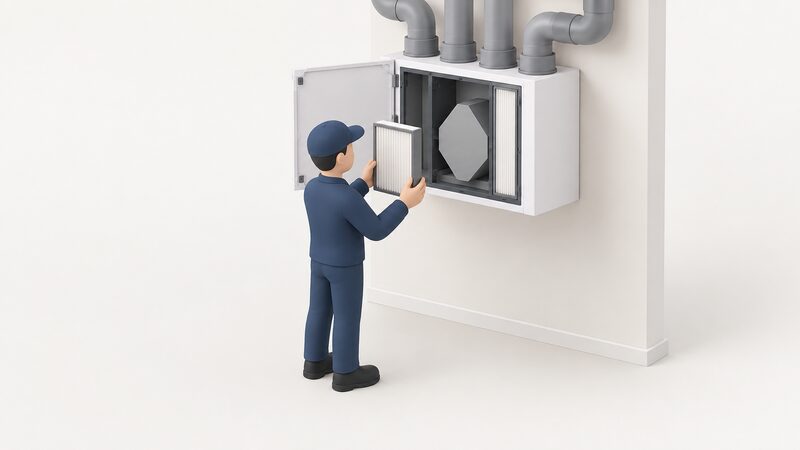
Servicing is where MVHR differs most from an extract fan. MVHR systems do require servicing as all equipment such as filters and fans must be kept clean to ensure effective operation2. The published interval for filter attention is every few months, with cleaning or replacement as necessary, and a more thorough servicing and cleaning of the heat exchanger and fans every few years6. A neglected unit loses airflow first and heat recovery second.
For contact and identification, Nuaire's aftercare department can be reached on 029 2085 8400 or at Aftersales@nuaire.co.uk1. The QR code on the front panel is the identification route the maker publishes for filter replacement1.
Warranty registration across the ventilation and hot water sector commonly runs through several routes: an online form, a registration card in the literature pack, and the installer's Benchmark commissioning checklist for unvented water cylinders20. The commissioning record matters because it is the evidence that the system was set up to its design airflow rates, which is what a service visit will check against.
Nuaire as a company and UK availability
Nuaire's published product information covers the residential fans and ancillaries range, including the MVHR units described above1. The maker's stated position is that MVHR is recommended for all new-build and self-build properties with high air tightness ratings and is the ideal solution in that context1. That is a manufacturer's claim about its own product category, and it should be read as such.
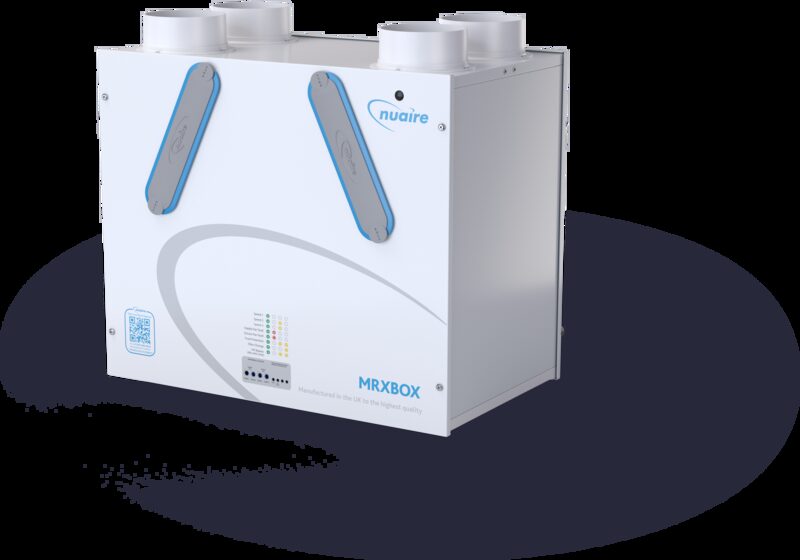
Availability of specific models varies. Nuaire's MVHR range includes options suitable for wall and ceiling-void installation, which extends the range to apartments and flats without loft space1. The MRXBOX system is described as typically installed in a utility room1. Where a property has neither a loft nor a utility room, the wall and ceiling-void options are the relevant ones.
On the wider question of what ventilation does for a household's energy independence, the position is mixed. MVHR reduces the heat lost through ventilation by transferring it from outgoing to incoming air10, which lowers the demand a heating system has to meet. It does not remove dependence on the electricity supply: the fans run continuously, and the unit needs power for as long as the home is occupied. PIV and extract fans carry the same electrical dependence with less heat recovery benefit.
None of the three systems removes a household from the grid, and none generates energy. What they do is allow a home to be sealed against uncontrolled draughts without becoming stale, which is the precondition for fabric measures such as loft insulation and cavity wall insulation to deliver their full benefit. The relationship between airtightness and ventilation is set out in more detail in Airtightness and Air Leakage in UK Homes, and the regulatory framework in Building Regulations Part F: Ventilation Requirements.
For households comparing manufacturers, Vent-Axia ventilation fans and MVHR, Zehnder MVHR and ventilation systems and Titon ventilation units and trickle vents cover the main alternatives. The general case for mechanical ventilation is set out in MVHR: Mechanical Ventilation with Heat Recovery and Home Ventilation: Systems, Rules and Why Insulated Homes Need It.
Sources20 cited
- Nuaire MVHR range, Nuaire, 2026-09-20
- Mechanical ventilation with heat recovery, Centre for Sustainable Energy, 2026-07
- How to stop condensation, Which?, 2026-05-26
- Ventilation focus area, BESA, 2026-09-20
- Ventilation and air quality guide, IAA, 2026-09-20
- Airtightness and ventilation, CAT, 2025-06-27
- Insulate and ventilate, BESA, 2024-06-21
- Home ventilation guide, IAA, 2026-09-20
- Ventilation advice, Centre for Sustainable Energy, 2025-07
- Why use MVHR, Brookvent, 2026-09-20
- Passivhaus: what you need to know, Energy Saving Trust, 2026-02-16
- RdSAP 10 specification, BRE Group, 2024-02-12
- SAP 10.3 full specification, BRE Group, 2026-01-13
- Eligible and non-eligible works, Cornwall Council, 2025-10-01
- Doors and windows building regulations, Planning Portal, 2026
- The importance of ventilation in retrofitting homes, Elmhurst Energy, 2025-03-03
- High Rise Retrofit and Upgrade Programme Phase 1, City of Edinburgh Council, 2026-04-20
- Priddy's Hard, Future Homes, 2024-10-14
- AECB CarbonLite new build standard, AECB
- Warranty registration, Heatrae Sadia, 2026-09-17
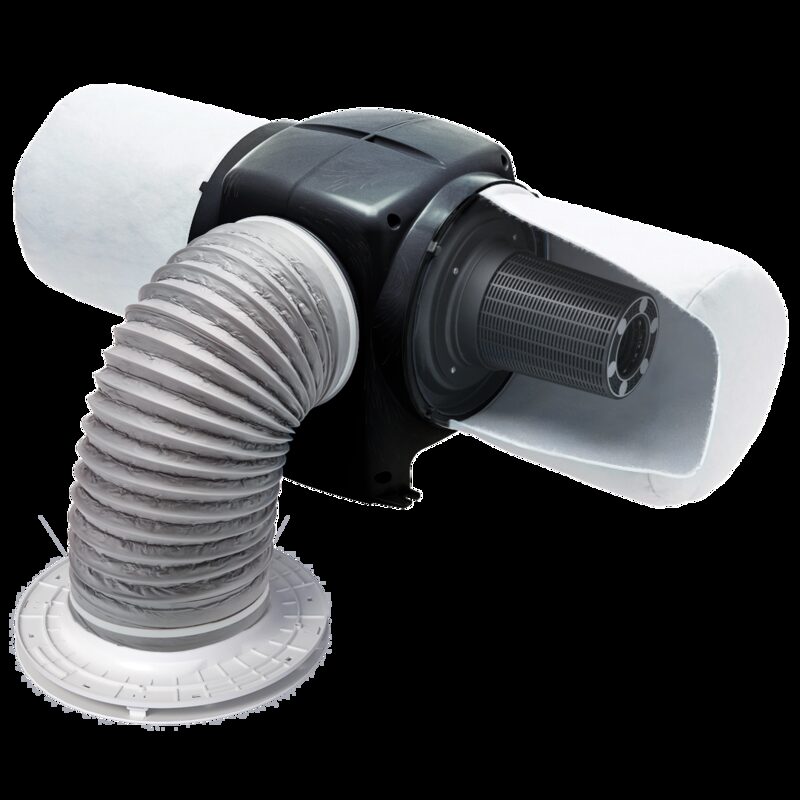
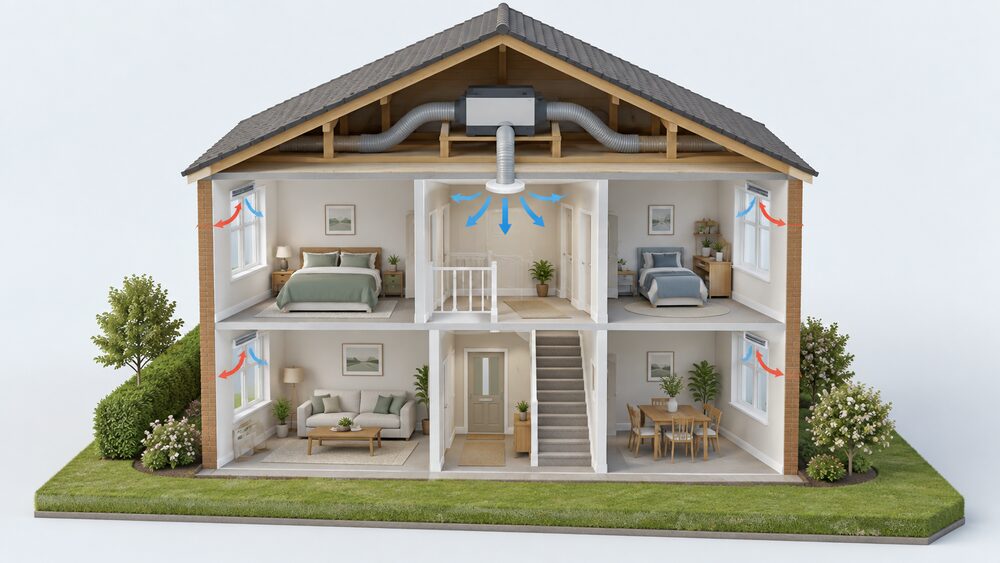 Nuaire PIV and ventilation systemsA Nuaire Drimaster pulls fresh air from outside into your loft and pushes it around your home, which helps clear damp and condensation.