
In this answer
Short answer
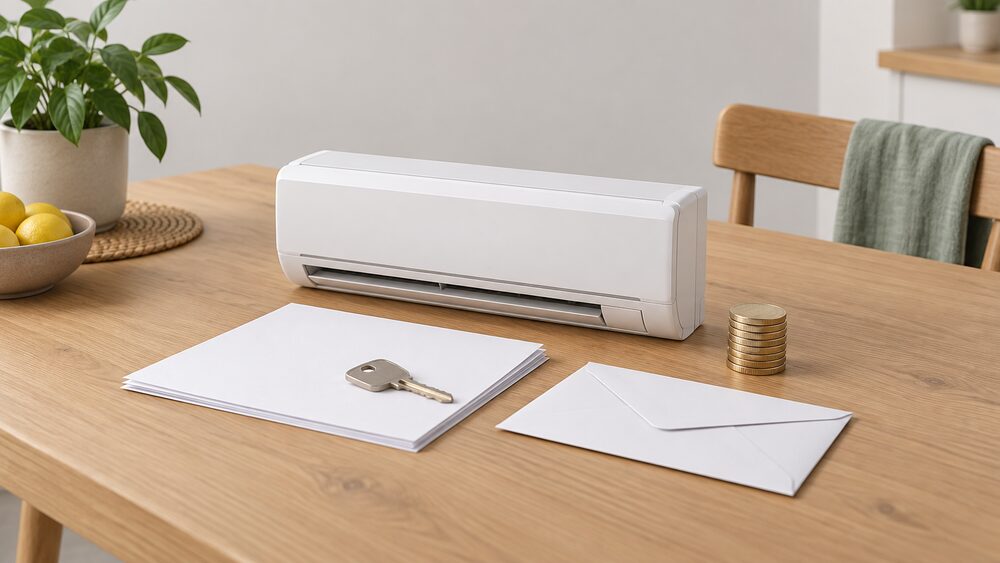
An air-to-air heat pump attracts a Boiler Upgrade Scheme grant of £2,500, not the £7,500 paid towards an air-to-water, ground source or water source heat pump1. The scheme rules describe the payment as "£2,500 off the cost and installation of air-to-air heat pumps for residential properties only", and the same £2,500 appears in the installer guidance and in the published scheme statistics2.
The lower figure is not a penalty. It reflects what the technology is: an air-to-air unit warms the air in a room through a refrigerant circuit rather than heating water for radiators and a cylinder, so it does less of the work a full wet heating system does, and it costs less to buy and install5. The grant is set against that lower upfront cost.
Two conditions shape everything else. Air-to-air heat pumps are eligible only in residential properties, and the technology has to be certifiable under the Microgeneration Certification Scheme before a certified installation can draw the grant7. Until that implementation is complete, the £2,500 is a scheme entitlement waiting on certification rather than money a household can book today.
What the Boiler Upgrade Scheme pays for air-to-air heat pumps
The Boiler Upgrade Scheme is the UK government's capital grant for low carbon heating, delivered by Ofgem. Its published grant levels separate the technologies cleanly. Air-to-water heat pumps, ground source heat pumps and water source heat pumps draw £7,500 off the cost and installation. Air-to-air heat pumps draw £2,500, and only in residential properties1.
That £2,500 is confirmed in three separate places. The government's own guidance for applicants lists "£2,500 towards an air-to-air heat pump"2. The investor factsheet for the heat and buildings programme repeats "£2,500 grants for air-to-air heat pumps" alongside £5,000 off a biomass boiler11. Ofgem's summary of updates to the installer guidance records the change as "New grant of £2500 added for air-to-air heat pumps and technology rules"10. The July 2026 statistics carry the same figure4.
Independent analysis frames the gap in the same terms. Nesta describes the air-to-air grant as "comparatively modest (at £2,500 compared with £7,500 for A2W)"12. The distinction matters because the two technologies are not substitutes: an air-to-water system replaces a boiler and a cylinder, while an air-to-air system replaces the space heating only.
| Technology | BUS grant | Property scope |
|---|---|---|
| Air-to-air heat pump | £2,500 | Residential only1 |
| Air-to-water heat pump | £7,500 | Residential and non-residential7 |
| Ground source heat pump | £7,500, or £9,000 off-gas grid | Residential and non-residential1 |
| Water source heat pump | £7,500 | Residential and non-residential1 |
| Biomass boiler | £5,000 | Residential and non-residential11 |
Why air-to-air gets a lower grant than air-to-water
The grant level tracks the cost of the kit. Air-to-air heat pumps "have lower upfront costs than other heat pump types", which is the Energy Saving Trust's summary of why a smaller subsidy is defensible13. The same organisation's response to Scotland's draft climate plan argues that "the grant level for these should be lower than for other types of heat pumps which are more expensive to install"6.
There is a second reason, and it is about capability. Air-to-air heat pumps "can't generally be used to heat larger homes and they don't heat water for showers and taps", so a household that fits one still needs another source of hot water14. An air-to-water system covers both space heating and domestic hot water, which is why it commands the larger sum.
Nesta's cost work adds a nuance that cuts against the simple story. Once Boiler Upgrade Scheme grants are accounted for, "A2A systems with hot water provision are comparable in cost, or more expensive, than most A2W systems with hot water"5. In other words, the lower grant is not automatically the cheaper route if a household has to add a separate hot water cylinder to make the system complete.
Running costs sit in a similar place. At current energy pricing, air-to-air running costs are "likely to be lower than using an oil boiler and similar to a gas boiler or an air-to-water heat pump with a standard electricity tariff"15. The grant gap therefore reflects capital cost and scope of service, not a judgement that the technology performs badly.

Eligibility rules that apply to air-to-air applications
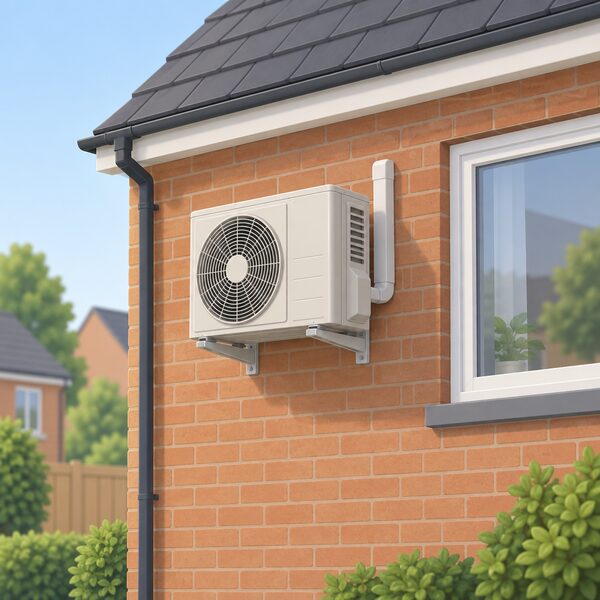
The first rule is property type. Ofgem's property owner guidance states plainly that "Air-to-air heat pumps are only eligible for residential buildings", and the installer guidance repeats that "Only residential properties are eligible for air-to-air heat pumps"16. This is a narrower scope than the one that applies to air-to-water systems, which the scheme supports in both residential and non-residential properties7.
The second rule is certification. Air-to-air heat pumps are listed among the eligible technologies, but the grant depends on the technology being fully implemented into the Microgeneration Certification Scheme3. MCS has published updates on that implementation, describing air-to-air heat pumps as soon to be eligible for funding under the scheme8. The Energy Saving Trust's advice page, dated September 2026, still records that "Grants for air-to-air heat pumps aren't available yet, but will be in the future"5.
The third rule is the heating system being replaced. Independent commentary describes eligibility as generally covering homeowners in England and Wales replacing fossil fuel heating systems, subject to property and installer criteria17. One approved grant category covers an air-to-water heat pump in an off-gas grid property replacing any other fossil fuel heating system18.
How the installer-led application and voucher process works
The Boiler Upgrade Scheme is not a rebate a household claims after the fact. It is an "installer-led" two stage application process, in which the property owner's chosen installer applies for and redeems the voucher19. The government's own description is that "The application is installer-led, with the installer applying for the grant on the property owner's behalf"20.
In practice the sequence runs as follows.
- The household engages an MCS certified installer, who surveys the property and quotes for the work.
- The installer discounts the grant from the invoice rather than the household paying it upfront.
- The installer applies to Ofgem for a grant voucher on the property owner's behalf.
- The installation is completed and commissioned.
- The installer redeems the voucher, and Ofgem pays the grant.
Two deadlines govern the timing. The heat pump "must be commissioned no more than 120 days prior to the voucher application being properly made"9. Once issued, a voucher is valid for three months, and the installation must be completed inside that window; the three month validity applies to air-to-air heat pumps, air-to-water heat pumps and biomass boilers alike21.
The installer's own credentials matter. Official guidance advises contacting an installer who can provide the necessary advice, preferably one belonging to the Microgeneration Certification Scheme or the relevant Competent Person Scheme22. The government's public campaign page points households to the MCS find a heat pump installer tool or to their energy supplier23.
The £9,000 uplift and why it does not apply to air-to-air
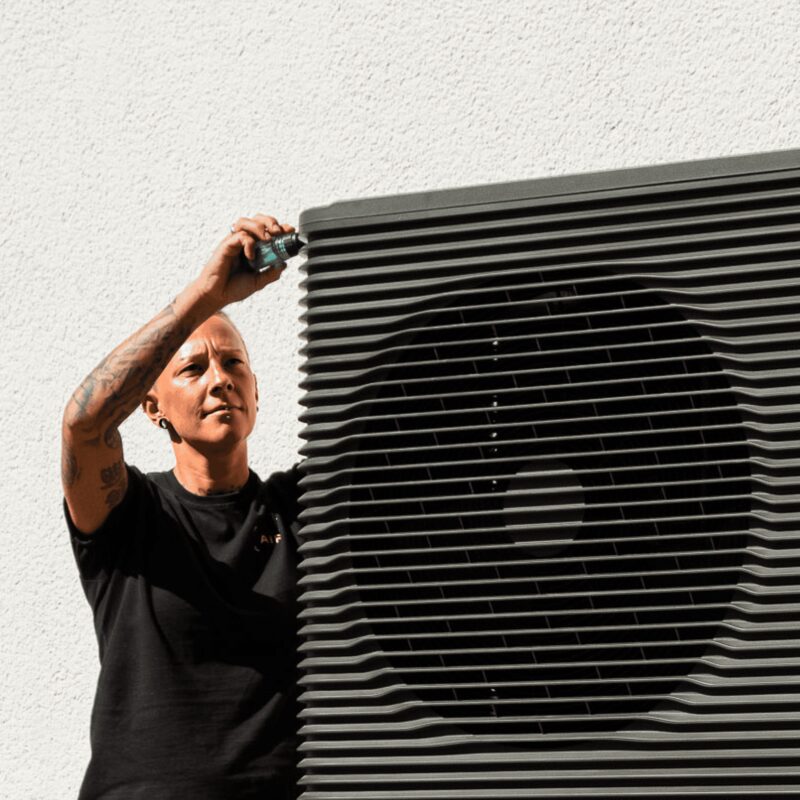
From 21 July 2026 the scheme introduced an uplifted grant for certain off-gas grid properties. Ofgem's installer guidance states that "eligible off-gas grid properties will be able to apply for an uplifted grant of £9,000", and the same document sets out the qualifying combination: "£9,000 for air-to-water or ground source heat pumps in off-gas grid properties replacing a heating system fuelled by oil" or liquefied petroleum gas3.
Air-to-air heat pumps are not in that category. The uplift is tied to air-to-water and ground source systems, and the air-to-air grant stays at £2,500 in residential properties3. The approved grant categories confirm the split: an air-to-water heat pump in an off-gas grid property replacing any other fossil fuel heating system sits in its own category, separate from the air-to-air entry18.
The reason follows the same logic as the base grant. The uplift exists to close the cost gap for households coming off oil or LPG, where a wet system has to be installed to replace the boiler and cylinder. An air-to-air unit does not replace that wet circuit, so the additional sum is not attached to it.
| Grant category | Value | Qualifying condition |
|---|---|---|
| Air-to-air heat pump | £2,500 | Residential properties only3 |
| Air-to-water heat pump | £7,500 | Standard category3 |
| Air-to-water or ground source, off-gas grid | £9,000 | Replacing oil or LPG heating3 |
| Biomass boiler | £5,000 | Residential and non-residential11 |
What an air-to-air grant means for household energy independence
An air-to-air heat pump changes where a home's heat comes from. It "takes warmth from the air outdoors, puts it through a refrigerant, and uses that to warm up the air inside the home", and it "produces warm air which is circulated by fans to heat your property"24. The household stops buying gas or oil for that portion of its heating and buys electricity instead.
That is a real shift in sovereignty, but a partial one. The home remains connected to the electricity grid and to a supplier, so the fuel is still bought rather than produced. What changes is the fuel: imported gas or delivered oil gives way to electricity, which can increasingly be generated at home or bought on a tariff of the household's choosing. The grant itself is a capital contribution, not a continuing subsidy, so it lowers the entry cost rather than the running cost.
Two further points shape the independence picture. Air-to-air units are "now included within air source heat pump permitted development rights, as long as they are used for heating, not just cooling", which removes a planning hurdle for many homes26. And the technology's role is still being studied: Nesta's air-to-air project is examining "the potential impact of air-to-air on grid capacity and emissions as they become year-round heating and cooling solutions"24. A household fitting one is an early participant in a technology whose system-level effects are still being measured.
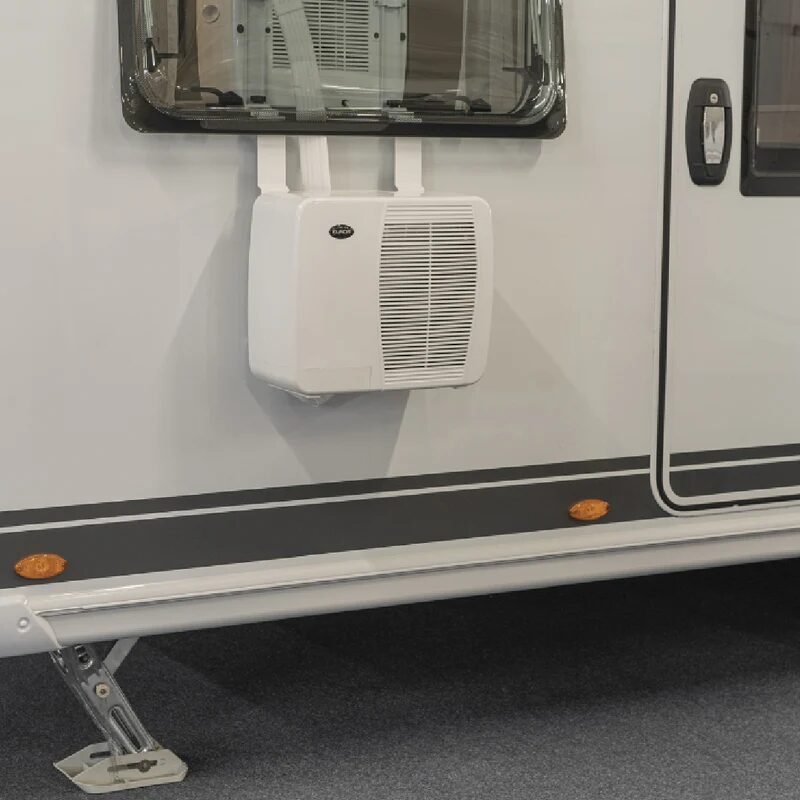
The dependence that remains is worth stating plainly. An air-to-air system does not heat water, so a home still needs a cylinder, an immersion or another appliance for showers and taps14. It suits "smaller properties, such as flats and park homes", where the outdoor unit is typically smaller than an air-to-water equivalent5. And the grant is available only once MCS certification is in place, so the financial case rests on a rule that is still being finished.
Sources26 cited
- Boiler Upgrade Scheme, Ofgem, 2026
- Apply for the Boiler Upgrade Scheme: what you can get, GOV.UK, 2026
- Boiler Upgrade Scheme guidance for installers v5.1, Ofgem, 2026
- Boiler Upgrade Scheme statistics, July 2026, GOV.UK, 2026
- Air to air heat pumps, Energy Saving Trust, 2026
- Air-to-air heat pumps: a low carbon solution for UK homes, Nesta, 2025
- Boiler Upgrade Scheme guidance for installers V5, Ofgem, 2026
- Update on the implementation of air-to-air heat pumps into MCS, MCS Certified, 2026
- Boiler Upgrade Scheme: installers, Ofgem, 2026
- Summary of updates to BUS guidance for installers V5, Ofgem, 2026
- Carbon Budget and Growth Delivery Plan: heat and buildings factsheet, GOV.UK, 2026
- Why a heatwave is a good time to think about home heating, Nesta, 2026
- NI low carbon heating in buildings, Energy Saving Trust, 2025
- Air-to-air heat pumps: common questions on air conditioning, Nesta, 2026
- Response to Scotland's draft climate change plan 2026 to 2040, Energy Saving Trust, 2026
- BUS guidance for property owners v5 draft, Ofgem, 2026
- Heating your home with renewable energy, Which?, 2026
- Notice of approved grant categories and values for the Boiler Upgrade Scheme, GOV.UK, 2026
- BUS property owner guidance V2.3, Ofgem, 2023
- Boiler Upgrade Scheme, Find government grants, 2026
- Boiler Upgrade Scheme guidance for property owners V5, Ofgem, 2026
- Heat pumps: building regulations, Planning Portal, 2026
- Heat pump, Clean Energy Campaign, 2026
- Air-to-air heat pumps project, Nesta, 2026
- Air source heat pumps, Electricity North West, 2026
- Planning guidance: heat pumps, Richmond Council, 2026
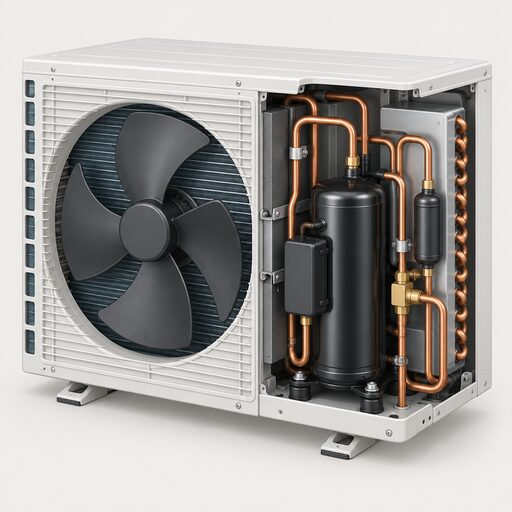 Air Source Heat PumpsHow an air source heat pump takes heat from outdoor air, the difference between air-to-air and air-to-water systems, typical efficiency, the £7,500 Boiler Upgrade Scheme grant, noise and planning limits, and what ownership means for a household's energy independence.
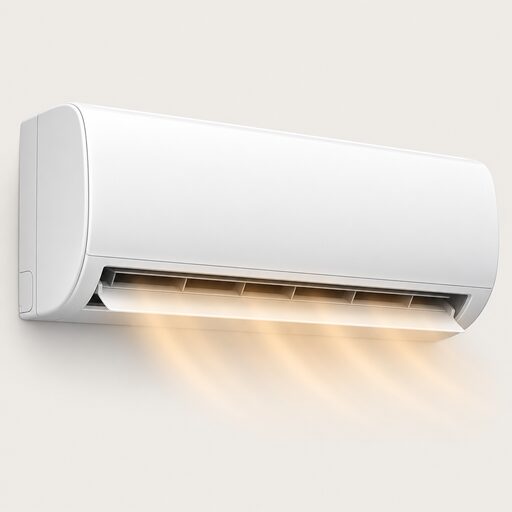 Air-to-Air Heating and CoolingAir-to-air heat pumps deliver warm air through indoor fan units rather than hot water to radiators.
 Hybrid Heat PumpsHow hybrid systems pair a heat pump with a gas, oil or LPG boiler, what decides which appliance runs, what they cost, how much gas they displace, and why the Boiler Upgrade Scheme will not fund them.
 Ground Source Heat Pump CostWhat a ground source heat pump costs in the UK, splitting groundworks and drilling from the heat pump and internal works, and how the £7,500 Boiler Upgrade Scheme grant and the £9,000 off-gas-grid uplift change the figure.
 Replacing a Gas or Oil BoilerSwapping a gas, oil or LPG boiler for a heat pump changes how your home is heated and how much it costs.
 Air-to-Water Wet SystemsAir-to-water heat pumps feed radiators, underfloor heating and a hot water cylinder, and are the most common domestic heat pump in the UK.