

In this answer
Short answer
The heat pump grant in Wales is the Boiler Upgrade Scheme, and the standard rate is £7,500 towards an air source or ground source heat pump. Homes that are off the gas grid and replacing oil or liquefied petroleum gas heating can get £9,000 instead, a higher rate that has applied since 21 July 20261.
The scheme is UK government funded and delivered across England and Wales, with Ofgem running the voucher process on the government's behalf. It is not devolved: the same £7,500 and £9,000 figures apply on both sides of the border, and the application route is identical2. What differs in Wales is the surrounding landscape, planning rules, additional Welsh Government retrofit funding and the network of installers.
The grant in Wales: £7,500, or £9,000 off the gas grid
The headline figure for a Welsh household is £7,500. Official scheme guidance sets the grant at £7,500 for air-to-water heat pumps and ground source heat pumps, and the same £7,500 appears in the published voucher values for both technologies from 21 July 20261. Independent guidance from the Energy Saving Trust puts the figure at up to £7,500 for homes in England, Scotland and Wales, and Which? reports the same ceiling for England, Wales and Scotland6.
The £9,000 rate is narrower. It applies to air-to-water or ground source heat pumps in off gas grid properties that are replacing a heating system fuelled by oil or liquefied petroleum gas, and it took effect from 21 July 20261. Government guidance describes it as an increased grant for some homes currently heated by oil or LPG4. A home on mains gas does not qualify for the uplift, even if it is in a rural part of Wales.
There is a conflict in the published figures that households may encounter. One official scheme document states grants of £7,500 for air source and ground source heat pumps, while a separate official guidance document has been recorded at £5,000.
For a household, the grant is a capital contribution, not a running cost subsidy. It reduces the upfront cost of the installation. It does not change the price of electricity, does not cover the annual servicing, and does not remove the standing charge on the electricity supply that the heat pump will draw from.
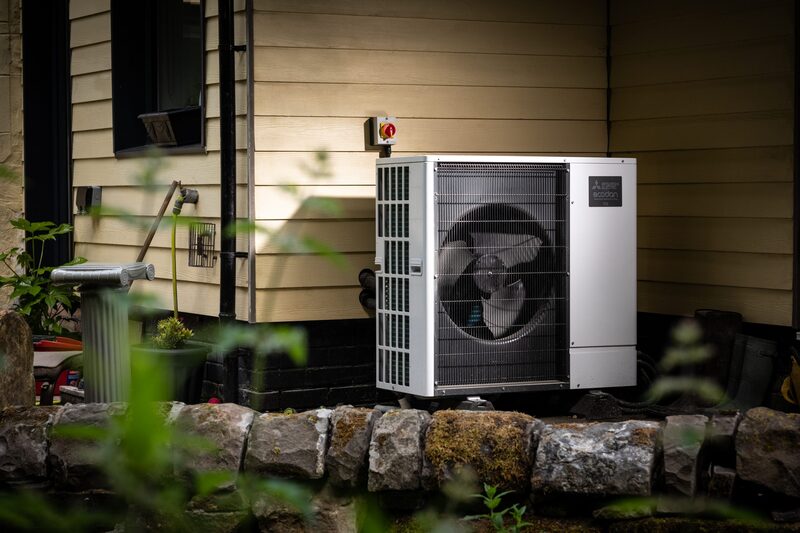
What the Boiler Upgrade Scheme covers and who qualifies

The Boiler Upgrade Scheme provides grants for heat pump installations across England and Wales, and the government's own evaluation confirms that territorial extent8. It is a replacement scheme in practice: the money is aimed at homes moving off a fossil fuel heating system onto a heat pump.
Eligibility turns on a small number of conditions. The property can be on or off the gas grid, and it can be urban or rural, in England or Wales9. Self-builds can qualify where the property is eligible9. The technology must be a supported type, and the installation must be carried out by an MCS certified installer5.
| Condition | Requirement |
|---|---|
| Nation | England or Wales2 |
| Location | Urban or rural, on or off the gas grid9 |
| Property type | Includes eligible self-builds9 |
| Installer | MCS certified5 |
| Technology | Air-to-water, air-to-air or ground source heat pump1 |
The scheme does not fund a like-for-like boiler replacement, and it does not fund insulation on its own. Households wanting fabric measures alongside a heat pump are looking at a different funding route, covered below.
The £9,000 uplift: who gets it and until when
The £9,000 rate exists to close part of the cost gap for homes that are hardest to convert: those burning oil or LPG, often in rural Wales where there is no mains gas connection at all. Official guidance confirms that some homes currently heated by oil or LPG may be eligible for an increased grant of £9,000, and the voucher schedule records £9,000 for an air-to-water heat pump in an off gas grid property replacing an oil or LPG system4.
The uplift is technology-specific as well as fuel-specific. It applies to air-to-water and ground source heat pumps, not to air-to-air units. A household replacing oil heating with an air-to-air system would be looking at the £2,500 rate instead1.
On timing, the £9,000 rate has applied from 21 July 2026, the same date the current voucher values took effect1. The scheme itself has run since 2022, and the government has not published an end date for the uplift in the material available here. Households should treat the rate as current rather than permanent, and confirm the position at the point of application.
For energy independence, the uplift matters because it targets exactly the households with the least resilience: those dependent on delivered fuel, exposed to oil price movements and to the logistics of tanker deliveries. Moving to a heat pump replaces a delivered fuel with electricity, which is a change of dependence rather than an end to it. The household still relies on the grid and on a supplier, but it is no longer exposed to the oil market or to a tank running low in a cold snap.
How the installer-led application works
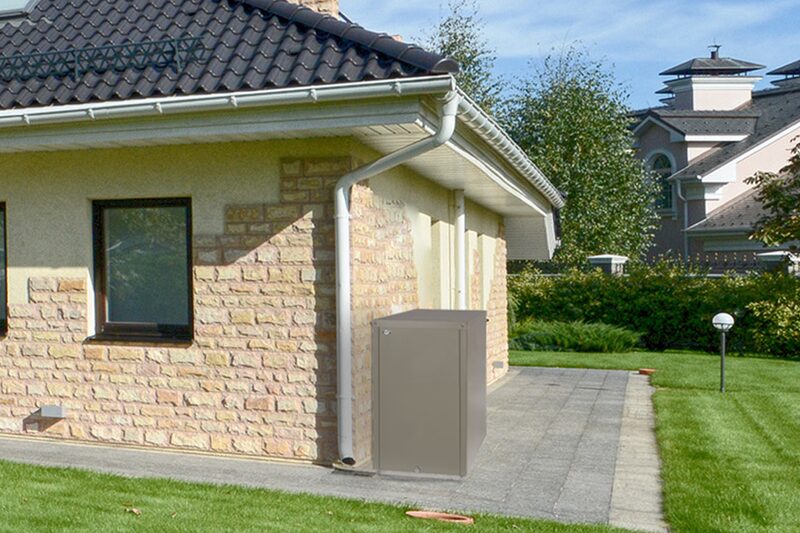
The application is not made by the householder. The installer applies for the grant on the householder's behalf through Ofgem, and the government's Clean Energy guidance directs households to check eligibility first and then work through an installer4. The same pattern appears in Northern Ireland's connection process, where the installer submits the application on the customer's behalf once one has been chosen10.
The practical sequence runs as follows.
- Check whether a heat pump could suit the property, using the government's eligibility checker, which asks for the nation, the heating system type and the number of bedrooms11.
- Obtain a quote from an MCS certified installer, using the MCS find an installer tool or contacting an energy supplier4.
- The installer applies to Ofgem for a voucher on the householder's behalf4.
- The voucher is issued, and the installation is completed within its validity period3.
- The installer redeems the voucher and the grant is deducted from the price.
Voucher validity is the point where applications most often come unstuck. Air-to-water, air-to-air and biomass boiler vouchers are valid for three months, while ground source heat pump vouchers are valid for six months3. Separate official guidance confirms the six month figure for ground source vouchers12. The clock runs from issue, so a household that has not settled on a final specification before the voucher is issued can lose it.
"Vouchers for ground source heat pumps are valid for 6 months."
In Wales there is a second installer-led route for households pursuing wider retrofit work. The Warm Homes Nest scheme used a network of Wales-based installers providing installation services under the management of the Nest team13. That model, a managed network rather than a single chosen contractor, is characteristic of Welsh Government funded programmes.
Which heat pumps and other systems are funded
Under the Boiler Upgrade Scheme itself, three technologies carry a grant value: air-to-water heat pumps at £7,500, ground source heat pumps at £7,500, and air-to-air heat pumps at £2,5001. The £9,000 rate applies to air-to-water and ground source units in off gas grid properties replacing oil or LPG1.
Welsh Government funding covers a much wider list. Green Homes Wales supports air source heat pumps, ground and water source heat pumps, high heat retention storage heaters, biomass boilers and stoves, solar thermal, solar PV with or without a diverter or battery, solid wall insulation, flat roof and room in roof insulation, loft insulation both virgin and top-up, cavity wall insulation, high performance glazing, draught proofing, floor insulation, and heating controls including smart home energy management systems14.
| Technology | Boiler Upgrade Scheme | Green Homes Wales |
|---|---|---|
| Air source heat pump | £7,500, or £9,000 off gas grid1 | Supported14 |
| Ground or water source heat pump | £7,500, or £9,000 off gas grid1 | Supported14 |
| Air-to-air heat pump | £2,5001 | Not listed14 |
| Biomass boiler or stove | Voucher category exists3 | Supported14 |
| Solar thermal and solar PV | Not funded | Supported14 |
| Insulation measures | Not funded | Supported14 |
The Optimised Retrofit Programme has funded specific projects across Wales, including air source heat pumps in Powys and Bridgend, Caerphilly, Flintshire and Ceredigion, and heat pumps with fabric measures in Denbighshire, Conwy, Ynys Mon, Gwynedd and Wrexham15. North Wales had 25 MW of heat pump capacity commissioned in 202316.
Where Wales differs and what to check before applying
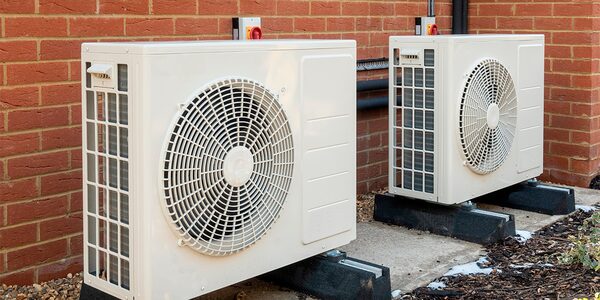
The grant itself does not differ. Planning and building rules do, and the Planning Portal is explicit that its heat pump guidance relates to the planning regime for England and that the policy in Wales may differ, with the same caveat repeated across its insulation and solar thermal pages17. Households in Wales should contact their local planning authority where a permission question arises19.
Permitted development rights for air source heat pumps in Wales changed from 1 June 2026. The previous limit of one heat pump on a detached dwelling house has been replaced, which matters for households considering more than one unit21. Building regulations guidance for heat pumps is published separately, and it advises contacting an installer who can provide the necessary advice, preferably one belonging to the Microgeneration Certification Scheme or the relevant Competent Person Scheme17.
Installer standards in Wales go beyond MCS in some routes. Green Homes Wales requires installers to be registered with TrustMark as approved PAS 2030 installers, or registered with TrustMark and certified with the Microgeneration Certification Scheme where the installation involves a low carbon technology such as a heat pump or solar panels14. The Warm Home Discount (England and Wales) Regulations 2026 require boiler and central heating installations to be carried out by a person registered with TrustMark, with a certificate of lodgement issued by the TrustMark operator22.
Green Homes Wales funding cannot be accessed in isolation: it offers a finance package providing grant funding in certain circumstances, and the grant alone is not available14. Its loan terms require the borrower to own and occupy a property in Wales, to instruct the Retrofit Coordinator named in the grant offer letter, to obtain an unsecured fixed sum loan from the scheme, to use registered installers, not to start work before the offer letter is issued, and to receive no other public financial support23.
On combining funding, ECO4 covers blended funding with the Boiler Upgrade Scheme24. Independent guidance cautions that grants like ECO4 in Wales are helpful only if the property is suitable for the technology, and that building fabric must be right or a heat pump could mean high bills and poor performance25. For social housing, the Warm Homes Social Housing Fund includes a low carbon heating incentive offering a £20,000 grant fund per home, with up to 10% of homes in an application able to access it26.
Wales accounted for 13% of government-supported heat pump installations in the year ending September 2025, the third largest share after the South West and South East at 15% each27. For a Welsh household, the grant reduces the capital barrier but leaves the underlying dependence intact: on the electricity grid, on a supplier, and on an installer certified to a standard the scheme recognises. The independence the grant buys is from delivered fossil fuel, not from the network.
Sources27 cited
- Boiler Upgrade Scheme guidance for installers v5.1, Ofgem, 2026
- Evaluation of the Boiler Upgrade Scheme 2025, UK Government, 2026
- Boiler Upgrade Scheme statistics July 2026, Department for Energy Security and Net Zero, 2026
- Heat pump grants and eligibility, UK Government, 2026
- Heat pump guide: air source vs ground source, IAA, 2026
- Air source heat pumps, Energy Saving Trust, 2026
- Electric boilers: what you need to know, Which?, 2025
- £5 million to help Welsh households invest in greener homes, Welsh Government, 2026
- Boiler Upgrade Scheme participant guidance V2.3, Ofgem, 2023
- Apply for an EV or heat pump connection, NIE Networks, 2026
- Check if a heat pump could be suitable for you, UK Government, 2026
- Boiler Upgrade Scheme guidance for installers V5, Ofgem, 2026
- Warm Homes Nest scheme annual report 2024 to 2025, Welsh Government, 2026
- Green Homes Wales, Development Bank of Wales, 2026
- Optimised Retrofit Programme 3 funded projects, Welsh Government, 2023
- Energy generation in Wales 2023, Welsh Government, 2025
- Heat pumps: building regulations, Planning Portal, 2026
- Heat pumps: sustainability and planning, Planning Portal, 2026
- Solar thermal water heating, Planning Portal, 2026
- Insulation: planning permission, Planning Portal, 2026
- Changes to permitted development rights in Wales from 1 June 2026, MCS Certified, 2026
- Warm Home Discount (England and Wales) Regulations 2026, legislation.gov.uk, 2026
- Green Homes Wales loan standard terms and conditions, Development Bank of Wales, 2026
- ECO4 summary updates document, Ofgem, 2022
- Why we teach renewables for households, Centre for Alternative Technology, 2025
- Warm Homes Social Housing Fund wave 3 scheme guidance addendum, UK Government, 2026
- Heat pump deployment quarterly statistics, UK 2025 Q3, Department for Energy Security and Net Zero, 2025
 How Much Does a Heat Pump CostA heat pump usually costs around eleven thousand pounds installed, though quotes vary a lot depending on your home.
 Ground Source Heat Pump CostWhat a ground source heat pump costs in the UK, splitting groundworks and drilling from the heat pump and internal works, and how the £7,500 Boiler Upgrade Scheme grant and the £9,000 off-gas-grid uplift change the figure.
 Air Source Heat PumpsHow an air source heat pump takes heat from outdoor air, the difference between air-to-air and air-to-water systems, typical efficiency, the £7,500 Boiler Upgrade Scheme grant, noise and planning limits, and what ownership means for a household's energy independence.
 High Temperature Heat PumpsHigh-temperature heat pumps deliver flow temperatures of roughly 65 to 80°C, close to boiler levels, so existing radiators can often stay in place.
 Planning Permission in WalesDo you need planning permission for a heat pump in Wales?
 Replacing a Gas or Oil BoilerSwapping a gas, oil or LPG boiler for a heat pump changes how your home is heated and how much it costs.