

In this answer
Short answer
For most government energy grants, the installer's certification is not a detail of the paperwork: it is the condition that makes the grant payable at all. Under the Boiler Upgrade Scheme, installers must be MCS certified and certified to install heat pumps and/or biomass boilers1. Heat pump installations funded by the scheme need to be carried out by an MCS-certified installer2. The same pattern runs through insulation and energy efficiency programmes, where works completed under government energy efficiency schemes have to be undertaken by a TrustMark-registered installer3.
The practical consequence is that a household cannot claim first and certify later. The installer applies for the Boiler Upgrade Scheme grant on the householder's behalf through Ofgem, and the grant is applied upfront as a discount to the cost of the installation rather than paid to the householder4. Certification therefore sits between the household and the money, and it also determines who signs off the building regulations side of the work.
This page sets out what MCS covers, which schemes require it, how to check an installer's status before committing, what happens when an installation is not certified, and the separate building rules and consents that certification does not replace.
Why certification decides your grant eligibility
Certification exists because a grant is paid against an outcome that a householder cannot easily verify: that a heat pump has been sized and commissioned correctly, that insulation has been fitted to a standard, that the work complies with building regulations. The scheme rules place that verification burden on the installer's accreditation rather than on the household.
The Microgeneration Certification Scheme has been a requirement for heat pump installations made under the Domestic Renewable Heat Incentive, the Green Homes Grant and the Clean Heat Grant7. That history matters because it shows the condition is structural rather than a feature of one scheme: successive governments have attached public money to certified installation, and the current Boiler Upgrade Scheme follows the same design.
For households, the rule has two effects. The first is protective: certification is described as essential if a household plans to access government incentives such as the Boiler Upgrade Scheme, since many programmes require MCS-certified installations8. The second is restrictive: it removes the option of using a competent but uncertified local tradesperson, or of doing the work oneself, if the grant is part of the funding.
Certification also interacts with consumer protection. Independent guidance on avoiding grant scams advises households to check eligibility and identify a reputable installer independently, rather than responding to cold approaches9. The certification register is the mechanism that makes independent checking possible, because it is a public list rather than a claim made by the company itself.
The Microgeneration Certification Scheme: what it is and what it covers
MCS is an independent certification scheme for microgeneration installation companies and products4. It certifies, quality assures and provides consumer protection for microgeneration installations and installers, covering small-scale renewable electricity technologies such as solar photovoltaic panels, biomass, wind, heat pumps and heat products8. The scheme includes certification for products and installer companies, and a code of practice based on the Office of Fair Trading Consumer Code6.
That dual structure, products as well as companies, is the part householders most often miss. A certified installer using an uncertified product does not satisfy a scheme that requires both. Official guidance on permitted development rights for wind turbines and air source heat pumps states that equipment must be installed by an installer who has been certificated through the scheme using a certificated product6.
Certification is also a competence signal. Independent guidance states that certification on the scheme shows a chosen contractor is competent to install and maintain low carbon technologies like heat pumps and solar panels10. It is not a guarantee of workmanship in any individual case, but it is the evidence base that grant schemes and building control bodies rely on.
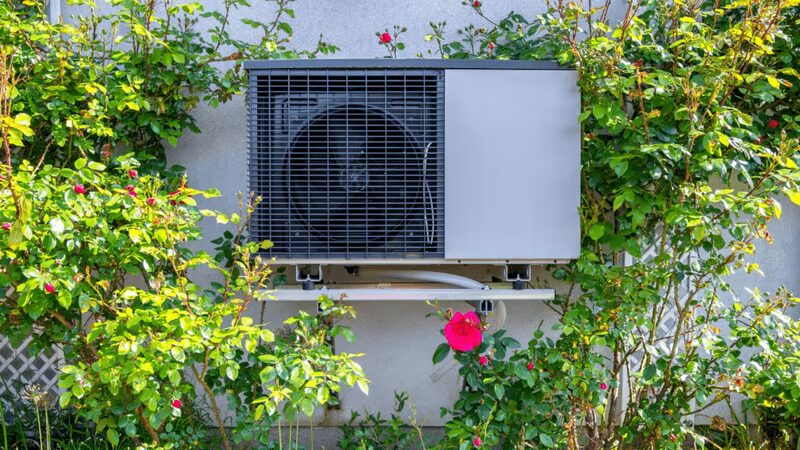
Which grants require an MCS installer: the Boiler Upgrade Scheme and beyond
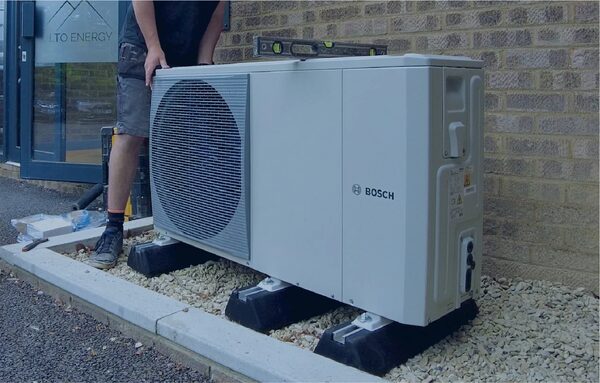
The Boiler Upgrade Scheme is the clearest case. Installers must be MCS certified and certified to install heat pumps and/or biomass boilers1, and heat pump installations funded by the scheme need to be carried out by an MCS-certified installer2. In Scotland, heat pump installations funded by the Home Energy Scotland Grant need to be carried out by an MCS-certified installer2.
The requirement is not confined to heat pumps. For installations of 50 kilowatts or less generating from combined heat and power, solar photovoltaic or wind, the installation must be certified under MCS or an Equivalent Scheme and installed by an MCS or equivalent installer11. That is the legislative framing behind the scheme rules, and it explains why the condition appears across technologies rather than only in heating programmes.
Insulation and energy efficiency measures follow a parallel route through TrustMark. All works completed under government energy efficiency schemes have to be undertaken by a TrustMark-registered installer3. In Northern Ireland, the Affordable Warmth Scheme adds a guarantee condition: where grant aid is awarded for cavity wall or solid wall insulation, the installer employed must be able to provide a minimum 25-year guarantee for the work6.
| Scheme | Installer condition | Source |
|---|---|---|
| Boiler Upgrade Scheme | MCS certified, and certified for heat pumps and/or biomass boilers | 1 |
| Home Energy Scotland Grant (heat pumps) | MCS-certified installer | 2 |
| Government energy efficiency schemes | TrustMark-registered installer | 3 |
| Affordable Warmth Scheme (NI), cavity or solid wall insulation | Installer must provide a minimum 25-year guarantee | 6 |
| Small-scale CHP, solar PV or wind | Certified under MCS or an Equivalent Scheme, installed by an MCS or equivalent installer | 11 |
How to check an installer is MCS certified before you commit
The check is a register lookup, not a judgement about the company's marketing. Government guidance directs households to use the government-endorsed Microgeneration Certification Scheme to find certified installers, and advises getting at least three quotes from reputable installers10. The register lists certified installer companies and certified products, so both halves of the requirement can be verified before any deposit is paid.
The Boiler Upgrade Scheme route adds a second check. The installer applies for the grant on the householder's behalf through Ofgem, and the standard route to a quote is the MCS find a heat pump installer tool or the household's energy supplier12. Because the application runs through the installer, an installer who cannot be found on the register cannot complete the claim.
For insulation, the relevant register is TrustMark, since works under government energy efficiency schemes must be undertaken by a TrustMark-registered installer3. Cavity wall work has a further layer: where the installer is registered with the Cavity Insulation Guarantee Agency, the installer will in most cases submit the building notice13. That registration is separate from MCS and separate from TrustMark, and it is worth confirming which body an installer is actually registered with rather than accepting a logo on a quote.

What happens if the installation is not MCS certified
An uncertified installation does not become eligible retrospectively. The Boiler Upgrade Scheme pays the installer when the installer redeems the voucher, with the owner benefiting through the reduced upfront cost14, and government has stated an intention to implement a requirement in regulations for installers to deduct the grant amount from the upfront costs of the eligible plant15. Both routes depend on a voucher that only a certified installer can redeem.
There are also boundaries to what MCS covers at all. The installations that would not be covered by MCS are heat pumps installed with a thermal output larger than 45kW and the majority of installations in new-build properties16. A household outside the scheme's scope cannot use the certification route to reach a grant that assumes it.
Where an installation is certified, the consumer protection has a time limit. For MCS certified installations, a complaint can be made no more than two years after the date that the system was commissioned5. Some grant specifications are tighter still on documentation: one Welsh scheme specification requires MCS commissioning certification to be issued to the employer within 14 days of commissioning17.
Other checks beyond certification: building rules and approvals
Certification and building regulations approval are separate requirements, and satisfying one does not satisfy the other. Building control bodies may accept certification under independent schemes of certification and accreditation of installers as evidence of compliance with a relevant standard18, which is how the two systems connect, but the underlying obligation to comply remains.
For insulation, installing insulation requires an application for approval under the Building Regulations, though this can be included as part of any application for the overall project19. There is an alternative route in some cases: advice may be obtained from an independent installer of the wall insulation system in question who meets the installer standards for that measure as set out in Schedule 3 to the Building Regulations 201020.
Competent person schemes allow registered installers to self-certify. Where an installer is part of a competent person scheme such as MCS, NICEIC, CIGA or Stroma, they can self-certify their work and will not need to get building regulations approval from the local authority21. For gas appliances, employing a registered installer with the relevant competencies means the work can be self-certified without close involvement of building control22, and a registered installer will be approved to carry out the work to comply with building regulations without involving local authority building control, with a certificate issued on completion23.
Consents sit alongside all of this. Listed buildings require listed building consent for any significant work24, and more disruptive work like internal or external insulation will usually need Listed Building Consent25. Electrical work should produce an Electrical Installation Certificate signed by a competent person26, and the competent person should provide a completed certificate showing that the work was tested for safety27.
Documentation for a grant claim is specific. For a low carbon heating system, the relevant MCS certificate together with manufacturer's instructions is required; for biomass, information about the Biomass Suppliers List; for certain energy efficiency measures, an appropriate claim of conformity and handover pack per PAS certification standards; a copy of the installer guarantee; and a dated copy or image of the installer invoice28.

What certification means for a household's energy independence

Certification does not change what a heat pump or a wall of insulation does for a home. It changes who is allowed to install it with public money attached, and it determines what paperwork the household holds afterwards. A certified installation leaves the household with an MCS certificate, a guarantee and an invoice that can be produced at sale, at a mortgage application or in a complaint28.
The dependence it creates is on a market of accredited installers rather than on the grid. A household that wants a grant is choosing from the certified register, and in some areas that register is thin. The alternative, paying in full for an uncertified installation, keeps the choice of contractor open but forfeits the grant and, for some measures, the guarantee structure that schemes require6.
Certification also ties the household to a scheme's timescales. The two-year complaint window for MCS certified installations runs from commissioning5, and some funding specifications require the certificate within 14 days17. Those are administrative dependencies rather than energy ones, but they are the terms on which grant-funded independence is delivered.
Sources28 cited
- Boiler Upgrade Scheme guidance for installers v5.1, Ofgem, 2026-07-02
- What the Warm Homes Plan and Future Homes Standard mean for installers, NICEIC, 2026-04-23
- Spray foam insulation and mortgages, House of Commons Library, 2026-09-20
- Boiler Upgrade Scheme guidance for property owners V5, Ofgem, 2026-04-28
- Who to contact: Domestic Renewable Heat Incentive, Ofgem, 2026-09-17
- The Microgeneration Certification Scheme, Planning Portal, 2026-09-17
- Energy efficiency and the net zero challenge, Public Accounts Committee, 2026-09-20
- ECO4 Flex and GBIS Flex information document, Ceredigion County Council, 2025-11
- How to spot and avoid ECO scams, Low Carbon Hub, 2025-11-10
- How heat pumps work: a guide for homeowners, NICEIC, 2025-09-17
- Draft licence conditions, Department for Business, Energy and Industrial Strategy, 2026-09-17
- Heat pump installation, Clean Energy Campaign, 2026-09-10
- Building regulations: cavity wall insulation, Planning Portal, 2026
- Boiler Upgrade Scheme guidance for property owners v5.1, Ofgem, 2026-07
- Amendments to the Boiler Upgrade Scheme: government response, Department for Energy Security and Net Zero, 2025-11
- Heat pump deployment quarterly statistics, United Kingdom 2026 Q1, Department for Energy Security and Net Zero, 2026-06-11
- Barcud Solar Panel Installation Scheme specification, Sell2Wales, 2026-06-15
- Approved Document L Volume 1 consultation version, Welsh Government, 2026-09-17
- Building regulations: energy efficiency, Planning Portal, 2026
- Guidance on PRS exemptions and exemptions register evidence requirements, Department for Energy Security and Net Zero, 2026-05-05
- ECO4 Flex open, South Cambridgeshire District Council, 2026-09-17
- Boilers and heating, Planning Portal, 2026
- Building regulations: doors and windows, Planning Portal, 2026
- Making alterations to a listed building, Bristol City Council, 2026
- Is permission needed for installing new roof tiles, Planning Portal, 2026-09-17
- Electrical safety, Cumberland Council, 2026-09-17
- Building regulations: electrics, Welsh Government, 2026-09-17
- Green Homes Wales loan standard terms and conditions, Development Bank of Wales, 2026-09-17
 Installer QualificationsWhat training and qualifications should a heat pump installer actually have?
 Buying Direct or Via InstallerCan you buy a heat pump yourself and still get the grant, or does it have to go through an installer?
 Using an Installer in EnglandHow do you check an installer is registered to sign off their own work, and what happens if they are not?
 Using an Installer in ScotlandYou live in Scotland and want solar panels or a heat pump fitted.
 DIY or ProfessionalLoft insulation and draught-proofing are jobs most people can tackle, but anything electrical near a kitchen, bathroom or outdoors needs a registered electrician.
 Home Energy Planning ScotlandDo you need planning permission for solar panels or a heat pump in Scotland?