

In this guide
Northern Ireland runs its own household energy efficiency funding, separate from the schemes that cover England, Scotland and Wales. The main route for insulation is the Affordable Warmth Scheme, delivered through the Northern Ireland Housing Executive and aimed at households in fuel poverty. Households in Northern Ireland may qualify for financial support towards the cost of loft and cavity wall insulation1. The scheme pays grant aid up to £7,500 for energy-efficiency upgrades for owner occupiers and private renters, and up to £10,000 where a home is of solid wall construction and needs insulation2.
The scheme is changing. A new Warm Healthy Homes Fund is planned to launch in 2027 and to replace the Affordable Warmth Scheme, with a whole-house, fabric-first approach and a proposed budget of £150 million over its first five years3. Until then, the Affordable Warmth Scheme continues, with business case approval running to March 20285.
Alongside the household scheme sits the Northern Ireland Sustainable Energy Programme (NISEP), an £8 million fund collected from domestic and non-domestic energy customers and administered by Energy Saving Trust on behalf of the Utility Regulator3. NISEP funds schemes delivered by energy suppliers rather than paying households directly, and it is the second main channel through which insulation work in Northern Ireland is funded.
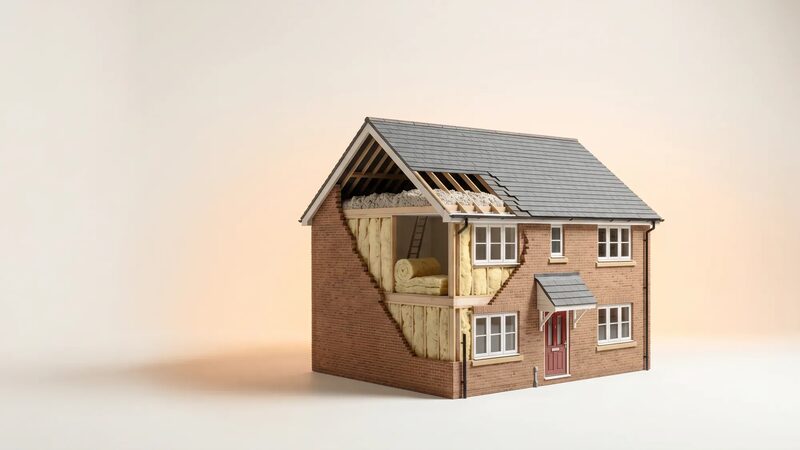
What insulation and glazing grant help exists in Northern Ireland
Northern Ireland's funding landscape is narrower than Great Britain's and structured differently. There is no Energy Company Obligation in the same form, and the Warm Home Discount Scheme does not run in Northern Ireland; instead there is an Affordable Warmth Scheme available7. That single fact shapes everything else: households in Northern Ireland look to a government-funded, council-referred scheme rather than to supplier obligations for insulation grants.
The Affordable Warmth Scheme is delivered by the Northern Ireland Housing Executive and aims to help with the effects of fuel poverty and energy inefficiency8. It is open to owner occupiers and private renters, and it pays grant aid towards a defined list of measures. Households in Northern Ireland may qualify for financial support towards the cost of loft and cavity wall insulation1.
The second channel is NISEP. It is an £8 million fund collected from both domestic and non-domestic energy customers, and Energy Saving Trust is the Programme Administrator on behalf of the Utility Regulator in Northern Ireland3. NISEP does not pay householders: it funds schemes run by energy suppliers and other organisations, which then deliver measures. In 2023/24 the Thermal Comfort 2 scheme delivered 514 insulation measures across 469 properties in Northern Ireland9.
Glazing is the weak point. The Affordable Warmth Scheme's measure list is built around insulation and heating, and the priority order for solid wall measures is limited to detached properties2. There is no Northern Ireland equivalent of a standalone window replacement grant in the current scheme documents. Households seeking help with windows are more likely to find it through the general energy advice route than through a dedicated glazing grant.
For a household, the practical effect is that insulation is grant-fundable and glazing largely is not. That matters for energy independence: fabric measures reduce the demand a home places on whatever heating fuel it uses, while windows remain a cost the household carries itself.
The Affordable Warmth Scheme: what it offered and where it stands now
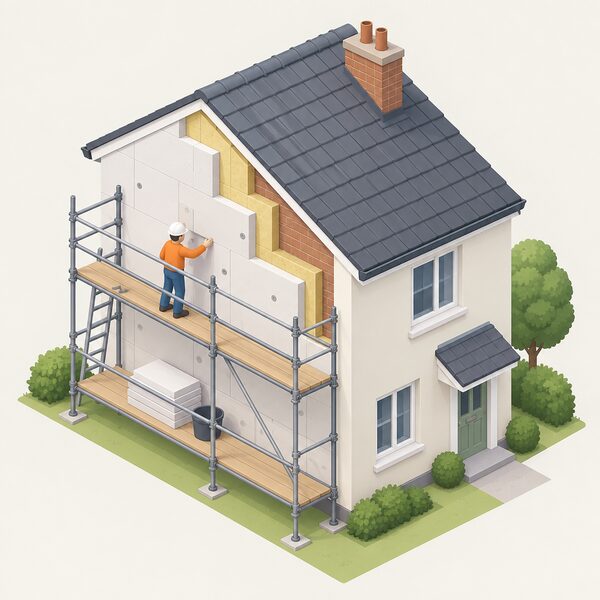
The Affordable Warmth Scheme is the current mainstay. It is available in Northern Ireland, and it is the scheme the Warm Home Discount points to in place of itself7. Its purpose is to help with the effects of fuel poverty and energy inefficiency8.
The money is real but capped. Owner occupiers and private renters in Northern Ireland may be able to get up to £7,500 for energy-efficiency upgrades through the scheme10. Where a home is of solid wall construction and needs insulation, the Housing Executive may pay grant aid up to £10,0002. Homes of solid wall construction needing insulation may be entitled to grant-aid up to £10,00010.
Two conditions sit over all of it. Grants are subject to the availability of funding2, and the scheme is currently planned to run to 2026, with business case approval until March 20285. The end date matters because the successor fund does not open until 2027.
The scheme's design reflects its age. It works measure by measure rather than house by house, and the Department for Communities has said the new fund reflects lessons learned from the Affordable Warmth Scheme, with development focused on a more streamlined delivery model and a whole-house, fabric-first approach4. That is an official acknowledgement that the current model has been less effective than a whole-house approach would be.
For a household, the position is that help exists now, is capped, and is time-limited. Anyone weighing insulation work against a wait for the successor fund is choosing between a known capped grant and an uncapped but unopened scheme.
Grants of up to £7,500, and £10,000 for solid wall homes
The two headline figures are the ones to hold on to. The standard ceiling is up to £7,500 for energy-efficiency upgrades for owner occupiers and private renters10. The solid wall ceiling is up to £10,000 where a home is of solid wall construction and needs insulation2.
The gap between them is deliberate. Solid wall insulation is the most expensive fabric measure in the UK housing stock, and the higher limit reflects that. It also reflects where the scheme's priority order places solid wall work: solid wall insulation is a Priority 4 measure, and within that priority it covers detached properties only2. A semi-detached or terraced solid wall home does not reach the £10,000 ceiling through this route.
| Measure | Grant position | Source |
|---|---|---|
| Energy-efficiency upgrades, owner occupiers and private renters | up to £7,500 | 10 |
| Solid wall insulation, solid wall homes needing insulation | up to £10,000 | 2 |
| Solid wall insulation, detached properties only | Priority 4 measure | 2 |
| Cavity wall or solid wall insulation guarantee | minimum 25-year guarantee required | 2 |
The limits are ceilings, not entitlements. Grants are subject to the availability of funding2, and the scheme is means tested: applicants for a grant will be means tested11. A household that qualifies on income may still find that the measure it needs sits outside the priority order, or that the funding for its area is committed.
For comparison, the equivalent schemes elsewhere in the UK operate at different scales. The Warm Homes: Local Grant in England makes up to £30,000 of measures available per property12, and the Nest Warm Homes Programme in Wales funds free home energy improvements including heating systems, insulation and solar panels13. Scotland has announced additional grant support for homeowners of up to £7,500, or up to £9,000 for households in island and remote rural areas14. Northern Ireland's ceilings sit at the lower end of that spread.
Who qualifies: income, benefits, tenure and property rules

Eligibility for the Affordable Warmth Scheme turns on income, tenure and the property itself. Households with a total annual gross income of less than £23,000 may be able to get funding3. Applicants must live in Northern Ireland2. The scheme is open to owner occupiers and private renters10.
The income threshold is the single most important number. It is a gross household figure, not an individual one, and it sits below the thresholds used by some NISEP-funded schemes. The variation between schemes in the same jurisdiction is wide:
- Keep Warm Scheme: single person household income or pension below £33,000 gross; couple or joint or single parent family income or pension below £40,000 gross; Northern Ireland Housing Executive leaseholders are not eligible15
- Better Energy Homes Plus: single person household income or pension below £28,000 gross; couple or joint or single parent family income or pension below £35,000 gross; owner occupiers throughout Northern Ireland15
- Priority PV Scheme: Northern Ireland Housing Executive tenants only, outside a natural gas area, in a single storey Housing Executive property with oil or electric heating, with a couple or single parent family income or pension below £35,000 gross15
Those figures show how much variation exists between schemes within Northern Ireland. A household above the £23,000 line for Affordable Warmth may still qualify for a NISEP-funded scheme with a higher threshold, and vice versa.
Tenure rules are relatively open. Private renters can apply, and the supporting documents must prove ownership or private tenancy at the property and that the applicant occupies it as their main residence2. In Great Britain, the equivalent insulation schemes require rented homes to have permission from the landlord16, and the same consent principle is standard for grant-funded work in a tenancy.
Property rules bite hardest on solid wall homes, where the £10,000 ceiling applies only to detached properties2. Households in other solid wall property types face the standard ceiling or no route at all through this scheme.
What the scheme funds: insulation, heating and windows in priority order
The Affordable Warmth Scheme does not fund a free choice of measures. It works through a priority order, and the order determines what a household can actually get.
Solid wall insulation sits at Priority 4, and within that priority it covers detached properties only2. That is the top of the measure hierarchy in cost terms and the narrowest in eligibility. Below it sit the standard fabric and heating measures that make up the bulk of awards.
NISEP-funded schemes show the wider measure set that operates in Northern Ireland. Whole House Warmer Homes NI funds:
- solid wall insulation with cavity wall insulation where required
- loft insulation
- natural gas or oil central heating
- high heat retention electric storage heaters if the home is currently on electric heating
- LED light bulbs
- a water widget
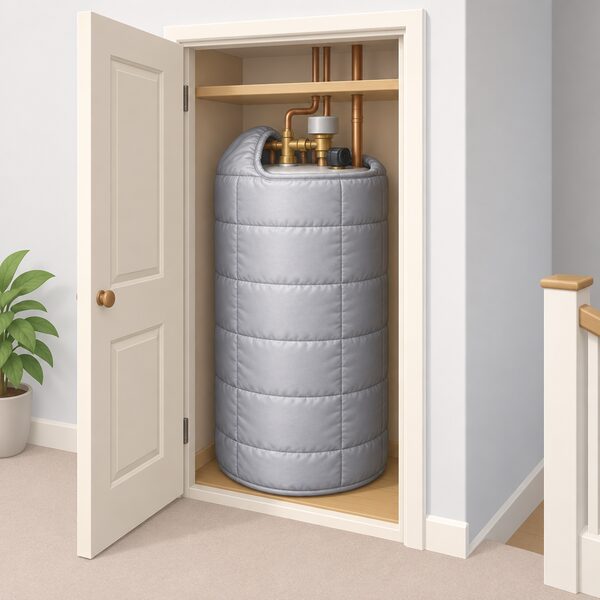
- a hot water tank jacket17
That list is a useful guide to what a whole-house package looks like in Northern Ireland practice: fabric first, then heating, then the small measures.
Windows are the notable absence. The Affordable Warmth Scheme's documented priority measures are insulation and heating, and no window replacement measure appears in the scheme rules. Households wanting glazing improvements are directed to general energy advice rather than to a grant. For the fabric of a home, that leaves a gap: windows are a significant heat loss path, and in Northern Ireland they are largely a household cost.
The VAT position softens the cost of some work. In Great Britain or Northern Ireland, 5% VAT applies to heating equipment work funded through an energy efficiency grant if eligible18. For insulation, where an installer charges £1,000 excluding VAT, made up of £400 materials and £600 labour, the materials are 40% of the total, so the installer can charge reduced 5% VAT on the total installation cost18. That is a meaningful reduction on a measure that would otherwise carry the standard rate.
For energy independence, the measure list matters more than the grant ceiling. Insulation and heating controls reduce the demand a home places on delivered fuel. Windows, left out of the grant, remain a dependence the household carries.
How to apply and what happens after you apply

The application route runs through advice, not through a direct form. Contact the NI Energy Advice Service; if the household meets the entry requirements, an application form will be sent, which the household completes and returns with supporting documents to the local Grant Office2. The service offers independent and impartial energy advice to domestic householders in Northern Ireland, plus referrals to energy grants and other sources of help8.
The contact details are published. The Northern Ireland Energy Advice Service can be reached on 0800 111 4455, open 9am to 5pm Monday to Friday15, and the email address is NIenergyadvice@nihe.gov.uk2.
Once an application is in, the process has published timescales:
- A case officer sends an acknowledgement letter within three working days11.
- Applicants for a grant will be means tested11.
- A list of grant aided work is sent within 12 weeks of inspection11.
- Inspections are scheduled with no less than 10 working days' notice, and it may take up to two weeks to schedule a site visit from receipt of an inspection request11.
- Requested documents must be provided within six months of the date on the letter11.
- Once all documents have been received, it may take up to four weeks until the grant payment is released11.
The documents required are specific. Supporting documents must prove ownership or private tenancy at the property and that the applicant occupies it as their main residence, and income evidence means wage slips, benefits award letters and bank statements2. The grant process may also require proof of ownership, architect or Principal Designer plans or proposed plans, estimates from the builder or contractor, building control approval and planning approval11. Before payment, accounts, receipts and certificates must be provided, including the insurance backed bond which guarantees the work11.
The completion deadline is tight. The Affordable Warmth Scheme usually expects grant aid work to be completed within three months of the date of approval2. Households should plan the installer booking around that window rather than after it.
The Warm Healthy Homes Fund: the whole-house, fabric-first successor
The successor scheme is designed around a different principle. The Warm Healthy Homes Fund takes a whole-house, fabric-first approach to improving home energy performance4. It is expected to become the Department's main fuel poverty intervention for private sector dwellings from April 20274, and it will replace the Affordable Warmth Scheme8.
The fabric-first ordering is explicit. The Warm Healthy Homes Fund will take a fabric-first approach, address ventilation and draught proofing, offer heating systems and other measures6. That sequence, insulation, ventilation and draught proofing before any other measures, is the standard retrofit order and it is a change from the measure-by-measure model of the current scheme.
The budget is set out at £150 million over its first five years10. The Department for Communities held a 12-week public consultation on the fund22, covering eligibility qualification criteria including income thresholds and the use of certain benefits, the impact of householder personal savings, increased grant limits per household, support for the Private Rented Sector, and Quality Standards and Redress for consumers22.
The fund reflects lessons learned from the Affordable Warmth Scheme, with development focused on a more streamlined delivery model and a whole-house, fabric-first approach4. A screening exercise on the fund recommended no full equality impact assessment5.
For a household, the significance is timing and scope. The fund is not open yet. When it opens, it is intended to cover the whole house rather than single measures, and it is intended to include ventilation and draught proofing alongside insulation, which the current scheme does not treat as a package. Households planning major retrofit work may find the fund's arrival changes what is worth doing and when.
Warm Healthy Homes Fund eligibility: income, savings and prioritisation
The eligibility rules for the new fund are still proposals. The fund is an energy efficiency scheme to help low-income households experiencing or at risk of Fuel Poverty22, and the proposed qualification criteria include income thresholds and the use of certain benefits22.
Three features distinguish the proposed criteria from the current scheme. First, personal savings are explicitly under consultation: the impact of householder personal savings is one of the topics the Department for Communities consulted on22. That is a departure from a pure income test and could exclude households with capital but low income. Second, the Private Rented Sector is named as a topic, which suggests the tenure rules for the new fund may differ from the current scheme's open approach to private renters22. Third, Quality Standards and Redress for consumers are part of the consultation, which points to a stronger consumer protection framework than the current scheme carries22.
The fund is intended for private sector dwellings, and it is expected to become the Department's main fuel poverty intervention for private sector dwellings from April 20274. Social housing sits outside it.
For households trying to plan, the honest position is that the new fund's rules are not yet fixed. The direction of travel is clear: a whole-house approach, a fabric-first order of works, and a stronger quality and redress framework. The detail that determines whether a particular household qualifies is not yet published.
Grant limits under the new fund: £35,000 standard, £45,000 hard-to-treat
The proposed grant limits for the Warm Healthy Homes Fund are substantially higher than the current scheme's ceilings. The proposed grant limit for hard-to-treat properties is £45,000, and it will also be kept under review for the life of the fund6. The standard limit is £35,000.
The gap between the two reflects the same logic as the current scheme's solid wall ceiling, scaled up. Hard-to-treat properties, typically solid wall, off-gas or awkward to insulate, cost more per unit of improvement, and the higher limit is intended to make whole-house work viable in them.
| Fund | Standard limit | Hard-to-treat limit | Source |
|---|---|---|---|
| Affordable Warmth Scheme | up to £7,500 | up to £10,000 (solid wall, detached only) | 2 |
| Warm Healthy Homes Fund (proposed) | £35,000 | £45,000 | 6 |
The increase is large enough to change what is possible. A £7,500 ceiling buys one or two measures. A £35,000 ceiling, applied on a whole-house basis, could cover a full fabric retrofit including solid wall insulation, which is the most expensive single measure in the UK stock. The proposed limits are also stated to be kept under review for the life of the fund6, which suggests they are not fixed for the fund's duration.
For comparison, the Warm Homes: Local Grant in England makes up to £30,000 of measures available per property12, and the Warm Homes: Local Grant funds insulation, energy-efficient heating systems and renewable energy installations12. The proposed Northern Ireland limits sit above that. The comparison is worth noting because it shows the direction of policy across the UK: larger per-property ceilings, whole-house scope, and a fabric-first order of works.
For a household, the proposed limits are the strongest signal yet that the successor fund is intended to fund complete retrofits rather than single measures. The limits are proposals, and the fund does not open until April 2027.
NISEP and other routes: the Northern Ireland Sustainable Energy Programme
NISEP is the second funding channel and it works differently from the household scheme. It is an £8 million fund collected from both domestic and non-domestic energy customers, and Energy Saving Trust is the Programme Administrator on behalf of the Utility Regulator in Northern Ireland3. The money comes from a levy on energy customers, not from general taxation, and it is allocated to schemes rather than to households.
The programme funds four categories:
- priority whole house solutions covering heating and insulation measures
- priority individual measures covering insulation and various other energy efficiency measures
- priority whole house solutions covering innovative measures
- non-priority conventional schemes covering various measures for non-priority domestic and commercial customers23
The minimum bid for funding is £50,000 per scheme24, which confirms that NISEP deals with organisations, not individual householders.
The delivery record is modest but real. In 2023/24 the Thermal Comfort 2 scheme delivered 514 insulation measures across 469 properties in Northern Ireland9, and the programme approved an additional capital funding allocation of up to £900,000 to the Northern Ireland Sustainable Energy Programme in that year9.
NISEP-funded schemes carry their own eligibility rules, which vary widely. The 2026/27 list includes Help to Insulate, which offers a grant of 40% towards the cost of cavity wall insulation and loft insulation, up to £650 maximum grant per insulation measure and up to £1,000 maximum grant for cavity wall insulation by extraction and refill, with a fully funded hot water tank jacket as an additional measure15. The same list includes Keep Warm Discount Scheme on the same 40% terms15, and Efficiency Plus Insulation Cashback, which offered a grant of one third towards the cost of cavity wall insulation or loft insulation, up to £500 maximum grant per insulation measure, with fully funded LED light bulbs and a water widget17.
Those schemes show the pattern: a percentage contribution towards a measure, capped, with small fully funded extras. They are smaller than the Affordable Warmth awards and they are delivered by named organisations rather than by the Housing Executive.
For a household, NISEP matters because it widens the range of measures and thresholds available. A household above the Affordable Warmth income line may still qualify for a NISEP-funded scheme with a higher threshold. The route in is the same: advice first, then referral.
Where Northern Ireland differs from the rest of the UK
The differences are structural, not cosmetic. Northern Ireland has no Warm Home Discount; the Affordable Warmth Scheme stands in its place7. It has no Energy Company Obligation of the Great British kind, and its household grant scheme is government-funded and council-referred rather than supplier-funded.
The successor fund is also on a different timetable. The Warm Healthy Homes Fund is stated to be introduced in Northern Ireland in April 20275, while the Warm Homes: Local Grant in England has a delivery window scheduled to close on 31 March 202825 and the Warm Homes: Social Housing Fund Wave 3 guidance was published in 202626. The two systems are moving on separate tracks.
The measure sets differ too. The Nest Warm Homes Programme in Wales funds free home energy improvements including heating systems, insulation and solar panels, with a tailored package that could include a boiler repair or replacement, heat pump, insulation and solar panels13. Scotland has announced additional grant support for homeowners of up to £7,500, or up to £9,000 for households in island and remote rural areas14. Northern Ireland's current scheme is narrower on renewables and does not fund solar through the Affordable Warmth route.
The income thresholds differ as well. Northern Ireland's £23,000 gross household threshold for Affordable Warmth3 sits below the thresholds used by several NISEP-funded schemes in the same jurisdiction15, and below the general direction of travel in the successor fund's proposed criteria.
For a household, the practical consequence is that advice matters more in Northern Ireland than elsewhere. The scheme landscape is layered, thresholds vary between schemes, and the entry point is a single advice service rather than a national online application. The NI Energy Advice Service offers independent and impartial energy advice to domestic householders in Northern Ireland, plus referrals to energy grants and other sources of help8, and it is the route into both the Affordable Warmth Scheme and the NISEP-funded schemes.
Sources26 cited
- Insulation, nidirect, 2026-09-02
- Affordable Warmth Scheme, Northern Ireland Housing Executive, 2026-09-17
- Fuel poverty in Northern Ireland, House of Commons Library, 2026-05-13
- Warm Healthy Homes Fund, Department for Communities, 2026-09-17
- Warm Healthy Homes Fund: replacing Affordable Warmth Scheme screening, Department for Communities, 2026-05-19
- Warm Healthy Homes Fund consultation, Department for Communities, 2026-05
- Warm Home Discount Scheme, Ofgem, 2026-09-17
- Energy saving grants in your area, nidirect, 2026-09-17
- 2023-24 NISEP Annual Report, Utility Regulator, 2025-07
- Fuel poverty in Northern Ireland, House of Commons Library, 2026-05-13
- How long will the whole process take, Northern Ireland Housing Executive, 2026-09-17
- Home and business grants, schemes and advice, East Herts Council, 2026-09-17
- Nest Warm Homes Programme, Welsh Government, 2026-09-18
- Decarbonising heating in homes and buildings, Scottish Government, 2026-09-17
- NISEP List of Schemes 2026-27, Utility Regulator, 2026-04
- Great British Insulation Scheme: homeowners and tenants, Ofgem, 2026-09-17
- NISEP List of Schemes 2024-25, Utility Regulator, 2024-10
- VAT on energy saving materials, HM Revenue and Customs, 2026-09-20
- Heating technologies to suit your home, nidirect, 2026-09-17
- Ventilation systems, nidirect, 2026-09-17
- Disabled Facilities Grants: what you'll get, GOV.UK, 2026-09-17
- Consultation on Warm Healthy Homes Fund, Department for Communities, 2026-09-19
- 2024/25 NISEP Annual Report, Utility Regulator, 2026-07-03
- NISEP Framework Document, Utility Regulator, 2009-09
- Apply for a Warm Homes Local Grant, Liverpool City Council, 2026-09-17
- Warm Homes: Social Housing Fund Wave 3 scheme guidance addendum, GOV.UK, 2026-06
 Housing Stock Data for NIMost homes in Northern Ireland heat with oil, so why are the grants and help different from the rest of the UK?
 Building Rules Northern IrelandDoing building work in Northern Ireland?
 Why Energy Grants DifferWhere you live in the UK changes which home energy grants you can get.
 Insulation and Glazing CostsTypical installed costs for cavity wall, solid wall, loft and roof insulation, draught-proofing and replacement glazing, by measure and home size, with the savings, VAT position and funding schemes that shape the final bill.
 Building Regs Part L InsulationAdding insulation or replacing windows?
 Installer in Northern IrelandHow do you check an installer in Northern Ireland is properly registered, and who do you complain to if the work goes wrong?