

In this comparison
The Warm Homes: Local Grant and the Great British Insulation Scheme (GBIS) are two different answers to the same problem: homes that cost too much to heat and households that cannot fund the work themselves. The Warm Homes: Local Grant is a government grant scheme providing energy performance upgrades and low carbon heating via local authorities, and it is the larger of the two for a single property: 100% of the cost up to £30,000 for an owner occupier or a private landlord's first property in England1. GBIS is the supplier-delivered insulation route, aimed at homes with poor energy efficiency, with a referral path for households a council considers to be in fuel poverty or on a low income3.
The practical difference is who runs it. Warm Homes: Local Grant money reaches a household through its council, which decides which streets and which homes to treat. GBIS reaches a household through an energy supplier or its installer, with local authorities able to refer households that fall outside the standard criteria3. One is area-based and targeted; the other is measure-based and open to application through the supply chain.
Both sit inside a much bigger programme. The Warm Homes Plan is backed by £5 billion of public investment for low-income households, and the wider plan comprises over £4.4 billion grant funding plus £600 million from the Warm Homes Fund4. The Energy Company Obligation, the scheme that has dominated supplier-funded retrofit since 2013, is closing to new applications and has been extended to 31 December 20261.
Two schemes, one goal, two very different delivery models
The Warm Homes: Local Grant exists to deliver energy performance upgrades and low carbon heating through local authorities, with the stated aim of achieving energy bill savings2. Councils set their own local objectives within that: Birmingham frames its scheme around reducing energy bills, lowering carbon emissions, improving housing quality and tackling fuel poverty9. That local framing matters, because it determines which homes get treated first.
GBIS works the other way round. It is a supplier obligation, so the measures are installed by the companies and installers that carry the obligation, and the household's route in is usually an application or a referral rather than a council letter. The referral route is the important one for households that do not fit a neat eligibility box: participating local authorities or devolved administrations can refer households they consider to be living in fuel poverty or on a low income, and vulnerable to the effects of living in a cold home, who may not qualify via the standard eligibility criteria3.
Both schemes are recent arrivals. The Warm Homes: Local Grant and the Warm Homes: Social Housing Fund were introduced as the two new schemes replacing the previous landscape10. The Social Housing Fund is the social housing counterpart, and it carries its own incentive: up to 10% of homes in an application can gain access to a £20,000 grant fund per home to install low carbon heating measures for homes on the gas grid11.
For a household's energy independence, the distinction is straightforward. Warm Homes: Local Grant work is fully funded by government for qualifying residents, so it removes the capital barrier entirely and leaves the household with a better-performing building and, where low carbon heating is installed, less exposure to gas12. GBIS improves the fabric, which reduces the amount of energy needed but leaves the heating fuel and the supplier relationship unchanged. Neither scheme removes the grid connection or the supplier.
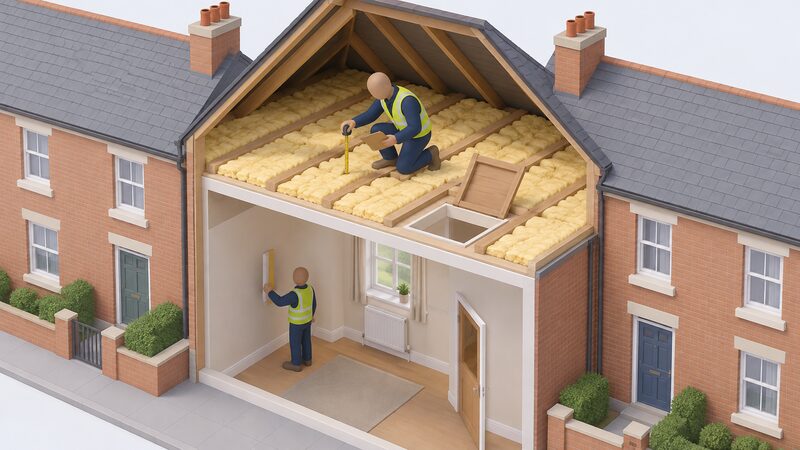
Warm Homes: Local Grant: up to £30,000 for low-income households in England
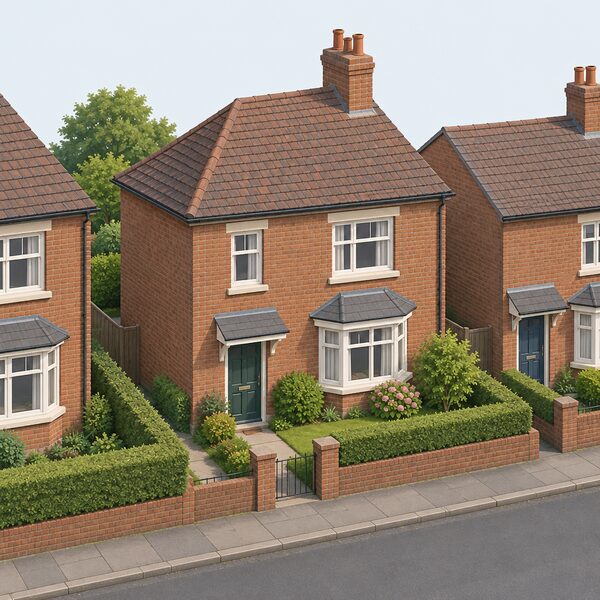
The headline figure is the one most households search for. For an owner occupier or a private landlord's first property in England, the grant covers 100% of the cost up to £30,000 total2. Up to £30,000 of measures is available per property13. For a private landlord's second and subsequent properties, the terms tighten: 50% of the cost up to £15,0002.
The scheme is for low-income households living in privately owned EPC band D to G homes in England14. It is open to homes using any fuel type: gas, electric, oil, LPG, coal or solid fuel15. That breadth is unusual, and it means off-gas rural homes are not excluded as they were under some earlier schemes.
| Household type | Funding | Cap |
|---|---|---|
| Owner occupier, England | 100% of cost | up to £30,0002 |
| Private landlord, first property | 100% of cost | up to £30,0002 |
| Private landlord, second and subsequent properties | 50% of cost | up to £15,0002 |
| Social housing | Infill and area-based upgrades only | £16.6k total9 |
Social housing is treated differently again. Social housing may only be treated using Warm Homes: Local Grant funding for infill purposes and to support area-based work, and the cap there is £8.3k for energy performance plus £8.3k for low carbon heating, a total of £16.6k9.
The money is real but finite. Of the funding, £0.5bn has been allocated to the Warm Homes: Local Grant, against a £500m indicative national pot7. An earlier allocation of £88m covered 2025 to 202616. The scheme started in 202517. The published guidance also records a lower per household figure for whole project averages, estimated at up to £12,400, which sits alongside the £30,000 per property cap; the two figures measure different things13.
GBIS: the supplier route for homes with poor energy efficiency
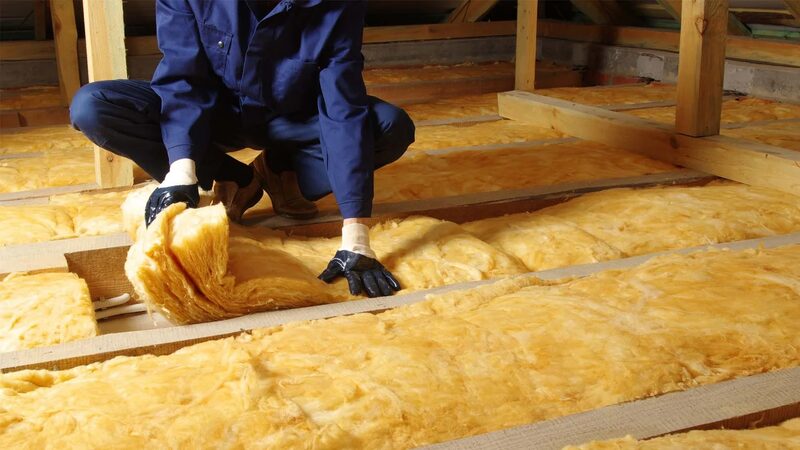
GBIS is the insulation-first scheme. Its funded measures include flat roof insulation, alongside the fabric measures that make up most of its delivery18. It is administered through the supply chain, and Ofgem publishes guidance for local authorities and devolved administrations on how the referral route operates3.
The scheme's reach is defined by who can refer and who can apply. The standard route looks at the property, and the referral route looks at the household. That second route exists precisely because energy efficiency schemes have historically missed households that are fuel poor but not on a qualifying benefit, or that live in a property whose EPC band does not fit the criteria.
GBIS does not carry the same per property headline as the Warm Homes: Local Grant, and it is not a whole-house low carbon heating scheme. Its purpose is to improve the energy efficiency of the worst-performing homes, which reduces running costs and carbon but does not change the heating system. For a household whose main problem is a cold, leaky house rather than an expensive heating system, that is the relevant intervention.
The scheme sits alongside the Boiler Upgrade Scheme rather than replacing it. The Boiler Upgrade Scheme has paid grants for heating systems in eligible self-build properties, 11,322 grants accounting for 15.1% of total installations in the most recent published quarter19. Households weighing up insulation against a heating replacement are choosing between two separate funding streams, and the Boiler Upgrade Scheme has its own eligibility rules.
Who qualifies: income limits, benefits and referral routes
The Warm Homes: Local Grant uses several eligibility pathways, and the one a household falls into determines what it has to prove.
Under the benefit route, households receiving Housing Benefit, Income-based Jobseeker's Allowance, Income-related Employment and Support Allowance, Income Support, Pension Credit (guarantee or savings) or Universal Credit qualify, and the person receiving the benefit must be a permanent resident of the household15. Council Tax Support also appears among the eligible benefits on the Surrey pathway8.
Under the income route, a household qualifies where household income is £36,000 or less after housing costs15. Homes qualifying under ECO4 Flex (Route 2) are also eligible, which links the new scheme to the flexible eligibility work councils already do15. Households outside the most deprived deciles may still be eligible via the low income proxies or the household income threshold, where local authorities verify them14.
GBIS eligibility runs on the property and on referral. The referral route is for households that participating local authorities or devolved administrations consider to be living in fuel poverty or on a low income, and vulnerable to the effects of living in a cold home, who may not qualify via the standard eligibility criteria3.
| Route | Warm Homes: Local Grant | GBIS |
|---|---|---|
| Benefit based | Housing Benefit, Income-based JSA, Income-related ESA, Income Support, Pension Credit, Universal Credit15 | Standard criteria plus referral3 |
| Income based | £36,000 or less after housing costs15 | Council or devolved administration judgement3 |
| Property based | EPC band D to G, privately owned, England14 | Poor energy efficiency18 |
| Cross-scheme | ECO4 Flex (Route 2) homes eligible15 | Referral for those outside standard criteria3 |
Tenure matters in both. For the Warm Homes: Local Grant, applications are open to residents who physically occupy the property, and shared ownership is considered as private rented if the resident is paying any rent8. Owner occupied properties with an EPC rating of band D, E, F or G are the core group20. Private rented sector properties are funded, with the scheme fully funding upgrades for one property per landlord9.
The Warm Homes: Local Grant eligibility and income limits page sets out the pathways in more detail, and ECO4 Flex explains the flexible route that feeds into it.
What each scheme pays for: insulation, heating and solar
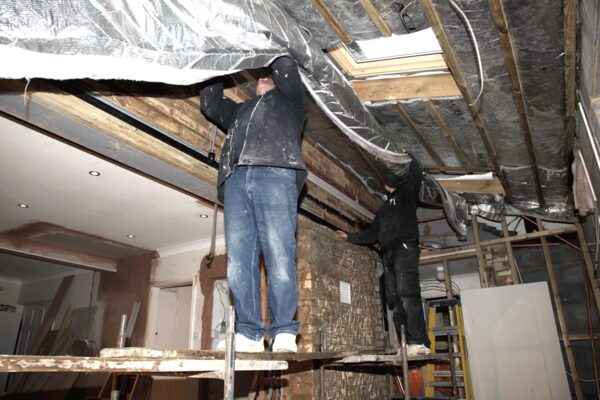
The Warm Homes: Local Grant funds energy performance improvements and low carbon heating improvements, with the aim of achieving energy bill savings2. In practice that means fabric measures and a heating upgrade where the property needs one. Biomass boilers appear among the eligible measures on the Liverpool route21.
Solar is the point where households most often overestimate what is available. The scheme's published guidance names energy performance and low carbon heating measures, and the £30,000 cap applies to the measures as a whole rather than to solar separately. Where solar is funded, it sits inside that cap. Households looking specifically at solar should read grants and funding for solar panels and grants and funding for home battery storage, which cover the routes where solar and storage are the funded measure.
GBIS funds insulation measures, including flat roof insulation18. It does not fund a heating system replacement. That is the cleanest way to separate the two schemes: one can change how a home is heated, the other changes how much heat it loses.
The Social Housing Fund, running in parallel, carries a low carbon heating incentive of £20,000 per home for up to 10% of the homes in an application, for homes on the gas grid11. That is a separate scheme with a separate landlord route, covered on the Warm Homes: Social Housing Fund page.
How to apply: council, supplier or direct
The Warm Homes: Local Grant is not a national application queue. It is delivered area by area, and the route in depends on where a household lives.
In Greater Manchester, residents of homes within the selected areas are contacted by officers working for the listed organisations, and the contact address for Bolton, Oldham, Salford, Stockport, Trafford and Wigan is held by the combined authority20. In London, the grant is delivered on behalf of 31 local authorities working together as a consortium, and total funding is shared between local authorities based on the number of homes in fuel poverty in each area22. In Liverpool, applicants must register their interest via the Government Portal link21.
Where a household applies directly, the process typically runs in four steps: apply, upload documents, get the home assessed, and approve the work9. The online form on GOV.UK checks eligibility, and it may ask about benefits received, household income in one year, tax and deduction costs in one year, council tax costs in one year, and mortgage or rent costs in one year22.
Local authorities had to apply for the funding by 1 December 2024, and the expression of interest window for councils interested in participating closed on that date14. That is why coverage is uneven: a household in a council that did not bid, or that bid for a limited number of homes, may find no route in even where it meets the national criteria.
GBIS applications run through energy suppliers and their installers, with the local authority referral route as the alternative for households outside the standard criteria3. The council and local authority energy grants page covers how to find out what a specific council is running.

ECO is winding down: what that means for both schemes
The Energy Company Obligation has been the backbone of supplier-funded retrofit since it started in 2013, placing legal obligations on energy suppliers to deliver energy efficiency measures to domestic premises and funded through a levy on energy bills23. It is now closing.
The government announced in Budget 2025 that funding for ECO would end in March 2026, and energy efficiency measures under ECO will continue until the end of 202617. ECO has been extended to 31 December 2026 to meet existing targets and remediate non-compliant installations5. Energy suppliers have now stopped advertising, or accepting applications for ECO4 funding5. The government decided to end ECO as it did not represent strong value for money17.
The scale of what is ending is significant. Between 2013 and December 2025 ECO delivered 4.4 million measures in 2.6 million homes across Great Britain17. Of those measures, 25% were cavity wall insulation, 21% new boilers, 18% loft insulation, 23% other heating measures mainly new heating controls, 6% solid wall insulation and 4% other insulation17.
| Scheme | Status | End date |
|---|---|---|
| ECO4 | Closing to new applications | 31 December 20261 |
| Warm Homes: Local Grant | Open, area-based | 31 March 20288 |
| GBIS | Open, supplier and referral | Not stated in the published guidance3 |
For households, the practical consequence is that the supplier-funded route that many people used for a boiler or cavity wall insulation is disappearing, and the replacement money is routed through councils and through GBIS. That shifts the initiative from the household to the local authority: a home in a treated area may get a fully funded package, while an identical home one street outside a priority area may get nothing. The Energy Company Obligation and ECO4 pages cover what remains of the supplier obligation.
The wider direction of travel is set out in the Warm Homes Plan, which is intended to upgrade up to 5 million homes, lift up to a million families out of fuel poverty and triple the number of homes with rooftop solar panels by 20304. For a household, the honest reading is that grant funding is moving towards area-based delivery and away from open application, which makes the council the first place to check.
Sources24 cited
- Research briefing CBP-9585: Home energy efficiency schemes, House of Commons Library, 2026
- Warm Homes: Local Grant scheme rules, Greater Manchester Combined Authority, 2026
- Great British Insulation Scheme and ECO4 local authority administration guidance, Ofgem, 2025
- Families to save in biggest home upgrade plan in British history, GOV.UK, 2026
- Carbon Budget and Growth Delivery Plan: heat and buildings investor factsheet, GOV.UK, 2026
- WMCA devolved retrofit pilot FAQs, West Midlands Combined Authority, 2026
- Warm Homes: Local Grant statistics, August 2026, GOV.UK, 2026
- Warm Homes: Local Grant, Surrey County Council, 2026
- Warm Homes: Local Grant policy guidance, July 2026, Department for Energy Security and Net Zero, 2026
- Energy security and net zero Committee report, House of Commons, 2025
- Warm Homes: Social Housing Fund wave 3 scheme guidance addendum, Department for Energy Security and Net Zero, 2026
- Residents urged to stay safe as Oxfordshire expands support, Oxfordshire County Council, 2026
- Home and business grants, schemes and advice, East Hertfordshire District Council, 2026
- Warm Homes: Local Grant, GOV.UK, 2026
- Warm Homes Local Grant, Birmingham City Council, 2026
- Help to save households money and deliver cleaner heat to homes, GOV.UK, 2024
- Research briefing CBP-9889: ECO and home energy efficiency, House of Commons Library, 2026
- Great British Insulation Scheme supply chain, Ofgem, 2026
- Boiler Upgrade Scheme quarterly report, issue 15, Ofgem, 2026
- Warm Homes Local Grant 2025 to 2028, Birmingham City Council, 2026
- Apply for a Warm Homes Local Grant, Liverpool City Council, 2026
- Warmer Homes, Greater London Authority, 2026
- Energy Company Obligation, Ofgem, 2026
- Research briefing CDP-2022-0129: the Energy Company Obligation, House of Commons Library, 2026
 Grants and Energy IndependenceCan you get a grant for solar panels or a battery?
 The Full Grants and Schemes GuideWhich grants can you actually get right now, and how do you apply for them?
 The Full Heat Pumps GuideWill a heat pump keep my house warm in winter, and what does one cost to buy and run?
 Buying Direct or Via InstallerCan you buy a heat pump yourself and still get the grant, or does it have to go through an installer?
 Housing Stock Data for NIMost homes in Northern Ireland heat with oil, so why are the grants and help different from the rest of the UK?
 Energy Policy in WalesWhat help can you get in Wales to make your home warmer and cheaper to run?